99 Results for "

spatial

" in MedChemExpress (MCE) Product Catalog:
Products (99)

99 Results for "spatial" in MCE Product Catalog:

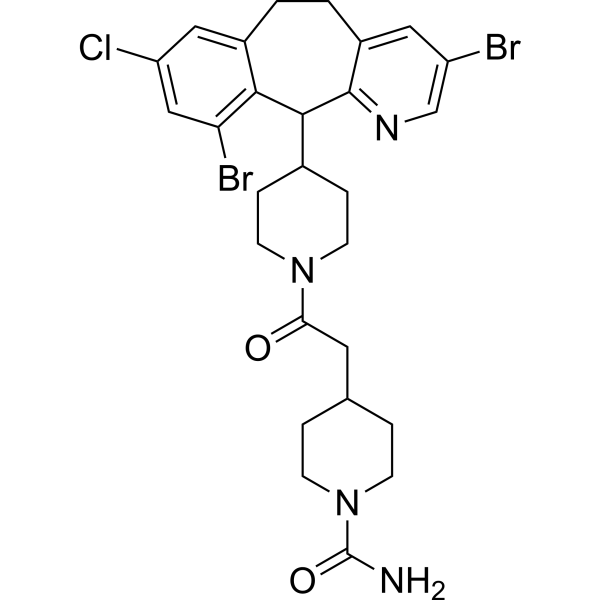
Cat. No.: HY-15136B
CAS No.: 193275-86-4
Synonyms: Sch66336 racemate
(Rac)-Lonafarnib (Sch66336 racemate) is an isomer of Lonafarnib (HY-15136). Lonafarnib (Sch66336) is an orally active, blood-brain barrier penetrant farnesyltransferase (FPTase) inhibitor. Lonafarnib increases the phosphorylation levels of Akt, CaMKII and CREB, upregulates BDNF expression in the hippocampus, elevates the content of α7nAChR on cell membranes, and blocks the isoprenylation of H-Ras. Lonafarnib repairs synapses and reverses spatial memory deficits in Aβ1-42 model mice. Lonafarnib inhibits RSV fusion and replication, and alleviates virus-induced lung injury. Lonafarnib activates the lysosomal and autophagic pathways, and reduces the phosphorylation and aggregation of tau. Lonafarnib acts synergistically with Sorafenib (HY-10201) to promote apoptosis, and inhibits the proliferation and invasion of melanoma cells. Lonafarnib inhibits the farnesylation of progerin, repairs nuclear membrane defects, and activates the cGAS-STING-STAT1 signaling pathway. Lonafarnib can be used in research related to diseases including Alzheimer's disease, viral infections, melanoma, and progeria .
loading...
    loading...
Cat. No.: HY-123037R
CAS No.: 43121-43-3
Triadimefon (Standard) is the analytical standard of Triadimefon (HY-123037). This product is intended for research and analytical applications. Triadimefon is an orally active fungicide. Triadimefon significantly reduces the phosphorylation of AKT1 and ERK1/2. Triadimefon significantly increases pAMPK levels, but does not affect total AMPK levels. Triadimefon inhibits the growth of Saccharomyces cerevisiae, disrupts hormone homeostasis (affecting the synthesis of testosterone, etc.), inhibits fetal adrenal development in rats, induces metabolic shifts in hepatocytes, and impairs spatial learning and memory .
loading...
    loading...
Cat. No.: HY-102086
CAS No.: 261717-23-1
Research Areas:  

Neurological Disease

MSX3 is an orally active, selective A2a adenosine receptor antagonist and a prodrug of MSX2 (HY-117184). MSX3 reduces hyperphosphorylation of Tau at specific epitopes in mice without altering total Tau levels, Tau fragments, or Tau aggregation in these animals. MSX3 enhances spatial memory. MSX3 regulates effort-related decision-making behaviors. MSX3 reverses D2 antagonist-induced suppression of lever pressing, increased Chow feed intake, reduced selection of high-barrier arms, and prolonged response latency, and also slightly attenuates effects induced by D1 antagonists. MSX3 can be used in the research of Tauopathies (Alzheimer's disease-related), depression, and Parkinsonism .
loading...
    loading...
Cat. No.: HY-175655
CAS No.: 3077831-11-6
BChE/p38-α MAPK-IN-1 is a selective dual inhibitor of hBChE (IC50 = 772 nM) and p38α MAPK (IC50 = 191 nM). BChE/p38-α MAPK-IN-1 reduces the production of pro-inflammatory cytokines (IL-1β, IL-6, IL-8, TNF-α) in cells. BChE/p38-α MAPK-IN-1 improves Scopolamine (HY-N0296)-induced cognitive impairment, as well as alleviates LPS (HY-D1056)-induced spatial learning impairment and exerts anti-neuroinflammatory effects in mice. BChE/p38-α MAPK-IN-1 can be used for the study of Alzheimer’s disease (AD) by targeting both cholinergic deficit and neuroinflammation .
loading...
    loading...
Cat. No.: HY-176036
CAS No.: 3070323-06-4
MS1262 is a blood-brain barrier-permeable, selective inhibitor of histone methyltransferases G9a (EHMT2) and GLP (EHMT1), with an IC50 of 19 nM and a Kd of 74 nM against G9a, and an IC50 of 6 nM and a Kd of 19 nM against GLP. MS1262 reduces the dimethylation level of histone H3 lysine 9 and decreases the size of plaques. MS1262 restores hippocampal long-term potentiation (LTP) and miniature excitatory postsynaptic current (sEPSC) frequency, ameliorates spatial memory deficits, and reverses anxiety-like and depression-like behaviors in AD model mice. MS1262 reverses the expression/phosphorylation levels of early AD biomarkers, providing support for stage-specific diagnosis of AD. MS1262 reduces the risk of thrombus rupture. MS1262 can be used in research related to Alzheimer's disease, colorectal cancer, and triple-negative breast cancer .
loading...
    loading...
Cat. No.: HY-W770410
CAS No.: 2748638-71-1
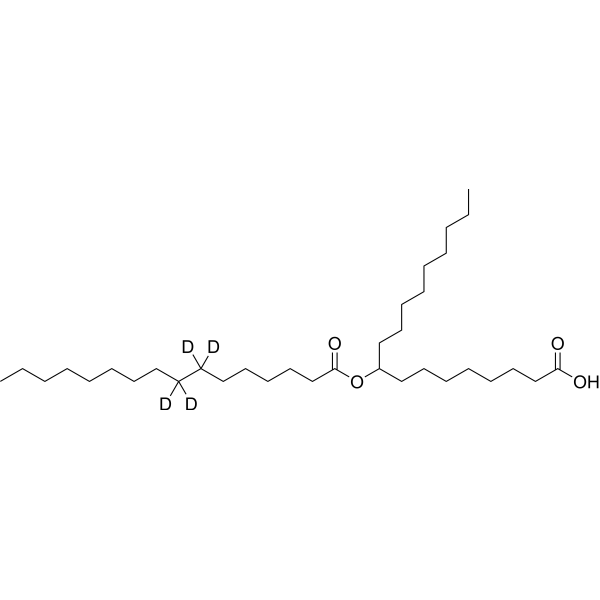
9-PAHSA- 13C4 is 13C-labeled 9-PAHSA. 9-PAHSAis an orally active endogenous GPR120 agonist (EC50=18 μM). 9-PAHSAsignificantly inhibits LPS-induced inflammatory responses by blocking the NF-κB pathway. 9-PAHSAinduces adipocyte browning, enhances glucose uptake and reduces lipid accumulation, while improving mitochondrial function and the survival rate of steatotic hepatocytes. In terms of neuroprotection, 9-PAHSAregulates the expression of REST and BDNF in the prefrontal cortex of diabetic mice, and effectively prevents spatial working memory deficits and abnormal social behaviors. 9-PAHSAdoes not directly regulate insulin secretion or improve systemic insulin sensitivity, and possesses specific anti-inflammatory, metabolic regulatory and neuroprotective properties. 9-PAHSAcan be used in the research of diabetes-related cognitive impairment, obesity and non-alcoholic fatty liver disease .
loading...
    loading...
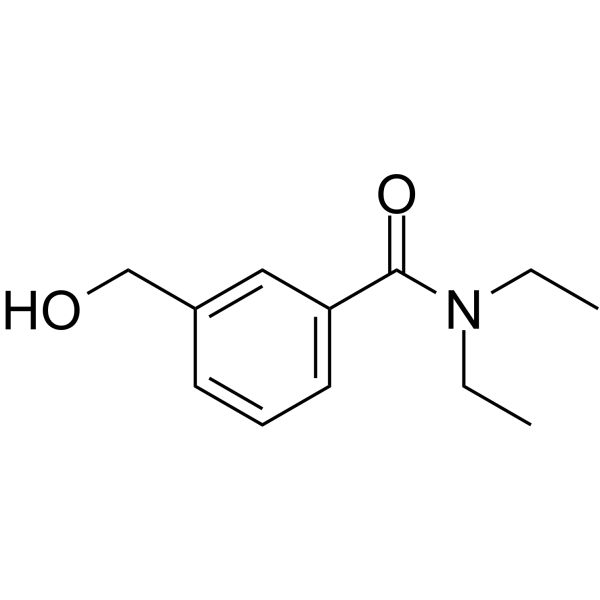
Cat. No.: HY-136611
CAS No.: 72236-22-7
Purity:  ≥96.0%
Target:  

Drug Metabolite

Research Areas:  

Infection

ω-Hydroxy-DEET is a major metabolite of insect repellent N-N-diethyl-meta-toluamide (DEET). ω-Hydroxy-DEET has anti-proliferative effects. DEET is a spatial repellent and an irritant that commonly used to prevent contact with mosquitoes .
loading...
    loading...
Cat. No.: HY-136092
CAS No.: 633-35-2
Target:  

Cytochrome P450

Research Areas:  

Neurological Disease Endocrinology

Androsta-1,4,6-triene-3,17-dione is a lipophilic and specific aromatase inhibitor with a Ki of 0.18 μM. Androsta-1,4,6-triene-3,17-dione inhibits estrogen biosynthesis and shows antifertility effects. Androsta-1,4,6-triene-3,17-dione induces impairment of spatial memory .
loading...
    loading...
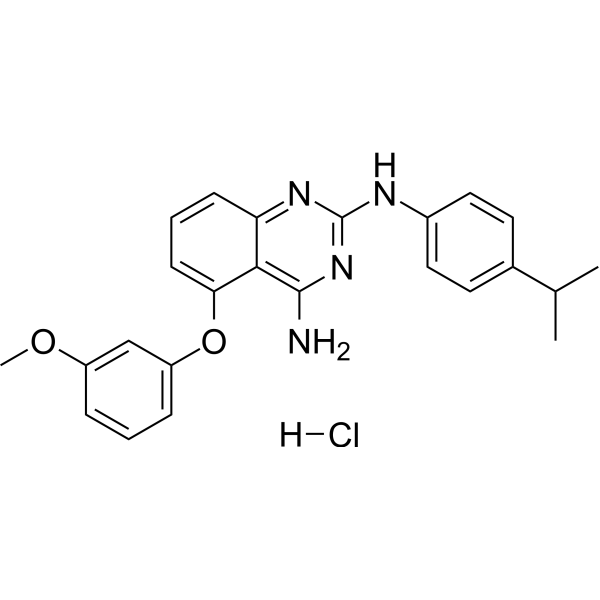
Cat. No.: HY-120782A
CAS No.: 2624336-93-0
Target:  

Notch

Research Areas:  

Neurological Disease

Yhhu-3792 hydrochloride is a Notch activator. Yhhu-3792 hydrochloride enhances the self-renewal capability of neural stem cells (NSCs). Yhhu-3792 hydrochloride promotes the expression of Hes3 and Hes5. Yhhu-3792 hydrochloride increases the spatial and episodic memory abilities of mice. Yhhu-3792 hydrochloride can be used for the study of neurodegenerative diseases (such as Alzheimer's disease) or for neural regeneration after brain injury .
loading...
    loading...
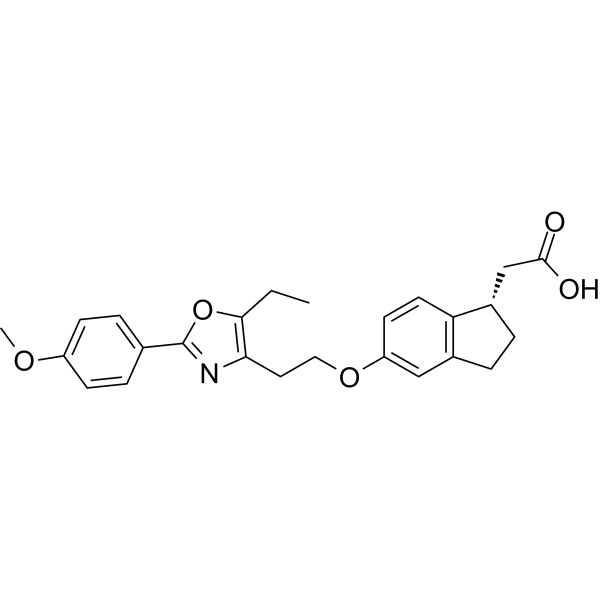
Cat. No.: HY-124244
CAS No.: 1257641-15-8
Synonyms: PPARδ/γ agonist 1
Target:  

PPAR

Research Areas:  

Neurological Disease

DB-959 (PPARδ/γ agonist 1) is a potent PPAR agonist targeting PPARδ/γ. DB-959 improves spatial learning and memory in mice induced by Streptozotocin (HY-13753) and has the potential to improve Alzheimer's disease (AD). .
loading...
    loading...
Cat. No.: HY-121041
CAS No.: 1776944-03-6
Research Areas:  

Neurological Disease

GEBR-7b is a selective PDE4D inhibitor with an IC50 of 0.67 μM. GEBR-7b increases hippocampal cAMP and does not influence Aβ levels in rodents. GEBR-7b also improves spatial and can be used for the study of cognitive deficits .
loading...
    loading...
Cat. No.: HY-120657S
CAS No.: 2704278-85-1
9-PAHSA-d4 is the deuterium labeled 9-PAHSA. 9-PAHSA is an orally active endogenous GPR120 agonist (EC50=18 μM). 9-PAHSA significantly inhibits LPS-induced inflammatory responses by blocking the NF-κB pathway. 9-PAHSA induces adipocyte browning, enhances glucose uptake and reduces lipid accumulation, while improving mitochondrial function and the survival rate of steatotic hepatocytes. In terms of neuroprotection, 9-PAHSA regulates the expression of REST and BDNF in the prefrontal cortex of diabetic mice, and effectively prevents spatial working memory deficits and abnormal social behaviors. 9-PAHSA does not directly regulate insulin secretion or improve systemic insulin sensitivity, and possesses specific anti-inflammatory, metabolic regulatory and neuroprotective properties. 9-PAHSA can be used in the research of diabetes-related cognitive impairment, obesity and non-alcoholic fatty liver disease .
loading...
    loading...
Cat. No.: HY-15136R
CAS No.: 193275-84-2
Synonyms: Sch66336 (Standard)
Lonafarnib (Standard) (Sch66336 (Standard)) is the analytical standard of Lonafarnib (HY-15136). This product is intended for research and analytical applications. Lonafarnib (Sch66336) is an orally active, blood-brain barrier penetrant farnesyltransferase (FPTase) inhibitor. Lonafarnib increases the phosphorylation levels of Akt, CaMKII and CREB, upregulates BDNF expression in the hippocampus, elevates the content of α7nAChR on cell membranes, and blocks the isoprenylation of H-Ras. Lonafarnib repairs synapses and reverses spatial memory deficits in Aβ1-42 model mice. Lonafarnib inhibits RSV fusion and replication, and alleviates virus-induced lung injury. Lonafarnib activates the lysosomal and autophagic pathways, and reduces the phosphorylation and aggregation of tau. Lonafarnib acts synergistically with Sorafenib (HY-10201) to promote apoptosis, and inhibits the proliferation and invasion of melanoma cells. Lonafarnib inhibits the farnesylation of progerin, repairs nuclear membrane defects, and activates the cGAS-STING-STAT1 signaling pathway. Lonafarnib can be used in research related to diseases including Alzheimer's disease, viral infections, melanoma, and progeria .
loading...
    loading...
Cat. No.: HY-19692
CAS No.: 123258-84-4
Synonyms: DA 6215; U98079A
Target:  

5-HT Receptor

Research Areas:  

Neurological Disease

Itasetron (DA 6215) is a selective 5-HT3 receptor antagonist. Itasetron improves spatial learning and memory abilities in the aged rat. Itasetron has potent antiemetic properties. Itasetron is used for age-related memory degeneration in rodents .
loading...
    loading...
Cat. No.: HY-RS14229
Research Areas:  

Others

TBATA Human Pre-designed siRNA Set A contains three designed siRNAs for TBATA gene (Human), as well as a negative control, a positive control, and a FAM-labeled negative control.

loading...
    loading...
Cat. No.: HY-103530R
CAS No.: 123690-79-9
Research Areas:  

Neurological Disease

CGP35348 (Standard) is the analytical standard of CGP35348. This product is intended for research and analytical applications. CGP 35348?is a selective, brain penetrant, centrally active GABAB receptor antagonist with an EC50 of 34 μM.?CGP 35348 shows affinity for the GABAB receptor only . CGP 35348 has a potential to improve neuromuscular coordination and spatial learning in albino mouse following neonatal brain damage .
loading...
    loading...
Cat. No.: HY-116377
CAS No.: 186303-55-9
Purity:  99.18%
Target:  

Steroid Sulfatase

Research Areas:  

Neurological Disease

DU-14 is a potent steroid sulfatase inhibitor with an IC50 of 55.8 nM. DU-14 inhibits the MCF-7 cell proliferation (IC50 = 38.7 nM). DU-14 has neuroprotective effects against neurotoxic Aβ, suggesting that up-regulation of endogenous DHEAS by DU-14 could be beneficial to the alleviation of Aβ-induced impairments in spatial memory and synaptic plasticity .
loading...
    loading...
Cat. No.: HY-W097570R
CAS No.: 38006-08-5
Research Areas:  

Infection

Sulfamonomethoxine sodium (Standard) is the analytical standard of Sulfamonomethoxine sodium. This product is intended for research and analytical applications. Sulfamonomethoxine sodium is an orally active broad-spectrum synthetic sulfonamide antibiotic that inhibits dihydropteroate synthetase. Sulfamonomethoxine sodium increases blood glucose levels, induces anxiety-related activities and impairs spatial learning and memory. Sulfamonomethoxine sodium can be used for the research of anxiety, spatial memory impairment, colisepticemia, salmonellosis, and staphylococcus infection .
loading...
    loading...
Cat. No.: HY-P2004
CAS No.: 2703745-70-2
Target:  

MMP

Research Areas:  

Cancer

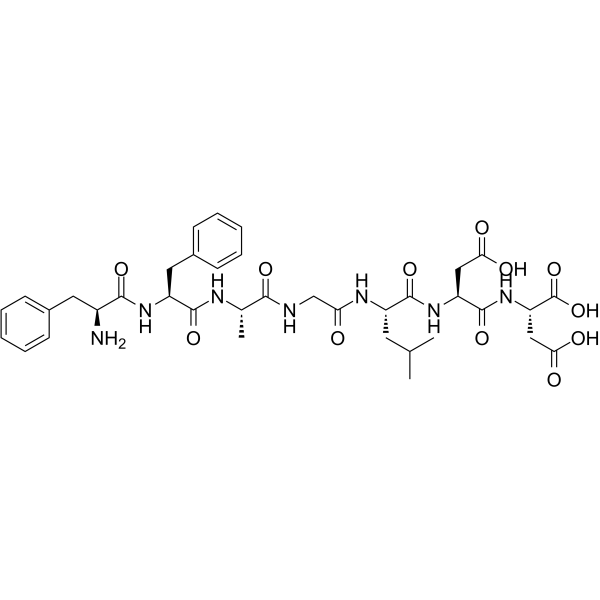
FFAGLDD is MMP9 selective cleavage peptides, which used for cytosolic delivery of Doxorubi-cin (DOX) and achieve temporally and spatially controlled slow drug delivery and release .
loading...
    loading...
Cat. No.: HY-P2004A
Target:  

MMP

Research Areas:  

Cancer

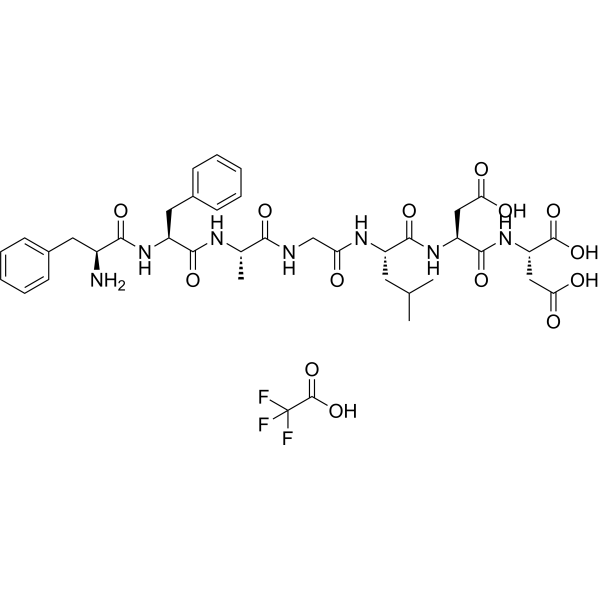
FFAGLDD TFA is MMP9 selective cleavage peptides, which used for cytosolic delivery of Doxorubi-cin (DOX) and achieve temporally and spatially controlled slow drug delivery and release .
loading...
    loading...

