
99 Results for "

spatial

" in MedChemExpress (MCE) Product Catalog:
Products (99)

99 Results for "spatial" in MCE Product Catalog:

1
1 Cited Publications
Cat. No.: HY-D1423
CAS No.: 68654-25-1
Target:  

Fluorescent Dye

Research Areas:  

Others

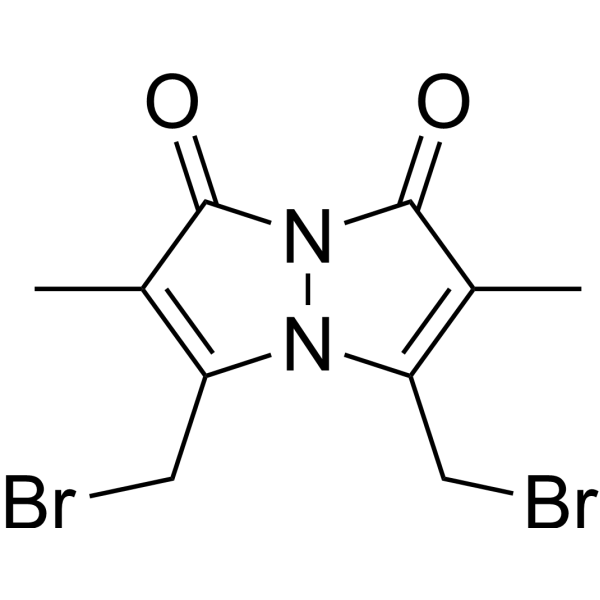
Dibromobimane is a Fluorescent dye and probe that can be used for the detection of intracellular reduced glutathione and the analysis of spatial proximity of closely adjacent cysteine thiol groups. Dibromobimane activates fluorescence through binding to thiol groups; its excitation/emission wavelengths are Ex/Em = 393/477 nm for glutathione detection, and Ex/Em = 385/477 nm for cysteine thiol cross-linking. Dibromobimane uses two equivalent bromomethyl groups to cross-link cysteine thiolates with a distance ranging from 3-6 Å. Dibromobimane can be applied to 96-well microplate-based high-throughput assays for labeling intracellular glutathione, and its fluorescence signal is normalized against nuclear staining results to eliminate the impact of cell density .
loading...
    loading...
1
1 Cited Publications
Cat. No.: HY-W097570
CAS No.: 38006-08-5
Target:  

Antibiotic Bacterial

Research Areas:  

Infection Neurological Disease

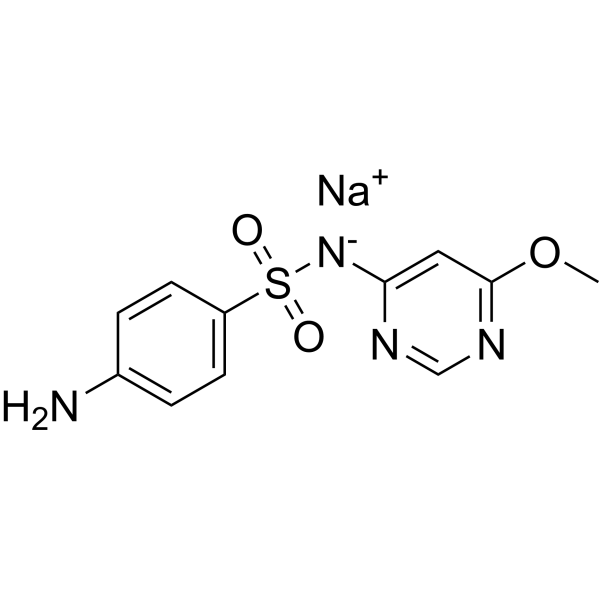
Sulfamonomethoxine sodium is an orally active broad-spectrum synthetic sulfonamide antibiotic that inhibits dihydropteroate synthetase. Sulfamonomethoxine sodium increases blood glucose levels, induces anxiety-related activities and impairs spatial learning and memory. Sulfamonomethoxine sodium can be used for the research of anxiety, spatial memory impairment, colisepticemia, salmonellosis, and staphylococcus infection .
loading...
    loading...
Cat. No.: HY-139912
CAS No.: 769933-15-5
Purity:  99.63%
Research Areas:  

Others

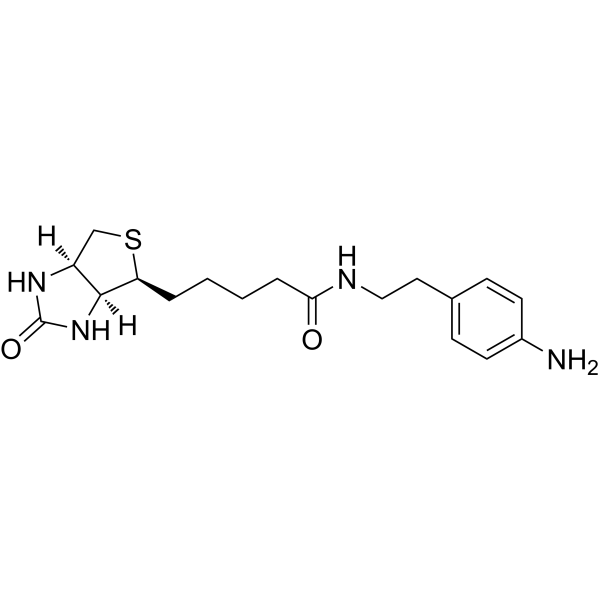
Biotin-aniline is a probe with substantially high reactivity towards RNA and DNA. Biotin-aniline is also a novel APEX2 substrate. Biotin-aniline can label proteins via miniSOG. Biotin-aniline emerges as more efficient probe for capturing subcellular transcriptome in living cells with high spatial specificity .
loading...
    loading...
Cat. No.: HY-N10889
CAS No.: 98569-64-3
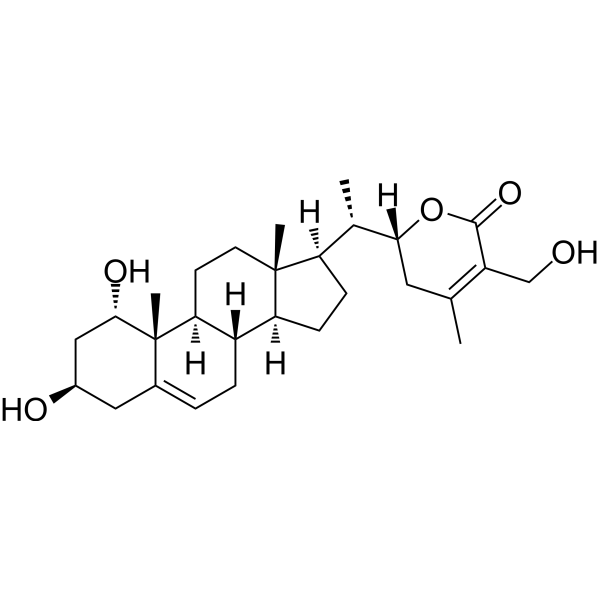
Sominone is the active metabolite of Withanoside IV (HY-N8693). Sominone enhances neuronal morphological plasticity by activating the RET pathway. Sominone can also induce axon/dendrite regeneration and synaptic reconstruction, thereby improving spatial memory. Sominone can be used in the research of neurodegenerative diseases such as Alzheimer's disease .
loading...
    loading...
Cat. No.: HY-NP0204
Synonyms: Mouse Serum Albumin
MSA Protein (Mouse Serum Albumin) is most abundant protein in plasma, which leaks into the brain parenchyma when the blood-brain barrier (BBB) is impaired. Mouse Serum Albumin induces astrocytes to A1 phenotype to remarkably increase levels of Elovl1. Mouse Serum Albumin promotes VLSFAs secretion and causes neuronal lippoapoptosis through endoplasmic reticulum stress response pathway. MSA-activated microglia triggeres remarkable tau phosphorylation at multiple sites (Ser202/Thr205) through NLRP3 inflammasome pathway. Mouse Serum Albumin decreases the spatial learning and memory abilities in mice. Mouse Serum Albumin can be used for the study of neurodegenerative diseases like Alzheimer’s disease (AD) and frontotemporal dementia (FTD) .
loading...
    loading...
Cat. No.: HY-123037
CAS No.: 43121-43-3
Purity:  98.12%
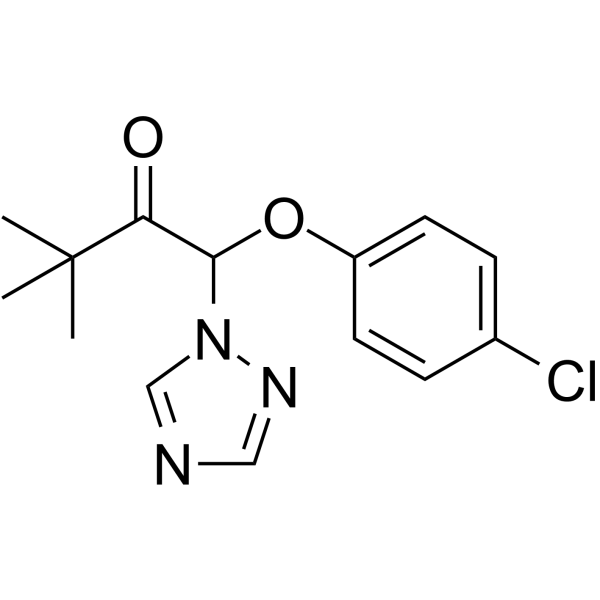
Triadimefon is an orally active fungicide. Triadimefon significantly reduces the phosphorylation of AKT1 and ERK1/2. Triadimefon significantly increases pAMPK levels, but does not affect total AMPK levels. Triadimefon inhibits the growth of Saccharomyces cerevisiae, disrupts hormone homeostasis (affecting the synthesis of testosterone, etc.), inhibits fetal adrenal development in rats, induces metabolic shifts in hepatocytes, and impairs spatial learning and memory .
loading...
    loading...
Cat. No.: HY-P10638
Target:  

CaMK

TAT-CN21 is a potent CaMKII inhibitor with an IC50 of 77.2 nM. TAT-CN21 inhibits both calcium/calmodulin-dependent and autonomously activated CaMKII, blocks glutamate-induced translocation of CaMK IIα, and reverses the enhanced phosphorylation of CaMKII at Thr286 following excitotoxic injury. TAT-CN21 shows application potential in studies related to ischemic stroke by reducing neuronal excitotoxicity and exacerbating pre-existing long-term neuronal death prior to injury. TAT-CN21 improves definitive behaviors in rats with residual nerve injury without altering indicators such as mechanical/thermal hyperalgesia or spatial memory. TAT-CN21 can also be used in studies related to neuropathic pain .
loading...
    loading...
Cat. No.: HY-101955A
CAS No.: 1430202-69-9
Purity:  99.61%
Synonyms: (2R,6R)-HNK hydrochloride
Target:  

Drug Metabolite

Research Areas:  

Neurological Disease

(2R,6R)-Hydroxynorketamine ((2R,6R)-HNK) hydrochloride is an active ketamine metabolite with no NMDAR binding activity. (2R,6R)-Hydroxynorketamine hydrochloride rescues impaired dorsal hippocampal long-term potentiation and restores robust long-term potentiation in the hippocampal SC-CA1 pathway. (2R,6R)-Hydroxynorketamine hydrochloride can be used for research on depression .
loading...
    loading...
Cat. No.: HY-167832
CAS No.: 2059104-90-2
PT109 is an orally active, blood-brain barrier permeable multi-kinase inhibitor. By inhibiting PTBP1, PT109 promotes the switch of pyruvate kinase isoform from PKM2 to PKM1, thereby effectively inhibiting the proliferation and migration of glioblastoma multiforme and inducing its reprogramming into oligodendrocytes. PT109 also targets and regulates key signaling molecules such as JNK, SGK1, GSK3β to exert neuroprotective effects including promoting neurogenesis, inducing synapse formation and alleviating neuroinflammation. In Alzheimer's disease models, PT109 exhibits significant efficacy in improving spatial learning ability, along with excellent in vivo pharmacokinetic properties. PT109 can be used to investigate metabolic reprogramming of glioblastoma multiforme and neuroprotective mechanisms of Alzheimer's disease .
loading...
    loading...
Cat. No.: HY-N1414
CAS No.: 139891-98-8
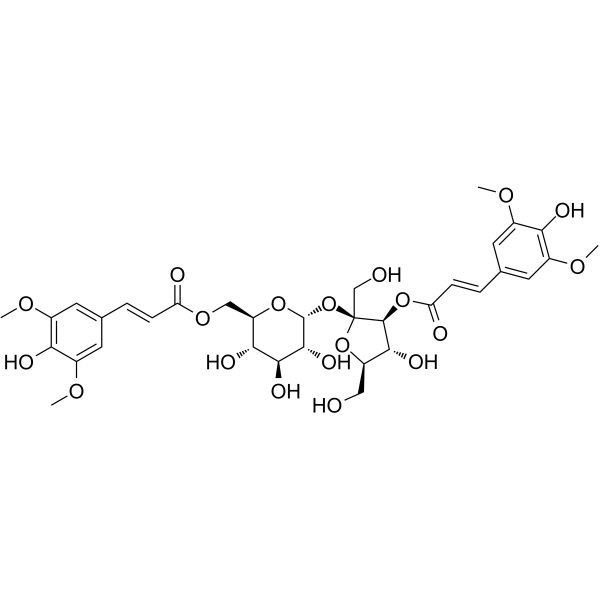
(E)-3',6-Disinapoylsucrose is an orally active, blood-brain barrier permeable neuroprotective agent that inhibits protein aggregation. (E)-3',6-Disinapoylsucrose exerts anxiolytic, anti-inflammatory and cognitive-enhancing effects. (E)-3',6-Disinapoylsucrose regulates the TrkB/BDNF signaling pathway, inhibits the expression of NF-κB p65, reduces pro-inflammatory cytokine levels, and alleviates neuronal damage. (E)-3',6-Disinapoylsucrose also enhances the functions of central 5-HT and noradrenergic systems, thereby improving spatial learning and memory abilities and reducing anxiety-like behaviors. (E)-3',6-Disinapoylsucrose can be used for the research of related diseases such as Alzheimer's disease, depression, memory impairment and anxiety disorder .
loading...
    loading...
Cat. No.: HY-120657
CAS No.: 1481636-31-0
Purity:  99.88%
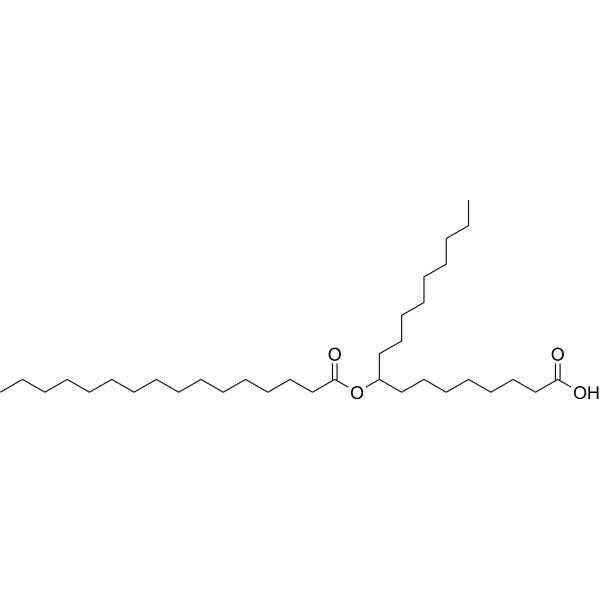
9-PAHSA is an orally active endogenous GPR120 agonist (EC50=18 μM). 9-PAHSA significantly inhibits LPS-induced inflammatory responses by blocking the NF-κB pathway. 9-PAHSA induces adipocyte browning, enhances glucose uptake and reduces lipid accumulation, while improving mitochondrial function and the survival rate of steatotic hepatocytes. In terms of neuroprotection, 9-PAHSA regulates the expression of REST and BDNF in the prefrontal cortex of diabetic mice, and effectively prevents spatial working memory deficits and abnormal social behaviors. 9-PAHSA does not directly regulate insulin secretion or improve systemic insulin sensitivity, and possesses specific anti-inflammatory, metabolic regulatory and neuroprotective properties. 9-PAHSA can be used in the research of diabetes-related cognitive impairment, obesity and non-alcoholic fatty liver disease .
loading...
    loading...
Cat. No.: HY-106432A
CAS No.: 159912-58-0
Purity:  99.86%
Synonyms: SB-202026 hydrochloride; Memric hydrochloride
Target:  

mAChR Dopamine Receptor

Research Areas:  

Neurological Disease

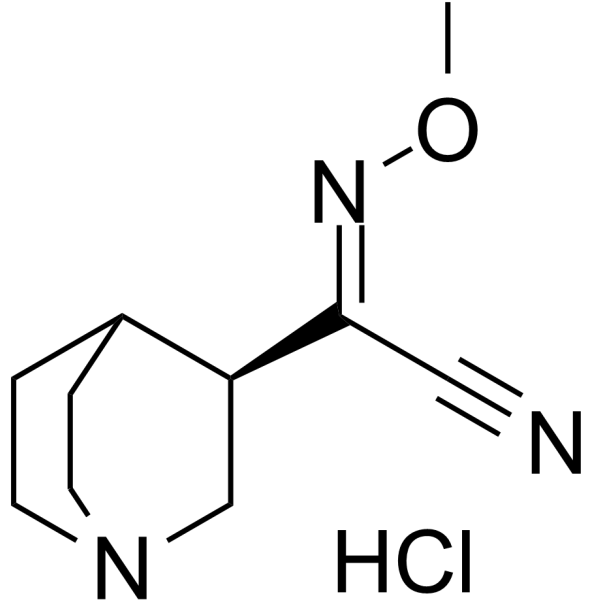
Sabcomeline (SB-202026; Memric) hydrochloride is a muscarinic receptor agonist capable of crossing the blood-brain barrier. Sabcomeline hydrochloride exhibits affinity for all hM1 to hM5 subtypes (pKi=6.72-7.23), and shows near-full agonism at the hM3 receptor, inducing extracellular acidification. Sabcomeline hydrochloride alters the binding kinetics of dopamine D2 receptors through neural network regulation. Sabcomeline hydrochloride also causes minimal cardiovascular changes, effectively reverses spatial memory deficits in rodents and induces conditioned taste aversion. Sabcomeline hydrochloride is an important tool compound in studies of Alzheimer's disease and related neurodegenerative diseases .
loading...
    loading...
Cat. No.: HY-B0764B
CAS No.: 362-74-3
Synonyms: Dibutyryl cAMP; DBcAMP
Bucladesine (Dibutyryl cAMP; DBcAMP) is a membrane-permeable 3′, 5′-cyclic adenosine monophosphate (cAMP) analog. Bucladesine selectively activates cAMP dependent protein kinase (PKA) by increasing the intracellular level of cAMP. Bucladesine significantly attenuates MDMA-induced increases in hippocampal mitochondrial ROS formation, mitochondrial outer membrane damage, cytochrome c release, and hippocampal ADP/ATP ratio, thereby improving spatial learning and memory impairments. Bucladesine exhibit anti-nociceptive and anti-inflammation effect. Bucladesine can inhibit cancer cells proliferation, induce apoptosis. Bucladesine can be used for the researches of neurological disease, cancer, inflammation .
loading...
    loading...
Cat. No.: HY-P1341
CAS No.: 343268-91-7
Synonyms: Orexin A (17-33) (human, mouse, rat, bovine)
OXA (17-33) (Orexin A (17-33) (human, mouse, rat, bovine)) is the shortest active orexin peptide that selectively targets OX1 (EC50=8.29 nM), with 23-fold selectivity for the OX1 receptor over the OX2 receptor. The activity of OXA (17-33) depends on the Tyr17, Leu20, Asn25, His26 residues and the spatial conformation of the α-helix. OXA (17-33) activates signaling pathways involving inositol-1,4,5-trisphosphate receptor (IP3R), phospholipase D (PL-D) and choline-Sigma-1R, thereby increasing the cytoplasmic Ca 2+ level in nucleus accumbens neurons, an effect that is blocked by Sigma-1R antagonists. OXA (17-33) serves as an important biological probe for investigating the function of the OX1 receptor. OXA (17-33) can be modified via incorporation of mixed disulfide bonds of homocysteine and cysteamine, and is widely used in studies related to insomnia and narcolepsy .
loading...
    loading...
Cat. No.: HY-117080
CAS No.: 167410-92-6
Purity:  ≥90.0%
Research Areas:  

Others

Sulfo-EGS is a homobifunctional, amine-reactive chemical crosslinker. Sulfo-EGS is used to study protein-protein or protein-peptide interactions, which can determine the spatial proximity of amino acid residues in a protein complex, without relying on standards .
loading...
    loading...
Cat. No.: HY-P3026
CAS No.: 37330-34-0
Research Areas:  

Cancer

The Bowman-Birk inhibitor, a highly cross-linked protein featuring seven disulfide bridges, possesses spatially distinct domains specifically designed for the inhibition of both trypsin and chymotrypsin, showcasing its significant role as a plant protease inhibitor with anticarcinogenic properties.
loading...
    loading...
Cat. No.: HY-B0764R
CAS No.: 16980-89-5
Synonyms: Dibutyryl cAMP sodium (Standard); DBcAMP sodium (Standard)
Bucladesine (Dibutyryl cAMP; DBcAMP) sodium (Standard) is the analytical standard of Bucladesine sodiumn (HY-B0764). This product is intended for research and analytical applications. Bucladesine is a membrane-permeable 3′, 5′-cyclic adenosine monophosphate (cAMP) analog. Bucladesine selectively activates cAMP dependent protein kinase (PKA) by increasing the intracellular level of cAMP. Bucladesine significantly attenuates MDMA-induced increases in hippocampal mitochondrial ROS formation, mitochondrial outer membrane damage, cytochrome c release, and hippocampal ADP/ATP ratio, thereby improving spatial learning and memory impairments. Bucladesine exhibit anti-nociceptive and anti-inflammation effect. Bucladesine can inhibit cancer cells proliferation, induce apoptosis. Bucladesine can be used for the researches of neurological disease, cancer, inflammation .
loading...
    loading...
Cat. No.: HY-128174
CAS No.: 69954-48-9
Synonyms: Beta-CCM; Ro 22-7497
Target:  

GABA Receptor

Research Areas:  

Neurological Disease

β-CCM is a benzodiazepine receptor inverse agonist with anxiogenic and proconvulsant effects. β-CCM enhances emotional reactivity and reduces vulnerability to interference in spatial working memory tasks. β-CCM can be used for research on anxiety-related disorders .
loading...
    loading...
Cat. No.: HY-135525
CAS No.: 548-42-5
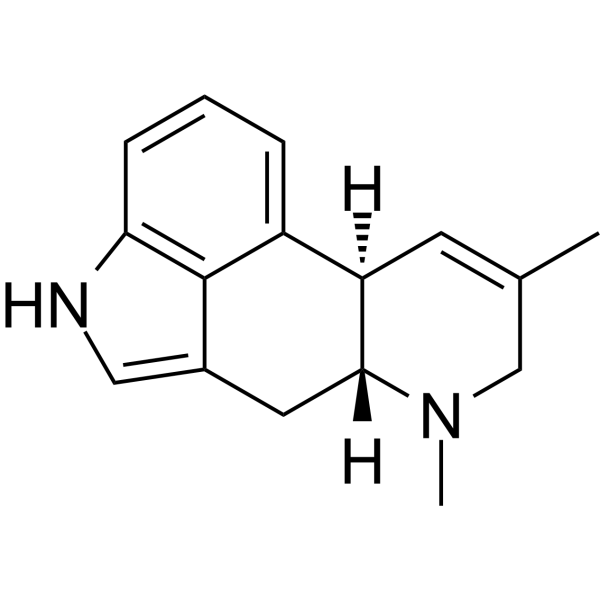
Agroclavine acts as an agonist of the D1-dopamine receptor and α1-adrenergic receptor. Agroclavine enhances the sensitivity of the brain to magnetic fields; it impairs spatial memory without affecting hippocampal long-term potentiation (LTP). Agroclavine exerts bidirectional regulatory effects on immune activity: it enhances NK cell activity with low toxicity under normal conditions, while it inhibits NK cell activity and exhibits significant cardiac and hepatic toxicity under stress conditions. Agroclavine can be used for research on neuroelectrophysiology, learning and memory, and immunoregulation .
loading...
    loading...

