

178 Results for "

supporting cells

" in MedChemExpress (MCE) Product Catalog:
Products (178)

178 Results for "supporting cells" in MCE Product Catalog:

Cat. No.: HY-158218
Synonyms: Gelatin Methacryloyl, 30% methacrylation, Red Fluorescent
Red Fluorescent Gelatin Methacryloyl (Red Fluorescent GelMA) is methacryloyl gelatin (GelMA) with red fluorescence, which is obtained by "grafting" fluorescent molecules on GelMA. Red Fluorescent Gelatin Methacryloyl acts as a scaffold and can be used to engineer tissue analogs from the vasculature to cartilage and bone, allowing cells to proliferate and spread . GelMA, 30% methacrylation, Red Fluorescent needs to self-assemble into fibrous hydrogel under the action of photoinitiator LAP (HY-44076), and target bioactive adhesion sites, play an inherent supporting role for tissue cells and biodegradable activity.
Application: cell culture, biological 3D printing, tissue engineering, etc.
loading...
    loading...
Cat. No.: HY-W017018S5
CAS No.: 360565-59-9
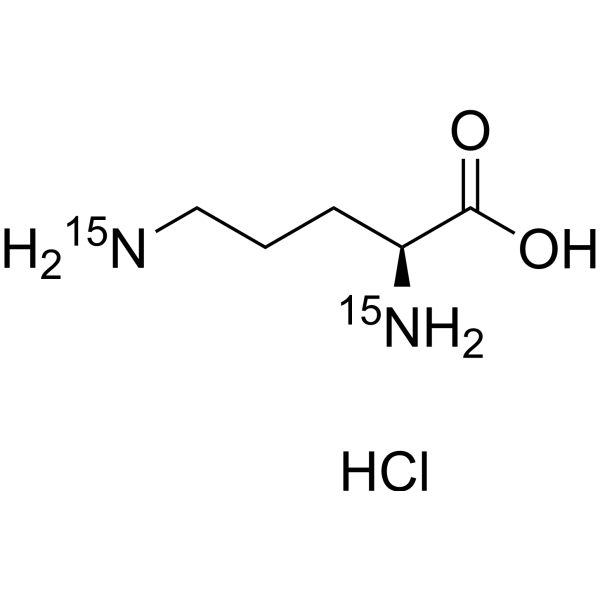
L-Ornithine- 15N2 hydrochloride is the 15N-labeled L-Ornithine (hydrochloride) (HY-W017018). L-Ornithine hydrochloride is an orally active CaSR and p38 activator. L-Ornithine hydrochloride inhibits ROS and supports urea cycle function. L-Ornithine hydrochloride can be used to study kidney diseases involving proximal tubular cell damage caused by oxidative stress or crystallopathy, as well as research related to anxiety disorders .
loading...
    loading...
Cat. No.: HY-141567
CAS No.: 1175-34-4
Synonyms: Pseudo-UTP
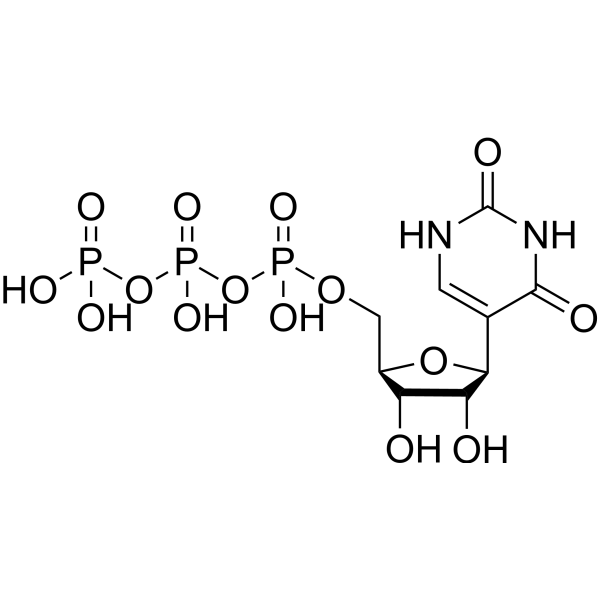
Pseudouridine 5'-triphosphate (Pseudo-UTP) is a modified ribonucleoside triphosphate and uracil base-modified UTP derivative. Pseudouridine 5'-triphosphate enhances translational properties and stability of mRNA, reduces innate immune responses in mammalian cells, and inhibits signal-dependent transcription termination of vaccinia virus early gene transcription while supporting transcription elongation. Pseudouridine 5'-triphosphate can be used for the research of vaccinia virus infection .
loading...
    loading...
Cat. No.: HY-158222
Synonyms: AlgMA (MW 50000)
Alginate Methacryloyl (MW 50000) is a methacryloyl alginate with potential for use as a tissue engineering scaffold and 3D printing ink. Alginate Methacryloyl (MW 50000) is biocompatible, non-immunogenic, has low toxicity and is capable of physical cross-linking with divalent cations such as calcium . Alginate Methacryloyl (MW 50000) needs to self-assemble into fibrous hydrogel under the action of photoinitiator LAP (HY-44076), and target bioactive adhesion sites, play an inherent supporting role for tissue cells and biodegradable activity.
Application: cell culture, biological 3D printing, tissue engineering, etc.
loading...
    loading...
Cat. No.: HY-D0889R
CAS No.: 556-50-3
Synonyms: Gly-Gly (Standard); H-Gly-Gly-OH (Standard)
Glycylglycine (Standard) is the analytical standard of Glycylglycine (HY-D0889). This product is intended for research and analytical applications. Glycylglycine is a non-selective glycylglycine dipeptidase substrate and iNOS inhibitor. Glycylglycine can cross the cell membrane by passive diffusion and is hydrolyzed to glycine in the cell, participating in energy metabolism and antioxidant processes. Glycylglycine promotes spermatogonial stem cells (SSCs) proliferation, inhibits astrocyte overactivation and reduces nitric oxide (NO) release, while upregulating the expression of neurotrophic factors (such as PDGFA, FGF2, CNTF) to support nerve myelin repair. Glycylglycine can be used to study male reproductive biology (such as SSCs proliferation regulation) and neurodegenerative diseases (such as neuroprotective mechanisms in multiple sclerosis) .
loading...
    loading...
Cat. No.: HY-158012
CAS No.: 2064292-78-8
Target:  

γ-secretase Notch

Research Areas:  

Neurological Disease

LY3056480 is a γ-secretase inhibitor. LY3056480 inhibits the Notch signaling pathway, upregulates Atoh1, promotes hair cell regeneration, and drives supporting cell transdifferentiation. LY3056480 is applicable to research related to sensorineural hearing loss .
loading...
    loading...
Cat. No.: HY-158228
Synonyms: PLMA
Poly-L-lysine Methacryloyl (PLMA) is methacrylated polylysine. When Poly-L-lysine Methacryloyl is cross-linked on polyetheretherketone (PEEK) through UV-induced cross-linking, it can improve the hydrophilicity of PEEK and retain its own degradation bioinertness . Poly-L-lysine Methacryloyl needs to self-assemble into fibrous hydrogel under the action of photoinitiator LAP (HY-44076), and target bioactive adhesion sites, play an inherent supporting role for tissue cells and biodegradable activity.
Application: cell culture, biological 3D printing, tissue engineering, etc.
loading...
    loading...
Cat. No.: HY-158217
Synonyms: Gelatin Methacryloyl, 30% methacrylation, Green Fluorescent
Green Fluorescent Gelatin Methacryloyl (Green Fluorescent GelMA) is methacryloyl gelatin (GelMA) with green fluorescence, which is obtained by "grafting" fluorescent molecules on GelMA. Green Fluorescent Gelatin Methacryloyl acts as a scaffold and can be used to engineer tissue analogs from the vasculature to cartilage and bone, allowing cells to proliferate and spread . GelMA, 30% methacrylation, Green Fluorescent needs to self-assemble into fibrous hydrogel under the action of photoinitiator LAP (HY-44076), and target bioactive adhesion sites, play an inherent supporting role for tissue cells and biodegradable activity.
Application: cell culture, biological 3D printing, tissue engineering, etc.
loading...
    loading...
Cat. No.: HY-158217A
Synonyms: Gelatin Methacryloyl, 60% methacrylation, Green Fluorescent
Green Fluorescent Gelatin Methacryloyl (Green Fluorescent GelMA) is methacryloyl gelatin (GelMA) with green fluorescence, which is obtained by "grafting" fluorescent molecules on GelMA. Green Fluorescent Gelatin Methacryloyl acts as a scaffold and can be used to engineer tissue analogs from the vasculature to cartilage and bone, allowing cells to proliferate and spread . GelMA, 60% methacrylation, Green Fluorescent needs to self-assemble into fibrous hydrogel under the action of photoinitiator LAP (HY-44076), and target bioactive adhesion sites, play an inherent supporting role for tissue cells and biodegradable activity.
Application: cell culture, biological 3D printing, tissue engineering, etc.
loading...
    loading...
Cat. No.: HY-W017018R
CAS No.: 3184-13-2
L-Ornithine hydrochloride (Standard) is the analytical standard of L-Ornithine hydrochloride (HY-W017018). This product is intended for research and analytical applications. L-Ornithine hydrochloride is an orally active CaSR and p38 activator. L-Ornithine hydrochloride inhibits ROS and supports urea cycle function. L-Ornithine hydrochloride can be used to study kidney diseases involving proximal tubular cell damage caused by oxidative stress or crystallopathy, as well as research related to anxiety disorders .
loading...
    loading...
Cat. No.: HY-158223
Synonyms: CMCSMA
Carboxymethyl chitosan Methacryloyl (CMCSMA) is methacrylated carboxymethyl chitosan with properties as a 3D printing ink. A composite hydrogel made of Carboxymethyl chitosan Methacryloyl can effectively accelerate bone healing in an infectious microenvironment after implantation in a rat model of Staphylococcus aureus-infected femoral defect . Carboxymethyl chitosan Methacryloyl needs to self-assemble into fibrous hydrogel under the action of photoinitiator LAP (HY-44076), and target bioactive adhesion sites, play an inherent supporting role for tissue cells and biodegradable activity.
Application: cell culture, biological 3D printing, tissue engineering, etc.
loading...
    loading...
Cat. No.: HY-157281
CAS No.: 23140-55-8
Purity:  99.96%
Synonyms: PLIII
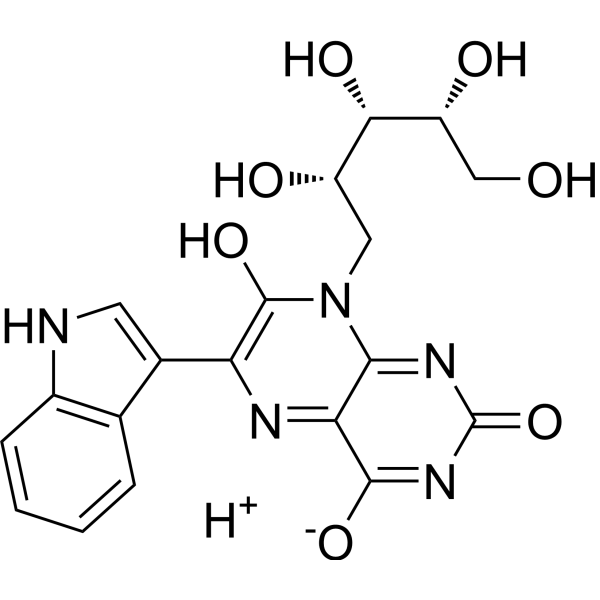
Photolumazine III (PLIII) is a microbial metabolite and derivative of Riboflavin (HY-B0456). Photolumazine III binds MR1 with high specificity. Photolumazine III supports efficient TCR binding. Photolumazine III acts as an antigen to activate cells. Responses to Photolumazine III trigger immune reactions .
loading...
    loading...
Cat. No.: HY-P5488
CAS No.: 329696-53-9
Target:  

Inhibitory Antibodies

Research Areas:  

Others

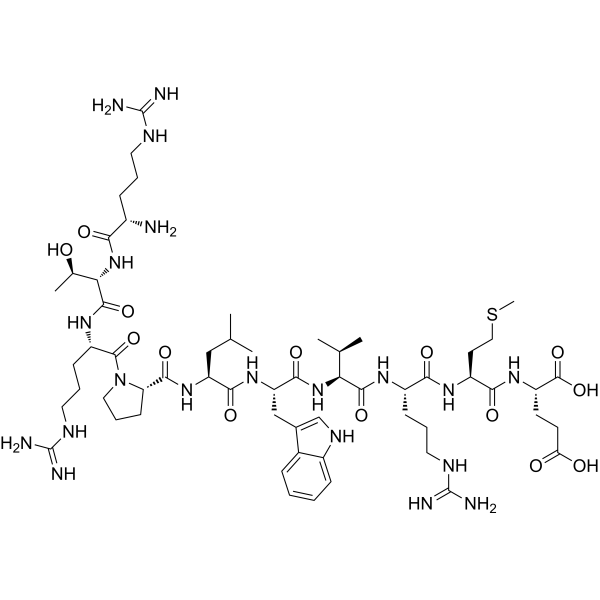
BDC2.5 Mimotope 1040-63 is a biological active peptide. (The TCR transgenic model (BDC2.5) mimitope was used in type 1 diabetes (T1D) study. T1D is an autoimmune disease in which T cells mediate damage to pancreatic islet b cells. T1D is caused by autoreactive T cell destruction of insulin-producing cells. BDC2.5 mimotope was utilized to support the study on antigen presentation of antigenic peptides to islet autoantigen-specific T cells.)
loading...
    loading...
Cat. No.: HY-145976
CAS No.: 133608-76-1
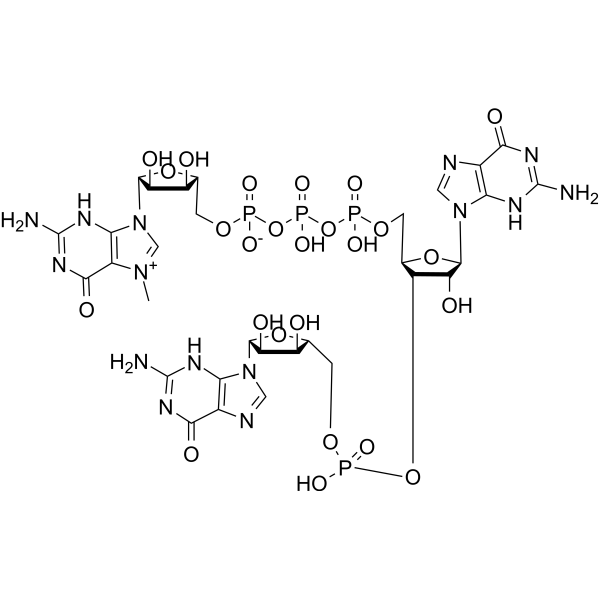
m7GpppGpG is an unmodified trinucleotide cap analog with enhancer activity. When incorporated into mRNA, it effectively enhances translational efficiency, stability, and protein expression levels of the mRNA. m7GpppGpG can serve as a standard cap analog for in vitro mRNA synthesis to support antigen generation and presentation by dendritic cells, although its expression efficiency in dendritic cells is 20-fold lower than that of the m7GpppApG cap .
loading...
    loading...
Cat. No.: HY-P4794A
Target:  

Inhibitory Antibodies

Research Areas:  

Metabolic Disease

Osteoblast-Adhesive Peptide (Lys-Arg-Ser-Arg) acetate is an adhesion peptide that can be used as a dental/orthopedic biomaterial to support and enhance osteoblast (anchorage-dependent cell) adhesion. Osteoblasts adhere via both integrin-mediated and proteoglycan-mediated mechanisms. Osteoblast-Adhesive Peptide acetate may be osteoblast- or osteocyte-specific and participate in proteoglycan-mediated osteoblast adhesion .
loading...
    loading...
Cat. No.: HY-158218A
Synonyms: Gelatin Methacryloyl, 60% methacrylation, red fluorescent
Research Areas:  

Others

Red Fluorescent Gelatin Methacryloyl (Red Fluorescent GelMA) is methacryloyl gelatin (GelMA) with red fluorescence, which is obtained by "grafting" fluorescent molecules on GelMA. Red Fluorescent Gelatin Methacryloyl acts as a scaffold and can be used to engineer tissue analogs from the vasculature to cartilage and bone, allowing cells to proliferate and spread . GelMA, 60% methacrylation, Red Fluorescent needs to self-assemble into fibrous hydrogel under the action of photoinitiator LAP (HY-44076), and target bioactive adhesion sites, play an inherent supporting role for tissue cells and biodegradable activity.
Application: cell culture, biological 3D printing, tissue engineering, etc.
loading...
    loading...
Cat. No.: HY-W017018S3
CAS No.: 2483831-42-9
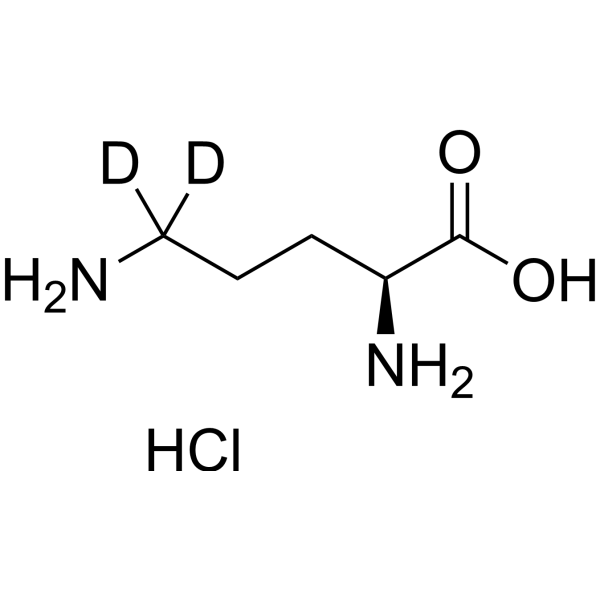
L-Ornithine-d2 hydrochloride is the d2-labeled L-Ornithine hydrochloride (HY-W017018). L-Ornithine hydrochloride is an orally active CaSR and p38 activator. L-Ornithine hydrochloride inhibits ROS and supports urea cycle function. L-Ornithine hydrochloride can be used to study kidney diseases involving proximal tubular cell damage caused by oxidative stress or crystallopathy, as well as research related to anxiety disorders .
loading...
    loading...
Cat. No.: HY-W094751
CAS No.: 1606-67-3
Synonyms: 1-Pyrenamine (purified by sublimation)
1-Pyrenamin (1-Pyrenamine purified by sublimation) is utilized to create highly efficient and stable catalyst supports in direct methanol fuel cells through noncovalent functionalization of graphite nanosheets .
loading...
    loading...
Cat. No.: HY-D1439
CAS No.: 172807-13-5
Target:  

Fluorescent Dye

Research Areas:  

Neurological Disease

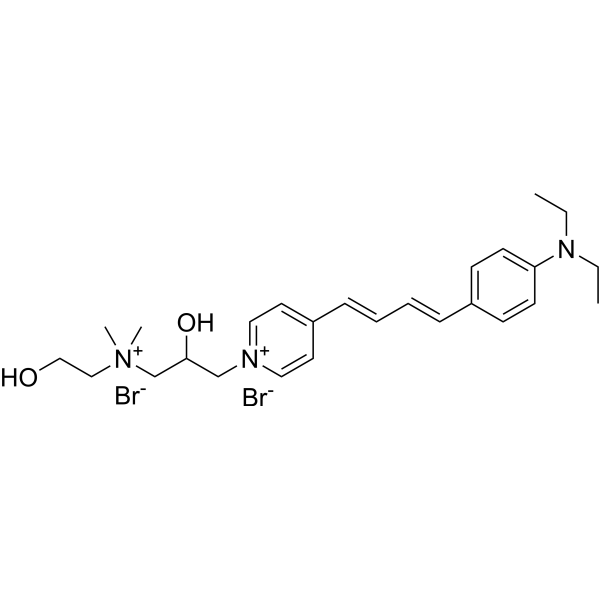
RH 795 is a lipophilic potentiometric styryl fluorescent dye (Ex/Em = 530 nm/712 nm). RH 795 stains the cell membranes of sensory cells and nerve fibers in living cells that maintain membrane potential, while it shows weak staining effect on supporting cells. RH 795 supports in vivo and in vitro confocal microscopy imaging of intact living inner ear cells and neuronal components. RH 795 can be used in studies related to hearing loss .
loading...
    loading...
Cat. No.: HY-P2697
CAS No.: 123063-31-0
Synonyms: Cys-Laminin A chain 2091-2108
Target:  

Inhibitory Antibodies

Research Areas:  

Others

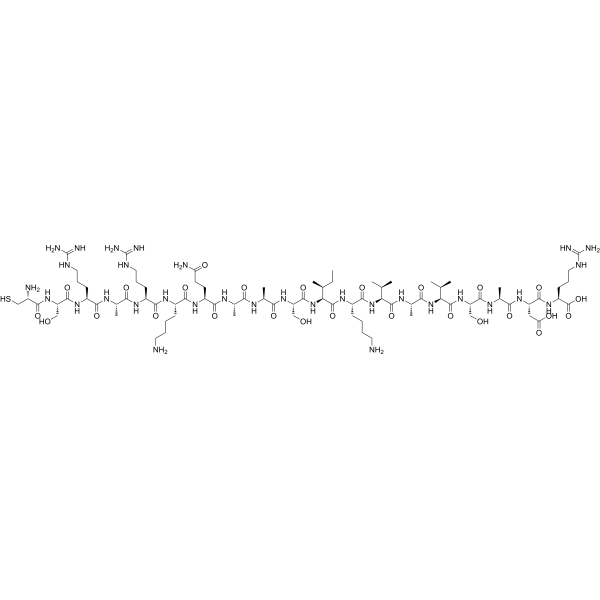
PA22-2 (free acid) (Cys-Laminin A chain 2091-2108) is a peptide that supports neurite outgrowth and stimulates neuronal-like process formation. PA22-2 (free acid) can be used to culture human adenoid cystic carcinoma cells, and in the preparation of peptide-functionalized supported phospholipid bilayers .
loading...
    loading...

