
795 Results for "

Protein structure

" in MedChemExpress (MCE) Product Catalog:
Products (795)

795 Results for "Protein structure" in MCE Product Catalog:

Cat. No.: HY-153108
Purity:  99.62%
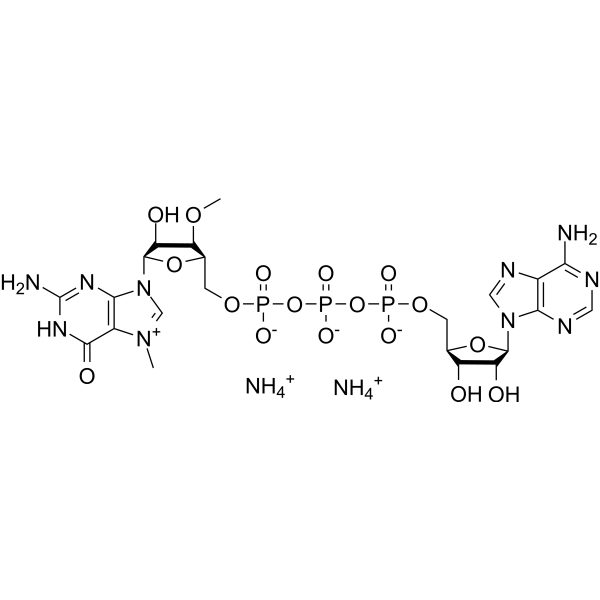
Synonyms: ARCA cap solution (100 mM)
3'-O-Me-m7G(5')ppp(5')A (ARCA cap) solution (100 mM), anti-reverse cap analog, has a special RNA cap structure. 3'-O-Me-m7G(5')ppp(5')A solution (100 mM) improves mRNA translation efficiency and stability, reduces translational inhibition by proteins such as IFIT1, and enables stronger and longer-lasting expression of the target protein. The RNA cap structure is a common feature of mRNAs in some RNA viruses and eukaryotes, and it serves as a signal for translation initiation .
loading...
    loading...
Cat. No.: HY-W011165
CAS No.: 52123-30-5
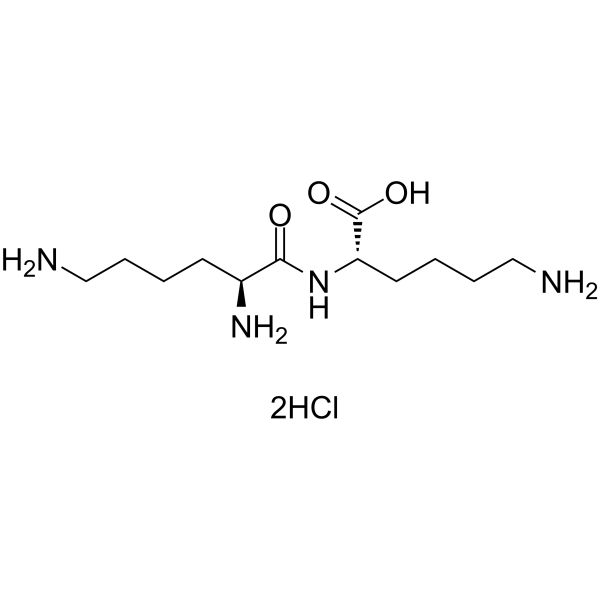
Synonyms: L-Lysyl-L-lysine dihydrochloride
Lysyllysine dihydrochloride (L-Lysyl-L-lysine dihydrochloride) is an orally active PepT1 substrate. Lysyllysine dihydrochloride enhances whole-body protein synthesis, improves intestinal structure, alleviates intestinal mucosal inflammation, and exhibits higher lysine bioavailability in neonatal piglets with PN-induced intestinal atrophy. Lysyllysine dihydrochloride inhibits the growth of axenic cyanobacterial strains and induces their cell lysis. Lysyllysine dihydrochloride can be used in studies related to intestinal atrophy and metabolism .
loading...
    loading...
Cat. No.: HY-NP041
Synonyms: Bovine Serum Albumin-PE
BSA Protein-PE (Bovine Serum Albumin-PE) is a biochemical reagent conjugated to fluorescein PE (Ex=565 nm; Em=578 nm). BSA Protein-PE can be used to label or detect specific antigens, molecules or cellular structures .
loading...
    loading...
Cat. No.: HY-W106411
CAS No.: 71865-37-7
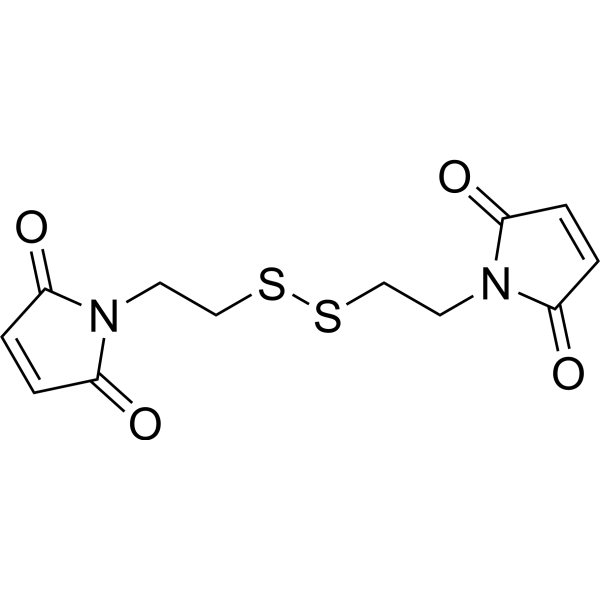
Synonyms: Dithio-bis-maleimidoethane
Research Areas:  

Others

DTME (dithio-bis-maleimidoethane) is a homobifunctional, maleimide crosslinker specifically designed for conjugation between sulfhydryl groups (-SH). DTME, whose molecular structure consists of two maleimide groups connected by an ethylene disulfide bridge, can specifically react with thiol - containing molecules (such as cysteine residues) to form stable covalent bonds. DTME allows crosslinks that can be cleaved with reducing agents such as DTT (HY-15917). DTME is commonly utilized to explore and characterize protein structure, particularly oligomerization, or protein interactions .
loading...
    loading...
Cat. No.: HY-P4882A
Target:  

Amyloid-β

Research Areas:  

Neurological Disease

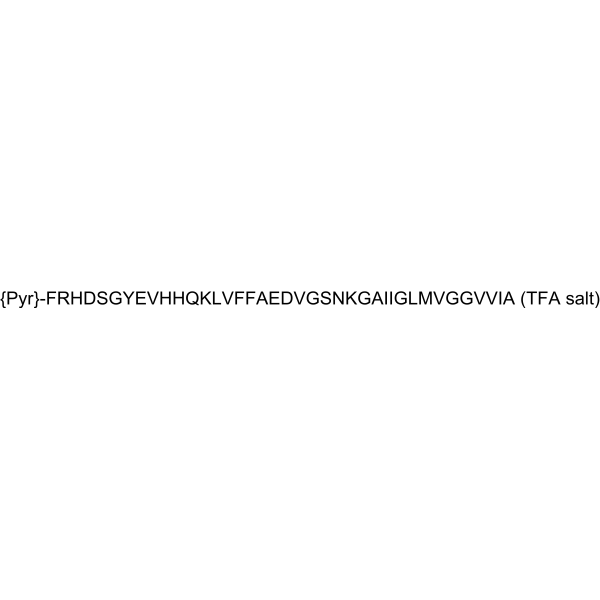
(Pyr3)-Amyloid β-Protein (3-42) TFA is the predominant amyloid β-peptide structure deposited in human brain of Alzheimer's disease and Down's syndrome patients. (Pyr3)-Amyloid β-Protein (3-42) TFA is suggested to accumulate in the brain and to trigger the formation of insoluble amyloid β-peptide deposits .
loading...
    loading...
Cat. No.: HY-E70372
CAS No.: 1607459-82-4
Research Areas:  

Others

SUMO Protease is highly specific for proteins containing small ubiquitin-like modifier (SUMO) tags. SUMO Protease can be used to regulates the proteins splicing, controlls protein structure and function in vitro .
loading...
    loading...
Cat. No.: HY-P10932
Research Areas:  

Neurological Disease

pGk13a is an amphipathic membrane-labeling probe containing an azide group, which can bind to fluorophores. pGk13a enables high-resolution imaging of cell membranes in the ultrastructure expansion microscopy (umExM) technique, facilitating the observation of membrane-associated structures and proteins. pGk13a is applicable to neuronal structure research .
loading...
    loading...
Cat. No.: HY-P2258
Research Areas:  

Others

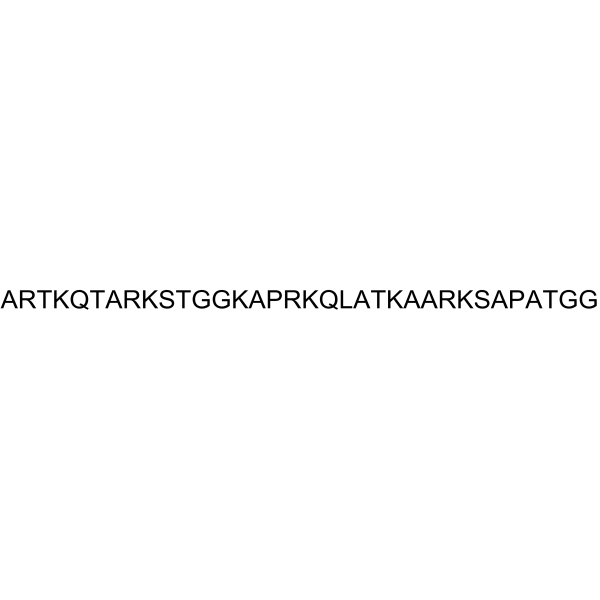
Histone H3 (1-34) is a peptide derived from human histone isotype 3.1. Histones are the main protein components of eukaryotic chromatin. Histone variants and histone modifications modulate chromatin structure, ensuring the precise operation of cellular processes associated with genomic DNA .
loading...
    loading...
Cat. No.: HY-W441330
CAS No.: 533-50-6
L-Erythrulose is a class of biochemical reagents used in glycobiology research. Glycobiology studies the structure, synthesis, biology, and evolution of sugars. It involves carbohydrate chemistry, enzymology of glycan formation and degradation, protein-glycan recognition, and the role of glycans in biological systems. This field is closely related to basic research, biomedicine, and biotechnology .
loading...
    loading...
Cat. No.: HY-W585874
CAS No.: 5746-03-2
Target:  

EAAT Apoptosis

Nε-(Carboxyethyl) lysine is an advanced glycation end product (AGE). Nε-(Carboxyethyl) lysine induces cross-linking between proteins, thereby affecting protein structure and function and causing protein denaturation. Nε-(Carboxyethyl) lysine binds to the RAGE receptor, affects cell signal transduction, and regulates processes such as inflammatory responses, cell proliferation, and apoptosis. Nε-(Carboxyethyl) lysine affects glutamate transporters, reduces glutamate uptake and S100β protein secretion, influences neurotransmission in the nervous system, and exhibits diabetes-related neurotoxicity .
loading...
    loading...
Cat. No.: HY-E70081
Research Areas:  

Others

mRNA Cap 2'-O-methyltransferase uses S-adenosylmethionine (SAM) as a methyl donor to add a methyl group at the 2'-O position of the first nucleotide at the 5’ end of Cap-0 mRNA, resulting in Cap-1 structure. Cap-1 structure promotes translation efficiency, increasing subsequent protein expression .
loading...
    loading...
Cat. No.: HY-154818
Synonyms: Bovine Serum Albumin, Acetylated
BSA Protein, Acetylated (Bovine Serum Albumin, Acetylated) is a polypeptide of known structure with strong antigenicity. BSA Protein, Acetylated produced a significant immune response, validating the accuracy and reliability of the experimental method. BSA Protein, Acetylated can be used as a positive control substance in ELISA or WB experiments, and can be used in experiments with acetylated lysine monoclonal or polyclonal antibodies. BSA Protein, Acetylated also improves encapsulation efficiency at low concentrations of PLGA, a polymer for biopharmaceutical delivery with biocompatibility, degradability, and controlled release properties .
loading...
    loading...
Cat. No.: HY-W009877
CAS No.: 92-91-1
4-Acetylbiphenyl (ACBP) is a biphenyl compound that can be used as a probe molecule to study the structure and function of proteins and to study the properties of lipid membranes .
loading...
    loading...
Cat. No.: HY-D2317
HaloFlipper 30 is a fluorescent probe that covalently reacts with HaloTag fusion proteins to form an ester bond, which allows the probe to be stably attached to membrane structures. HaloFlipper 30 has high specificity, precision and good cell permeability .
loading...
    loading...
Cat. No.: HY-W250181
CAS No.: 148616-91-5
Synonyms: Octyl β-D-thiomaltopyranoside
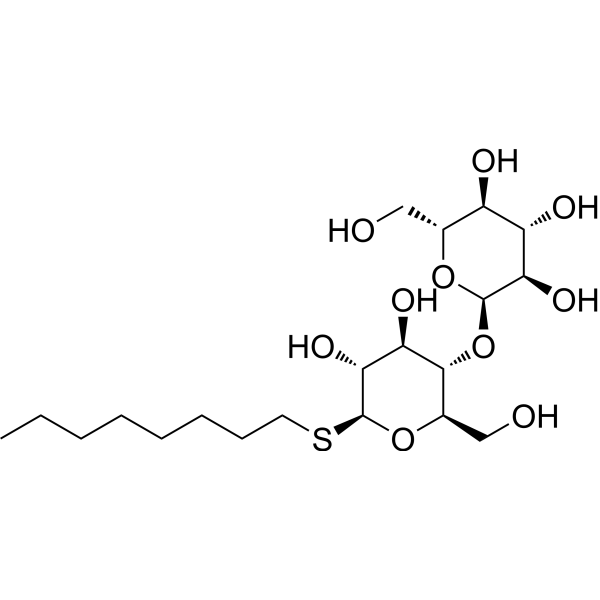
Octyl thiomaltoside (OTM) is a nonionic detergent commonly used in the purification and crystallization of membrane proteins. It belongs to the family of maltoside detergents and has a hydrophilic head group and a lipophilic tail group, enabling it to interact with water-soluble and membrane-bound proteins. OTMs are known for their ability to solubilize integral membrane proteins without disrupting their structure or function, making them an invaluable tool in biochemical and biophysical research. In addition to protein research, OTMs are used in a variety of other applications, including drug delivery systems, nanotechnology, and diagnostic analysis.
loading...
    loading...
Cat. No.: HY-12480
CAS No.: 1152107-25-9
Purity:  98.62%
Synonyms: GSK 1322322
Target:  

Bacterial

Research Areas:  

Infection

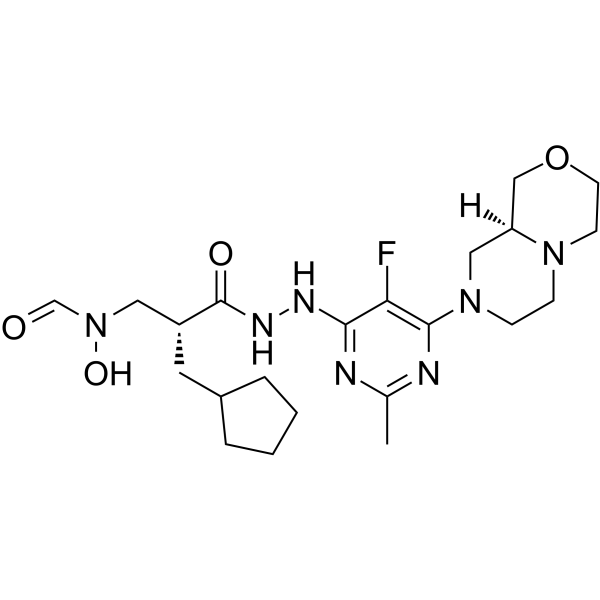
Lanopepden (GSK 1322322) is a peptide deformylase (PDF) inhibitor. Lanopepden exerts antibacterial activity by inhibiting the activity of PDF and preventing the correct synthesis of bacterial proteins. Lanopepden can be used for the research of acute bacterial skin and skin structure infections .
loading...
    loading...
Cat. No.: HY-W776833
CAS No.: 384342-58-9
Synonyms: Otmpmms-15N,d15
MTSSL- 15N,d15-1 (Otmpmms- 15N,d15) is the deuterium and 15N-labeled MTSSL (HY-130509). MTSSL (Otmpmms) is a highly reactive thiol-specific spin label that can be used to label thiol residues in proteins for the determination of protein structure and dynamics, as well as studies on protein-protein interactions. MTSSL serves as a nitroxide labeling reagent for cysteine residues in recombinant mouse prion protein (moPrP C) mutants. MTSSL can be applied in studies of transmissible spongiform encephalopathies (prion diseases) .
loading...
    loading...
Cat. No.: HY-157659
CAS No.: 1422389-91-0
Target:  

WDR5

Research Areas:  

Others

WDR5-MLL1 antagonist 1 (compound 47) is a compound optimized through protein crystal structure guidance. It has stronger antagonistic activity against WDR5-MLL interaction with a dissociation constant (Kd) of 0.3μM.
loading...
    loading...
Cat. No.: HY-166976
CAS No.: 116883-09-1
Trifucosyllacto-N-hexaose is a class of biochemical reagents used in glycobiology research. Glycobiology studies the structure, synthesis, biology, and evolution of sugars. It involves carbohydrate chemistry, enzymology of glycan formation and degradation, protein-glycan recognition, and the role of glycans in biological systems. This field is closely related to basic research, biomedicine, and biotechnology .
loading...
    loading...
Cat. No.: HY-177767
CAS No.: 960294-74-0
Research Areas:  

Others

EY-CBS is a synthetic and rigid cross linker. EY-CBS reacts selectively with cysteines in a-helices, to stabilize the connecting helix. EY-CBS can be used for the study of the structural stability of protein polypeptides .
loading...
    loading...

