65 Results for "

drinking

" in MedChemExpress (MCE) Product Catalog:
Products (65)

65 Results for "drinking" in MCE Product Catalog:

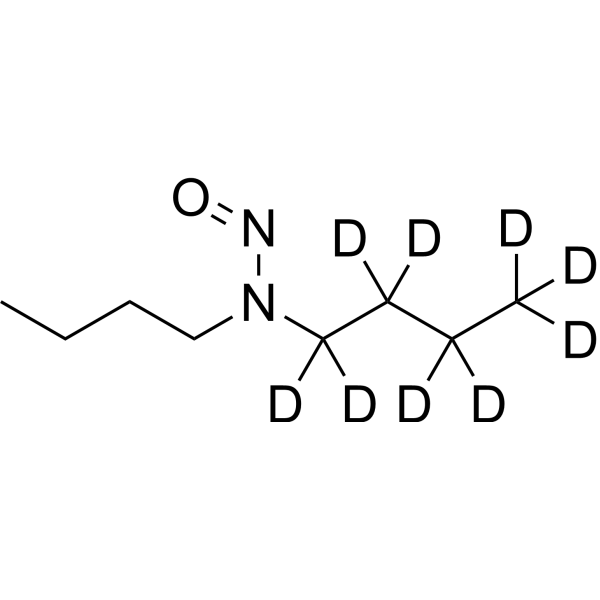
Art. -Nr.: HY-131113S1
CAS. Nr.: 2975202-09-4
Synonyms: N-Nitroso-di-n-butylamine-d9
N-Nitrosodibutylamine-d9 is the deuterium labeled N-Nitrosodibutylamine . N-Nitrosodibutylamine (N-Nitroso-di-n-butylamine) is a nitrosamine enriched in the drinking water .
loading...
    loading...
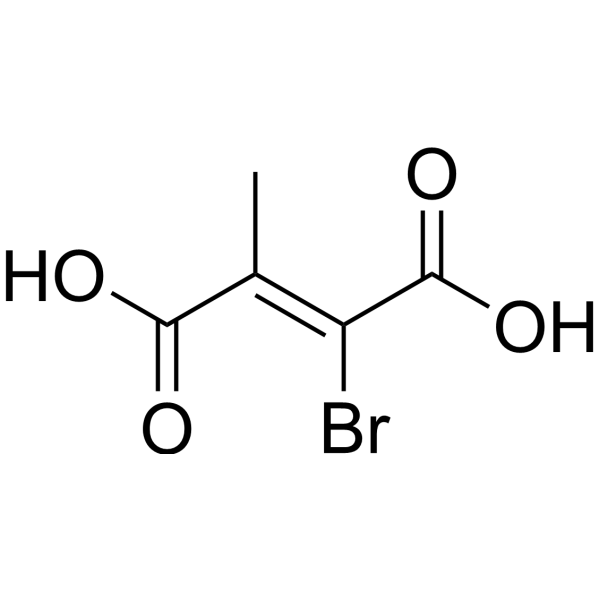
Art. -Nr.: HY-133656
CAS. Nr.: 23366-89-4
Synonyms: cis-2-Bromo-3-methylbutenendioic acid
Forschungsgebiete:  

Others

(Z)-2-Bromo-3-methyl-2-butenedioic acid, one of brominated haloacids, is a disinfection byproduct (DBP) at in finished drinking waters .
loading...
    loading...
Art. -Nr.: HY-131113R
CAS. Nr.: 924-16-3
Synonyms: N-Nitroso-di-n-butylamine (Standard)
Forschungsgebiete:  

Others

N-Nitrosodibutylamine (Standard) is the analytical standard of N-Nitrosodibutylamine. This product is intended for research and analytical applications. N-Nitrosodibutylamine (N-Nitroso-di-n-butylamine) is a nitrosamine enriched in the drinking water .
loading...
    loading...
Art. -Nr.: HY-120144
CAS. Nr.: 1594121-16-0
Target:  

Opioid Receptor

Forschungsgebiete:  

Neurological Disease

SR-8993 is a highly selective nociceptin receptor agonist that can penetrate the blood-brain barrier and has the activity of reducing alcohol intake and relieving withdrawal anxiety. SR-8993 has shown mild anxiolytic effects in animal models and can effectively reverse anxiety caused by acute alcohol withdrawal. SR-8993 further reduces restricted drinking, operant responses for alcohol, and increased drinking induced by long-term intermittent exposure to alcohol. SR-8993 also reduces stress- and cue-related alcohol-seeking relapse .
loading...
    loading...
Art. -Nr.: HY-23399R
CAS. Nr.: 631-64-1
Forschungsgebiete:  

Others

Dibromoacetic acid (Standard) is the analytical standard of Dibromoacetic acid. This product is intended for research and analytical applications. Dibromoacetic acid, a haloacetic acid found in drinking water as a disinfection by-product, can cause many adverse effects, including immunotoxicity and apoptosis .
loading...
    loading...
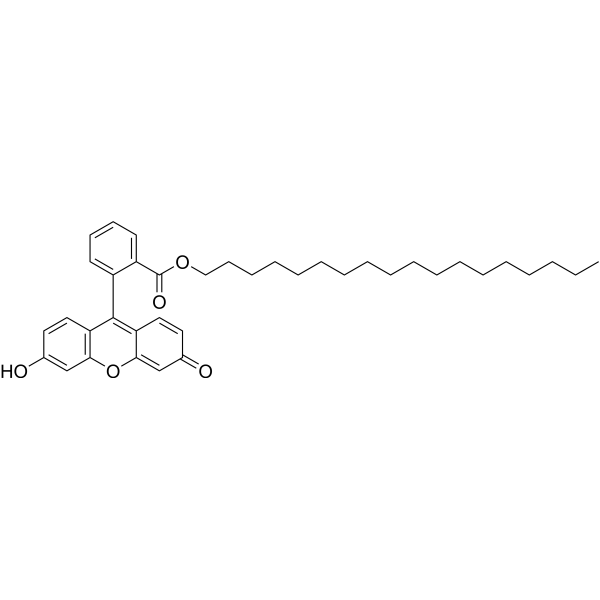
Art. -Nr.: HY-134564
CAS. Nr.: 138833-46-2
Fluorescein octadecyl ester is a lipophilic fluorescent reagent is immobilized in a plasticized PVC membrane. Fluorescein octadecyl ester can reversibly recognize alcohol molecules and can be used to determine the concentration of ethanol in alcoholic drinks. Fluorescein octadecyl ester can be used as acceptor to make optrode membrane for the determination of picric acid .
loading...
    loading...
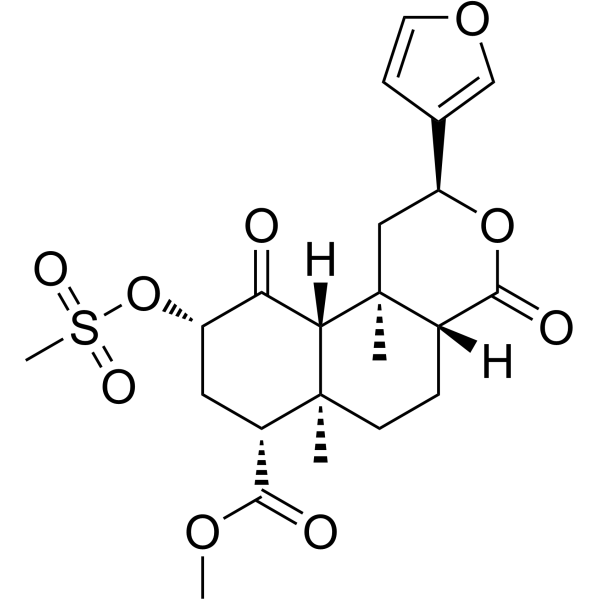
Art. -Nr.: HY-126910
CAS. Nr.: 862073-79-8
Target:  

Opioid Receptor

Forschungsgebiete:  

Metabolic Disease

Mesyl Salvinorin B is a potent and selective kappa opioid receptor (KOP-r) agonist. Mesyl Salvinorin B prevents the ADE (Alcohol deprivation effect) in mice. Mesyl Salvinorin B dose-dependently reduces alcohol intake and preference in CED (chronic escalation drinking) mice .
loading...
    loading...
Art. -Nr.: HY-11084
CAS. Nr.: 387825-78-7
Target:  

Endogenous Metabolite

Forschungsgebiete:  

Neurological Disease

SNAP-7941 is a selective antagonist with anxiolytic, antidepressant and appetite suppressant activities. SNAP-7941 showed promising biological activity in initial animal studies. SNAP-7941 targets the melanin concentrating hormone receptor MCH1 and has significant inhibitory potential. SNAP-7941 was shown to inhibit the centrally induced MCH-induced drinking effect in in vivo studies .
loading...
    loading...
Art. -Nr.: HY-W715850
Synonyms: Ethyl 3-oxohexanoate-d5
Ethyl butyrylacetate-d5 (Ethyl 3-oxohexanoate-d5) is the deuterium labeled Ethyl butyrylacetate (HY-W015487). Ethyl butyrylacetate is an organic compound belonging to the class of esters. Synthesized by the reaction of ethyl acetate, butyric acid and acetic anhydride. Ethyl butyrylacetate has a fruity aroma and is commonly used as a flavoring agent in various food and beverages such as candies, ice cream and soft drinks. It is also used as a fragrance ingredient in perfumes and personal care products. In addition to its use in the food and fragrance industries, Ethyl butyrylacetate is also used in industrial settings, such as in the production of solvents.
loading...
    loading...
Art. -Nr.: HY-N0113BR
CAS. Nr.: 6027-23-2
Synonyms: Ordenina hydrochloride (Standard); Peyocactine hydrochloride (Standard)
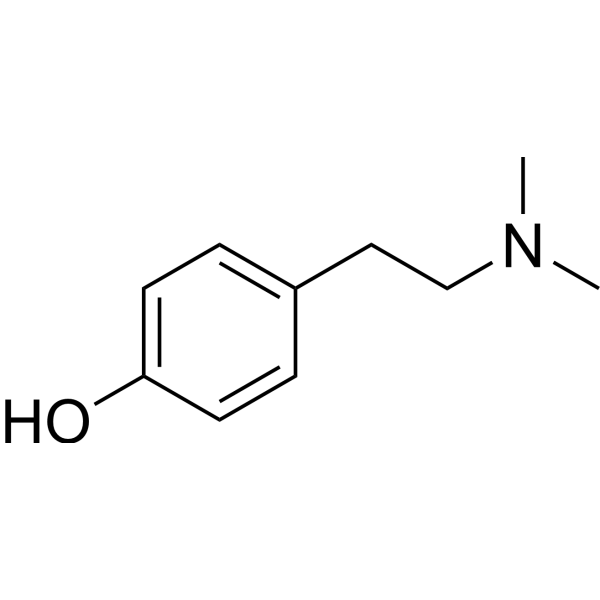
Hordenine hydrochloride (Standard) (Ordenina hydrochloride (Standard); Peyocactine hydrochloride (Standard)) is the analytical standard of Hordenine hydrochloride (HY-N0113B). This product is intended for research and analytical applications. Hordenine hydrochloride (Ordenina hydrochloride; Peyocactine hydrochloride) is a multifunctional alkaloid with oral activity and blood-brain barrier penetration. Hordenine hydrochloride inhibits LPS-induced phosphorylation of p38, JNK, ERK1/2, p65, IκB, and AKT, prevents p65 nuclear translocation, and suppresses inflammatory cytokines and mediators. Hordenine hydrochloride inhibits melanin synthesis in melanocytes and reconstructed epidermis. Hordenine hydrochloride activates the Wnt/β-catenin signaling pathway. Hordenine hydrochloride activates DRD2, acts as a D3R partial agonist, α2A-AR full agonist, and 5-HT2A-R antagonist, and inhibits SERT and DAT. Hordenine hydrochloride inhibits α-synuclein accumulation and ameliorates motor deficits in Parkinson's disease models. Hordenine hydrochloride limits alcohol intake, reduces relapse drinking behavior. Hordenine hydrochloride can be used for research on mastitis, skin pigmentation, acute lung injury, foodborne diseases, hair loss, Parkinson's disease, bacterial infections, and alcohol use disorder .
loading...
    loading...
Art. -Nr.: HY-N0113BS
Synonyms: Ordenina-d6 hydrochloride; Peyocactine-d6 hydrochloride
Hordenine-d6 hydrochloride (Ordenina-d6 hydrochloride; Peyocactine-d6 hydrochloride) is the deuterated-labeled Hordenine hydrochloride (HY-N0113B). Hordenine hydrochloride (Ordenina hydrochloride; Peyocactine hydrochloride) is a multifunctional alkaloid with oral activity and blood-brain barrier penetration. Hordenine hydrochloride inhibits LPS-induced phosphorylation of p38, JNK, ERK1/2, p65, IκB, and AKT, prevents p65 nuclear translocation, and suppresses inflammatory cytokines and mediators. Hordenine hydrochloride inhibits melanin synthesis in melanocytes and reconstructed epidermis. Hordenine hydrochloride activates the Wnt/β-catenin signaling pathway. Hordenine hydrochloride activates DRD2, acts as a D3R partial agonist, α2A-AR full agonist, and 5-HT2A-R antagonist, and inhibits SERT and DAT. Hordenine hydrochloride inhibits α-synuclein accumulation and ameliorates motor deficits in Parkinson's disease models. Hordenine hydrochloride limits alcohol intake, reduces relapse drinking behavior. Hordenine hydrochloride can be used for research on mastitis, skin pigmentation, acute lung injury, foodborne diseases, hair loss, Parkinson's disease, bacterial infections, and alcohol use disorder .
loading...
    loading...
Art. -Nr.: HY-N0113A
CAS. Nr.: 62493-39-4
Synonyms: Ordenina sulfate; Peyocactine sulfate
Hordenine sulfate (Ordenina sulfate; Peyocactine sulfate) is a multifunctional alkaloid with oral activity and blood-brain barrier penetration. Hordenine sulfate inhibits LPS-induced phosphorylation of p38, JNK, ERK1/2, p65, IκB, and AKT, prevents p65 nuclear translocation, and suppresses inflammatory cytokines and mediators. Hordenine sulfate promotes M2 macrophage polarization, restores blood-milk barrier integrity, alleviates oxidative stress by reducing ROS and MDA, and attenuates LPS-induced lung injury and pulmonary edema. Hordenine sulfate inhibits cAMP production, CREB phosphorylation, and MITF expression, thereby suppressing melanin synthesis in melanocytes and reconstructed epidermis. Hordenine sulfate activates the Wnt/β-catenin signaling pathway, promotes dermal papilla cell proliferation and hair shaft elongation, and accelerates hair regeneration. Hordenine sulfate activates DRD2, acts as a D3R partial agonist, α2A-AR full agonist, and 5-HT2A-R antagonist, and inhibits SERT and DAT. Hordenine sulfate inhibits α-synuclein accumulation and ameliorates motor deficits in Parkinson's disease models. Hordenine sulfate limits alcohol intake, reduces relapse drinking behavior, and modulates alcohol-induced conditioned place preference. Hordenine sulfate can be used for research on mastitis, skin pigmentation, acute lung injury, foodborne diseases, hair loss, Parkinson's disease, bacterial infections, and alcohol use disorder .
loading...
    loading...
Art. -Nr.: HY-N0113R
CAS. Nr.: 539-15-1
Synonyms: Ordenina (Standard); Peyocactine (Standard)
Hordenine (Standard) (Ordenina (Standard); Peyocactine (Standard)) is the analytical standard of Hordenine (HY-N0113). This product is intended for research and analytical applications. Hordenine (Ordenina; Peyocactine) is a multifunctional alkaloid with oral activity and blood-brain barrier penetration. Hordenine inhibits LPS-induced phosphorylation of p38, JNK, ERK1/2, p65, IκB, and AKT, prevents p65 nuclear translocation, and suppresses inflammatory cytokines and mediators. Hordenine promotes M2 macrophage polarization, restores blood-milk barrier integrity, alleviates oxidative stress by reducing ROS and MDA, and attenuates LPS-induced lung injury and pulmonary edema. Hordenine inhibits cAMP production, CREB phosphorylation, and MITF expression, thereby suppressing melanin synthesis in melanocytes and reconstructed epidermis. Hordenine activates the Wnt/β-catenin signaling pathway, promotes dermal papilla cell proliferation and hair shaft elongation, and accelerates hair regeneration. Hordenine activates DRD2, acts as a D3R partial agonist, α2A-AR full agonist, and 5-HT2A-R antagonist, and inhibits SERT and DAT. Hordenine inhibits α-synuclein accumulation and ameliorates motor deficits in Parkinson's disease models. Hordenine limits alcohol intake, reduces relapse drinking behavior, and modulates alcohol-induced conditioned place preference. Hordenine can be used for research on mastitis, skin pigmentation, acute lung injury, foodborne diseases, hair loss, Parkinson's disease, bacterial infections, and alcohol use disorder .
loading...
    loading...
Art. -Nr.: HY-111469R
CAS. Nr.: 888213-72-7
Forschungsgebiete:  

Metabolic Disease

CPT-157633 (Standard) is the analytical standard of CPT-157633 (HY-111469). This product is intended for research and analytical applications. CPT-157633, a difluoro-phosphonomethyl phenylalanine derivative, and is a PTP1B inhibitor. CPT-157633 prevents binge drinKing-induced glucose intolerance .
loading...
    loading...
Art. -Nr.: HY-W274652
CAS. Nr.: 5555-22-6
Synonyms: IEM-1770
Target:  

iGluR Drug Derivative

Forschungsgebiete:  

Neurological Disease

Benzylaspartic acid (IEM-1770), a derivative of aspartic acid, is a NMDA agonist. Benzylaspartic acid has antidepressant activity. Benzylaspartic acid blocks alcohol-abstinence syndrome (AAS) development in chronic alcohol drinking rat models. Benzylaspartic acid can be used for depression research .
loading...
    loading...
Art. -Nr.: HY-N20185
Category:  

Extract

Target:  

Others

Quillaia extract is an extract from the soap tree (Quillaja) that can be used as a foaming agent for soft drinks.
loading...
    loading...
Art. -Nr.: HY-W142446
CAS. Nr.: 2008-58-4
Forschungsgebiete:  

Others

2,6-Dichlorobenzamide is a herbicide degradation product that is relatively difficult to degrade .
loading...
    loading...
Art. -Nr.: HY-N0216S7
CAS. Nr.: 406679-59-2
Benzoic acid-d is the deuterium labeled Benzoic acid (HY-N0216). Benzoic acid is an aromatic alcohol existing naturally in many plants and is a common additive to food, drinks, cosmetics and other products. It acts as preservatives through inhibiting both bacteria and fungi .
loading...
    loading...
Art. -Nr.: HY-N0216S6
CAS. Nr.: 222412-89-7
Benzoic acid- 13C7 is the 13C-labeled Benzoic acid (HY-N0216). Benzoic acid is an aromatic alcohol existing naturally in many?plants?and is a common additive to food, drinks, cosmetics and?other?products. It acts as?preservatives?through inhibiting both?bacteria?and?fungi.
loading...
    loading...
Art. -Nr.: HY-116707A
CAS. Nr.: 1178-29-6
Target:  

Others

Forschungsgebiete:  

Neurological Disease

Metoserpate hydrochloride is a reserpine-type sedative for poultry. Metoserpate hydrochloride reduces fear-related tonic immobility responses in chicks, inhibits neonatal imprinting approach behavior in an age-dependent manner, and controls hysteria in pullet flocks after administration via drinking water. Metoserpate hydrochloride can be used in studies related to avian fear, stress, imprinting learning and behavioral regulation .
loading...
    loading...

