640 Results for "

first

" in MedChemExpress (MCE) Product Catalog:
Products (640)

640 Results for "first" in MCE Product Catalog:

Cat. No.: HY-N7833
CAS No.: 24257-10-1
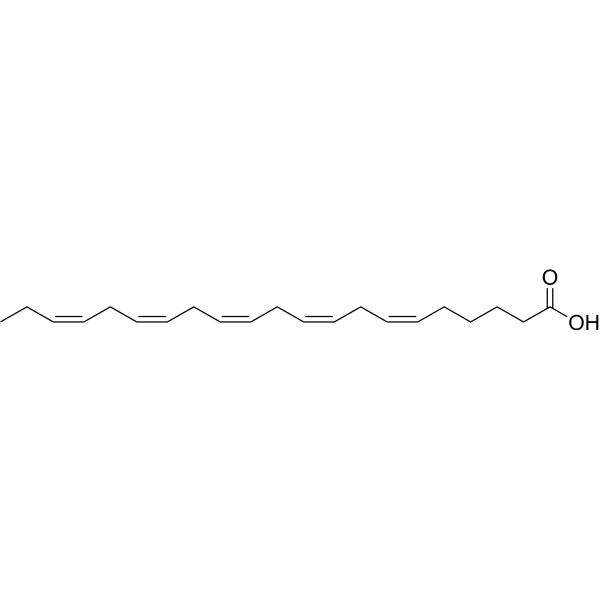
Heneicosapentaenoic Acid (HPA) is a 21:5 omega-3 fatty acid found in trace amounts in the green alga B. pennata and in fish oils. Its chemical composition is similar to eicosapentaenoic acid (EPA), except that a carbon is extended at the carboxy terminus, placing the first double bond at the δ6 position. HPA can be used to study the importance of double bond position in omega-3 fatty acids. It incorporates phospholipids and triacylglycerols in vivo with the same efficiency as EPA and docosahexaenoic acid, and exhibits a strong inhibitory effect on the synthesis of arachidonic acid from linoleic acid. HPA is a poor substrate for prostaglandin H synthase (PGHS) (cyclooxygenase) and 5-lipoxygenase, but retains the ability to rapidly inactivate PGHS.
loading...
    loading...
Cat. No.: HY-10624R
CAS No.: 312637-48-2
THIQ (Standard) is the analytical standard of THIQ (HY-10624). This product is intended for research and analytical applications. THIQ is the first selective agonist of the melanocortin-4 receptor (MC4R), with high affinity and potency for hMC4R (IC50=1.2 nM, EC50=2.1 nM) and rMC4R (IC50=0.6 nM, EC50=2.9 nM). THIQ maintains low potency at MC1R, MC3R and MC5R. THIQ plays a role in eliciting erectile activity in rodents. THIQ acts as a pharmacoperone of the MC4R rescuing the cell surface expression and signaling of some intracellularly retained MC4R mutants .
loading...
    loading...
Cat. No.: HY-A0069AS
CAS No.: 1173020-59-1
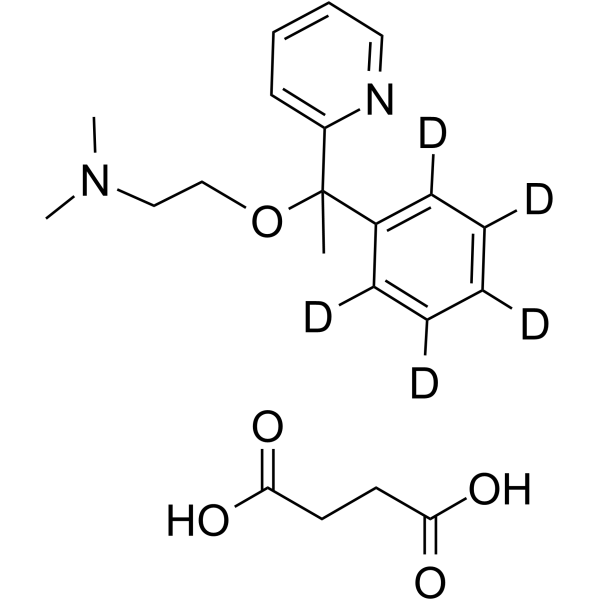
Doxylamine-d5 is deuterium labeled Doxylamine (HY-A0069A). Doxylamine is a first-generation antihistamine and acts as a histamine H1 receptor antagonist. Doxylamine is orally active, possessing analgesic and hypnotic activities. Doxylamine enhances the activities of CYP2B, CYP2A, CYP3A and thyroxine-glucuronosyltransferase via promoting substrate hydroxylation and thyroxine metabolic pathways. Doxylamine decreases serum thyroxine (T4) level and elevates serum thyroid-stimulating hormone (TSH) level. Doxylamine induces liver enlargement and increases the activities of hepatic microsomal cytochrome P450, cytochrome b5 and NADPH-cytochrome c reductase. Doxylamine can be used for the research of nausea, allergy, insomnia .
loading...
    loading...
Cat. No.: HY-W018324
CAS No.: 1123-95-1
Synonyms: 5hmC
5-Hydroxymethylcytosine (5hmC) is an oxidized forms of 5-methylcytosine (5mC) in mammalian DNA. 5-Hydroxymethylcytosine is produced from 5mC in an enzymatic pathway involving three 5mC oxidases, Ten-eleven translocation (TET)1, TET2, and TET3. The conversion of 5mC into 5hmC can be the first step in a pathway leading towards DNA demethylation. 5-Hydroxymethylcytosine is associated with gene transcription and frequently used as a mark to investigate dynamic DNA methylation conversion during mammalian development. 5-Hydroxymethylcytosine can be used for the study of non-small cell lung cancer (NSCLC), neurodegenerative diseases (Alzheimer’s, Parkinson’s) and hematological malignancies (acute myeloid leukemia, myelodysplastic syndromes) .
loading...
    loading...
Cat. No.: HY-W583212
CAS No.: 14354-67-7
Synonyms: ZnMP
Zn (II) Mesoporphyrin IX (ZnMP) is a heme oxygenase inhibitor with photochemical substrate activity. Zn (II) Mesoporphyrin IX specifically inhibits the activity of bone marrow heme oxygenase. In vitro, Zn (II) Mesoporphyrin IX inhibits the growth of erythroid and myeloid progenitor cells in rabbit bone marrow, and blocks the rhG-CSF-induced mobilization of these progenitor cells into the peripheral blood, exhibiting toxicity to hematopoietic growth and progenitor cell production in rabbits. Zn (II) Mesoporphyrin IX undergoes irreversible photochemical decomposition conforming to first-order kinetic characteristics when irradiated with UV-B in 95% ethanol solution. Zn (II) Mesoporphyrin IX can be used in hematopoietic regulation research, but its photolability and toxic effects on the hematopoietic system require attention .
loading...
    loading...
Cat. No.: HY-L035
5,148 compounds

New drug development is a time-consuming and high-cost process. Drug repurposing (also called drug repositioning, reprofiling or re‑tasking) offers various advantages over developing an entirely new drug for a given indication. First, the risk of failure is lower. Second, the time frame for drug development can be reduced. Third, less investment is needed. Approved and clinical drugs, especially after phase I drugs, have identified bioactivities, good pharmacokinetic characteristics and safety which are suitable for drug repurposing.

MCE Drug Repurposing Compound Library contains 5,148 approved drugs and passed phase Ⅰclinical drugs, which have been completed extensive preclinical and clinical studies and have well-characterized bioactivities, safety and bioavailability properties.

Cat. No.: HY-L022M
3,236 compounds

New drug development is a time-consuming and high-cost process. Drug repurposing (also called drug repositioning, reprofiling or re‑tasking) offers various advantages over developing an entirely new drug for a given indication. First, the risk of failure is lower. Second, the time frame for drug development can be reduced. Third, less investment is needed. Approved drugs have identified bioactivities, good pharmacokinetic characteristics and safety which are suitable for drug repurposing.

MCE owns a unique collection of 3,236 approved compounds which have been completed extensive preclinical and clinical studies and have well-characterized bioactivities, safety and bioavailability properties. The package of this library is 96-well microplate with peelable foil seal, which makes the screening process easier and faster.

Cat. No.: HY-L022
3,236 compounds

New drug development is a time-consuming and high-cost process. Drug repurposing (also called drug repositioning, reprofiling or re‑tasking) offers various advantages over developing an entirely new drug for a given indication. First, the risk of failure is lower. Second, the time frame for drug development can be reduced. Third, less investment is needed. Approved drugs have identified bioactivities, good pharmacokinetic characteristics and safety which are suitable for drug repurposing.

MCE owns a unique collection of 3,236 approved compounds which have been completed extensive preclinical and clinical studies and have well-characterized bioactivities, safety and bioavailability properties. MCE FDA-Approved Drug Library is a good tool for drug repurposing which could dramatically accelerate drug development.

Cat. No.: HY-K0360

MCE Mouse CD4+ CD25+ Regulatory T Cell Positive Selection Kit is designed for the isolation of CD4+ CD25+ regulatory T cells (Tregs) from mouse splenic single-cell suspensions. The kit utilizes a two-step isolation strategy. First, CD4 Enrichment Beads are used to deplete non-target cells and enrich CD4+ T cells. Subsequently, CD25 Capture Antibody specifically binds to CD25+ cells, which are then captured by Releasable Magnetic Beads. Following isolation, the magnetic beads are gently detached from the cell surface using Magnetic Beads Release Buffer, yielding label-free CD4+ CD25+ regulatory T cells with no residual magnetic beads.

loading...
    loading...
Cat. No.: HY-103693R
CAS No.: 2809469-05-2
Research Areas:  

Cancer

NAZ2329 (Standard) is the analytical standard of NAZ2329 (HY-103693). This product is intended for research and analytical applications. NAZ2329, the first cell-permeable inhibitor of R5 subfamily of receptor-type protein tyrosine phosphatases (RPTPs), allosterically and preferentially inhibits PTPRZ (IC50=7.5 µM for hPTPRZ1) and PTPRG (IC50=4.8 µM for hPTPRG) over other PTPs. NAZ2329 binds to the active D1 domain and more potently inhibits PTPRZ-D1 fragment (IC50 of 1.1 µM) than the whole intracellular (D1 + D2) fragment (IC50 of 7.5 µM). NAZ2329 can effectively inhibit tumor growth of the glioblastoma cells and suppress stem cell-like properties .
loading...
    loading...
Cat. No.: HY-164986A
Target:  

DNA/RNA Synthesis

Research Areas:  

Others

m3227G(5)ppp(5')m6Am triammonium is the triammonium salt form of m3227G(5)ppp(5')m6Am (HY-164986). m3227G(5)ppp(5')m6Am triammonium is a specific mRNA molecule structure, which is composed of a 3227-methylguanine (m3227G) cap, a triphosphate group and a N6,2'-O-dimethyladenosine. m6Am is a reversible modification located on the first coding nucleotide near the 5' cap of mRNA, that can affect the stability of mRNA .
loading...
    loading...
Cat. No.: HY-A0069R
CAS No.: 562-10-7
Doxylamine succinate (Standard) is the analytical standard of Doxylamine succinate (HY-A0069). This product is intended for research and analytical applications. Doxylamine succinate is a first-generation antihistamine and acts as a histamine H1 receptor antagonist. Doxylamine succinate is orally active, possessing analgesic and hypnotic activities. Doxylamine succinate enhances the activities of CYP2B, CYP2A, CYP3A and thyroxine-glucuronosyltransferase via promoting substrate hydroxylation and thyroxine metabolic pathways. Doxylamine succinate decreases serum thyroxine (T4) level and elevates serum thyroid-stimulating hormone (TSH) level. Doxylamine succinate induces liver enlargement and increases the activities of hepatic microsomal cytochrome P450, cytochrome b5 and NADPH-cytochrome c reductase. Doxylamine succinate can be used for the research of nausea, allergy, insomnia .
loading...
    loading...
Cat. No.: HY-A0069S
CAS No.: 1216840-94-6
Doxylamine-d5 succinate is deuterium labeled Doxylamine succinate (HY-A0069A). Doxylamine succinate is a first-generation antihistamine and acts as a histamine H1 receptor antagonist. Doxylamine succinate is orally active, possessing analgesic and hypnotic activities. Doxylamine succinate enhances the activities of CYP2B, CYP2A, CYP3A and thyroxine-glucuronosyltransferase via promoting substrate hydroxylation and thyroxine metabolic pathways. Doxylamine succinate decreases serum thyroxine (T4) level and elevates serum thyroid-stimulating hormone (TSH) level. Doxylamine succinate induces liver enlargement and increases the activities of hepatic microsomal cytochrome P450, cytochrome b5 and NADPH-cytochrome c reductase. Doxylamine succinate can be used for the research of nausea, allergy, insomnia .
loading...
    loading...
Cat. No.: HY-L090
2,569 compounds

Transcription is the essential first step in the conversion of the genetic information in the DNA into protein and the major point at which gene expression is controlled. Transcription of protein-coding genes is accomplished by the multi-subunit enzyme RNA polymerase II and an ensemble of ancillary proteins, called transcription factors (TFs). Transcription factors play an important role in the long-term regulation of cell growth, differentiation and responses to environmental cues. Deregulated transcription factors contribute to the pathogenesis of a plethora of human diseases, ranging from diabetes, inflammatory disorders and cardiovascular disease to many cancers, and thus these proteins hold great therapeutic potential.

MCE offers a unique collection of 2,569 compounds with validated transcription factor targets modulating properties. MCE transcription factor-targeted compound library is an effective tool for researching transcription factors as drug targets as well as modulation of TFs for different therapeutic applications.

Cat. No.: HY-L066
3,750 compounds

New drug development is a time-consuming and high-cost process. Drug repurposing (also called drug repositioning, reprofiling or retasking) offers various advantages over developing an entirely new drug for a given indication. First, the risk of failure is lower. Second, the time frame for drug development can be reduced. Third, less investment is needed. Approved drugs and pharmacopoeia collected compounds have identified bioactivities, good pharmacokinetic characteristics and safety which are suitable for drug repurposing.

MCE owns a unique collection of 3,750 compounds from approved institutions such as FDA, EMA, NMPA, PMDA, etc. or pharmacopoeia such as USP, BP, JP, etc. These compounds have well-characterized bioactivities, safety and bioavailability properties. MCE FDA Approved & Pharmacopeial Drug Library is a good tool for drug repurposing which could dramatically accelerate drug development.

Cat. No.: HY-159520
CAS No.: 2731294-23-6
Synonyms: Ofirnoflast; HT-6184
Ofirnoflastum (Ofirnoflast) is an orally active first-in-class allosteric NEK7 inhibitor with an IC50 of 46 nM. Ofirnoflastum binds an allosteric site adjacent to NEK7’s ATP-binding pocket, induces conformational shifts, disrupts NEK7-NLRP3 binding, blocks NLRP3 inflammasome assembly, spares NEK7’s physiological functions, and suppresses caspase-1, caspase-8, NF-κB, and TNF activity. Ofirnoflastum reduces pro-inflammatory cytokine production, suppresses ASC specks, IL-1β release, pyroptotic cell death, and leukemic burden, induces apoptosis and erythroid differentiation, restores hematopoiesis, and improves outcomes in colitis models. Ofirnoflastum can be used for the research of myelodysplastic syndromes, chronic myelomonocytic leukemia, and acute myeloid leukemia .
loading...
    loading...
Cat. No.: HY-P5325
CAS No.: 505070-05-3
Target:  

Bcl-2 Family

Research Areas:  

Others

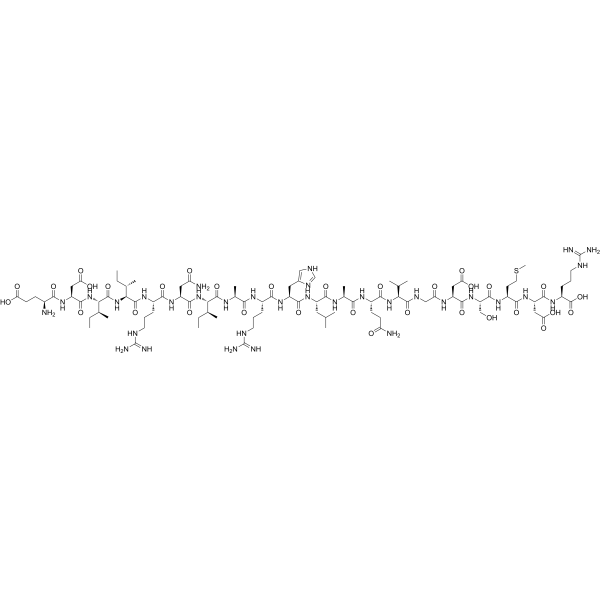
Bid BH3 (80-99) is a biological active peptide. (BID is a pro-apoptotic member of the 'BH3-only' (BOPS) subset of the BCL-2 family of proteins that constitute a critical control point in apoptosis. Bid is the first of the BOPs reported to bind and activate Bcl-2, Bax, and Bak. Bid serves as a death-inducing ligand that moves from the cytosol to the mitochondrial membrane to inactivate Bcl-2 or to activate Bax.Pyroglutamyl (pGlu) peptides may spontaneously form when either Glutamine (Q) or Glutamic acid (E) is located at the sequence N-terminus. The conversion of Q or E to pGlu is a natural occurrence and in general it is believed that the hydrophobic γ-lactam ring of pGlu may play a role in peptide stability against gastrointestinal proteases. Pyroglutamyl peptides are therefore considered a normal subset of such peptides and are included as part of the peptide purity during HPLC analysis.)
loading...
    loading...
Cat. No.: HY-P5325A
Target:  

Bcl-2 Family

Research Areas:  

Others

Bid BH3 (80-99) acetate is a biological active peptide. (BID is a pro-apoptotic member of the 'BH3-only' (BOPS) subset of the BCL-2 family of proteins that constitute a critical control point in apoptosis. Bid is the first of the BOPs reported to bind and activate Bcl-2, Bax, and Bak. Bid serves as a death-inducing ligand that moves from the cytosol to the mitochondrial membrane to inactivate Bcl-2 or to activate Bax.Pyroglutamyl (pGlu) peptides may spontaneously form when either Glutamine (Q) or Glutamic acid (E) is located at the sequence N-terminus. The conversion of Q or E to pGlu is a natural occurrence and in general it is believed that the hydrophobic γ-lactam ring of pGlu may play a role in peptide stability against gastrointestinal proteases. Pyroglutamyl peptides are therefore considered a normal subset of such peptides and are included as part of the peptide purity during HPLC analysis.)
loading...
    loading...
Cat. No.: HY-L145
930 compounds

The majority of hypertensive patients have primary (or essential) hypertension, that is, hypertension in which secondary causes are not present. Management aims to control arterial pressure, prevent end-organ damage (cerebrovascular, cardiovascular, and renal), and reduce the risk of premature death.

Antihypertensive drugs may be divided into two broad groups, the first group being those which directly or indirectly block the renin–angiotensin system (RAS), for example, ACEIs, angiotensin receptor antagonists (ARAs), direct renin inhibitors (DRIs), and to a lesser extent β-blockers. The second group of drugs works by increasing water and sodium excretion, thereby reducing intravascular volume, or by causing vasodilatation through non-RAS pathways, for example, diuretics and calcium channel blockers (CCBs).

MCE offers a unique collection of 930 compounds with identified and potential antihypertensive activity. MCE Antihypertensive Compound Library is critical for antihypertensive drug discovery and development.

Cat. No.: HY-183309
Target:  

FXR 17β-HSD

Research Areas:  

Inflammation/Immunology

FXR/HSD17B13-modulator-2 is a dual FXR activator and HSD17B13 inhibitor with human FXR EC50 of 128 nM, human HSD17B13 IC50 of 0.18 μM, high selectivity over related nuclear receptors and HSD17B isoforms, and oral effectiveness.FXR/HSD17B13-modulator-2 alleviates fatty liver, regulates lipid metabolism, reduces inflammation, and attenuates hepatic fibrosis.FXR/HSD17B13-modulator-2 is the first non-carboxylic acid dual FXR/HSD17B13 modulator.FXR/HSD17B13-modulator-2 can be used for the research of metabolic dysfunction-associated steatohepatitis .
loading...
    loading...

