115 Results for "

MEK pathways

" in MedChemExpress (MCE) Product Catalog:
Products (115)

115 Results for "MEK pathways" in MCE Product Catalog:

Cat. No.: HY-120412
CAS No.: 1350545-09-3
Target:  

EGFR Apoptosis

Research Areas:  

Cancer

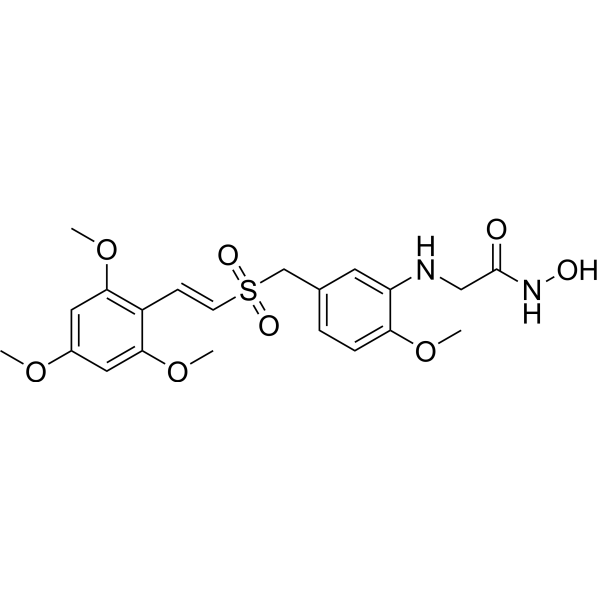
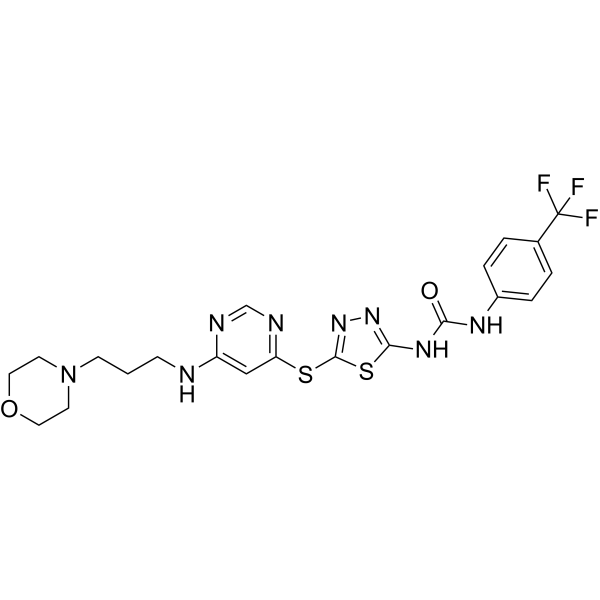
SKLB188 is an orally active and potent epidermal growth factor receptor (EGFR) inhibitor (IC50=5 nM). SKLB188 suppresses MEK/Erk and Akt/mTOR signaling pathways to inhibit head and neck squamous cell carcinoma (HNSCC) proliferation and induce caspase-dependent apoptosis. SKLB188 is promising for research of EGFR-overexpressing solid tumors .
loading...
    loading...
Cat. No.: HY-P11130
CAS No.: 322644-72-4
Target:  

Akt ERK PI3K MEK

Research Areas:  

Neurological Disease

LQEQ-19 (mouse, rat) is a VGF derived peptide that exerts neuroprotective effects. LQEQ-19 (mouse, rat) activates the PI3K/Akt and MEK/ERK signaling pathways by promoting phosphorylation of Akt and ERK1/2. LQEQ-19 (mouse, rat) is commonly used in the study of neurological conditions .
loading...
    loading...
Cat. No.: HY-157740
Target:  

HDAC

Research Areas:  

Cancer

XSJ-10 is a HDAC inhibitor containing a RAS/RAF protein interfering unit, with IC50s of 0.05 and 0.04 μM in PANC-1 cells and HT-29 cells. XSJ-10 can effectively induce the apoptosis of cancer cells and suppress the tumor by strongly inhibiting the RAS-RAF-MEK-ERK signaling pathway and the acetylation level of HDAC3 .
loading...
    loading...
Cat. No.: HY-B0185S
CAS No.: 851528-10-4
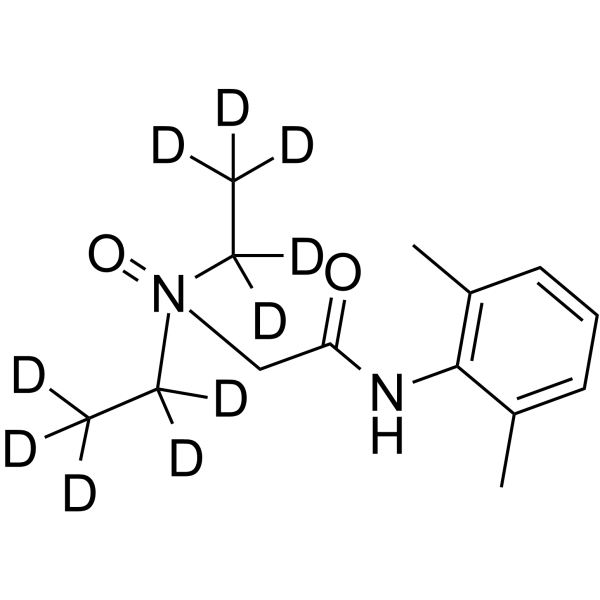
N-Oxide Lidocaine-d10 is the deuterium labeled Lidocaine. Lidocaine (Lignocaine) inhibits sodium channels involving complex voltage and using dependence . Lidocaine decreases growth, migration and invasion of gastric carcinoma cells via up-regulating miR-145 expression and further inactivation of MEK/ERK and NF-κB signaling pathways. Lidocaine is an amide derivative and has potential for the research of ventricular arrhythmia .
loading...
    loading...
Cat. No.: HY-B0185G
CAS No.: 137-58-6
Synonyms: Lignocaine (GMP)
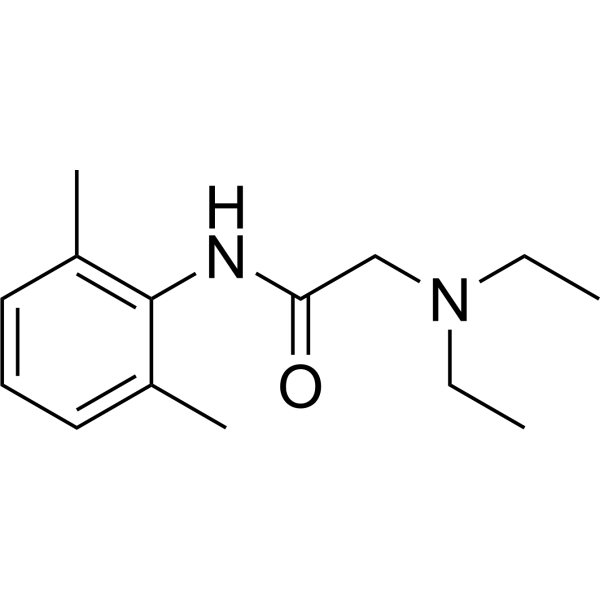
Lidocaine (GMP) is Lidocaine (HY-B0185) produced by using GMP guidelines. GMP small molecules work appropriately as an auxiliary reagent for cell therapy manufacture. Lidocaine inhibits sodium channels involving complex voltage and using dependence . Lidocaine decreases growth, migration and invasion of gastric carcinoma cells via up-regulating miR-145 expression and further inactivation of MEK/ERK and NF-κB signaling pathways. Lidocaine is an amide derivative and has potential for the research of ventricular arrhythmia .
loading...
    loading...
Cat. No.: HY-E70684
Target:  

CDK

Research Areas:  

Neurological Disease Cancer

CDK5 can be mapped to chromosome 7q36 and its expression is upregulated by the transcription factors Fos and CREB through the MEK/ERK pathway and by δFosB. CDK5 plays a vital role in the central nervous system but has functions in other cell types. CDK5 has recently been implicated in diseases, including the development and progression of cancer and neurodegenerative diseases. CDK5/p25NCK Recombinant Human Active Protein Kinase is an ortholog of CDK5 .
loading...
    loading...
Cat. No.: HY-E70685
Target:  

CDK

Research Areas:  

Neurological Disease Cancer

CDK5 can be mapped to chromosome 7q36 and its expression is upregulated by the transcription factors Fos and CREB through the MEK/ERK pathway and by δFosB. CDK5 plays a vital role in the central nervous system but has functions in other cell types. CDK5 has recently been implicated in diseases, including the development and progression of cancer and neurodegenerative diseases. CDK5/p35NCK Recombinant Human Active Protein Kinase is an ortholog of CDK5 .
loading...
    loading...
Cat. No.: HY-120339
CAS No.: 1578247-29-6
STK899704 is a tubulin polymerization inhibitor. STK899704 exhibits broad-spectrum inhibitory activity against various cancer cell lines with IC50 values ​​ranging from 0.2 to 1.0 μM. STK899704 disrupts the mitotic spindle structure, inducing G2/M phase cell cycle arrest. STK899704 inhibits the migration ability of HT29 cells by downregulating the FAK-MEK-ERK signaling pathway, thereby suppressing the expression and activity of MMP-2 and MMP-9. STK899704 activates caspase-3/7/8/9, leading to PARP cleavage and inducing apoptosis. STK899704 induces cellular senescence through the p53 pathway. STK899704 can be used in research on skin cancer, lung cancer, colon cancer, and other cancers .
loading...
    loading...
Cat. No.: HY-179424
CAS No.: 3095636-64-6
PROTAC HIF-1α degrader-2 is a highly efficient and selective PROTAC degrader targeting HIF-1α. PROTAC HIF-1α degrader-2 promotes HIF-1α degradation via the ubiquitin-proteasome pathway by facilitating the formation of a HIF-1α/VHL ternary complex. PROTAC HIF-1α degrader-2 inhibits HeLa cell proliferation, migration, and colony formation, and induces apoptosis. PROTAC HIF-1α degrader-2 reduces p-MEK and p-AKT expression in the MAPK and PI3K/AKT pathways. PROTAC HIF-1α degrader-2 can be used for the study of cervical cancer .
loading...
    loading...
Cat. No.: HY-164474
Target:  

MEK

Research Areas:  

Cancer

DS03090629 is an orally active, ATP-competitive MEK1/2 inhibitor. DS03090629 binds to the ATP-binding pocket of MEK, and this binding is unaffected by phosphorylation status. DS03090629 exhibits high affinity for both MEK and phosphorylated MEK, with Kd values of 0.11 nM and 0.15 nM, respectively. DS03090629 inhibits the MEK1F53L mutant while retaining activity relative to wild-type MEK1. DS03090629 suppresses the MAPK pathway, cell proliferation, and BRAF overexpression-mediated drug resistance in melanoma cells. DS03090629 can be used for research related to melanoma .
loading...
    loading...
Cat. No.: HY-174141
Target:  

MEK mTOR

Research Areas:  

Cancer

LP-65 is a dual inhibitor of MEK (IC50=83.2 nM) and mTOR (IC50=40.5 nM). LP-65 blocks MEK and mTOR signaling pathways and inhibits tumor cell proliferation and migration. LP-65 is promising for research of cancers .
loading...
    loading...
Cat. No.: HY-E70747
Target:  

MEK

Research Areas:  

Cancer

MEK5 Recombinant Human Active Protein Kinase is a MAP/ERK kinase. MEK5 is thought to lie in an uncharacterized MAP kinase pathway, because MEK5 does not phosphorylate the ERK/MAP kinase family members ERK1, ERK2, ERK3, JNK/SAPK, or p38/HOG1, nor will Raf-1, c-Mos, or MEKK1 highly phosphorylate it .
loading...
    loading...
Cat. No.: HY-12031B
CAS No.: 218601-62-8
Target:  

MEK

Research Areas:  

Inflammation/Immunology

(2Z,3Z)-U0126 is a selective inhibitor of MEK1 and MEK2, demonstrating potent antiinflammatory effects by noncompetitively inhibiting AP-1 transcriptional activity with IC50 values of 72 nM for MEK1 and 58 nM for MEK2. (2Z,3Z)-U0126 also inhibits anchorage-independent growth of Ki-ras-transformed rat fibroblasts by blocking both the extracellular signal-regulated kinase and mammalian target of rapamycin pathways. Additionally, (2Z,3Z)-U0126 can undergo isomerization and cyclization, resulting in various products that show reduced affinity for MEK and diminished AP-1 inhibition compared to the parent compound.
loading...
    loading...
Cat. No.: HY-164428
CAS No.: 433966-92-8
Target:  

PKC

Research Areas:  

Cancer

AE 51310 is an OPN4 inhibitor. AE 51310 inhibits the activation of PKC and the downstream BRAF/MEK/ERKs signaling pathway. AE 51310 can be used for cancer research, such as NSCLC .
loading...
    loading...
Cat. No.: HY-N12740
CAS No.: 111216-63-8
Target:  

MEK ERK

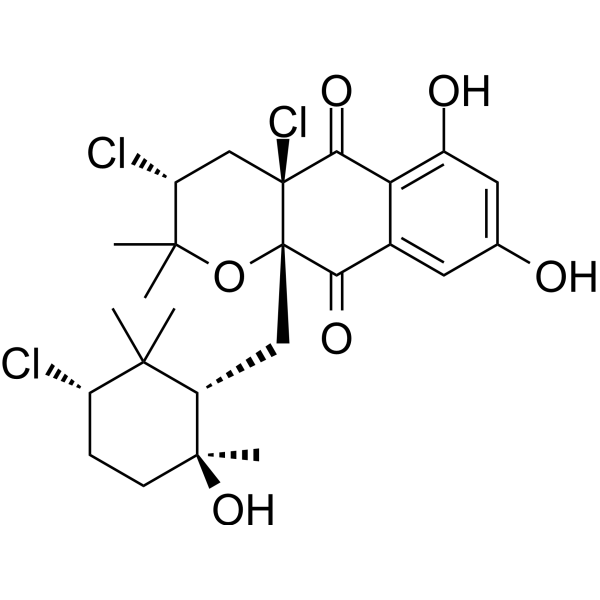
Napyradiomycin B4 is a Napyradiomycin derivative, which inhibits the RANKL-induced MEK-ERK signaling pathway. Napyradiomycin B4 attenuates osteoclastogenesis and prevents alveolar bone destruction in experimental periodontitis .
loading...
    loading...
Cat. No.: HY-W065835
CAS No.: 96562-96-8
2-Bromoaldisine is a pyrrole alkaloid that can be isolated from the Red Sea: marine sponge Stylissa carter. 2-Bromoaldisine inhibits HIV-1 vector infection. 2-Bromoaldisine inhibits Raf/MEK/MAPK pathway .
loading...
    loading...
Cat. No.: HY-153445A
CAS No.: 2845153-35-5
Synonyms: MEK-IN-6 hydrate
Target:  

MEK ERK

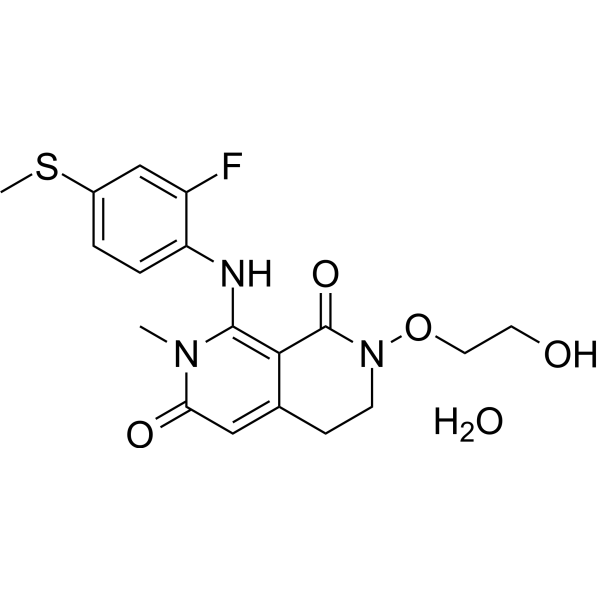
Polfurmetinib hydrate (MEK-IN-6 hydrate) is a MEK inhibitor and inhibits ERK1/2 phosphorylation in A375 cells. Polfurmetinib hydrate can be used for cancer research .
loading...
    loading...
Cat. No.: HY-128634
CAS No.: 2235393-30-1
Target:  

Apoptosis PI3K MEK

Research Areas:  

Cancer

CML-IN-1 (compound 7) is a potent anticancer agent. CML-IN-1 displays very good induced-apoptosis effect for human chronic myeloid leukemia (CML) cell line K562. CML-IN-1 exerts its effect via a significantly reduced protein phosphorylation of PI3K/Akt signal pathway. CML-IN-1 (compound 4) also inhibits cell proliferation by suppressing the MEK/ERK signaling pathway in colorectal cancer .
loading...
    loading...
Cat. No.: HY-169407
CAS No.: 3114773-24-6
Target:  

Akt mTOR MEK ERK Apoptosis

Research Areas:  

Cancer

KT-IN-24 (Compound M17) is a AKT allosteric inhibitor with anti-tumor activity. KT-IN-24 can target the AKT/mTOR and MEK/ERK signaling pathways and inhibit epithelial-mesenchymal transition, which has a synergistic suppressive effect on TNBC, promoting cell apoptosis while inhibiting proliferation and migration when used in combination with Trametinib (HY-10999) .
loading...
    loading...
Cat. No.: HY-B0185BR
CAS No.: 6108-05-0
Synonyms: Lignocaine hydrochloride hydrate (Standard)
Lidocaine (hydrochloride hydrate) (Standard) is the analytical standard of Lidocaine (hydrochloride hydrate). This product is intended for research and analytical applications. Lidocaine (Lignocaine) hydrochloride hydrate inhibits sodium channels involving complex voltage and using dependence. Lidocaine hydrochloride hydrate decreases growth, migration and invasion of gastric carcinoma cells via up-regulating miR-145 expression and further inactivation of MEK/ERK and NF-κB signaling pathways. Lidocaine hydrochloride hydrate is an amide derivative and has potential for the research of ventricular arrhythmia .
loading...
    loading...

