96 Results for "

urinary bladder

" in MedChemExpress (MCE) Product Catalog:
Products (96)

96 Results for "urinary bladder" in MCE Product Catalog:

Cat. No.: HY-A0024R
CAS No.: 124937-51-5
Synonyms: (R)-(+)-Tolterodine (Standard); (+)-Tolterodine (Standard); (R)-Tolterodine (Standard); PNU-200583 (Standard)
Tolterodine (Standard) is the analytical standard of Tolterodine. This product is intended for research and analytical applications. Tolterodine ((R)-(+)-Tolterodine) is a mAChR inhibitor and substrate for cytochrome P450 enzymes. Tolterodine competitively binds acetylcholine, reduces sympathetic excitation, and inhibits involuntary bladder muscle contraction. Tolterodine restores the Nrf2/NF-κB signaling pathway, mediates protection against inflammatory response and ferroptosis. Tolterodine ameliorates LPS (HY-D1056)-induced reactive oxygen species production and lipid oxidation. Tolterodine can be used for the research of urinary tract infections and overactive bladder.
loading...
    loading...
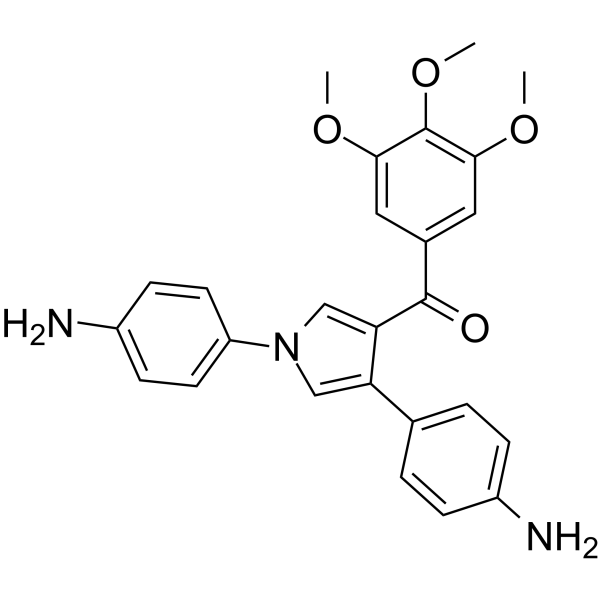
Cat. No.: HY-146358
CAS No.: 2395009-34-2
Target:  

Microtubule/Tubulin

Research Areas:  

Cancer

Anticancer agent 49 (compound 69) is a broad spectrum anticancer agent. Anticancer agent 49 inhibits tubulin polymerization. Anticancer agent 49 shows antiproliferative activity. Anticancer agent 49 has the potential for the research of solid and hematological tumors .
loading...
    loading...
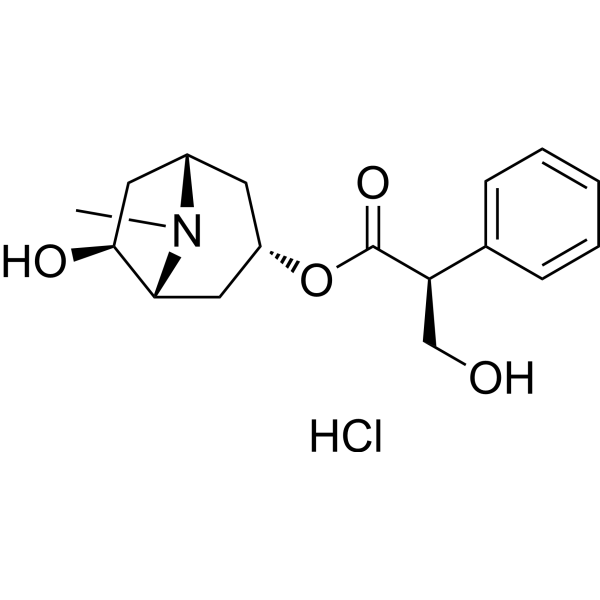
Cat. No.: HY-N0584B
CAS No.: 131674-05-0
Synonyms: 6-Hydroxyhyoscyamine hydrochloride
Target:  

Adrenergic Receptor

Research Areas:  

Inflammation/Immunology Cancer

Anisodamine hydrochloride is an anticholinergic and α1 adrenergic receptor antagonist. Anisodamine hydrochloride can be used for improving blood flow in circulatory disorders such as septic shock, Anisodamine hydrochloride displays a spectrum of pharmacological effects similar to Atropine (HY-B1205) and Sopolamine (HY-B2065) including inhibition of salivation, gastrointestinal and sweat secretion, gastrointestinal motility, respiratory secretion and urinary bladder contraction in vivo .
loading...
    loading...
Cat. No.: HY-119577R
CAS No.: 15876-67-2
Synonyms: Distigmine dibromide (Standard)
Ubretid (Standard) is the analytical standard of Ubretid. This product is intended for research and analytical applications. Ubretid is a potent inhibitor of plasma cholinesterase. Ubretid therefore delays the hydrolysis of suxamethonium and prolongs its action, similar to the effects shown by other anticholinesterase agents, such as pyridostigmine and donepezil. Ubretid has the potential for the research of urinary retention prolongs the effect of suxamethonium. Ubretid is commonly prescribed for the research of myasthenia gravis and for difficulty in emptying the bladder .
loading...
    loading...
Cat. No.: HY-B0267CS
CAS No.: 1189190-67-7
Synonyms: Aroxybutynin-d10
(R)-Oxybutynin-d10 (Aroxybutynin-d10) is deuterium labeled (R)-Oxybutynin. (R)-Oxybutynin (Aroxybutynin) is the racemic isomer of Oxybutynin and an orally active muscarinic receptor antagonist. (R)-Oxybutynin has antispasmodic, antimuscarinic, and anticholinergic activities and competitively antagonizes carbachol-induced contractions. (R)-Oxybutynin can be used to study urinary incontinence caused by neurogenic bladder dysfunction .
loading...
    loading...
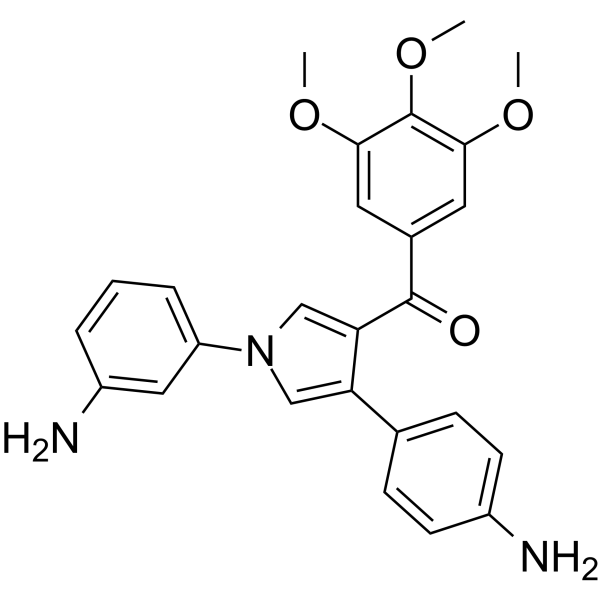
Cat. No.: HY-146357
CAS No.: 2395009-13-7
Target:  

Microtubule/Tubulin

Research Areas:  

Cancer

Anticancer agent 48 (compound 48) is a broad spectrum anticancer agent. Anticancer agent 48 inhibits tubulin polymerization. Anticancer agent 48 shows antiproliferative activity. Anticancer agent 48 shows antitumor activity in vivo. Anticancer agent 48 has the potential for the research of solid and hematological tumors .
loading...
    loading...
Cat. No.: HY-15574R
CAS No.: 152811-62-6
Synonyms: SB-207266 (Standard)
Research Areas:  

Cardiovascular Disease

Piboserod (Standard) is the analytical standard of Piboserod. This product is intended for research and analytical applications. Piboserod is an orally available selective antagonist of the 5-HT4 receptor, with a Ki value of approximately 0.1 nM for human 5-HT4 receptors. Piboserod can competitively bind to the 5-HT4 receptor and block the activation of the 5-HT4 receptor. Piboserod can inhibit the enhancing effect of 5-HT on the nerve-mediated contraction response of the human bladder detrusor muscle. Piboserod is mainly used in the research of urinary system diseases (such as overactive bladder) and cardiovascular diseases (such as chronic heart failure) .
loading...
    loading...
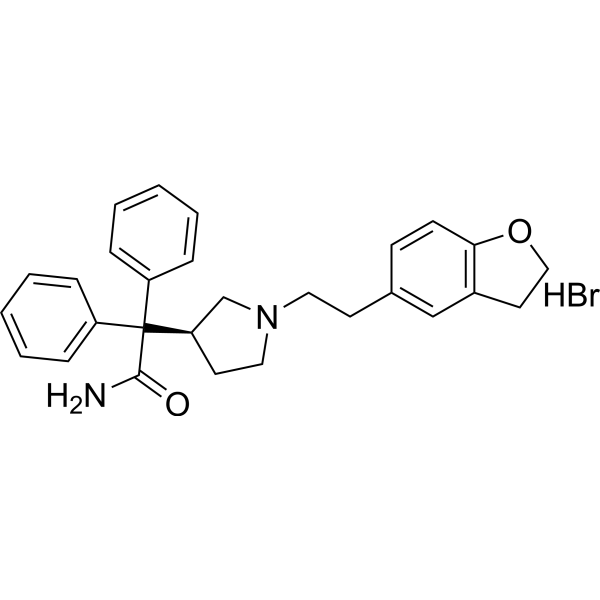
Cat. No.: HY-A0012R
CAS No.: 133099-07-7
Synonyms: UK-88525 hydrobromide (Standard)
Darifenacin (hydrobromide) (Standard) is the analytical standard of Darifenacin (hydrobromide). This product is intended for research and analytical applications. Darifenacin (hydrobromide) is a selective and orally active M3 muscarinic receptor (M3R) antagonist with a pKi of 8.9. Darifenacin (hydrobromide) binds >20-fold more specifically to M3R than to other muscarinic receptors. Darifenacin (hydrobromide) can be used in the study of urinary incontinence and other symptoms of overactive bladder. Darifenacin (hydrobromide) inhibits tumor growth in colorectal cancer cells and has anti-tumor effects .
loading...
    loading...
Cat. No.: HY-P0004R
CAS No.: 50-57-7
Synonyms: Lysine vasopressin (Standard); [Lys8]-Vasopressin (Standard)
Lysipressin (Standard) is the analytical standard of Lysipressin (HY-P0004). This product is intended for research and analytical applications. Lysipressin (Lysine vasopressin ; [Lys8]-Vasopressin ) is a neurohypophyseal nonapeptide with dual cardiovascular regulatory activities of peripheral pressor action and central hypotensive action, and it also regulates pain perception in the body. Lysipressin is an Oxytocin Receptor agonist, with a Ki value of 10.2 nM for porcine OT receptor. Lysipressin stimulates contraction of rabbit bladder smooth muscle via V1-vasopressin receptor. The central hypotensive effect of Lysipressin depends on the sympathetic tone pathway. Lysipressin dose-dependently prolongs tail-flick latency in rats, producing a stable central antinociceptive effect. Lysipressin can be used in studies related to cardiovascular regulation, hypertension and pain .
loading...
    loading...
Cat. No.: HY-14825
CAS No.: 385367-47-5
Synonyms: SVT-40776
Target:  

mAChR

Research Areas:  

Inflammation/Immunology

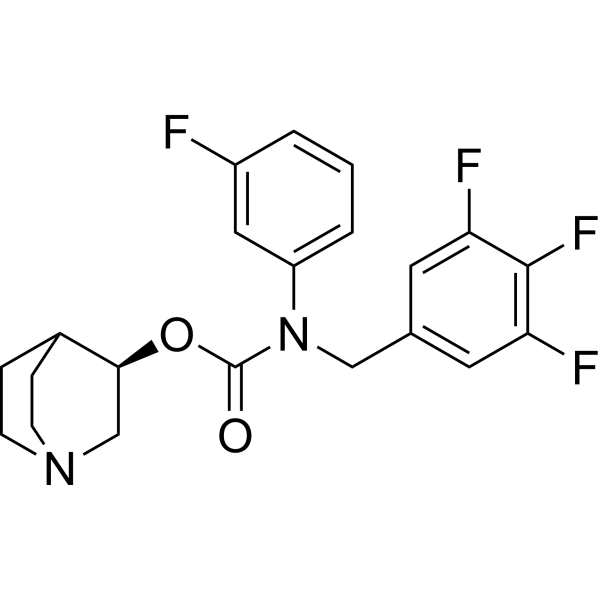
Tarafenacin (SVT-40776) is an orally active, selective M3 muscarinic receptor (M3 muscarinic receptor) antagonist with 203-fold selectivity over the M2 muscarinic receptor. Tarafenacin does not affect atrial contraction, arterial blood pressure or arterial pressure at high doses. Tarafenacin can be used in the research of overactive bladder .
loading...
    loading...
Cat. No.: HY-P1278A
Target:  

Neurokinin Receptor

Research Areas:  

Neurological Disease Endocrinology

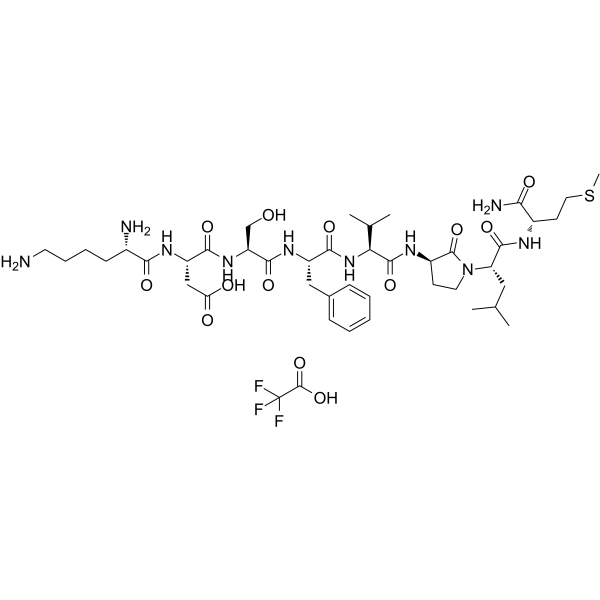
GR 64349 TFA is a selective neurokinin 2 (NK2) receptor agonist. GR 64349 TFA selectively activates the NK-2 receptor subtype. GR 64349 TFA activates tonic and rhythmic bladder contractions of the micturition reflex. GR 64349 TFA does not inhibit rhythmic bladder contraction activation induced by normal saline. GR 64349 TFA induces inward currents .
loading...
    loading...
Cat. No.: HY-B0985R
CAS No.: 136-40-3
Research Areas:  

Neurological Disease

Phenazopyridine (hydrochloride) (Standard) is the analytical standard of Phenazopyridine (hydrochloride). This product is intended for research and analytical applications. Phenazopyridine hydrochlorideis a competitive SARM1 inhibitor, with IC50 145 μM. Phenazopyridine hydrochlorideis a TRPM8 antagonist. Phenazopyridine hydrochloride has a local anesthetic/analgesic effect. Phenazopyridine hydrochlorideis used to relieve painful symptoms of conditions such as cystitis and urethritis. Phenazopyridine hydrochloridecan promote neuronal differentiation and can also be used in the study of traumatic brain injury, peripheral neuropathy and neurodegenerative diseases .
loading...
    loading...
Cat. No.: HY-N1500A
CAS No.: 3391-90-0
Synonyms: (-)-Pulegone
(S)-Pulegone ((-)-Pulegone) is a cytochrome P450 (CYP450) substrate. (S)-Pulegone induces urothelial cytotoxicity, necrosis, regenerative proliferation and urinary bladder tumors in female rats. (S)-Pulegone induces rodent nephropathy, olfactory metaplasia, gastric hyperplasia/perforation at high dose. (S)-Pulegone can be used for the research of urinary bladder and hepatic neoplasms .
loading...
    loading...
Cat. No.: HY-187797
CAS No.: 2408524-70-7
Synonyms: GSK3882347
Target:  

Bacterial

Research Areas:  

Infection

Luxafimloc (GSK3882347) is a FimH inhibitor and anti-infective agent. Luxafimloc inhibits the activity of the FimH adhesin molecule. Luxafimloc reduces the bacterial load in the bladder of mice with acute cystitis induced by Klebsiella pneumoniae infection. Luxafimloc can be used in studies related to urinary tract infections, including cystitis, uncomplicated urinary tract infection, complicated urinary tract infection, catheter-associated urinary tract infection, acute urinary tract infection, recurrent urinary tract infection, and chronic urinary tract infection .
loading...
    loading...
Cat. No.: HY-120473A
CAS No.: 1192347-42-4
Target:  

Adrenergic Receptor

Research Areas:  

Metabolic Disease

TAK-259 hydrochloride is an orally active α1D-adrenergic receptor antagonist with a Ki value of 1.1 nM for human α1D-adrenergic receptors. TAK-259 hydrochloride can inhibit the contraction of isolated bladder strips in rats with bladder outlet obstruction, reduce non-voiding bladder contractions, and improve urinary frequency symptoms. TAK-259 hydrochloride can be used in research related to overactive bladder .
loading...
    loading...
Cat. No.: HY-19122
CAS No.: 141034-43-7
Target:  

Opioid Receptor

Research Areas:  

Metabolic Disease

JO-1870 hydrochloride is a selective opioid receptor agonist. JO-1870 hydrochloride exerts bladder relaxation via activation of opioid receptors. JO-1870 hydrochloride is promising for research of urinary incontinence .
loading...
    loading...
Cat. No.: HY-138983
CAS No.: 227609-66-7
Target:  

Potassium Channel

Research Areas:  

Neurological Disease

A-278637 is a selective KATP channel opening agent with an EC50 of 102 nM. A-278637 does not interact with other ion channels, including L-type calcium channels or other neurotransmitter receptor systems. A-278637 possesses a greater functional selectivity for urinary bladder versus vascular smooth muscle in vivo. A-278637 can be used for the study of overactive bladder .
loading...
    loading...
Cat. No.: HY-W010031S
CAS No.: 1173022-91-7
1-Methyluric acid- 13C4, 15N3 is the 13C and 15N labeled 1-Methyluric acid . 1-Methyluric acid acts on the urinary bladder mucosa and increases the blood glucose, insulin, triglyceride, and cholesterol levels .
loading...
    loading...
Cat. No.: HY-W713147
CAS No.: 317815-83-1
Target:  

Herbicide

Research Areas:  

Others

Thiencarbazone-methyl is a triazole herbicide and also a substrate for microbial degradation. Thiencarbazone-methyl can be degraded by specific fungi and strains. Thiencarbazone-methyl has intrinsic toxicity to the bladder and urinary function. Thiencarbazone-methyl possesses herbicidal activity and can be applied to corn, wheat, lawns and ornamental plants .
loading...
    loading...
Cat. No.: HY-P701232
Purity:  ≥ 95%, as determined by reducing SDS-PAGE.
Synonyms: FGF10; Produced By Fibroblasts Of urinary bladder Lamina Propria; Fibroblast Growth Factor 10; Fibroblast Growth Factor; Keratinocyte Growth Factor 2; LADD3; FGF-10; FGF
Species:  
Rat
Source:  
E. coli
loading...
    loading...

