

948 Results for "

Solid

" in MedChemExpress (MCE) Product Catalog:
Products (948)

948 Results for "Solid" in MCE Product Catalog:

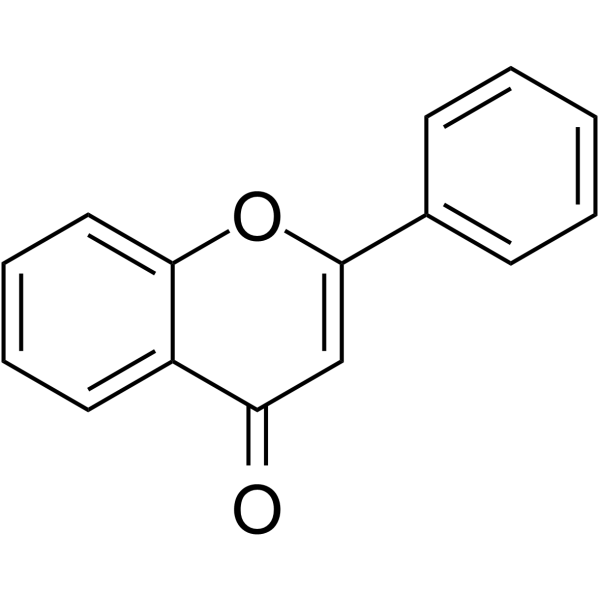
Cat. No.: HY-N2424
CAS No.: 525-82-6
Synonyms: 2-Phenyl-4-chromone
Flavone is an anti-tumor compound that targets cell cycle regulatory proteins (such as cyclin B1) and apoptosis-related factors (such as p21waf1, PIG3). Flavone selectively induces mitochondrial-mediated apoptosis pathways in tumor cells, inhibits cyclin B1 protein expression, upregulates p21waf1, and activates p63/p73 proteins. Flavone has immunomodulatory functions that enhance natural killer cell (NK cell) activity and lymphocyte proliferation. Flavone is used in cancer research, especially for its inhibitory potential in solid tumor models such as esophageal cancer and liver cancer .
loading...
    loading...
Cat. No.: HY-P992361

Research Areas:  

Cancer

HB0030 is a TIGIT inhibitor with antibody-dependent cellular cytotoxicity (ADCC) and complement-dependent cytotoxicity (CDC) activities. HB0030 enhances the expression of activation markers in natural killer (NK) cells, promotes the killing of regulatory T cells (Tregs), and reduces the proportion of FoxP3 + Treg in tumor-infiltrating lymphocytes. The combination of HB0030 with the anti-PD-L1/VEGF bispecific antibody HB0025 further enhances tumor suppression efficacy. HB0030 can be used in studies related to colorectal cancer, pancreatic adenocarcinoma, hepatocellular carcinoma, bladder cancer, breast cancer, non-small cell lung cancer, and advanced solid tumors .
loading...
    loading...
Cat. No.: HY-P992365

Target:  

CCR

Research Areas:  

Cancer

HFB101110 is a human-derived inhibitor and Treg depleter that specifically targets CCR8. It does not bind to the homologous CCR4 receptor and is mainly used in research on solid tumors, renal cell carcinoma and colorectal cancer. HFB101110 blocks hCCL1 binding by interacting with the N-terminal extracellular domain of hCCR8, thereby inhibiting hCCL1-induced calcium influx, chemotaxis and downstream signaling pathways. Meanwhile, HFB101110 can mediate ADCC effects to specifically deplete CCR8-positive cells, including intratumoral Tregs. HFB101110 exhibits favorable anti-tumor activity and pharmacokinetic properties .
loading...
    loading...
Cat. No.: HY-P99682
CAS No.: 1629760-28-6
Synonyms: hLIV22
Target:  

ADC Antibodies

Research Areas:  

Cancer

Ladiratuzumab (hLIV22) is a humanized monoclonal antibody against zinc transporter LIV-1/ZIP6. Ladiratuzumab is conjugated to MMAE (HY-15162) via a cleavable dipeptide linker to synthesize an antibody-drug conjugate (ADC) Ladiratuzumab vedotin (HY-P99683). Ladiratuzumab vedotin selectively targets LIV-1 protein overexpressed on the surface of tumor cells, enters cells through antibody-mediated receptor endocytosis, releases MMAE to inhibit microtubule polymerization, and kills adjacent tumor cells with a bystander effect. Ladiratuzumab can be used in the study of solid tumors such as metastatic triple-negative breast cancer (mTNBC) .
loading...
    loading...
Cat. No.: HY-P11864
Research Areas:  

Cancer

DOTA-SMIC-1014 is a DOTA chelator-conjugated precursor of the c-Met-targeting peptide SMIC-1014 (HY-P11863). DOTA-SMIC-1014 binds to the extracellular domain of c-Met (Kd = 42.83 nM). After radiolabeling to [ 68Ga]Ga-SMIC-1014, DOTA-SMIC-1014 acts as a positron emission tomography (PET) probe that achieves specific tumor uptake in xenografts and functions as a diagnostic probe targeting c-Met. SMIC-1014 can be used in research related to colon cancer, hepatocellular carcinoma, and prostate cancer .
loading...
    loading...
Cat. No.: HY-11001A
CAS No.: 718630-60-5
Target:  

CDK Caspase Apoptosis GSK-3

Research Areas:  

Cancer

PHA-793887 hydrochloride is a CDK inhibitor (with IC50 values of 8 nM for Cdk2, 60 nM for Cdk1, 62 nM for Cdk4, 138 nM for Cdk9). PHA-793887 hydrochloride inhibits purified GSK3β (IC50 79 nM). PHA-793887 hydrochloride reduces the phosphorylation level of nucleophosmin/cdc6, induces G1/G2/M phase arrest, and triggers Apoptosis by activating Caspase-3. PHA-793887 hydrochloride exhibits anticancer activity against leukemia. PHA-793887 hydrochloride can be used in research related to acute leukemia, chronic myeloid leukemia, and advanced/metastatic solid tumors .
loading...
    loading...
Cat. No.: HY-170952
CAS No.: 3053857-55-6
Research Areas:  

Cancer

LYG-409 is a highly potent, selective, and orally active GSPT1 molecular glue degrader. LYG-409 induces GSPT1 degradation in KG-1 cells with a DC50 of 7.87 nM. LYG-409 binds to Cereblon with an IC50 of 191 nM, promotes the formation of the CRBN-GSPT1 ternary complex, and induces proteasome-dependent degradation of GSPT1. LYG-409 exhibits broad antiproliferative and GSPT1-degrading activities in a variety of hematologic and solid tumor cells. LYG-409 can be used for studies related to GSPT1-targeted protein degradation, acute myeloid leukemia, and prostate cancer .
loading...
    loading...
Sgc8c-M
0 Images
Sgc8c-M
Cat. No.: HY-177571
Synonyms: Sgc8c-VcMMAE
Sgc8c-M is a PTK7-targeted aptamer-drug conjugate (ApDC). Sgc8c-M is composed of the classic PTK7-specific aptamer Sgc8c, a cathepsin B (CTSB)-cleavable valine-citrulline (VC)-based linker, and the potent antimitotic agent Monomethyl auristatin E (MMAE) (HY-15162) as the payload. Sgc8c-M inhibits the growth of PTK7-overexpressing cancer cells. Sgc8c-M can be used for the study of PTK7-expressing advanced solid tumors .
loading...
    loading...
Cat. No.: HY-181965
CAS No.: 3023465-20-2
Target:  

Ras ERK p38 MAPK

Research Areas:  

Cancer

KRAS G12C-IN-78 is a selective SWII-binding KRASG12C dual inhibitor targeting both inactive and active states. KRAS G12C-IN-78 rapidly inhibits ERK1/2 phosphorylation, induces covalent adduct formation with endogenous KRASG12C, suppresses MAPK pathway gene expression, and inhibits cellular proliferation in KRASG12C mutant cells. KRAS G12C-IN-78 can be used for the research of KRASG12C mutant solid tumors, including pancreatic ductal adenocarcinoma and non-small cell lung cancer .
loading...
    loading...
Cat. No.: HY-N12931F
Maackia amurensis Lectin (MAA/MAL II)-Biotinylated is a plant lectin modified by biotin. Maackia amurensis Lectin (MAA/MAL II)-Biotinylated has the activity to recognize specific sugar structures, specifically the alpha-2, 3-linked sialic acid (HY-I0400). Maackia amurensis Lectin (MAA/MAL II)-Biotinylated has a very high affinity with avidin or streptavidin and this interaction can be used to fix it to solid surfaces or bind it to other molecules. Maackia amurensis Lectin (MAA/MAL II)-Biotinylated can be used to isolate and purify proteins or other molecules with specific sugar chain structures in affinity chromatography as well as for disease marker discovery and cancer research .
loading...
    loading...
Cat. No.: HY-P991927

Target:  

CD47

Research Areas:  

Cancer

ZL-1201 is a recombinant humanized monoclonal anti-CD47 IgG4 antibody. ZL-1201 disrupt the CD47-SIRPα interaction. ZL-1201 modulates the tumor microenvironment. ZL-1201 promotes tumor-associated macrophage phagocytic activity. ZL-1201 substantially enhances phagocytosis by M2 macrophages, but not by M1 macrophages. ZL-1201 in combination with both mAb and chemotherapy achieves the maximal antitumor effects in a variety of solid tumor models. ZL-1201 can be used in the study of lymphoma, breast cancer, ovarian cancer, head and neck squamous cell carcinoma, and gastric cancer .
loading...
    loading...
Cat. No.: HY-P992146
CAS No.: 3060218-90-5
Synonyms: MYTX-011 Antibody; Q-397

Research Areas:  

Cancer

Zevontabart (MYTX-011 Antibody; Q-397) is a pH-dependent anti-c-MET antibody. Zevontabart regulates the trafficking process of c-MET to reduce receptor recycling, and enhances its own endocytosis and accumulation in c-MET-expressing cells. Zevontabart induces cytotoxicity in solid tumor cells and exerts anti-tumor activity in a non-small cell lung cancer xenograft mouse model. Zevontabart can be used to synthesize ADC, such as: MYTX-011. Zevontabart can be used in studies related to non-small cell lung cancer, with its corresponding isotype control being Human IgG1 kappa, Isotype Control (HY-P99001) .
loading...
    loading...
Cat. No.: HY-P992389

Target:  

LILRB

Research Areas:  

Cancer

IO-202 is a high-affinity LILRB4/ILT3 binder and myeloid checkpoint inhibitor. IO-202 blocks APOE binding and LILRB4 activation to reverse T-cell suppression and enhance T-cell cytotoxicity, while eliminating LILRB4-high-expressing leukemic blasts via ADCC and ADCP mechanisms. IO-202 promotes dendritic cell maturation and antigen presentation, reshapes the phenotype of tumor-associated macrophages, and reduces myeloid-derived suppressor cells. IO-202 is widely applicable to research on relapsed/refractory acute myeloid leukemia (AML), chronic myelomonocytic leukemia (CMML), and solid tumors .
loading...
    loading...
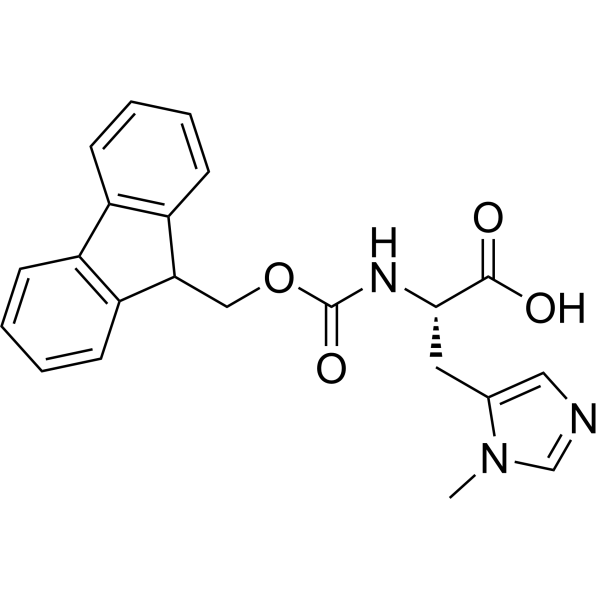
Cat. No.: HY-W111226
CAS No.: 252049-16-4
Fmoc-His (3-Me)-OH is a histidine derivative with a methylated imidazole group. Fmoc-His (3-Me)-OH can be used for the synthesis of the chemically modified tripeptide His (3-methyl)-Arg-Trp (H (3-Me)-RW). Fmoc-His (3-Me)-OH serves as a resin in Fmoc solid-phase synthesis for the generation of the His-(3-Me)-Gly-Lys peptide. Fmoc-His (3-Me)-OH is a building block for the synthesis of NAHIS02-(p-Met). Fmoc-His (3-Me)-OH can be applied in research related to Alzheimer's disease .
loading...
    loading...
Cat. No.: HY-W682115
CAS No.: 30811-80-4
Synonyms: Polycytidylic acid
Poly(C) (Polycytidylic acid) is a pleiotropic immunostimulant that specifically binds to TLR3, RIG-I and MDA5 receptors. Poly (C) recruits adaptor proteins to activate downstream signaling pathways and induce the production of type I interferons and inflammatory cytokines. Poly (C) triggers cancer cell apoptosis via the intrinsic or extrinsic caspase pathway, thereby exerting inhibitory effects on tumor growth and metastasis. Poly (C) acts as a vaccine adjuvant to modify the tumor microenvironment, regulate the expression of endothelial adhesion molecules and induce virus-like immune responses. Poly (C) can be applied to research related to melanoma, various solid tumors, hematological malignancies and autoimmune insulin-dependent diabetes mellitus .
loading...
    loading...
Cat. No.: HY-Y0949R
CAS No.: 611-13-2
Synonyms: Methyl furan-2-carboxylate (Standard)
Methyl 2-furoate (Standard) (Methyl furan-2-carboxylate (Standard)) is the analytical standard of Methyl 2-furoate (HY-Y0949). This product is intended for research and analytical applications. Methyl 2-furoate (Methyl furan-2-carboxylate) is a furan ester and the methyl ester of Furan-2-carboxylic acid (HY-W012946). Methyl 2-furoate is found in the solid-state fermentation of Antrodia camphorata and is formed via the Maillard reaction between pea protein hydrolysates and fructose. Methyl 2-furoate serves as a synthetic intermediate in the synthesis of Furan-2-carbohydrazide .
loading...
    loading...
Cat. No.: HY-159480
CAS No.: 2907782-78-7
Target:  

Src ATM/ATR Apoptosis mTOR AMPK

Research Areas:  

Cancer

AD1058 is an orally active, selective, and BBB-permeable inhibitor of ATR (IC50: 1.6 nM). AD1058 exhibits anticancer activity by inhibiting tumor cell proliferation, inducing cell cycle arrest, and promoting apoptosis. AD1058 is suitable for research on advanced malignancies and brain metastases .
loading...
    loading...
Cat. No.: HY-N17840
CAS No.: 134515-70-1
6α-Methoxygeniposidic acid is an iridoid glucoside found in the leaves of Hedyotis tenelliflora Blume (Rubiaceae) .
loading...
    loading...
Cat. No.: HY-P99363
CAS No.: 2252518-85-5
Synonyms: Anti-ICOS/CD278 Reference Antibody (feladilimab); GSK3359609

Research Areas:  

Cancer

Feladilimab (Anti-ICOS/CD278 Reference Antibody (feladilimab); GSK3359609) is humanized IgG4 anti-ICOS/CD278 agonist monoclonal antibody. Feladilimab can be used for the research of cancer .
loading...
    loading...

