
949 Results for "

sensitive

" in MedChemExpress (MCE) Product Catalog:
Products (949)

949 Results for "sensitive" in MCE Product Catalog:

Cat. No.: HY-P5081
CAS No.: 1678414-54-4
Research Areas:  

Inflammation/Immunology

Endotrophin (Mus musculus) is an adipokine, a cleavage fragment derived from Collagen VI, whose levels are elevated in adipose tissue and breast tumors of obese mice. Endotrophin (Mus musculus) activates the TGF-β signaling pathway and reduces the expression of hormone-sensitive lipase. Endotrophin (Mus musculus) induces adipogenesis, lipid accumulation, fibrosis, inflammation, angiogenesis, adipose tissue expansion, epithelial-mesenchymal transition, and insulin resistance; it also induces Cisplatin (HY-17394) resistance in cancer cells. Endotrophin (Mus musculus) can be used in research related to metabolic diseases such as obesity and type 2 diabetes, as well as cancers such as breast cancer .
loading...
    loading...
Cat. No.: HY-W399025
CAS No.: 1110883-26-5
Research Areas:  

Neurological Disease

ID110460001 is a full agonist of μ-opioid receptor and an agonist of δ-opioid receptor. ID110460001 exhibits high intrinsic efficacy for G protein pathway activation of μ-opioid receptor, and this property is not affected by the reduction in receptor quantity. ID110460001 acts only as a very weak partial agonist in the β-arrestin-2 pathway of both receptors, and binds to μ-opioid receptor via a specific mode. The efficacy of ID110460001 in the G protein pathway of δ-opioid receptor is sensitive to changes in receptor quantity. ID110460001 can be used in pain-related research .
loading...
    loading...
Cat. No.: HY-P72109
Purity:  ≥ 90%, as determined by reducing SDS-PAGE.
Synonyms: CACNA2D1; Voltage-Dependent Calcium Channel Subunit Alpha-2/Delta-1; Prev. CACNL2A; CCHL2A; Prev. LINC01112; Dihydropyridine-sensitive L-Type, Calcium Channel Alpha-2/Delta Subunit; Prev. CACNA2; Calcium Channel, L Type, Alpha 2 Polypeptide; Prev. MHS3; L
Species:  
Human
Source:  
E. coli
loading...
    loading...
Cat. No.: HY-105521
CAS No.: 92629-87-3
Synonyms: (S)-Nafenodone free base; LU-43706 free base
Research Areas:  

Neurological Disease

Dexnafenodone ((S)-Nafenodone free base; LU-43706 free base) is a novel antidepressant candidate molecule that selectively inhibits the norepinephrine synaptosomal uptake transporter. Dexnafenodone inhibits the fast inward Na + current and slow inward Ca 2+ current in cardiomyocytes. Dexnafenodone inhibits voltage-gated and receptor-activated Ca 2+ influx in vascular smooth muscle, depletes norepinephrine-sensitive intracellular Ca 2+ stores, suppresses agonist-stimulated Ca 2+ influx, relaxes precontracted vascular smooth muscle, inhibits spontaneous myogenic activity, and modulates cardiac electrophysiology, exerting negative chronotropic and negative inotropic effects. Dexnafenodone can be used in the research of depression .
loading...
    loading...
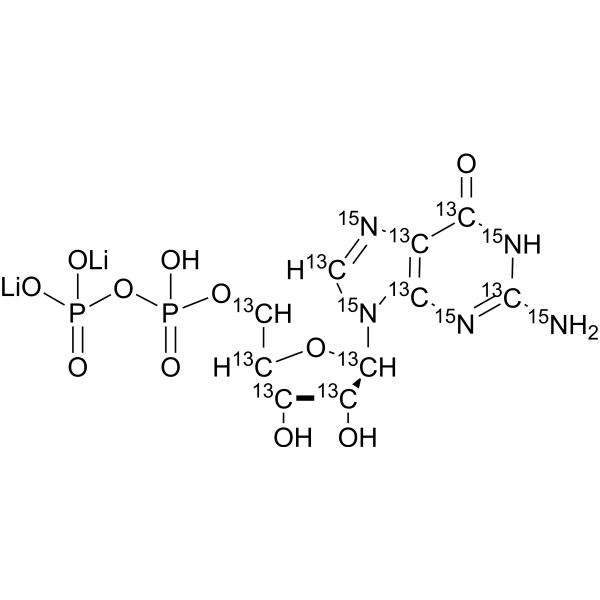
Cat. No.: HY-113066S3
Synonyms: GDP-13C10,15N5 dilithium
Guanosine 5'-diphosphate- 13C10, 15N5 (GDP- 13C10, 15N5) dilithium is 13C and 15N-labeled Guanosine 5'-diphosphate (HY-113066). Guanosine 5'-diphosphate (GDP) is a nucleoside diphosphate that activates adenosine 5'-triphosphate-sensitive K + channel. Guanosine 5'-diphosphate is a potential iron mobilizer, which prevents the hepcidin-ferroportin interaction and modulates the interleukin-6 (IL-6)/stat-3 pathway. Guanosine 5'-diphosphate can be used in the research of inflammation, such as anemia of inflammation (AI).
loading...
    loading...
Cat. No.: HY-126914
CAS No.: 62574-06-5
Target:  

Parasite

Research Areas:  

Infection

Diacetylcercosporin is a perylenequinone produced by Cercospora and Septoria that has diverse biological activities. Diacetylcercosporin inhibits the growth of P. falciparum strains that are sensitive and resistant to chloroquine (IC50s=2.75 and 1.94 μM for D6 and W2 clones, respectively) and L. donovani parasites (IC50=3.1 μM) in vitro. Diacetylcercosporin exhibits cytotoxicity against SK-MEL, KB, BT549, and SKOV3 human cancer cell lines (IC50s=4.8-8.7 μM). Diacetylcercosporin is also a phytotoxin that inhibits the growth of lettuce and bentgrass at a concentration of 1.62 mM.
loading...
    loading...
Cat. No.: HY-165399
CAS No.: 145253-48-1
Research Areas:  

Others

RB104 is a highly selective neutral endopeptidase (NEP) inhibitor that exhibits extremely high affinity for Aplysia californica apNEP (Kd=0.16-0.26 pM) and rat NEP (Kd=7.0-26.8 pM). RB104 effectively blocks apNEP-mediated cleavage of Leu-enkephalin and shows minimal cross-reactivity with other zinc peptidases. Furthermore, RB104 can be iodinated or radiolabeled with 125I to serve as a probe, and is widely used in inhibitor gel electrophoresis, binding assays, Western blotting, and autoradiographic tissue localization, enabling sensitive detection of nanogram-level NEP in crude extracts and tissue sections .
loading...
    loading...
Cat. No.: HY-171744
CAS No.: 1333382-32-3
Target:  

Casein Kinase

Research Areas:  

Cancer

CX-5279 is an efficient and selective CK2 inhibitor with IC50 values for nCK2 and CK2α of 2.73 and 0.91 nM, respectively. CX-5279 is sensitive to mutations at Val66, Ile174, and V66I174AA, with IC50 values of 13.8, 12.5, and 23.35 nM, respectively. CX-5279's inhibitory activity against PIM1 is very weak, with a IC50 value of 8.52 μM. CX-5279 exhibits anti-proliferative activity in various cancer cell lines. CX-5279 can be used for research on cancers such as pancreatic cancer and leukemia .
loading...
    loading...
Cat. No.: HY-172368
PROTAC IKZF3 degrader-1 is a potent dual-targeting agent that functions as both a CARM1 inhibitor (IC50 = 2 nM) and a CRBN-dependent PROTAC degrader of IKZF3. PROTAC IKZF3 degrader-1 simultaneously inhibits CARM1 activity (reducing BAF155 methylation) and recruits CRBN to induce the targeted degradation of IKZF1, IKZF3, ZFP91, and FGD3 proteins; this leads to the downregulation of oncogenes, more potent induction of apoptosis, and the overcoming of immunomodulatory imide drugs resistance. PROTAC IKZF3 degrader-1 is suitable for research into both IMiD-sensitive and IMiD-resistant multiple myeloma .
loading...
    loading...
Cat. No.: HY-172813
Research Areas:  

Infection Cancer

Vancomycin prodrug (compound 13c) is a Vancomycin (HY-B0671) prodrug. Vancomycin prodrug shows antibacterial effect with MICs of 0.78 μM, 0.78 μM, 1.56 μM for S. aureus 330041, MRSA USA 300 and MRSA 3390, respectively. Vancomycin prodrug has the ability to quickly bind to Cys-34 residue of plasma. Vancomycin prodrug exhibits a good therapeutic effect on MRSA USA300 infected mice similar to Vancomycin. Vancomycin prodrug, an albumin-binding acid-sensitive prodrug, effectively reduces Vancomycin’s nephrotoxicity while maintaining its efficacy for Gram-positive bacterial infections .
loading...
    loading...
Cat. No.: HY-178941
DHODH-IN-32 (Compound A1) is a DHODH inhibitor. DHODH-IN-32 shows significant cytotoxicity against NCI-60 cell lines, especially being sensitive to breast cancer, prostate cancer and leukemia cell lines. DHODH-IN-32 can induce cell apoptosis by activating the Caspase pathway. DHODH-IN-32 causes G0/G1 phase cell cycle arrest and inhibits cellular metabolism by ROS. DHODH-IN-32 exhibits significant anti-tumor properties in mouse breast cancer models. DHODH-IN-32 can be used for the study of breast cancer .
loading...
    loading...
Cat. No.: HY-B1099R
CAS No.: 3105-97-3
Hycanthone (Standard) is the analytical standard of Hycanthone (HY-B1099). This product is intended for research and analytical applications. Hycanthone is an apurinic/apyrimidinic endonuclease 1 (APE1) inhibitor, DNA intercalator and Antischistosomal agent, with an IC50 of 80 nM against APE1. Hycanthone irreversibly inhibits thymidine incorporation into DNA in adult sensitive *Schistosoma mansoni*, while exerts weak inhibitory effects on uridine and leucine incorporation. Hycanthone reduces influenza virus-induced interferon production. Hycanthone exhibits mutagenic effects in various organisms, shows teratogenicity in mice and rabbits, and induces neoplastic liver lesions in partially hepatectomized mice. Hycanthone can be used in research related to schistosomiasis and cancer .
loading...
    loading...
Cat. No.: HY-D1429
CAS No.: 287715-95-1
Target:  

Fluorescent Dye

Research Areas:  

Others

ER-Tracker dye is a derivative of BODIPY series dyes coupled with Glibenclamide (HY-15206), highly selective binding to the endoplasmic reticulum, non-toxic to cells at low concentrations, this type of dye is an environmentally sensitive probe, and formaldehyde treatment can still retain part of the fluorescence, with high fluorescence life, good extinction coefficient and other characteristics. Glibenclamide is an atp-dependent K + channel blocker (Kir6, KATP) and CFTR Cl-channel blocker that binds in the endoplasmic reticulum. ER-Tracker is not suitable for staining fixed cells. Staining followed by fixation is possible, but cells fixed with aldehydes will only retain partial fluorescence (Ex/Em = 374/ 430-640 nm) .
loading...
    loading...
Cat. No.: HY-D1470
CAS No.: 210832-86-3
Target:  

Fluorescent Dye

Research Areas:  

Others

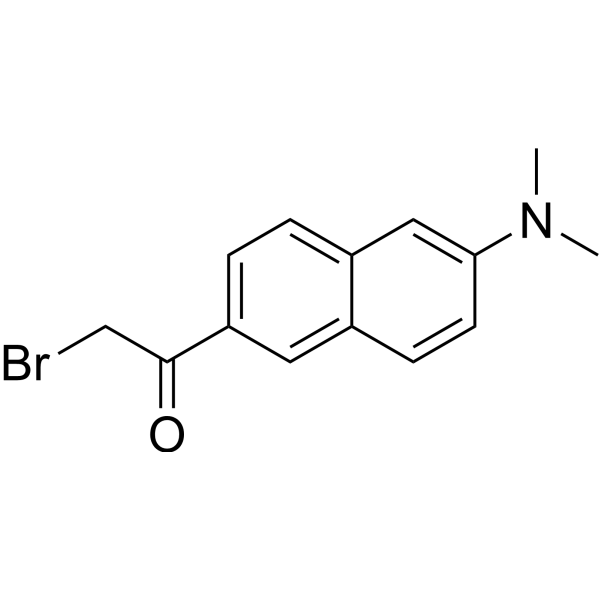
BADAN is a thiol-reactive, environment-sensitive fluorescent probe used for site-specific labeling of protein cysteine residues to detect protein topology, local polarity, protein-lipid interactions, and conformational changes. The bromoacetyl group of BADAN covalently binds to cysteine thiols, and its fluorescence originates from the intramolecular charge transfer (ICT) excited state. The emission peak position varies with the polarity of the surrounding medium: it blue-shifts to approximately 488 nm in nonpolar environments (such as the hydrophobic core of lipid bilayers) and red-shifts to approximately 496-507 nm in polar environments (such as aqueous phases), independent of enzymes, pH, or membrane potential. Ex = 380-402 nm; Em = 400-600 nm .
loading...
    loading...
Cat. No.: HY-D3442
CAS No.: 3121565-89-4
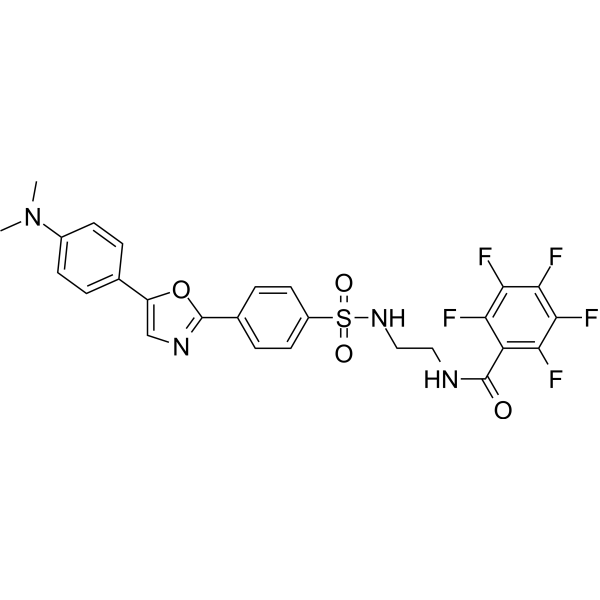
ALDH2 probe 5 is a ALDH2 isoform-selective fluorescent probe with an emission wavelength centered at 494 nm. ALDH2 probe 5 is a turn-on fluorescent substrate for ALDH2; in its unreacted aldehyde form, twisted intramolecular charge transfer (TICT) occurs, resulting in fluorescence quenching. After ALDH2 probe 5 is catalytically oxidized to carboxylate by ALDH2, TICT is inhibited and fluorescence is significantly enhanced. ALDH2 probe 5 enables highly sensitive quantitative imaging of ALDH2 activity in recombinant enzymes, live cells, blood, tissue homogenates, and the brains of living mice. ALDH2 probe 5 can be used for studies related to neuroinflammation .
loading...
    loading...
Cat. No.: HY-D3520
CAS No.: 2484683-99-8
HPsensor 2 is a fluorescent probe used to detect the surface hydrophobicity of proteins. The detection mechanism of HPsensor 2 relies on its amphipathic properties. The 2-methoxyethylamine substituents at positions 3 and 5 of its BODIPY core enhance water solubility, enabling it to interact with solvent-exposed hydrophobic regions on proteins. When it binds to these hydrophobic surfaces, the free rotation of the meso-aryl substituent is restricted, increasing molecular rigidity and reducing non-radiative deactivation, which results in a significant enhancement of fluorescence. HPsensor 2 exhibits weak but detectable fluorescence in aqueous environments, and its fluorescence is highly sensitive to changes in protein surface hydrophobicity (Ex/Em = 528/579 nm) .
loading...
    loading...
Cat. No.: HY-DY1074
CAS No.: 287715-95-1
Target:  

Fluorescent Dye

Research Areas:  

Others

ER-Tracker dye is a derivative of BODIPY series dyes coupled with Glibenclamide (HY-15206) , highly selective binding to the endoplasmic reticulum, non-toxic to cells at low concentrations, this type of dye is an environmentally sensitive probe, and formaldehyde treatment can still retain part of the fluorescence, with high fluorescence life, good extinction coefficient and other characteristics. Glibenclamide is an atp-dependent K + channel blocker (Kir6, KATP) and CFTR Cl-channel blocker that binds in the endoplasmic reticulum. ER-Tracker is not suitable for staining fixed cells. Staining followed by fixation is possible, but cells fixed with aldehydes will only retain partial fluorescence .
Solvent and concentration: DMSO: 1 mM
loading...
    loading...
Cat. No.: HY-DY1120
Research Areas:  

Cancer

ZY-2 (solution) is a fluorescent probe targeting pyruvate kinase M2 (PKM2) with an excitation wavelength of 419 nm. ZY-2 (solution) significantly activates purified PKM2 protein. ZY-2 (solution) exhibits enhanced fluorescence emission in low-polarity or high-viscosity environments. ZY-2 (solution) enables highly sensitive and selective fluorescence imaging of PKM2 in live PKM2-positive cancer cells, with no significant side effects on cell viability within its effective concentration range. ZY-2 (solution) can be used for cervical cancer research .
Solvent and concentration: DMSO: 10 mM
loading...
    loading...
Cat. No.: HY-P5081A
Research Areas:  

Inflammation/Immunology

Endotrophin (Mus musculus) TFA is an adipokine, a cleavage fragment derived from Collagen VI, whose levels are elevated in adipose tissue and breast tumors of obese mice. Endotrophin (Mus musculus) TFA activates the TGF-β signaling pathway and reduces the expression of hormone-sensitive lipase. Endotrophin (Mus musculus) TFA induces adipogenesis, lipid accumulation, fibrosis, inflammation, angiogenesis, adipose tissue expansion, epithelial-mesenchymal transition, and insulin resistance; it also induces Cisplatin (HY-17394) resistance in cancer cells. Endotrophin (Mus musculus) TFA can be used in research related to metabolic diseases such as obesity and type 2 diabetes, as well as cancers such as breast cancer .
loading...
    loading...
Cat. No.: HY-107405R
CAS No.: 1211866-85-1
Research Areas:  

Neurological Disease

TC-N 1752 (Standard) is the analytical standard of TC-N 1752 (HY-107405). This product is intended for research and analytical applications. TC-N 1752 is a potent and orally active inhibitor of Nav1.7, with IC50s of 0.17 μM, 0.3 μM, 0.4 μM, 1.1 μM and 2.2 μM at hNav1.7, hNav1.3, hNav1.4, hNaV1.5 and rNav1.8, respectively. TC-N 1752 also inhibits tetrodotoxin-sensitive sodium channels. TC-N 1752 shows analgesic efficacy in the Formalin model of pain .
loading...
    loading...

