949 Results for "

sensitive

" in MedChemExpress (MCE) Product Catalog:
Products (949)

949 Results for "sensitive" in MCE Product Catalog:

Cat. No.: HY-123320
CAS No.: 69409-94-5
Research Areas:  

Infection Neurological Disease

Fluvalinate is an orally active acaricide classified as a sodium channel inhibitor. Fluvalinate delays sodium channel closure, prolongs cell membrane depolarization, inhibits the excitability of honeybee brain neurons, and exerts a central nervous system inhibitory effect. Fluvalinate negatively affects the learning ability, memory ability, sucrose responsiveness, and survival of honeybees. Fluvalinate potentiates pentobarbital-induced hypnosis, reduces spontaneous activity in mice, and decreases the total white blood cell count and absolute lymphocyte count in mice. Fluvalinate induces acute toxic symptoms in rats, acts as a cholinergic stimulant, and induces the production of hepatic enzymes in rats. Fluvalinate causes the death of Varroa jacobsoni sensitive to τ-Fluvalinate (HY-B2021). Fluvalinate can be used in studies related to mite pest control .
loading...
    loading...
Cat. No.: HY-131501R
CAS No.: 523-39-7
Menaquinone 9 (Standard) is the analytical standard of Menaquinone 9 (HY-131501). This product is intended for research and analytical applications. Menaquinone 9 is a naphthoquinone-type vitamin K and electron transport component produced by bacteria. Menaquinone 9 is an orally active analog of Vitamin K2 (HY-109569). Menaquinone 9 acts as an ultraviolet-sensitive, photooxidizable substrate that generates more polar photodegradation products under oxygen and ultraviolet irradiation. Menaquinone 9 binds to the αβ dimer of Escherichia coli nitrate reductase, supporting electron transport within the αβ subunit structure of the enzyme. Menaquinone 9 serves as a precursor for bone Menaquinone-4 (HY-B2156). Menaquinone 9 can be used in studies related to metabolic diseases .
loading...
    loading...
Cat. No.: HY-131501S
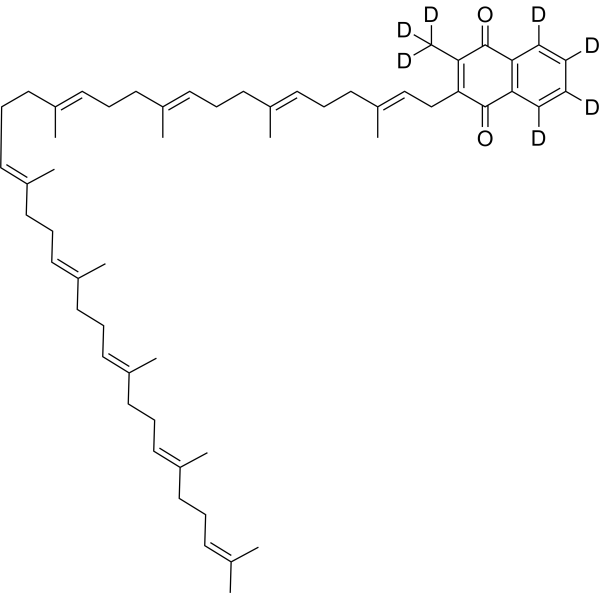
Menaquinone-9-d7 is the deuterated-labeled Menaquinone 9 (HY-131501). Menaquinone 9 is a naphthoquinone-type vitamin K and electron transport component produced by bacteria. Menaquinone 9 is an orally active analog of Vitamin K2 (HY-109569). Menaquinone 9 acts as an ultraviolet-sensitive, photooxidizable substrate that generates more polar photodegradation products under oxygen and ultraviolet irradiation. Menaquinone 9 binds to the αβ dimer of Escherichia coli nitrate reductase, supporting electron transport within the αβ subunit structure of the enzyme. Menaquinone 9 serves as a precursor for bone Menaquinone-4 (HY-B2156). Menaquinone 9 can be used in studies related to metabolic diseases .
loading...
    loading...
Cat. No.: HY-131501S1
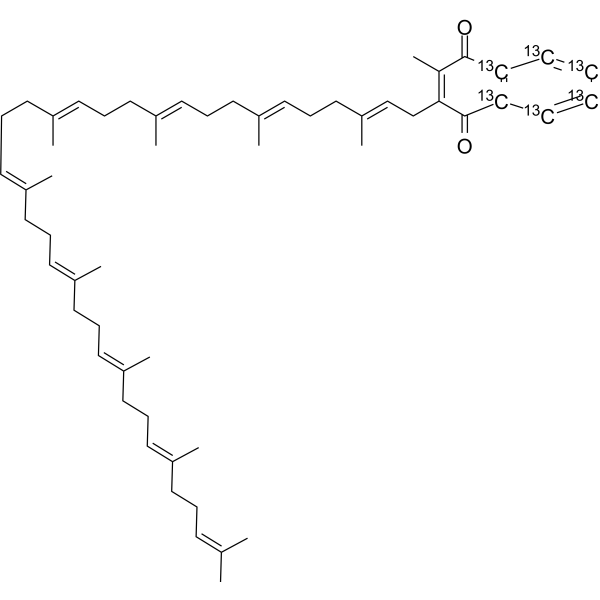
Menaquinone-9-13C6 is the 13C-labeled Menaquinone 9 (HY-131501). Menaquinone 9 is a naphthoquinone-type vitamin K and electron transport component produced by bacteria. Menaquinone 9 is an orally active analog of Vitamin K2 (HY-109569). Menaquinone 9 acts as an ultraviolet-sensitive, photooxidizable substrate that generates more polar photodegradation products under oxygen and ultraviolet irradiation. Menaquinone 9 binds to the αβ dimer of Escherichia coli nitrate reductase, supporting electron transport within the αβ subunit structure of the enzyme. Menaquinone 9 serves as a precursor for bone Menaquinone-4 (HY-B2156). Menaquinone 9 can be used in studies related to metabolic diseases .
loading...
    loading...
Cat. No.: HY-134858
CAS No.: 2406205-61-4
Purity:  99.77%
Synonyms: A1AT modulator 1
Target:  

Serpin Ser/Thr Protease

Research Areas:  

Metabolic Disease

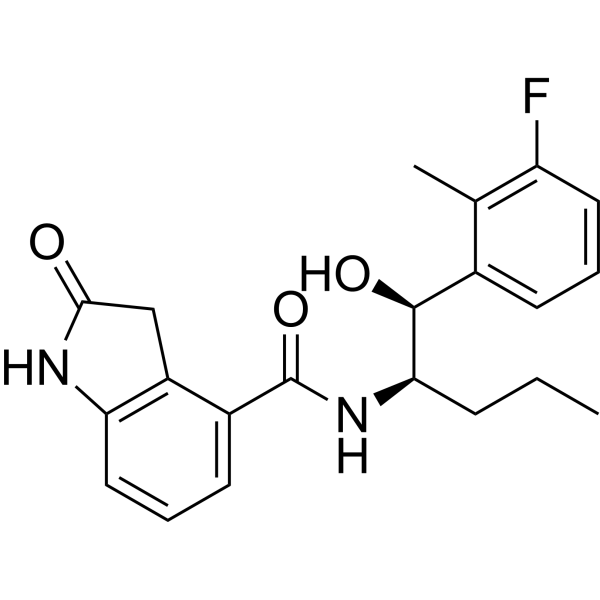
GSK716 (A1AT modulator 1) is an orally active Z α1-antitrypsin (Z-A1AT) inhibitor with a pIC50 of 8.3. GSK716 binds a cryptic Z α1-antitrypsin pocket, stabilizes monomeric folding intermediates, blocks polymerization, and increases monomer secretion. GSK716 acts on select sensitive α1-antitrypsin variants but fails to affect resistant variants. GSK716 can be used for the research of α1-antitrypsin deficiency and α1-antitrypsin deficiency-associated liver disease .
loading...
    loading...
Cat. No.: HY-174423
CAS No.: 1994348-72-9
Synonyms: NC-656
Target:  

Herbicide HPPD

Research Areas:  

Others

Iptriazopyrid is a 4-hydroxyphenylpyruvate dioxygenase (HPPD) inhibitor, with a Ki value of 24.3 nM against Arabidopsis thaliana and 33.3 nM against Oryza sativa. Iptriazopyrid binds to the active pocket of HPPD, occupies the catalytic site, inhibits carotenoid biosynthesis, prevents chloroplast formation, and induces albino and chlorotic symptoms in sensitive plants. Used as a herbicide, Iptriazopyrid can control barnyardgrass when applied alone, and its efficacy does not decrease when mixed with labeled residual herbicides. When Iptriazopyrid is mixed with 2,4-D or triclopyr, its barnyardgrass control effect shows an antagonistic effect. Iptriazopyrid is a triazole carboxamide herbicide that exhibits selectivity for Oryza sativa over Echinochloa crus-galli, and has partial tank-mix compatibility with synthetic auxin herbicides registered for rice .
loading...
    loading...
Cat. No.: HY-185057
CAS No.: 41656-56-8
Synonyms: S-Lactylglutathione; (R)-S-Lactoylglutathione
S-D-Lactoylglutathione (S-Lactylglutathione; (R)-S-Lactoylglutathione) is a multifunctional metabolic intermediate of the glyoxalase system. S-D-Lactoylglutathione activates K + efflux in bacteria by displacing inhibitory glutathione from KefGB channels, thereby acidifying the cytoplasm. In eukaryotic cells, S-D-Lactoylglutathione mediates S-glutathionylation as a substrate of glyoxalase 2. S-D-Lactoylglutathione serves as a sensitive metabolic biomarker for neodymium nitrate neurotoxicity; when used in combination with MSCs-exo, it upregulates glutathione levels, downregulates lactate dehydrogenase and Glo2 levels, and inhibits cellular inflammatory responses and pyroptosis. S-D-Lactoylglutathione can be used in research related to prostate cancer, breast cancer, non-small cell lung cancer, sepsis-associated encephalopathy, and neurotoxicity .
loading...
    loading...
Cat. No.: HY-76705S
CAS No.: 2562378-12-3
Methyl N-methylanthranilate-d3 is the deuterated-labeled Methyl N-methylanthranilate (HY-76705). Methyl N-methylanthranilate is an N-alkylated anthranilate with a sweet citrus aroma, which is commonly used in perfume manufacturing. Methyl N-methylanthranilate is the dominant component in the defensive secretion of the millipede Typhloiulus orpheus. Methyl N-methylanthranilate exhibits quorum sensing inhibition and anti-biofilm activity against P. aeruginosa; it interferes with PQS synthesis via competitive inhibition of PqsA, but lacks bactericidal activity. Methyl N-methylanthranilate is sensitive to UVA/sunlight in human skin cells, and generates O2- through type I photodynamic reactions, leading to lysosomal/mitochondrial damage, double-strand DNA breaks and apoptosis, with potential phototoxicity .
loading...
    loading...
Cat. No.: HY-D0074
CAS No.: 70504-01-7
Target:  

Fluorescent Dye

Research Areas:  

Others

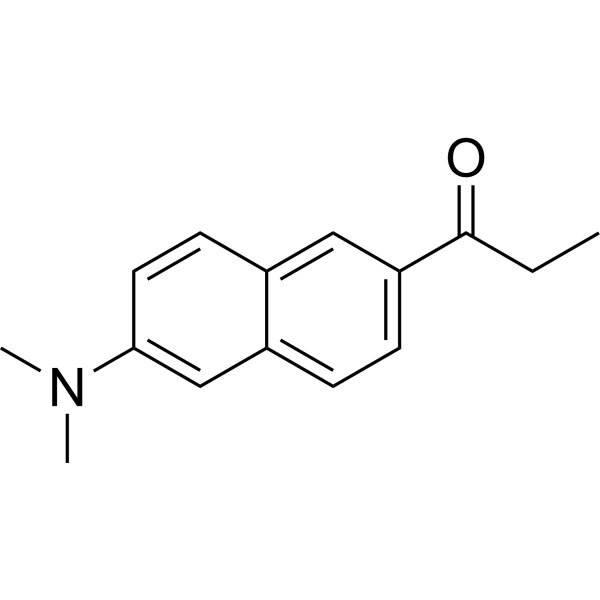
Prodan is an environment-sensitive fluorescent probe used to investigate the polarity, fluidity, and structure of lipid membranes. Prodan exhibits environment-dependent excitation/emission wavelengths, with its wavelength range covering Ex = 360-410 nm and Em = 430-530 nm when in solvents, bound to DNA, located in lipid bilayers, or associated with proteins. Prodan can interact with the major groove of DNA, regions of lipid bilayers, and hydrophobic pockets of proteins. During phase transitions, Prodan localizes to different regions of the bilayer: the emission minimum is 430-440 nm in the gel phase, while it shifts to 480-500 nm in the liquid-crystalline phase or interdigitated gel phase. When bound to rigid hydrophobic sites of proteins, the emission peak of Prodan undergoes a blue shift and its fluorescence intensity increases .
loading...
    loading...
Cat. No.: HY-D2771
CAS No.: 2131079-93-9
BP Fluor 405 NHS Ester is a water-soluble, blue-fluorescent dye that is often used in multi-color applications, including flow cytometry and super-resolution microscopy using STORM. Its excitation is ideally suited for the 407 nm spectral line of the krypton laser or the 408 nm violet laser diode. BP Fluor 405 conjugates are pH-insensitive from pH 4 to pH 10. The NHS ester (or succinimidyl ester) is the most popular amine reactive group for labeling with the primary amines of proteins (Lys), amine-modified oligonucleotides, and other amine-containing molecules. Proteins can be labeled with BP Fluor 405 NHS Ester at high molar ratios without significant self-quenching, leading to brighter conjugates and more sensitive detection. BP Fluor 405 conjugates can also be used for the detection of abundance targets.
loading...
    loading...
Cat. No.: HY-N12768
CAS No.: 37720-87-9
Rhodojaponin VI is an orally active diterpenoid compound found in hododendron molle G. Don
(Ericaceae) (RM). Rhodojaponin VI binds rat N-Ethylmaleimide-sensitive fusion (NSF) with a Kd of 1.03 μM. Rhodojaponin VI blocks the MDM2-Notch1 signalling pathway by reducing MDM2 and Notch1 expression. Rhodojaponin VI indirectly reduces Cav2.2 current intensity by inhibiting NSF-mediated Cav2.2 trafficking. Rhodojaponin VI alleviates glomerulonephritis progression and podocyte injury in passive heymann nephritis rats. Rhodojaponin VI also has antinociceptive effects. Rhodojaponin VI can be used for the researches of heymann nephritis and pain .
loading...
    loading...
Cat. No.: HY-N17304
CAS No.: 314744-17-7
10S,13aR-Antofine N-oxide is a phenanthroindolizidine N-oxide alkaloid and cytotoxic agent found in Cynanchum vincetoxicum. 10S,13aR-Antofine N-oxide exerts cytotoxic effects in drug-sensitive (KB-3-1, IC50 = 0.11 μM) and multi-drug-resistant (KB-V1, IC50 = 0.16 μM) carcinoma cells. 10S, 13aR-Antofine N-oxide acts as a poor substrate for the P-glycoprotein (P-170) efflux pump. 10S,13aR-Antofine N-oxide can be used for the research of cancers .
loading...
    loading...
Cat. No.: HY-W040430R
CAS No.: 494-97-3
(S)-Nornicotine (Standard) is the analytical standard of (S)-Nornicotine (HY-W040430). This product is intended for research and analytical applications. (S)-Nornicotine is a nicotine metabolite that crosses the blood-brain barrier. (S)-Nornicotine weakly inhibits human CYP2A6 with a Ki >300 μM. (S)-Nornicotine promotes dopamine release in rat striatal and nucleus accumbens slices and increases endogenous DOPAC overflow through a calcium-dependent nAChR pathway that is sensitive to Mecamylamine (HY-B1395A). (S)-Nornicotine reduces behavioral responses maintained by nicotine or sucrose, exerts analgesic effects in persistent inflammatory pain and neuropathic pain models, and enhances the analgesic effect of morphine. (S)-Nornicotine is useful for research on tobacco dependence and pain .
loading...
    loading...
Cat. No.: HY-Y0678R
CAS No.: 621-23-8
1,3,5-Trimethoxybenzene (TRIMETHYL PHLOROGLUCINOL) is an electrophilic substitution reaction substrate targeting free chlorine (Cl+) and free bromine (Br+). 1,3,5-Trimethoxybenzene has highly selective electrophilic addition characteristics. By capturing halogens, it undergoes specific substitution reactions to generate stable halogenated products. 1,3,5-Trimethoxybenzene can not only quench residual oxidants, but also quantify the halogen concentration by detecting the product without affecting the stability of redox-sensitive disinfection byproducts (DBPs). 1,3,5-Trimethoxybenzene is mainly used in water quality testing and quantitative analysis of free chlorine/bromine in water. At the same time, in phytochemistry, it is a key component of rose fragrance and participates in the study of pollination attraction mechanism .
loading...
    loading...
Cat. No.: HY-106289
CAS No.: 105026-50-4
Target:  

Antibiotic

Research Areas:  

Cancer

Antibiotic MX 2 is an orally active antibiotic that can cross the blood-brain barrier. Antibiotic MX 2 inhibits the growth of drug-sensitive and multidrug-resistant tumor cells, prolongs the survival of tumor-bearing mice, induces single-strand and double-strand DNA breaks, suppresses colony formation of fresh human-derived tumor cells, and overcomes multidrug resistance mediated by P-glycoprotein. Antibiotic MX 2 can be used in research related to L1210 leukemia, Lewis lung cancer, colon adenocarcinoma type 26 and type 38, gastric adenocarcinoma, non-small cell lung cancer, mammary adenocarcinoma, drug-resistant P388 leukemia, renal cancer, melanoma, ovarian cancer, breast cancer, small cell lung cancer, and colorectal cancer .
loading...
    loading...
Cat. No.: HY-118411R
CAS No.: 61135-33-9
Synonyms: EdU (Standard)
Research Areas:  

Cancer

5-Ethynyl-2'-deoxyuridine (Standard) is the analytical standard of 5-Ethynyl-2'-deoxyuridine (HY-118411). This product is intended for research and analytical applications. 5-Ethynyl-2'-deoxyuridine (EdU), a thymidine analogue, is incorporated into cellular DNA during DNA replication and the subsequent reaction of EdU with a fluorescent azide in a “Click” reaction. EdU staining is a fast, sensitive and reproducible method to study cell proliferation . 5-Ethynyl-2'-deoxyuridine is an alkyl chain-based PROTAC linker that can be used in the synthesis of PROTACs . 5-Ethynyl-2'-deoxyuridine is a click chemistry reagent, it contains an Alkyne group and can undergo copper-catalyzed azide-alkyne cycloaddition (CuAAc) with molecules containing Azide groups.
loading...
    loading...
Cat. No.: HY-118411S
CAS No.: 1610530-40-9
Synonyms: EdU-13C
5-Ethynyl-2'-deoxyuridine- 13C1 (EdU- 13C1) is the 13C-labeled 5-Ethynyl-2'-deoxyuridine (HY-118411). 5-Ethynyl-2'-deoxyuridine (EdU), a thymidine analogue, is incorporated into cellular DNA during DNA replication and the subsequent reaction of EdU with a fluorescent azide in a “Click” reaction. EdU staining is a fast, sensitive and reproducible method to study cell proliferation . 5-Ethynyl-2'-deoxyuridine is an alkyl chain-based PROTAC linker that can be used in the synthesis of PROTACs . 5-Ethynyl-2'-deoxyuridine is a click chemistry reagent, it contains an Alkyne group and can undergo copper-catalyzed azide-alkyne cycloaddition (CuAAc) with molecules containing Azide groups.
loading...
    loading...
Cat. No.: HY-118411S1
CAS No.: 1610530-35-2
Synonyms: EdU-13C2
5-Ethynyl-2'-deoxyuridine- 13C2 (EdU- 13C2) is the 13C-labeled 5-Ethynyl-2'-deoxyuridine (HY-118411). 5-Ethynyl-2'-deoxyuridine (EdU), a thymidine analogue, is incorporated into cellular DNA during DNA replication and the subsequent reaction of EdU with a fluorescent azide in a “Click” reaction. EdU staining is a fast, sensitive and reproducible method to study cell proliferation . 5-Ethynyl-2'-deoxyuridine is an alkyl chain-based PROTAC linker that can be used in the synthesis of PROTACs . 5-Ethynyl-2'-deoxyuridine is a click chemistry reagent, it contains an Alkyne group and can undergo copper-catalyzed azide-alkyne cycloaddition (CuAAc) with molecules containing Azide groups.
loading...
    loading...
Cat. No.: HY-147183
CAS No.: 2820336-67-0
Target:  

EGFR

Research Areas:  

Cancer

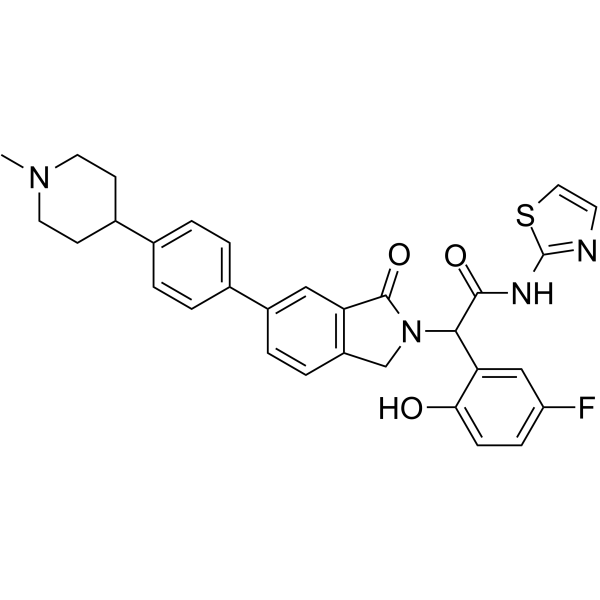
JBJ-09-063 is a mutant-selective allosteric EGFR inhibitor with IC50s of 0.147 nM, 0.063 nM, 0.083 nM and 0.396 nM for EGFR L858R, EGFR L858R/T790M, EGFR L858R/T790M/C797S and EGFRLT/L747S. JBJ-09-063 effectively reduces EGFR, Akt and ERK1/2 phosphorylation. JBJ-09-063 is effective across EGFR tyrosine kinase inhibitor (TKI)-sensitive and resistant models. JBJ-09-063 can be used for researching EGFR-mutant lung cancer .
loading...
    loading...
Cat. No.: HY-147183A
Purity:  99.64%
Target:  

EGFR

Research Areas:  

Cancer

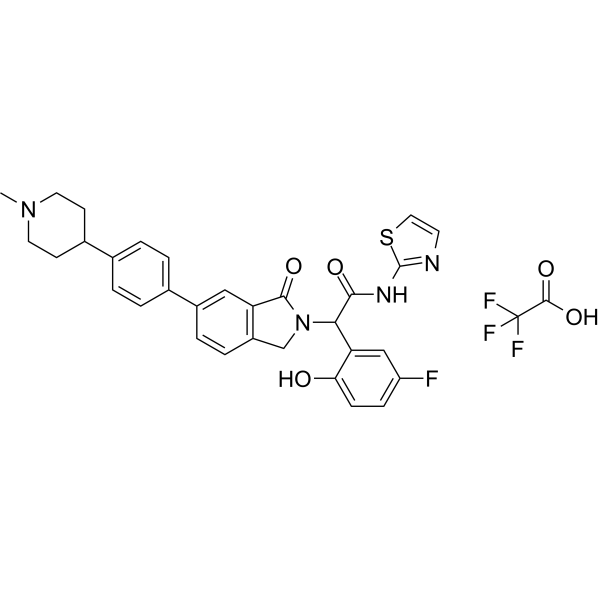
JBJ-09-063 TFA is a mutant-selective allosteric EGFR inhibitor with IC50s of 0.147 nM, 0.063 nM, 0.083 nM and 0.396 nM for EGFR L858R, EGFR L858R/T790M, EGFR L858R/T790M/C797S and EGFRLT/L747S. JBJ-09-063 TFA effectively reduces EGFR, Akt and ERK1/2 phosphorylation. JBJ-09-063 TFA is effective across EGFR tyrosine kinase inhibitor (TKI)-sensitive and resistant models. JBJ-09-063 TFA can be used for researching EGFR-mutant lung cancer .
loading...
    loading...

