991 Results for "

NSC 127669-13C,15N

" in MedChemExpress (MCE) Product Catalog:
Products (991)

991 Results for "NSC 127669-13C,15N" in MCE Product Catalog:

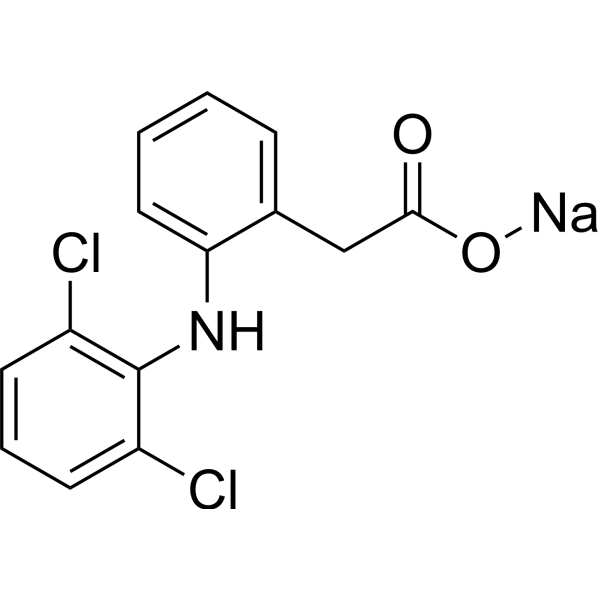
Cat. No.: HY-15037R
CAS No.: 15307-79-6
Synonyms: GP 45840 (Standard)
Diclofenac (Sodium) (Standard) is the analytical standard of Diclofenac (Sodium). This product is intended for research and analytical applications. Diclofenac Sodium (GP 45840) is a potent and nonselective anti-inflammatory agent, acts as a COX inhibitor, with IC50s of 4 and 1.3 nM for human COX-1 and COX-2 in CHO cells , and 5.1 and 0.84 μM for ovine COX-1 and COX-2, respectively . Diclofenac Sodium induces apoptosis of neural stem cells (NSCs) via the activation of the caspase cascade .
loading...
    loading...
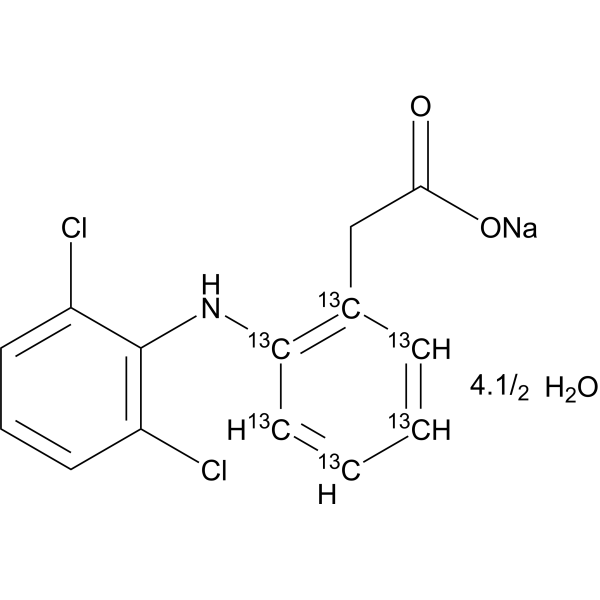
Cat. No.: HY-15037S
Diclofenac- 13C6 (sodium heminonahydrate) is the 13C-labeled Diclofenac Sodium. Diclofenac Sodium (GP 45840) is a potent and nonselective anti-inflammatory agent, acts as a COX inhibitor, with IC50s of 4 and 1.3 nM for human COX-1 and COX-2 in CHO cells , and 5.1 and 0.84 μM for ovine COX-1 and COX-2, respectively . Diclofenac Sodium induces apoptosis of neural stem cells (NSCs) via the activation of the caspase cascade .
loading...
    loading...
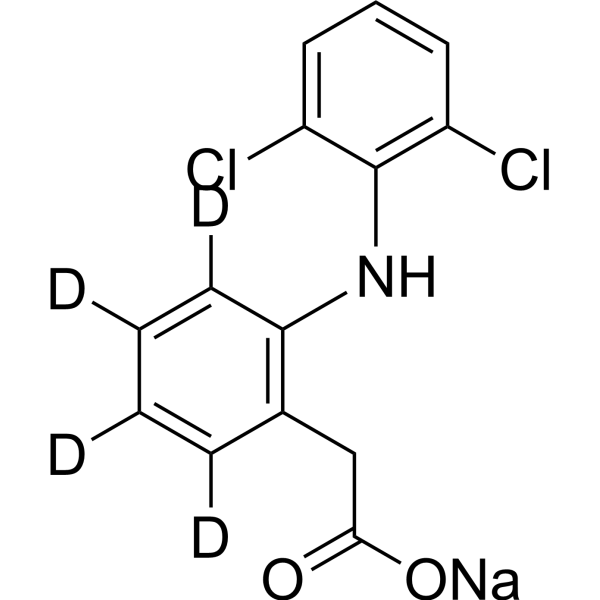
Cat. No.: HY-15037S1
CAS No.: 154523-54-3
Purity:  99.29%
Diclofenac-d4 (sodium) is the deuterium labeled Diclofenac sodium. Diclofenac Sodium (GP 45840) is a potent and nonselective anti-inflammatory agent, acts as a COX inhibitor, with IC50s of 4 and 1.3 nM for human COX-1 and COX-2 in CHO cells , and 5.1 and 0.84 μM for ovine COX-1 and COX-2, respectively . Diclofenac Sodium induces apoptosis of neural stem cells (NSCs) via the activation of the caspase cascade .
loading...
    loading...
Cat. No.: HY-15038R
CAS No.: 15307-81-0
Diclofenac (potassium) (Standard) is the analytical standard of Diclofenac (potassium). This product is intended for research and analytical applications. Diclofenac potassium is a potent and nonselective anti-inflammatory agent, acts as a COX inhibitor, with IC50s of 4 and 1.3 nM for human COX-1 and COX-2 in CHO cells , and 5.1 and 0.84 μM for ovine COX-1 and COX-2, respectively . Diclofenac potassium induces apoptosis of neural stem cells (NSCs) via the activation of the caspase cascade .
loading...
    loading...
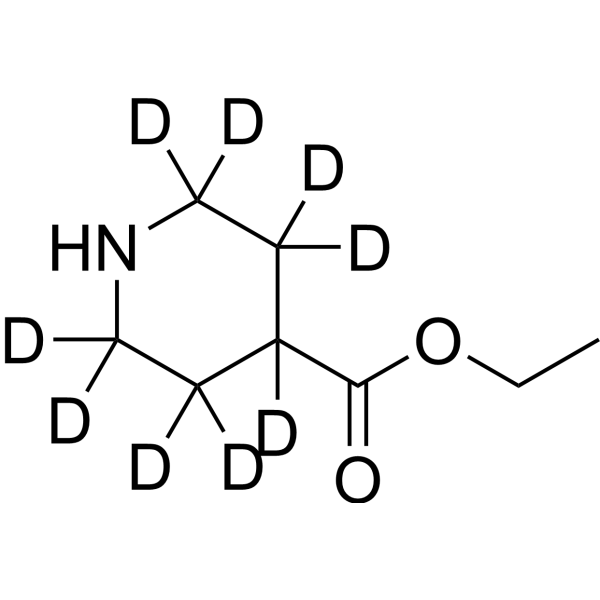
Cat. No.: HY-Y0453S
CAS No.: 1219803-75-4
Synonyms: Ethyl isonipecotate-d9; NSC 93792-d9; Piperidin-4-carboxylic acid ethyl ester-d9
4-Carboethoxypiperidine-d9 is the deuterium labeled 4-Carboethoxypiperidine .
loading...
    loading...
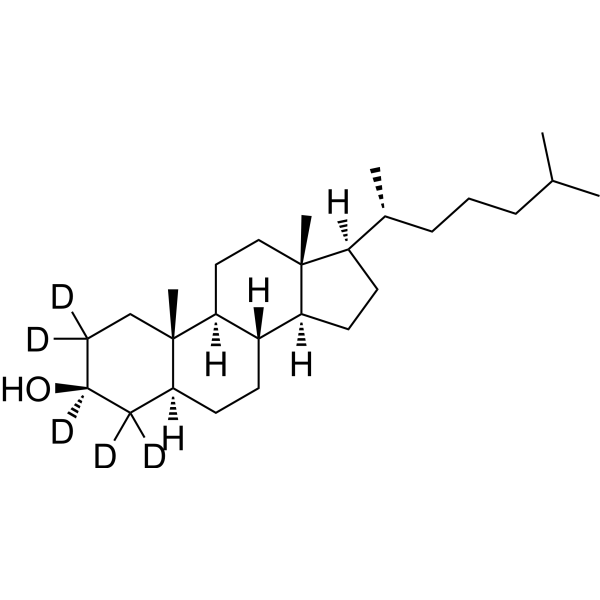
Cat. No.: HY-107819S
CAS No.: 2260669-14-3
Purity:  99.18%
Synonyms: Dihydrocholesterol-d5; 5α-Cholestanol-d5; NSC 18188-d5
5α-Cholestan-3β-ol-d5 is the deuterium labeled 5α-Cholestan-3β-ol. 5α-Cholestan-3β-ol is a derivitized steroid compound .
loading...
    loading...
Cat. No.: HY-W700927
CAS No.: 1356930-28-3
Synonyms: N-Formyl-S-leucine-d3; N-Formylleucine-d3; NSC 334321-d3
N-Formyl-L-leucine-d3 (N-Formyl-S-leucine-d3) is deuterium labeled N-Formyl-L-leucine. N-Formyl-L-leucine is a leucine derivative .
loading...
    loading...
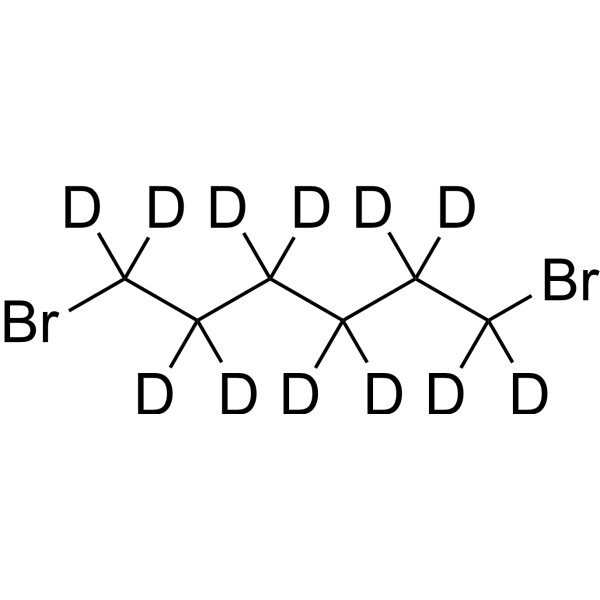
Cat. No.: HY-Y0860S
CAS No.: 169397-96-0
Synonyms: 1,6-Dibromohexane-d12; Hexamethylene dibromide-d12; NSC 7306-d12
1,6-Dibromo-n-hexane-d12 is the deuterium labeled 1,6-Dibromo-n-hexane .
loading...
    loading...
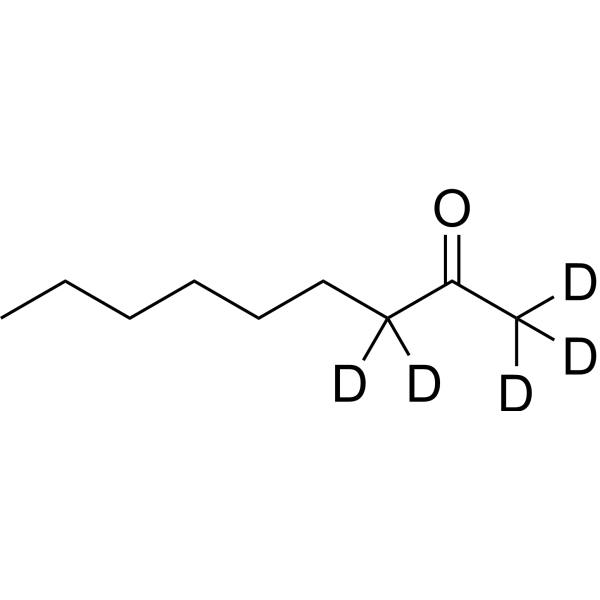
Cat. No.: HY-Y0999S
CAS No.: 1398065-76-3
Synonyms: Methyl heptyl ketone-d5; Methyl n-heptyl ketone-d5; NSC 14760-d5
Heptyl methyl ketone-d5 is the deuterium labeled Heptyl methyl ketone .
loading...
    loading...
Cat. No.: HY-15036AR
CAS No.: 78213-16-8
Diclofenac (diethylamine) (Standard) is the analytical standard of Diclofenac (diethylamine). This product is intended for research and analytical applications. Diclofenac diethylamine is a potent and nonselective anti-inflammatory agent, acts as a COX inhibitor, with IC50s of 4 and 1.3 nM for human COX-1 and COX-2 in CHO cells , and 5.1 and 0.84 μM for ovine COX-1 and COX-2, respectively . Diclofenac diethylamine induces apoptosis of neural stem cells (NSCs) via the activation of the caspase cascade .
loading...
    loading...
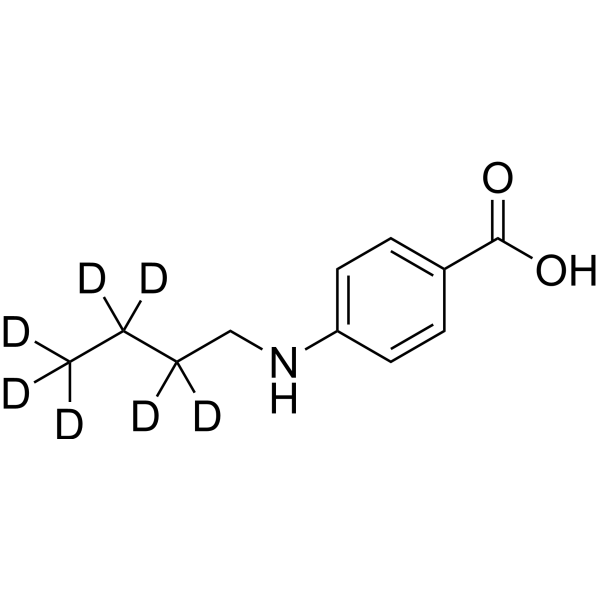
Cat. No.: HY-41463S
CAS No.: 1219803-44-7
Synonyms: 4-(Butylamino)benzoic acid-d7; NSC 44300-d7; p-Butylaminobenzoic acid-d7
4-(Butylamino)benzoic acid-d7 is the deuterium labeled 4-(Butylamino)benzoic acid[1].
loading...
    loading...
Cat. No.: HY-B0678S
CAS No.: 1192812-66-0
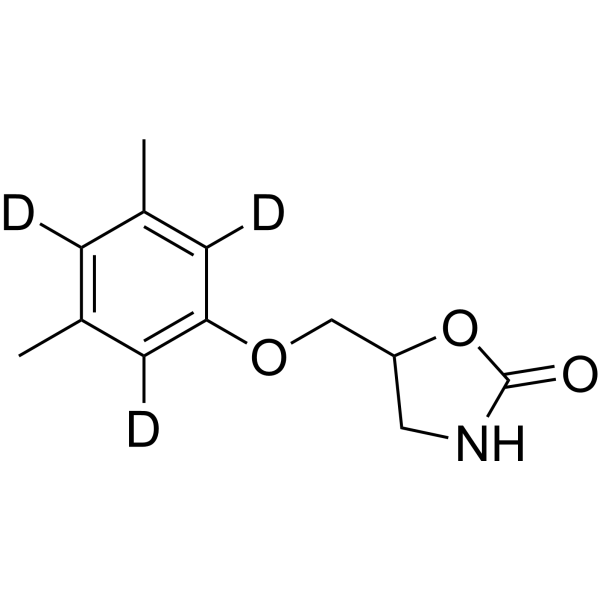
Metaxalone-d3 is the deuterium labeled Metaxalone. Metaxalone (AHR438; NSC170959) is an FDA-approved muscle relaxant. Metaxalone acts mainly on the central nervous system and achieves muscle relaxation by inhibiting polysynaptic reflex arcs. In addition, Metaxalone is an inhibitor of MAO-A, which has anti-inflammatory and antioxidant effects. Metaxalone inhibits IL-1β-induced inflammatory phenotype, modulates NF-κB and other related signaling pathways, and decreases MAO-A expression and activity in IL-1β-treated microglia .
loading...
    loading...
Cat. No.: HY-L013
3,961 compounds

Neuronal Signaling is involved in the regulation of the mechanisms of the central nervous system (CNS) such as its structure, function, genetics and physiology as well as how this can be applied to understand diseases of the nervous system. Every information processing system in the CNS is composed of neurons and glia, neurons have evolved unique capabilities for intracellular signaling (communication within the cell) and intercellular signaling (communication between cells). G protein-coupled receptors (GPCRs), including 5-HT receptor, histamine receptor, opioid receptor, etc. are the largest class of sensory proteins and are important therapeutic targets in Neuronal Signaling. Besides, Notch signaling, such as β- and γ-secretase, also plays multiple roles in the development of the CNS including regulating neural stem cell (NSC) proliferation, survival, self-renewal and differentiation. GPCR dysfunction caused by receptor mutations and environmental challenges contributes to many neurological diseases. Notch signaling in neurons, glia, and NSCs is also involved in pathological changes that occur in disorders such as stroke, Alzheimer's disease and CNS tumors. Thus, targeting Neuronal Signaling, such as notch signaling and GPCRs, can be used as therapeutic interventions for several different CNS disorders.

MCE designs a unique collection of 3,961 Neuronal Signaling-related compounds that act as a useful tool for the research of neuronal regulation and neuronal diseases.

Cat. No.: HY-A0161S
Synonyms: Clofedanol-13C6; Calmotusin-13C6; NSC 113595-13C6
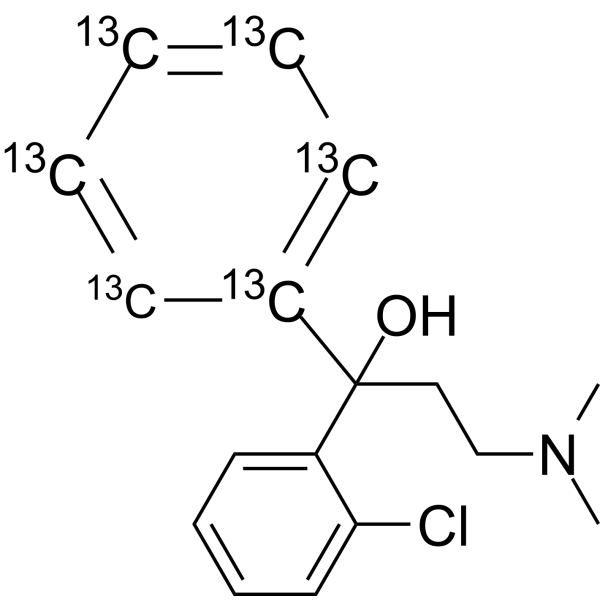
Chlophedianol- 13C6 is the 13C labeled Chlophedianol (HY-A0161). Chlophedianol is an orally active and potent antitussive agent. Chlophedianol can be used for the research of acute cough due to upper respiratory tract infections (URIs) .
loading...
    loading...
Cat. No.: HY-B0213S1
Synonyms: Sulfametoxydiazine-13C6; 5-Methoxysulfadiazine-13C6; NSC 683528-13C6
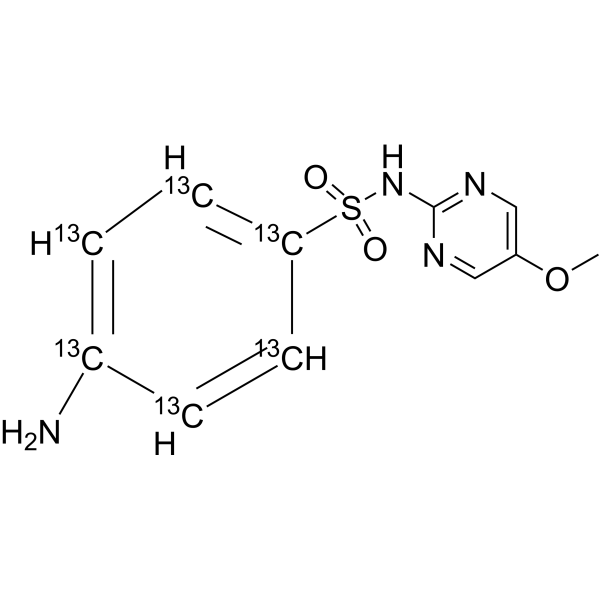
Sulfameter- 13C6 (Sulfametoxydiazine- 13C6) is the 13C6 labeled Sulfameter (HY-B0213). Sulfameter (Sulfametoxydiazine) is an orally active long-acting sulfonamide antibiotic. Sulfameter is active against both Gram-positive and Gram-negative bacteria. Sulfameter can be used for the research of diseases such as respiratory and urinary tract infections .
loading...
    loading...
Cat. No.: HY-W777393
CAS No.: 1189992-05-9
Synonyms: 7-Hydroxycoumarin-13C6; Hydrangin-13C6; NSC 19790-13C6
Umbelliferone- 13C6 (7-Hydroxycoumarin- 13C6) is the 13C-labeled Umbelliferone (HY-N0573). Umbelliferone (7-Hydroxycoumarin), a natural orally active product of the coumarin family, is a fluorescing compound which can be used as a sunscreen agent. Umbelliferone induces cell cycle arrest, apoptosis and DNA fragmentation in HepG2 cells. Umbelliferone exhibits significant anticancer effects. Umbelliferone attenuates the alteration characteristics of allergic airway inflammation. Umbelliferone displays the neuroprotective effects and cross the blood-brain barrier. Umbelliferone exhibits anti-inflammatory and antioxidant effects in chronic alcohol-fed rats .
loading...
    loading...
Cat. No.: HY-Y0978S4
CAS No.: 145143-01-7
Synonyms: N-tert-Butoxycarbonyl-2-aminoacetic acid-13C,15N; NSC 127669-13C,15N
Boc-Glycine- 13C, 15N (N-tert-Butoxycarbonyl-2-aminoacetic acid- 13C, 15N) is the 13C- and 15N-labeled Boc-Glycine (HY-Y0978). Boc-Glycine is a Glycine (HY-Y0966) derivative .
loading...
    loading...
Cat. No.: HY-B1119R
CAS No.: 3380-34-5
Triclosan (Standard) is the analytical standard of Triclosan. This product is intended for research and analytical applications. Triclosan is a broad-spectrum antibacterial agent that inhibits bacterial fatty acid synthesis at the enoyl-acyl carrier protein reductase (FabI) step. Triclosan inhibits E. coli enoyl-acyl carrier protein reductase (FabI) and FabI containing a glycine-to-valine substitution at position 93 (FabIG93V) with IC50s of 2 µM and 10 µM, respectively. Triclosan causes apoptotic effect in cultured rat neural stem cells (NSC). Triclosan exacerbates colitis and colitis-associated colorectal tumorigenesis in animal models .
loading...
    loading...
Cat. No.: HY-W653962
CAS No.: 2726926-25-4
Triclosan- 13C6 is 13C labeled Triclosan. Triclosan is a broad-spectrum antibacterial agent that inhibits bacterial fatty acid synthesis at the enoyl-acyl carrier protein reductase (FabI) step. Triclosan inhibits E. coli enoyl-acyl carrier protein reductase (FabI) and FabI containing a glycine-to-valine substitution at position 93 (FabIG93V) with IC50s of 2 μM and 10 μM, respectively. Triclosan causes apoptotic effect in cultured rat neural stem cells (NSC). Triclosan exacerbates colitis and colitis-associated colorectal tumorigenesis in animal models .
loading...
    loading...
Cat. No.: HY-12008S1
CAS No.: 1210610-07-3
Synonyms: CP-358774-13C6 hydrochloride; NSC 718781-13C6 hydrochloride; OSI-774-13C6 hydrochloride
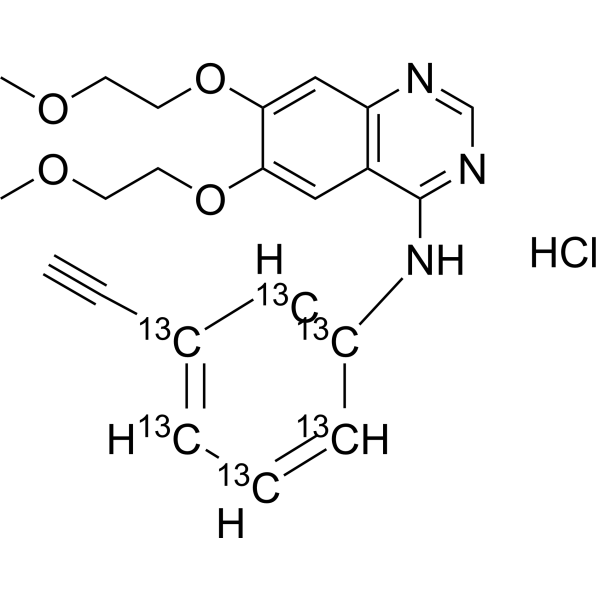
Erlotinib- 13C6 hydrochloride (CP-358774- 13C6 hydrochloride) is the 13C-labeled Erlotinib Hydrochloride (HY-12008). Erlotinib (CP-358774) Hydrochloride is a selective, orally active EGFR tyrosine kinase inhibitor. Erlotinib Hydrochloride also acts as a substrate and inhibitor of OATP2B1, with an IC50 of approximately 0.079 μM for inhibiting OATP2B1-mediated uptake of estrone 3-sulfate. Erlotinib Hydrochloride blocks EGFR phosphorylation, downstream signal transduction, as well as the growth and proliferation of cancer cells. Erlotinib Hydrochloride inhibits MMP-10-mediated renal injury, fibrotic lesions, the ERK1/2, GSK-3β and β-catenin signaling pathways, as well as the deposition of fibronectin, α-SMA, collagen and renal injury markers. Erlotinib Hydrochloride is metabolized via CYP3A to produce the active metabolite OSI-420. Erlotinib Hydrochloride can be used in research related to non-small cell lung cancer, gastric cancer, papillary renal cell carcinoma, EGFR inhibitor resistance and renal fibrosis .
loading...
    loading...

