101 Results for "

morphine

" in MedChemExpress (MCE) Product Catalog:
Products (101)

101 Results for "morphine" in MCE Product Catalog:

Cat. No.: HY-N0666AR
CAS No.: 1115-63-5
L-Aspartic acid potassium (Standard) is the analytical standard of L-Aspartic acid potassium (HY-N0666A). This product is intended for research and analytical applications. L-Aspartic acid potassium (potassium L-aspartate) is a NMDA receptor agonist and acidic amino acid. L-Aspartic acid potassium has no independent analgesic activity. L-Aspartic acid potassium can antagonize the analgesic effects of D-Aspartic acid and Morphine. L-Aspartic acid potassium regulates polymorph transformation, crystal growth/aggregation and nucleation processes of calcium carbonate, and can serve as a biomineralization template. L-Aspartic acid potassium promotes burst firing of central neurons. L-Aspartic acid potassium can be used in studies related to cerebral ischemia and epilepsy .
loading...
    loading...
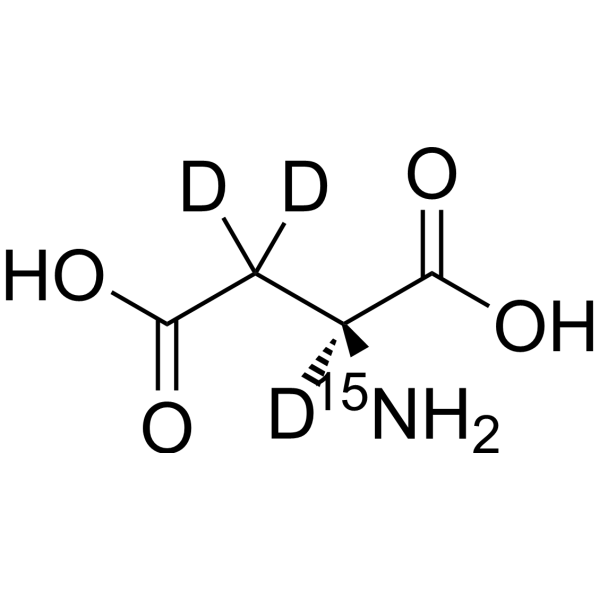
Cat. No.: HY-N0666S9
CAS No.: 1308264-52-9
L-Aspartic acid- 15N,d3 is the 15N, deuterated-labeled L-Aspartic acid (HY-N0666). L-Aspartic acid is a NMDA receptor agonist and acidic amino acid. L-Aspartic acid has no independent analgesic activity. L-Aspartic acid can antagonize the analgesic effects of D-Aspartic acid and Morphine. L-Aspartic acid regulates polymorph transformation, crystal growth/aggregation and nucleation processes of calcium carbonate, and can serve as a biomineralization template. L-Aspartic acid promotes burst firing of central neurons. L-Aspartic acid can be used in studies related to cerebral ischemia and epilepsy .
loading...
    loading...
Cat. No.: HY-10895R
CAS No.: 249889-64-3
Synonyms: SB 334867A (Standard)
SB-334867 (Standard) is the analytical standard of SB-334867. This product is intended for research and analytical applications. SB-334867 (SB 334867A) is an excellent,selective and blood-brain barrier permeable orexin-1 (OX1) receptor antagonist, shows selectivity over OX2 (pKb=7.4), 100-fold over 5-HT2B, 5-HT2C with pKi values of 5.4 and 5.3, respectively . SB-334867 reduces ethanol consumption and inhibits the acquisition of morphine-induced sensitization to locomotor activity in vivo .
loading...
    loading...
Cat. No.: HY-N0666CR
CAS No.: 3792-50-5
Synonyms: Sodium L-aspartate (Standard)
L-Aspartic aicd sodium (Standard) (Sodium L-aspartate (Standard)) is the analytical standard of L-Aspartic aicd sodium (HY-N0666C). This product is intended for research and analytical applications. L-Aspartic acid sodium (Sodium L-aspartate) is a NMDA receptor agonist and acidic amino acid. L-Aspartic acid sodium has no independent analgesic activity. L-Aspartic acid sodium can antagonize the analgesic effects of D-Aspartic acid and Morphine. L-Aspartic acid sodium regulates polymorph transformation, crystal growth/aggregation and nucleation processes of calcium carbonate, and can serve as a biomineralization template. L-Aspartic acid sodium promotes burst firing of central neurons. L-Aspartic acid sodium can be used in studies related to cerebral ischemia and epilepsy .
loading...
    loading...
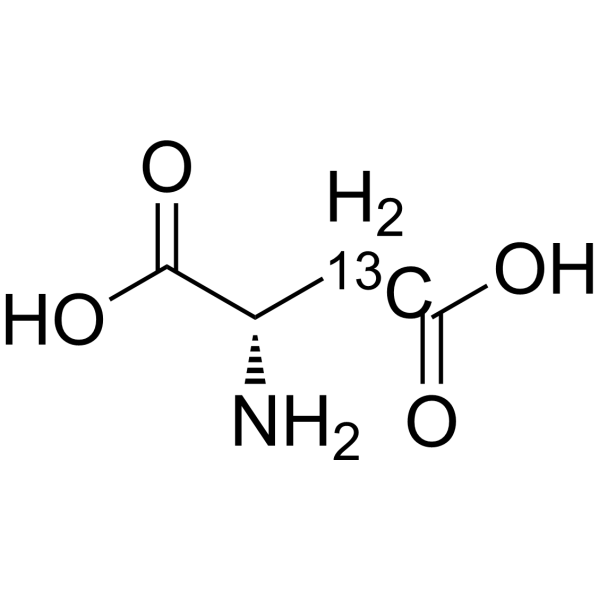
Cat. No.: HY-N0666S10
CAS No.: 68261-19-8
Synonyms: [3-13C]Aspartic acid
L-Aspartic acid- 13C-1 ([3- 13C]Aspartic acid) is the 13C-labeled L-Aspartic acid (HY-N0666). L-Aspartic acid is a NMDA receptor agonist and acidic amino acid. L-Aspartic acid has no independent analgesic activity. L-Aspartic acid can antagonize the analgesic effects of D-Aspartic acid and Morphine. L-Aspartic acid regulates polymorph transformation, crystal growth/aggregation and nucleation processes of calcium carbonate, and can serve as a biomineralization template. L-Aspartic acid promotes burst firing of central neurons. L-Aspartic acid can be used in studies related to cerebral ischemia and epilepsy .
loading...
    loading...
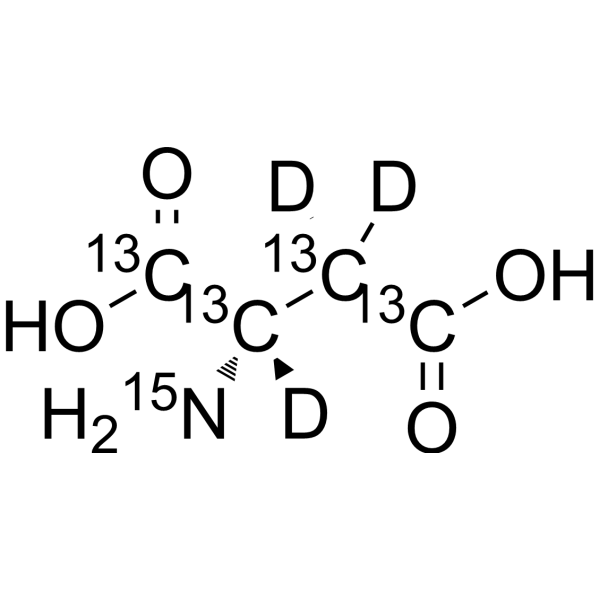
Cat. No.: HY-N0666S5
CAS No.: 1217475-13-2
L-Aspartic acid- 13C4, 15N,d3 is the 15N, deuterated, 13C-labeled L-Aspartic acid (HY-N0666). L-Aspartic acid is a NMDA receptor agonist and acidic amino acid. L-Aspartic acid has no independent analgesic activity. L-Aspartic acid can antagonize the analgesic effects of D-Aspartic acid and Morphine. L-Aspartic acid regulates polymorph transformation, crystal growth/aggregation and nucleation processes of calcium carbonate, and can serve as a biomineralization template. L-Aspartic acid promotes burst firing of central neurons. L-Aspartic acid can be used in studies related to cerebral ischemia and epilepsy .
loading...
    loading...
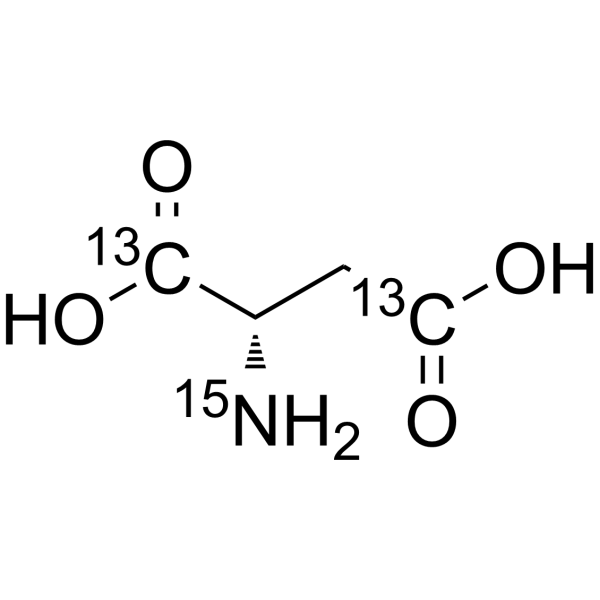
Cat. No.: HY-N0666S7
CAS No.: 2483830-03-9
L-Aspartic acid-1,4- 13C2, 15N is the 15N, 13C-labeled L-Aspartic acid (HY-N0666). L-Aspartic acid is a NMDA receptor agonist and acidic amino acid. L-Aspartic acid has no independent analgesic activity. L-Aspartic acid can antagonize the analgesic effects of D-Aspartic acid and Morphine. L-Aspartic acid regulates polymorph transformation, crystal growth/aggregation and nucleation processes of calcium carbonate, and can serve as a biomineralization template. L-Aspartic acid promotes burst firing of central neurons. L-Aspartic acid can be used in studies related to cerebral ischemia and epilepsy .
loading...
    loading...
Cat. No.: HY-118807A
CAS No.: 6036-95-9
Synonyms: Pyrilamine hydrochloride
Mepyramine hydrochloride (Pyrilamine hydrochloride) is a selective histamine H1 receptor antagonist and KCNQ channel inhibitor, with an IC50 of 12.5 μM against KCNQ2/Q3. Mepyramine hydrochloride shows no activity against allergic asthma in mice when used alone, but modulates the effect of JNJ 7777120 (HY-13508) on allergic asthma in mice; it inhibits the development of morphine physical dependence and increases histamine levels in mouse brains. Mepyramine hydrochloride can be used in studies related to seizures, convulsions, allergic asthma and morphine physical dependence .
loading...
    loading...
Cat. No.: HY-118807S
Synonyms: Pyrilamine-d2
Mepyramine-d2 (Pyrilamine-d2) is the d2-labeled Mepyramine (HY-118807). Mepyramine (Pyrilamine) is a selective histamine H1 receptor antagonist and KCNQ channel inhibitor, with an IC50 of 12.5 μM against KCNQ2/Q3. Mepyramine shows no activity against allergic asthma in mice when used alone, but modulates the effect of JNJ 7777120 (HY-13508) on allergic asthma in mice; it inhibits the development of morphine physical dependence and increases histamine levels in mouse brains. Mepyramine can be used in studies related to seizures, convulsions, allergic asthma and morphine physical dependence .
loading...
    loading...
Cat. No.: HY-E72113
Target:  

UGT

Research Areas:  

Cardiovascular Disease

Human UGT2B7 is a UDP-glucuronosyltransferase isoform. Human UGT2B7 catalyzes the glucuronidation of Clopidogrel carboxylic acid (HY-141749A), Chloramphenicol (HY-B0239), and Morphine. Human UGT2B7 can be used in studies related to acute coronary syndrome and thrombus-induced events .
loading...
    loading...
Cat. No.: HY-182584
CAS No.: 153607-45-5
Target:  

5-HT Receptor

Research Areas:  

Neurological Disease

S 15931 is a 5-HT1A receptor inhibitor. S 15931 inhibits the late-phase hindpaw licking response induced by formalin and the abdominal writhing response induced by acetic acid in Mus musculus. S 15931 abolishes the spontaneous tail-flick response induced by 8-OH-DPAT in Rattus norvegicus and potentiates the analgesic effect of morphine. S 15931 is applicable for pain-related research .
loading...
    loading...
Cat. No.: HY-106840R
CAS No.: 118101-09-0
L-365260 (Standard) is the analytical standard of L-365260 (HY-106840). This product is intended for research and analytical applications. L-365260 is an orally active and selective antagonist of non-peptide gastrin and brain cholecystoKinin receptor (CCK-B), with Kis of 1.9 nM and 2.0 nM, respectively. L-365260 interacts in a stereoselective and competitive manner with guinea pig stomach gastrin and brain CCK receptors. L-365260 can enhance Morphine analgesia and prevents Morphine tolerance .
loading...
    loading...
Cat. No.: HY-104006R
CAS No.: 1069498-96-9
Research Areas:  

Neurological Disease

CYM51010 (Standard) is the analytical standard of CYM51010 (HY-104006). This product is intended for research and analytical applications. CYM51010 is a biased ligand of μ-opioid receptor – δ-opioid receptor heterodimers with an EC50 of 403 nM. CYM51010 exhibits anti-nociceptive activity similar to morphine but with a decreased levels of tolerance development and withdrawal symptoms .
loading...
    loading...
Cat. No.: HY-23133
CAS No.: 961-45-5
Target:  

Adenosine Receptor

Research Areas:  

Neurological Disease

8-Phenyltheophylline is an adenosine receptor (adenosine receptor) antagonist. 8-Phenyltheophylline blocks adenosine-stimulated cAMP accumulation, inhibits tissue-selective cAMP hydrolysis, and antagonizes the inhibitory effects of adenosine. 8-Phenyltheophylline enhances apomorphine-induced rotational behavior in lesioned rats, reverses the analgesic effect of morphine in the rat hot plate test, and slightly enhances contractile responses of the atrium and ileum. 8-Phenyltheophylline can be used in studies related to unilateral nigrostriatal pathway injury .
loading...
    loading...
Cat. No.: HY-10895AR
CAS No.: 792173-99-0
Synonyms: SB334867A free base (Standard)
SB-334867 free base (Standard) is the analytical standard of SB-334867 (free base) (HY-10895A). This product is intended for research and analytical applications. SB-334867 free base (SB334867A free base) is an excellent, selective and blood–brain barrier permeable orexin-1 (OX1) receptor antagonist, shows selectivity over OX2 (pKb=7.4), 100-fold over 5-HT2B, 5-HT2C with pKi values of 5.4 and 5.3, respectively . SB-334867 reduces ethanol consumption and inhibits the acquisition of morphine-induced sensitization to locomotor activity in vivo .
loading...
    loading...
Cat. No.: HY-W583729
CAS No.: 26023-30-3
Research Areas:  

Others

DL-Poly (lactic acid) is a biodegradable poly (α-hydroxy acid) matrix and a coating material for controlled drug release. DL-Poly (lactic acid) is classified as a drug release retardant, which degrades into natural lactic acid monomers, an intermediate product of carbohydrate metabolism, enabling complete drug delivery that lasts for several weeks. Its drug release rate is affected by the pH of the surrounding environment .
loading...
    loading...
Cat. No.: HY-14790A
CAS No.: 635724-55-9
Synonyms: PNU-165442G; (S,S)-Reboxetine succinate
Esreboxetine succinate (PNU-165442G; (S,S)-Reboxetine succinate) is a selective norepinephrine transporter (NET) inhibitor, with a pIC50 of 9.6 and a pKi of 9.2 in rats, and it can cross the blood-brain barrier. Esreboxetine succinate increases urethral closure pressure and urethral resistance in rats. Esreboxetine succinate is applicable to research related to inflammatory pain and stress urinary incontinence .
loading...
    loading...
Cat. No.: HY-L071
594 compounds

Alkaloids are a large and complex group of cyclic compounds that contain N. About 2,000 different alkaloids have been isolated. Important alkaloids include morphine, strychnine, atropine, colchicine, ephedrine, quinine, and nicotine. Alkaloids are useful as diet ingredients, supplements, and pharmaceuticals, in medicine and in other applications in human life. They showed anti-inflammatory, anticancer, analgesics, local anesthetic and pain relief, neuropharmacologic, antimicrobial, antifungal, and many other activities. Alkaloids are also important compounds in organic synthesis for searching new semisynthetic and synthetic compounds with possibly better biological activity than parent compounds.

MCE designs a unique collection of 594 alkaloids that all come from natural products. MCE Alkaloids Library is a useful tool for drug discovery that can be used for high throughput screening (HTS) and high content screening (HCS).

Cat. No.: HY-E72112
Target:  

UGT

Research Areas:  

Cancer

Human UGT1A10 is a UDP-glucuronosyltransferase. UGT1A10 catalyzes the glucuronidation of Mycophenolic acid (HY-B0421). Human UGT1A10 mediates glucuronidation modification of 34 out of 42 tested bioflavonoids. Human UGT1A10 is applicable to relevant research on colorectal cancer .
loading...
    loading...
Cat. No.: HY-16900G
CAS No.: 61413-54-5
Rolipram GMP is Rolipram (HY-16900) produced by using GMP guidelines. GMP small molecules works appropriately as an auxiliary reagent for cell therapy manufacture. Rolipram is a PDE4 inhibitor, with blood-brain barrier permeability, that reverses β-amyloid-induced learning and memory impairment in rats. Rolipram elevates intracellular cAMP and clevels and regulates the cAMP/CREB signaling pathway, thereby alleviating neuroinflammation and apoptotic responses. Rolipram promotes neuronal differentiation of human bone marrow mesenchymal stem cells and inhibits Methamphetamine- and morphine-induced hyperlocomotion in mice. Rolipram also reduces the viability of glioblastoma stem-like cells and enhances Bevacizumab (HY-P9906)-induced cell death. Rolipram inhibits the expression of proinflammatory cytokines and enhances central noradrenergic transmission. Rolipram is mainly used in studies related to various central nervous system diseases including Alzheimer's disease, major depressive disorder, glioblastoma multiforme, and multiple sclerosis .
loading...
    loading...

