
1058 Results for "

peripheral

" in MedChemExpress (MCE) Product Catalog:
Products (1058)

1058 Results for "peripheral" in MCE Product Catalog:

Cat. No.: HY-183620
Target:  

NTPDase CD73

Research Areas:  

Cancer

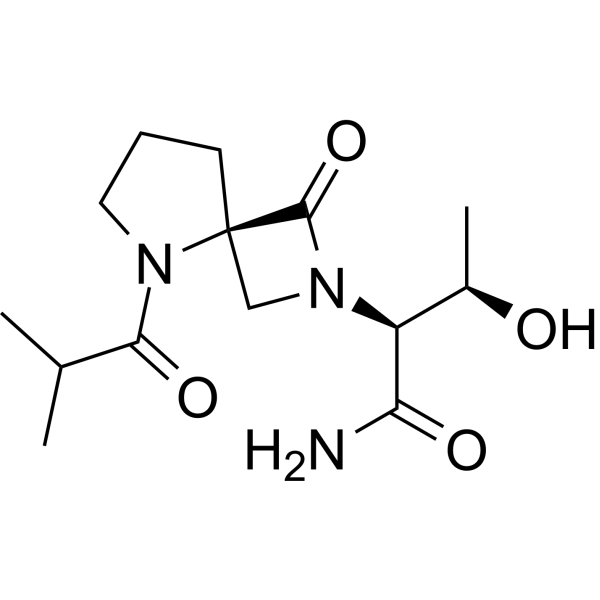
PSB-24379 is a CD39 inhibitor that potently inhibits human membrane-bound CD39 (Ki = 77.4 nM) and truncated soluble human CD39 (Ki = 23.1 nM). PSB-24379 reduces the level of ATP hydrolysis in melanoma and breast cancer cell membranes. PSB-24379 partially reverses ATP-mediated suppression of T cell activation and proliferation in a high-ATP environment. PSB-24379 can be used in research related to melanoma and breast cancer .
loading...
    loading...
Cat. No.: HY-183767
Aurora kinase/ALK-IN-1 is a dual Aurora A kinase and ALK inhibitor with IC50 values of 0.296 μM and 0.332 μM, respectively. Aurora kinase/ALK-IN-1 induces G2/M cell cycle arrest, triggers mitochondrial apoptosis, elevates intracellular reactive oxygen species (ROS) levels, and inhibits ALDH1 activity. Aurora kinase/ALK-IN-1 demonstrates cytotoxicity and tumor selectivity. Aurora kinase/ALK-IN-1 can be used for the research of anaplastic large cell lymphoma .
loading...
    loading...
Cat. No.: HY-P11868
PADI4_3 is a substrate-competitive and selective PADI4 inhibitor with an IC50 of 56 nM. PADI4_3 blocks citrullination of histone H3 and reduces the formation of neutrophil extracellular traps. PADI4_3 can be used in research related to autoimmune diseases and cancers .
loading...
    loading...
Cat. No.: HY-P992212

Target:  

L-Selectin

Research Areas:  

Inflammation/Immunology

Anti-CD62L Antibody (DREG-200) is a human monoclonal antibody targeting CD62L/L-selectin. Anti-CD62L Antibody (DREG-200) binds to residues 45, 46 and 47 of L-selectin, and blocks L-selectin-mediated interactions, neutrophil rolling, adhesion, aggregation, secondary anchoring, as well as leukocyte rolling on ligands. Anti-CD62L Antibody (DREG-200) reduces myocardial necrosis, coronary endothelial dysfunction, and neutrophil migration driven by neutrophil microparticles. Anti-CD62L Antibody (DREG-200) exerts cardioprotective effects in feline models. Anti-CD62L Antibody (DREG-200) can be used in studies related to myocardial ischemia-reperfusion injury. The recommended isotype control is Mouse IgG1 kappa (HY-P99977) .
loading...
    loading...
Cat. No.: HY-P992390

Target:  

CD3

Research Areas:  

Inflammation/Immunology

IOR-T3 is a monoclonal antibody targeting CD3, with biological activities related to T cell activation regulation . IOR-T3 uses its variable region to competitively engage surface CD3 on lymphocytes and trigger robust T cell proliferation and activation. IOR-T3 and its derivatives can be used in studies related to acute transplant rejection .
loading...
    loading...
Cat. No.: HY-P992413

Target:  

Integrin

Research Areas:  

Inflammation/Immunology

MOR102 is a fully human IgG4 monoclonal antibody and an ICAM-1 inhibitor, lacking cross-reactivity with ICAM-2 and ICAM-3. MOR102 binds to the LFA-1 binding site within ICAM-1 domain 1, blocks ICAM-1/LFA-1 interaction, binds human keratinocytes with increased binding to interferon-γ-stimulated keratinocytes. MOR102 inhibits lymphocyte adhesion, reduces lymphocyte proliferation, prevents local T-cell activation, reduces inflammatory infiltrate, restores orthokeratotic differentiation, and reduces epidermal thickness. MOR102 can be used for the research of psoriasis .
loading...
    loading...
Cat. No.: HY-P992440

Target:  

Interleukin Related

Research Areas:  

Inflammation/Immunology

PF-06817024 is a high affinity, humanized antibody that binds IL-33. PF-06817024 binds to IL-33, prevents IL-33 from binding to receptor ST2, and inhibits downstream type 2 inflammatory responses. PF-06817024 can be used for the research of allergic diseases .
loading...
    loading...
Cat. No.: HY-13443S
Synonyms: Exenatide (Leu-13C6,15N) TFA
Exendin-4 (Leu- 13C6, 15N) TFA (Exenatide (Leu- 13C6, 15N) TFA) is the 13C, 15N-labeled Exendin-4 (HY-13443). Exendin‑4 (Exenatide) is an orally active, blood-brain barrier-permeable glucagon-like peptide-1 receptor (GLP‑1 receptor) agonist that resists degradation mediated by dipeptidyl peptidase IV. Exendin‑4 mediates multiple glucose-regulating effects, including stimulation of glucose-dependent insulin secretion, inhibition of glucagon production, increase in β-cell mass, delay of gastric emptying, reduction of food intake, improvement of peripheral insulin sensitivity, and restoration of normal islet structure. Exendin‑4 inhibits oxidative stress, alleviates inflammatory responses, and reduces neuronal apoptosis. Exendin‑4 reduces the aggregation level of mutant huntingtin, improves motor function, prolongs survival time, and regulates the expression levels of leptin and ghrelin. Exendin‑4 can be used in research related to type 2 diabetes, acute ischemic stroke, and Huntington's disease .
loading...
    loading...
Cat. No.: HY-135741
CAS No.: 2012536-16-0
Purity:  98.77%
NYX-2925 is an orally active, blood-brain barrier-permeable NMDAR modulator, with EC50 values of 55 pM, 28 fM, 11 pM and 55 pM against NR2A, NR2B, NR2C and NR2D, respectively . NYX-2925 enhances synaptic plasticity, long-term potentiation, metaplasticity, structural plasticity, learning ability, memory capacity and circadian rhythm amplitude. NYX-2925 regulates the signaling pathways of Src kinase, EIF2, mTOR, CDK5 and protein kinase A (PKA). NYX-2925 increases the levels of PSD-95, GluA1, activated Src and synaptic GluN2B . NYX-2925 is used in the research of neuropathic pain, fibromyalgia, painful diabetic peripheral neuropathy, post-traumatic stress disorder, cognitive impairment, depression, age-related cognitive decline and NMDAR-mediated central nervous system diseases .
loading...
    loading...
Cat. No.: HY-137055
CAS No.: 1171824-96-6
Target:  

Others

Research Areas:  

Others

PF-3774076 is a highly central nervous system (CNS) penetrant, potent, and selective human α1A-adrenoceptor partial agonist. It exhibits good potency and selectivity in multiple binding and functional assays. PF-3774076 increases peak urethral pressure in anesthetized female dogs in a dose-dependent manner via a central mechanism. PF-3774076 affects both the proximal and distal portions of the urethra in vivo. These properties suggest that PF-3774076 may have significant benefit in the treatment of stress urinary incontinence (SUI) as a CNS-penetrant α1A receptor partial agonist. However, despite its partial agonism and selectivity for α1A receptors, PF-3774076 failed to provide adequate safety differences in in vivo models of cardiovascular function. This may be due to the simultaneous activation of both peripheral and central α1A receptors. These data suggest that while central α1A partial agonists may have significant benefit in the treatment of SUI, this class of agents may have difficulty achieving the desired urethral selectivity without affecting cardiovascular function.
loading...
    loading...
Cat. No.: HY-145473S
Synonyms: 15(S)-HETE-SAPE; 15(S)-Hydroxyeicosatetraenoic acid-SAPE-d11; 1-Stearoyl-2-15(S)-HETE-sn-glycero-3-Phosphatidylethanolamine-d11
1-Stearoyl-2-15(S)-HETE-sn-glycero-3-PE-d11 (15(S)-HETE-SAPE-d11) is deuterium labeled 1-Stearoyl-2-15(S)-HETE-sn-glycero-3-PE. 1-Stearoyl-2-15(S)-HETE-sn-glycero-3-PE is a phospholipid that contains stearic acid (HY-B2219) at the sn-1 position and 15(S)-HETE at the sn-2 position. It is formed in human peripheral monocytes activated by the calcium ionophore A23187 (HY-N6687) by direct oxidation of 1-stearoyl-2-arachidonoyl-sn-glycero-3-PE (SAPE) by 15-LO. Phosphoethanolamine (PE) HETEs (PE-HETEs), including 1-stearoyl-2-15(S)-HETE-sn-glycero-3-PE, are the main source of esterified HETE in ionophore-activated monocytes .
loading...
    loading...
Cat. No.: HY-164401A
CAS No.: 1802735-31-4
Research Areas:  

Cancer

QBS10072S dihydrochloride is a LAT1-selective substrate with blood-brain barrier permeability that inhibits tumor growth. QBS10072S dihydrochloride enters LAT1-expressing tumor cells via LAT1-mediated active transport, induces interstrand DNA cross-linking and cell apoptosis, and reduces leptomeningeal dissemination. QBS10072S dihydrochloride can be used in studies related to glioblastoma multiforme, diffuse intrinsic pontine glioma, triple-negative breast cancer brain metastases, and aggressive T-cell lymphoma .
loading...
    loading...
Cat. No.: HY-184508
Target:  

Ligands for E3 Ligase

Research Areas:  

Cancer

E3 ligase Ligand 81 is a VHL E3 ubiquitin ligase ligand and constitutes the VHL ligand moiety of R4VPL3-1 (HY-184506). R4VPL3-1 is a PROTAC-like bifunctional degrader linking RNF4 and VHL; it binds to and modifies GPX4, thereby inhibiting its anti-ferroptotic function. R4VPL3-1 induces iron-dependent lipid peroxidation and rapid ferroptosis-mediated cell death in cancer cells. E3 ligase Ligand 81 can be used in research related to targeted protein degradation and tumors such as melanoma .
loading...
    loading...
Cat. No.: HY-186050
CAS No.: 3105300-99-7
Target:  

Insulin Receptor

Research Areas:  

Metabolic Disease

GIPR antagonist 2 is a glucose-dependent insulinotropic polypeptide receptor (GIPR) antagonist with an IC50 of 7.2 nM in CHO-K1 cells. GIPR antagonist 2 can be used in research related to diseases such as obesity, type 2 diabetes, non-alcoholic fatty liver disease, and atherosclerosis .
loading...
    loading...
Cat. No.: HY-NP143
CAS No.: 93928-24-6
Nerve Growth Factor 2.5S,murine submaxillary gland is a neurotrophic polypeptide and protein growth factor isolated from murine submaxillary glands. Nerve Growth Factor 2.5S,murine submaxillary gland increases the survival rate, phagocytic capacity and superoxide anion production level of mouse cells. Nerve Growth Factor 2.5S,murine submaxillary gland acts through cell membrane surface receptors to mediate the differentiation and maintenance of adrenergic neurons in the sympathetic nervous system. Nerve Growth Factor 2.5S,murine submaxillary gland loses its activity and undergoes dimer dissociation due to oxidation; it remains active after modification of specific tryptophan residues, while its tyrosine residues are not essential for activity. Nerve Growth Factor 2.5S,murine submaxillary gland may play a role in the inflammatory process .
loading...
    loading...
Cat. No.: HY-P991665
Synonyms: OBT357NF; OBT357

Research Areas:  

Cancer

MEN1112 (OBT357NF; OBT357) is a defucosylated humanized monoclonal antibody targeting Bst1/CD157, with an EC50 of 0.4 nM. MEN1112 binds to Bst1/CD157 on acute myeloid leukemia cells, triggers slow antigen internalization, induces antibody-dependent cell-mediated cytotoxicity, and mediates the lysis of acute myeloid leukemia cells and blasts. MEN1112 is applicable for research related to acute myeloid leukemia .
loading...
    loading...
Cat. No.: HY-P992052

Research Areas:  

Inflammation/Immunology

Anti-CD11a Antibody (AL-57) is a monoclonal antibody targeting human CD11a. Anti-CD11a Antibody (AL-57) binds to HA cells in a dose-dependent manner but did not bind to LA cells. Anti-CD11a Antibody (AL-57) preferentially binds to the active conformation of LFA-1 and blocks LFA-1-mediated adhesion and lymphocyte proliferation. Anti-CD11a Antibody (AL-57) can be used for the research of inflammatory and autoimmune diseases .
loading...
    loading...
Cat. No.: HY-121272
CAS No.: 98106-17-3
Synonyms: A-56619
Research Areas:  

Infection

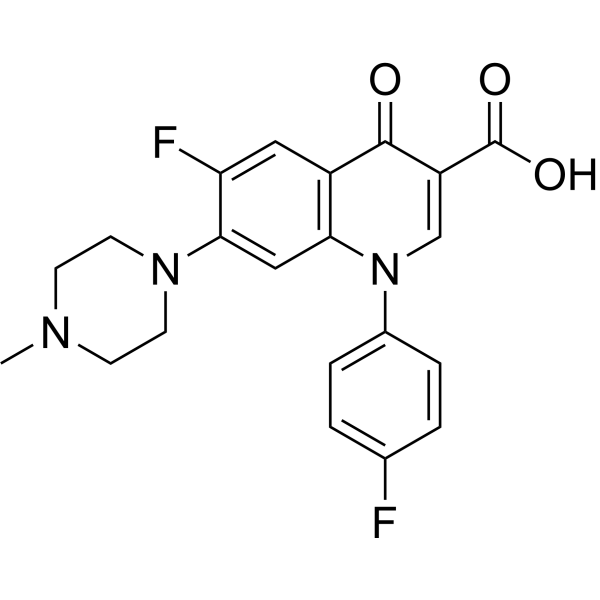
Difloxacin (A-56619) is an orally active bactericidal agent. Difloxacin inhibits bacterial DNA gyrase. Difloxacin exhibits concentration-dependent bactericidal activity. Difloxacin shows strong in vitro activity against a variety of Gram-positive and Gram-negative bacteria. Difloxacin can be used in research related to colibacillosis and Staphylococcus aureus infections .
loading...
    loading...
Cat. No.: HY-149906
CAS No.: 153021-75-1
Synonyms: GEM91
Target:  

HIV mRNA

Research Areas:  

Infection

Trecovirsen (GEM91) is an antiviral agent targeting HIV gag mRNA, which hybridizes with complementary HIV gag mRNA at the initiation site. Trecovirsen induces a reversible, dose-dependent prolongation of activated partial thromboplastin time via its polyanionic property. Trecovirsen is applicable to research related to HIV infection .
loading...
    loading...
Cat. No.: HY-B2162B
CAS No.: 9082-07-9
Synonyms: Chondroitin polysulfate sodium (from bovine)
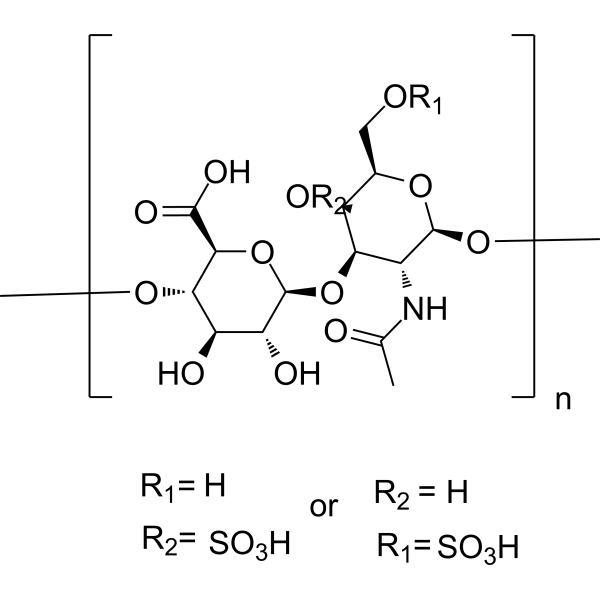
Chondroitin sulfate (Chondroitin polysulfate) sodium (from bovine)) is a sulfated linear polysaccharide extracted from bovine sources, belonging to glycosaminoglycans. Chondroitin sulfate sodium (from bovine) inhibits osteoclast-mediated bone resorption and exhibits antioxidant activity, which is negatively correlated with molecular weight. Chondroitin sulfate sodium (from bovine) can be used in studies related to osteoarthritis .
loading...
    loading...

