115 Results for "

Vomiting

" in MedChemExpress (MCE) Product Catalog:
Products (115)

115 Results for "Vomiting" in MCE Product Catalog:

Cat. No.: HY-16347
CAS No.: 290296-54-7
Synonyms: CID 6451149 hydrochloride
Target:  

Neurokinin Receptor

Research Areas:  

Neurological Disease Endocrinology

Netupitant hydrochloride (CID 6451149 hydrochloride) is a blood-brain barrier penetrable, orally active NK1 receptor inhibitor with a Ki of 0.95 nM (CHO cells) against the human receptor. Netupitant hydrochloride antagonizes the effects induced by Substance P, inhibits the maximal response of Substance P with a long-lasting action, and suppresses NK1 agonist-induced behaviors in mice and gerbils. Netupitant hydrochloride reduces the frequency of bladder contractions, prolongs contraction intervals, decreases basal pressure at high doses, and acts on the afferent branch of the micturition reflex. Netupitant hydrochloride can be used in research related to overactive bladder, chemotherapy-induced nausea and vomiting, post-operative nausea and vomiting, anxiety disorders, and depression .
loading...
    loading...
Cat. No.: HY-17382D
CAS No.: 5581-45-3
Research Areas:  

Metabolic Disease Cancer

Metoclopramide dihydrochloride hydrate is a potent antagonist of 5-HT3 and dopamine D2 receptor, with IC50s of 308 nM and 483 nM, respectively. Metoclopramide dihydrochloride hydrate can be used for the research of nausea and vomiting, gastro-oesophageal reflux, and gastroparesis .
loading...
    loading...
Cat. No.: HY-187871
CAS No.: 2854332-29-7
Grexenetant (compound I) is a NK-3 receptor antagonist. Grexenetant can be used in the research of diseases mediated by NK-3 receptors, such as depression, anxiety, psychosis, schizophrenia, psychotic disorders, bipolar disorder, cognitive impairment, Parkinson's disease, Alzheimer's disease, attention deficit hyperactivity disorder, pain, convulsions, obesity, inflammatory diseases, vomiting, preeclampsia, airway-related diseases, reproductive disorders, sex hormone-dependent diseases, gynecological diseases, and menopausal syndrome .
loading...
    loading...
Cat. No.: HY-182701
CAS No.: 149685-89-2
5-HT3 antagonist-7 (Compound 7e) is a competitive and selective 5-HT3 receptor antagonist. 5-HT3 antagonist-7 inhibits 5-HT-induced contractions in guinea pig ileum and guinea pig thoracic aorta. 5-HT3 antagonist-7 prevents 2-methyl-5-HT-induced vomiting episodes in ferrets .
loading...
    loading...
Cat. No.: HY-FLB0002A
CAS No.: 103639-04-9
Synonyms: GR 38032 hydrochloride dihydrate solution; SN 307 hydrochloride dihydrate solution
Target:  

5-HT Receptor

Research Areas:  

Neurological Disease

Ondansetron hydrochloride solution is mainly composed of Ondansetron hydrochloride dihydrate (HY-B0002A). Ondansetron (GR 38032; SN 307) hydrochloride dehydrate is a highly selective 5-HT3 receptor antagonist with an IC50 value of 103 pM. Ondansetron hydrochloride dehydrate exerts its antiemetic effect by antagonizing 5-HT receptors located in localized neurons in the peripheral and central nervous systems. Ondansetron hydrochloride dehydrate can inhibit nausea and vomiting induced by chemotherapy and radiotherapy .
loading...
    loading...
Cat. No.: HY-B0002BS2
CAS No.: 2699607-85-5
Synonyms: GR 38032-13C,d3; SN 307-13C,d3
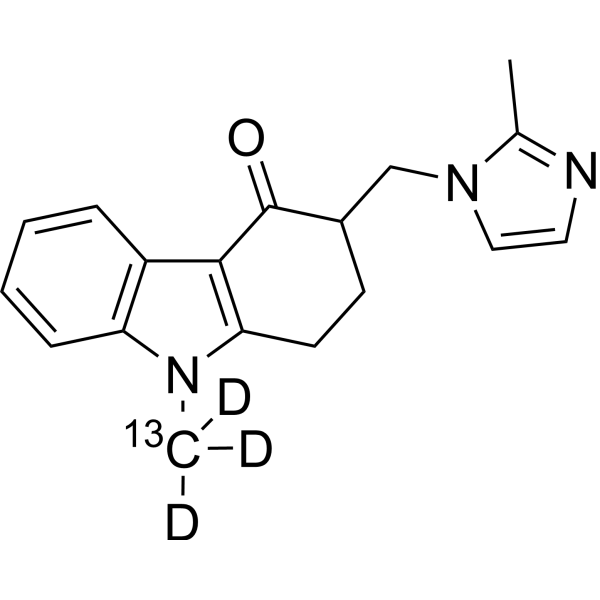
Ondansetron- 13C,d3 is the 13C- and deuterium labeled Ondansetron (HY-B0002B). Ondansetron (GR 38032; SN 307) is a highly selective 5-HT3 receptor antagonist with an IC50 value of 103 pM. Ondansetron exerts its antiemetic effect by antagonizing 5-HT receptors located in localized neurons in the peripheral and central nervous systems. Ondansetron can inhibit nausea and vomiting induced by chemotherapy and radiotherapy .
loading...
    loading...
Cat. No.: HY-123113
CAS No.: 65886-71-7
Synonyms: Kymarabine; Ara-AC; NSC 281272
Target:  

DNA/RNA Synthesis

Research Areas:  

Cancer

Fazarabine (Kymarabine; Ara-AC; NSC 281272) is an orally active, blood-brain barrier permeable DNA polymerase inhibitor and antitumor agent. Fazarabine interferes with DNA synthesis via intracellular activation into a triphosphate nucleotide that directly incorporates into DNA, inducing cytotoxicity, myelosuppression, as well as moderate nausea and vomiting. Fazarabine is resistant to deamination by cytidine-deoxycytidine deaminase and undergoes spontaneous aqueous degradation. Fazarabine exerts time-dependent, broad-spectrum activity against leukemia and solid tumors. Fazarabine can be used in research related to refractory malignancies, acute leukemia, and blast-phase chronic myeloid leukemia .
loading...
    loading...
Cat. No.: HY-124470
CAS No.: 550-28-7
Target:  

Others

Research Areas:  

Cardiovascular Disease

Amisometradine is an orally active aminouracil diuretic with a diuretic potency approximately 40% that of Mersalyl (HY-108868) (when administered intramuscularly). Amisometradine exerts its effects by promoting the excretion of sodium, chloride and a small amount of potassium, exhibits significant therapeutic effects in heart failure models, and has good tolerance with long-term administration. Compared with drugs of the same class, Amisometradine causes fewer gastrointestinal reactions; its minor side effects mainly include nausea, vomiting, diarrhea, tinnitus and deafness, and are usually not accompanied by proteinuria or abnormalities in blood and urine indicators. Amisometradine is an important tool for the study of heart failure and related diuretic mechanisms .
loading...
    loading...
Cat. No.: HY-B1693R
CAS No.: 60-99-1
Synonyms: Methotrimeprazine (Standard)
Levomepromazine (Standard) is the analytical standard of Levomepromazine. This product is intended for research and analytical applications. Levomepromazine (Methotrimeprazine) is an orally active antipsychotic compound and Ca 2+ release inducer. Levomepromazine inhibits SERCA pump and induces an increase in cytoplasmic Ca 2+ levels. Levomepromazine has antagonistic effects on a variety of neurotransmitter receptors, including dopamine, cholinergic, serotonin, and histamine receptors. Levomepromazine can induce adaptive ER stress and autophagy. In addition, Levomepromazine has antiviral, anti-inflammatory, neuroprotective and analgesic, sedative and anti-injurious activities. Levomepromazine can be used in the study psychiatric disorders and relieving nausea and vomiting .
loading...
    loading...
Cat. No.: HY-N6829R
CAS No.: 1245-15-4
Synonyms: Quercetin-​3,​3',​4',​7-​tetramethylether (Standard)
Retusin (Quercetin-3,3',4',7-tetramethylether) (Standard) is the analytical standard of Retusin. This product is intended for research and analytical applications. Retusin is a tyrosinase inhibitor, with IC50 values of 50.9 μM and 51.8 μM against mushroom and intracellular tyrosinase, respectively. Retusin also acts as a free radical scavenger, melanogenesis inhibitor, anti-apoptosis agent, neuroprotective agent, antiemetic, antifungal agent, and antiviral agent. Retusin scavenges ABTS• + and DPPH• free radicals. Retusin can be used in studies related to hyperpigmentation, vomiting, Aspergillus niger infection, and COVID-19 infection.
loading...
    loading...
Cat. No.: HY-166562S
Synonyms: Methotrimeprazine-d6 hydrochloride
Levomepromazine-d6 hydrochloride (Methotrimeprazine-d6 hydrochloride) is the deuterium labeled Levomepromazine hydrochloride. Levomepromazine (Methotrimeprazine) hydrochloride is an orally active antipsychotic compound and Ca 2+ release inducer. Levomepromazine inhibits SERCA pump and induces an increase in cytoplasmic Ca 2+ levels. Levomepromazine hydrochloride has antagonistic effects on a variety of neurotransmitter receptors, including dopamine, cholinergic, serotonin, and histamine receptors. Levomepromazine hydrochloride can induce adaptive ER stress and autophagy. In addition, Levomepromazine hydrochloride has antiviral, anti-inflammatory, neuroprotective and analgesic, sedative and anti-injurious activities. Levomepromazine hydrochloride can be used in the study psychiatric disorders and relieving nausea and vomiting .
loading...
    loading...
Cat. No.: HY-U00244
CAS No.: 63-12-7
Synonyms: P2647; BZQ; Benzoquinamide
Research Areas:  

Metabolic Disease

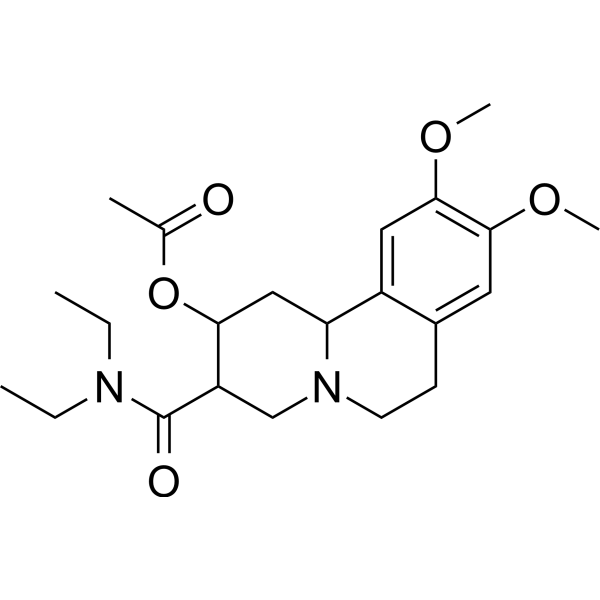
Benzquinamide (P2647; BZQ; Benzoquinamide) is an orally active binder of dopamine receptors and adrenergic receptors. Benzquinamide specifically targets dopamine D2, D3, D4 receptors and α-2A, α-2B, α-2C adrenergic receptors. Benzquinamide regulates blood pressure and heart rate, attenuates the pressor effect of adrenaline, and exhibits activities such as antiemesis, anxiolysis, and reduction of histamine-induced bronchoconstriction. Benzquinamide has good safety and does not deplete serotonin or norepinephrine in the brain. Benzquinamide can be used in studies related to nausea/vomiting, mental disorders, anxiety states, neurosis, and psychosis .
loading...
    loading...
Cat. No.: HY-U00244A
CAS No.: 113-69-9
Synonyms: P2647 hydrochloride; BZQ hydrochloride; Benzoquinamide hydrochloride
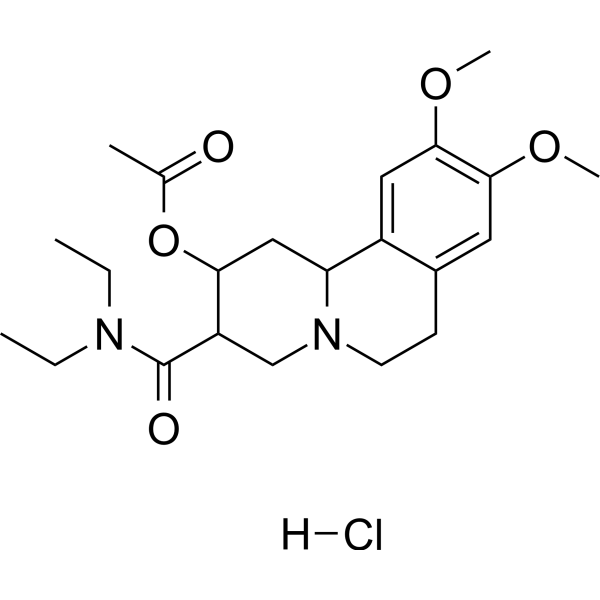
Benzquinamide (P2647; BZQ; Benzoquinamide) hydrochloride is an orally active binder of dopamine receptors and adrenergic receptors. Benzquinamide hydrochloride specifically targets dopamine D2, D3, D4 receptors and α-2A, α-2B, α-2C adrenergic receptors. Benzquinamide hydrochloride regulates blood pressure and heart rate, attenuates the pressor effect of adrenaline, and exhibits activities such as antiemesis, anxiolysis, and reduction of histamine-induced bronchoconstriction. Benzquinamide hydrochloride has good safety and does not deplete serotonin or norepinephrine in the brain. Benzquinamide hydrochloride can be used in studies related to nausea/vomiting, mental disorders, anxiety states, neurosis, and psychosis .
loading...
    loading...
Cat. No.: HY-B1829R
CAS No.: 312-93-6
Synonyms: Dexamethasone 21-phosphate (Standard)
Dexamethasone phosphate (Standard) (Dexamethasone 21-phosphate (Standard)) is the analytical standard of Dexamethasone phosphate (HY-B1829). This product is intended for research and analytical applications. Dexamethasone phosphate (Dexamethasone 21-phosphate) is a prodrug form of the glucocorticoid Dexamethasone (HY-14648). Dexamethasone phosphate is prepared by introducing a phosphate ester group to the hydroxyl group at position 21 of the Dexamethasone molecule. Dexamethasone phosphate inhibits LPS (HY-D1056)-induced degradation of IRAK-1 and IRAK-4, and blocks LPS-induced activation of TRAF6, p-TAK1 and p-JNK. Dexamethasone phosphate inhibits the secretion of RANTES, TGF-β1 and NO, promotes the production of MIP-1α and IL-10, and blocks microglial migration. Dexamethasone phosphate is almost completely converted to Dexamethasone in rat blood, and supports transdermal delivery via iontophoresis. Dexamethasone phosphate can be used in research related to steroid-dependent ulcerative colitis, chemotherapy-induced vomiting, allergic asthma and acute colitis (inflammatory bowel disease).
loading...
    loading...
Cat. No.: HY-B1829AR
CAS No.: 2392-39-4
Synonyms: Dexamethasone 21-phosphate disodium (Standard)
Dexamethasone phosphate (Dexamethasone 21-phosphate) disodium (Standard) is the analytical standard of Dexamethasone phosphate disodium (HY-B1829A). This product is intended for research and analytical applications. Dexamethasone phosphate (Dexamethasone 21-phosphate) disodium is a prodrug form of the glucocorticoid Dexamethasone (HY-14648). Dexamethasone phosphate disodium is produced by introducing a phosphate ester group at the 21-position of the Dexamethasone molecule, forming a salt with sodium ions, thereby significantly improving water solubility. Dexamethasone phosphate disodium inhibits LPS (HY-D1056)-induced degradation of IRAK-1 and IRAK-4, and blocks LPS-induced activation of TRAF6, p-TAK1 and p-JNK. Dexamethasone phosphate disodium inhibits the secretion of RANTES, TGF-β1 and NO, promotes the production of MIP-1α and IL-10, and blocks microglial migration. Dexamethasone phosphate disodium is almost completely converted to Dexamethasone in rat blood, and supports transdermal delivery via iontophoresis. Dexamethasone phosphate disodium can be used in research related to steroid-dependent ulcerative colitis, chemotherapy-induced vomiting, allergic asthma and acute colitis (inflammatory bowel disease).
loading...
    loading...

