

147 Results for "

Relative

" in MedChemExpress (MCE) Product Catalog:
Products (147)

147 Results for "Relative" in MCE Product Catalog:

Cat. No.: HY-W114420
CAS No.: 17028-03-4
Target:  

PKC Drug Derivative

Research Areas:  

Cancer

3-Methyl-L-tyrosine is a derivative of L-Tyrosine (HY-N0473). Structurally, 3-Methyl-L-tyrosine features a methyl modification at the third position of the aromatic ring of L-Tyrosine. As a substrate for the protein tyrosine kinase Csk, 3-Methyl-L-tyrosine's relative catalytic efficiency (kcat/Km) is 38% of L-Tyrosine, indicating that the methyl modification impacts the processing efficiency of Gsk significantly. 3-Methyl-L-tyrosine helps to deepen the understanding of Gsk's molecular recognition mechanisms of its substrates, which is crucial for developing specific inhibitors targeting Gsk .
loading...
    loading...
Cat. No.: HY-116163
CAS No.: 1565852-90-5
Synonyms: CYM50202
Target:  

Endogenous Metabolite

Research Areas:  

Others

ML350 (CYM50202) is a highly potent OPRK1 antagonist with selectivity and broad biological applications. With IC50 values of 9-16 nM, ML350 shows high selectivity for OPRK1, with selectivity of 219-382-fold and 20-35-fold relative to OPRD1 and OPRM1, respectively. ML350 exhibited favorable characteristics in in vivo pharmacokinetic analysis, including high passive membrane permeability and moderate human plasma protein binding. Extensive screening of ML350 against multiple ion channels, receptors, and transporters showed that it does not have adverse off-target effects .
loading...
    loading...
Cat. No.: HY-120493
CAS No.: 1142222-28-3
Research Areas:  

Metabolic Disease

(rel)-AM-6226 is the relative stereoisomer of AM-6226 (HY-120493A). AM-6226 is a potent, orally active full agonist of G protein-coupled receptor 40 (GPR40) with an EC50 value of 0.12 μM. AM-6226 activates GPR40 receptors on pancreatic β-cells and enteroendocrine L-cells, promotes insulin secretion in a glucose-dependent manner, and increases the release of incretin hormones (GLP-1, GIP), thus avoiding the risk of hypoglycemia. AM-6226 can be used in the research of metabolic diseases such as diabetes .
loading...
    loading...
Cat. No.: HY-164474
Target:  

MEK

Research Areas:  

Cancer

DS03090629 is an orally active, ATP-competitive MEK1/2 inhibitor. DS03090629 binds to the ATP-binding pocket of MEK, and this binding is unaffected by phosphorylation status. DS03090629 exhibits high affinity for both MEK and phosphorylated MEK, with Kd values of 0.11 nM and 0.15 nM, respectively. DS03090629 inhibits the MEK1F53L mutant while retaining activity relative to wild-type MEK1. DS03090629 suppresses the MAPK pathway, cell proliferation, and BRAF overexpression-mediated drug resistance in melanoma cells. DS03090629 can be used for research related to melanoma .
loading...
    loading...
Cat. No.: HY-18326
CAS No.: 1235493-78-3
Target:  

γ-secretase Amyloid-β

Research Areas:  

Neurological Disease

BMS-869780 is an orally active non-acidic γ-secretase (γ-secretase) modulator. BMS-869780 regulates the activity of γ-secretase, thereby altering the production profile of β-amyloid proteins. When acting alone, it changes the relative levels of specific β-amyloid subtypes without inhibiting the total production of β-amyloid proteins. BMS-869780 exerts a synergistic effect with γ-secretase modulators of the acidic structural class to inhibit the total production of β-amyloid proteins in cell cultures .
loading...
    loading...
Cat. No.: HY-P992181
Synonyms: MEDI1116; VIB-1116; HZN-1116

Target:  

Inhibitory Antibodies

Research Areas:  

Inflammation/Immunology

AMG-329 (MEDI1116) is a human immunoglobulin G1λ monoclonal antibody targeting FLT3L. AMG-329 selectively binds to FLT3L, blocks FLT3L-FLT3 interaction, neutralizes soluble and cell-bound human FLT3L activity. AMG-329 reduces circulating relative proportions of plasmacytoid dendritic cells, conventional dendritic cells, and classical monocytes. AMG-329 does not induce antibody dependent cellular cytotoxicity. AMG-329 can be used for the research of sjögren’s disease .
loading...
    loading...
Cat. No.: HY-Z12208
CAS No.: 1305124-48-4
N1-Phenylsuberamide is an organic amide compound, and its structure can be regarded as a simplified analogue of Vorinostat (HY-10221). N1-Phenylsuberamide exhibits moderate anti-proliferative activity against MDA-MB-231 and MCF-7 cells. N1-Phenylsuberamide does not show significant HDAC inhibitory activity and can only weakly induce the expression of the p21 gene. N1-Phenylsuberamide has extremely low relative binding affinity of estrogen receptor. N1-Phenylsuberamide can be used as a control compound .
loading...
    loading...
Cat. No.: HY-108556
CAS No.: 252889-88-6
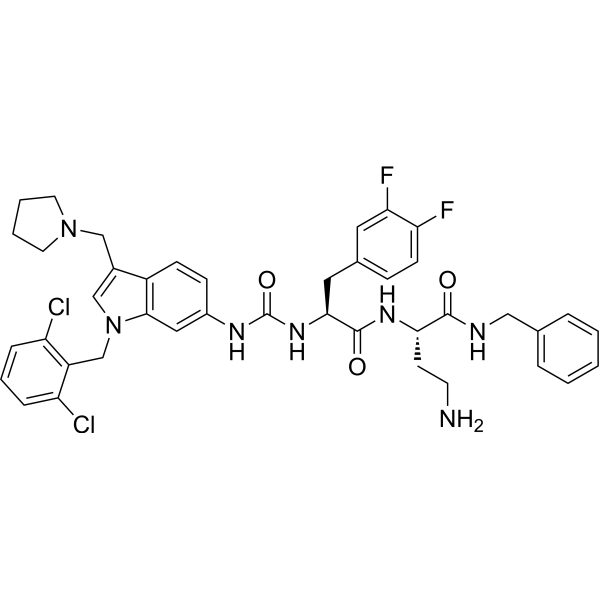
RWJ-56110 is a potent, selective, peptide-mimetic inhibitor of PAR-1 activation and internalization (binding IC50=0.44 uM) and shows no effect on PAR-2, PAR-3, or PAR-4. RWJ-56110 inhibits the aggregation of human platelets induced by both SFLLRN-NH2 (IC50=0.16 μM) and thrombin (IC50=0.34 μM), quite selective relative to U46619 (HY-108566). RWJ-56110 inhibits angiogenesis and blocks the formation of new vessels in vivo. RWJ-56110 induces cell apoptosis .
loading...
    loading...
Cat. No.: HY-108556A
CAS No.: 2387505-58-8
Purity:  99.54%
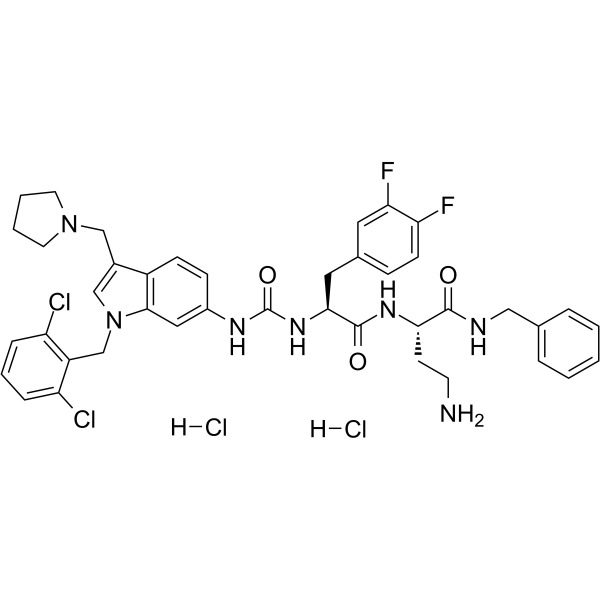
RWJ-56110 dihydrochloride is a potent, selective, peptide-mimetic inhibitor of PAR-1 activation and internalization (binding IC50=0.44 uM) and shows no effect on PAR-2, PAR-3, or PAR-4. RWJ-56110 dihydrochloride inhibits the aggregation of human platelets induced by both SFLLRN-NH2 (IC50=0.16 μM) and thrombin (IC50=0.34 μM), quite selective relative to U46619 (HY-108566). RWJ-56110 dihydrochloride blocks angiogenesis and blocks the formation of new vessels in vivo. RWJ-56110 dihydrochloride induces cell apoptosis .
loading...
    loading...
Cat. No.: HY-114324A
Purity:  98.99%
Target:  

PROTACs PARP Apoptosis

Research Areas:  

Cancer

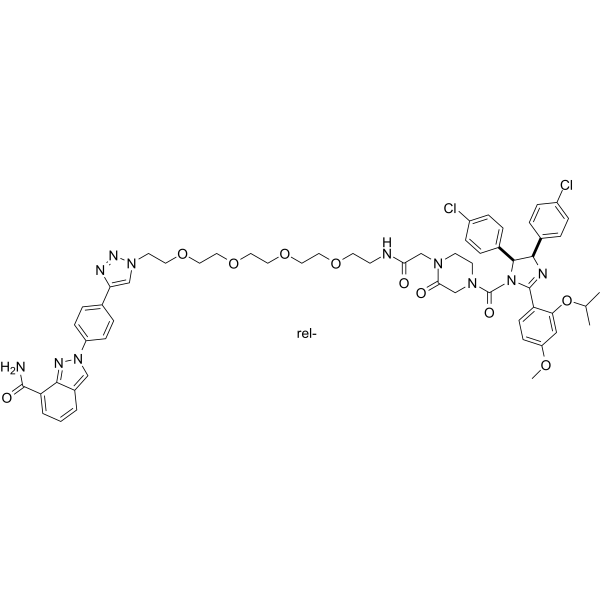
rel-PROTAC PARP1 degrader is the relative configuration of ROTAC PARP1 degrader (HY-114324). PROTAC PARP1 degrader is a PROTAC PARP1 degrader. PROTAC PARP1 degrader mediates the interaction between PARP1 and MDM2 E3 ubiquitin ligase, thereby inducing ubiquitination of PARP1 and subsequent proteasome-mediated degradation. PROTAC PARP1 degrader selectively inhibits the growth of breast cancer cells. PROTAC PARP1 degrader induces cell apoptosis by activating caspase-3 and phosphatidylserine externalization. PROTAC PARP1 degrader can be used in the research of triple-negative breast cancer .
loading...
    loading...
Cat. No.: HY-P1576
CAS No.: 163560-19-8
Target:  

AMPK SnRK

Research Areas:  

Others

AMARA peptide is a synthetic peptide substrate of sucrose non-fermenting-1-related protein kinase 1 (SnRK1). AMARA peptide contains residues required for SnRK1 phosphorylation, retains the minimal motif recognized by SnRK1, and when this substrate is recognized by cauliflower SnRK1 HRK-A, the hydrophobic residues at the relative positions P-5 and P+4 of the phosphorylated serine require a critical spacing. AMARA peptide can serve as a control substrate in peptide phosphorylation assays for the detection of SnRK1 activity in Arabidopsis thaliana, potato tuber tissues, and during SnRK1 purification .
loading...
    loading...
Cat. No.: HY-106899A
CAS No.: 143445-03-8
Synonyms: (rel)-L-680573
Research Areas:  

Others

(rel)-MK 287 ((rel)-L-680573) is a relative configuration of MK 287. MK 287 is a potent, selective and orally active antagonist of platelet-activating factor receptor (PAFR). MK 287 can inhibit [3H]C18-PAF binding to human platelet, polymorphonuclear leukocyte (PMN) and lung membranes with K1 values of 6.1, 3.2, and 5.49 nM, respectively. MK 287 can inhibit PAF-induced aggregation of platelets in plasma or gel-filtered platelets and elastase release from PMNs with ED50 values of 56, 1.5 and 4.4 nM. MK 287 can be used for the research of cardiovascular disease, such as thrombosis .
loading...
    loading...
Cat. No.: HY-P1576A
Target:  

AMPK SnRK

Research Areas:  

Others

AMARA peptide TFA is a synthetic peptide substrate of sucrose non-fermenting-1-related protein kinase 1 (SnRK1). AMARA peptide TFA contains residues required for SnRK1 phosphorylation, retains the minimal motif recognized by SnRK1, and when this substrate is recognized by cauliflower SnRK1 HRK-A, the hydrophobic residues at the relative positions P-5 and P+4 of the phosphorylated serine require a critical spacing. AMARA peptide TFA can serve as a control substrate in peptide phosphorylation assays for the detection of SnRK1 activity in Arabidopsis thaliana, potato tuber tissues, and during SnRK1 purification .
loading...
    loading...
Cat. No.: HY-14826
CAS No.: 166741-91-9
Synonyms: AVE8112
Research Areas:  

Neurological Disease

Tilivapram (AVE8112) is an orally active PDE4 inhibitor with procognitive effects. Tilivapram exhibits in vivo efficacy and improves processing speed and psychomotor speed. Oral administration of tilivapram may induce dose-related adverse reactions such as nausea and dizziness, but transdermal delivery enables slow, controlled elevation of plasma concentrations, thereby significantly reducing gastrointestinal discomfort and dizziness. Tilivapram is applicable to research related to neuropsychiatric disorders .
loading...
    loading...
Cat. No.: HY-106006
CAS No.: 1293915-42-0
Target:  

PI3K

Research Areas:  

Others Inflammation/Immunology

RV-1729 is an inhibitor of the phosphatidylinositol 3-kinase-δ (PI3Kδ). RV-1729 identifies inhibition of the PI3K isotype by quantifying the release of phosphatidylinositol 3,4, 5-triphosphate (PIP3) (IC50=12 nM), showing twice the selectivity for PI3Kδ relative to PI3Kγ. RV-1729 is also 16 times more selective to PI3Kα. RV-1729 regulates immune and inflammatory responses by inhibiting PI3Kδ. RV-1729 can be used in studies of asthma and chronic obstructive pulmonary disease (COPD) .
loading...
    loading...
Cat. No.: HY-143885
CAS No.: 2734918-37-5
Target:  

JAK

Research Areas:  

Inflammation/Immunology

JAK1/TYK2-IN-3 is a potent, selective and orally active dual TYK2/JAK1 inhibitor with IC50 values of 6 and 37 nM, respectively. JAK1/TYK2-IN-3 also shows selectively relative to JAK2 (IC50=140 nM) and JAK3 (IC50=362 nM). JAK1/TYK2-IN-3 shows anti-inflammatory effect by regulating the expression of related TYK2/JAK1-regulated genes, as well as the formation of Th1, Th2, and Th17 cells .
loading...
    loading...
Cat. No.: HY-21200
CAS No.: 375-92-8
Synonyms: 1-Perfluoroheptanesulfonic acid; Perfluoroheptanesulphonic acid; PFHpS
Target:  

PPAR

Perfluoroheptanesulfonic acid (1-Perfluoroheptanesulfonic acid; Perfluoroheptanesulphonic acid; PFHpS) is a per- and polyfluoroalkyl substance (PFAS) that penetrates the skin and induces systemic toxicity and immunotoxicity. Perfluoroheptanesulfonic acid reduces the expression of PPARδ in liver tissue; it induces hepatocyte hypertrophy and necrosis in liver tissue and alters serum biochemical markers associated with liver injury. Perfluoroheptanesulfonic acid upregulates genes related to fatty acid metabolism, cell necrosis and inflammation, reduces the relative weights of the spleen and thymus, suppresses humoral immune responses, and alters the composition of immune cell subsets in the spleen and skin. The plasma concentration of Perfluoroheptanesulfonic acid correlates with food intake. Perfluoroheptanesulfonic acid and perfluorooctanesulfonic acid exhibit synchronous pulse events in influent samples from wastewater treatment plants. Perfluoroheptanesulfonic acid can be used in studies related to liver injury and immune system damage .
loading...
    loading...
Cat. No.: HY-108556AR
CAS No.: 2387505-58-8
RWJ-56110 dihydrochloride (Standard) is the analytical standard of RWJ-56110 (dihydrochloride) (HY-108556A). This product is intended for research and analytical applications. RWJ-56110 dihydrochloride is a potent, selective, peptide-mimetic inhibitor of PAR-1 activation and internalization (binding IC50=0.44 uM) and shows no effect on PAR-2, PAR-3, or PAR-4. RWJ-56110 dihydrochloride inhibits the aggregation of human platelets induced by both SFLLRN-NH2 (IC50=0.16 μM) and thrombin (IC50=0.34 μM), quite selective relative to U46619 (HY-108566). RWJ-56110 dihydrochloride blocks angiogenesis and blocks the formation of new vessels in vivo. RWJ-56110 dihydrochloride induces cell apoptosis .
loading...
    loading...
Cat. No.: HY-181420A
CAS No.: 3029443-36-2
Research Areas:  

Cancer

BBO-11818 is an orally active, highly selective (relative to NRAS and HRAS), non-covalent pan-KRAS inhibitor (IC50=28-120 nM). BBO-11818 specifically binds to the Switch-II/Helix 3 pocket, disrupts the KRAS:RAF1 interaction by inducing conformational changes, and blocks the MAPK signaling pathway. BBO-11818 exhibits significant anti-tumor activity, which not only inhibits cell proliferation and induces apoptosis, but also drives tumor regression in xenograft models. BBO-11818 produces synergistic effects when combined with Cetuximab (HY-P9905), anti-PD-1 antibody or PI3Kα inhibitor. BBO-11818 is used in the research of KRAS mutation-related malignancies such as pancreatic cancer, non-small cell lung cancer and colorectal cancer .
loading...
    loading...
Cat. No.: HY-112624E
CAS No.: 9004-54-0
Synonyms: Dextran 0.8; Dextran D0.8; Dextran T0.8(MW 640-960)
Dextran T0.8 (Dextran 0.8; Dextran T0.8(MW 640-960)) is a food additive with a porous network structure that exhibits strong hydration capacity and low browning activity. Dextran T0.8 (MW 800) can improve the coagulation of dairy products and is used as a prebiotic in baked goods. Dextran T0.8 (MW 800) is non-toxic to HeLa cells at a concentration of ~500 μg/mL and has a low relative browning rate in the Maillard reaction. The Dextran series of compounds are also natural polysaccharide drug carriers that can be connected to drugs through covalent bonding methods such as ester bonds, amide bonds or click chemistry, or self-assembled to form carriers such as nanoparticles and hydrogels. Dextran is biodegradable and biocompatible, and can achieve targeted delivery and controlled release of drugs. Dextran derivatives can prolong the half-life of drugs, increase local concentrations, and reduce the activity of immune clearance .
loading...
    loading...

