261 Results for "

membrane function

" in MedChemExpress (MCE) Product Catalog:
Products (261)

261 Results for "membrane function" in MCE Product Catalog:

Cat. No.: HY-180191
Anti-MRSA agent 42 (Compound 6d) is an anti-methicillin-resistant Staphylococcus aureus (MRSA) agent. Anti-MRSA agent 42 shows strong inhibitory effects on MRSA standard strains and 11 clinical isolates with MIC values of 0.25-0.5 μg/mL. Anti-MRSA agent 42 has low hemolytic activity and minimal cytotoxicity toward mammalian cells. Anti-MRSA agent 42 can suppress biofilm formation, compromise the cell wall, and disrupt the cytoplasmic membrane, which are accompanied by membrane depolarization, enhanced permeability, and loss of membrane integrity. Anti-MRSA agent 42 can induce ROS production and bind to DNA grooves, interfering with nucleic acid function. Anti-MRSA agent 42 can be used for the research of MRSA infection .
loading...
    loading...
Cat. No.: HY-203862
CAS No.: 125275-25-4
Research Areas:  

Others

Polyquaternium-51 is a hydrophilic polymeric zwitterion with counter ions, and an artificial cell membrane-mimicking material with high biocompatibility. Polyquaternium-51 functions as a penetration inhibitor and exfoliation efficacy reducer. Polyquaternium-51 can be used as cosmetic moisturizing ingredient, and can be used as coating biological scaffolds .
loading...
    loading...
Cat. No.: HY-P11301
Research Areas:  

Neurological Disease Cancer

C16-pHD108 is a pH-responsive nanopore-forming peptide. C16-pHD108 functions as a macromolecule delivery carrier via endosomal membrane nanoporation. C16-pHD108 is promising for research of cancers and neurodegenerative diseases .
loading...
    loading...
Cat. No.: HY-185559
CAS No.: 3106880-06-9
Research Areas:  

Cancer

Mito-fisetin mF7 is a lipophilic derivative of Fisetin (HY-N0182). Mito-fisetin mF7 interacts with AKT and Bcl-2, limiting their stability and functionality. Mito-fisetin mF7 stimulates impairs mitochondrial function and reduces metabolic activity of cancer cells. Mito-fisetin mF7 can be used for the research of ER-positive breast cancer .
loading...
    loading...
Cat. No.: HY-L265
558 compounds

Cholesterol is a crucial lipid that maintains cell membrane structure, serves as a precursor for the synthesis of steroid hormones and bile acids, and plays an important role in cell signal transduction and membrane function regulation. Intracellular cholesterol levels are precisely controlled by multiple processes, including synthesis, uptake, transport, esterification, storage, and efflux. Dysregulation of cholesterol metabolism is closely associated with diseases such as atherosclerosis, fatty liver disease, metabolic syndrome, and various cancers.

The Cholesterol Metabolism Compound Library contains 558 compounds and focuses on cholesterol metabolism and homeostatic regulation. It provides an efficient tool for mechanistic studies of cholesterol metabolism and for drug discovery in metabolism‑related diseases.

Cat. No.: HY-183416
CAS No.: 111234-77-6
Research Areas:  

Others

M&B 39279 is an inhibitor of protoporphyrinogen oxidase (Protoporphyrinogen Oxidase). M&B 39279 induces protoporphyrin IX accumulation, light-dependent lipid peroxidation, degradation of membranes and organelles, and reduction of photosynthesis. M&B 39279 functions through the mechanism of action of diphenyl ether herbicides, and can be used for studies on PPO inhibition and herbicide mechanisms of action .
loading...
    loading...
Cat. No.: HY-P11869
Research Areas:  

Inflammation/Immunology

PADI4_11 is an isoform-selective, allosteric PADI4 activator with a Kd of 457 nM. PADI4_11 enters cells via active transport, does not induce cytotoxicity or membrane damage, and serves as a tool for investigating the regulation, function and cellular reprogramming of PADI4. PADI4_11 can be used in studies related to rheumatoid arthritis and ulcerative colitis .
loading...
    loading...
Cat. No.: HY-L168
707 compounds

Extracellular vesicles (EVs) are small membrane binding structures that are released from cells into the surrounding environment and play a crucial role in mediating and regulating intercellular communication related to physiological and pathological processes. EVs are lipid membrane vesicles composed of proteins, lipids, and nucleic acids. EVs can be divided into several types based on their source, such as extracellular vesicles, microcapsules, and apoptotic vesicles. The size range of exosomes is 30-150nm, which are endocrine in multi vesicular endosomes (MVEs); microvesicles (50-1000nm) are secreted directly through extracellular interactions, thereby releasing plasma membrane vesicles. In contrast, apoptotic bodies are usually larger, ranging in size from 1 to 5 μ m. This is generated during programmed cell death. EV plays a crucial role in transmitting information between cells and influencing the behavior and function of receptor cells.

MCE designs a unique collection of 707 small molecules related to extracellular vesicles (EVs). It is a good tool to be used for research on metabolize, cancer and other diseases.

Cat. No.: HY-185306
CAS No.: 4636-83-3
Synonyms: PP 745
Research Areas:  

Metabolic Disease

Morfamquat dichloride (PP 745) is a bipyridine herbicide. Acute poisoning by Morfamquat dichloride strongly stimulates the reticuloendothelial system, causes lysosomal membrane damage and enzyme leakage, and interferes with the function of hepatocyte Golgi apparatus and related glucose metabolic pathways. Morfamquat dichloride significantly increases the activities of acid phosphatase and β-glucuronidase, exerting toxic effects on mice, while pre-administration of vitamin E alleviates such toxicity .
loading...
    loading...
Cat. No.: HY-P3057A
CAS No.: 75644-95-0
Target:  

Neurotensin Receptor

Research Areas:  

Neurological Disease

[Trp11]-Neurotensin is a neurotensin analog and neurotensin receptor agonist. The Tyr11 residue of neurotensin is replaced by L-Trp. [Trp11]-Neurotensin competes for neurotensin receptor binding sites, with an IC50 of 4.3 nM in rat brain synaptic membranes, and activates neurotensin receptor-mediated smooth muscle responses, with an EC50 of 1.7 nM in rat ileum, exhibiting significant species-dependent differences in receptor recognition. [Trp11]-Neurotensin can be used in studies related to neurotensin receptor pharmacology, gastrointestinal smooth muscle, and species-dependent receptor recognition .
loading...
    loading...
Cat. No.: HY-131640
CAS No.: 3436-44-0
Purity:  ≥98.0%
Synonyms: 1,2-Didecanoyl-sn-glycero-3-phosphocholine
Target:  

P-glycoprotein

Research Areas:  

Others

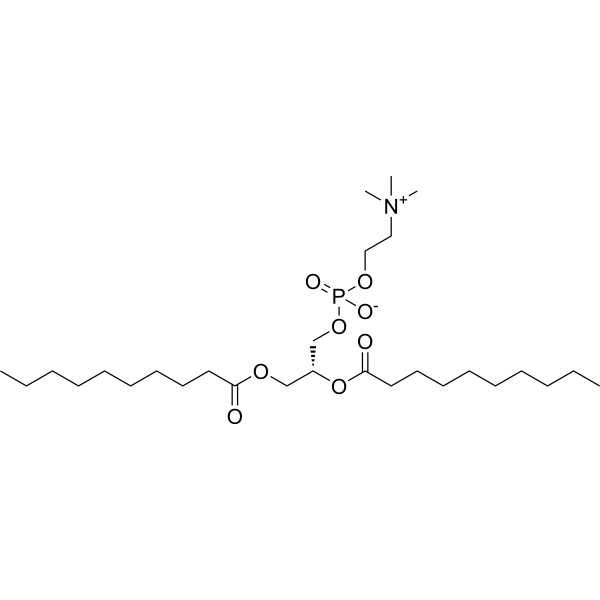
1,2-Didecanoyl PC (1,2-Didecanoyl-sn-glycero-3-phosphocholine) is an orally effective medium-chain saturated phospholipid with well-defined P-gp inhibitory activity and membrane-modulating functions. As a functional excipient/absorption enhancer, 1,2-Didecanoyl PC is particularly suitable for oral formulations of P-gp substrates (e.g., Ritonavir (HY-90001)) .
loading...
    loading...
Cat. No.: HY-162488
Target:  

Fungal

Research Areas:  

Infection

Laccase-IN-3 (Compound 2b) is a laccase inhibitor (IC50 = 1.02= μM) with significant antifungal activity. Laccase-IN-3 shows superior inhibitory effect on Botryosphaeria dothidea (EC50 = 0.17 mg/L). Laccase-IN-3 effectively blocks the catalytic function of laccase by binding to its active center. Laccase-IN-3 also disrupts pathogen cell membrane integrity and increases ROS .
loading...
    loading...
Cat. No.: HY-34154
CAS No.: 619-60-3
Target:  

Lactate Dehydrogenase

Research Areas:  

Others

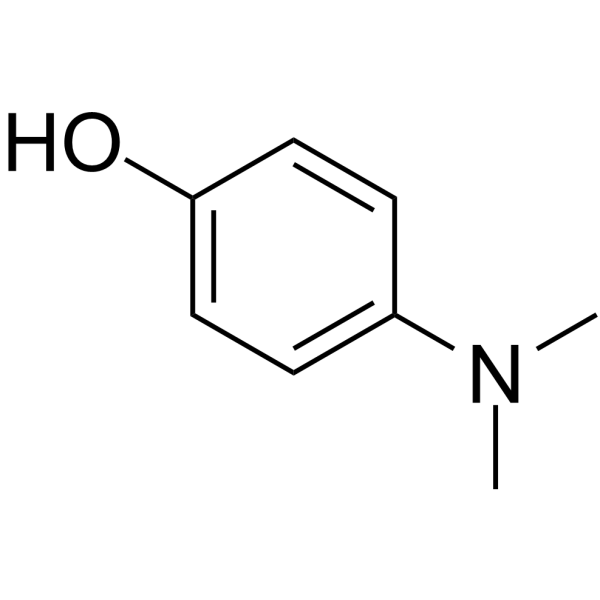
4-(Dimethylamino)phenol is a potent cyanide antidote. 4-(Dimethylamino)phenol increases the extracellular lactate dehydrogenase (LDH) without markedly affecting gluconeogenesis. 4-(Dimethylamino)phenol cannot decreases the ATP content until the membrane becomes permeable to LDH. 4-(Dimethylamino)phenol’s toxicity is related to its reaction with glutathione and formation of covalent complexes, leading to impaired cellular function .
loading...
    loading...
Cat. No.: HY-E70853
Target:  

PKC

Research Areas:  

Cancer

PKCδ is a PKC isoform. PKCδ is expressed ubiquitously among cells and tissues. It is activated by diacylglycerol produced by receptor-mediated hydrolysis of membrane inositol phospholipids as well as by tumor-promoting phorbol ester through the binding of these compounds to the C1 region in its regulatory domain. PKCδ Recombinant Human Active Protein Kinase is a recombinant PKCδ protein that can be used to study PKCδ-related functions .
loading...
    loading...
Cat. No.: HY-N3806
CAS No.: 917-13-5
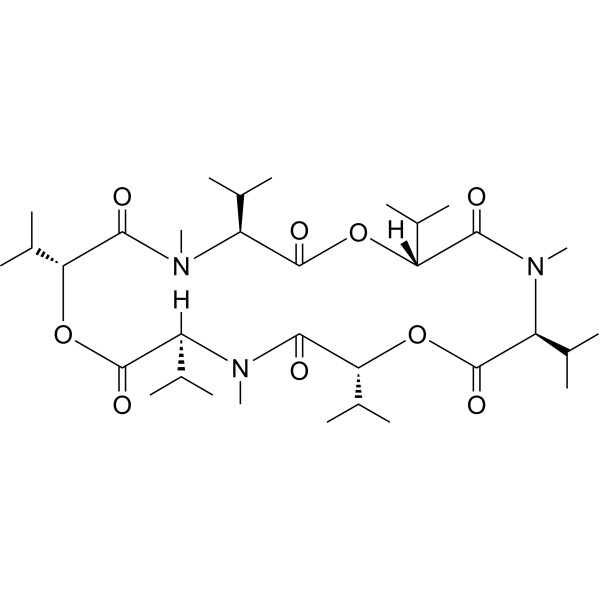
Enniatin B is a Fusarium mycotoxin that acts as an ionophore to form cation-selective membrane channels, disrupt ion homeostasis and mitochondrial function, inhibit cell proliferation, and induce apoptosis, while modulating ERK, p38 MAPK, and STAT3 signaling pathways. Enniatin B is used in research on atherosclerosis, hypercholesterolemia, cervical cancer, and colon adenocarcinoma .
loading...
    loading...
Cat. No.: HY-P10743
Research Areas:  

Cancer

BQ7876 is a probe targeting prostate-specific membrane antigen (PSMA) that contains a DOTA chelator. BQ7876, after being radiolabeled with radionuclide (177Lu), functions in both radionuclide imaging and tumor cell destruction by specifically binding to PSMA. BQ7876 shows potential for research in the field of metastatic castration-resistant prostate cancer (mCRPC) . BQ7876 can be used for the synthesis/research of Radionuclide-Drug Conjugates (RDCs).
loading...
    loading...
Cat. No.: HY-P5589
CAS No.: 131463-18-8
Synonyms: PlnA
Plantaricin A is an antimicrobial peptide that can be derived from Lactobacillus plantarum. Plantaricin A has a synergistic effect with Ciprofloxacin. Plantaricin A shows anti-microbial activity. Plantaricin A increases the membrane potential of S. aureus and the level of intracellular ROS. Plantaricin A inhibits the function of the efflux pump by binding it and altering the structure of MepA, NorA, and LmrS. Plantaricin A significantly relieves inflammation, and promotes wound healing. Plantaricin A permeabilizes cancerous rat pituitary cells [1][2].
loading...
    loading...
Cat. No.: HY-E70765
Target:  

Raf

Research Areas:  

Cancer

Ras-associated factor -1 (RAF1) belongs to the RAF protein kinases family, also known as C-Raf. RAF1 participates in Ras-RAF-MEK-ERk signaling pathway (MAPK signaling pathway), and transmits extracellular signals into the nucleus through cell membrane receptors, thereby mediating the expression of intracellular specific proteins and participating in the regulation of cell proliferation, differentiation, apoptosis, autophagy and other functions. RAF1 YDYD is a mutant of RAF1. RAF1 YDYD Recombinant Human Active Protein Kinase is a recombinant RAF1 YDYD protein that can be used to study RAF1 YDYD-related functions .
loading...
    loading...
Cat. No.: HY-16111
CAS No.: 195987-41-8
Research Areas:  

Cancer

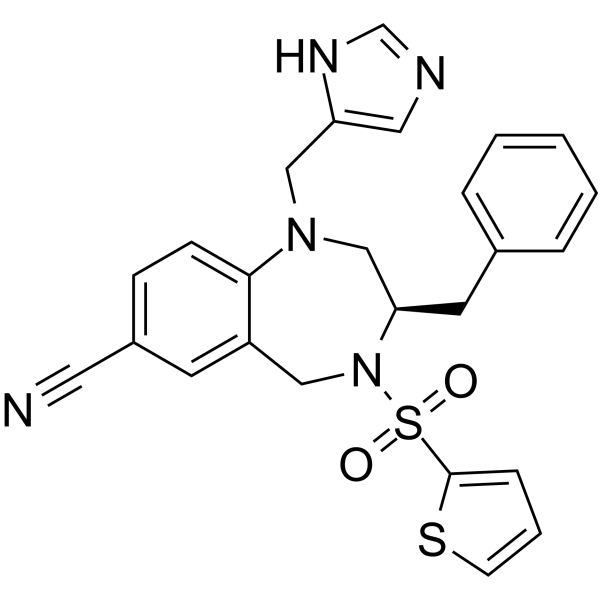
BMS-214662 is a farnesyl transferase inhibitor. BMS-214662 can effectively block the localization and function of Ras protein in the cell membrane by inhibiting the pro-group modification of Ras protein, thereby exerting anti-tumor activity. BMS-214662 has an IC50 value of 1.3 nM for H-Ras and 8.4 nM for K-Ras. BMS-214662 can be used to study Ras-related tumor diseases .
loading...
    loading...
Cat. No.: HY-16111A
CAS No.: 195981-08-9
Research Areas:  

Cancer

BMS-214662 hydrochloride is an inhibitor of farnesyltransferase (Farnesyl Transferase). BMS-214662 hydrochloride can effectively block the localization and function of Ras proteins on the cell membrane by inhibiting the prenylation modification of Ras proteins, thereby exerting anti-tumor activity. The IC50 value of BMS-214662 hydrochloride for H-Ras is 1.3 nM, and for K-Ras it is 8.4 nM. BMS-214662 hydrochloride can be used in the research of tumor diseases related to Ras .
loading...
    loading...