1680 Results for "

precursor

" in MedChemExpress (MCE) Product Catalog:
Products (1680)

1680 Results for "precursor" in MCE Product Catalog:

Cat. No.: HY-N10159
CAS No.: 60941-76-6
1-Benzyl-I3C is a NEDD4-1 inhibitor with significant anticancer activity. 1-Benzyl-I3C can directly inhibit the ubiquitination activity of NEDD4-1 with an IC50 of 12.3μM, which is significantly better than its precursor compound I3C of 284μM. 1-Benzyl-I3C and its analogs showed good effects in inhibiting the proliferation of human melanoma cells, which is roughly related to their potency as NEDD4-1 enzyme inhibitors. By combining in vitro ubiquitination experiments and thermal stability analysis, 1-Benzyl-I3C was shown to be able to bind to the catalytic HECT domain of NEDD4-1 .
loading...
    loading...
Cat. No.: HY-N9362R
CAS No.: 491-60-1
Synonyms: EmodAN (Standard)
Pro-xylane (Standard) is the analytical standard of Pro-xylane. This product is intended for research and analytical applications. Emodinanthrone (EmodAn) is a MARCH7 stabilizer that inhibits ferroptosis (EC50=70 nM). Emodinanthrone is also a precursor to Emodin (HY-14393) and possesses antibiotic activity. Emodinanthrone directly binds to MARCH7 and blocks its ubiquitination-mediated degradation at the K608 site; this action enhances MARCH7-mediated K48 ubiquitination and degradation of NCOA4, as well as its regulation of the intracellular localization of TFR1 via K63 ubiquitination, thereby reducing the intracellular labile iron pool and blocking ferroptosis. Emodinanthrone demonstrates in vivo cardioprotective effects and exhibits a favorable safety profile. Emodinanthrone is applicable to research on ferroptosis-related cardiovascular diseases, including Doxorubicin (HY-15142A)-induced cardiomyopathy and myocardial ischemia-reperfusion injury .
loading...
    loading...
Cat. No.: HY-W008150R
CAS No.: 4026-18-0
Synonyms: α-Hydroxyisovaleric acid (Standard)
2-Hydroxy-3-methylbutanoic acid (α-Hydroxyisovaleric acid) (Standard) is the analytical standard of 2-Hydroxy-3-methylbutanoic acid (HY-W008150). This product is intended for research and analytical applications. 2-Hydroxy-3-methylbutanoic acid is an α-hydroxy analogue of valine and a valine precursor that reduces urea excretion. 2-Hydroxy-3-methylbutanoic acid can promote the growth of chickens and rats, and is converted into valine in the body, participating in protein synthesis and maintaining nitrogen balance, thereby supporting animal growth and development. 2-Hydroxy-3-methylbutanoic acid has a more significant effect on the valine-deficient dietary model. 2-Hydroxy-3-methylbutanoic acid is mainly used in animal nutrition research to evaluate its potential application as a nitrogen source substitute in feed.
loading...
    loading...
Cat. No.: HY-W018798
CAS No.: 4005-51-0
1,3,4-Thiadiazol-2-amine is a 1,3,4-thiadiazole antitumor agent with the potential to penetrate the blood-brain barrier. 1,3,4-Thiadiazol-2-amine can induce hyperuricemia, and this effect is blocked by Nicotinamide (HY-B0150). 1,3,4-Thiadiazol-2-amine supports the simultaneous administration of Allopurinol (HY-B0219), and their combined use prevents hyperuricemia without reducing antitumor activity.\n1,3,4-Thiadiazol-2-amine is a condensation precursor for the synthesis of antibacterial Schiff bases and their Co/Cu/Ni/Zn (II) complexes. 1,3,4-Thiadiazol-2-amine is used in research related to tumors and bacterial infections .
loading...
    loading...
Cat. No.: HY-W019704R
CAS No.: 1115-47-5
N-Acetyl-DL-methionine (Standard) is the analytical standard of N-Acetyl-DL-methionine (HY-W019704). This product is intended for research and analytical applications. N-Acetyl-DL-methionine is an orally active methionine analog and a glutathione (GSH) precursor that can be metabolized into cysteine in vivo. N-Acetyl-DL-methionine increases plasma methionine concentration and the molar percentage of plasma lysine in castrated sheep, and can partially meet the methionine requirement of growing rats. N-Acetyl-DL-methionine is absorbable from the lower digestive tract of sheep and undergoes ruminal microbial degradation in vivo. N-Acetyl-DL-methionine alleviates Acetaminophen (HY-66005)-induced hepatic GSH depletion in mice, maintains hepatocyte integrity, and promotes de novo synthesis of hepatic GSH. N-Acetyl-DL-methionine can be used in studies related to acetaminophen-induced liver injury .
loading...
    loading...
Cat. No.: HY-W725504
2-Hydroxy-3-methylbutanoic acid-d7 is the deuterium labeled 2-Hydroxy-3-methylbutanoic acid (HY-W008150). 2-Hydroxy-3-methylbutanoic acid is an α-hydroxy analogue of valine and a valine precursor that reduces urea excretion. 2-Hydroxy-3-methylbutanoic acid can promote the growth of chickens and rats, and is converted into valine in the body, participating in protein synthesis and maintaining nitrogen balance, thereby supporting animal growth and development. 2-Hydroxy-3-methylbutanoic acid has a more significant effect on the valine-deficient dietary model. 2-Hydroxy-3-methylbutanoic acid is mainly used in animal nutrition research to evaluate its potential application as a nitrogen source substitute in feed .
loading...
    loading...
Cat. No.: HY-W097054
CAS No.: 751470-47-0
Research Areas:  

Others

Fmoc-L-cysteic acid is a cysteine derivative bearing an Fmoc protecting group and also serves as an amide coupling reagent for research related to organic synthesis .
loading...
    loading...
Cat. No.: HY-P85986
Synonyms: beta Granin; betagranin; N-terminal fragment of chromogranin A; catestatin; CgA; CHG A; Chga; chromofungin; Chromogranin A; Chromogranin A parathyroid secretory protein 1; Chromogranin A precursor; ChromograninA; CMGA_HUMAN; ER-37; Pancreastatin; Parastatin; Parathyroid secretory protein 1; Pituitary secretory protein I; Secretory protein I; SP I; SP-I; SP1; SPI; vasostatin 2; Vasostatin; Vasostatin I; Vasostatin II; vasostatin-2

Host:  

Mouse

Application:  

IHC-P, ELISA

Reactivity:  

Human, Mouse

loading...
    loading...
Cat. No.: HY-P86527
Synonyms: beta Granin; betagranin; N-terminal fragment of chromogranin A; catestatin; CgA; CHG A; Chga; chromofungin; Chromogranin A; Chromogranin A parathyroid secretory protein 1; Chromogranin A precursor; ChromograninA; CMGA_HUMAN; ER-37; Pancreastatin; Parastatin; Parathyroid secretory protein 1; Pituitary secretory protein I; Secretory protein I; SP I; SP-I; SP1; SPI; vasostatin 2; Vasostatin; Vasostatin I; Vasostatin II; vasostatin-2

Host:  

Rabbit

Application:  

WB, IHC-P, ICC/IF, IP, ELISA

Reactivity:  

Human, Mouse, Rat

loading...
    loading...
Cat. No.: HY-P86703
Synonyms: platelet endothelial cell adhesion molecule precursor-1; PECAM-1; PECAM1; Adhesion molecule; CD31 antigen; CD31 EndoCAM; Endocam; FLJ34100; FLJ58394; GPIIA; Pecam 1; PECA1_HUMAN; PECAM 1 CD31 EndoCAM; PECA1; Pecam1; Platelet endothelial cell adhesion molecule; Platelet/endothelial cell adhesion molecule 1; Adhesion molecule; Platelet/endothelial cell adhesion molecule.

Host:  

Rabbit

Application:  

WB, IHC-P, IHC-F, IF-Tissue

Reactivity:  

Human

loading...
    loading...
Cat. No.: HY-P86711
Synonyms: platelet endothelial cell adhesion molecule precursor-1; PECAM-1; PECAM1; Adhesion molecule; CD31 antigen; CD31 EndoCAM; Endocam; FLJ34100; FLJ58394; GPIIA; Pecam 1; PECA1_HUMAN; PECAM 1 CD31 EndoCAM; PECA1; Pecam1; Platelet endothelial cell adhesion molecule; Platelet/endothelial cell adhesion molecule 1; Adhesion molecule; Platelet/endothelial cell adhesion molecule.

Host:  

Mouse

Application:  

WB, IHC-P, IHC-F, ICC/IF, IF-Tissue, FC

Reactivity:  

Human

loading...
    loading...
Cat. No.: HY-P86711A
Synonyms: platelet endothelial cell adhesion molecule precursor-1; PECAM-1; PECAM1; Adhesion molecule; CD31 antigen; CD31 EndoCAM; Endocam; FLJ34100; FLJ58394; GPIIA; Pecam 1; PECA1_HUMAN; PECAM 1 CD31 EndoCAM; PECA1; Pecam1; Platelet endothelial cell adhesion molecule; Platelet/endothelial cell adhesion molecule 1; Adhesion molecule; Platelet/endothelial cell adhesion molecule.

Host:  

Mouse

Application:  

WB, IHC-P, IHC-F, ICC/IF, IF-Tissue, FC

Reactivity:  

Human

loading...
    loading...
Cat. No.: HY-P86747A
Synonyms: beta-Amyloid(1-42); A4; AAA; ABETA; ABPP; AD1; Alzheimers Disease Amyloid Protein; Amyloid B; Amyloid beta A4 Protein precursor; Amyloid beta; Amyloid of Aging and Alzheimer Disease; APP; APPI; B Amyloid; beta APP; Cerebral Vascular Amyloid Peptide; CTFgamma; CVAP; PN II; PN2; PreA4; Protease nexin II; A beta; Amyloid 1-42.Aβ

Host:  

Mouse

Application:  

WB, IHC-P, IHC-F, IF-Tissue

Reactivity:  

Human

loading...
    loading...
Cat. No.: HY-W338819
CAS No.: 25122-41-2
Clobetasol is a glucocorticoid and Smoothened agonist that can cross the blood-brain barrier. Clobetasol induces Smo-dependent activation of the Shh signaling pathway and nuclear translocation of Gli1. Clobetasol promotes remyelination and reduces myelin loss in lesions of neuromyelitis optica (NMO). Clobetasol may cause adrenal suppression, cushingoid appearance, and local adverse reactions including dysgeusia, xerostomia, and gastroesophageal burning. Clobetasol can be used in research related to neurodegenerative diseases, oral lichen planus, mucous membrane pemphigoid, and neuromyelitis optica .
loading...
    loading...
Cat. No.: HY-113512
CAS No.: 90780-52-2
Purity:  98.8%
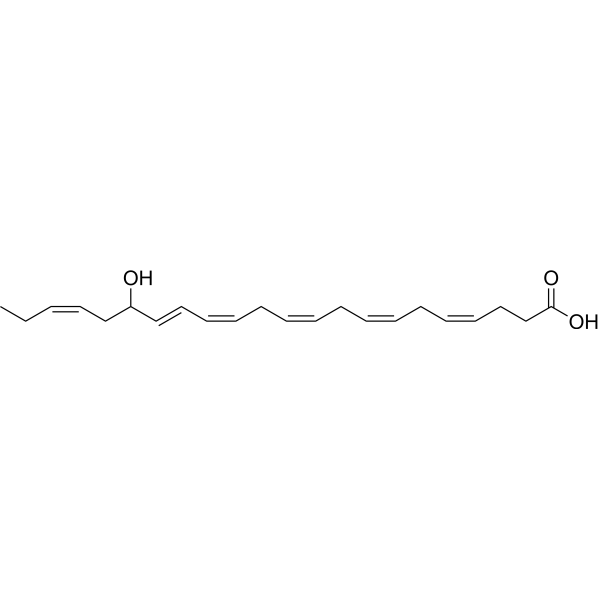
17-HDHA is a DHA-derived specialized pro-resolving mediator (SPM). 17-HDHA inhibits NF-κB activation by activating PPARγ and upregulating IκBα, targets FPR2 and Bcl-6, and also acts as a precursor of RvD1 and PD1. 17-HDHA inhibits pulmonary artery smooth muscle cell proliferation, regulates the expression of adiponectin, GLUT-4 and inflammatory cytokines, suppresses IgE production by B cells and promotes antibody secretion. 17-HDHA reduces adipose tissue inflammation, improves insulin sensitivity and glucose tolerance, alleviates pathological processes associated with pulmonary hypertension, and enhances antibody responses and virus neutralizing activity against influenza HA. 17-HDHA can be used in research related to obesity-associated inflammation, insulin resistance, glucose intolerance, pulmonary hypertension and influenza virus infection .
loading...
    loading...
Cat. No.: HY-121501
CAS No.: 121024-51-9
Target:  

Endogenous Metabolite

Research Areas:  

Others

Tyrostatin is a peptide inhibitor isolated from Kitasatospora sp. 55. It has a Ki value of 6 nM against serine carboxyl protease (PSCP) from Pseudomonas sp. 101, a Ki value of 2.1 nM against carboxyl protease (XSCP) from Xanthomonas sp. T-22, and a Ki value of 2.6 nM against carboxyl protease (PCP) from Pseudomonas sp. 101. Tyrostatin forms a reversible covalent hemiacetal bond with Ser287 at the active site of PSCP, where Tyr at the P1 position and Leu at the P2 position occupy the S1-S4 subsites of the enzyme. Tyrostatin inhibits the activity of XSCP, specifically blocks the autocatalytic maturation process of PCP precursor under acidic conditions, and also inhibits the protease activity of mature and recombinant PCP in a dose-dependent manner. Tyrostatin does not inhibit KSCP or alcohol-resistant protease J-4, and can serve as a tool for identifying the catalytic residues of PCP .
loading...
    loading...
Cat. No.: HY-183403
CAS No.: 457075-21-7
Synonyms: CHF 2819 free base
Target:  

Cholinesterase (ChE)

Research Areas:  

Neurological Disease

Ganstigmine (CHF 2819 free base) is a potent, orally active, blood-brain barrier-permeable acetylcholinesterase (AChE) inhibitor, with an IC50 value of 65 nM against human AChE, 310 nM against human butyrylcholinesterase (BChE), and 5.12 μM against Torpedo californica AChE. Ganstigmine increases extracellular acetylcholine levels in the brain of rodents without altering the concentrations of other neurotransmitters, stimulates cholinergic transmission, and induces the release of soluble non-amyloidogenic amyloid precursor protein. Ganstigmine exhibits neuroprotective activity independent of cholinesterase inhibition, prevents neuronal death, alleviates β-amyloid-induced neurodegeneration, rescues cholinergic neuron loss, and reverses Scopolamine (HY-N0296)-induced amnesia and memory deficits. Ganstigmine shows cholinesterase inhibition-independent neuroprotective effects against growth factor deprivation and Aβ25-35 toxicity. Ganstigmine can be used in research on Alzheimer's disease, cholinergic dysfunction, and neuroprotection .
loading...
    loading...
Cat. No.: HY-184600
Reactive oxygen species responsive hydrogels are a novel class of smart hydrogels, formed by the cross-linking of ROS-responsive modules through covalent, coordination, or supramolecular interactions. Due to the introduction of these ROS-responsive modules, these hydrogels exhibit a sensitive response to the oxidative stress microenvironment present in organisms. PVA-TSPBA hydrogel is a hydrogel formed by the cross-linking polymerization of polyvinyl alcohol (PVA) and the reactive oxygen species-sensitive cross-linking agent N1-(4-benzyl borate)-N3-(4-phenyl borate)N1,N1,N3,N3-tetramethyl-1,3-propanediamine (TSPBA). This hydrogel consists of two parts: a boric acid precursor (TSPBA) and an aqueous solution of PVA. The boric acid bonds on TSPBA and the hydroxyl groups on PVA rapidly cross-link to form borate ester bonds, thus forming the hydrogel.
loading...
    loading...
Cat. No.: HY-W001288S
Indole-4-carboxaldehyde- 13C is the 13C-labeled Indole-4-carboxaldehyde (HY-W001288). Indole-4-carboxaldehyde is an ergot alkaloid precursor that regulates glycosylation and inflammation. Indole-4-carboxaldehyde upregulates Glo-1, inhibits MGO-induced NF-κB activation, and suppresses MGO-induced expression of TNF-α and IFN-γ. Indole-4-carboxaldehyde inhibits MGO-induced formation of advanced glycation end products (AGE) and expression of their receptor (RAGE). Indole-4-carboxaldehyde is a core metabolite produced in the pedicels of Summer Black grapes after exogenous gibberellin treatment, and it directly promotes fruit enlargement and fruit set of Summer Black grapes. Indole-4-carboxaldehyde can be used in studies related to hepatic steatosis and plant growth regulation .
loading...
    loading...
Cat. No.: HY-W129441
CAS No.: 91281-32-2
Synonyms: N-Ac-4-S-CAP
Research Areas:  

Others

N-Acetyl-4-S-mercaptoaminophenol (N-Ac-4-S-CAP) is a compound that is selectively cytotoxic to melanocytes of black mouse hair follicles. It can cause 98% depigmentation of black mouse hair follicles. N-Ac-4-S-CAP can produce visible changes in hair follicle melanocytes 4 hours after intraperitoneal injection, including aggregation of melanin granules and nuclear condensation. Electron microscopy observations showed that it caused progressive destruction of melanocytes, including swelling of membranous organelles, nuclear condensation, and cytoplasmic vacuolation, ultimately leading to complete cell necrosis. N-Ac-4-S-CAP has a specific cytotoxic effect on melanocytes that actively produce eumelanin, but may not affect precursor or dormant melanocytes. These properties suggest that N-Ac-4-S-CAP may have potential application value in the treatment of melanoma or skin whitening.
loading...
    loading...

