
2347 Results for "

component

" in MedChemExpress (MCE) Product Catalog:
Products (2347)

2347 Results for "component" in MCE Product Catalog:

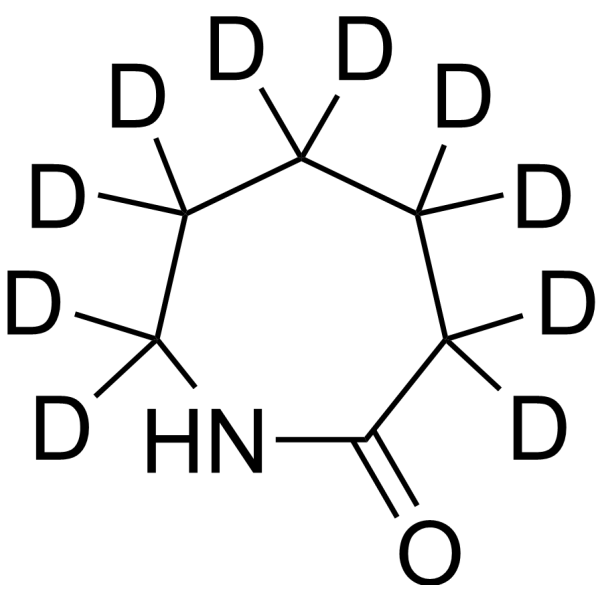
Cat. No.: HY-W010542S
CAS No.: 169297-53-4
Research Areas:  

Infection

Azepan-2-one-d10 is the deuterated-labeled Azepan-2-one (HY-W010542). Azepan-2-one is a seven-membered lactam (cyclic amide) scaffold found in the natural product Capuramycin. It serves as the core structural component required for the CB2 agonist activity of 4-(1,2,4-oxadiazol-5-yl) azepan-2-one derivatives. Azepan-2-one is used in tuberculosis research .
loading...
    loading...
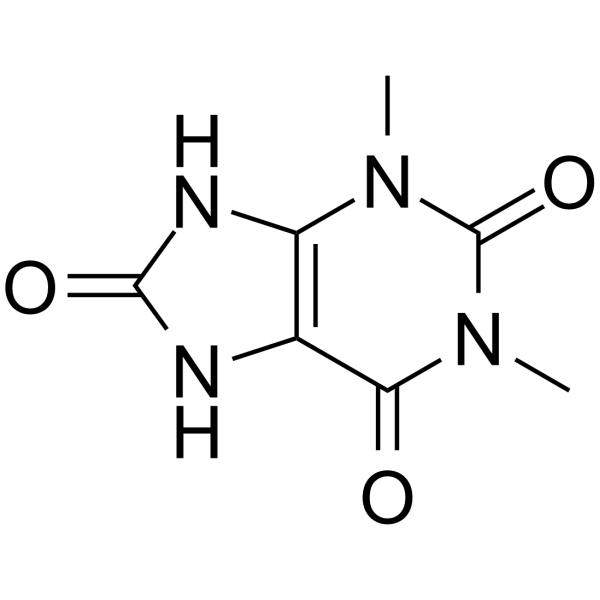
Cat. No.: HY-W014993
CAS No.: 944-73-0
1,3-Dimethyluric acid is a major metabolite of Theophylline (HY-B0809) in vivo. 1,3-Dimethyluric acid is an inhibitor of human organic anion transporter 1 (hOAT1) with an IC50 of 9.2 μM. 1,3-Dimethyluric acid inhibits hOAT1-mediated substrate uptake and transport through competitive binding. 1,3-Dimethyluric acid is also a component of urinary calculi. 1,3-Dimethyluric acid can be used in research on urolithiasis .
loading...
    loading...
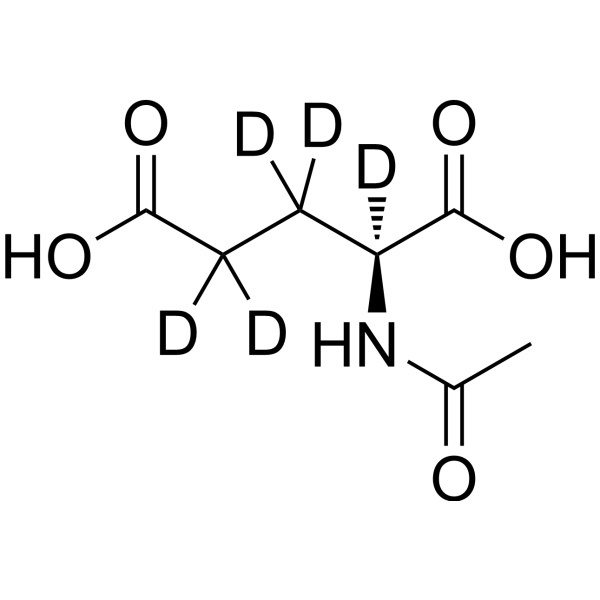
Cat. No.: HY-W015240S
N-Acetyl-L-glutamic acid-d5 is the deuterium labeled N-Acetyl-L-glutamic acid (HY-W015240). N-Acetyl-L-glutamic acid is a type of glutamic acid that can serve as a component of cell culture media. When combined with media containing inorganic salts, carbohydrates, vitamins, and amino acids, N-Acetyl-L-glutamic acid plays roles in promoting cell growth, enhancing antibody production, etc. N-Acetyl-L-glutamic acid is also an endogenous metabolite that can be found in the brain. Additionally, as an IgE blocker, N-Acetyl-L-glutamic acid can be used in the research of allergic diseases .
loading...
    loading...
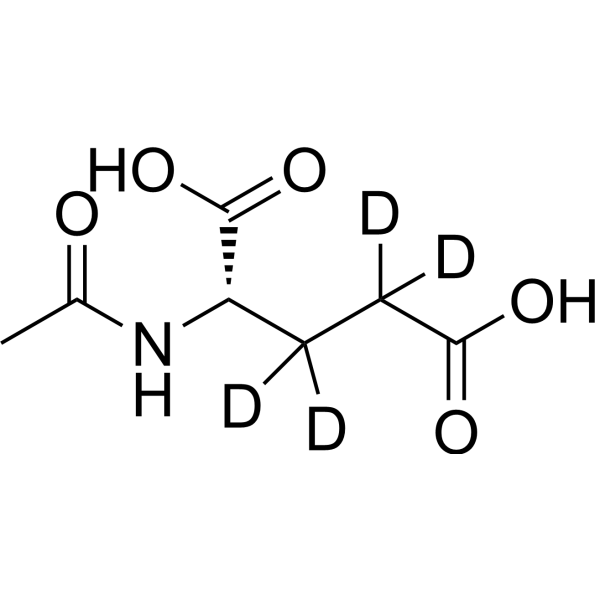
Cat. No.: HY-W015240S1
N-Acetyl-L-glutamic acid-d4 is the deuterium labeled N-Acetyl-L-glutamic acid (HY-W015240). N-Acetyl-L-glutamic acid is a type of glutamic acid that can serve as a component of cell culture media. When combined with media containing inorganic salts, carbohydrates, vitamins, and amino acids, N-Acetyl-L-glutamic acid plays roles in promoting cell growth, enhancing antibody production, etc. N-Acetyl-L-glutamic acid is also an endogenous metabolite that can be found in the brain. Additionally, as an IgE blocker, N-Acetyl-L-glutamic acid can be used in the research of allergic diseases .
loading...
    loading...
Cat. No.: HY-W133898
CAS No.: 73049-73-7
Tryptone is a peptide-rich bacterial culture medium component that can regulate bacterial cell surface proteins and biofilm-related genes. Tryptone promotes the expression and assembly of bacterial adhesion proteins (such as LapA and LapF) by providing peptide substances as structural factors, enhancing cell surface hydrophobicity and intercellular adhesion, thereby stabilizing the biofilm matrix and supporting the maturation and maintenance of bacterial biofilms. The peptide mixture contained in Tryptone can specifically regulate the transcription of bacterial adhesion-related genes (such as activating LapA and inhibiting LapF), affecting the synthesis and localization of biofilm structural proteins .
loading...
    loading...
Cat. No.: HY-W266188
CAS No.: 84600-66-8
Decanoic acid- 13C is the 13C-labeled Decanoic acid (HY-W015309). Decanoic acid is a key component of the medium-chain triglyceride (MCT) found in coconut oil. Decanoic acid is a brain-penetrant and non-competitive inhibitor of AMPA receptor showing antiseizure activity in rats. Decanoic acid reduces tyrosinase activity and inhibits melanosome maturation. Decanoic acid suppresses the phosphorylation of c-Met and induced apoptosis in hepatocellular carcinoma (HCC) cells by inhibiting the expression of various oncogenic proteins, which is promising for research in the field of mTORC1 signaling, HCC and epilepsy .
loading...
    loading...
Cat. No.: HY-W706672R
CAS No.: 86850-72-8
Synonyms: Glycerol Tritricosanoate (Standard); TG(23:0/23:0/23:0) (Standard); Tritricosanoin (Standard)
Propane-1,2,3-triyl tritricosanoate (Standard) is the analytical standard of Propane-1,2,3-triyl tritricosanoate. This product is intended for research and analytical applications. 1,2,3-Tritricosanoyl glycerol is a triacylglycerol that contains tricosanoic acid (HY-W009081) at the sn-1, sn-2, and sn-3 positions. It has been used as an internal standard for the quantification of fatty acids in the triglyceride component of human aortic endothelial cells (HAECs) grown in media supplemented with stearic and/or oleic acid.
loading...
    loading...
Cat. No.: HY-W710512
Synonyms: Glycerol Tritricosanoate-d5; TG(23:0/23:0/23:0)-d5; Tritricosanoin-d5
Propane-1,2,3-triyl tritricosanoate-d5 (Glycerol Tritricosanoate-d5) is deuterium labeled Propane-1,2,3-triyl tritricosanoate. 1,2,3-Tritricosanoyl glycerol is a triacylglycerol that contains tricosanoic acid (HY-W009081) at the sn-1, sn-2, and sn-3 positions. It has been used as an internal standard for the quantification of fatty acids in the triglyceride component of human aortic endothelial cells (HAECs) grown in media supplemented with stearic and/or oleic acid.
loading...
    loading...
Cat. No.: HY-W800805
CAS No.: 2295813-15-7
Target:  

Liposome

Research Areas:  

Cancer

DOPE-Mal is an N-maleimide-derived phosphatidylethanolamine. DOPE-Mal does not interfere with fatty acyl chains or alter lipid bilayer permeability; it increases lipid bilayer order, reduces fluidity, induces conformational changes in phospholipid polar heads and enhances their hydration. DOPE-Mal can be used as a component to prepare maleimide-displaying liposomes, enabling peptide conjugation via maleimide-thiol coupling. DOPE-Mal can be used to prepare Liposomes for delivering Doxorubicin (HY-15142A) to hepatocytes. DOPE-Mal is applicable to research related to hepatocellular carcinoma and lung cancer .
loading...
    loading...
Cat. No.: HY-K3124

MCE Macrofungal-Derived Extracellular Vesicle Isolation and Purification Kit is specifically optimized for fungal fruiting body samples. The optimized extraction system facilitates the release of EVs from fungal tissues, while the purification system effectively removes polysaccharides, proteins, phenolic compounds, terpenoids, and other non-vesicular components, enabling efficient isolation and purification of fungal EVs. The isolated macrofungal-derived vesicles can be used for downstream applications including transmission electron microscopy (TEM), nanoparticle tracking analysis (NTA), Western blotting, qPCR, cell-based studies, and animal experiments.

loading...
    loading...
Cat. No.: HY-P71387
Purity:  ≥ 95%, as determined by reducing SDS-PAGE.
Synonyms: TACSTD2; Epithelial Glycoprotein-1; Prev. M1S1; Membrane component, Chromosome 1, Surface Marker 1; GA733-1; Gastrointestinal Tumor-Associated Antigen GA7331; TROP2; Pancreatic Carcinoma Marker Protein GA7331; Tumor-Associated Calcium Signal Transducer 2
Species:  
Mouse
Source:  
HEK293
loading...
    loading...
Cat. No.: HY-P72015
Purity:  ≥ 95%, as determined by reducing SDS-PAGE.
Synonyms: TACSTD2; Epithelial Glycoprotein-1; Prev. M1S1; Membrane component, Chromosome 1, Surface Marker 1; GA733-1; Gastrointestinal Tumor-Associated Antigen GA7331; TROP2; Pancreatic Carcinoma Marker Protein GA7331; Tumor-Associated Calcium Signal Transducer 2
Species:  
Human
Source:  
HEK293
loading...
    loading...
Cat. No.: HY-P74488
Purity:  ≥ 95%, as determined by reducing SDS-PAGE.
Synonyms: TACSTD2; Epithelial Glycoprotein-1; Prev. M1S1; Membrane component, Chromosome 1, Surface Marker 1; GA733-1; Gastrointestinal Tumor-Associated Antigen GA7331; TROP2; Pancreatic Carcinoma Marker Protein GA7331; Tumor-Associated Calcium Signal Transducer 2
Species:  
Mouse
Source:  
HEK293
loading...
    loading...
Cat. No.: HY-P77861
Purity:  ≥ 95%, as determined by reducing SDS-PAGE or Bis-Tris PAGE.
Synonyms: TACSTD2; Epithelial Glycoprotein-1; Prev. M1S1; Membrane component, Chromosome 1, Surface Marker 1; GA733-1; Gastrointestinal Tumor-Associated Antigen GA7331; TROP2; Pancreatic Carcinoma Marker Protein GA7331; Tumor-Associated Calcium Signal Transducer 2
Species:  
Cynomolgus
Source:  
HEK293
loading...
    loading...
Cat. No.: HY-P78631
Purity:  ≥ 90%, as determined by reducing SDS-PAGE.
Synonyms: TACSTD2; Epithelial Glycoprotein-1; Prev. M1S1; Membrane component, Chromosome 1, Surface Marker 1; GA733-1; Gastrointestinal Tumor-Associated Antigen GA7331; TROP2; Pancreatic Carcinoma Marker Protein GA7331; Tumor-Associated Calcium Signal Transducer 2
Species:  
Canine
Source:  
HEK293
loading...
    loading...
Cat. No.: HY-P702054
Purity:  ≥ 90%, as determined by reducing SDS-PAGE.
Synonyms: VPS29; VPS29 Retromer Complex component; Vacuolar Protein Sorting-Associated Protein 29; Vesicle Protein Sorting 29; PEP11; DC15; DC7; PEP11 Homolog; HVPS29; Vacuolar Protein Sorting 29 Homolog (S. Cerevisiae); Epididymis Secretory Sperm Binding Protein;
Species:  
Human
Source:  
E. coli
loading...
    loading...
Cat. No.: HY-P704276
Purity:  ≥ 95%, as determined by Bis-Tris PAGE.
Synonyms: TACSTD2; Epithelial Glycoprotein-1; Prev. M1S1; Membrane component, Chromosome 1, Surface Marker 1; GA733-1; Gastrointestinal Tumor-Associated Antigen GA7331; TROP2; Pancreatic Carcinoma Marker Protein GA7331; Tumor-Associated Calcium Signal Transducer 2
Species:  
Human
Source:  
HEK293
loading...
    loading...
Cat. No.: HY-P811864A
Synonyms: NSMCE1; NSE1 Homolog, SMC5-SMC6 Complex component; NSE1; Non-Structural Maintenance Of Chromosomes Element 1 Homolog; Non-SMC Element 1 Homolog; Non-SMC Element 1 Homolog (S. Cerevisiae); EC 2.3.2.27

Host:  

Mouse

Application:  

WB, ICC/IF

Reactivity:  

Human, Mouse, Rat

loading...
    loading...
Cat. No.: HY-106991
CAS No.: 878189-87-8
Synonyms: S-303
Research Areas:  

Infection

Amustaline (S-303) is a compound used for inactivating pathogens in blood components and belongs to the category of nucleic acid-targeted chemical decontaminants. Amustaline has the ability to inactivate viruses and is effective against mosquito-borne viruses such as Chikungunya virus (CHIKV), Dengue virus (DENV), and Zika virus (ZIKV). When combined with glutathione (Glutathione, GSH), which acts as a neutralizer to counteract adverse reactions, Amustaline ensures the stability of red blood cell membranes. Amustaline is mainly used for inactivating pathogens in red blood cell concentrates (RBCC) to reduce the risk of transfusion-transmitted infections (TTI) .
loading...
    loading...
Cat. No.: HY-117057S
CAS No.: 2692624-21-6
Hexaenoic acid-d6 is deuterium labeled Hexaenoic acid. Very long chain polyunsaturated fatty acids (VLCPUFAs) are important components of ceramides and sphingomyelin and are present in retina, sperm, and brain. Tetratriaconta-16(Z),19(Z),22(Z),25(Z),28(Z),31(Z)-hexaenoic acid is a C34:6 VLCPUFA whose specific biological actions are largely unknown. This VLCPUFA, along with others, has been investigated for its role in activating protein kinase C .
loading...
    loading...

