11 Results for "

α-Glycosidase

" in MedChemExpress (MCE) Product Catalog:
Products (11)

11 Results for "α-Glycosidase" in MCE Product Catalog:

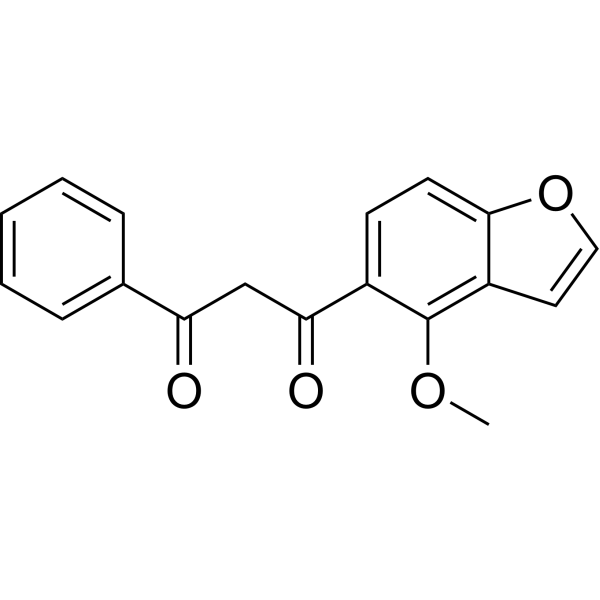
Cat. No.: HY-121811
CAS No.: 484-33-3
Purity:  99.81%
Synonyms: Lanceolatin C
Pongamol (Lanceolatin C) is an orally active flavonoid with an IC50 of 75 μM and a Ki of 58 μM against PTPase-1B, and an IC50 of 103.5 μM against intestinal α-Glycosidase. Pongamol reduces the release of IL‑1β, TNF‑α, COX‑2 and iNOS in cells, reverses the nuclear translocation of NF‑κB, and upregulates the levels of Beclin 1 and LC3 Ⅱ/LC3 Ⅰ. Pongamol promotes glucose uptake by increasing the level of GLUT4 on the surface of skeletal muscle cells. Pongamol inhibits epithelial-mesenchymal transition by suppressing the FAK/Akt-mTOR signaling pathway. Pongamol inhibits neuronal cytotoxicity, suppresses cell apoptosis and extends the lifespan of Caenorhabditis elegans by activating the MAPKs/Nrf2 signaling pathway. Pongamol exerts hypoglycemic effects in diabetic mouse models. Pongamol exhibits antibacterial activity. Pongamol alleviates oxidative stress, neuroinflammation, deposition and excessive phosphorylation of Tau Protein, and restores autophagy function in Alzheimer's disease mouse models by inhibiting the Akt/mTOR signaling pathway. Pongamol is applicable to research related to Alzheimer's disease, type 2 diabetes, non-small cell lung cancer and postprandial hyperglycemia .
loading...
    loading...
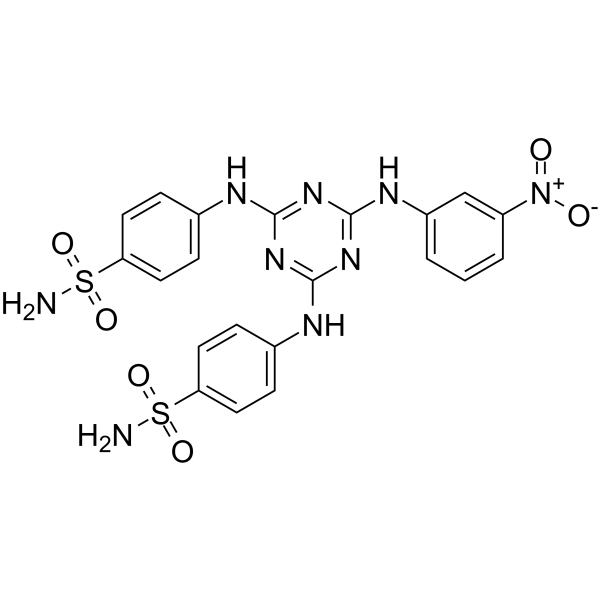
Cat. No.: HY-147954
CAS No.: 2428389-66-4
α-Glycosidase-IN-1 (compound MZ7) is a potent α-GLY (α-Glycosidase) inhibitor, with an IC50 of 44.72 nM and a KI of 41.74 nM. α-Glycosidase-IN-1 also shows inhibition profile against human carbonic anhydrase isoenzymes I and II (hCA I and hCA II), and acetylcholinesterase (AChE), with IC50 values of 104.87, 100.04, and 654.87 nM, respectively. α-Glycosidase-IN-1 can be used for the research of many diseases such as diabetes, Alzheimer’s disease, heart failure, ulcer, and epilepsy .
loading...
    loading...
Cat. No.: HY-169283
Target:  

Carbonic Anhydrase

Research Areas:  

Metabolic Disease

α-Glycosidase-IN-2 (compound 8b) is a α-Glycosidase inhibitor with the Ki values of 74.16 nM and 6.09 nM for aldose reductase and α-glycosidase,respectively. α-Glycosidase-IN-2 can be used for study of diabetes mellitus .
loading...
    loading...
Cat. No.: HY-N15280
CAS No.: 1778735-31-1
Terrestrimine is a potent inhibitor of α-Glycosidase, with the IC50 of 225.83 μM. Terrestrimine plays an important role in metabolic disease research .
loading...
    loading...
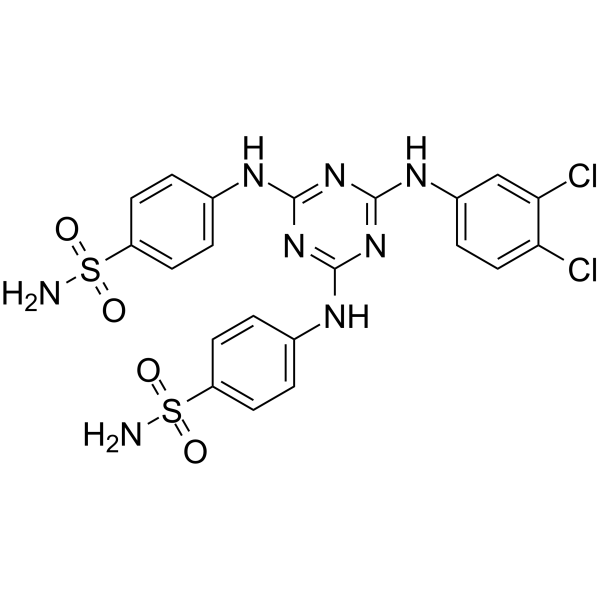
Cat. No.: HY-147955
CAS No.: 2428389-67-5
CAI/II-IN-5 (compound MZ8) is a potent hCA I and hCA II (human carbonic anhydrase isoenzymes I and II) inhibitor, with IC50 values of 37.88 and 45.23 nM, respectively. CAI/II-IN-5 also shows inhibition profile against α-Glycosidase and AChE, with IC50 values of 48.98 and 420.14 nM, respectively. CAI/II-IN-5 can be used for the research of many diseases such as diabetes, Alzheimer’s disease, heart failure, ulcer, and epilepsy .
loading...
    loading...
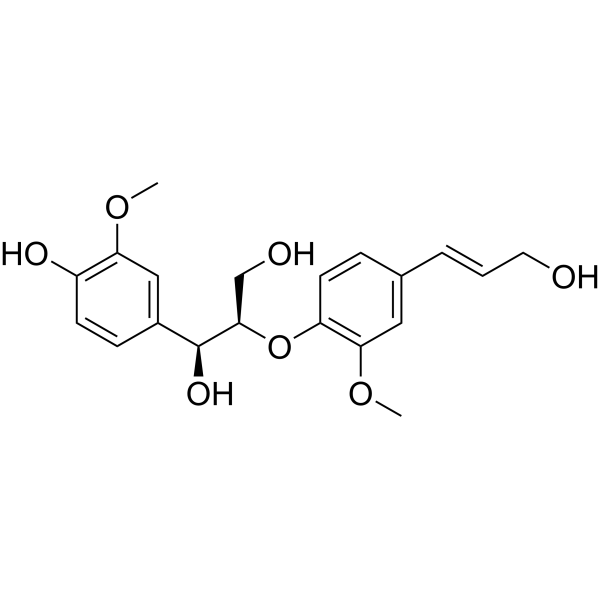
Cat. No.: HY-N3864
CAS No.: 890317-92-7
Erythro-Guaiacylglycerol beta-coniferyl ether (compound 22) can be isolated from the stems and leaves of mung beans. Erythro-Guaiacylglycerol beta-coniferyl ether inhibits α-Glycosidase activity with EC50 value of 18.71 μM .
loading...
    loading...
Cat. No.: HY-N13020
CAS No.: 1360110-49-1
Scleropentaside D is a potent α-glycosidase inhibitor. Scleropentaside D has antioxidant activity .
loading...
    loading...
Cat. No.: HY-174319
Target:  

Amylases Glycosidase

Research Areas:  

Metabolic Disease

α-Amylase/α-Glucosidase-IN-20 (Compound 6b) is a dual inhibitor of α-Amylase and α-Glucosidase with IC50s of 414.57 and 924.15 μM for α-Amylase and α-Glucosidase, respectively. α-Amylase/α-Glucosidase-IN-20 shows a potent anti-diabetic activity, promising for diabetes research .
loading...
    loading...
Cat. No.: HY-N9846
CAS No.: 62346-14-9
Luteolin 5,3'-dimethyl ether is a flavonoid compound that exhibits strong binding to enzymes such as acetylcholinesterase (AChE), butyrylcholinesterase (BChE), and α-Glycosidase. Luteolin 5,3'-dimethyl ether can be naturally extracted from the dried roots of Alhagi maurorum (camel thorn). The methanol extract of this plant has significant free radical scavenging ability and enzyme inhibitory potential. Luteolin 5,3'-dimethyl ether can be used in research related to neurodegenerative diseases, diabetes, and skin pigmentation-related diseases .
loading...
    loading...
Cat. No.: HY-181519
ALR2/α-GLY-IN-1 is a potent dual-target inhibitor that targets aldose reductase ALR2 and α-glucosidase (IC50 values are 0.72 μM and 0.82 μM, respectively; Ki values are 1.67 μM and 1.37 μM, respectively). ALR2/α-GLY-IN-1 also acts as a DNA binder, which stably interacts with calf thymus double-stranded DNA through non-covalent interactions such as groove-binding mode and water-bridged hydrogen bonds. ALR2/α-GLY-IN-1 can be used in studies related to diabetes and its complications .
loading...
    loading...
Cat. No.: HY-N19401
CAS No.: 36001-47-5
Vescalagin is a hexahydroxyphenol. Vescalagin is isolable from Camu-camu (Myrciaria dubia) and immature wax apple fruits. Vescalagin exhibits inhibitory activity against a variety of enzymes, with a Ki value of 5.87 nM against AChE, 3.89 nM against BChE, 11.75 nM against hCA I, 16.23 nM against hCA II, and 16.08 nM against α-glucosidase. Vescalagin inhibits hCA I, hCA II and α-glucosidase in a non-competitive manner. Vescalagin downregulates JNK/p38 MAPK to protect pancreatic β-cells and improve insulin secretion in methylglyoxal-treated rats. Vescalagin reduces hyperglycemia and hypertriglyceridemia in rats fed a high-fructose diet. Vescalagin possesses anti-inflammatory and antioxidant properties .
loading...
    loading...
  • 1

