28 Results for "

α1-receptor

" in MedChemExpress (MCE) Product Catalog:
Products (28)

28 Results for "α1-receptor" in MCE Product Catalog:

14
14 Publications Verification
Cat. No.: HY-14541
CAS No.: 132539-06-1
Purity:  99.96%
Synonyms: LY170053
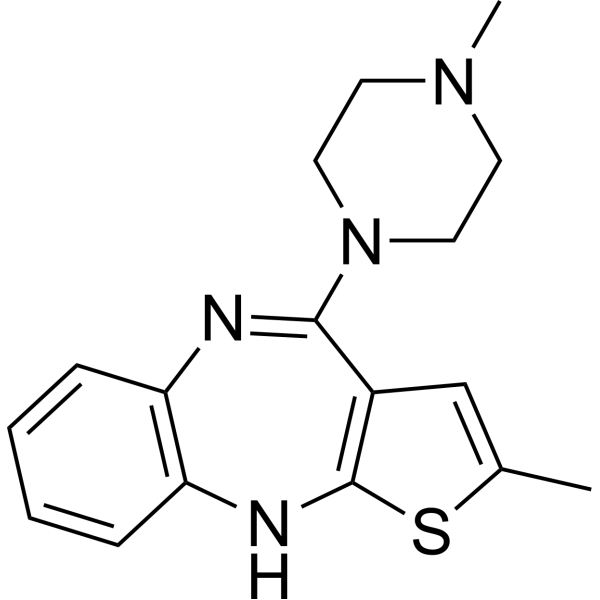
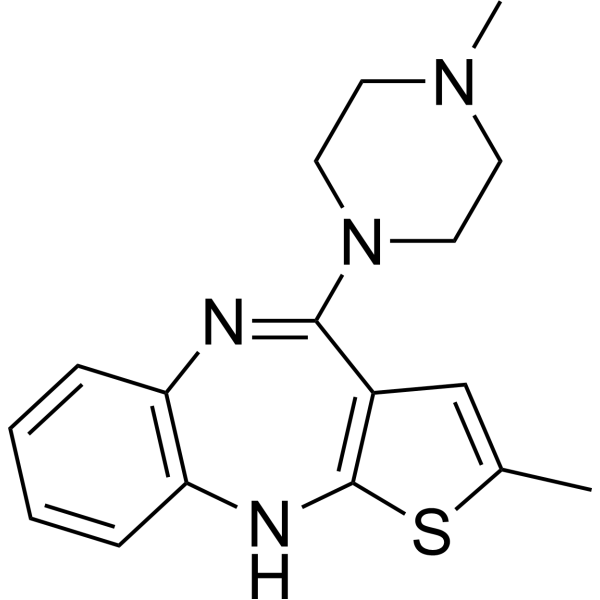
Olanzapine (LY170053) is a selective, orally active monoaminergic antagonist with high affinity binding to serotonin H1, 5HT2A/2C, 5HT3, 5HT6 (Ki=7, 4, 11, 57, and 5 nM, respectively), dopamine D1-4 (Ki=11 to 31 nM), muscarinic M1-5 (Ki=1.9-25 nM), and adrenergic α1 receptor (Ki=19 nM). Olanzapine is an atypical antipsychotic [1] .
loading...
    loading...
9
9 Cited Publications
Cat. No.: HY-B0527A
CAS No.: 549-18-8
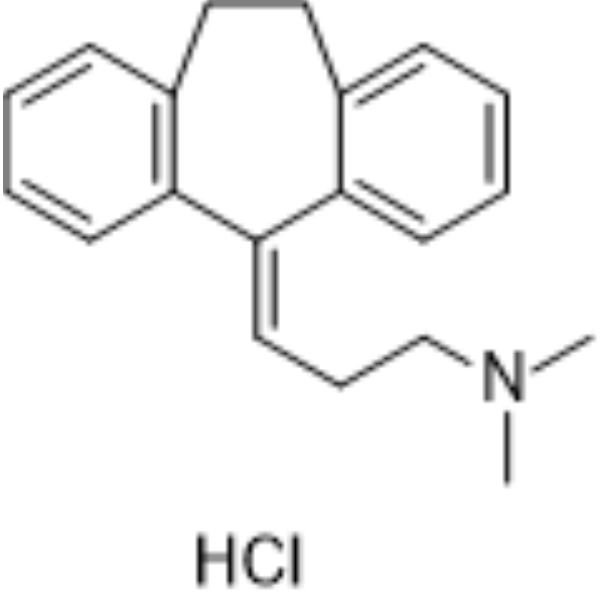
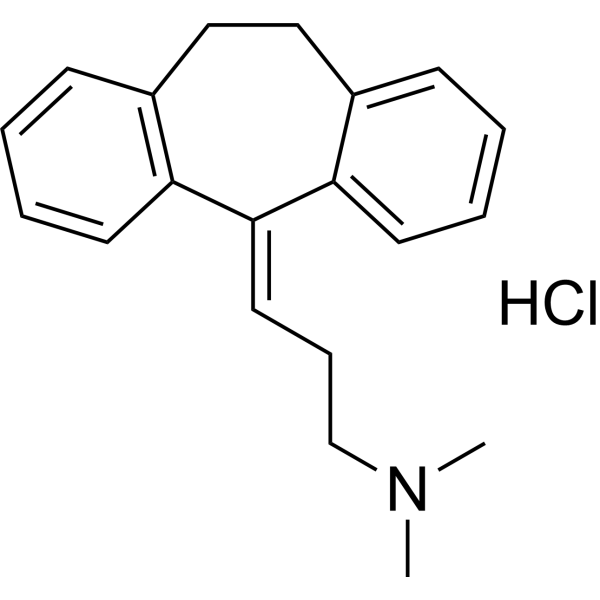
Amitriptyline hydrochloride is an orally active tricyclic antidepressant (TCA). Amitriptyline hydrochloride mainly exerts its antidepressant effect by blocking SERT (Ki = 3.45 nM) and NET (Ki = 13.3 nM), thereby increasing the concentrations of 5-hydroxytryptamine (5-HT) and norepinephrine (NE) in the synaptic cleft. Amitriptyline hydrochloride is also an agonist at α2A and TrkA/TrkB receptors, thereby exerting analgesic and neurotrophic activities (inhibiting cell apoptosis). Amitriptyline hydrochloride can reduce inflammation, angiogenesis and fibrosis. Amitriptyline hydrochloride binds to DAT (with Ki = 2.58 μM). Amitriptyline hydrochloride has high affinity for a series of receptors and can antagonize muscarinic cholinergic receptors (M1/M2/M3/M4/M5 receptors) (Ki = 11-24 nM), H1 receptors (Ki = 0.5-1.1 nM), adrenergic α1 receptors (Ki = 4.4 nM), etc., resulting in a series of side effects. Amitriptyline hydrochloride can block sodium channels and hERG potassium channel (IC50 = 4.78 μM) and it has cardiotoxicity [1] .
loading...
    loading...
9
9 Cited Publications
Cat. No.: HY-B0527
CAS No.: 50-48-6
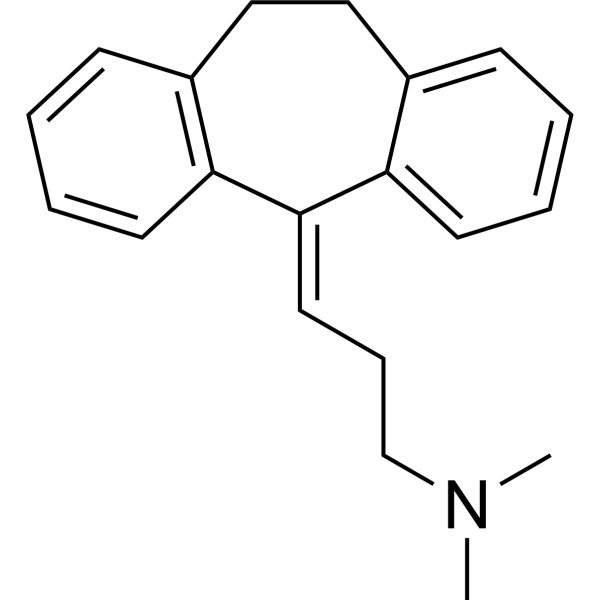
Amitriptyline is an orally active tricyclic antidepressant (TCA). Amitriptyline mainly exerts its antidepressant effect by blocking SERT (Ki = 3.45 nM) and NET (Ki = 13.3 nM), thereby increasing the concentrations of 5-hydroxytryptamine (5-HT) and norepinephrine (NE) in the synaptic cleft. Amitriptyline is also an agonist at α2A and TrkA/TrkB receptors, thereby exerting analgesic and neurotrophic activities (inhibiting cell apoptosis). Amitriptyline can reduce inflammation, angiogenesis and fibrosis. Amitriptyline binds to DAT (with Ki = 2.58 μM). Amitriptyline has high affinity for a series of receptors and can antagonize muscarinic cholinergic receptors (M1/M2/M3/M4/M5 receptors) (Ki = 11-24 nM), H1 receptors (Ki = 0.5-1.1 nM), adrenergic α1 receptors (Ki = 4.4 nM), etc., resulting in a series of side effects. Amitriptyline can block sodium channels and hERG potassium channel (IC50 = 4.78 μM) and it has cardiotoxicity [1] .
loading...
    loading...
3
3 Cited Publications
Cat. No.: HY-12720A
CAS No.: 73218-79-8
Purity:  98.96%
Synonyms: ALO 2145
Target:  

Adrenergic Receptor

Research Areas:  

Neurological Disease

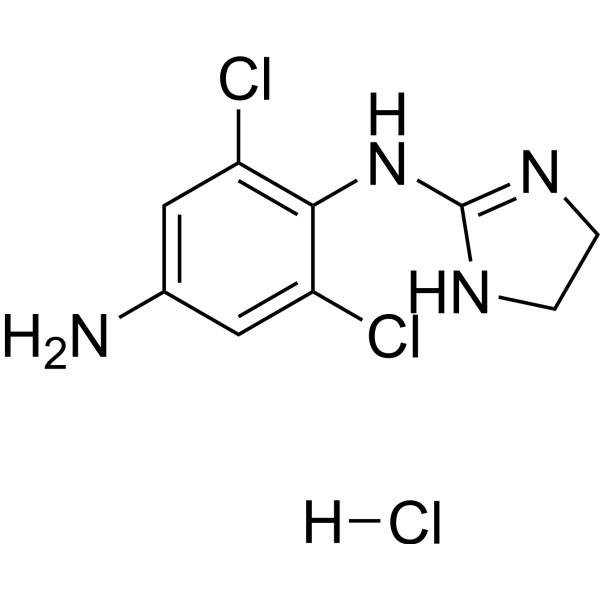
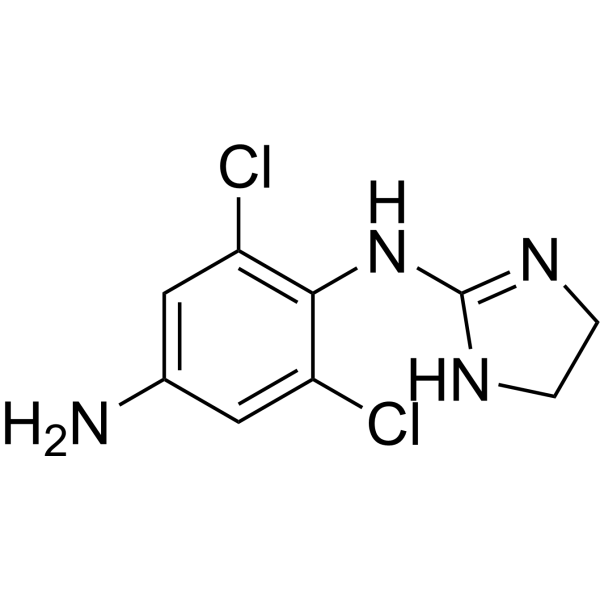
Apraclonidine hydrochloride (ALO 2145), a selective α2 and weak α1 receptor agonist activity, effectively lowers intraocular pressure (IOP) in human eyes. Apraclonidine hydrochloride is a topical ophthalmic solution and has the ability to elevate the eye lid [1] .
loading...
    loading...
Cat. No.: HY-12749
CAS No.: 42794-76-3
Purity:  99.67%
Synonyms: (±)-Midodrin
Target:  

Adrenergic Receptor

Research Areas:  

Cardiovascular Disease

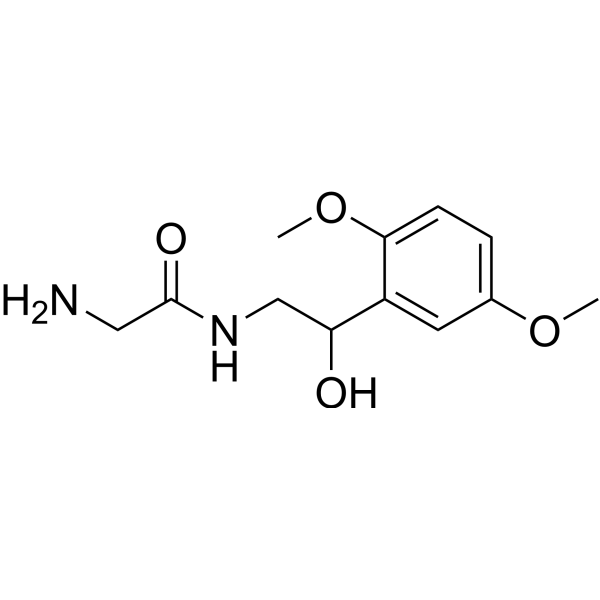
Midodrine is a selective and orally active adrenergic α1-receptor agonist. Midodrine can strengthen vascular contraction. Midodrine can be used for the researches of cardiovascular disease, such as orthostatic hypotension [1] .
loading...
    loading...
Cat. No.: HY-12749A
CAS No.: 43218-56-0
Purity:  99.49%
Synonyms: (±)-Midodrine hydrochloride
Target:  

Adrenergic Receptor

Research Areas:  

Cardiovascular Disease

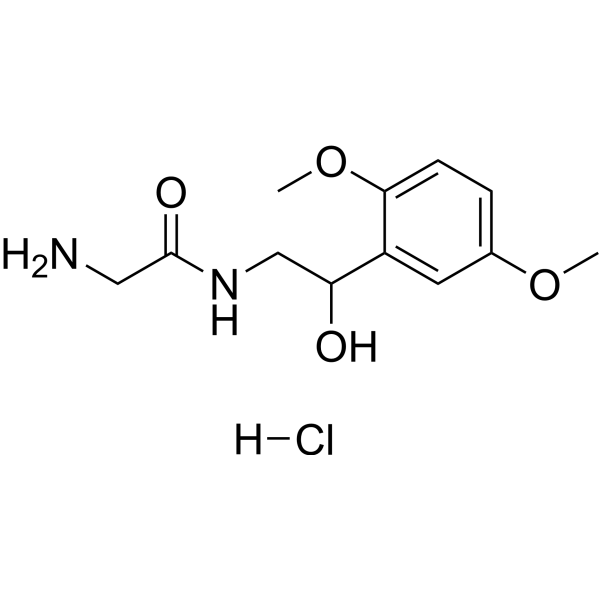
Midodrine hydrochloride ((±)-Midodrine hydrochloride) is a selective and orally active adrenergic α1-receptor agonist. Midodrine hydrochloride can strengthen vascular contraction. Midodrine hydrochloride can be used for the researches of cardiovascular disease, such as orthostatic hypotension [1] .
loading...
    loading...
Cat. No.: HY-14541R
CAS No.: 132539-06-1
Synonyms: LY170053 (Standard)
Olanzapine (Standard) is the analytical standard of Olanzapine. This product is intended for research and analytical applications. Olanzapine (LY170053) is a selective, orally active monoaminergic antagonist with high affinity binding to serotonin H1, 5HT2A/2C, 5HT3, 5HT6 (Ki=7, 4, 11, 57, and 5 nM, respectively), dopamine D1-4 (Ki=11 to 31 nM), muscarinic M1-5 (Ki=1.9-25 nM), and adrenergic α1 receptor (Ki=19 nM). Olanzapine is an atypical antipsychotic [1] .
loading...
    loading...
Cat. No.: HY-B0527AR
CAS No.: 549-18-8
Amitriptyline hydrochloride (Standard) is the analytical standard of Amitriptyline hydrochloride (HY-B0527A). This product is intended for research and analytical applications. Amitriptyline hydrochloride is an orally active tricyclic antidepressant (TCA). Amitriptyline hydrochloride mainly exerts its antidepressant effect by blocking SERT (Ki = 3.45 nM) and NET (Ki = 13.3 nM), thereby increasing the concentrations of 5-hydroxytryptamine (5-HT) and norepinephrine (NE) in the synaptic cleft. Amitriptyline hydrochloride is also an agonist at α2A and TrkA/TrkB receptors, thereby exerting analgesic and neurotrophic activities (inhibiting cell apoptosis). Amitriptyline hydrochloride can reduce inflammation, angiogenesis and fibrosis. Amitriptyline hydrochloride binds to DAT (with Ki = 2.58 μM). Amitriptyline hydrochloride has high affinity for a series of receptors and can antagonize muscarinic cholinergic receptors (M1/M2/M3/M4/M5 receptors) (Ki = 11-24 nM), H1 receptors (Ki = 0.5-1.1 nM), adrenergic α1 receptors (Ki = 4.4 nM), etc., resulting in a series of side effects. Amitriptyline hydrochloride can block sodium channels and hERG potassium channel (IC50 = 4.78 μM) and it has cardiotoxicity.
loading...
    loading...
Cat. No.: HY-12749AS
CAS No.: 1188265-43-1
Purity:  99.44%
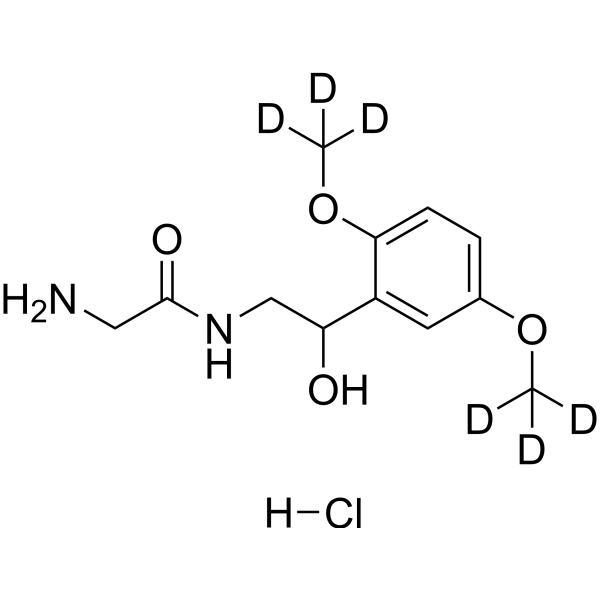
Midodrine-d6 (hydrochloride) is a selective and orally active adrenergic α1-receptor agonist. Midodrine-d6 (hydrochloride) can strengthen vascular contraction. Midodrine-d6 (hydrochloride) can be used for the researches of cardiovascular disease, such as orthostatic hypotension [1] .
loading...
    loading...
Cat. No.: HY-14541S
CAS No.: 786686-79-1
Purity:  99.09%
Synonyms: LY170053-d3
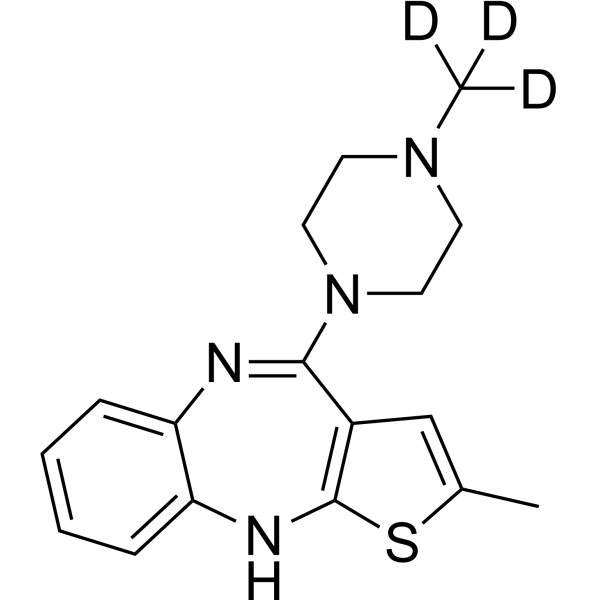
Olanzapine-d3 (LY170053-d3) is the deuterium labeled Olanzapine. Olanzapine is a selective, orally active monoaminergic antagonist with high affinity binding to serotonin H1, 5HT2A/2C, 5HT3, 5HT6 (Ki=7, 4, 11, 57, and 5 nM, respectively), dopamine D1-4 (Ki=11 to 31 nM), muscarinic M1-5 (Ki=1.9-25 nM), and adrenergic α1 receptors (Ki=19 nM). Olanzapine is an atypical antipsychotic [1] .
loading...
    loading...
Cat. No.: HY-B0527AS
CAS No.: 203645-63-0
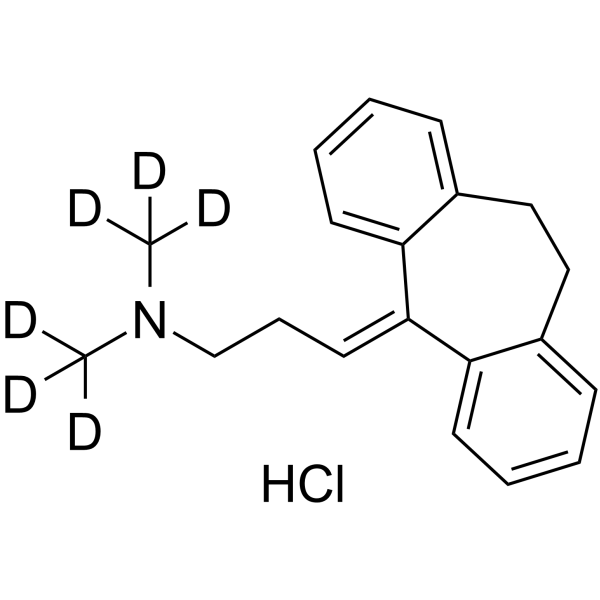
Amitriptyline-d6 hydrochloride is the deuterium labeled Amitriptyline hydrochloride (HY-B0527A). Amitriptyline hydrochloride is an orally active tricyclic antidepressant (TCA). Amitriptyline hydrochloride mainly exerts its antidepressant effect by blocking SERT (Ki = 3.45 nM) and NET (Ki = 13.3 nM), thereby increasing the concentrations of 5-hydroxytryptamine (5-HT) and norepinephrine (NE) in the synaptic cleft. Amitriptyline hydrochloride is also an agonist at α2A and TrkA/TrkB receptors, thereby exerting analgesic and neurotrophic activities (inhibiting cell apoptosis). Amitriptyline hydrochloride can reduce inflammation, angiogenesis and fibrosis. Amitriptyline hydrochloride binds to DAT (with Ki = 2.58 μM). Amitriptyline hydrochloride has high affinity for a series of receptors and can antagonize muscarinic cholinergic receptors (M1/M2/M3/M4/M5 receptors) (Ki = 11-24 nM), H1 receptors (Ki = 0.5-1.1 nM), adrenergic α1 receptors (Ki = 4.4 nM), etc., resulting in a series of side effects. Amitriptyline hydrochloride can block sodium channels and hERG potassium channel (IC50 = 4.78 μM) and it has cardiotoxicity.
loading...
    loading...
Cat. No.: HY-12720
CAS No.: 66711-21-5
Synonyms: ALO 2145 free base
Target:  

Adrenergic Receptor

Research Areas:  

Infection Neurological Disease

Apraclonidine (ALO 2145 (free base)), a selective α2 and weak α1 receptor agonist activity, effectively low intraocular pressure (IOP) in human eyes. Apraclonidine hydrochloride is a topical ophthalmic solution [1] .
loading...
    loading...
Cat. No.: HY-153091
CAS No.: 105565-56-8
Purity:  98.96%
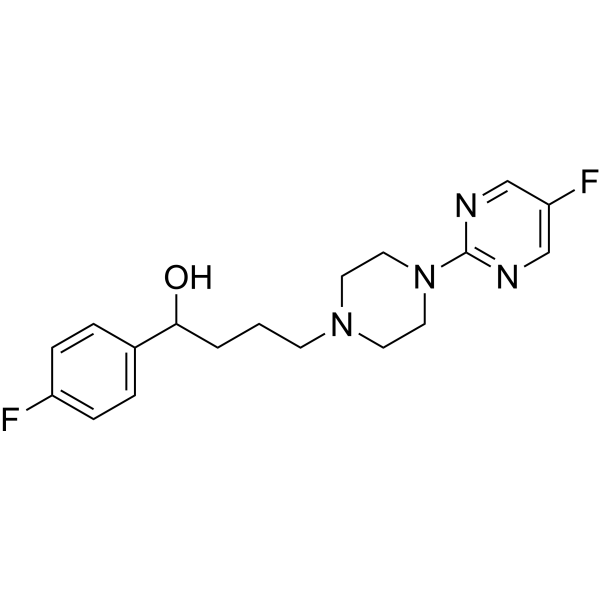
BMY 14802 is a sigma-1 receptor (σ1R) antagonist, as well as an agonist at serotonin (5-HT) 1A and adrenergic alpha-1 receptors. BMY 14802 inhibits abnormal involuntary movement (AIM) in rat Parkinson's disease (PD) model, with down-regulating the expression of AIM [1] .
loading...
    loading...
Cat. No.: HY-14541A
CAS No.: 783334-36-1
Synonyms: LY170053 hydrochloride
Olanzapine hydrochloride is a selective, orally active monoaminergic antagonist with high affinity binding to serotonin H1, 5HT2A/2C, 5HT3, 5HT6 (Ki=7, 4, 11, 57, and 5 nM, respectively), dopamine D1-4 (Ki=11 to 31 nM), muscarinic M1-5 (Ki=1.9-25 nM), and adrenergic α1 receptor (Ki=19 nM). Olanzapine hydrochloride is an atypical antipsychotic [1] .
loading...
    loading...
Cat. No.: HY-19012
CAS No.: 93750-14-2
Target:  

Adrenergic Receptor

Research Areas:  

Cardiovascular Disease

N-1518 is an α and β adrenergic receptor blocker that has competitive antagonism against β1 and α1 receptors, but does not show selectivity for β1 receptors, but shows about 20-fold selectivity for α1 receptors. N-1518 has vasodilatory effects and can be used in the research field of hypertension treatment [1].
loading...
    loading...
Cat. No.: HY-12720B
CAS No.: 73217-88-6
Synonyms: ALO 2145 dihydrochloride
Target:  

Adrenergic Receptor

Research Areas:  

Neurological Disease

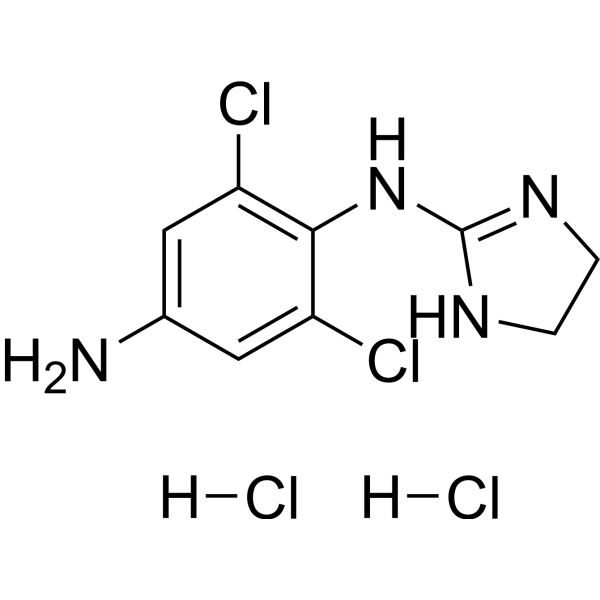
Apraclonidine (ALO 2145) dihydrochloride, a selective α2 and weak α1 receptor agonist activity, effectively low intraocular pressure (IOP) in eyes. Apraclonidine dihydrochloride is a topical ophthalmic solution [1] .
loading...
    loading...
Cat. No.: HY-105672
CAS No.: 30924-31-3
Target:  

Adrenergic Receptor

Research Areas:  

Cancer

Cafaminol (Methylcoffanolamine) is a vasoconstrictor and anticatarrhal that selectively binds to alpha-1 receptors, causing blood vessels to constrict. Cafaminol is an xanthine derivative which can be utilized in decongestant and antitumor research [1].
loading...
    loading...
Cat. No.: HY-135175
CAS No.: 93933-71-2
Phenoprolamine hydrochloride is an adrenergic α1 receptor antagonist that exhibits potent antihypertensive effects. Phenoprolamine hydrochloride demonstrates neuroprotective and cardioprotective properties. Phenoprolamine hydrochloride inhibits CYP2D and CYP3A activities while down-regulating their mRNA transcription.
loading...
    loading...
Cat. No.: HY-112074A
CAS No.: 51274-83-0
Synonyms: HOE 440 hydrochloride
Target:  

Adrenergic Receptor

Research Areas:  

Cardiovascular Disease

Tiamenidine hydrochloride (HOE 440 hydrochloride) is a centrally acting α1-adrenergic receptor antagonist with hypotensive activity. Tiamenidine hydrochloride regulates blood pressure levels by binding to α1 receptors. Tiamenidine hydrochloride can be used in the study of hypertension [1].
loading...
    loading...
Cat. No.: HY-108509
CAS No.: 105565-55-7
Purity:  98.02%
Synonyms: BMY-14802-1; BMS 181100 hydrochloride
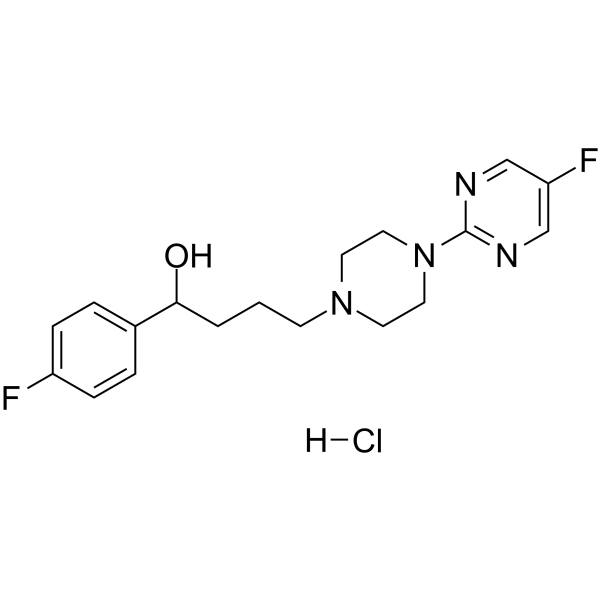
BMY-14802 hydrochloride (BMY-14802-1) is a selective and orally active sigma receptor antagonist with an IC50 of 112 nM. BMY-14802 hydrochloride is also a 5-HT1A and adrenergic α1 receptors agonist. BMY-14802 hydrochloride has antipsychotic effects [1] .
loading...
    loading...

