





25 Results for "

β-Amyloid (1-42), human

" in MedChemExpress (MCE) Product Catalog:
Products (25)

25 Results for "β-Amyloid (1-42), human" in MCE Product Catalog:

27
27 Publications Verification
Cat. No.: HY-P1363A
CAS No.: 107761-42-2
Synonyms: Amyloid β-peptide (1-42) (human)
Target:  

Amyloid-β

Research Areas:  

Neurological Disease

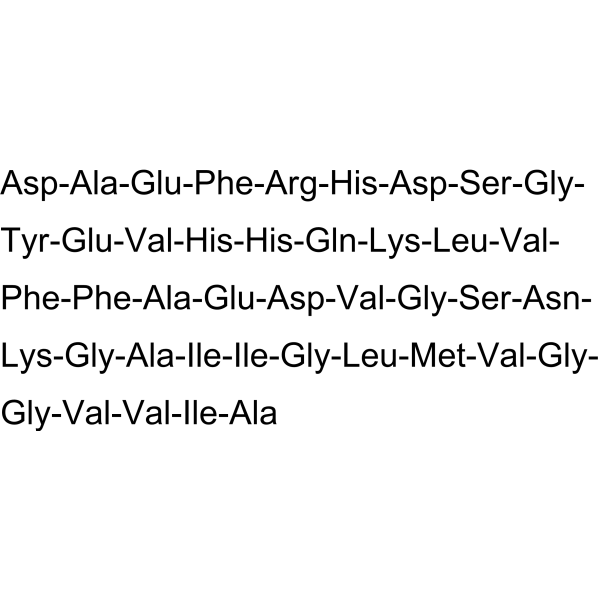
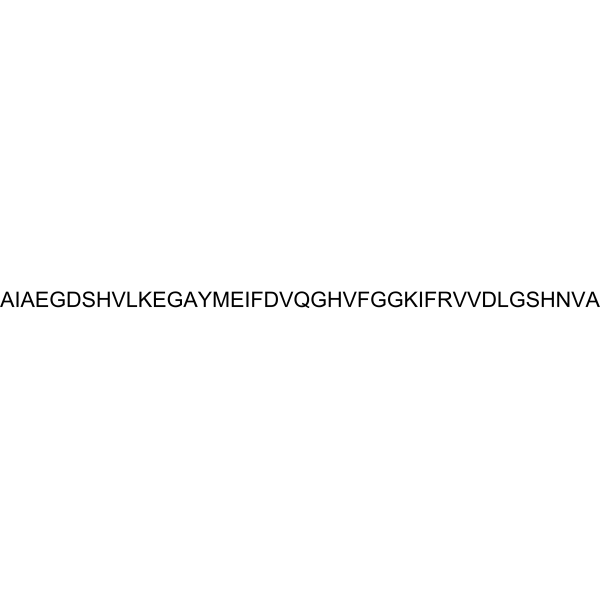
β-Amyloid (1-42) (Amyloid β-peptide (1-42)), human, a 42-amino acid peptide that has not been treated with HFIP, is a brain-penetrant amyloid protein fragment, which can be used in research on Alzheimer's disease and Down’s syndrome. β-Amyloid (1-42), human remaining as a monomer exhibits antioxidant and neuroprotective effects. β-Amyloid (1-42), human, after being monomericized by HFIP and dissolved in DMSO to form the stock solution, on the one hand, can form soluble oligomers (AβOs) when incubated at 4 °C, which have synaptic toxicity and neurotoxicity; on the other hand, it can be incubated at 37 °C to form insoluble fibrils, with lower neurotoxicity, and participating in the oxidative damage process. Aβ42 oligomers bind to various neuronal surface receptors (such as PrPc, mGluR5, NMDA receptors, etc.), triggering oxidative stress, calcium homeostasis imbalance, and synaptic toxicity via activating downstream signaling pathways, leading to neuronal dysfunction and death .
loading...
    loading...
27
27 Publications Verification
Cat. No.: HY-P1363B
CAS No.: 107761-42-2
Target:  

Amyloid-β

Research Areas:  

Neurological Disease

β-Amyloid (1-42), human, HFIP-treated, a 42-amino acid peptide that has been treated with HFIP from β-Amyloid (1-42), human (HY-P1363A), is a brain-penetrant amyloid protein fragment, which can be used in research on Alzheimer's disease and Down’s syndrome. β-Amyloid (1-42), human, HFIP-treated remaining as a monomer exhibits antioxidant and neuroprotective effects. β-Amyloid (1-42), human, HFIP-treated, after being dissolved in DMSO to form the stock solution, on the one hand, can form soluble oligomers (AβOs) when incubated at 4°C, which have synaptic toxicity and neurotoxicity; on the other hand, it can be incubated at 37°C to form insoluble fibrils, with lower neurotoxicity, and participating in the oxidative damage process. Aβ42 oligomers bind to various neuronal surface receptors (such as PrPc, mGluR5, NMDA receptors, etc.), triggering oxidative stress, calcium homeostasis imbalance, and synaptic toxicity via activating downstream signaling pathways, leading to neuronal dysfunction and death .
loading...
    loading...
27
27 Publications Verification
Cat. No.: HY-P1363
Synonyms: Amyloid β-peptide (1-42) (human) TFA
Target:  

Amyloid-β

Research Areas:  

Neurological Disease

β-Amyloid (1-42) (Amyloid β-peptide (1-42), human TFA, a 42-amino acid peptide that has not been treated with HFIP, is a brain-penetrant amyloid protein fragment, which can be used in research on Alzheimer's disease and Down’s syndrome. β-Amyloid (1-42), human TFA remaining as a monomer exhibits antioxidant and neuroprotective effects. β-Amyloid (1-42), human TFA, after being monomericized by HFIP and dissolved in DMSO to form the stock solution, on the one hand, can form soluble oligomers (AβOs) when incubated at 4 °C, which have synaptic toxicity and neurotoxicity; on the other hand, it can be incubated at 37 °C to form insoluble fibrils, with lower neurotoxicity, and participating in the oxidative damage process. Aβ42 oligomers bind to various neuronal surface receptors (such as PrPc, mGluR5, NMDA receptors, etc.), triggering oxidative stress, calcium homeostasis imbalance, and synaptic toxicity via activating downstream signaling pathways, leading to neuronal dysfunction and death .
loading...
    loading...
1
1 Cited Publications
Cat. No.: HY-P1363F3
Synonyms: 5-FAM-Amyloid β-peptide (1-42) (human) Tris
Target:  

Amyloid-β

Research Areas:  

Neurological Disease

5-FAM-β-Amyloid (1-42), human (5-FAM-Amyloid β-peptide (1-42) (human) Tris is a 5-FAM labeled β-Amyloid (1-42), human. β-Amyloid (1-42), human is a brain-penetrant amyloid protein fragment, which can be used in research on Alzheimer's disease and Down’s syndrome.
loading...
    loading...
1
1 Cited Publications
Cat. No.: HY-P1362
CAS No.: 317366-82-8
Synonyms: Amyloid β Peptide (42-1)(human)
Target:  

Amyloid-β

Research Areas:  

Neurological Disease

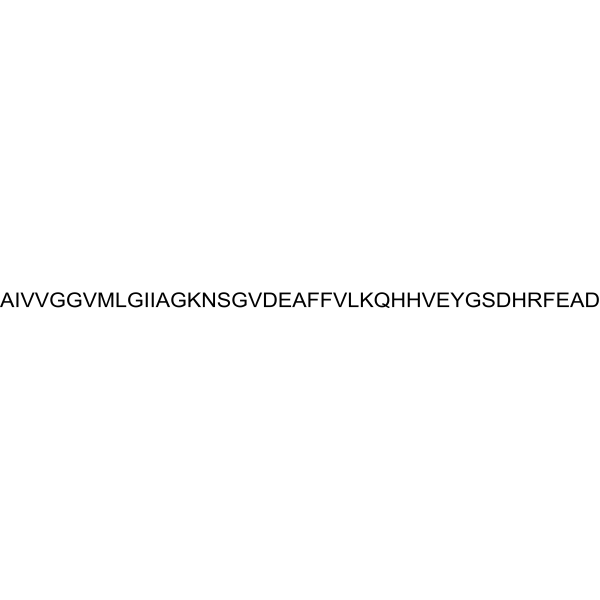
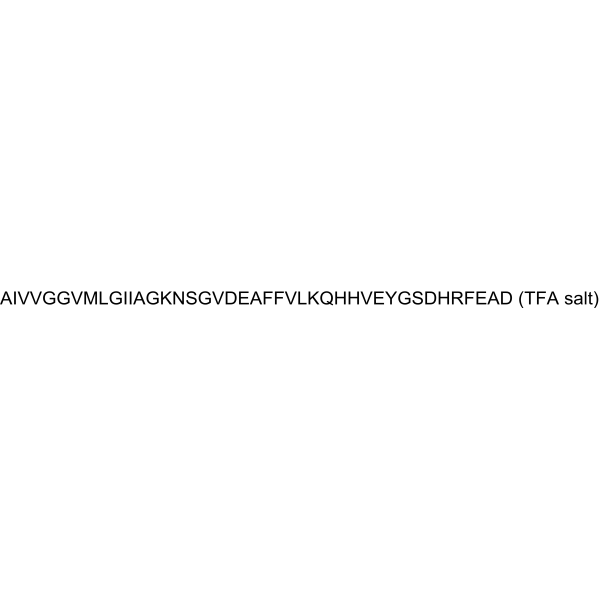
β-Amyloid (42-1), human is the inactive form of Amyloid β Peptide (1-42). Its active form, β-Amyloid (1-42), may play a key role in the pathogenesis of Alzheimer's disease .
loading...
    loading...
Cat. No.: HY-P1363F1
Synonyms: Biotin-Amyloid β-peptide (1-42) (human) TFA
Target:  

Amyloid-β

Research Areas:  

Neurological Disease

Biotin-β-Amyloid (1-42), human TFA (Biotin-Amyloid β-Peptide (1-42) (human) TFA) is the botin labeled β-Amyloid (1-42), human TFA (HY-P1363). β-Amyloid (1-42), human TFA is a 42-amino acid peptide which plays a key role in the pathogenesis of Alzheimer disease .
loading...
    loading...
Cat. No.: HY-P1363S
Synonyms: Amyloid β-peptide-15N (1-42) (human) TFA
Target:  

Amyloid-β

Research Areas:  

Neurological Disease

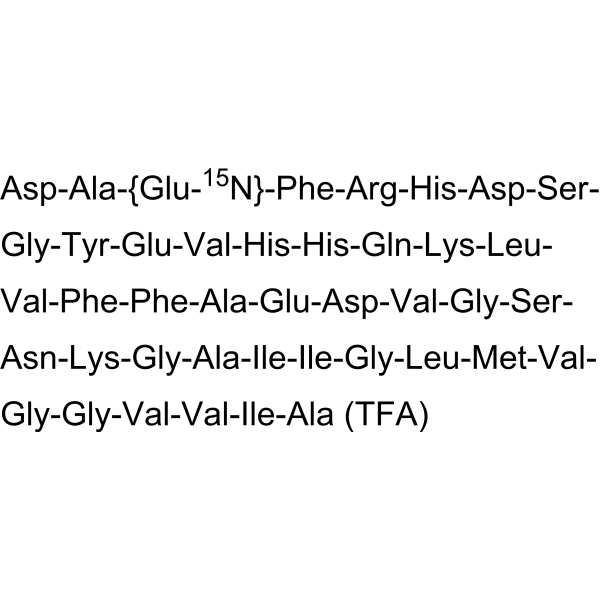
β-Amyloid- 15N (1-42), human (TFA) is the 15N-labledβ-Amyloid (1-42) (TFA). β-Amyloid (1-42), human TFA (Amyloid β-Peptide (1-42) (human) TFA) is a 42-amino acid peptide which plays a key role in the pathogenesis of Alzheimer disease .
loading...
    loading...
Cat. No.: HY-P4867A
Target:  

Amyloid-β

Research Areas:  

Neurological Disease

β Amyloid (1-42) (scrambled) TFA is a negative control of β-Amyloid (1-42), human TFA (HY-P1363) .
loading...
    loading...
Cat. No.: HY-P1362F
Synonyms: Cy5-Amyloid β Peptide (42-1)(human) Tris
Target:  

Amyloid-β

Research Areas:  

Neurological Disease

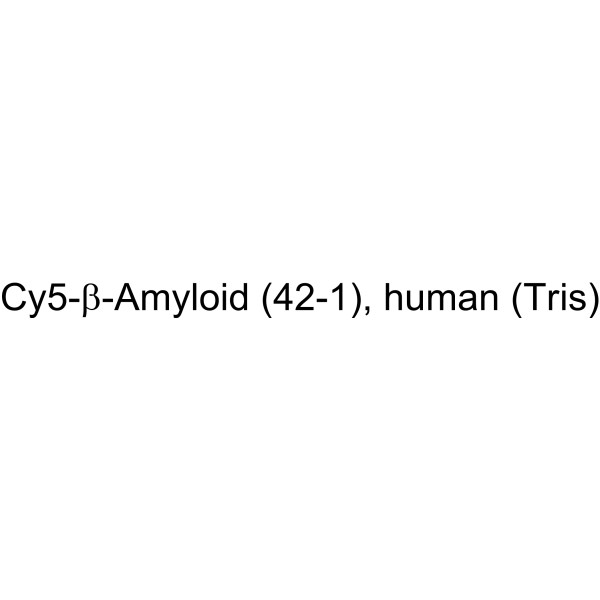
Cy5-β-Amyloid (42-1), human is a Cy5 fluorescently-labelled β-Amyloid (42-1, human) peptide (λex= 633 nm and λem= 670 nm) . β-Amyloid (42-1), human is the inactive form of Amyloid β Peptide (1-42). Its active form, β-Amyloid (1-42), may play a key role in the pathogenesis of Alzheimer's disease.
loading...
    loading...
Cat. No.: HY-P5905
Synonyms: Citrullinated Aβ (1-42); Citrullinated Aβ42
Target:  

Amyloid-β

Research Areas:  

Neurological Disease

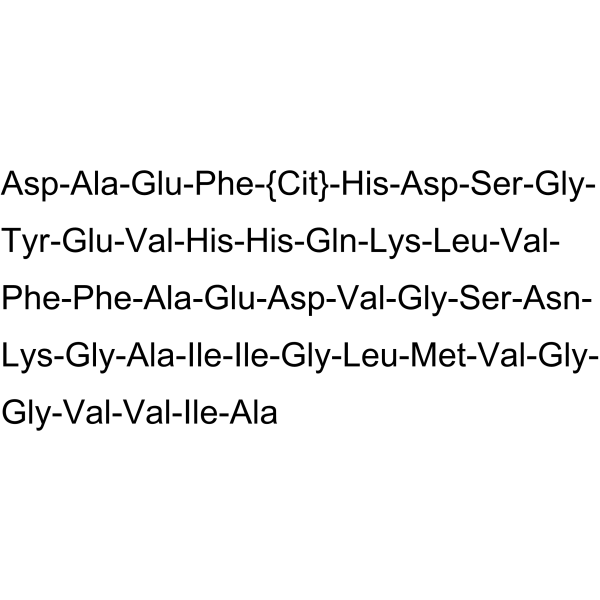
Citrullinated amyloid-β (1-42) peptide (human) (Citrullinated Aβ (1-42)) is a modified form of β-Amyloid (1-42) (HY-P1363) with a citrullination at the Arg5 site. Compared to the unmodified β-Amyloid (1-42), its formation of soluble low-molecular-weight oligomers is enhanced, the rate of fibril formation is reduced, and like unmodified Aβ42, it forms protofibrils comprised of parallel β-sheets .
loading...
    loading...
Cat. No.: HY-P1378A
Target:  

Amyloid-β

Research Areas:  

Neurological Disease

β-Amyloid (1-43)(human) TFA is more prone to aggregation and has higher toxic properties than the long-known Aβ1-42. β-Amyloid (1-43)(human) TFA shows a correlation with both sAPPα and sAPPβ. β-Amyloid (1-43)(human) TFA could be considered an added Alzheimer's disease (AD) biomarker together with the others already in use .
loading...
    loading...
Cat. No.: HY-P1363S1
β-Amyloid (1-42), human, Ala( 13C3, 15N) TFA is the 13C and 15N-labeled β-Amyloid (1-42), human (HY-P1363A). β-Amyloid (1-42) (Amyloid β-peptide (1-42)), human, a 42-amino acid peptide that has not been treated with HFIP, is a brain-penetrant amyloid protein fragment, which can be used in research on Alzheimer's disease and Down’s syndrome. β-Amyloid (1-42), human remaining as a monomer exhibits antioxidant and neuroprotective effects. β-Amyloid (1-42), human, after being monomericized by HFIP and dissolved in DMSO to form the stock solution, on the one hand, can form soluble oligomers (AβOs) when incubated at 4 °C, which have synaptic toxicity and neurotoxicity; on the other hand, it can be incubated at 37 °C to form insoluble fibrils, with lower neurotoxicity, and participating in the oxidative damage process. Aβ42 oligomers bind to various neuronal surface receptors (such as PrPc, mGluR5, NMDA receptors, etc.), triggering oxidative stress, calcium homeostasis imbalance, and synaptic toxicity via activating downstream signaling pathways, leading to neuronal dysfunction and death .
loading...
    loading...
Cat. No.: HY-P4867
CAS No.: 1678415-52-5
Target:  

Amyloid-β

Research Areas:  

Neurological Disease

β Amyloid (1-42) (scrambled) is a negative control of β-Amyloid (1-42), human (HY-P1363A) .
loading...
    loading...
Cat. No.: HY-P1378
CAS No.: 134500-80-4
Target:  

Amyloid-β

Research Areas:  

Neurological Disease

β-Amyloid (1-43)(human) is more prone to aggregation and has higher toxic properties than the long-known Aβ1-42. β-Amyloid (1-43)(human) shows a correlation with both sAPPα and sAPPβ. β-Amyloid (1-43)(human) could be considered an added Alzheimer's disease (AD) biomarker together with the others already in use .
loading...
    loading...
Cat. No.: HY-P1363D
Target:  

Amyloid-β

Research Areas:  

Neurological Disease

Cys-β-Amyloid (1-42), human is a Cys-labeled β-Amyloid (1-42), human TFA (HY-P1363). β-Amyloid (1-42), human TFA is a peptide composed of 42 amino acids that plays a key role in the pathogenesis of Alzheimer's disease.
loading...
    loading...
Cat. No.: HY-P4882
CAS No.: 183449-57-2
Target:  

Amyloid-β Tau Protein

Research Areas:  

Neurological Disease

(Pyr3)-Amyloid β-Protein (3-42) is an N-terminally truncated pyroglutamylated β-amyloid peptide. (Pyr3)-Amyloid β-Protein (3-42) forms stable β-sheet structures across different pH values, co-oligomerizes with Aβ1-42 to form cytotoxic oligomers, induces tau-dependent cytotoxicity and neuronal loss, inhibits hippocampal LTP, and exhibits stronger protease resistance. (Pyr3)-Amyloid β-Protein (3-42) exists in the brain tissues of human Alzheimer's disease patients, correlates with the pathogenesis of Alzheimer's disease, and follows a unique, faster oligomerization pathway. (Pyr3)-Amyloid β-Protein (3-42) can be used in Alzheimer's disease-related research .
loading...
    loading...
Cat. No.: HY-P1362A
Synonyms: Amyloid β Peptide (42-1)(human) TFA
Target:  

Amyloid-β

Research Areas:  

Neurological Disease

β-Amyloid (42-1), human TFA is the inactive form of Amyloid β Peptide (1-42). β-Amyloid (42-1), human TFA is a 42-amino acid peptide which plays a key role in the pathogenesis of Alzheimer disease .
loading...
    loading...
Cat. No.: HY-P4861
CAS No.: 1872440-40-8
Target:  

Amyloid-β

Research Areas:  

Others

Biotinyl-Ahx-Amyloid β-Protein (1-42) is abiotinylated β-Amyloid (1-42), human (TFA) (HY-P1363).
loading...
    loading...
Cat. No.: HY-P1362FA
Synonyms: Cy5-Amyloid β Peptide (42-1)(human) (TFA
Target:  

Amyloid-β

Research Areas:  

Neurological Disease

Cy5-β-Amyloid (42-1), human is a Cy5 fluorescently-labelled β-Amyloid (42-1, human) peptide (λex= 633 nm and λem= 670 nm) . β-Amyloid (42-1), human is the inactive form of Amyloid β Peptide (1-42). Its active form, β-Amyloid (1-42), may play a key role in the pathogenesis of Alzheimer's disease.
loading...
    loading...
Cat. No.: HY-P706264
Purity:  ≥ 95%, as determined by HPLC.
Synonyms: ¹⁵N-Aβ(1-42); ¹⁵N-Beta-Amyloid(1-42); ¹⁵N-Aβ(1-42); ¹⁵N-Amyloid β Protein Fragment1-42; ¹⁵N-Amyloid β-Peptide(1-42); ¹⁵N-β-Amyloid 42; ¹⁵N-β-Amyloid(1-42); APP; PreA4; Prev. AD1; CVAP; Alzheimer Disease Amyloid A4 Protein Homolog; Beta-Amyloid Precursor Protein; Amyloid-Beta Precursor Protein; Testicular Tissue Protein Li 2; Amyloid Precursor Protein; Beta-Amyloid Peptide(1-40); Alpha-SAPP; Beta-Amyloid Peptide(1-42); ABPP; Alternative Protein APP; Amyloid Beta (A4) Precursor Protein; Beta-Amyloid Peptide; Amyloid-Beta (A4) Precursor Protein; Amyloid Beta Protein; Alzheimer Disease Amyloid Protein; Alzheimer Disease; Cerebral Vascular Amyloid Peptide; CTFgamma; Amyloid Beta A4 Protein; ABETA; Amyloid-Beta A4 Protein; AAA; Peptidase Nexin-II; PN2; Protease Nexin-II; A4; PN-II; Amyloid Beta Precursor Protein; APPI
Species:  
Human
Source:  
E. coli
loading...
    loading...

