

Search Result
Results for "
4-trifluoromethyl
" in MedChemExpress (MCE) Product Catalog:
4
Biochemical Assay Reagents
10
Isotope-Labeled Compounds
| Cat. No. |
상품명 |
Target |
연구분야 |
Chemical Structure |
-
- HY-134124
-
|
|
Reactive Oxygen Species (ROS)
|
Metabolic Disease
|
|
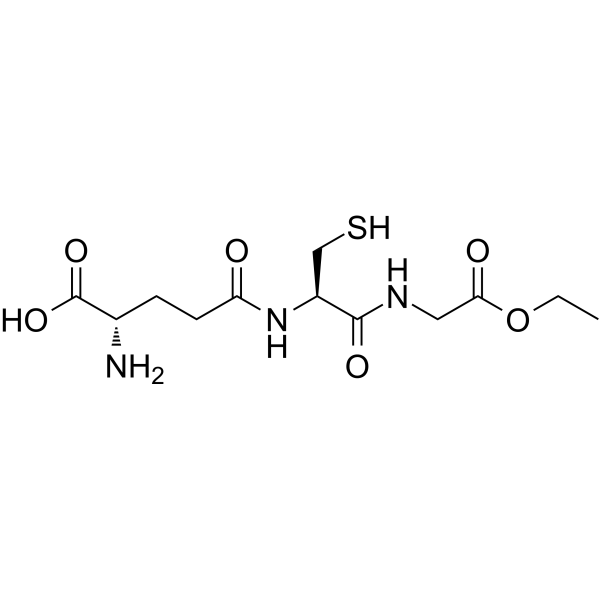
Glutathione ethyl ester is a cell-permeable GSH donor and provides an efficient supply of GSH to the oocyte. Glutathione ethyl ester shows positive effect on the in vitro production of embryos by enhancement of the antioxidative defense .
|
-
-
- HY-P10272
-
|
PTG-300
|
Ferroportin
|
Others
|
|
Rusfertide is a peptide mimetic of natural hepcidin, which targets and degrades ferroportin, reduces serum iron and transferrin-saturation, and thus regulates the production of red blood cells. Rusfertide ameliorates the polycythemia vera, β-thalassemia and hereditary hemochromatosis .
|
-
-
- HY-A0248A
-
|
|
Bacterial
|
Infection
|
|
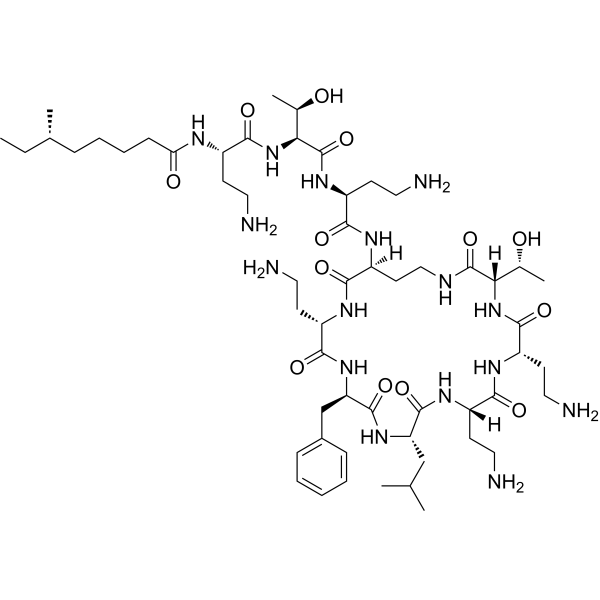
Polymyxin B1 is a potent antimicrobial lipopeptide first derived from Bacilus polymyxa. Polymyxin B1 is the major component in Polymyxin B (HY-A0248). Polymyxin B1 can induce lysis of bacterial cells through interaction with their membranes. Polymyxin B1 has the potential for multidrug-resistant Gram-negative bacterial infections treatment .
|
-
-
- HY-D0981
-
|
Coumarin 151; AFC
|
Fluorescent Dye
|
Others
|
|
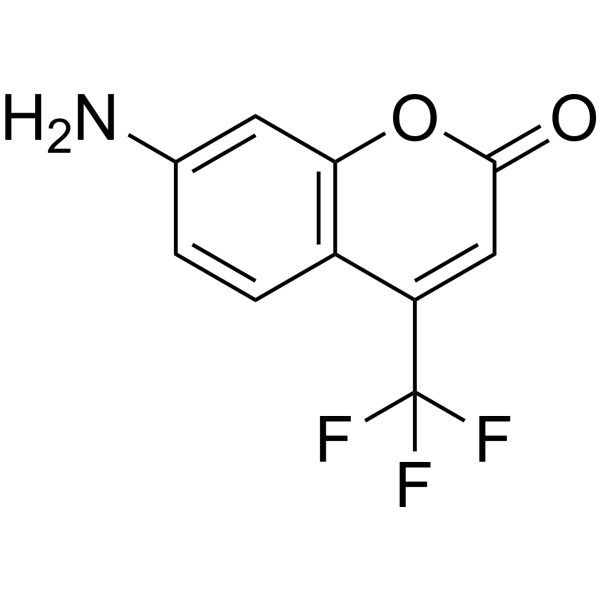
7-Amino-4-(trifluoromethyl)coumarin (Coumarin 151) is a fluorescent marker for the sensitive detection of proteinases. The excitation and emission wavelengths are 400 and 490 nm, respectively.
|
-
-
- HY-W013962
-
-
-
- HY-34781
-
-
-
- HY-P1108A
-
|
|
CRFR
|
Neurological Disease
Inflammation/Immunology
|
Astressin 2B TFA is a blood-brain barrier-impermeable, highly selective CRFR2 antagonist (rCRFR2, IC50=0.57 nM). Astressin 2B TFA blocks the protective effects mediated by CRFR2, thereby exacerbating indomethacin (HY-14397)-induced hemorrhagic intestinal injury in rats. Astressin 2B TFA reverses the protective effects of Urocortin 1 against intestinal hypermotility, bacterial invasion and upregulation of inflammatory mediators. Astressin 2B TFA also blocks the anxiogenic effect of Urocortin 2 and attenuates stress-induced anxiety-related behaviors. In the Clostridioides difficile toxin A (C. difficile toxin A)-mediated enteritis model, Astressin 2B TFA mimics the phenotype of CRFR2-deficient mice, significantly exacerbating intestinal epithelial damage, edema, neutrophil migration and the expression of multiple proinflammatory cytokines. Astressin 2B TFA is an important tool molecule for investigating the intestinal protective mechanisms of CRFR2 [4] .
|
-
-
- HY-P1108
-
|
|
CRFR
|
Neurological Disease
Inflammation/Immunology
|
Astressin 2B is a blood-brain barrier-impermeable, highly selective CRFR2 antagonist (rCRFR2, IC50=0.57 nM). Astressin 2B blocks the protective effects mediated by CRFR2, thereby exacerbating indomethacin (HY-14397)-induced hemorrhagic intestinal injury in rats. Astressin 2B reverses the protective effects of Urocortin 1 against intestinal hypermotility, bacterial invasion and upregulation of inflammatory mediators. Astressin 2B also blocks the anxiogenic effect of Urocortin 2 and attenuates stress-induced anxiety-related behaviors. In the Clostridioides difficile toxin A (C. difficile toxin A)-mediated enteritis model, Astressin 2B mimics the phenotype of CRFR2-deficient mice, significantly exacerbating intestinal epithelial damage, edema, neutrophil migration and the expression of multiple proinflammatory cytokines. Astressin 2B is an important tool molecule for investigating the intestinal protective mechanisms of CRFR2 [4] .
|
-
-
- HY-D0149
-
|
|
Cytochrome P450
|
Others
|
|
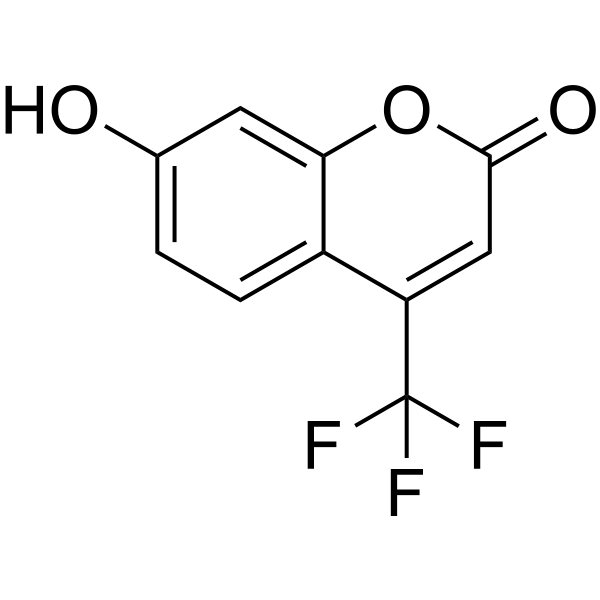
4-(Trifluoromethyl)umbelliferone is fluorescent probe substrate for rat hepatic cytochrome P450 enzymes .
|
-
-
- HY-W002441
-
|
|
Biochemical Assay Reagents
|
Others
|
|
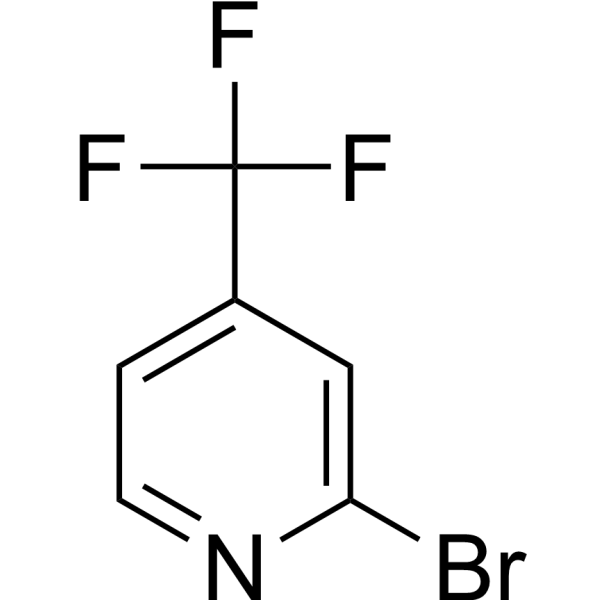
2-Bromo-4-(trifluoromethyl)pyridine is a biochemical reagent that can be used as a biological material or organic compound for life science related research.
|
-
-
- HY-W027773
-
-
-
- HY-112731
-
-
-
- HY-66035
-
|
4-(trifluoromethyl)pyridine-3-carboxylic acid
|
Parasite
|
Infection
|
|
4-(Trifluoromethyl)nicotinic acid (4-(Trifluoromethyl)pyridine-3-carboxylic acid) is a metabolite of the pyridinecarboxamide insecticide Flonicamid (HY-119649) .
|
-
-
- HY-W004212
-
|
|
Biochemical Assay Reagents
|
Others
|
|
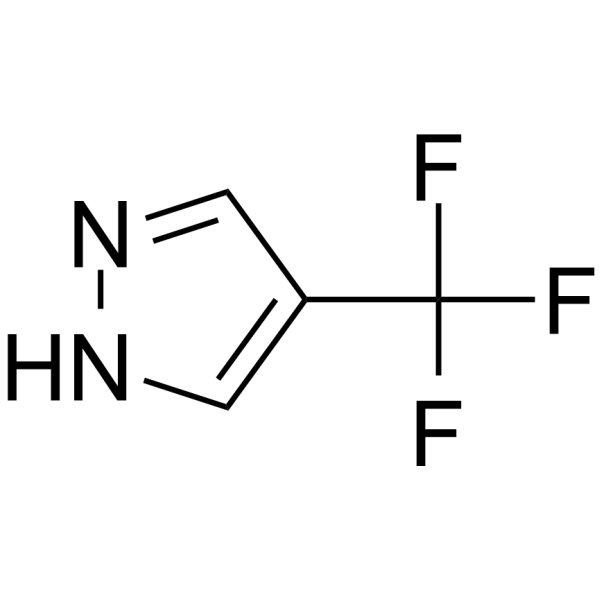
4-(Trifluoromethyl)-1H-pyrazole is a biochemical reagent that can be used as a biological material or organic compound for life science related research.
|
-
-
- HY-W267897
-
|
7-BFC
|
Cytochrome P450
|
Others
|
|
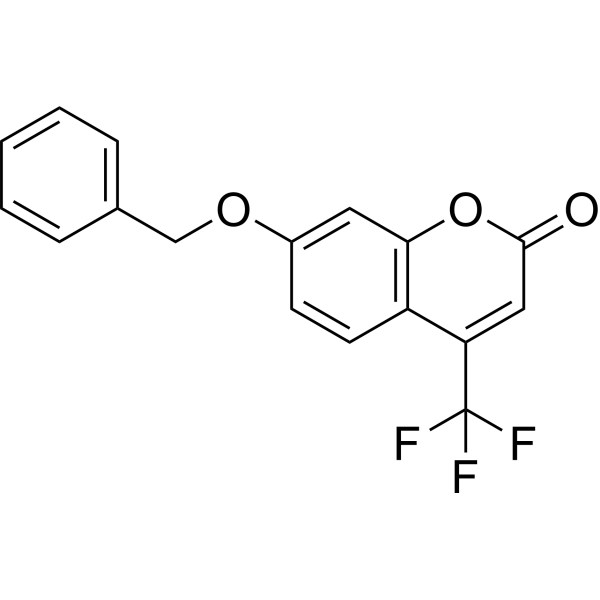
7-Benzyloxy-4-(trifluoromethyl)coumarin (7-BFC) is a coumarin fluorescent substrate. 7-Benzyloxy-4-(trifluoromethyl)coumarin is a substrate for cDNA-expressed CYP1A2 and CYP3A4 and is metabolized to 7-hydroxy-4-trifluoromethylcoumarin (HFC). 7-Benzyloxy-4-(trifluoromethyl)coumarin is used for rapid CYP isoform metabolism and inhibition screening studies .
|
-
-
- HY-103033
-
|
|
Parasite
|
Infection
|
|
T.cruzi-IN-1 is a potent Trypanosoma cruzi inhibitor with an IC50 of 8 nM. T.cruzi-IN-1, a 4-trifluoromethyl substituted analog, has the potential for both the acute and chronic stages of Chagas disease .
|
-
-
- HY-P10143
-
|
Ac-Pro-Leu-Gly-[(S)-2-mercapto-4-methyl-pentanoyl]-Leu-Gly-OEt
|
MMP
|
Others
|
|
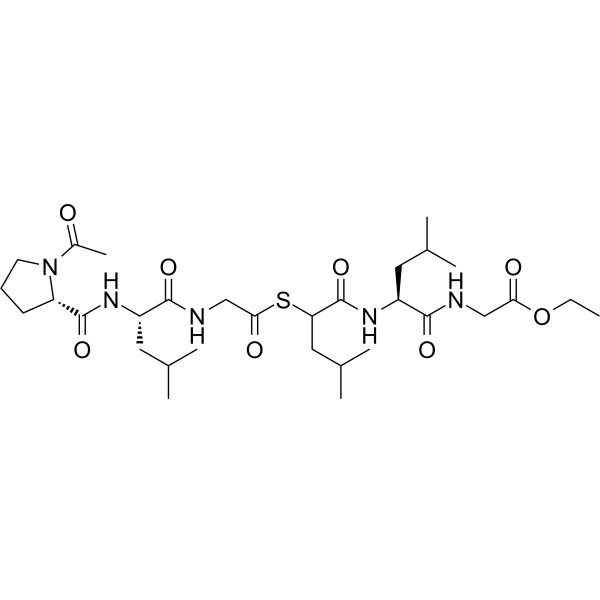
MMP-2/MMP-9 Substrate (Ac-Pro-Leu-Gly-[(S)-2-mercapto-4-methyl-pentanoyl]-Leu-Gly-OEt) is a synthetic chromogenic polypeptide substrate whose core structure mimics the cleavage sites of MMP-2 and MMP-9 (gelatinase A and B) in collagen. After being hydrolyzed by collagenase, MMP-2/MMP-9 Substrate reacts with 4,4'-dithiodipyridine or Ellman's Reagent via its thiol fragment to produce a product with ultraviolet absorption properties .
|
-
-
- HY-A0248AS
-
|
|
Isotope-Labeled Compounds
Bacterial
|
Infection
|
|
Polymyxin B1-d7 TFA is the deuterium labeled Polymyxin B1 TFA (HY-A0248A). Polymyxin B1 is a potent antimicrobial lipopeptide first derived from Bacilus polymyxa. Polymyxin B1 is the major component in Polymyxin B (HY-A0248). Polymyxin B1 can induce lysis of bacterial cells through interaction with their membranes. Polymyxin B1 has the potential for multidrug-resistant Gram-negative bacterial infections treatment .
|
-
-
- HY-W015198S
-
-
-
- HY-W011223
-
|
|
Amino Acid Derivatives
|
Others
|
|
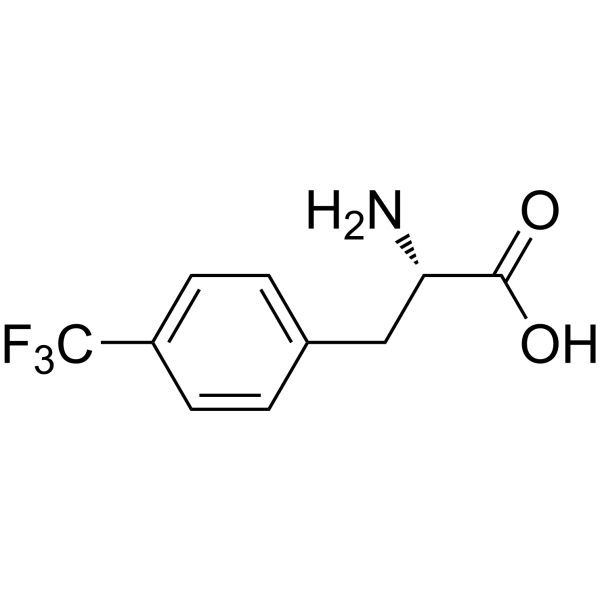
(S)-2-((tert-Butoxycarbonyl)amino)-3-(4-(trifluoromethyl)phenyl)propanoic acid is a phenylalanine derivative .
|
-
-
- HY-P2496
-
|
|
Endothelin Receptor
Fluorescent Dye
NF-κB
COX
Prostaglandin Receptor
Apoptosis
TNF Receptor
Interleukin Related
MMP
|
Cardiovascular Disease
Inflammation/Immunology
Cancer
|
|
Endothelin 1 (swine, human), Alexa Fluor 488-labeled is an Endothelin-1 conjugated with Alexa Fluor 488 (HY-D1304). Endothelin-1 is an endogenous vasoconstrictor and agonist of ETA/ETB receptor. Endothelin 1 (swine, human) exerts effects including promoting mitosis, angiogenesis, tumor invasion and metastasis, and inhibiting apoptosis. Endothelin 1 (swine, human) induces inflammation and oxidative stress by activating the NF-κB pathway. Endothelin 1 (swine, human), Alexa Fluor 488-labeled is specifically designed for fluorescence imaging, flow cytometry or receptor localization studies, and can be used in research related to sepsis, atherosclerosis, systemic inflammatory response syndrome, cancer and congestive heart failure .
|
-
-
- HY-P5372A
-
|
|
Protease Activated Receptor (PAR)
|
Cancer
|
|
Ala-parafluoroPhe-Arg-Cha-Cit-Tyr-NH2 TFA, a bioactive peptide, is a selective Protease activating receptor 1 (PAR-1) agonist over PAR-2. PAR-1 belongs to a subfamily of G-protein coupled receptors and is known to mediate the cellular effects of thrombin. In addition to its varied cellular effects of thrombin, PAR-1 has also been shown to coordinate with PAR-4 and regulate thrombin-induced hepatocellular carcinoma harboring thrombin formation within the tumor environment classified as 'coagulation type' .
|
-
-
- HY-77324R
-
|
4-Aminobenzotrifluoride (Standard)
|
Reference Standards
|
|
|
4-(Trifluoromethyl)aniline (Standard) is the analytical standard of 4-(Trifluoromethyl)aniline. This product is intended for research and analytical applications.
|
-
-
- HY-W015198
-
|
|
Biochemical Assay Reagents
|
Others
|
|
4-(Trifluoromethyl)benzoic acid is a biochemical reagent that can be used as a biological material or organic compound for life science related research.
|
-
-
- HY-P10563
-
|
BHV-1100
|
CD38
|
Cancer
|
|
Noraramtide (BHV-1100) is an antibody recruitment molecule. Noraramtide can specifically bind to CD38 molecules to recruit natural killer (NK) cells. Noraramtide enhances the ability of NK cells to kill tumor cells through antibody-dependent cellular cytotoxicity (ADCC). This mechanism allows NK cells to more effectively recognize and eliminate tumor cells while avoiding mutual killing between NK cells. Noraramtide can be used for the study of autologous cancer immunity .
|
-
-
- HY-77324S
-
|
4-Aminobenzotrifluoride-d4
|
DYRK
|
Cancer
|
|
4-(Trifluoromethyl)aniline-d4 (4-Aminobenzotrifluoride-d4) is deuterium labeled 4-(Trifluoromethyl)aniline. 4-(Trifluoromethyl)aniline is a DYRK1A and DYRK1B kinase inhibitor with IC50s of 54.84 nM and 186.40 nM, respectively .
|
-
-
- HY-42549
-
|
|
Drug Intermediate
|
Others
|
|
N-[4-(Trifluoromethyl)benzyl]piperazine is a drug intermediate for synthesis of various active compounds.
|
-
-
- HY-W013504S
-
|
4-Bromo-α,α,α-trifluorotoluene-d4
|
Isotope-Labeled Compounds
|
Others
|
|
1-Bromo-4-(trifluoromethyl)benzene-d4 is the deuterium labeled 1-Bromo-4-(trifluoromethyl)benzene .
|
-
-
- HY-W158239
-
|
|
Drug Metabolite
|
Others
|
|
4-Methyl-2-[4-(trifluoromethyl)phenyl]-1,3-thiazole-5-carboxylic acid is a metabolite of GW 501516 (HY-10838) .
|
-
-
- HY-W011235S
-
-
-
- HY-P3066
-
|
d(CH2)5Tyr(Et)VAVP
|
Vasopressin Receptor
|
Metabolic Disease
|
|
SKF 100398 (d(CH2)5Tyr(Et)VAVP), an arginine vasopressin (AVP) analogue, is a specific antagonist of the antidiuretic effect of exogenous and endogenous AVP .
|
-
-
- HY-W019715
-
|
|
Drug Derivative
|
Others
|
|
trans-4-(Trifluoromethyl)cinnamic acid is a Phenylpropanoids product that can be isolated from the barks of Cinnamomum cassia Presl .
|
-
-
- HY-75513
-
|
|
Biochemical Assay Reagents
|
Others
|
|
2-Amino-4-(trifluoromethyl)pyridine is a biochemical reagent that can be used as a biological material or organic compound for life science related research.
|
-
-
- HY-P10828
-
|
|
Virus Protease
|
Infection
Inflammation/Immunology
|
|
MAPI is a polypeptide irreversible 3C cysteine protease (SV3CP) inhibitor. MAPI inhibits SV3CP by covalently binding its C-terminal Michael-acceptor extension to the active site thiol of SV3CP Cys 139. MAPI is promising for research of noroviruses infection .
|
-
-
- HY-P5372
-
|
|
Protease Activated Receptor (PAR)
|
Cancer
|
|
Ala-parafluoroPhe-Arg-Cha-Cit-Tyr-NH2, a bioactive peptide, is a selective Protease activating receptor 1 (PAR-1) agonist over PAR-2. PAR-1 belongs to a subfamily of G-protein coupled receptors and is known to mediate the cellular effects of thrombin. In addition to its varied cellular effects of thrombin, PAR-1 has also been shown to coordinate with PAR-4 and regulate thrombin-induced hepatocellular carcinoma harboring thrombin formation within the tumor environment classified as 'coagulation type' .
|
-
-
- HY-163915
-
-
-
- HY-W141899
-
-
-
- HY-W142047
-
-
-
- HY-152337
-
|
|
Nucleoside Antimetabolite/Analog
|
Cancer
|
|
2’-Chloro-N6-(4-trifluoromethyl)benzyl adenosine is a purine nucleoside analog. Purine nucleoside analogs have broad antitumor activity targeting indolent lymphoid malignancies. Anticancer mechanisms in this process rely on inhibition of DNA synthesis, induction of apoptosis, etc .
|
-
-
- HY-152395
-
|
|
Nucleoside Antimetabolite/Analog
|
Cancer
|
|
N-[[4-(Trifluoromethyl)phenyl]methyl]adenosine is an adenosine analog. Adenosine analogs mostly act as smooth muscle vasodilators and have also been shown to inhibit cancer progression. Its popular products are adenosine phosphate, Acadesine (HY-13417), Clofarabine (HY-A0005), Fludarabine phosphate (HY-B0028) and Vidarabine (HY-B0277) .
|
-
-
- HY-W662572S
-
|
N-(5,7-Dimethoxy-d6[1,2,4]triazolo[1,5-a]pyrimidin-2-yl)-2-methoxy-4-(trifluoromethyl)pyridine-3-sulfonamide
|
Isotope-Labeled Compounds
|
Others
|
|
Pyroxsulam-d6 (N-(5,7-Dimethoxy-d6[1,2,4]triazolo[1,5-a]pyrimidin-2-yl)-2-methoxy-4-(trifluoromethyl)pyridine-3-sulfonamide) is deuterium labeled N-(5,7-Dimethoxy-[1,2,4]triazolo[1,5-a]pyrimidin-2-yl)-2-methoxy-4-(trifluoromethyl)pyridine-3-sulfonamide .
|
-
-
- HY-W010153S
-
-
-
- HY-163847
-
|
|
MMP
Cathepsin
|
Inflammation/Immunology
|
|
Anti-osteoporosis agent-9 (compound 5b) is a N-cyclopropyl-4-((4-((4-(trifluoromethyl)phenyl)sulfonyl)piperazin-1-yl)methyl)benzamide derivative that shows anti-osteoclast activity .
|
-
-
- HY-W654191
-
|
|
Isotope-Labeled Compounds
|
Others
|
|
Fipronil detrifluoromethylsulfinyl- 13C2, 15N2 is 13C and 15N labeled 5-Amino-1-(2,6-dichloro-4-(trifluoromethyl)phenyl)-1H-pyrazole-3-carbonitrile .
|
-
-
- HY-P2592
-
-
-
- HY-125628
-
|
|
Endogenous Metabolite
|
Infection
|
|
Kahalalide A is an anti-mycobacterial compound with antimicrobial activity. Kahalalide A is derived from the marine mollusk Elysia rufescens. Kahalalide A has attracted extensive attention in natural product research due to its potential medicinal value .
|
-
-
- HY-W019715R
-
|
|
Others
Reference Standards
|
Others
|
|
trans-4-(Trifluoromethyl)cinnamic acid (Standard) is the analytical standard of trans-4-(Trifluoromethyl)cinnamic acid (HY-W019715). This product is intended for research and analytical applications. trans-4-(Trifluoromethyl)cinnamic acid is a Phenylpropanoids product that can be isolated from the barks of Cinnamomum cassia Presl .
|
-
-
- HY-78861R
-
|
|
Reference Standards
|
|
|
2-Cyano-N-[4-(trifluoromethyl)phenyl]acetamide (Standard) is the analytical standard of 2-Cyano-N-[4-(trifluoromethyl)phenyl]acetamide. This product is intended for research and analytical applications.
|
-
-
- HY-23507R
-
|
|
Reference Standards
|
|
|
5-Methoxy-1-(4-(trifluoromethyl)phenyl)pentan-1-one (Standard) is the analytical standard of 5-Methoxy-1-(4-(trifluoromethyl)phenyl)pentan-1-one. This product is intended for research and analytical applications.
|
-
-
- HY-W543638
-
|
|
MOFs
|
Others
|
|
2,6-Bis(pyridin-4-ylethynyl)-4-(trifluoromethyl)aniline is a metal-organic framework (MOF).
|
-
- HY-W094746
-
|
2-[[4-(trifluoromethyl)phenyl]thio] benzoic acid
|
MOFs
|
Others
|
|
2-(4'-TrifluoroMethylphenylthio)benzoic acid (2-[[4-(Trifluoromethyl)phenyl]thio] benzoic acid) is a metal-organic framework (MOF).
|
-
- HY-W500700
-
|
|
MOFs
|
Others
|
|
Bis(pyridin-4-ylmethyl) 4-(trifluoromethyl)pyridine-2,6-dicarboxylate is a metal-organic framework (MOF).
|
-
- HY-W249951
-
|
|
PROTAC Linkers
|
Cancer
|
|
Ethyl 2-(4-(((trifluoromethyl)sulfonyl)oxy)cyclohex-3-en-1-yl)acetate is a PROTAC linker that can be used in the synthesis of PROTACs.
|
-
- HY-W035788A
-
|
|
MOFs
|
Others
|
|
3,3'-Bis(4-(trifluoromethyl)phenyl)-[1,1'-binaphthalene]-2,2'-diol is a metal-organic framework (MOF).
|
-
- HY-W456394
-
|
|
MOFs
|
Others
|
|
1,1'-Bis(4-(trifluoromethyl)phenyl)-[4,4'-bipyridine]-1,1'-diium is a metal-organic framework (MOF).
|
-
- HY-166873S
-
|
|
Isotope-Labeled Compounds
|
Others
|
|
Fluvoxamine-d3 is deuterium labeled (Z)-5-Methoxy-1-(4-(trifluoromethyl)phenyl)pentan-1-one O-(2-aminoethyl) oxime (Fluvoxamine Impurity) .
|
-
- HY-A0248AS1
-
|
|
Isotope-Labeled Compounds
Bacterial
|
Infection
|
|
Polymyxin B1-D-Leu-d7 TFA is the deuterium labeled Polymyxin B1 (HY-A0248A). Polymyxin B1 is a potent antimicrobial lipopeptide first derived from Bacilus polymyxa. Polymyxin B1 is the major component in Polymyxin B (HY-A0248). Polymyxin B1 can induce lysis of bacterial cells through interaction with their membranes. Polymyxin B1 has the potential for multidrug-resistant Gram-negative bacterial infections treatment .
|
-
-
- HY-D0981
-
|
Coumarin 151; AFC
|
Fluorescent Dyes
|
|
7-Amino-4-(trifluoromethyl)coumarin (Coumarin 151) is a fluorescent marker for the sensitive detection of proteinases. The excitation and emission wavelengths are 400 and 490 nm, respectively.
|
-
- HY-D0149
-
|
|
Fluorescent Dyes
|
|
4-(Trifluoromethyl)umbelliferone is fluorescent probe substrate for rat hepatic cytochrome P450 enzymes .
|
-
- HY-W027773
-
|
MFC
|
Fluorescent Dyes
|
|
7-Methoxy-4-(trifluoromethyl)coumarin (MFC) is a fluorescent substrate for cytochrome P450 and can quantify CYP activity .
|
-
- HY-W002441
-
|
|
Biochemical Assay Reagents
|
|
2-Bromo-4-(trifluoromethyl)pyridine is a biochemical reagent that can be used as a biological material or organic compound for life science related research.
|
-
- HY-W004212
-
|
|
Biochemical Assay Reagents
|
|
4-(Trifluoromethyl)-1H-pyrazole is a biochemical reagent that can be used as a biological material or organic compound for life science related research.
|
-
- HY-W015198
-
|
|
Biochemical Assay Reagents
|
|
4-(Trifluoromethyl)benzoic acid is a biochemical reagent that can be used as a biological material or organic compound for life science related research.
|
-
- HY-75513
-
|
|
Biochemical Assay Reagents
|
|
2-Amino-4-(trifluoromethyl)pyridine is a biochemical reagent that can be used as a biological material or organic compound for life science related research.
|
| Cat. No. |
상품명 |
Target |
Research Area |
-
- HY-134124
-
|
|
Reactive Oxygen Species (ROS)
|
Metabolic Disease
|
|
Glutathione ethyl ester is a cell-permeable GSH donor and provides an efficient supply of GSH to the oocyte. Glutathione ethyl ester shows positive effect on the in vitro production of embryos by enhancement of the antioxidative defense .
|
-
- HY-P10272
-
|
PTG-300
|
Ferroportin
|
Others
|
|
Rusfertide is a peptide mimetic of natural hepcidin, which targets and degrades ferroportin, reduces serum iron and transferrin-saturation, and thus regulates the production of red blood cells. Rusfertide ameliorates the polycythemia vera, β-thalassemia and hereditary hemochromatosis .
|
-
- HY-A0248A
-
|
|
Bacterial
|
Infection
|
|
Polymyxin B1 is a potent antimicrobial lipopeptide first derived from Bacilus polymyxa. Polymyxin B1 is the major component in Polymyxin B (HY-A0248). Polymyxin B1 can induce lysis of bacterial cells through interaction with their membranes. Polymyxin B1 has the potential for multidrug-resistant Gram-negative bacterial infections treatment .
|
-
- HY-W013962
-
-
- HY-P1108A
-
|
|
CRFR
|
Neurological Disease
Inflammation/Immunology
|
Astressin 2B TFA is a blood-brain barrier-impermeable, highly selective CRFR2 antagonist (rCRFR2, IC50=0.57 nM). Astressin 2B TFA blocks the protective effects mediated by CRFR2, thereby exacerbating indomethacin (HY-14397)-induced hemorrhagic intestinal injury in rats. Astressin 2B TFA reverses the protective effects of Urocortin 1 against intestinal hypermotility, bacterial invasion and upregulation of inflammatory mediators. Astressin 2B TFA also blocks the anxiogenic effect of Urocortin 2 and attenuates stress-induced anxiety-related behaviors. In the Clostridioides difficile toxin A (C. difficile toxin A)-mediated enteritis model, Astressin 2B TFA mimics the phenotype of CRFR2-deficient mice, significantly exacerbating intestinal epithelial damage, edema, neutrophil migration and the expression of multiple proinflammatory cytokines. Astressin 2B TFA is an important tool molecule for investigating the intestinal protective mechanisms of CRFR2 [4] .
|
-
- HY-P1108
-
|
|
CRFR
|
Neurological Disease
Inflammation/Immunology
|
Astressin 2B is a blood-brain barrier-impermeable, highly selective CRFR2 antagonist (rCRFR2, IC50=0.57 nM). Astressin 2B blocks the protective effects mediated by CRFR2, thereby exacerbating indomethacin (HY-14397)-induced hemorrhagic intestinal injury in rats. Astressin 2B reverses the protective effects of Urocortin 1 against intestinal hypermotility, bacterial invasion and upregulation of inflammatory mediators. Astressin 2B also blocks the anxiogenic effect of Urocortin 2 and attenuates stress-induced anxiety-related behaviors. In the Clostridioides difficile toxin A (C. difficile toxin A)-mediated enteritis model, Astressin 2B mimics the phenotype of CRFR2-deficient mice, significantly exacerbating intestinal epithelial damage, edema, neutrophil migration and the expression of multiple proinflammatory cytokines. Astressin 2B is an important tool molecule for investigating the intestinal protective mechanisms of CRFR2 [4] .
|
-
- HY-P10143
-
|
Ac-Pro-Leu-Gly-[(S)-2-mercapto-4-methyl-pentanoyl]-Leu-Gly-OEt
|
MMP
|
Others
|
|
MMP-2/MMP-9 Substrate (Ac-Pro-Leu-Gly-[(S)-2-mercapto-4-methyl-pentanoyl]-Leu-Gly-OEt) is a synthetic chromogenic polypeptide substrate whose core structure mimics the cleavage sites of MMP-2 and MMP-9 (gelatinase A and B) in collagen. After being hydrolyzed by collagenase, MMP-2/MMP-9 Substrate reacts with 4,4'-dithiodipyridine or Ellman's Reagent via its thiol fragment to produce a product with ultraviolet absorption properties .
|
-
- HY-A0248AS
-
|
|
Isotope-Labeled Compounds
Bacterial
|
Infection
|
|
Polymyxin B1-d7 TFA is the deuterium labeled Polymyxin B1 TFA (HY-A0248A). Polymyxin B1 is a potent antimicrobial lipopeptide first derived from Bacilus polymyxa. Polymyxin B1 is the major component in Polymyxin B (HY-A0248). Polymyxin B1 can induce lysis of bacterial cells through interaction with their membranes. Polymyxin B1 has the potential for multidrug-resistant Gram-negative bacterial infections treatment .
|
-
- HY-W011223
-
|
|
Amino Acid Derivatives
|
Others
|
|
(S)-2-((tert-Butoxycarbonyl)amino)-3-(4-(trifluoromethyl)phenyl)propanoic acid is a phenylalanine derivative .
|
-
- HY-P2496
-
|
|
Endothelin Receptor
Fluorescent Dye
NF-κB
COX
Prostaglandin Receptor
Apoptosis
TNF Receptor
Interleukin Related
MMP
|
Cardiovascular Disease
Inflammation/Immunology
Cancer
|
|
Endothelin 1 (swine, human), Alexa Fluor 488-labeled is an Endothelin-1 conjugated with Alexa Fluor 488 (HY-D1304). Endothelin-1 is an endogenous vasoconstrictor and agonist of ETA/ETB receptor. Endothelin 1 (swine, human) exerts effects including promoting mitosis, angiogenesis, tumor invasion and metastasis, and inhibiting apoptosis. Endothelin 1 (swine, human) induces inflammation and oxidative stress by activating the NF-κB pathway. Endothelin 1 (swine, human), Alexa Fluor 488-labeled is specifically designed for fluorescence imaging, flow cytometry or receptor localization studies, and can be used in research related to sepsis, atherosclerosis, systemic inflammatory response syndrome, cancer and congestive heart failure .
|
-
- HY-P5372A
-
|
|
Protease Activated Receptor (PAR)
|
Cancer
|
|
Ala-parafluoroPhe-Arg-Cha-Cit-Tyr-NH2 TFA, a bioactive peptide, is a selective Protease activating receptor 1 (PAR-1) agonist over PAR-2. PAR-1 belongs to a subfamily of G-protein coupled receptors and is known to mediate the cellular effects of thrombin. In addition to its varied cellular effects of thrombin, PAR-1 has also been shown to coordinate with PAR-4 and regulate thrombin-induced hepatocellular carcinoma harboring thrombin formation within the tumor environment classified as 'coagulation type' .
|
-
- HY-P10563
-
|
BHV-1100
|
CD38
|
Cancer
|
|
Noraramtide (BHV-1100) is an antibody recruitment molecule. Noraramtide can specifically bind to CD38 molecules to recruit natural killer (NK) cells. Noraramtide enhances the ability of NK cells to kill tumor cells through antibody-dependent cellular cytotoxicity (ADCC). This mechanism allows NK cells to more effectively recognize and eliminate tumor cells while avoiding mutual killing between NK cells. Noraramtide can be used for the study of autologous cancer immunity .
|
-
- HY-P3066
-
|
d(CH2)5Tyr(Et)VAVP
|
Vasopressin Receptor
|
Metabolic Disease
|
|
SKF 100398 (d(CH2)5Tyr(Et)VAVP), an arginine vasopressin (AVP) analogue, is a specific antagonist of the antidiuretic effect of exogenous and endogenous AVP .
|
-
- HY-P10828
-
|
|
Virus Protease
|
Infection
Inflammation/Immunology
|
|
MAPI is a polypeptide irreversible 3C cysteine protease (SV3CP) inhibitor. MAPI inhibits SV3CP by covalently binding its C-terminal Michael-acceptor extension to the active site thiol of SV3CP Cys 139. MAPI is promising for research of noroviruses infection .
|
-
- HY-P5373
-
|
|
Peptides
|
Others
|
|
Ser-parafluoroPhe-Aad-Leu-Arg-Asn-Pro-NH2 is a biological active peptide. (Structure-activity studies of thrombin receptor-tethered ligand SFLLRNP have revealed
the importance of the Phe-2-phenyl group in receptor recognition and the replacement of the
Phe-2 by para-fluorophenylalanine [(p-F)Phe] was found to enhance its activity)
|
-
- HY-P5372
-
|
|
Protease Activated Receptor (PAR)
|
Cancer
|
|
Ala-parafluoroPhe-Arg-Cha-Cit-Tyr-NH2, a bioactive peptide, is a selective Protease activating receptor 1 (PAR-1) agonist over PAR-2. PAR-1 belongs to a subfamily of G-protein coupled receptors and is known to mediate the cellular effects of thrombin. In addition to its varied cellular effects of thrombin, PAR-1 has also been shown to coordinate with PAR-4 and regulate thrombin-induced hepatocellular carcinoma harboring thrombin formation within the tumor environment classified as 'coagulation type' .
|
-
- HY-W141899
-
-
- HY-W142047
-
-
- HY-P4756
-
|
|
Peptides
|
Others
|
|
N-(2-Carbamoyl-ethyl)-Val-Leu-anilide is a polypeptide that can be found by peptide screening. Peptide screening is a research tool that pools active peptides primarily by immunoassay. Peptide screening can be used for protein interaction, functional analysis, epitope screening, especially in the field of agent research and development .
|
-
- HY-P2592
-
-
- HY-125628
-
|
|
Endogenous Metabolite
|
Infection
|
|
Kahalalide A is an anti-mycobacterial compound with antimicrobial activity. Kahalalide A is derived from the marine mollusk Elysia rufescens. Kahalalide A has attracted extensive attention in natural product research due to its potential medicinal value .
|
-
- HY-A0248AS1
-
|
|
Isotope-Labeled Compounds
Bacterial
|
Infection
|
|
Polymyxin B1-D-Leu-d7 TFA is the deuterium labeled Polymyxin B1 (HY-A0248A). Polymyxin B1 is a potent antimicrobial lipopeptide first derived from Bacilus polymyxa. Polymyxin B1 is the major component in Polymyxin B (HY-A0248). Polymyxin B1 can induce lysis of bacterial cells through interaction with their membranes. Polymyxin B1 has the potential for multidrug-resistant Gram-negative bacterial infections treatment .
|
| Cat. No. |
상품명 |
Category |
Target |
Chemical Structure |
| Cat. No. |
상품명 |
Chemical Structure |
-
- HY-A0248AS
-
|
|
|
Polymyxin B1-d7 TFA is the deuterium labeled Polymyxin B1 TFA (HY-A0248A). Polymyxin B1 is a potent antimicrobial lipopeptide first derived from Bacilus polymyxa. Polymyxin B1 is the major component in Polymyxin B (HY-A0248). Polymyxin B1 can induce lysis of bacterial cells through interaction with their membranes. Polymyxin B1 has the potential for multidrug-resistant Gram-negative bacterial infections treatment .
|
-
-
- HY-W015198S
-
|
|
|
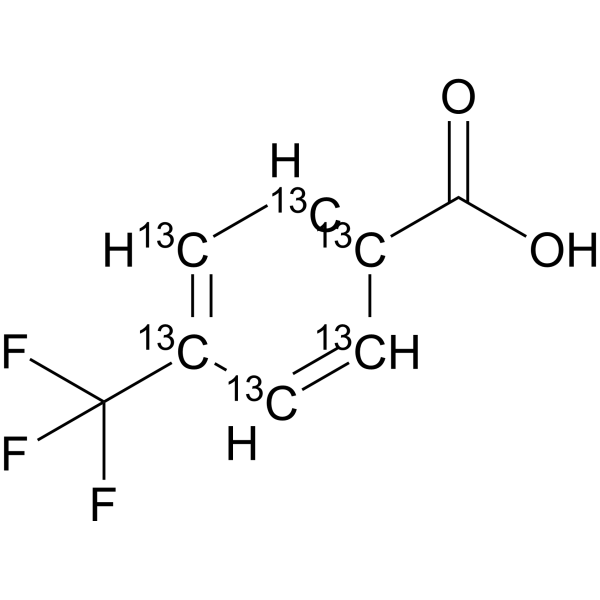
4-(Trifluoromethyl)benzoic acid- 13C6 is the 13C labeled 4-(Trifluoromethyl)benzoic acid .
|
-
-
- HY-77324S
-
|
|
|
4-(Trifluoromethyl)aniline-d4 (4-Aminobenzotrifluoride-d4) is deuterium labeled 4-(Trifluoromethyl)aniline. 4-(Trifluoromethyl)aniline is a DYRK1A and DYRK1B kinase inhibitor with IC50s of 54.84 nM and 186.40 nM, respectively .
|
-
-
- HY-W013504S
-
|
|
|
1-Bromo-4-(trifluoromethyl)benzene-d4 is the deuterium labeled 1-Bromo-4-(trifluoromethyl)benzene .
|
-
-
- HY-W011235S
-
|
|
|
Norfluoxetine-d5 (hydrochloride) is deuterium labeled 3-Phenyl-3-(4-(trifluoromethyl)phenoxy)propan-1-amine hydrochloride.
|
-
-
- HY-W662572S
-
|
|
|
Pyroxsulam-d6 (N-(5,7-Dimethoxy-d6[1,2,4]triazolo[1,5-a]pyrimidin-2-yl)-2-methoxy-4-(trifluoromethyl)pyridine-3-sulfonamide) is deuterium labeled N-(5,7-Dimethoxy-[1,2,4]triazolo[1,5-a]pyrimidin-2-yl)-2-methoxy-4-(trifluoromethyl)pyridine-3-sulfonamide .
|
-
-
- HY-W010153S
-
|
|
|
3-(Trifluoromethyl)phenol-d4 is the deuterium labeled 3-(Trifluoromethyl)phenol .
|
-
-
- HY-W654191
-
|
|
|
Fipronil detrifluoromethylsulfinyl- 13C2, 15N2 is 13C and 15N labeled 5-Amino-1-(2,6-dichloro-4-(trifluoromethyl)phenyl)-1H-pyrazole-3-carbonitrile .
|
-
-
- HY-166873S
-
|
|
|
Fluvoxamine-d3 is deuterium labeled (Z)-5-Methoxy-1-(4-(trifluoromethyl)phenyl)pentan-1-one O-(2-aminoethyl) oxime (Fluvoxamine Impurity) .
|
-
-
- HY-A0248AS1
-
|
|
|
Polymyxin B1-D-Leu-d7 TFA is the deuterium labeled Polymyxin B1 (HY-A0248A). Polymyxin B1 is a potent antimicrobial lipopeptide first derived from Bacilus polymyxa. Polymyxin B1 is the major component in Polymyxin B (HY-A0248). Polymyxin B1 can induce lysis of bacterial cells through interaction with their membranes. Polymyxin B1 has the potential for multidrug-resistant Gram-negative bacterial infections treatment .
|
-
| Cat. No. |
상품명 |
|
Classification |
-
- HY-152337
-
|
|
|
Nucleoside Analogs
Adenosine
|
|
2’-Chloro-N6-(4-trifluoromethyl)benzyl adenosine is a purine nucleoside analog. Purine nucleoside analogs have broad antitumor activity targeting indolent lymphoid malignancies. Anticancer mechanisms in this process rely on inhibition of DNA synthesis, induction of apoptosis, etc .
|
-
- HY-152395
-
|
|
|
Nucleoside Analogs
Adenosine
|
|
N-[[4-(Trifluoromethyl)phenyl]methyl]adenosine is an adenosine analog. Adenosine analogs mostly act as smooth muscle vasodilators and have also been shown to inhibit cancer progression. Its popular products are adenosine phosphate, Acadesine (HY-13417), Clofarabine (HY-A0005), Fludarabine phosphate (HY-B0028) and Vidarabine (HY-B0277) .
|
Your information is safe with us. * Required Fields.
Inquiry Information
- 상품명:
- Cat. No.:
- 수량:
- MCE Japan Authorized Agent:

