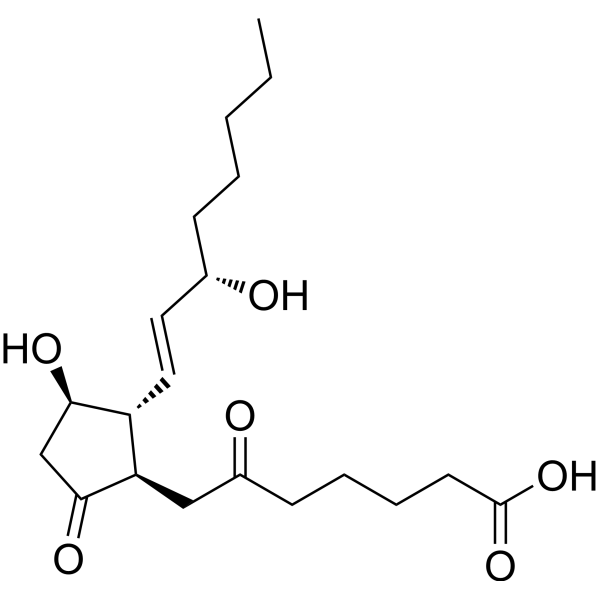
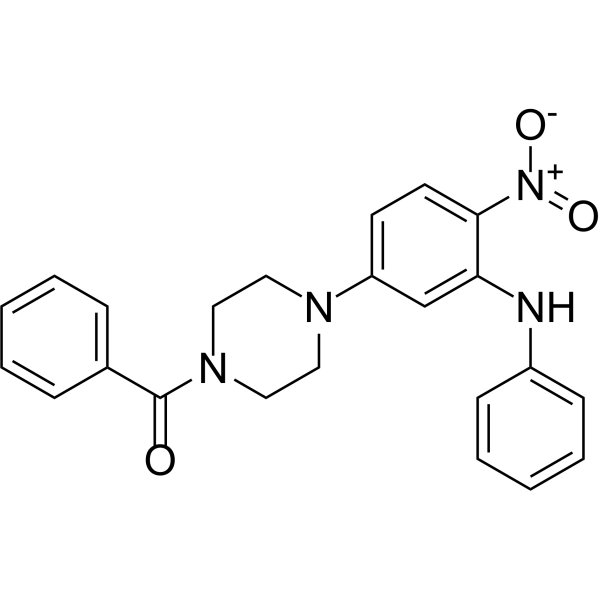
1. Search Result
Search Result
Results for "

Aβ aggregation

" in MedChemExpress (MCE) Product Catalog:

243

Inhibitors & Agonists

6

Fluorescent Dye

3

Biochemical Assay Reagents

31

Peptides

39

Natural
Products

7

Isotope-Labeled Compounds

3

Click Chemistry

Targets Recommended:
Cat. No. Product Name Target Research Areas Chemical Structure
  • HY-D0214
    Acid Red 94 sodium
    1 Publications Verification

    Influenza Virus Photosensitizer Amyloid-β Infection Neurological Disease Cancer
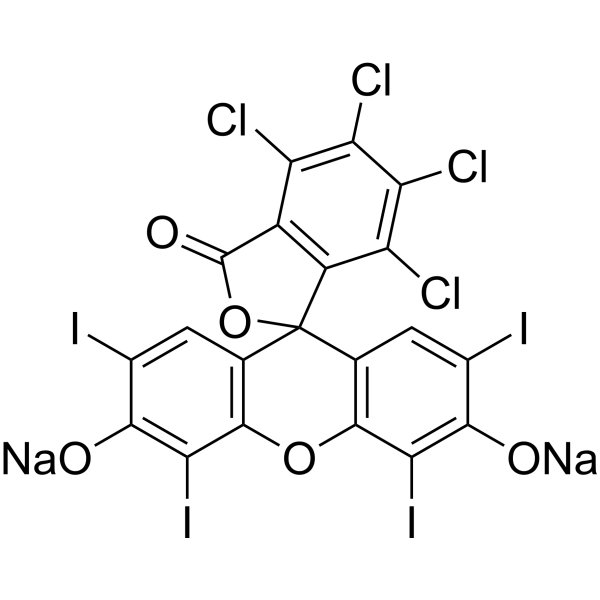
    Acid Red 94 sodium, a synthetic fluorescein derivative, is a deep red dye primarily composed of 4,5,6,7-tetrachloro-2,4,5,7-tetraiodo fluorescein. It is widely used as an ophthalmic diagnostic agent to detect dry or damaged cells on the ocular surface. Acid Red 94 sodium exhibits antitumor activity and can inhibit Friend Leukemia Virus (FLV) infection through photodynamic action. Additionally, Acid Red 94 sodium can inhibit Aβ aggregation through light irradiation. Acid Red 94 sodium holds potential for use in cancer, viral infections, and neurodegenerative disease research .
    Acid Red 94 sodium
  • HY-N0373
    Licochalcone B
    Maximum Cited Publications
    12 Publications Verification

    Amyloid-β Apoptosis NOD-like Receptor (NLR) Neurological Disease
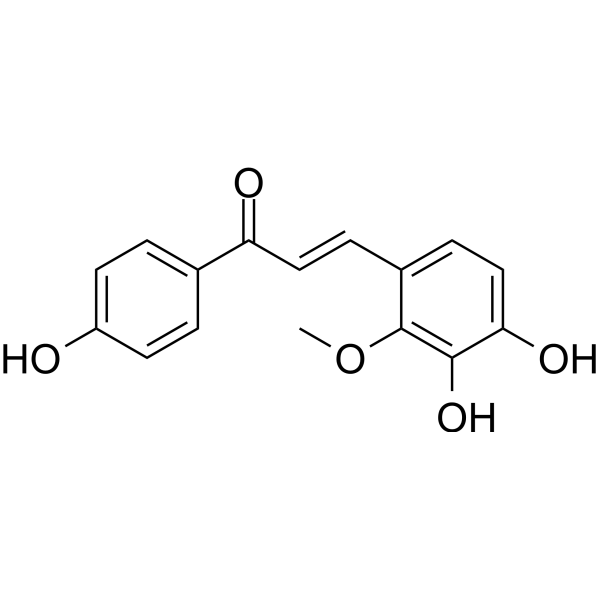
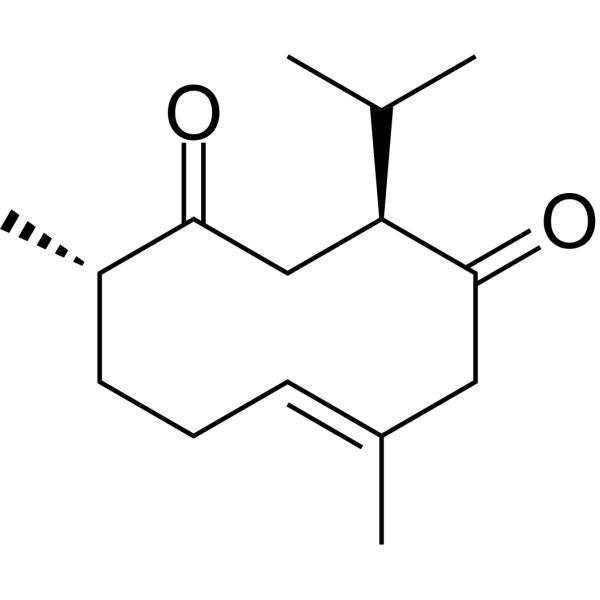
    Licochalcone B is an extract from the root of Glycyrrhiza uralensis. Licochalcone B inhibits amyloid β (42) self-aggregation (IC50=2.16 μM) and disaggregate pre-formed Aβ42 fibrils, reduce metal-induced Aβ42 aggregation through chelating metal ionsLicochalcone B inhibits phosphorylation of NF-κB p65 in LPS signaling pathway. Licochalcone B inhibits growth and induces apoptosis of NSCLC cells. Licochalcone B specifically inhibits the NLRP3 inflammasome by disrupting NEK7‐NLRP3 interaction .
    Licochalcone B
  • HY-12662
    PE859
    2 Publications Verification

    Microtubule/Tubulin Neurological Disease
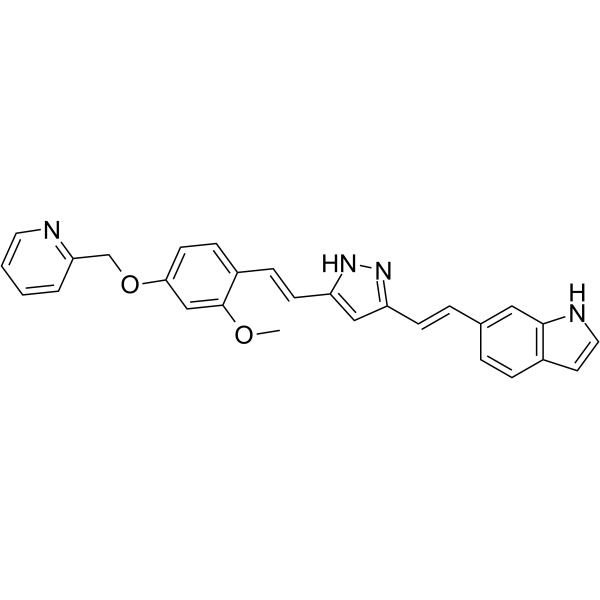
    PE859 is a potent inhibitor of both tau and Aβ aggregation with IC50 values of 0.66 and 1.2 μM, respectively.
    PE859
  • HY-153430

    Amyloid-β Neurological Disease
    Aβ/tau aggregation-IN-3 is a potent amyloid protein aggregation inhibitor with an IC50 of 0.85 μM by Aβ-Thioflavin T (Aβ-ThT) functional aggregation assay. Aβ/tau aggregation-IN-3 has anti-amyloid activity .
    Aβ/tau aggregation-IN-3
  • HY-152073

    Fluorescent Dye Others
    BETA-1 is the first twisted intramolecular charge transfer (TICT)-aggregation-induced emission (AIE) integration molecule. BETA-1 emits cyan fluorescence in lipid droplets (LDs) and red fluorescence in mitochondria. BETA-1 can be used for the simultaneous and dual-color imaging of LDs and mitochondria in vivo and in vitro .
    BETA-1
  • HY-P1189

    Integrin Metabolic Disease Inflammation/Immunology
    Echistatin, the smallest active RGD protein belonging to the family of disintegrins that are derived from snake venoms, is a potent inhibitor of platelet aggregation. Echistatin is a potent inhibitor of bone resorption in culture. Echistatin is a potent antagonist of αIIbβ3, αvβ3 and α5β1 .
    Echistatin
  • HY-W117986

    Amyloid-β Reactive Oxygen Species (ROS) Caspase Neurological Disease
    Aβ aggregation-IN-1 (Compound 1b) is a β-amyloid aggregation inhibitor/depolymerizer, with IC50 values of 3.92 μM and 7.19 μM, respectively. Aβ aggregation-IN-1 inhibits the activation of preformed β-amyloid fibrils, reactive oxygen species (ROS) and Caspase-3. Aβ aggregation-IN-1 can be used in research related to Alzheimer's disease .
    Aβ aggregation-IN-1
  • HY-14503

    DWK-1339

    Amyloid-β Neurological Disease
    MDR-1339 (DWK-1339) is an orally active and blood-brain-barrier-permeable Aβ-aggregation inhibitor, used in the research of Alzheimer's disease.
    MDR-1339
  • HY-P1189A

    Integrin Metabolic Disease Inflammation/Immunology
    Echistatin TFA, the smallest active RGD protein belonging to the family of disintegrins that are derived from snake venoms, is a potent inhibitor of platelet aggregation. Echistatin is a potent inhibitor of bone resorption in culture. Echistatin is a potent antagonist of αIIbβ3, αvβ3 and α5β1 .
    Echistatin TFA
  • HY-150003

    Cholinesterase (ChE) Amyloid-β Neurological Disease
    Aβ1-42 aggregation inhibitor 1 inhibits AChE (acetylcholinesterase) and BuChE (butyrylcholinesterase) with the IC50 value of 2.64 μM and 1.29 μM, respectively. Aβ1-42 aggregation inhibitor 1 inhibits self-mediated Aβ1-42 aggregation by 51.29% at a concentration of 25 μM. Aβ1-42 aggregation inhibitor 1 has the potential for the research of anti-Alzheimer's disease .
    Aβ1–42 aggregation inhibitor 1
  • HY-P1378A

    Amyloid-β Neurological Disease
    β-Amyloid (1-43)(human) TFA is more prone to aggregation and has higher toxic properties than the long-known Aβ1-42. β-Amyloid (1-43)(human) TFA shows a correlation with both sAPPα and sAPPβ. β-Amyloid (1-43)(human) TFA could be considered an added Alzheimer's disease (AD) biomarker together with the others already in use .
    β-Amyloid (1-43)(human) TFA
  • HY-159083

    Amyloid-β Neurological Disease
    DN5355 is a small molecule compound that targets amyloid β protein (Aβ) and hyperphosphorylated tau protein. DN5355 can inhibit the aggregation of Aβ and tau protein and disaggregate the formed Aβ and tau protein fibers. DN5355 can be used in the study of Alzheimer's disease .
    DN5355
  • HY-141661

    Amyloid-β Neurological Disease
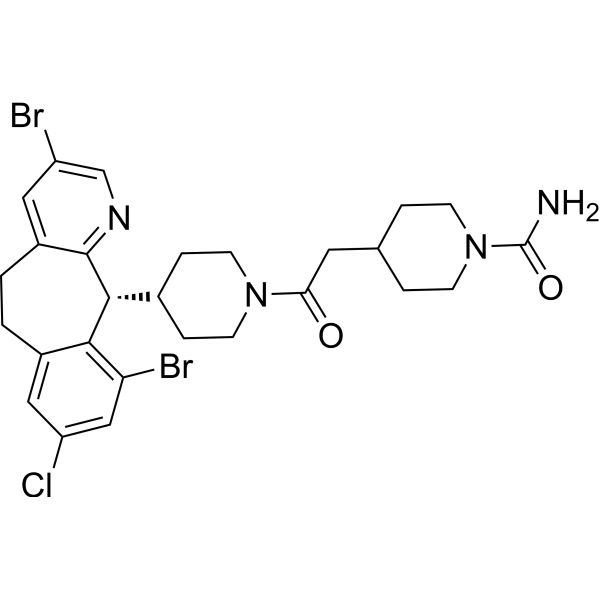
    Aβ/tau aggregation-IN-1 is a potent Aβ1-42 β-sheets formation and tau aggregation inhibitor. The KD values of Aβ/tau aggregation-IN-1 with Aβ1-42 and tau are 160 μM and 337 μM, respectively. Aβ/tau aggregation-IN-1 can permeate the blood-brain barrier .
    Aβ/tau aggregation-IN-1
  • HY-114508

    3-Phenylpropiophenone; β-Phenylpropiophenone

    Amyloid-β Neurological Disease
    Dihydrochalcone (3-Phenylpropiophenone) is a Aβ aggregation inhibitor. Dihydrochalcone destabilizes Aβ17-42 protofibrils by disrupting the β-sheet of β1 region. Dihydrochalcone destabilizes both U-shaped Aβ40/Aβ42 protofibrils and S-shaped Aβ42 protofibrils by binding to the protofibril cavity. Dihydrochalcone is the main component of daemonorops draco tree .
    Dihydrochalcone
  • HY-P10578

    Amyloid-β Neurological Disease
    SEN 304 is an Aβ aggregation inhibitor. SEN 304 can bind directly to Aβ(1-42), delay β-sheet formation and promote aggregation of toxic oligomers into a nontoxic form. SEN 304 can be used for research of Alzheimer’s disease .
    SEN 304
  • HY-121815

    Amyloid-β Neurological Disease
    TDI-2760 is an Aβ aggregation inhibitor with an IC50 of 1.67 μM. TDI-2760 can inhibit the Aβ-fibrinogen interaction and Aβ aggregation, and also modulate the contact system activation induced by Aβ42. TDI-2760 can be used in research related to vascular abnormalities and Aβ aggregation in Alzheimer's disease .
    TDI-2760
  • HY-177854

    Amyloid-β Neurological Disease
    Aβ aggregation-IN-4 can alleviate the neurotoxicity of amyloid-β protein (Aβ) and significantly reduce the level of oligomeric complexes of Aβ (Aβ-OCs). Aβ aggregation-IN-4 does not decrease the level of amyloid-β protein (Aβ). Aβ aggregation-IN-4 attenuates Aβ oligomerization and prevents oligomer-induced death of primary cortical neurons. Aβ aggregation-IN-4 can be used for the study of Alzheimer’s disease (AD) .
    Aβ aggregation-IN-4
  • HY-153416

    Amyloid-β Neurological Disease
    QR-0217 is a potent Aβ1-40 aggregation inhibitor with an IC50 value of 7.5 µM. QR-0217 inhibits α-synuclein aggregation. QR-0217 reduces memory impairments caused by Aβ neurotoxicity .
    QR-0217
  • HY-148495

    Amyloid-β Neurological Disease
    Carnosine conjugated hyalyronate is a hyaluronic acid derivative functionalized with the dipeptide carnosine (Carnosine, Car) and has the ability to resist Aβ amyloid aggregation. Carnosine conjugated hyalyronate dissolves amyloid fibrils and reduces Aβ-induced toxicity in vitro. The effectiveness of Carnosine conjugated hyalyronate against amyloid aggregation is directly proportional to the Carnosine loading .
    Carnosine conjugated hyalyronate
  • HY-P4886A

    Amyloid-β Neurological Disease
    Amyloid β-Protein (3-42) TFA is a precursor of Pyr peptide. Pyroglutamic acid-modified Aβ (pEAβ) (3-42) is the core of the amyloid plaque in Alzheimer's disease. pEAβ (3-42) accelerates the aggregation of Aβ(1-42), while Aβ(1-42) significantly slows down the primary and secondary nucleation of pEAβ(3-42).
    Amyloid β-Protein (3-42) TFA
  • HY-144389

    Cholinesterase (ChE) Amyloid-β Neurological Disease
    hAChE/Aβ1-42-IN-1 (Compound 16) is a potent inhibitor of hAChE and Aβ1-42 aggregation. hAChE/Aβ1-42-IN-1 shows acceptable relative safety upon hepG2 cell line and excellent BBB penetration with wide safety margin. hAChE/Aβ1-42-IN-1 has the potential for the research of Alzheimer disease (AD) .
    hAChE/Aβ1-42-IN-1
  • HY-P1378

    Amyloid-β Neurological Disease
    β-Amyloid (1-43)(human) is more prone to aggregation and has higher toxic properties than the long-known Aβ1-42. β-Amyloid (1-43)(human) shows a correlation with both sAPPα and sAPPβ. β-Amyloid (1-43)(human) could be considered an added Alzheimer's disease (AD) biomarker together with the others already in use .
    β-Amyloid (1-43)(human)
  • HY-115650

    Cholinesterase (ChE) Amyloid-β Neurological Disease
    TAE-1 is a potent inhibitor of AChE and BuChE. TAE-1 also inhibits Aβ fibril formation and aggregation. TAE-1 can be used for the researches of Alzheimer's disease .
    TAE-1
  • HY-149764

    Amyloid-β Neurological Disease
    Aβ42 agonist-2 (compound 7b) is a small molecule compound that can promote Aβ42 aggregation. Aβ42 agonist-2 can interact with Aβ42 oligomers and pentamers to promote nontoxic aggregate self-assembly and rapid fibril formation. Aβ42 agonist-2 prevents Aβ42-induced cytotoxicity in HT22 hippocampal neuronal cells .
    Aβ42 agonist-2
  • HY-149340

    Cholinesterase (ChE) Neurological Disease
    PD07 is an orally active AChE inhibitor (IC50: 0.29 μM for hAChE). PD07 also inhibits ChEs, BACE1 (IC50: 13.42 μM), and Aβ1–42 aggregation in in vitro. PD07 is an antioxidant, and shows DPPH inhibitory activity (IC50: 26.46 μM). PD07 improves memory and cognition in Scopolamine (HY-N0296)-induced amnesia rats. PD07 can be used for research of Alzheimer’s disease .
    PD07
  • HY-119292

    Cholinesterase (ChE) Amyloid-β Neurological Disease
    AP2238 is a dual-function acetylcholinesterase (AChE) inhibitor with Ki values for human AChE (HuAChE) and butyrylcholinesterase (BuChE) of 21.7 and 48.9 μM respectively. AP2238 blocks the pro-fibrotic interaction between the peripheral site of AChE and Aβ, and can inhibit Aβ aggregation. AP2238 can be used for the research of Alzheimer's disease .
    AP2238
  • HY-13325

    Drug Derivative Amyloid-β Neurological Disease
    Aβ aggregation modulator-1 is a stimulator of amyloid-β (Aβ) fibrillogenesis. Aβ aggregation modulator-1 binds hydrophobic residues in Aβ peptides and stabilizes β-sheet-rich protofibrils and fibrils. Aβ aggregation modulator-1 accelerates Aβ polymerization and reduces concentrations of small, toxic Aβ oligomers in heterogeneous aggregation reactions. Aβ aggregation modulator-1 suppresses long-term potentiation (LTP) inhibition by Aβ oligomers in hippocampal brain slices. Aβ aggregation modulator-1 can be used for the study of Alzheimer's disease (AD) .
    Aβ aggregation modulator-1
  • HY-173621

    Cholinesterase (ChE) Amyloid-β Neurological Disease
    Aβ1–42 aggregation inhibitor 3 (Compound 3b) is an acetylcholinesterase (AChE) and butyrylcholinesterase (BuChE) inhibitor (IC50 values are 1.634 and 0.0285 μM, respectively). Aβ1–42 aggregation inhibitor 3 can inhibit the aggregation of Aβ1-42. Aβ1–42 aggregation inhibitor can be used in Alzheimer's disease (AD) research .
    Aβ1–42 aggregation inhibitor 3
  • HY-149272

    Tau Protein Amyloid-β Cholinesterase (ChE) Neurological Disease
    tau/Aβ40 aggregation-IN-1 (Compound 20) is a tau and Aβ40 aggregation inhibitor with IC50s of 1.8 μM and 1.3 μM, respectively .
    tau/Aβ40 aggregation-IN-1
  • HY-P5968A

    β(25-35)KA TFA

    Amyloid-β Neurological Disease
    [Ala28]-β Amyloid(25-35) (β(25-35)KA) TFA is an electrically neutral mutant peptide of Aβ(25-35) that accelerates the aggregation of Firefly Luciferase .
    [Ala28]-β Amyloid(25-35) TFA
  • HY-162093

    Amyloid-β Neurological Disease
    Aβ1–42 aggregation inhibitor 2 (compound 7c) is a potent inhibitor of Aβ1-42 aggregation that plays an important role in Alzheimer's disease research. Aβ1–42 aggregation inhibitor 2 displays excellent antioxidant, metal ions chelating, oxidative stress alleviation, neuroprotective and anti-neuroinflammatory activities .
    Aβ1–42 aggregation inhibitor 2
  • HY-W265961

    ST1859; 1,1′-Methylenedi-2-naphthol

    Amyloid-β Neurological Disease Inflammation/Immunology
    Squoxin (ST1859) is an antiamyloid agent that specifically binds to Aβ1-42 and prevents the aggregation and fibril formation of Aβ. Squoxin crosses the blood-brain barrier (BBB) and has anthelmintic activity and anti-inflammatory properties .
    Squoxin
  • HY-144324

    Cholinesterase (ChE) Neurological Disease
    AChE-IN-6 (Compound 12a) is an optimal multifunctional ligand with significant inhibition of AChE (EeAChE, IC50 = 0.20 μM; HuAChE, IC50 = 37.02 nM) and anti-Aβ activity (IC50 = 1.92 μM for self-induced Aβ1-42 aggregation; IC50 = 1.80 μM for disaggregation of Aβ1-42 fibrils; IC50 = 2.18 μM for Cu2+-induced Aβ1-42 aggregation; IC50 = 1.17 μM for disaggregation of Cu2+-induced Aβ1-42 fibrils). AChE-IN-6 has the potential for the research of Alzheimer's disease .
    AChE-IN-6
  • HY-134894A

    GroPEtn sodium

    Amyloid-β Neurological Disease
    Glycerophosphorylethanolamine (GroPEtn) sodium is an active phosphodiester metabolite of Phosphatidylethanolamine. Glycerophosphorylethanolamine sodium promotes the aggregation of amyloid β-protein (Aβ (1-40)) in vitro. Glycerophosphorylethanolamine sodium can be used in the field of neurodegenerative diseases, such as Alzheimer’s disease research .
    Glycerophosphorylethanolamine sodium
  • HY-P4886

    Amyloid-β Neurological Disease
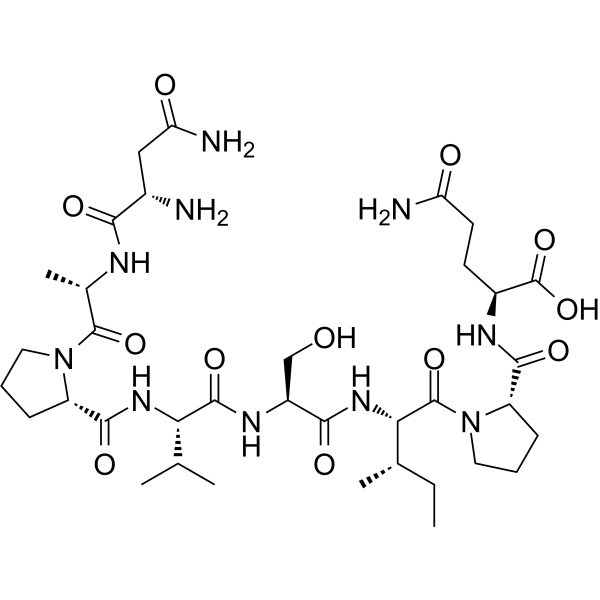
    Amyloid β-Protein (3-42) is the precursor of Pyr peptide. Pyroglutamate-modified Aβ (pEAβ) (3-42) is the core of the amyloid template block in Alzheimer's disease. pEAβ(3-42) accelerated the aggregation of Aβ(1-42), while Aβ(1-42) significantly slowed the primary and secondary nucleation of pEAβ(3-42) .
    Amyloid β-Protein (3-42)
  • HY-P3846

    Amyloid-β Neurological Disease
    (Glu20)-Amyloid β-Protein (1-42) is a slower fibrillizing variant of amyloid β-protein (Aβ). The Glu20 mutation reduces the aggregation propensity of Aβ42 and prevents accumulation of the slowly fibrillizing peptide. Amyloid β-protein is the primary component of both vascular and parenchymal amyloid deposits in Alzheimer's disease .
    (Glu20)-Amyloid β-Protein (1-42)
  • HY-P1051

    Amyloid β-Protein (12-28)

    Amyloid-β Neurological Disease
    β-Amyloid (12-28) (Amyloid β-Protein (12-28)) is a peptide fragment of β-amyloid protein (β1-42). β1-42, a 42 amino acid protein , is the major component of senile plaque cores. β-Amyloid (12-28) shows aggregation properties. β-Amyloid (12-28) has the potential for Alzheimer’s disease research .
    β-Amyloid (12-28)
  • HY-N8218

    Platelet-activating Factor Receptor (PAFR) Cardiovascular Disease
    Homoeriodictyol 7-O-β-D-glucoside is a natural platelet-activating factor (PAF) antagonist. Homoeriodictyol 7-O-β-D-glucoside inhibits human and rabbit platelet aggregation induced by PAF, with an IC50 of 0.8 μM .
    Homoeriodictyol 7-O-β-D-glucoside
  • HY-N2898

    Cholinesterase (ChE) Neurological Disease
    Artanin is a coumarin, has biological activities related to Alzheimer’s disease. Artanin exerts function including AChE inhibitory and AChE- and self-induced amyloid beta (Aβ) aggregation inhibitory activities, with IC50s of 51 μM, 98 μM, and 124 μM, respectively .
    Artanin
  • HY-123745

    Neurological Disease
    Aβ aggregation-IN-6 (compound 4) is an Aβ aggregation inhibitor with ~60-70% inhibition of Aβ17-40 aggregation. Aβ aggregation-IN-6 stabilizes Aβ dimer assembly, binds to Aβ steric-zipper assembly, and interferes with aggregation into higher-order toxic species. Aβ aggregation-IN-6 can be used for the research of alzheimer's disease .
    Aβ aggregation-IN-6
  • HY-149583

    Amyloid-β Neurological Disease
    Aβ-IN-8 (compound 7e) is a potent inhibitor of the Aβ aggregation .
    Aβ-IN-8
  • HY-149582

    Amyloid-β Neurological Disease
    Aβ-IN-7 (compound 5a) is a potent inhibitor of the Aβ aggregation. Aβ-IN-7 with 50 μM stabilize Aβ monomers in the small oligomeric species and prolong the nucleation process. Aβ-IN-7 inhibits Aβ fibril formation better than Aβ-IN-8 (HY-149583) in 50 μM .
    Aβ-IN-7
  • HY-174272

    GSK-3 Amyloid-β Neurological Disease
    GSK-3β inhibitor 27 (Compound 1c) is a reversible and competitive GSK-3β inhibitor with an IC50 value of 2.2 μM. GSK-3β inhibitor 27 inhibits tau hyperphosphorylation, reduces Aβ protein aggregation and possesses metal chelation and neuroprotective potential. GSK-3β inhibitor 27 is promising for research of neurodegenerative diseases (such as Alzheimer’s disease) .
    GSK-3β inhibitor 27
  • HY-147938

    Cholinesterase (ChE) Amyloid-β Neurological Disease
    AChE-IN-19 (compound A15) is a highly potent AChE inhibitor with an IC50 value of 0.56 μM, also inhibits Aβ aggregation. AChE-IN-19 has potent neuroprotective activities and nearly no toxicity on SH-SY5Y cells. AChE-IN-19 can be used for researching Alzheimer's disease .
    AChE-IN-19
  • HY-155305

    Cholinesterase (ChE) Beta-secretase GABA Receptor Neurological Disease
    BuChE-IN-9 (compound 22a) is a potent equine serum-derived BuChE (eqBuChE) inhibitor with an IC50 of 173 nM. BuChE-IN-9 also inhibits human BACE1, Aβ aggregation, mouse GABA transporter 1 (mGAT1) and mGAT4. BuChE-IN-9 has significant antiamnesic properties .
    BuChE-IN-9
  • HY-150585

    Amyloid-β Cholinesterase (ChE) Tau Protein Neurological Disease
    BuChE-IN-5 (compound 25b) is a potent BuChE inhibitor with an IC50 value of 1.94 μM. BuChE-IN-5 efficiently inhibits aggregation Aβ and tau protein in Escherichia coli. BuChE-IN-5 also has free radical scavenging capacity and antioxidant activity. BuChE-IN-5 can be used for researching Alzheimer’s disease .
    BuChE-IN-5
  • HY-180160

    Amyloid-β Neurological Disease
    Aβ aggregation-IN-3 (Compound B7) is an Aβ aggregation inhibitor. Aβ aggregation-IN-3 inhibits Aβ aggregation. Aβ aggregation-IN-3 confers protection in both neuronal and microglial models. Aβ aggregation-IN-3 reduces Aβ-induced paralysis in C. elegans. Aβ aggregation-IN-3 improves Alzheimer's disease .
    Aβ aggregation-IN-3
  • HY-180997

    Amyloid-β Neurological Disease
    Aβ aggregation-IN-5 is a brain-penetrant amyloid-β aggregation inhibitor. Aβ aggregation-IN-5 inhibits Aβ aggregation/oligomerization, rescues cells from AB/ROS toxicity and reduces microglial activation/NO production. Aβ aggregation-IN-5 reduces amyloid burden, neuroinflammation, microglial activation in APP/PSEN1 mice. Aβ aggregation-IN-5 can be used for the research of Alzheimer's disease .
    Aβ aggregation-IN-5
  • HY-173282

    Amyloid-β Neurological Disease
    Aβ aggregation-IN-2 (Compound 8i) is an inhibitor of amyloid-β protein (Aβ42) aggregation, showing approximately 91% inhibition of Aβ42 aggregation at 25 μM. It also exhibits Aβ42 disaggregation effects and antioxidant activity. Aβ aggregation-IN-2 can be used for research in the field of Alzheimer's disease .
    Aβ aggregation-IN-2
  • HY-147859

    Amyloid-β Neurological Disease
    BChE-IN-8 (compound 20) is an orally active, potent and BBB-penetrated BChE (butyrylcholinesterase) inhibitor, with IC50 values of 0.15 nM (eqBChE, equine serum BChE) and 45.2 nM (hBChE), respectively. High stability of BChE-IN-8 contributes to significantly improved blood concentration and tissue exposure. BChE-IN-8 can exert neuro-protecting and cognition improving properties through multiple modulations, including cholinergic system, Aβ aggregation, neuropeptide levels. BChE-IN-8 can be used for Alzheimer's disease (AD) research .
    BChE-IN-8

Inquiry Online

Your information is safe with us. * Required Fields.

Salutation


Country or Region *

Applicant Name *


Organization Name *

Department *


Email Address *


Product Name *

Cat. No.


Requested quantity *

Phone Number *


Remarks

Inquiry Online

Inquiry Information

Product Name:
Cat. No.:
Quantity:
MCE Japan Authorized Agent:

