1. Search Result
Search Result
Pathways Recommended: Stem Cell/Wnt Cell Cycle/DNA Damage
Results for "

A549 cells

" in MedChemExpress (MCE) Product Catalog:

811

Inhibitors & Agonists

12

Fluorescent Dye

8

Biochemical Assay Reagents

21

Peptides

13

Inhibitory Antibodies

168

Natural
Products

10

Isotope-Labeled Compounds

8

Click Chemistry

4

Oligonucleotides

Cat. No. Product Name Target Research Areas Chemical Structure
  • HY-174990

    15-PGDH Metabolic Disease Inflammation/Immunology
    HW201877 is a potent and orally active 15-prostaglandin dehydrogenase (15-PGDH) inhibitor with an IC50 of 3.6 nM. HW201877 demonstrates robust cellular efficacy in elevating PGE2 levels in A549 cells and exhibits remarkable efficacy in animal models of tissue injury and fibrosis. HW201877 can be used for the study of inflammatory bowel disease (IBD), idiopathic pulmonary fibrosis (IPF) and Crohn’s disease (CD) .
    HW201877
  • HY-12757
    YHO-13177
    2 Publications Verification

    BCRP Cancer
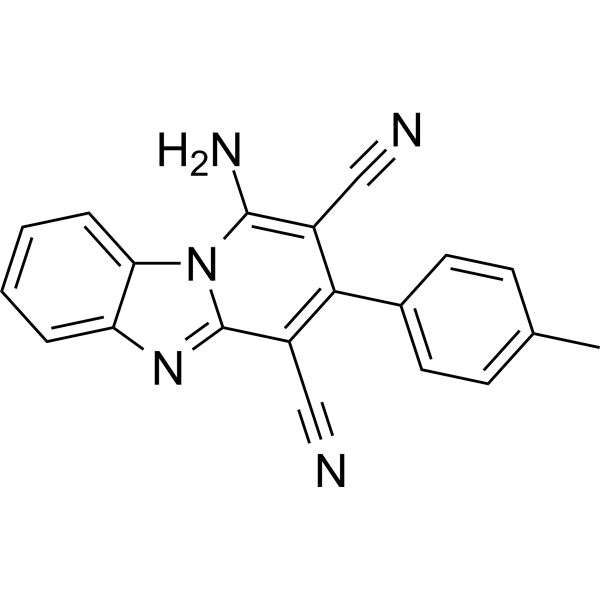
    YHO-13177, a acrylonitrile derivative, is an orally active, potent and specific inhibitor of breast cancer resistance protein (BCRP) and ABCG2 with an IC50 value of 10 nM. YHO-13177 potentiates the cytotoxicity of SN-38 in HCT116 and A549 cells that express BCRP. YHO-13177 combined with Irinotecan (HY-16562) significantly suppresses the tumor growth in an HCT116/BCRP xenograft model .
    YHO-13177
  • HY-145963
    DRB18
    1 Publications Verification

    GLUT Cancer
    DRB18 is a potent pan-class GLUT inhibitor. DRB18 alters energy-related metabolism in A549 cells by changing the abundance of metabolites in glucose-related pathways. DRB18 can eventually lead to G1/S phase arrest and increase oxidative stress and necrotic cell death. DRB18 has anti-tumor activity .
    DRB18
  • HY-152100

    Autophagy Cancer
    CUR5g is a potent autophagy inhibitor. CUR5g selectively inhibits autophagosome degradation in cancer cells by blocking autophagosome-lysosome fusion. CUR5g blocks the recruitment of STX17 to autophagosomes via a UVRAG-dependent mechanism, resulting in the inability of autophagosomes to fuse with lysosomes. CUR5g improves the anticancer effect of Cisplatin (HY-17394) against A549 cells both in vitro and in vivo .
    CUR5g
  • HY-103662
    GW-870086
    1 Publications Verification

    Glucocorticoid Receptor Inflammation/Immunology Endocrinology
    GW-870086 is a potent anti-inflammatory agent, acting as a glucocorticoid receptor agonist, with a pIC50 of 10.1 in A549 cells expressing NF-κB.
    GW-870086
  • HY-N2429

    COX Inflammation/Immunology
    Sphondin possesses an inhibitory effect on IL-1β-induced increase in the level of COX-2 protein and PGE2 release in A549 cells .
    Sphondin
  • HY-75564

    Endogenous Metabolite Cancer
    Cyclo(Ala-Gly), a metabolite of a mangrove endophytic fungus, Penicillium thomi, exhibits cytotoxicity against A549, HepG2 and HT29 cells. The IC50 values range from 9.5 to 18.1 μM .
    Cyclo(Ala-Gly)
  • HY-115983

    CD47 Apoptosis Cancer
    DMUP is a potent CD47-SIRPα axis inhibitor. DMUP induces apoptosis and increases the macrophage phagocytosis in A549 cells. DMUP decreases the expression of CD47 and SIRPα protein. DMUP shows antitumor activity .
    DMUP
  • HY-147027

    PARP Caspase Apoptosis Neurological Disease Inflammation/Immunology Cancer
    PARP-1-IN-2 (compound 11g) is a potent PARP1 inhibitor, with an IC50 of 149 nM, and ADME prediction indicates it has high blood-brain barrier permeability. PARP1-IN-2 shows significantly potent anti-proliferative activity against Human lung adenocarcinoma epithelial cell line A549. PARP1-IN-2 can induce A549 cells apoptosis .
    PARP-1-IN-2
  • HY-131344

    mTOR Autophagy Cancer
    mTOR inhibitor-8 is an mTOR inhibitor and autophagy inducer. mTOR inhibitor-8 inhibits the activity of mTOR via FKBP12 and induces autophagy of A549 human lung cancer cells .
    mTOR inhibitor-8
  • HY-155231

    Elastase Cancer
    Neutrophil elastase inhibitor 4 (compound 4f) is a competitive human neutrophil elastase (HNE) inhibitor (IC50: 42.30 nM, Ki: 8.04 nM). Neutrophil elastase inhibitor 4 induces T47D cell apoptosis. Neutrophil elastase inhibitor 4 inhibits cell proliferation with IC50s of 21.25, 34.17, 29.93, 99.11 nM for T47D, RPMI 8226, A549, and HSF cells .
    Neutrophil elastase inhibitor 4
  • HY-N10113
    Verrucarin J
    1 Publications Verification

    Muconomycin B

    Apoptosis Arenavirus Fungal Antibiotic Reactive Oxygen Species (ROS) Infection Cancer
    Verrucarin J (Muconomycin B) is a metabolite of the Myrothecium fungus family. Verrucarin J generates reactive oxygen species (ROS) and induces apoptosis of cancer cell lines, such as A549, HCT 116 and SW-620 cells. Verrucarin J shows activities against Candida albicans and Mucor miehei. Verrucarin J inhibits arenavirus Junin (JUNV) yield with an IC50 of 1.2 ng/mL .
    Verrucarin J
  • HY-174247

    PROTACs PAK Cadherin Cancer
    CPS-021 is a selective PAK4 PROTAC degrader with a DC50 of 50 nM. CPS-021 has potent antimigratory and invasive activity and significantly suppresses the invasion and metastasis of tumor cells in A549-luc lung metastasis mice model . Pink: PAK4 ligand (HY-174822); Blue: CRBN ligase ligand (HY-10984); Black: linker
    CPS-021
  • HY-P1935

    Biochemical Assay Reagents Cancer
    Cyclo(Ala-Pro) is an anticancer agent that is toxic to cancer cells such as A549, HCT-116 and HepG2 .
    Cyclo(Ala-​Pro)
  • HY-178472

    PROTACs Aurora Kinase Cancer
    AurAP14 is an Aurora A PROTAC degrader (DC50 = 120 nM). AurAP14 shows significant inhibitory activity against various tumor cell lines, with IC50s of 0.294 μM in A549 cells and 0.534 μM in MCF-7 cells. AurAP14 induces apoptosis and arrests A549 cells in the S and G2/M phases. AurAP14 demonstrates anti-tumor efficacy in nude mouse xenograft models of A549 and A549/PTR. AurAP14can be used in the research on the treatment of Aurora A-overexpressing NSCLC. (Pink: Aurora A ligand (HY-10971), Blue: E3 ligase Ligand (HY-W437598), Black: Linker) .
    AurAP14
  • HY-143466

    FAK ULK AMPK Apoptosis Autophagy Cancer
    ULK1-IN-2 (compound 3s) is a potent ULK1 inhibitor. ULK1-IN-2 shows highest cytotoxic effect against cancer cell lines, with IC50 of 1.94 μM in A549. ULK1-IN-2 can induce apoptosis and simultaneously block autophagy, and can be used to study NSCLC (Non-small cell lung cancer) .
    ULK1-IN-2
  • HY-N10208

    Endogenous Metabolite Cancer
    Aspericin C is a pyran derivative found in the marine-derived fungus Rhizopus sp. 2-PDA-61. Aspericin C shows cytotoxic activities against P388, A549, HL-60, and BEL-7420 cell lines (IC50=14.6, 7.1, 61.4, and 24.2 μM, respectively) .
    Aspericin C
  • HY-155050

    Apoptosis Histone Methyltransferase Cancer
    PRMT5-IN-31 (Compound 3m) is a selective PRMT5 inhibitor (IC50: 0.31 μM). PRMT5-IN-31 up-regulates hnRNP E1 protein level. PRMT5-IN-31 occupies the substrate site of PRMT5 and forms essential interactions with amino acid residues. PRMT5-IN-31 has antiproliferative effects against A549 cells by inducing apoptosis and inhibiting cell migration. PRMT5-IN-31 has high metabolic stability on human liver microsomes (T1/2: 132.4 min) .
    PRMT5-IN-31
  • HY-149842

    Akt Apoptosis Cancer
    AKT-IN-18, an inhibitor of Akt, inhibits Akt with an IC50 of 69.45 μΜ in A549 cells. AKT-IN-18 induces apoptosis and can be used in non-small cell lung cancer study .
    AKT-IN-18
  • HY-173198

    BTB/POZ Family Cancer
    Kaiso-IN-1 (Compound 20) is a Kaiso inhibitor with an IC50 of 0.34 μM against A549 cells. Kaiso-IN-1 can be used in research related to lung cancer.
    Kaiso-IN-1
  • HY-N16602

    Others Others
    (±)-Blephenanthrofuran B is a pair of enantiomers can be found in Bletilla striata. (±)-Blephenanthrofuran B shows no cytotoxic activity against human lung cancer A549 cells .
    (±)-Blephenanthrofuran B
  • HY-144394

    Apoptosis c-Met/HGFR Cancer
    Antitumor agent-45 (Compound 21) could induce and stimulate A549 cells apoptosis in G0/G1 and G2/M phase. Antitumor agent-45 (Compound 21) inhibits c-Met expression to regulate the growth of tumor cells .
    Antitumor agent-45
  • HY-N7980

    NF-κB Cancer
    Rubipodanone A, a naphthohydroquinone dimer, shows cytotoxicity against A549, BEL-7402, HeLa, HepG2, SGC-7901 and U251 cells. Rubipodanone A also shows obvious activating effect at 20 and 40 μM for NF-κB .
    Rubipodanone A
  • HY-115941

    HDAC Microtubule/Tubulin Apoptosis Cancer
    HDAC-IN-9 is a potent and selective tubulin and HDAC dual inhibitor. HDAC-IN-9 inhibits the invasion and migration of A549 cells. HDAC-IN-9 shows potent antitumor and antiangiogenic effect in vitro and in vivo .
    HDAC-IN-9
  • HY-175019

    VEGFR Apoptosis Caspase MDM-2/p53 Bcl-2 Family Cancer
    VEGFR-2-IN-70 is a potent VEGFR-2 inhibitor with an IC50 of 18.04 nM. VEGFR-2-IN-70 exhibits cytotoxicity against A549 and MCF-7 cancer cells with IC50 values of 0.43 μM and 3.8 μM, respectively. VEGFR-2-IN-70 induces G1 cell cycle arrest and apoptosis in lung cancer cells. VEGFR-2-IN-70 is useful in cancer research .
    VEGFR-2-IN-70
  • HY-178922

    Carbonic Anhydrase Cancer
    CAI/II-IN-13 (Compound 5f) is a CAI/II inhibitor, with IC50 values of 309.16 nM for hCA I and 267.27 nM for hCA II. CAI/II-IN-13 exhibits potent and selective antiproliferative activity against A549 lung cancer cells (IC50 = 0.58 μM). CAI/II-IN-13 can be used for the study of lung cancer .
    CAI/II-IN-13
  • HY-170813

    CDK TGF-beta/Smad Infection
    P162-0948 is a selective CDK8 inhibitor with an IC50 value of 50.4 nM. P162-0948 reduces cell migration and protein expression of EMT-related proteins in A549 human alveolar epithelial cell lines. P162-0948 reduces phosphorylation of Smad, which suggests disruption of the TGF-β/Smad signaling pathway. P162-0948 is promising for research of pulmonary fibrosis .
    P162-0948
  • HY-175009

    EGFR JAK STAT Apoptosis Cancer
    MRC-G-001 is a Genipin (HY-17389) derivative with an IC50 of 117 μM against A549 cancer cells. MRC-G-001 inhibits the phosphorylation of EGFR, JAK1, and STAT3, and modulates epithelial-mesenchymal transition (EMT)-related protein expression, thereby attenuating cell migration and invasion. MRC-G-001 induces cell cycle arrest and cell apoptosis. MRC-G-001 can be used for the study of cancers such as non-small-cell lung cancer .
    MRC-G-001
  • HY-178937

    RIP kinase Cancer
    Anticancer agent 284 exhibits cytotoxicity against osteosarcoma cell line (Hos), non-small cell lung cancer cell line (A549), and colon cancer cell line (HCT-116). Anticancer agent 284 can impact the pRIPK3 kinase concentration in the A549 (2.97 pg/mL). Anticancer agent 284 can be used for the study of cancer .
    Anticancer agent 284
  • HY-175010

    STAT Apoptosis Bcl-2 Family Caspase Cancer
    STAT3-IN-44 is a potent STAT3 inhibitor with IC50s of 1.84 (C6 cells) and 4.81 μM (A549 cells). STAT3-IN-44 inhibits STAT3 phosphorylation, downregulates Bcl-2, and upregulates Caspase-3 to promote late-stage apoptosis. STAT3-IN-44 significantly suppresses tumor cell proliferation and migration. STAT3-IN-44 can be used for the study of cancers such as glioma and lung cancer .
    STAT3-IN-44
  • HY-162745

    PROTACs Cancer
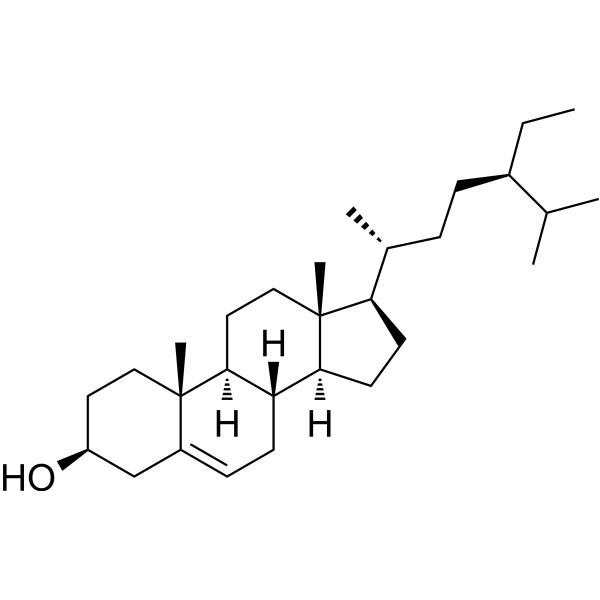
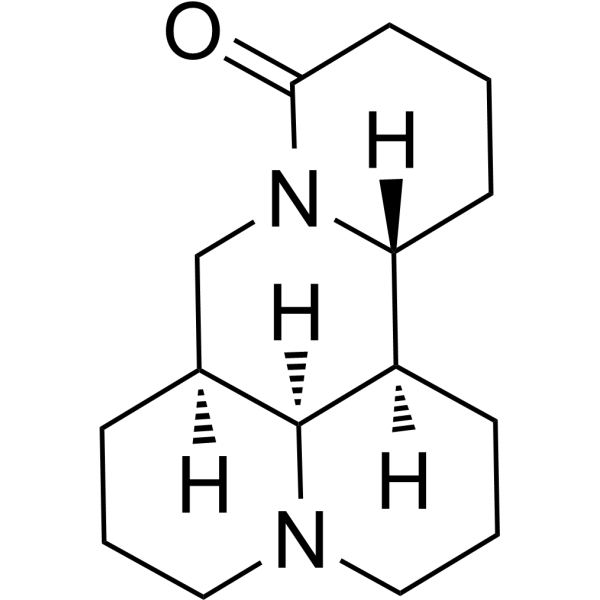
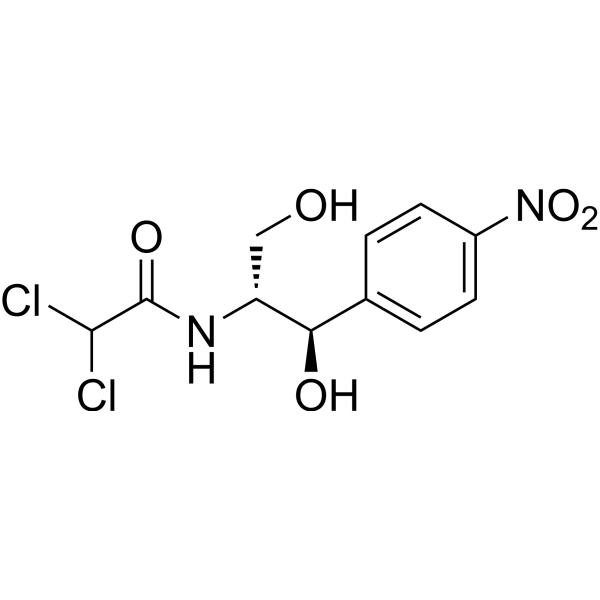
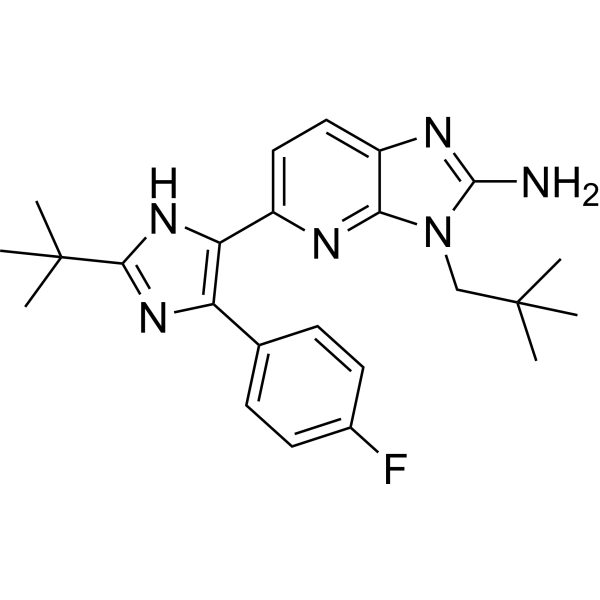
    SMARCA2 degrader-20 is a PROTAC SMARCA2 degrader with a DC50 less than 100 nM in A549 cells .
    SMARCA2 degrader-20
  • HY-162098

    PROTACs Microtubule/Tubulin Apoptosis Cancer
    PROTAC tubulin-Degrader-1 is a α/β/β3-tubulin PROTAC degrader. PROTAC tubulin-Degrader-1 exhibits potent anti-proliferative activity against multiple human tumor cell lines. PROTAC tubulin-Degrader-1 induces G2/M phase arrest and apoptosis and inhibits colony formation in A549 and A549/Taxol cells. PROTAC tubulin-Degrader-1demonstrates potent anti-tumor efficacy in A549 and A549/Taxol (Taxol-resistant) xenograft model. PROTAC tubulin-Degrader-1 can be used for the study of non-small cell lung cancer (NSCLC). (Pink: Tubulin ligand (HY-N2146), Blue: CRBN Ligand (HY-10984), Black: Linker (HY-N6056)) .
    PROTAC tubulin-Degrader-1
  • HY-120581

    PGE synthase Cancer
    ML388 is a potent and selective hydroxyprostaglandin dehydrogenase (HPGD) inhibitor with an IC50 of 34 nM. ML388 induces PGE2 production in A549 cells and LNCaP prostate cancer cells .
    ML388
  • HY-169370

    STAT Infection Inflammation/Immunology Cancer
    STAT3 HiBiT degrader 1 is a STAT3 HiBiT degrader with a DC50 of less than 0.05 μM in A549 cells .
    STAT3 HiBiT degrader 1
  • HY-163920

    PROTACs HDAC Cancer
    Degrader-1 (compound Z16) is a potent and selective HDAC8 PROTAC degrader with an DC50 of 0.27 nM in A549 cells .
    PROTAC HDAC8 Degrader-1
  • HY-179908

    MEK Cancer
    MEK-IN-8 (Compound 30) is a MEK inhibitor (IC50: < 5 nM for pMEK in A549 cells). MEK-IN-8 can be used in tumor research .
    MEK-IN-8
  • HY-P10988

    Apoptosis MDM-2/p53 Integrin Cancer
    LVTX-8 is a peptide toxin, exacted from Lycosa vittata. LVTX-8 has potent anticancer and and anti-metastasis activities towards lung cancer with strong cytotoxicity. LVTX-8 significantly induces apoptosis and inhibits the proliferation, invasion and migration of lung cancer cells through P53 hypoxia pathways and integrin signaling. LVTX-8 significantly inhibits the tumor growth and metastasis in A549/H460 xenograft mice model .
    LVTX-8
  • HY-146105

    Apoptosis MDM-2/p53 MMP Bcl-2 Family Reactive Oxygen Species (ROS) Cancer
    Anticancer agent 65 (compound 4c) shows excellent activity in cancer cell lines, especially A549 cells, with an IC50 of 1.07 μM. Anticancer agent 65 induces S-phase arrest in A549 cells and increases the expression level of p53 and p21. Anticancer agent 65 causes apoptosis, ROS generation and collapse of MMP in A549 cells .
    Anticancer agent 65
  • HY-145314

    Integrin Cancer
    TC113 is a c(RGDyK)-Based conjugate of Gemcitabine (GEM). TC113 could be internalized by A549 cells through integrin αvβ3. TC113 shows potent antiproliferative properties against WM266.4 and A549 cells .
    TC113
  • HY-170568

    Microtubule/Tubulin Apoptosis Cancer
    Tubulin polymerization-IN-73 (Compound 37) is an inhibitor for microtubule polymerization with an IC50 of 1.8 μM. Tubulin polymerization-IN-73 arrests the cell cycle at G2/M phase, induces apoptosis in A549 cell, inhibits the proliferation of A549 WT and A549/T resistant cell with IC50 of 0.023 μM and 0.057 μM. Tubulin polymerization-IN-73 exhibits antitumor efficacy in mouse model .
    Tubulin polymerization-IN-73
  • HY-146274

    c-Met/HGFR Apoptosis Cancer
    c-Met-IN-10 (compound 26a) is a highly potent c-Met kinase inhibitor with an IC50 value of 16 nM. c-Met-IN-10 has inhibitory activity against cancer cells A549, H460 and HT-29 with IC50s of 0.56 ~ 1.59 μM. c-Met-IN-10 suppresses the colony formation on HT-29 cells, induces HT-29 and A549 cells apoptosis, and inhibits A549 cells motility. c-Met-IN-10 can be used for researching anticancer .
    c-Met-IN-10
  • HY-156453

    PAK Apoptosis Cancer
    PAK4-IN-3(compound 27e) is aPAK4inhibitor, with theIC50of 10 nM.PAK4-IN-3shows antiproliferative activity against A549 cells with anIC50value of 0.61μM, and inducesapoptosisof A549 cells in a concentration-dependent manner and blocked the cell cycle at phase G0/G1 .
    PAK4-IN-3
  • HY-155396

    PROTACs HDAC Cancer
    PRO-HD1 is a PROTAC HDAC6 degrader. PRO-HD1 degrades HDAC6 in A549 cells, and inhibits proliferation of Jurkat cells (IC50: 5.8 μM) .
    PRO-HD1
  • HY-173515

    FAK Cancer
    FAK-IN-26 is a BBB-penetrable Focal Adhesion Kinase (FAK) inhibitor (IC50: 0.87 nM). FAK-IN-26 significantly suppresses tumor cell viability, cancer stem cell activity, and cell migration in A549 and SKOV-3 cell lines. FAK-IN-26 has potent anti-cancer activity in A549 and SKOV-3 tumor mice models with tumor inhibition rates of 59.15 % and 57.9 % .
    FAK-IN-26
  • HY-161891

    EGFR Akt Cancer
    EGFR/Akt-IN-1 (compound 17) is a potent inhibitor of EGFR/Akt, with the IC50s of 12.89 μM and 10.88 μM in A549 cells, respectively. EGFR/Akt-IN-1 arrestes the cell cycle at the S phase .
    EGFR/Akt-IN-1
  • HY-N10201

    Endogenous Metabolite Cancer
    Cytoglobosin C, a cytochalasan derivative, shows potent cytotoxicity against both SGC-7901 and A549 cell lines (IC50<10 μM) .
    Cytoglobosin C
  • HY-N11912

    Biochemical Assay Reagents Cancer
    Soladulcoside A is a steroidal glycoside and antineoplastic agent that can be obtained from the whole plant of Solanum nigrum. Soladulcoside A can inhibit A549 cells and has the potential to study cancers such as non-small cell lung cancer (NSCLC) .
    Soladulcoside A
  • HY-158019

    DNA/RNA Synthesis Cancer
    Anticancer agent 196 (compound 1) shows cell cytotoxicity with IC50  values of  7.69 µM and  54.2 µM for HL-60 cells and A549 cells, respectively. Anticancer agent 196 can induce DNA damage .
    Anticancer agent 196
  • HY-158020

    DNA/RNA Synthesis Cancer
    Anticancer agent 197 (compound 2b) shows cell cytotoxicity with IC50  values of  10.03 µM and  73.54 µM for HL-60 cells and A549 cells, respectively. Anticancer agent 197 can induce DNA damage .
    Anticancer agent 197
  • HY-162885

    Proteasome JAK STAT Interleukin Related Cancer
    YSY01A is a proteasome inhibitor that can suppress cancer cell survival by inducing apoptosis (Apoptosis). Its IC50 values are 51.0 nM for HEK293T, 9.2 nM for A549, 5.2 nM for MCF-7, 8.9 nM for MGC-803, and 35.4 nM for PC-3M cells. Additionally, YSY01A eliminates constitutive STAT3 signaling by downregulating gp130 and JAK2 in human A549 lung cancer cells. YSY01A holds promise for research in the field of cancer therapy .
    YSY01A

Inquiry Online

Your information is safe with us. * Required Fields.

Salutation


Country or Region *

Applicant Name *


Organization Name *

Department *


Email Address *


Product Name *

Cat. No.


Requested quantity *

Phone Number *


Remarks

Inquiry Online

Inquiry Information

Product Name:
Cat. No.:
Quantity:
MCE Japan Authorized Agent:

