1. Search Result
Search Result
Results for "

Allergic,contact,dermatitis

" in MedChemExpress (MCE) Product Catalog:

12

Inhibitors & Agonists

1

Peptides

6

Natural
Products

Cat. No. Product Name Target Research Areas Chemical Structure
  • HY-13516
    Aloperine
    Maximum Cited Publications
    6 Publications Verification

    Apoptosis Autophagy Filovirus HIV Infection Inflammation/Immunology Cancer
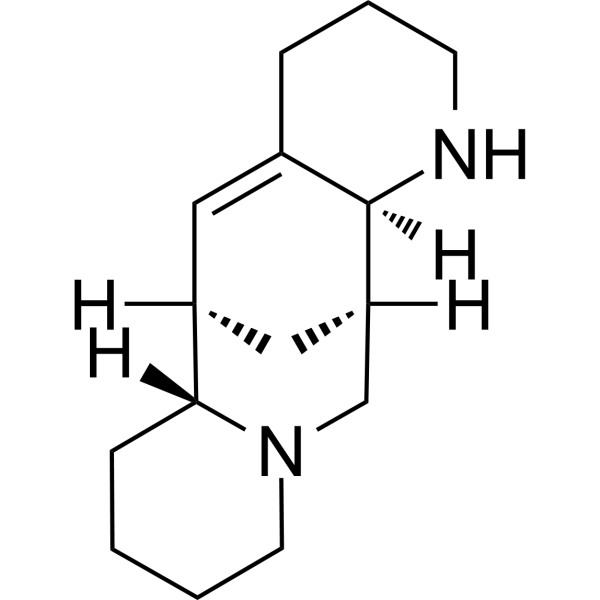
    Aloperine is an alkaloid in sophora plants such as Sophora alopecuroides L, which has shown anti-cancer, anti-inflammatory and anti-virus properties . Aloperine is widely used to treat patients with allergic contact dermatitis eczema and other skin inflammation in China . Aloperine induces apoptosis and autophagy in HL-60 cells .
    Aloperine
  • HY-Y0912

    N-HBTU

    Biochemical Assay Reagents Inflammation/Immunology
    HBTU (N-HBTU) is a guanidinium-based peptide coupling reagent and immunological sensitizer. HBTU can be used in combination with bases such as DIPEA (HY-130142) to complete coupling reactions, with HOBt and TMU as by-products. HBTU is a standard reagent in automated solid-phase peptide synthesis, particularly for the Fmoc/tBu strategy, which effectively promotes coupling steps, but it is not suitable for sterically hindered amino acids or dipeptide derivatives. HBTU can induce rhinitis, dermatitis, bronchial asthma and severe allergic reactions. HBTU can be used to study the pathogenesis of allergic reactions, occupational rhinitis, allergic contact dermatitis and bronchial asthma .
    HBTU
  • HY-W041608

    NF-κB Toll-like Receptor (TLR) Bacterial Infection Inflammation/Immunology
    Methylchloroisothiazolinone is a widely used fungicide and also an aquatic pollutant with pro-inflammatory activity and neurotoxicity. Methylchloroisothiazolinone induces the production of pro-inflammatory cytokines (such as IL-1β, TNF-α, IL-6) by activating the NF-κB signaling pathway and upregulating TLR4 expression, thereby triggering allergic contact dermatitis. Methylchloroisothiazolinone reduces cholinesterase activity and exacerbates oxidative stress by impairing catalase activity and disrupting redox balance. Methylchloroisothiazolinone poses significant harm to Mediterranean mussels, reducing the viability of hemocytes and digestive gland cells, inhibiting immune phagocytic function, and disrupting osmoregulatory capacity. Methylchloroisothiazolinone is used in studies on allergic contact dermatitis and related immunotoxicity mechanisms .
    Methylchloroisothiazolinone
  • HY-W014605

    Diphencyprone

    Interleukin Related Apoptosis p38 MAPK IRE1 Inflammation/Immunology Cancer
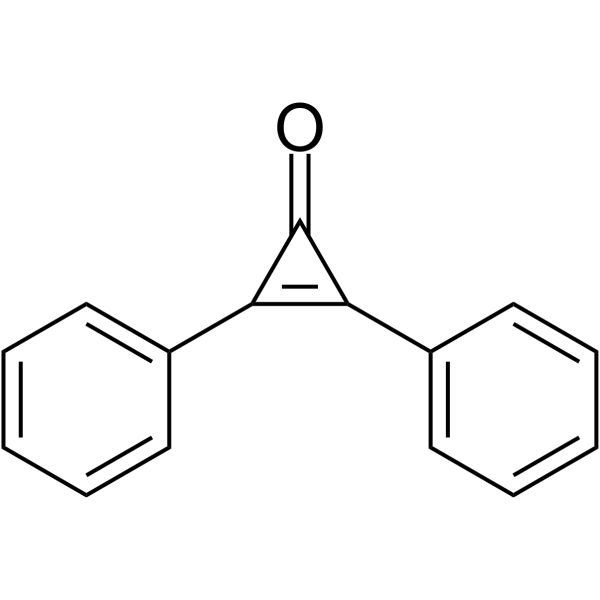
    Diphenylcyclopropenone (Diphencyprone) is a potent hapten acting as a topical immunomodulatory agent, which induces an allergic contact dermatitis. Diphenylcyclopropenone induces an increase of cell-surface thiols in cells of a human monocytic cell line, THP-1. Diphenylcyclopropenone acts on the autoreactive T-lymphocytes within the follicular milieu to induce Apoptosis. Diphenylcyclopropenone can be used for alopecia areata research .
    Diphenylcyclopropenone
  • HY-W020246

    TMTM

    Squalene Monooxygenase Bacterial Infection Inflammation/Immunology
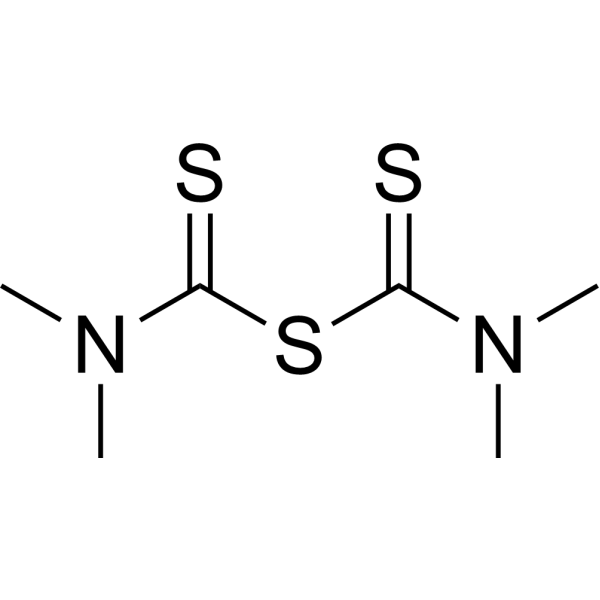
    Tetramethylthiuram monosulfide (TMTM) is an orally active microsomal monooxygenases inhibitor. Tetramethylthiuram monosulfide is used as an accelerator and activator in the processing of natural rubber and butyl rubber. Tetramethylthiuram monosulfide reduces palmitic acid incorporation into microsomal phospholipids, disrupts microsomal membrane integrity, and impairs electron transport during oxygenation. Tetramethylthiuram monosulfide can be used for the research of fungal infection, bacterial infection and allergic contact dermatitis .
    Tetramethylthiuram monosulfide
  • HY-B1419

    2-Hydroxybenzyl alcohol; Saligenin

    Drug Intermediate Bacterial Others
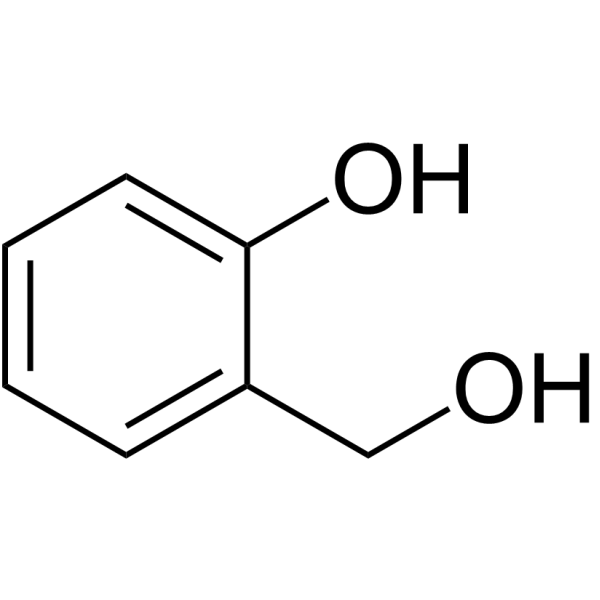
    Salicyl alcohol (2-Hydroxybenzyl alcohol; Saligenin) is a phenolic alcohol-type topical anesthetic and strong sensitizer with antiseptic, antibacterial and antipyretic activities. Salicyl alcohol serves as a precursor for salicin synthesis. Salicyl alcohol induces contact dermatitis and eczematous skin reactions, and is a well-known allergen identified in phenolic resins. Salicyl alcohol is isolated from the barks of European aspen (Populus tremula), rowan (Sorbus aucuparia) and willow (Salix spp.). Salicyl alcohol is used in studies related to allergic contact dermatitis .
    Salicyl alcohol
  • HY-N0508
    Rosin
    2 Publications Verification

    Others Inflammation/Immunology
    Rosin is a natural resin extracted from coniferous trees such as pine trees. Rosin is a frequent contact allergen which induces allergic contact dermatitis. Rosin can be used as emulsifiers, adhesives, and other chemical applications .
    Rosin
  • HY-108170
    Pyrethrin II
    1 Publications Verification

    Insecticide Parasite Infection Inflammation/Immunology
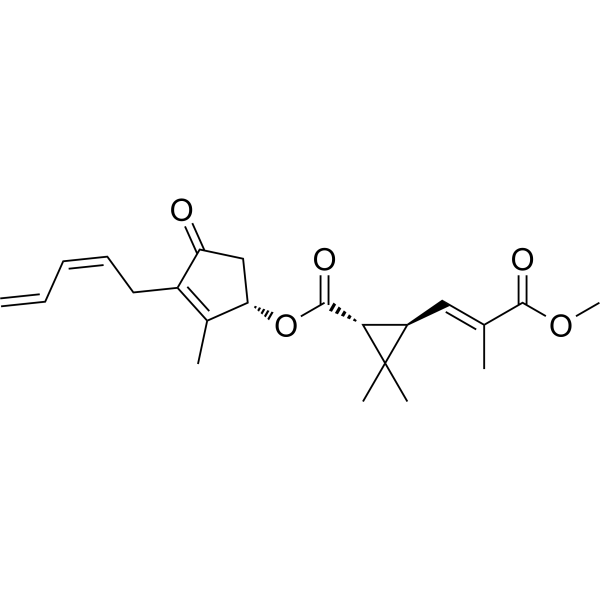
    Pyrethrin II is an orally active insecticidal ester of chrysanthemum acid found in Chrysanthemum cinerariifolium and C. coccineum Willd., an active constituent of pyrethrum extract with low mammalian toxicity. Pyrethrin II exhibits antiparasitic activity. Pyrethrin II can be used for the research of allergic contact dermatitis and parasitic infections .
    Pyrethrin II
  • HY-N0508R

    Reference Standards Others Inflammation/Immunology
    Rosin (Standard) is the analytical standard of Rosin. This product is intended for research and analytical applications. Rosin is a natural resin extracted from coniferous trees such as pine trees. Rosin is a frequent contact allergen which induces allergic contact dermatitis. Rosin can be used as emulsifiers, adhesives, and other chemical applications .
    Rosin (Standard)
  • HY-186038

    Biochemical Assay Reagents Inflammation/Immunology
    Cyanoethyl dimethyldithiocarbamate, a dithiocarbamate-related substance, is a contact allergen. Cyanoethyl dimethyldithiocarbamate can be found in accelerator-free and conventional nitrile gloves. Cyanoethyl dimethyldithiocarbamate can be used for the research of allergic contact dermatitis .
    Cyanoethyl dimethyldithiocarbamate
  • HY-13516R

    Apoptosis Autophagy Filovirus HIV Reference Standards Infection Inflammation/Immunology Cancer
    Aloperine (Standard) is the analytical standard of Aloperine. This product is intended for research and analytical applications. Aloperine is an alkaloid in sophora plants such as Sophora alopecuroides L, which has shown anti-cancer, anti-inflammatory and anti-virus properties . Aloperine is widely used to treat patients with allergic contact dermatitis eczema and other skin inflammation in China . Aloperine induces apoptosis and autophagy in HL-60 cells .
    Aloperine (Standard)
  • HY-W040536

    Dimethyloldimethyl hydantoin

    Environmental Pollutants Bacterial Fungal Infection
    DMDM hydantoin (Glydant) is an allergen and formaldehyde-releasing preservative. DMDM hydantoin releases formaldehyde under regulation by multiple factors and with enhanced release in alkaline environments. DMDM hydantoin induces allergic contact dermatitis via type-IV delayed hypersensitivity, either directly or through released formaldehyde. DMDM hydantoin is a broad-spectrum preservative that is effective against fungi, yeast, and gram-positive and gram-negative bacteria. DMDM hydantoin can be used in cosmetics industry production research (e.g., shampoos, hairsprays, and skincare products) and can be used for research on allergic contact dermatitis .
    DMDM hydantoin

Inquiry Online

Your information is safe with us. * Required Fields.

Salutation


Country or Region *

Applicant Name *


Organization Name *

Department *


Email Address *


Product Name *

Cat. No.


Requested quantity *

Phone Number *


Remarks

Inquiry Online

Inquiry Information

Product Name:
Cat. No.:
Quantity:
MCE Japan Authorized Agent:

