67 Results for "

Antibiofilm Agent

" in MedChemExpress (MCE) Product Catalog:
Products (67)

67 Results for "Antibiofilm Agent" in MCE Product Catalog:

5
5 Cited Publications
Cat. No.: HY-108547
CAS No.: 1715-30-6
Purity:  99.68%
Target:  

Fungal Apoptosis

Research Areas:  

Infection Cancer

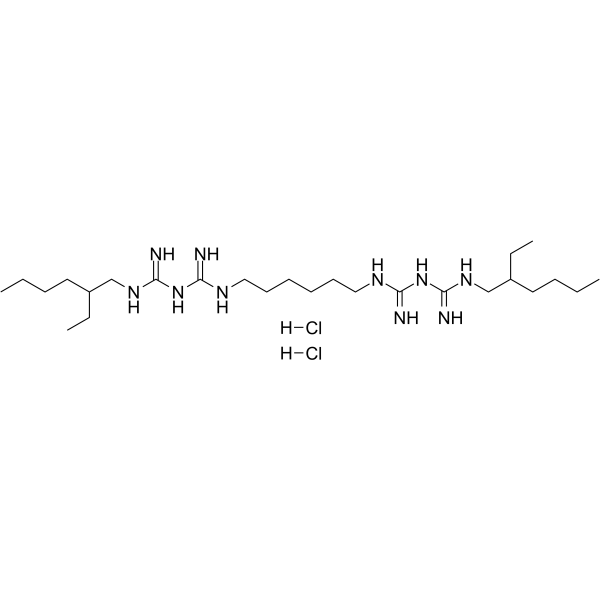
Alexidine dihydrochloride is an anticancer agent that targets a mitochondrial tyrosine phosphatase, PTPMT1, in mammalian cells and causes mitochondrial apoptosis. Alexidine dihydrochloride has antifungal and antibiofilm activity against a diverse range of fungal pathogens .
loading...
    loading...
4
4 Cited Publications
Cat. No.: HY-B1159
CAS No.: 4008-48-4
Synonyms: 8-Hydroxy-5-nitroquinoline; 5-Nitro-8-quinolinol
Research Areas:  

Infection Cancer

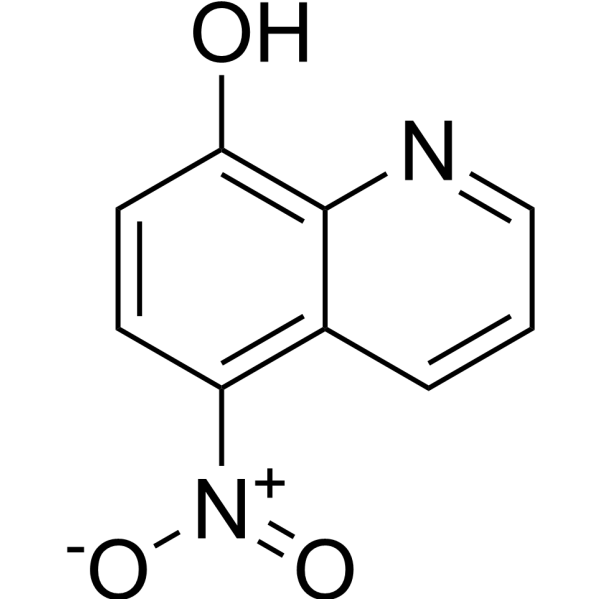
Nitroxoline (8-Hydroxy-5-nitroquinoline), an antibiotic, is an orally active antibiofilm agent. Nitroxoline reduces the formation and induces the dispersal of Pseudomonas aeruginosa biofilms by chelation of iron and zinc. Nitroxoline can be used for the urinary tract infections and cancer research .
loading...
    loading...
4
4 Cited Publications
Cat. No.: HY-17594
CAS No.: 2277-92-1
Research Areas:  

Infection

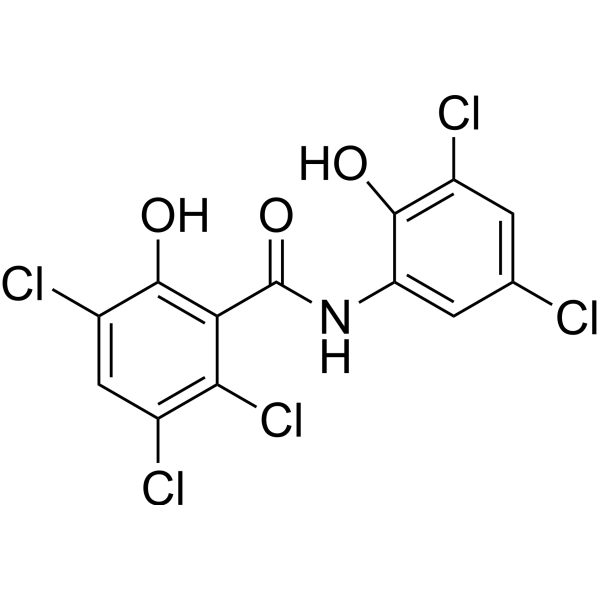
Oxyclozanide is an orally active salicylanilide anthelmintic agent that mainly acts by uncoupling oxidative phosphorylation in flukes. Oxyclozanide shows good anti-adenovirus, anti-biofilm, antifungal, and antibacterial activity .
loading...
    loading...
1
1 Cited Publications
Cat. No.: HY-155333
CAS No.: 2001602-10-2
Target:  

Bacterial

Research Areas:  

Infection

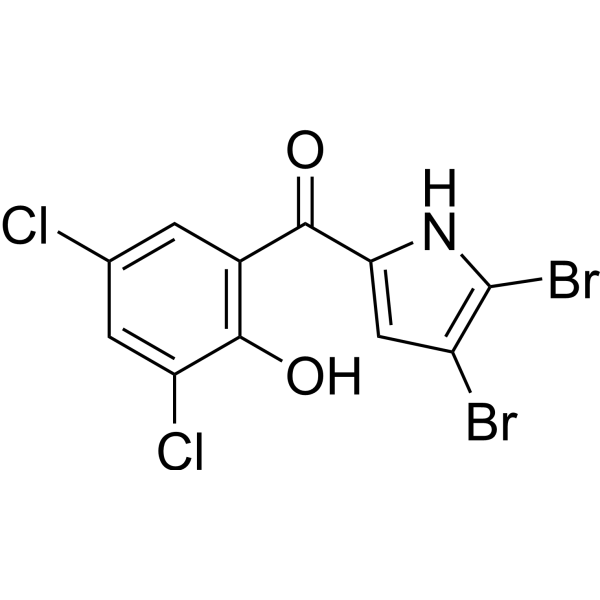
Antibiofilm agent-1 is an antibacterial agent that inhibits growth of Gram-positive pathogens (WO2017011725A1; compound 17) .
loading...
    loading...
Cat. No.: HY-W062216
CAS No.: 7720-39-0
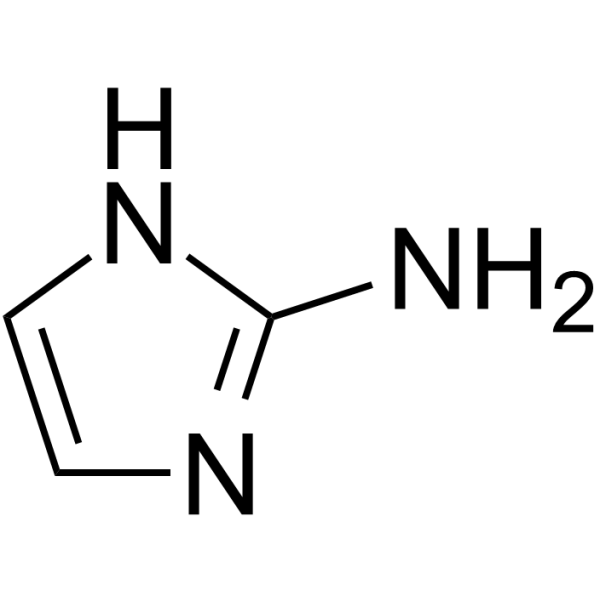
2-Aminoimidazole is a potent antibiofilm agent that can be used as an adjuvant to antimicrobial. 2-aminoimidazoles disrupts the ability of bacteria to protect themselves by inhibiting biofilm formation and genetically-encoded antibiotic resistance traits. 2-Aminoimidazole is also a weak noncompetitive inhibitor of human arginase I with a Ki of 3.6 mM .
loading...
    loading...
Cat. No.: HY-W015551
CAS No.: 3913-81-3
Synonyms: (E)-Dec-2-enal
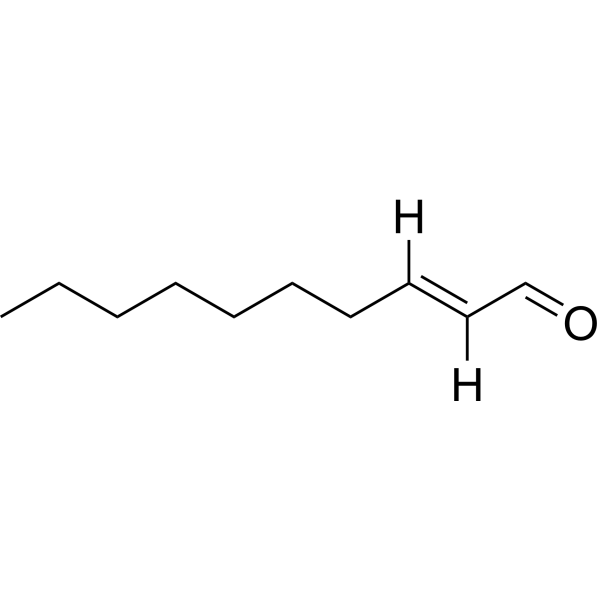
trans-2-Decenal ((E)-Dec-2-enal) acts as a urease inhibitor and antibacterial agent against Helicobacter pylori, with an IC50 of 9.484 μg/mL against Helicobacter pylori urease. trans-2-Decenal reduces the urease activity of Helicobacter pylori, and possesses antibacterial, bactericidal, anti-biofilm and anti-migratory activities. It alters the morphology of Helicobacter pylori, induces bacterial rupture, inhibits biofilm formation, reduces the number of mature biofilms and impairs the migratory capacity of Helicobacter pylori. trans-2-Decenal disrupts the cell wall integrity of Phytophthora capsici, damages membrane integrity and permeability, triggers intracellular reactive oxygen species (ROS) accumulation, decreases glutathione levels and disrupts the mitochondrial membrane potential of Phytophthora capsici. trans-2-Decenal is applicable to studies related to Helicobacter pylori and plant diseases induced by and Phytophthora capsici .
loading...
    loading...
Cat. No.: HY-W012572
CAS No.: 351-50-8
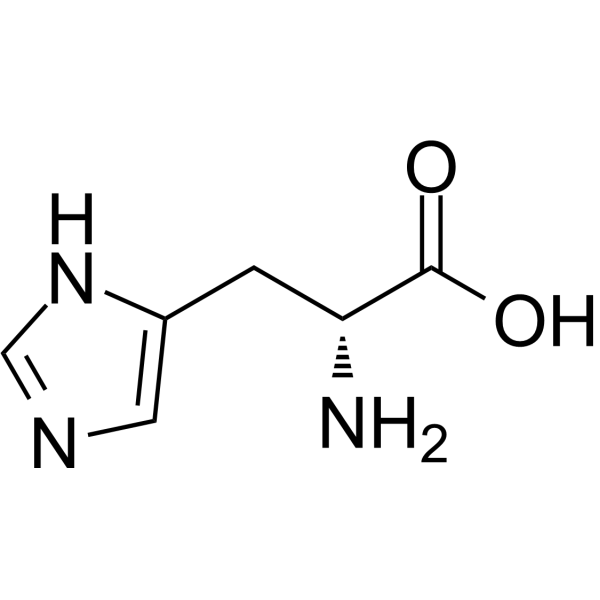
D-Histidine is an anti-biofilm agent that targets bacterial quorum sensing systems (such as RhlI/RhlR pathway) and has antibacterial activity. D-Histidine works by non-covalently binding to bacterial regulatory factors or copper ion complexes, selectively inhibiting bacterial biofilm formation and motility. D-Histidine downregulates quorum sensing-related gene expression, reduces the synthesis of virulence factors (such as alginate and proteases), and interferes with bacterial membrane stability, inhibiting biofilm formation, promoting the disintegration of mature biofilms, and enhancing antibiotic sensitivity. D-Histidine is also an efficient catalyst for the salt-induced peptide formation (SIPF) reaction, which promotes the condensation of amino acids to form dipeptides (such as dialanine and dilysine) by forming a complex with copper ions (Cu 2+) .
loading...
    loading...
Cat. No.: HY-W019922
CAS No.: 7783-40-6
Magnesium fluoride is a biochemical reagent. Magnesium fluoride nanoparticles act as an antibacterial and antibiofilm agent with activity against pathogenic bacteria. Magnesium fluoride can be used for the research of bacteria-related infections .
loading...
    loading...
Cat. No.: HY-161685
Antibiofilm agent-8 (compound Ru2) enhances antimicrobial activity on visible-light exposure (400-700 nm, 10 J cm-2). Antibiofilm agent-8 generates of oxidative stress via NADH oxidation and ROS generation and compromises bacterial wall .
loading...
    loading...
Cat. No.: HY-Y1718S
CAS No.: 64118-44-1
Synonyms: N-Tridecanoic acid-d2
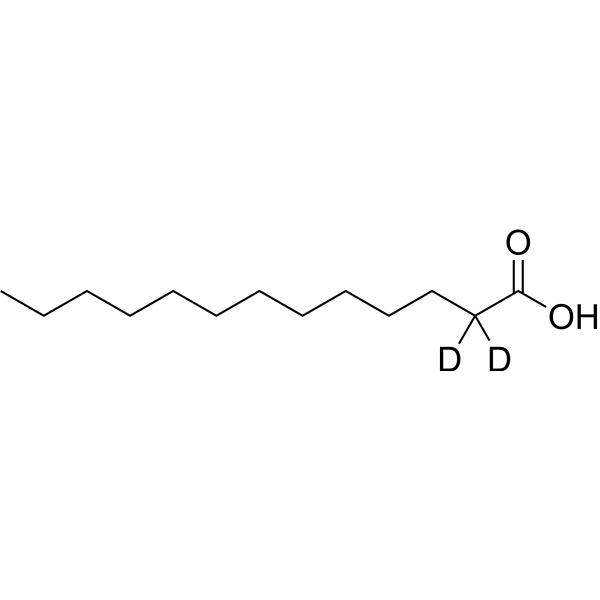
Tridecanoic acid-d2 is the deuterium labeled Tridecanoic acid. Tridecanoic acid (N-Tridecanoic acid), a 13-carbon medium-chain saturated fatty acid, can serve as an antipersister and antibiofilm agent that may be applied to research bacterial infections. Tridecanoic acid inhibits Escherichia coli persistence and biofilm formation .
loading...
    loading...
Cat. No.: HY-Y1718S1
CAS No.: 202529-03-1
Synonyms: N-Tridecanoic acid-d25
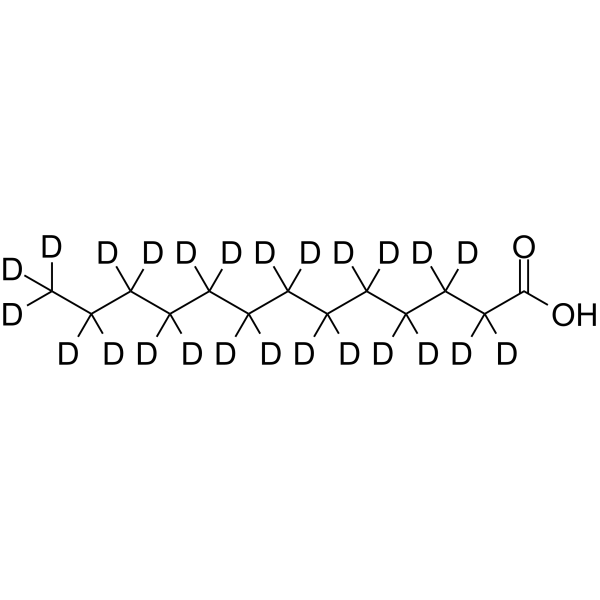
Tridecanoic acid-d25 is the deuterium labeled Tridecanoic acid. Tridecanoic acid (N-Tridecanoic acid), a 13-carbon medium-chain saturated fatty acid, can serve as an antipersister and antibiofilm agent that may be applied to research bacterial infections. Tridecanoic acid inhibits Escherichia coli persistence and biofilm formation .
loading...
    loading...
Cat. No.: HY-168900
Target:  

Bacterial

Research Areas:  

Infection

Antibiofilm agent-15 (Compound 17) is an antibacterial agent. Antibiofilm agent-15 inhibits biofilm formation in Gram-positive and Gram-negative bacteria .
loading...
    loading...
Cat. No.: HY-N6931
CAS No.: 15503-87-4
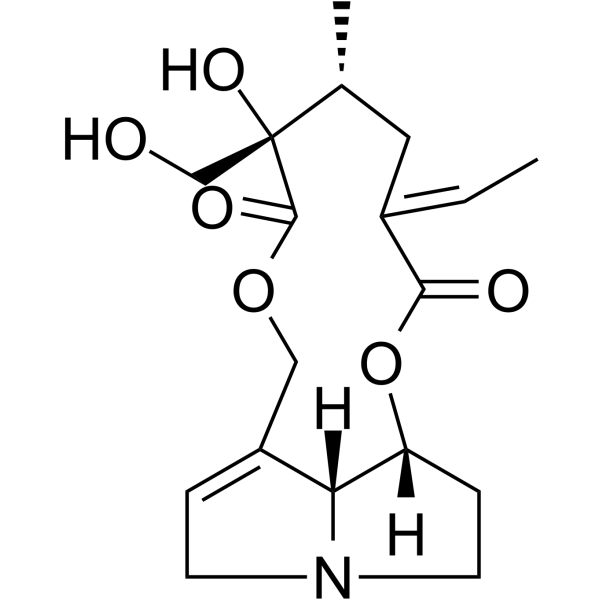
Usaramine is a pyrrolizidine alkaloid that can be isolated from seeds of Crolatalaria pallida. Usaramine selective Usaramine demonstrates antibiofilm activity against Staphylococcus epidermidis. Usaramine can be used for the research of bacterial infections .
loading...
    loading...
Cat. No.: HY-W012572A
CAS No.: 328526-86-9
D-Histidine hydrochloride hydrate is an anti-biofilm agent that targets bacterial quorum sensing systems (such as RhlI/RhlR pathway) and has antibacterial activity. D-Histidine hydrochloride hydrate works by non-covalently binding to bacterial regulatory factors or copper ion complexes, selectively inhibiting bacterial biofilm formation and motility. D-Histidine hydrochloride hydrate downregulates quorum sensing-related gene expression, reduces the synthesis of virulence factors (such as alginate and proteases), and interferes with bacterial membrane stability, inhibiting biofilm formation, promoting the disintegration of mature biofilms, and enhancing antibiotic sensitivity. D-Histidine hydrochloride hydrate is also an efficient catalyst for the salt-induced peptide formation (SIPF) reaction, which promotes the condensation of amino acids to form dipeptides (such as dialanine and dilysine) by forming a complex with copper ions (Cu 2+) .
loading...
    loading...
Cat. No.: HY-164369
CAS No.: 22812-29-9
Target:  

Bacterial

Research Areas:  

Infection

Antibiofilm agent-10 is an antibiofilm agent, which reduces bacterial levels and improves wound healing in recalcitrant pressure ulcers (PUs) in combination with negative pressure wound therapy (NPWT). Antibiofilm agent-10 enhances pathogen killing efficacy of antimicrobials .
loading...
    loading...
Cat. No.: HY-175254
Target:  

Bacterial

Research Areas:  

Infection

Antibiofilm agent-17 is a dual-action biofilm inhibitor against Pseudomonas aeruginosa (IC50 = 0.33 μM). Antibiofilm agent-17 inhibits biofilm growth by reducing quorum sensing-mediated virulence production and iron ion acquisition. Antibiofilm agent-17 exhibits synergistic antimicrobial effects in a mouse wound infection model. Antibiofilm agent-17 can be used in research on combating Pseudomonas aeruginosa infections .
loading...
    loading...
Cat. No.: HY-168258
Target:  

Bacterial

Research Areas:  

Infection

Antibiofilm agent-13 (compound 14b) is a potent antibacterial agent that displays a broad-spectrum antimicrobial activity. Antibiofilm agent-13 could disintegrate the integrity of bacterial cell membranes by destroying transmembrane potential and enhancing membrane permeability, and causing the generation of intracellular ROS and the leakage of DNA and proteins, ultimately leading to bacterial death. Antibiofilm agent-13 inhibits both Gram-positive bacteria (MIC of 0.5-1 μg/mL) and Gram-negative bacteria (MIC of 1-32 μg/mL) .
loading...
    loading...
Cat. No.: HY-161086
CAS No.: 3027083-73-1
Target:  

Bacterial

Research Areas:  

Infection

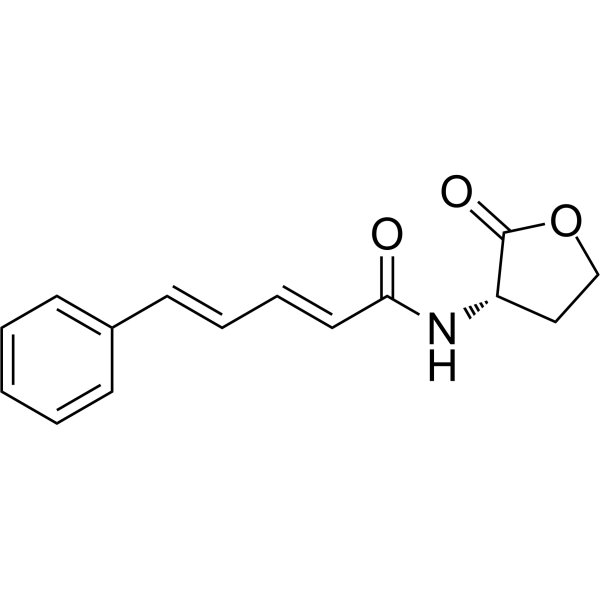
Antibiofilm agent-4 (compound 4p) is a LasR inhibitor. Antibiofilm agent-4 shows the best antibiofilm and anti-QS properties .
loading...
    loading...
Cat. No.: HY-164123
CAS No.: 2001602-07-7
Target:  

Bacterial

Research Areas:  

Infection

Antibiofilm agent-9 (Compound 4) is a pyrrolomycin derivative with antibacterial activity. Antibiofilm agent-9 inhibits Bacillus anthracis with MIC of 0.031 μg/mL. Antibiofilm agent-9 exhibits antibiofilm activity with 84% biofilm inhibition (24 h, 8.0 μg/mL). Antibiofilm agent-9 exhibits a good pharmacokinetic characters in mouse model .
loading...
    loading...
Cat. No.: HY-168063
Target:  

Bacterial

Research Areas:  

Infection

Antibiofilm agent-11 (compound C12) is a xanthone derivative with anti-biofilm activity .
loading...
    loading...

