
1. Search Result
Search Result
Results for "

B. subtilis ATCC 6051

" in MedChemExpress (MCE) Product Catalog:

309

Inhibitors & Agonists

6

Fluorescent Dyes

2

Biochemical Assay Reagents

41

Peptides

1

MCE Kits

141

Natural
Products

8

Recombinant Proteins

1

Isotope-Labeled Compounds

1

Oligonucleotides

Cat. No. Product Name Target Research Areas Chemical Structure
  • HY-131409

    D-Val-Leu-Lys-p-itoailide dihydrochloride; D-VLK-pNA dihydrochloride; S 2251 dihydrochloride

    Fluorescent Dye Others
    D-Val-Leu-Lys-pNA (D-Val-Leu-Lys-p-nitroanilide) dihydrochloride is a chromogenic peptide substrate that serves as a characteristic substrate for plasmin and plasminogen. D-Val-Leu-Lys-pNA dihydrochloride acts as a sensitive substrate for the DFE27 serine protease derived from Bacillus subtilis DC27. Catalyzed by plasmin, D-Val-Leu-Lys-pNA dihydrochloride binds and hydrolyzes to release p-nitroaniline (pNA), which can be detected colorimetrically at 405 nm as a measure of fibrinolytic activity .
    D-Val-Leu-Lys-pNA dihydrochloride
  • HY-P2124

    Antibiotic Bacterial Infection
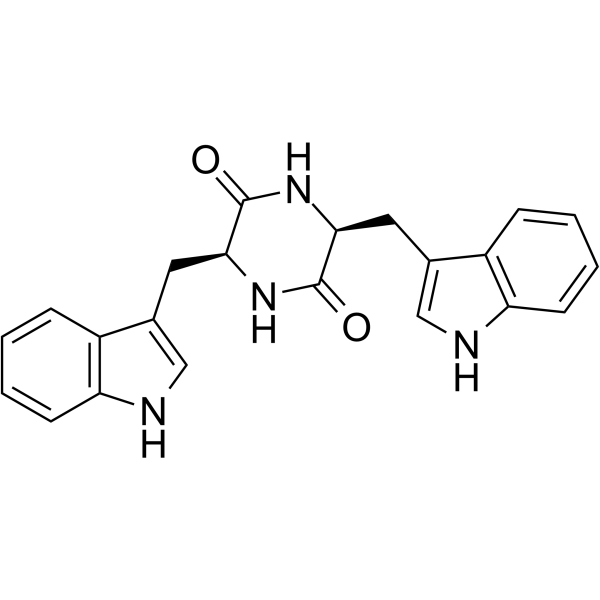
    Cyclo(L-Trp-L-Trp) is an antibiotic, and shows antimicrobial activity. Cyclo(L-Trp-L-Trp) can inhibit A. baumannii, as well as Candida albicans, Bacillus subtilis, Micrococcus luteus, Saccharomyces cerevisiae, Aspergillus niger, Staphylococcus aureus. Cyclo(L-Trp-L-Trp) can be used in microbial infection research .
    Cyclo(L-Trp-L-Trp)
  • HY-N13668

    Antibiotic Bacterial Infection
    Rhodomyrtone is an antibiotic that can be found in the leaves of Rhodomyrtus tomentosa. Rhodomyrtone kills Gram-positive bacterial cells without causing bacteriolysis. Rhodomyrtone exhibits activity against a variety of Gram-positive bacteria, including Bacillus cereus, Bacillus subtilis, Enterococcus faecalis, Staphylococcus epidermidis, Streptococcus gordonii, Streptococcus pneumoniae, Streptococcus pyogenes and Streptococcus salivarius. Rhodomyrtone is applicable to studies related to bacterial infections .
    Rhodomyrtone
  • HY-121382

    Cholinesterase (ChE) Apoptosis Necroptosis Neurological Disease Cancer
    Gypsogenin is a selective mixed-type BChE inhibitor (Ki=19.99 μM) that also exhibits significant cytotoxicity against various human cancer cell lines. Gypsogenin inhibits tumor growth by inducing cell cycle arrest and triggering apoptosis. Gypsogenin displays antibacterial activity against bacteria such as Bacillus subtilis and Bacillus thuringiensis, and often serves as a key parent nucleus for the synthesis of anticancer compounds. Gypsogenin is widely used in research on Alzheimer's disease and various cancers including colon cancer, melanoma, and leukemia .
    Gypsogenin
  • HY-N5127

    Bacterial Infection
    Nonacosane, isolated from Baphia massaiensis, exhibits weak activities against E. coli, B. subtilis, P. aeruginosa and S. aureus .
    Nonacosane
  • HY-W040795

    DNA/RNA Synthesis Endogenous Metabolite Infection
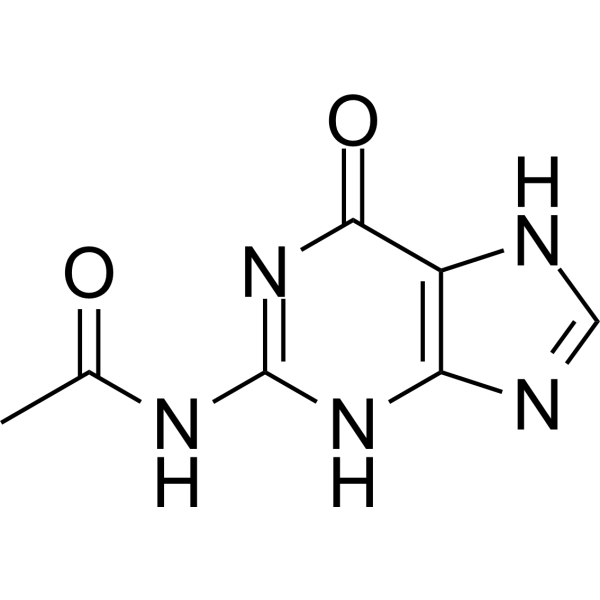
    N2-Acetylguanine is a C2-modified guanine. N2-Acetylguanine binds GR (guanine-guanine riboswitch) with an Kd value of 300 nM. N2-Acetylguanine modulate transcriptional termination. N2-Acetylguanine has the potential for the research of antimicrobial agent .
    N2-Acetylguanine
  • HY-P2770

    Endogenous Metabolite Others
    β-Amylase, Bacilus subtilis has abundant starch degrading activities. β-Amylase can be used for various biochemical studies .
    β-Amylase, Bacilus subtilis
  • HY-W354851

    Bacterial Antibiotic Infection
    Pisiferic acid is an antibacterial agent with inhibitory activity against Gram-negative/positive bacteria such as P. vulgaris, S. aureus and B. subtilis. Pisiferic acid can be used to study bacterial infections .
    Pisiferic acid
  • HY-E70216

    Others Others
    Bsu DNA polymerase, Large fragment is a polymerase derived from Bacillus subtilis. Bsu DNA polymerase, Large fragment is a DNA isothermal amplification polymerase with chain replacement activity, which used in RPA recombinase polymerase amplification technology .
    Bsu DNA polymerase, Large fragment
  • HY-E70124A

    Biochemical Assay Reagents Metabolic Disease
    Esterase, Bacillus subtilis is a carboxylate hydrolase. Esterase, Bacillus subtilis accepts a branched alcohol moiety as substrate .
    Esterase, Bacillus subtilis
  • HY-N10751

    Bacterial Infection
    (2E,4E)-Decadienoic acid is an anti-oomycete aliphatic compound that can be found in Coculture of Bacillus subtilis and Trichoderma asperellum .
    (2E,4E)-Decadienoic acid
  • HY-105282

    MM 45289; A 82846A

    Antibiotic Bacterial Infection
    Eremomycin (MM 45289) is a potent glycopeptide antibiotic closely related to Vancomycin (HY-B0671). Eremomycin shows antibacterial activity in Staphylococcus spp. and Bacillus subtilis ATCC6633, with the MIC values of 0.03-1.6 μg/mL .
    Eremomycin
  • HY-E70409

    Endogenous Metabolite Metabolic Disease
    Diacetinase, Bacillus subtilis is a member of the esterase family and is responsible for catalyzing the hydrolysis of diacetin. This enzyme is used in the measurement of lipase activity .
    Diacetinase, bacillus subtilis
  • HY-E70598

    Biochemical Assay Reagents Others
    endo-α-1,5-Arabinanase, Bacillus subtilis 168 (EC.3.2.1.99) is a glycoside hydrolase involved in arabinan decomposition. exo-α-1,5-Arabinanase is capable of cleaving arabinan main chains .
    endo-α-1,5-Arabinanase, Bacillus subtilis 168
  • HY-N8535

    Bacterial Infection
    Massarigenin C is a compound that can be isolated from Massarina tunicata. Massarigenin C has inhibitory activity against Bacillus subtilis (ATCC 6051) .
    Massarigenin C
  • HY-175539

    Bacterial Topoisomerase DNA/RNA Synthesis Infection
    DNA gyrase/Topo IV-IN-2 (Compound AK19) is an antibacterial agent with IC50 values of 0.783 μM and 7.136 μM against E. coli DNA gyrase and topoisomerase IV, respectively. DNA gyrase/Topo IV-IN-2 exhibits broad-spectrum antibacterial efficacy against both Gram-positive and Gram-negative pathogens. DNA gyrase/Topo IV-IN-2 can inhibit the biofilms of B. subtilis and MRSA, with an MIC of 1.9 μM against both B. subtilis and MRSA. DNA gyrase/Topo IV-IN-2 can be used in research related to anti-drug-resistant bacterial drugs .
    DNA gyrase/Topo IV-IN-2
  • HY-N15640

    (-)-Filiformin

    Bacterial Infection Inflammation/Immunology Cancer
    Filiformin ((-)-Filiformin) is a sesquiterpene compound that can be isolated from Laurencia filiformis forma heteroclada. Filiformin exhibits certain cytotoxicity against P388 and BSC-1 cells. Filiformin has antimicrobial activity against Bacillus subtilis, Trichophyton mentagrophytes and Candida albicans. In addition, Filiformin can inhibit oxygen uptake in isolated rat liver mitochondria at a concentration of 150 μM .
    Filiformin
  • HY-173054

    Bacterial Infection
    FtsZ-IN-12 (Compound 16e) is the inhibitor for filamentous temperature-sensitive mutant Z (FtsZ) that promotes the polymerization of FtsZ protein, inhibits its GTPase activity, thereby interfering with bacterial cell division process. FtsZ-IN-12 exhibits boardspectrum antibacterial activity that inhibits B. subtilis ATCC9372, B. pumilus CMCC63202, S. aureus ATCC25923, E. coli BW25113 and A. baumannii ATCC19606 with MIC of 0.062-1 μg/mL. FtsZ-IN-12 inhibits the formation of bacterial biofilms and exhibits a clearing effect on mature biofilms. FtsZ-IN-12 exhibits bactericidal activity without hemolytic toxicity to mammalian red blood cells (15 mg/kg) .
    FtsZ-IN-12
  • HY-E70221

    Bacterial Others
    α-Acetolactate decarboxylase, from Bacillus subtilis is an enzyme responsible for acetoin production, and can be widely used in food processing .
    α-Acetolactate decarboxylase, from Bacillus subtilis
  • HY-P5639

    Fungal Infection
    Gageotetrin A is an antimicrobial peptide derived from the marine bacterium Bacillus subtilis. Gageotetrin A has antifungal activity, but none toxic to numerous human cancer cells .
    Gageotetrin A
  • HY-P5646

    Bacterial Infection
    Gageotetrin C is an antimicrobial peptide derived from the marine bacterium Bacillus subtilis. Gageotetrin C is more active against fungi (MIC value is 0.02-0.04 μM) .
    Gageotetrin C
  • HY-125461

    Stemphylin; NSC 173943

    Bacterial Infection
    Altersolanol A (Stemphylin; NSC 173943) exhibits antimicrobial activities against Bacillus subtilis and Pseudomonas aeruginosa, with MIC of 25-100 μg/mL. Altersolanol A exhibits no phytotoxicity to Taxus (at dose of 4 μg/μL) .
    Altersolanol A
  • HY-157143

    Bacterial Infection
    Antibacterial agent 164 (compound 2a) is an antibacterial and antibiofilm agent. Antibacterial agent 164 inhibits S. aureus and B. subtilis (MIC of 0.09 mM), and also exhibits strong anti-B. Subtilis biofilm formation .
    Antibacterial agent 164
  • HY-N12258

    Antibiotic Bacterial Infection
    Aranciamycin A is an anthracyclic antibiotic and can be isolated from Streptomyces. Aranciamycin A shows antibacterial activity against M. bovis and B. subtilis with the MIC values of 30 and 7.5 µM, respectively .
    Aranciamycin A
  • HY-N12723

    Fungal Infection
    Talaroderxine D (compound 4) has biofilm inhibitory effect. Talaroderxine D shows antimicrobial activities against Bacillus subtilis and Staphylococcus aureus with MIC values of 2.1 and 8.3 μg/mL .
    Talaroderxine D
  • HY-111396

    Bacterial Infection
    PC58538 is a cell division inhibitor, targeting to FtsZ. PC58538 shows moderate antibacterial activity, and inhibits cell division in vegetative cells of wild-type B. subtilis. PC58538 is also known to modulate the rate of GTP hydrolysis .
    PC58538
  • HY-129292

    Quinocarmycin; DC-52; KW2152 free base

    Antibiotic Bacterial Infection Cancer
    Quinocarcin (DC-52) is a potent antitumor antibiotic. Quinocarcin inhibits Bacillus subtilis DNA, RNA and protein syntheses .
    Quinocarcin
  • HY-124425

    Antibiotic Cancer
    5′-Deoxythymidine is a thymidine form which 5' position replaced with hydrogen. 5'-deoxy Thymidine is effective against Bacillus subtilis and Staphylococcus aureus. 5′-Deoxythymidine can be used as a research tool for antiviral and anticancer studies .
    5′-Deoxythymidine
  • HY-P5666

    Bacterial Infection
    Maximin 15 is an antimicrobial peptide derived from the toad brain. Maximin 15 is active against Staphylococcus aureus, Escherichia coli and Bacillus subtilis, with MIC values of 9.4, 18.8, 75 μg/mL, respectively .
    Maximin 15
  • HY-P5668

    Bacterial Infection
    Maximin 28 is an antimicrobial peptide derived from the toad brain. Maximin 28 is active against Staphylococcus aureus, Escherichia coli and Bacillus subtilis, with MIC values of 4.7, 9.4, 75 μg/mL, respectively .
    Maximin 28
  • HY-P0135

    Bacterial Infection
    Penta lysine is an antibacterial agent, that inhibits E. coli, A. baumannii, P. aeruginos, S. aureus, and B. subtilis, with MIC of 1.1-18 μM .
    Penta lysine
  • HY-157933

    Mitochondrial Metabolism Infection
    SF-C5-TPP is an potent mitochondria-targeted protonophoric uncoupler. SF-C5-TPP has significant proton transfer activity on model planar bilayer lipid membranes. SF-C5-TPP inhibits the growth of Bacillus subtilis with a MIC of 2 μM >[1].
    SF-C5-TPP
  • HY-146593

    Bacterial Infection
    Antibacterial agent 88 (Compound 5h) is a potent antibacterial agent with MIC values of both ≤0.0156 μg/mL against MRSA, MRSE and S. aureus. Antibacterial agent 88 also inhibits B. subtilis with an MIC of 4 μg/mL .
    Antibacterial agent 88
  • HY-126462

    Bacterial Infection
    Lantic acid is a triterpenoid compound possessing antimicrobial activity. Lantic acid exhibits inhibitory effects on a broad range of both Gram-positive and Gram-negative bacteria, with particular potency against Escherichia coli and Bacillus subtilis. Lantic acid is utilized in the research and development of antimicrobial agents .
    Lantic acid
  • HY-169065

    Bacterial Infection
    Antibacterial agent 241 is a histidine kinase (HK) inhibitor, with IC50 values of 14 μM and 238 μM for CckA and PhoQ, respectively. Antibacterial agent 241 shows moderate antibacterial activity against E. coli DC2, Bacillus cereus, and Bacillus subtilis, with a MIC range of 12-74 μg/mL .
    Antibacterial agent 241
  • HY-121104A

    Antibiotic Bacterial Infection Cancer
    Bactobolin hydrochloride (Compound 1) is an antibiotic, which inhibits Escherichia coli, Salmonella, Shigella, Staphylococcus and Bacillus subtilis, with MICs of 0.3-6.25 μg/mL. Bactobolin hydrochloride exhibits antitumor efficacy against leukemia, with a LD50 value of 6.25-12.5 mg/kg .
    Bactobolin hydrochloride
  • HY-121104

    Antibiotic Bacterial Infection Cancer
    Bactobolin (Compound 1) is an antibiotic, which inhibits Escherichia coli, Salmonella, Shigella, Staphylococcus and Bacillus subtilis, with MICs of 0.3-6.25 μg/mL. Bactobolin exhibits antitumor efficacy against leukemia, with a LD50 value of 6.25-12.5 mg/kg .
    Bactobolin
  • HY-119022

    Bacterial Infection
    MAC-0547630 is a potent inhibitor of undecaprenyl diphosphate synthase (UppS), with IC50s of 0.05 μM and 1.6 μM for UppS BS and UppS BA, respectively. MAC-0547630 is active against B. subtilis in vitro (MIC 0.1 ng/mL) .
    MAC-0547630
  • HY-128222

    Hydrazinecarboselenoamide

    Bacterial Infection Cancer
    Selenosemicarbazide (Hydrazinecarboselenoamide) exhibits antimicrobial activity, that inhibits B. subtilis, S. aureus, Klebsiella pneumoniae, Sarcina lutea and Mycobacterium tuberculosis. Selenosemicarbazide forms complex with metal ions, and exhibits antitumor efficacy against cancer cells
    Selenosemicarbazide
  • HY-P11086

    Bacterial Infection
    c(R3W4V) is an antimicrobial peptide. c(R3W4V) has a relatively stable transmembrane structure. c(R3W4V) has IC50 values of 0.27 μM, 0.46 μM, and 0.05 μM for E. coli, S. aureus, and B. subtilis, respectively .
    c(R3W4V)
  • HY-163882

    Bacterial DNA/RNA Synthesis Infection
    CUHK242 is a bacterial transcription inhibitor, with a MIC of 2 μg/mL for B. subtilis reporter strain BS2019. CUHK242 has antimicrobial activity against Staphylococcus aureus. CUHK242 can inhibit RNA synthesis in cells, thereby simultaneously reducing protein synthesis .
    CUHK242
  • HY-122467

    Bacterial Infection Cancer
    Kumbicin C is a bis-indolyl benzenoid compound from an Australian soil fungus, Aspergillus kumbius. Kumbicin C inhibits the growth of mouse myeloma cells and the Gram-positive bacterium Bacillus subtilis .
    Kumbicin C
  • HY-151357

    Bacterial Infection
    MraY-IN-3 (12a) is a potent bacterial translocase MraY inhibitor with an IC50 value of 140 µM. MraY-IN-3 acts on E. coli K12, B. subtilis W23 and P. fluorescens Pf-5 with the MIC50 values of 7 µg/mL, 12 µg/mL, and 46 µg/mL, respectively .
    MraY-IN-3
  • HY-N10087A

    Bacterial Infection
    Angustifoline hydrochloride, an alkaloid, can be isolated from Lupinus angustifolius L. alkaloid extract. Angustifoline hydrochloride exhibits antimicrobial activity. Angustifoline hydrochloride could have bacteriostatic effects against S. aureusB. subtilisE. coliP. aeruginosa and B. thuringiensis .
    Angustifoline hydrochloride
  • HY-N16446

    Bacterial Infection
    Stromemycin is a stromelysin inhibitor. Stromemycin exhibits weak antibacterial activity against Staphylococcus aureus, vancomycin-resistant Enterococcus faecium, and Bacillus subtilis when used alone. Stromemycin shows a significant increase in antibacterial efficacy when combined with Compound 5. Stromemycin does not possess a significant cell-killing effect on HCT-116 cells .
    Stromemycin
  • HY-144728

    Bacterial Infection
    MraY-IN-1 (compound 12a) is a potent  MraY inhibitor with an IC50 value of 140 μM. MraY-IN-1 has antimicrobial activity against Escherichia coli K12, Bacillus subtilis W23 and Pseudomonas fluorescens Pf-5 with MIC50s of 7 µg/mL, 12 µg/mL and 46 µg/mL, respectively. MraY-IN-1 can be used for researching anti-bacteria .
    MraY-IN-3 hydrochloride
  • HY-125620

    Antibiotic Bacterial Infection Cancer
    Rubiginone D2 is an antibiotic, which exhibits antimicrobial activities against Bacillus subtilis, Staphylococcus aureus and Escherichia coli. Rubiginone D2 exhibits antitumor efficacy, inhibits proliferations of cancer cells HM02, Kato III, HepG2 and MCF7, with GI50s of 0.1, 0.7, <0.1 and 7.5 μM, respectively .
    Rubiginone D2
  • HY-N12096

    α-Acetylsalazinic acid

    Bacterial Infection
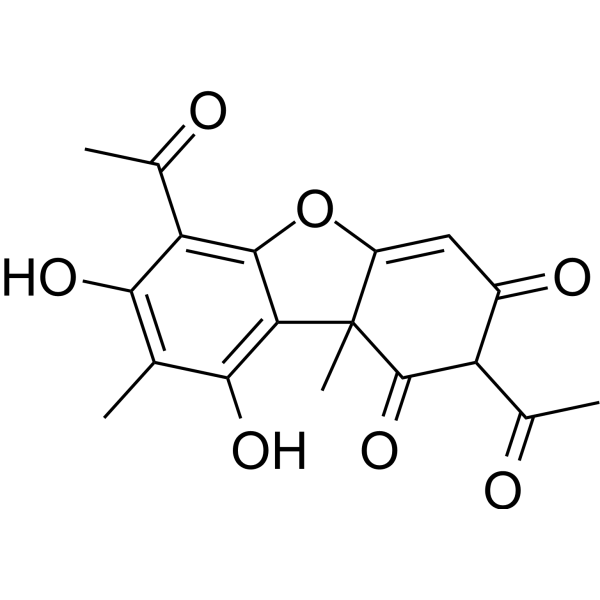
    Galbinic acid (α-Acetylsalazinic acid), a lichen acid, shows antibacterial activities against the Gram-positive bacteria B. cereus, B. subtilis, and S. aureus (MICs=62.5, 62.5, 250 μg/ml, respectively). Galbinic acid inhibits the Gram-negative bacterium E. coli (MIC=125 μg/ml) .
    Galbinic acid
  • HY-N12264

    Antibiotic Bacterial Fungal Infection
    Burnettramic acid A is an antibiotic, which can be isolated from Aspergillus burnettii. Burnettramic acid A exhibits antibacterial and antifungal activities, with IC50 of 0.2, 0.5, 2.3 and 5.9 μg/mL, for Saccharomyces cerevisiae, Candida albicans, Bacillus subtilis and Staphylococcus aureus, respectively. Burnettramic acid A exhibits cytotoxicity in cancer cell NS-1 with IC50 of 13.8 μg/mL .
    Burnettramic acid A
  • HY-119648

    Bacterial Infection
    CCR-11 is an antibacterial agent. CCR-11 can inhibit the proliferation of B. subtilis cells with an IC50 value of 1.2 μM. CCR-11 inhibits HeLa cell proliferation with an IC50 value of 18.1 μM. CCR-11 inhibits bacterial cytokinesis by inhibiting FtsZ assembly. CCR-11 can be used for the research of FtsZ-targeted antibacterial agents .
    CCR-11

Inquiry Online

Your information is safe with us. * Required Fields.

Salutation


Country or Region *

Applicant Name *


Organization Name *

Department *


Email Address *


Product Name *

Cat. No.


Requested quantity *

Phone Number *


Remarks

Inquiry Online

Inquiry Information

Product Name:
Cat. No.:
Quantity:
MCE Japan Authorized Agent:

