20 Results for "

Cannabis sativa

" in MedChemExpress (MCE) Product Catalog:
Products (20)

20 Results for "Cannabis sativa" in MCE Product Catalog:

1
1 Cited Publications
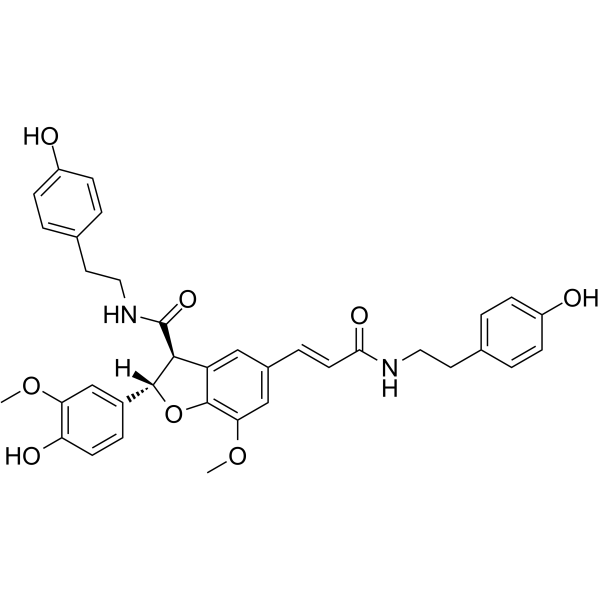
Cat. No.: HY-N3979
CAS No.: 80510-06-1
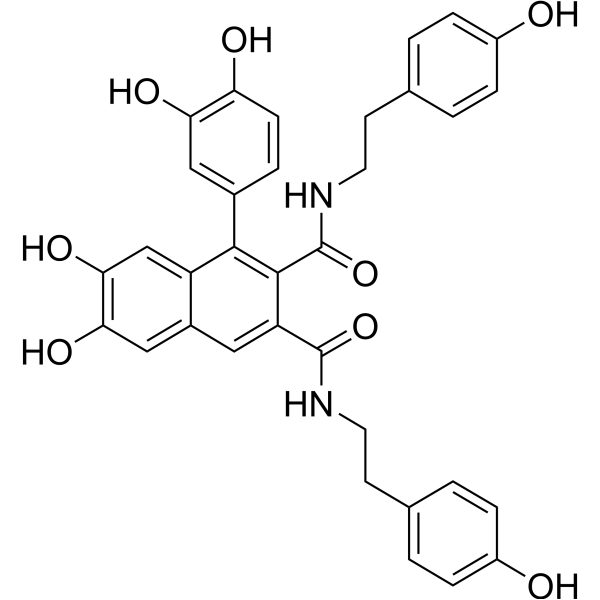
Grossamide is a natural product that can be isolated from fructus cannabis, the dried fruit of Cannabis sativa L.. Grossamide has anti-neuroinflammatory effects .
loading...
    loading...
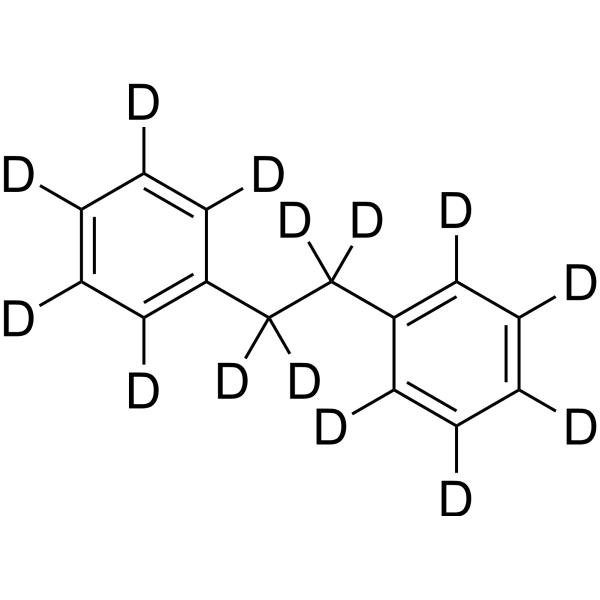
Cat. No.: HY-78004S
CAS No.: 94371-89-8
1,2-Diphenylethane-d14 is the d14-labeled Bibenzyl (HY-78004). Bibenzyl (s-Diphenylethane; Dibenzyl) is the parent core structure of bibenzyl-type natural products and an intermediate in organic synthesis. Hydroxyl-substituted derivatives of Bibenzyl are mainly isolated from plants such as Dendrobium (Orchidaceae) and Cannabaceae. These derivatives accumulate when plants are exposed to fungal infection and biotic stress, and exhibit antioxidant, anti-inflammatory, and anti-hepatic steatosis activities .
loading...
    loading...
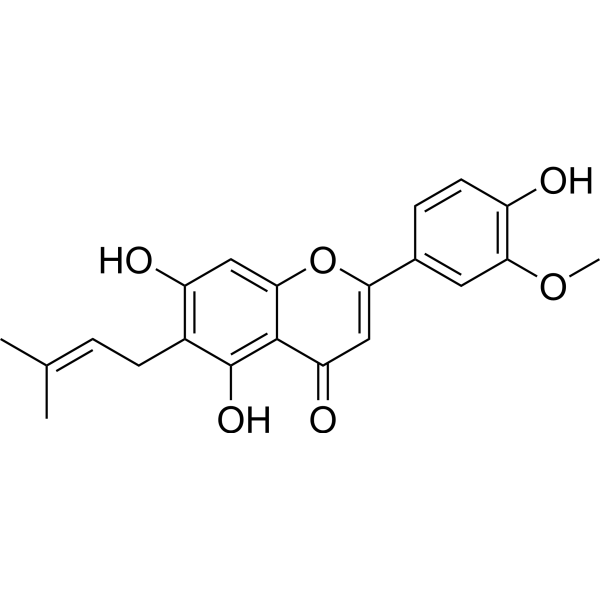
Cat. No.: HY-W753479
CAS No.: 1086463-05-9
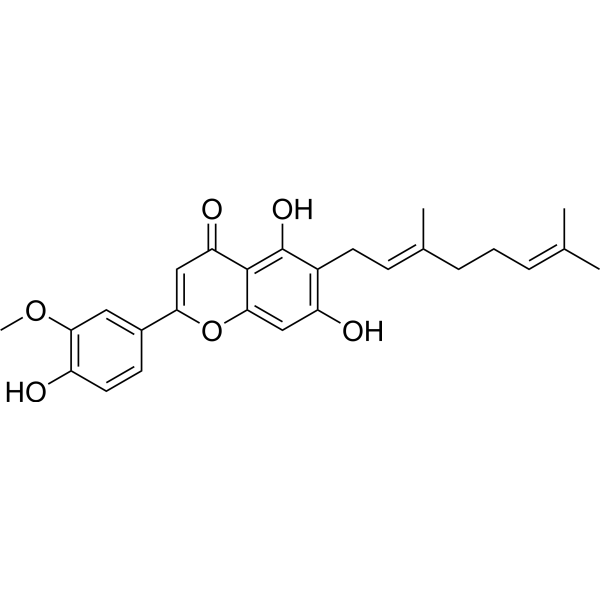
Cannflavin C (compound 5) can be isolated from Cannabis sativa. Cannflavin C has anti-oxidant activity .
loading...
    loading...
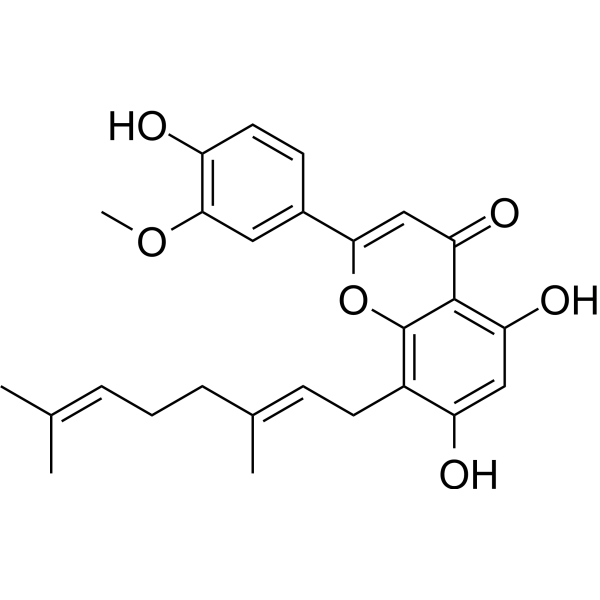
Cat. No.: HY-W749694
CAS No.: 76735-58-5
Synonyms: Canniflavone
Cannflavin B is a flavonoid compound that can be isolated from Cannabis sativa L. Cannflavin B is inhibitors of PGE2 release (IC50: 0.7 μM), mPGES-1 (IC50: 3.7 μM), and 5-lipoxygenase. Cannflavin B has multiple activities such as anti-inflammatory, antioxidant, anti-glycation, anti-ferroptosis, anti-tumor, and anti-Leishmania (IC50: 14 μM). Cannflavin B can also inhibit the TrkB-BDNF signaling pathway .
loading...
    loading...
Cat. No.: HY-W748591
CAS No.: 76735-57-4
Cannflavin A can be isolated from Cannabis sativa L.. Cannflavin A has anti-cancer, neuroprotective and anti-inflammatory activity. Cannflavin A inhibits 1-42 aggregation. Cannflavin A also inhibits kynurenine-3-monooxygenase (KMO) (IC50 = 29.4 μM). Cannflavin A activates apoptosis via caspase-3 cleavage. Cannflavin A exerts anti-inflammatory effects by inhibiting pro-inflammatory enzymes, including prostaglandin E2 and cytochrome c oxidases I and II in PC12 cell line .
loading...
    loading...
Cat. No.: HY-N1959
CAS No.: 130508-46-2
Cannabisin A is a natural product in seeds in sprouts .
loading...
    loading...
Cat. No.: HY-117209
CAS No.: 33745-21-0
Cannabivarin is a Phenols product that can be isolated from the herbs of Cannabis sativa. .
loading...
    loading...
Cat. No.: HY-N3535
CAS No.: 70677-47-3
Canniprene, an isoprenylated bibenzyl unique to Cannabis sativa, is a potent inhibitor of 5-lipoxygenase (5-LO) activity (IC50=0.4 μM) and cyclooxygenase/microsomal prostaglandin E2 synthase (PGE2; IC50=10 μM). Canniprene inhibits the production of inflammatory eicosanoids and affects the generation of prostaglandins .
loading...
    loading...
Cat. No.: HY-78004
CAS No.: 103-29-7
Synonyms: s-Diphenylethane; Dibenzyl
Bibenzyl (s-Diphenylethane; Dibenzyl) is the parent core structure of bibenzyl-type natural products and an intermediate in organic synthesis. Hydroxyl-substituted derivatives of Bibenzyl are mainly isolated from plants such as Dendrobium (Orchidaceae) and Cannabaceae. These derivatives accumulate when plants are exposed to fungal infection and biotic stress, and exhibit antioxidant, anti-inflammatory, and anti-hepatic steatosis activities .
loading...
    loading...
Cat. No.: HY-169461
CAS No.: 22972-64-1
Synonyms: Δ8-Tetrahydrocannabiorcol
Target:  

Drug Derivative

Research Areas:  

Inflammation/Immunology

Δ8-THCO (delta 8-tetrahydrocannabinol) is a cannabinoid compound that can be isolated from medicinal cannabis (sp. Sativa) .
loading...
    loading...
Cat. No.: HY-N20782
Cannabis sativa extract is an extract isolated fromCannabis sativa.
loading...
    loading...
Cat. No.: HY-130225
CAS No.: 41408-19-9
Cannabichromevarin is a cannabinoid, which could be found in Cannabis sativa .
loading...
    loading...
Cat. No.: HY-179455
CAS No.: 37936-78-0
Synonyms: 8-Oxo-Δ9-tetrahydrocannabinol; Δ1-Tetrahydrocannabinol-6-one
Target:  

Drug Derivative

Research Areas:  

Others

8-Oxo-Δ9-THC is an oxygenated tetrahydrocannabinol that can be found in Cannabis sativa L. variety CHPF-01 .
loading...
    loading...
Cat. No.: HY-137960
CAS No.: 29106-16-9
Purity:  99.86%
Target:  

Bacterial

Research Areas:  

Inflammation/Immunology Cancer

O,O-Dimethyl-cannabigerol is a natural product from Cannabis sativa. O,O-Dimethyl-cannabigerol has an antibacterial effect on drug-resistant strains of Staphylococcus aureus (MIC ranging from 1 to 2 μg/mL) . O,O-Dimethyl-cannabigerol is a nonpsychoactive constituent .
loading...
    loading...
Cat. No.: HY-W748591R
CAS No.: 76735-57-4
Cannflavin A (Standard) is the analytical standard of Cannflavin A. This product is intended for research and analytical applications. Cannflavin A can be isolated from Cannabis sativa L.. Cannflavin A has anti-cancer, neuroprotective and anti-inflammatory activity. Cannflavin A inhibits 1-42 aggregation. Cannflavin A also inhibits kynurenine-3-monooxygenase (KMO) (IC50 = 29.4 μM). Cannflavin A activates apoptosis via caspase-3 cleavage. Cannflavin A exerts anti-inflammatory effects by inhibiting pro-inflammatory enzymes, including prostaglandin E2 and cytochrome c oxidases I and II in PC12 cell line .
loading...
    loading...
Cat. No.: HY-W152736
CAS No.: 33414-49-2
Target:  

DYRK

Research Areas:  

Neurological Disease

2-Methyl-5-acetylphenol is a hydroxylated methylacetophenone that exists in the aerial parts of Cannabis sativa subsp. sativa. 2-Methyl-5-acetylphenol exhibits strong binding affinity to HIPK2. 2-Methyl-5-acetylphenol cannot reverse MPP + (1-methyl-4-phenyl-pyridinium ion)-induced neuronal cytotoxicity. 2-Methyl-5-acetylphenol can be used for Parkinson's disease research .
loading...
    loading...
Cat. No.: HY-78004S1
CAS No.: 20389-19-9
Synonyms: Dibenzil-d4; s-Diphenylethane-d4; Bibenzyl-d4
1,2-Diphenylethane-d4 (Dibenzil-d4; s-Diphenylethane-d4; Bibenzyl-d4) is the d4-labeled Bibenzyl (HY-78004). Bibenzyl (s-Diphenylethane; Dibenzyl) is the parent core structure of bibenzyl-type natural products and an intermediate in organic synthesis. Hydroxyl-substituted derivatives of Bibenzyl are mainly isolated from plants such as Dendrobium (Orchidaceae) and Cannabaceae. These derivatives accumulate when plants are exposed to fungal infection and biotic stress, and exhibit antioxidant, anti-inflammatory, and anti-hepatic steatosis activities .
loading...
    loading...
Cat. No.: HY-N8961
CAS No.: 1259515-25-7
10-O-Ethylcannabitriol is a Phenols product that can be isolated from the pollen of Cannabis sativa L. .
loading...
    loading...
Cat. No.: HY-179436
CAS No.: 1781270-07-2
Synonyms: 9β,10β-EHHC; 9β,10β-epoxy HHC
Target:  

Cannabinoid Receptor

Research Areas:  

Neurological Disease

9β,10β-epoxy Hexahydrocannabinol is a cannabinoid receptor 1 (CB1) and CB2 receptor ligand with a binding affinity of 224 nM for CB1 and 335 nM for CB2. 9β,10β-epoxy Hexahydrocannabinol reduces locomotor activity, induces catalepsy, lowers body temperature, and produces antinociceptive effects in mice. 9β,10β-epoxy Hexahydrocannabinol can be used for the study of nervous system diseases .
loading...
    loading...
Cat. No.: HY-148869
CAS No.: 5060-32-2
Synonyms: R-Hexanoyl-CoA; R-Hexanoyl coenzyme A
Hexanoyl coenzyme A is a short-chain fatty acyl-CoA thioester. Hexanoyl coenzyme A competes with butyryl-CoA to abolish the dehydrogenation effect of medium-chain acyl-CoA dehydrogenase on butyryl-CoA, and does not serve as a substrate for short-chain acyl-CoA dehydrogenase. Hexanoyl coenzyme A acts as a biosynthetic precursor for the synthesis of olivetolic acid and cannabinoids. Hexanoyl coenzyme A is applicable to research related to short-chain acyl-CoA dehydrogenase deficiency .
loading...
    loading...
  • 1

