
4 Results for "

Capreomycin

" in MedChemExpress (MCE) Product Catalog:
Products (4)

4 Results for "Capreomycin" in MCE Product Catalog:

Cat. No.: HY-P3270
CAS No.: 11003-38-6
Target:  

Bacterial Antibiotic

Research Areas:  

Infection

Capreomycin is a macrocyclic peptide antibiotic. Capreomycin can be used for anti-multidrug-resistant-tuberculosis research. Capreomycin can inhibit phenylalanine synthesis in in mycobacterial ribosomes translation
loading...
    loading...
5
5 Cited Publications
Cat. No.: HY-17566
CAS No.: 1405-37-4
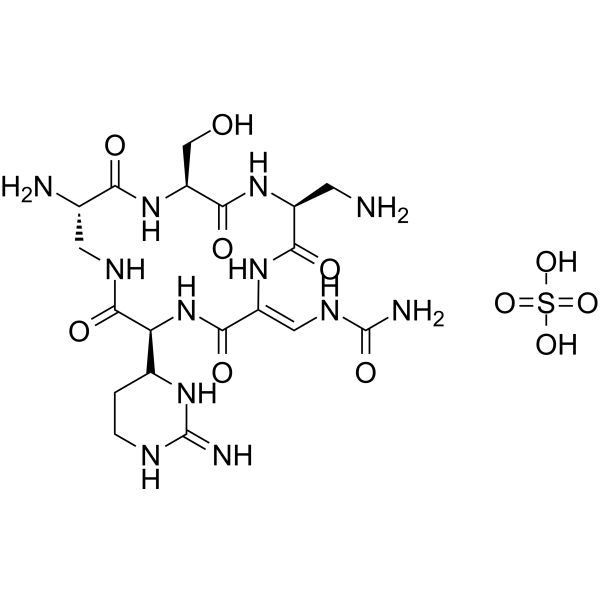
Capreomycin sulfate is a macrocyclic peptide antibiotic that inhibits phenylalanine synthesis in mycobacterial ribosomal translation. Capreomycin sulfate has anti-amyloidogenic and pro-fibrinolytic activities, reducing amyloid-induced cytotoxicity by inhibiting the occurrence of amyloid fibrillation. Capreomycin sulfate can be used in the study of multidrug-resistant tuberculosis, type 2 diabetes, Alzheimer's disease and Parkinson's disease .
loading...
    loading...
Cat. No.: HY-202273
CAS No.: 37280-35-6
Target:  

Bacterial

Research Areas:  

Infection

Capreomycin IA is a bactericidal agent targeting bacterial ribosomes, with activity limited primarily to mycobacteria. Capreomycin IA blocks translocation of peptidyl-transfer RNA from the A to the P site to inhibit protein synthesis. Capreomycin IA exerts activity against Mycobacterium tuberculosis. Capreomycin IA can be used for the research of tuberculosis .
loading...
    loading...
Cat. No.: HY-129262
CAS No.: 69280-94-0
Target:  

Antibiotic Bacterial

Research Areas:  

Infection

Deoxypheganomycin D is a specific antimycobacterial inhibitor with no cross-resistance to other antibiotics such as Paromomycin (HY-B0956), Capreomycin (HY-P3270), Viomycin (HY-A0155), Streptothricin (HY-129065), Kanamycin (HY-16566), and Streptomycin (HY-B1906). Deoxypheganomycin D (28 μM) partially inhibits the growth of Mycobacterium 607, with no significant inhibitory effects on DNA, RNA, or protein synthesis. Deoxypheganomycin D (7 μM) affects leucine influx, not thymidine, and has the opposite effect on efflux. The effects of Deoxypheganomycin D may be related to cell membrane and specific mycobacterial lipid components.
loading...
    loading...

