27 Results for "

Cell contamination

" in MedChemExpress (MCE) Product Catalog:
Products (27)

27 Results for "Cell contamination" in MCE Product Catalog:

100
100 Publications Verification
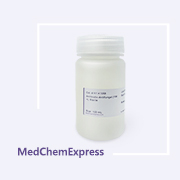
Cat. No.: HY-K1006

MCE Penicillin-Streptomycin (100×), Sterile is used to prevent bacterial contamination of cell culture due to their effective combined action against gram-positive and gram-negative bacteria, which contains 10,000 units/mL of penicillin and 10 mg/mL of streptomycin.

loading...
    loading...
73
73 Cited Publications
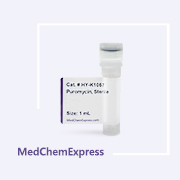
Cat. No.: HY-K1057

Puromycin is an aminonucleoside antibiotic produced by Streptomyces alboniger. It inhibits protein synthesis by disrupting peptide transfer on ribosomes, causing premature chain termination during translation. It can kill most gram-positive bacteria and various animal or insect cells.

loading...
    loading...
8
8 Cited Publications
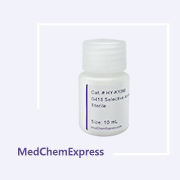
Cat. No.: HY-K1056

MCE G418 Selective Antibiotic, Sterile (50 mg/mL) is an aminoglycoside antibiotic produced by Micromonospora rhodorangea. It acts by binding to the 80S subunit of the bacterial ribosome, thus inhibiting protein synthesis in both prokaryotic and eukaryotic cells.

loading...
    loading...
5
5 Cited Publications
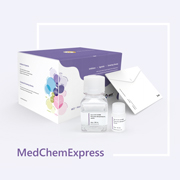
Cat. No.: HY-K0552

MCE Mycoplasma Detection Kit (PCR) is a diagnostic kit that utilizes the PCR method to detect mycoplasma contamination in biological materials such as cultured cells.

loading...
    loading...
5
5 Cited Publications
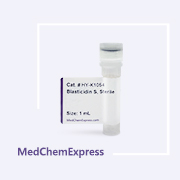
Cat. No.: HY-K1054

MCE Blasticidin S, Sterile (10 mg/mL) is a filtered and sterilized antibiotic solution that can be used directly in cell culture. Blasticidin S is a peptidyl nucleoside antibiotic isolated from Streptomyces griseochromogenes. It acts by blocking hydrolysis of peptidyl-tRNA induced by release factors and inhibits peptide bond formation.

loading...
    loading...
5
5 Cited Publications
Cat. No.: HY-K1058

MCE Antibiotic-Antifungal (100 ×), Sterile contains 10 KU/mL of penicillin, 10 mg/mL of streptomycin, and 25 μg/mL of Amphotericin B. The antibiotics penicillin and streptomycin prevent bacterial contamination, and Amphotericin B prevents fungal contamination.

loading...
    loading...
3
3 Cited Publications
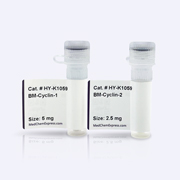
Cat. No.: HY-K1059

MCE BM-Cyclin mainly contains Tiamulin fumarate and Minocycline hydrochloride, can effectively inhibit and remove mycoplasma contamination widespread in cell cultures. It is also effective against some common bacteria.

loading...
    loading...
3
3 Cited Publications
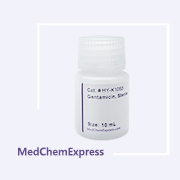
Cat. No.: HY-K1050

MCE Gentamicin, Sterile (10 mg/mL) is a filtered and sterilized antibiotic solution that can be used directly in cell culture. Gentamicin acts by binding to the 30S subunit of the bacterial ribosome leading to inhibition of protein synthesis and death in susceptible bacteria, mainly for gram-negative and gram-positive bacteria.

loading...
    loading...
2
2 Cited Publications
Cat. No.: HY-K1052

MCE Amphotericin B, Sterile (250 μg/mL) is a filtered and sterilized antibiotic solution that can be used directly in cell culture. Amphotericin B is a polyene antifungal antibiotic produced by Streptomyces nodosus. It can bind with sterols to form transmembrane channels, resulting in the leakage of intracellular substances, thus inhibiting fungal and yeast contamination.

loading...
    loading...
1
1 Cited Publications
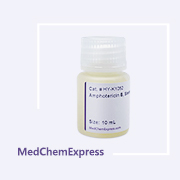
Cat. No.: HY-K1008

MCE Gentamicin-Amphotericin B (500×), sterile is used to prevent contamination of cell culture due to their effective combined action against gram-positive bacteria, gram-negative bacteria, fungi and yeasts, which contains 5 mg/mL of gentamicin, and 125 μg/mL of amphotericin.

loading...
    loading...
1
1 Cited Publications
Cat. No.: HY-K1051

MCE Hygromycin B, Sterile (50 mg/mL) is a filtered and sterilized antibiotic solution that can be used directly in cell culture.Hygromycin B is an aminoglycosidic antibiotic purified from Streptomyces hygroscopicus. It acts by binding to the 70S subunit of the bacterial ribosome and inhibiting protein synthesis, leading to the death of bacteria, fungi and mammalian cells.

loading...
    loading...
Cat. No.: HY-N6746
CAS No.: 518-75-2
Synonyms: NSC 186
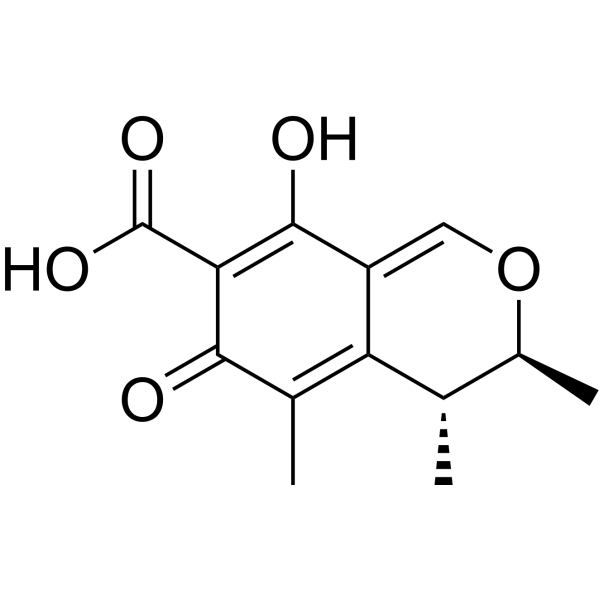
Citrinin (NSC 186) is a mycotoxin that causes food contamination and has different toxic effects. Citrinin is an effective oral anticancer agent. Citrinin has various regulatory effects on mouse immune system, including regulating the number of immune cells, inducing apoptosis and autophagy of immune cells, altering toll-like receptor expression and cytokine production. Citrinin can induce oxidative stress and lead to early apoptosis of oocytes. Low doses of Citrinin have neuroprotective effects against glutamate-induced excitotoxicity in rat cortical neurons. In addition, Citrinin also has antibacterial activity .
loading...
    loading...
Cat. No.: HY-N6723
CAS No.: 116355-84-1
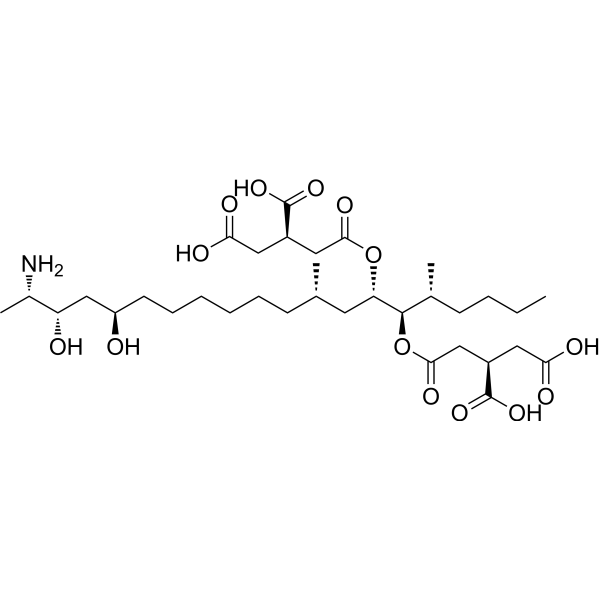
Fumonisin B2 is a selective ceramide synthase inhibitor and carcinogenic mycotoxin with toxicity comparable to that of Fumonisin B1 (HY-N6719). Fumonisin B2 inhibits de novo sphingolipid biosynthesis by blocking the amide bond formation between fatty acids and dihydrosphingosine, which leads to a massive intracellular accumulation of free dihydrosphingosine, altered sphingosine levels, subsequent inhibition of cell proliferation, and induction of cell death. Fumonisin B2 is used to investigate the pathogenesis of diseases associated with Fusarium verticillioides contamination, including equine leukoencephalomalacia, porcine pulmonary edema syndrome, human esophageal cancer, and rat hepatocellular carcinoma .
loading...
    loading...
Cat. No.: HY-P11074
Target:  

Bacterial

Research Areas:  

Infection

Sakacin P is an antimicrobial peptide that targets Gram-positive bacteria (such as Listeria monocytogenes) and belongs to Class IIa bacteriocin. Sakacin P has almost no antimicrobial activity against Gram-negative bacteria. Sakacin P exerts its antimicrobial activity by interacting with bacterial cell membranes and destroying membrane integrity. Sakacin P can be used for the study of Listeria contamination and antimicrobial drugs in the food industry.
loading...
    loading...
Cat. No.: HY-N6746R
CAS No.: 518-75-2
Synonyms: NSC 186 (Standard)
Citrinin (Standard) is the analytical standard of Citrinin. This product is intended for research and analytical applications. Citrinin (NSC 186) is a mycotoxin that causes food contamination and has different toxic effects. Citrinin is an effective oral anticancer agent. Citrinin has various regulatory effects on mouse immune system, including regulating the number of immune cells, inducing apoptosis and autophagy of immune cells, altering toll-like receptor expression and cytokine production. Citrinin can induce oxidative stress and lead to early apoptosis of oocytes. Low doses of Citrinin have neuroprotective effects against glutamate-induced excitotoxicity in rat cortical neurons. In addition, Citrinin also has antibacterial activity .
loading...
    loading...
Cat. No.: HY-W005255R
CAS No.: 621-54-5
Citrinin (Standard) is the analytical standard of Citrinin. This product is intended for research and analytical applications. Citrinin (NSC 186) is a mycotoxin that causes food contamination and has different toxic effects. Citrinin is an effective oral anticancer agent. Citrinin has various regulatory effects on mouse immune system, including regulating the number of immune cells, inducing apoptosis and autophagy of immune cells, altering toll-like receptor expression and cytokine production. Citrinin can induce oxidative stress and lead to early apoptosis of oocytes. Low doses of Citrinin have neuroprotective effects against glutamate-induced excitotoxicity in rat cortical neurons. In addition, Citrinin also has antibacterial activity .
loading...
    loading...
Cat. No.: HY-N6746S1
Synonyms: NSC 186-13C13
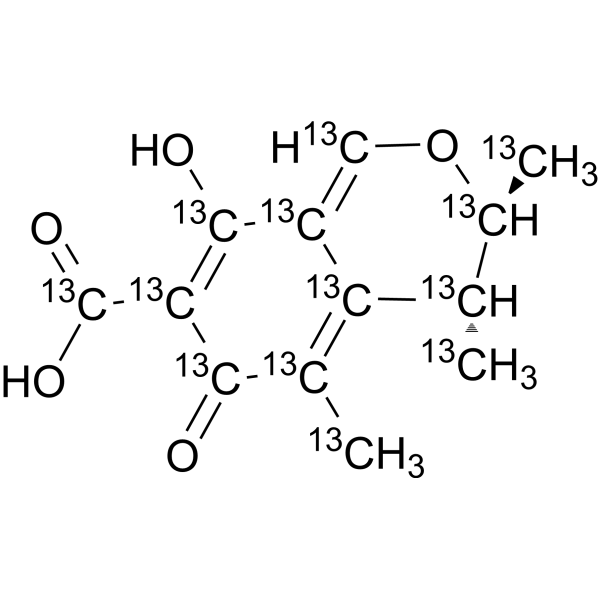
Citrinin- 13C13 (NSC 186- 13C13) is the 13C labeled Citrinin (HY-N6746). Citrinin (NSC 186) is a mycotoxin that causes food contamination and has different toxic effects. Citrinin is an effective oral anticancer agent. Citrinin has various regulatory effects on mouse immune system, including regulating the number of immune cells, inducing apoptosis and autophagy of immune cells, altering toll-like receptor expression and cytokine production. Citrinin can induce oxidative stress and lead to early apoptosis of oocytes. Low doses of Citrinin have neuroprotective effects against glutamate-induced excitotoxicity in rat cortical neurons. In addition, Citrinin also has antibacterial activity .
loading...
    loading...
Cat. No.: HY-K1010

MCE Penicillin-Streptomycin-Glutamine (100×), sterile is used to prevent bacterial contamination of cell culture due to their effective combined action against gram-positive and gram-negative bacteria, which contains 10,000 units/mL of penicillin, 10 mg/mL of streptomycin, and 29.2 mg/mL of Glutamine.

loading...
    loading...
Cat. No.: HY-K0552A

MCE Mycoplasma Detection Plus Kit (PCR) employs polymerase chain reaction (PCR) technology for rapid and sensitive detection of mycoplasma contamination in cultured cells and related biological samples. The kit contains a PCR premix and mycoplasma-specific primers designed against conserved regions of the 16S rRNA gene. Cell culture supernatant or cell lysates can be used directly as templates for specific amplification of mycoplasma DNA, enabling rapid identification of mycoplasma contamination.

loading...
    loading...
Cat. No.: HY-K0553

MCE Mycoplasma Detection Kit (qPCR) is a diagnostic kit that utilizes the real-time quantitative PCR (qPCR) method to detect mycoplasma contamination in biological materials such as cultured cells.

loading...
    loading...

