1. Search Result
Search Result
Results for "

Conjunctivitis

" in MedChemExpress (MCE) Product Catalog:

76

Inhibitors & Agonists

3

Biochemical Assay Reagents

1

Peptides

2

Inhibitory Antibodies

6

Natural
Products

10

Isotope-Labeled Compounds

Cat. No. Product Name Target Research Areas Chemical Structure
  • HY-32067

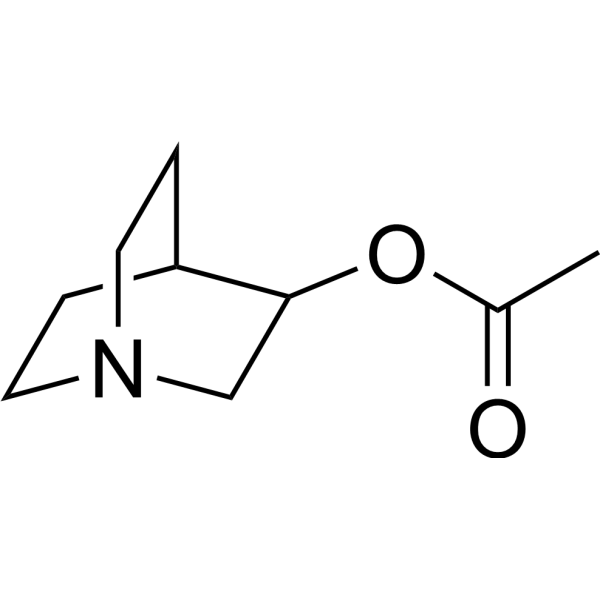
    Quinuclidin-3-yl acetate

    mAChR Cardiovascular Disease Neurological Disease
    Aceclidine (Quinuclidin-3-yl acetate) is a modulator of M3 muscarinic acetylcholine receptor and a M1 receptor agonist (EC50: 40 μM). Aceclidine is a cycloplegic agent, a surfactant, a tonicity adjustor and optionally a viscosity enhancer and an antioxidant. Aceclidine has the potential for the research of disorders such as refractive errors of the eye, xerostomia, Sjogren's syndrome, glaucoma, conjunctivitis, lacrimal gland disease, and esotropia .
    Aceclidine
  • HY-B0580
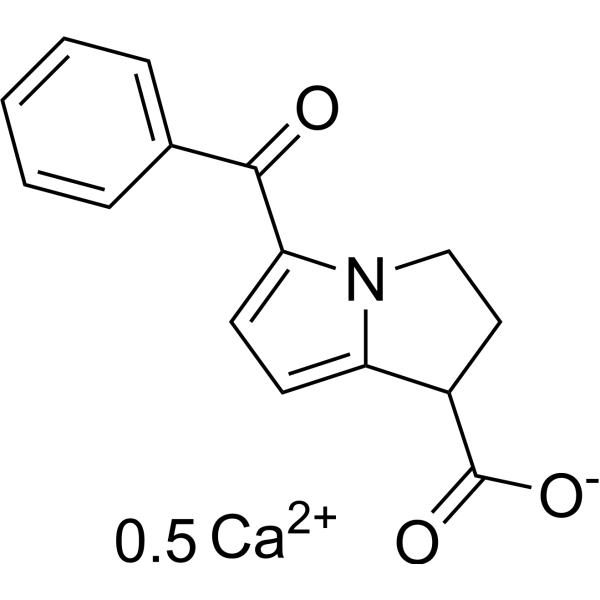
    Ketorolac
    3 Publications Verification

    RS37619

    COX Apoptosis Inflammation/Immunology Cancer
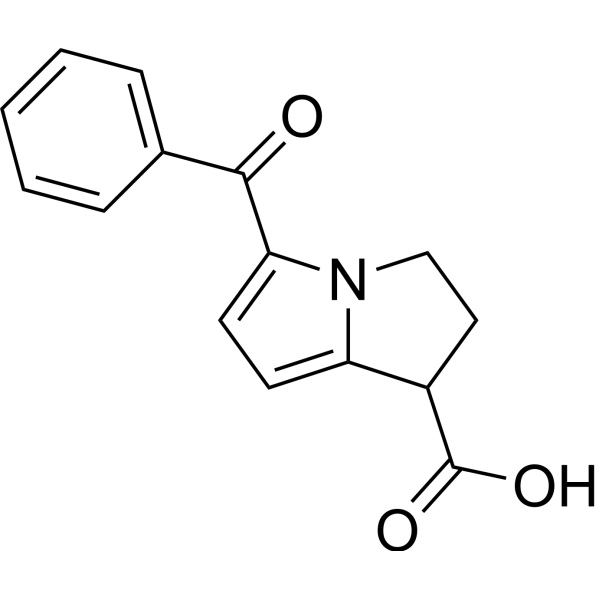
    Ketorolac (RS37619) is a non-steroidal anti-inflammatory drug (NSAID), acting as a nonselective COX inhibitor, with IC50s of 20 nM for COX-1 and 120 nM for COX-2. Ketorolac tromethamine is used as 0.5% ophthalmic solution for the research of allergic conjunctivitis, cystoid macular edema, intraoperative miosis, and postoperative ocular inflammation and pain. Ketorolac tromethamine is also a DDX3 inhibitor that can be used for cancer research .
    Ketorolac
  • HY-14277A

    R 50547 hydrochloride

    Histamine Receptor Neurotensin Receptor Integrin Inflammation/Immunology
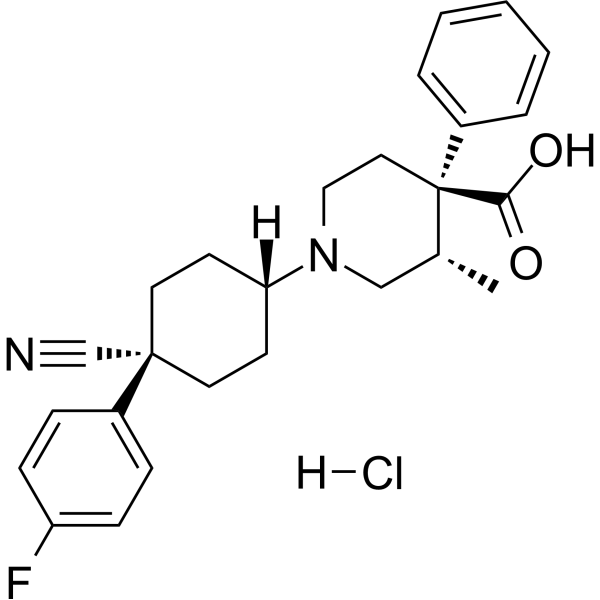
    Levocabastine (R 50547) hydrochloride is a potent and selective histamine H1-receptor antagonist. Levocabastine hydrochloride is also a selective, high affinity neurotensin receptor subtype 2 (NTR2) antagonist, with a Ki of 17 nM for mNTR2. Levocabastine hydrochloride can act as a VLA-4 antagonist, interferes with conjunctival eosinophil infiltration in allergic conjunctivitis (AC) .
    Levocabastine hydrochloride
  • HY-107150

    ADX-102; NS-2

    PKC Caspase Neurological Disease Inflammation/Immunology
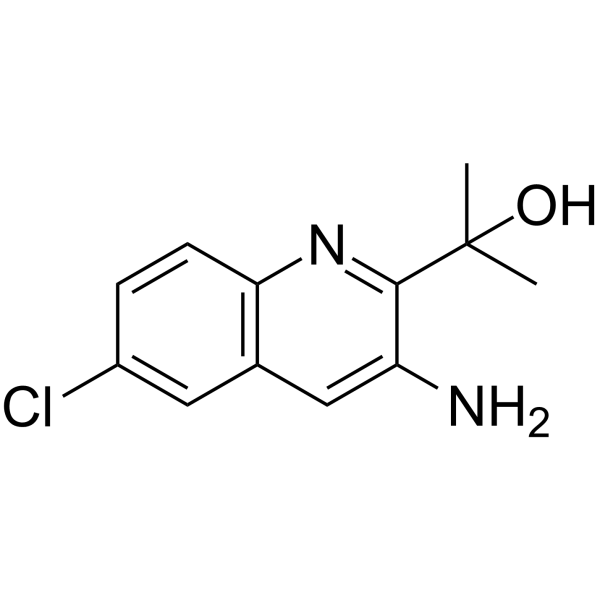
    Reproxalap (ADX-102) is an active aldehyde sequestering agent. Reproxalap reduces the PKCα activity. Reproxalap blocks caspase 3/7 activation. Reproxalap protects cells from the cytotoxicity of C18:0-al. Reproxalap has anti-inflammatory and pain-relieving effects. Reproxalap is used in studies of dry eye, allergic conjunctivitis, and non-infectious anterior uveitis .
    Reproxalap
  • HY-17028

    Bacterial Antibiotic DNA/RNA Synthesis Topoisomerase Infection Inflammation/Immunology
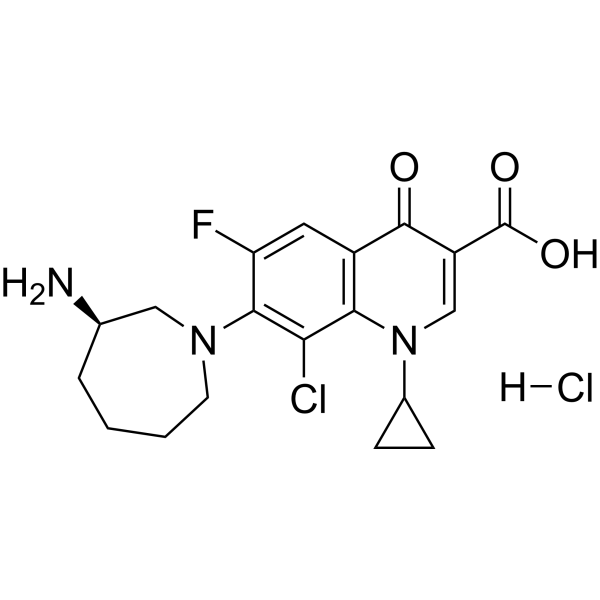
    Besifloxacin Hydrochloride is a fourth generation fluoroquinolone antibiotic. Besifloxacin Hydrochloride is a DNA gyrase and topoisomerase IV inhibitor. Besifloxacin Hydrochloride has broad-spectrum antibacterial activity, it is effective against Gram-negative and Gram-positive aerobic and anaerobic strains and reduces the incidence of drug resistance. Besifloxacin Hydrochloride has anti-inflammatory activity. Besifloxacin Hydrochloride can be used in bacterial conjunctivitis research .
    Besifloxacin Hydrochloride
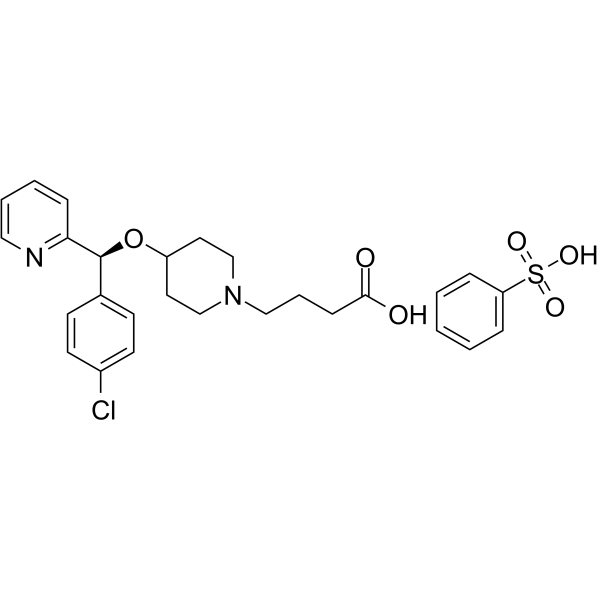
  • HY-A0015
    Bepotastine besilate
    1 Publications Verification

    Histamine Receptor Inflammation/Immunology Endocrinology
    Bepotastine besilate is a selective and orally active second-generation histamine H1 receptor antagonist, can suppress the expression of nerve growth factor (NGF). Bepotastine besilate has the potential for allergic rhinitis, allergic conjunctivitis and urticaria/pruritus research .
    Bepotastine besilate
  • HY-10581
    Gatifloxacin
    4 Publications Verification

    AM-1155; BMS-206584; PD135432

    Bacterial Topoisomerase Antibiotic Infection Neurological Disease Cancer
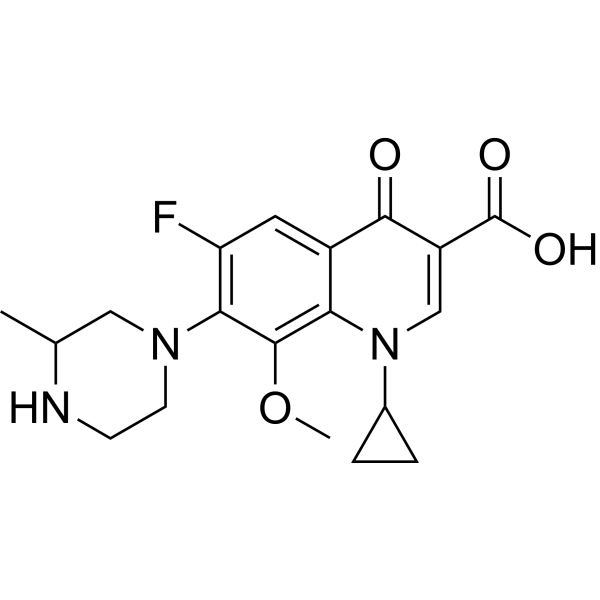
    Gatifloxacin (AM-1155; BMS-206584; PD135432) is a potent fluoroquinolone antibiotic that can cross the blood-brain barrier, with broad-spectrum antibacterial activity. Gatifloxacin inhibits bacterial type II topoisomerases (IC50=13.8 μg/ml for S. aureus topoisomerase IV) and E. coli DNA gyrase (IC50=0.109 μg/ml) . Gatifloxacin can be used to treat bacterial conjunctivitis in vivo.
    Gatifloxacin
  • HY-NP159A

    Interleukin Related Inflammation/Immunology
    House Dust Mite Extract, from D. pteronyssinus is a house dust mite allergenic extract derived from Dermatophagoides pteronyssinus. House Dust Mite Extract, from D. pteronyssinus increases serum IgE, IgG1 and IgG2a levels, and elevates the levels of Interleukins 4, 5, 6, 10, 13 and 17. House Dust Mite Extract, from D. pteronyssinus induces significant asthmatic pathological changes. House Dust Mite Extract, from D. pteronyssinus can be used in studies related to asthma and allergic conjunctivitis .
    House Dust Mite Extract, from D.pteronyssinus
  • HY-B0455

    SC47111A hydrochloride; NY-198 hydrochloride

    Antibiotic Bacterial Topoisomerase Reactive Oxygen Species (ROS) Apoptosis Infection Endocrinology Cancer
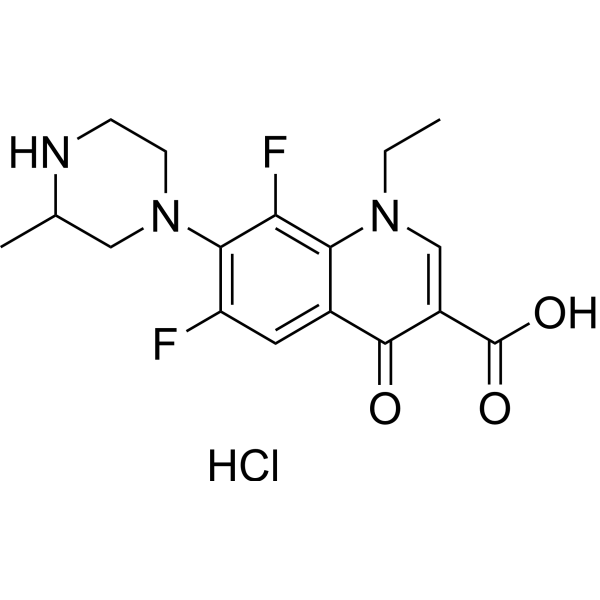
    Lomefloxacin hydrochloride (NY-198 hydrochloride) is an orally active difluoroquinolone antibiotic. Lomefloxacin hydrochloride prevents DNA supercoiling and replication by inhibiting bacterial topoisomerase II. Lomefloxacin hydrochloride induces ROS production and Apoptosis. Lomefloxacin hydrochloride has broad-spectrum bactericidal activity against Gram-positive and Gram-negative bacteria. Lomefloxacin hydrochloride has anticancer effects against melanoma. Lomefloxacin hydrochloride can be used in the study of systemic bacterial infections (such as Salmonella typhimurium infections), skin and melanoma .
    Lomefloxacin hydrochloride
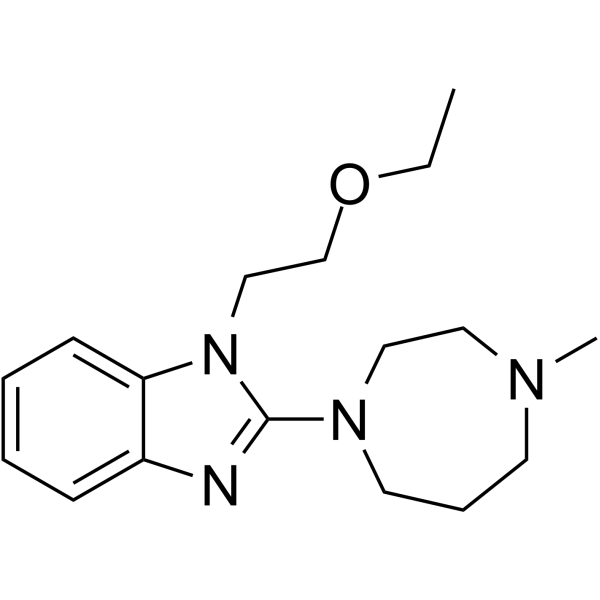
  • HY-108411
    Emedastine
    1 Publications Verification

    Histamine Receptor Inflammation/Immunology
    Emedastine is an orally active, selective and high affinity histamine H1 receptor antagonist with a Ki value of 1.3 nM. Emedastine is a benzimidazole derivative with potent antiallergic properties and used for allergic rhinitis, allergic skin diseases and allergic conjunctivitis .
    Emedastine
  • HY-14270
    Lodoxamide
    2 Publications Verification

    U-42585E free acid

    Histamine Receptor Inflammation/Immunology Endocrinology
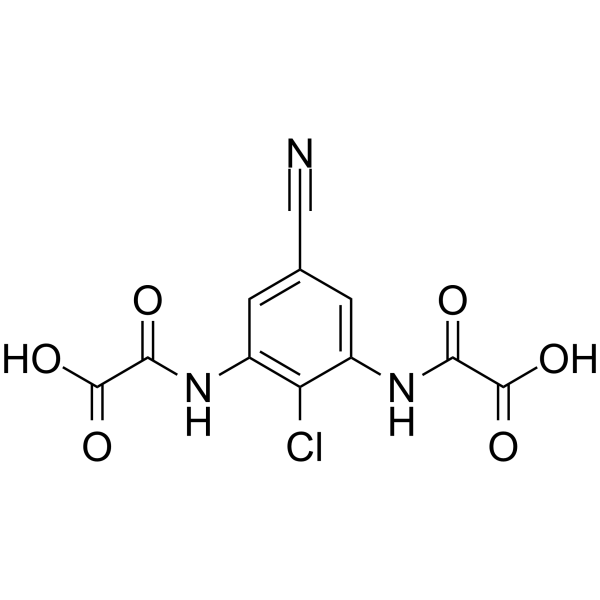
    Lodoxamide (U-42585E free acid) is an antiallergic compound acting as a mast-cell stabilizer for the treatment of asthma and allergic conjunctivitis.
    Lodoxamide
  • HY-B0538A

    TWT-8152; BMY 26517

    Histamine Receptor Cardiovascular Disease Inflammation/Immunology
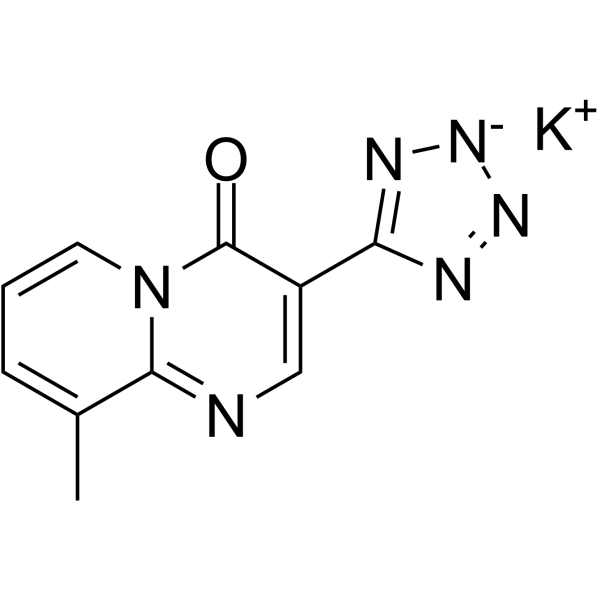
    Pemirolast potassium is an orally active antiallergic agent. Pemirolast potassium attenuates Paclitaxel (HY-B0015) hypersensitivity reactions. Pemirolast potassium can be used for bronchial asthma and conjunctivitis research - .
    Pemirolast potassium
  • HY-B0426A

    ALO4943A; KW4679

    Histamine Receptor CXCR Infection Neurological Disease Metabolic Disease Inflammation/Immunology
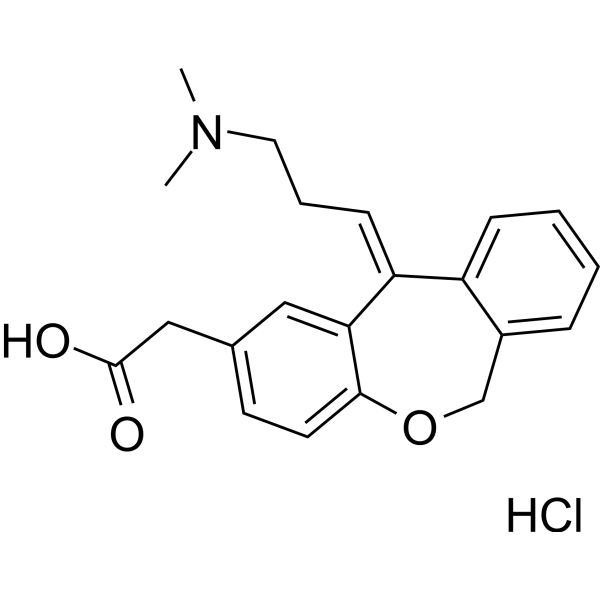
    Olopatadine hydrochloride (ALO4943A; KW4679) is an orally active histamine H1 receptor antagonist and mast cell stabilizer. Olopatadine hydrochloride exerts antiallergic effects by blocking histamine H1 receptor-mediated activities. Olopatadine hydrochloride inhibits exocytosis, chemokine release, F-actin polymerization, CXCL10-induced calcium influx, and T cell chemotactic activity. Olopatadine hydrochloride also reduces the expression levels of CXCR3 on the surface of CD4 + and CD8 + T cells. Olopatadine hydrochloride inhibits scratching behavior, improves dermatitis scores, and suppresses intraepidermal neurite outgrowth. Olopatadine hydrochloride simultaneously decreases the levels of inflammatory markers, growth factors, histamine, and specific IgE, while increasing the expression of ErbB3A/HER3A. Olopatadine hydrochloride can be used in research related to seasonal pollinosis, chronic rhinitis, urticaria, allergic conjunctivitis, alopecia areata, and atopic dermatitis .
    Olopatadine hydrochloride
  • HY-32067A

    Quinuclidin-3-yl acetate hydrochloride

    mAChR Neurological Disease
    Aceclidine (Quinuclidin-3-yl acetate) hydrochloride is a modulator of M3 muscarinic acetylcholine receptor and a M1 receptor agonist (EC50: 40 μM). Aceclidine hydrochloride is a cycloplegic agent, a surfactant, a tonicity adjustor and optionally a viscosity enhancer and an antioxidant. Aceclidine hydrochloride has the potential for the research of disorders such as refractive errors of the eye, xerostomia, Sjogren's syndrome, glaucoma, conjunctivitis, lacrimal gland disease, and esotropia .
    Aceclidine hydrochloride
  • HY-I0021
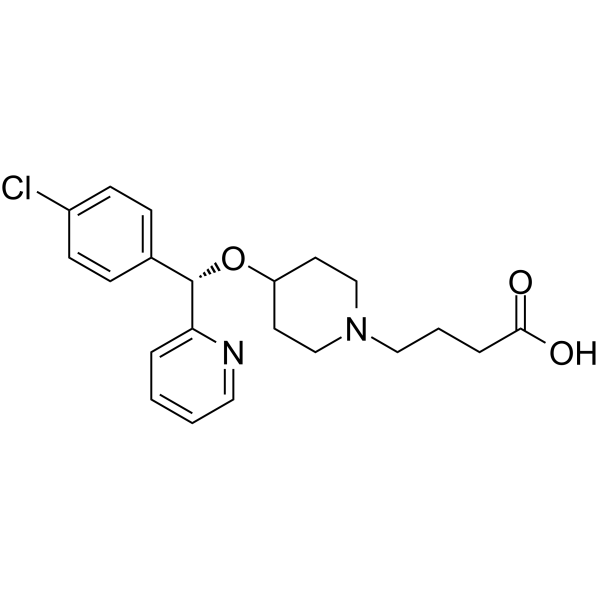
    Bepotastine
    1 Publications Verification

    Histamine Receptor Inflammation/Immunology Endocrinology
    Bepotastine is a selective and orally active second-generation histamine H1 receptor antagonist, can suppress the expression of nerve growth factor (NGF). Bepotastine has the potential for allergic rhinitis, allergic conjunctivitis and urticaria/pruritus research .
    Bepotastine
  • HY-111326
    Naphazoline
    1 Publications Verification

    Naphthazoline

    Adrenergic Receptor TNF Receptor Interleukin Related VEGFR Cardiovascular Disease Inflammation/Immunology Cancer
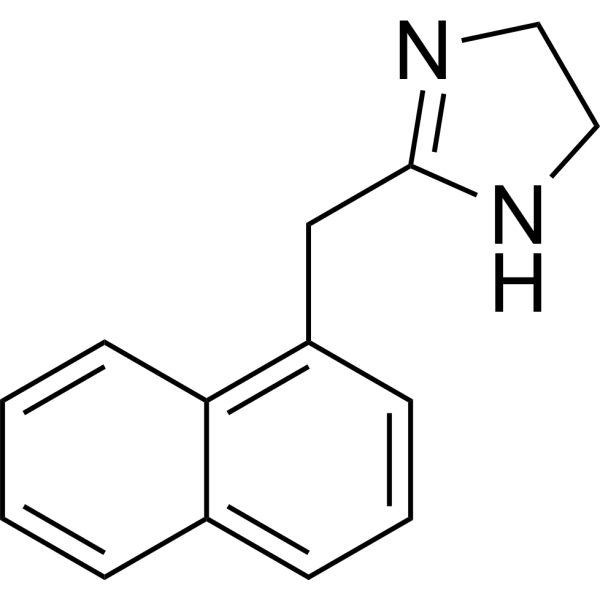
    Naphazoline (Naphthazoline) is a potent α-adrenergic receptor agonist. Naphazoline reduces vascular hyperpermeability and promotes vasoconstriction. Naphazoline reduces the levels of inflammatory factors (TNF-α, IL-1β and IL-6), cytokines (IFN-γ and IL-4), IgE, GMCSF, and NGF. Naphazoline can be used for non-bacterial conjunctivitis research .
    Naphazoline
  • HY-B0446
    Naphazoline hydrochloride
    1 Publications Verification

    Naphthazoline hydrochloride

    Adrenergic Receptor TNF Receptor Interleukin Related VEGFR Cardiovascular Disease Inflammation/Immunology Cancer
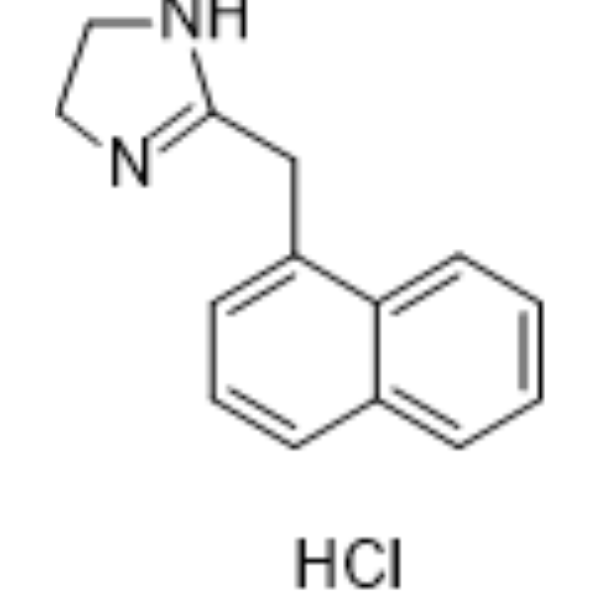
    Naphazoline (Naphthazoline) hydrochloride is a potent α-adrenergic receptor agonist. Naphazoline hydrochloride reduces vascular hyperpermeability and promotes vasoconstriction. Naphazoline hydrochloride reduces the levels of inflammatory factors (TNF-α, IL-1β and IL-6), cytokines (IFN-γ and IL-4), IgE, GMCSF, and NGF. Naphazoline hydrochloride can be used for non-bacterial conjunctivitis research .
    Naphazoline hydrochloride
  • HY-10581A
    Gatifloxacin hydrochloride
    4 Publications Verification

    AM-1155 hydrochloride; BMS-206584 hydrochloride; PD135432 hydrochloride

    Bacterial Topoisomerase Antibiotic Infection
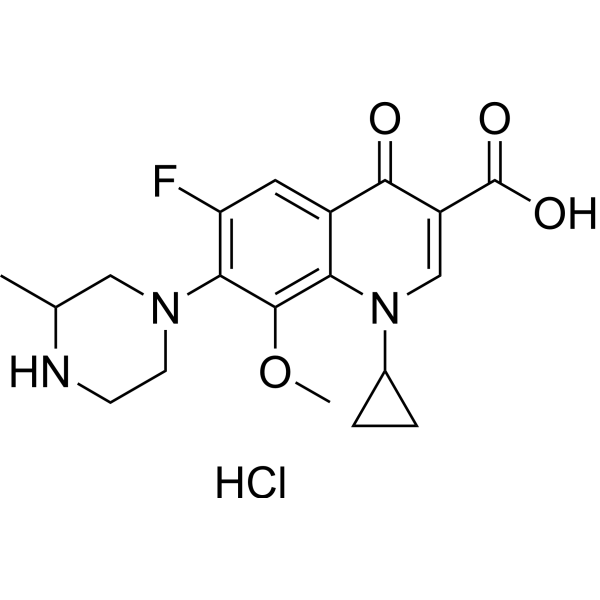
    Gatifloxacin hydrochloride (AM-1155; BMS-206584; PD135432) is a potent fluoroquinolone antibiotic with broad-spectrum antibacterial activity. Gatifloxacin hydrochloride inhibits bacterial type II topoisomerases (IC50=13.8 μg/ml for S. aureus topoisomerase IV) and E. coli DNA gyrase (IC50 = 0.109 μg/ml) . Gatifloxacin hydrochloride can be used to treat bacterial conjunctivitis in vivo.
    Gatifloxacin hydrochloride
  • HY-17039
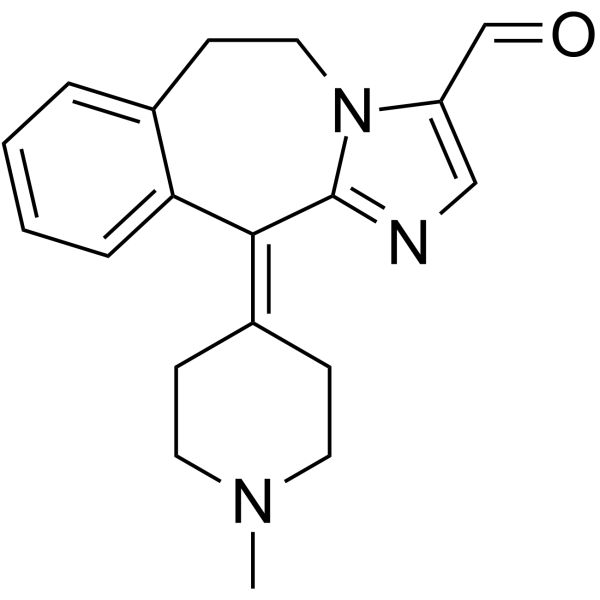
    Alcaftadine
    1 Publications Verification

    R89674

    Histamine Receptor Inflammation/Immunology Endocrinology
    Alcaftadine (R89674) is a histamine H1 receptor antagonist, which is used to prevent eye irritation brought on by allergic conjunctivitis. Alcaftadine is a broad-spectrum antihistamine displaying a high affinity for histamine H1 and H2 receptors and a lower affinity for H4 receptors. Alcaftadine also exhibits modulatory action on immune cell recruitment and mast cell stabilizing effects .
    Alcaftadine
  • HY-B0455A

    SC47111A; NY-198

    Bacterial Antibiotic Topoisomerase Reactive Oxygen Species (ROS) Apoptosis Infection
    Lomefloxacin (SC47111A) is an orally active difluoroquinolone antibiotic. Lomefloxacin prevents DNA supercoiling and replication by inhibiting bacterial topoisomerase II. Lomefloxacin induces ROS production and Apoptosis. Lomefloxacin has broad-spectrum bactericidal activity against Gram-positive and Gram-negative bacteria. Lomefloxacin has anticancer effects against melanoma. Lomefloxacin can be used in the study of systemic bacterial infections (such as Salmonella typhimurium infections), skin and melanoma .
    Lomefloxacin
  • HY-P991252

    AIMab-7195

    Histamine Receptor Inflammation/Immunology
    XmAb-7195 (AIMab-7195) is a human monoclonal antibody (mAb) targeting IGHE. XmAb-7195 can be used in Food hypersensitivity, Allergic asthma, Allergic rhinitis, Atopic dermatitis and Conjunctivitis research .
    XmAb-7195
  • HY-111326A
    Naphazoline nitrate
    1 Publications Verification

    Naphthazoline nitrate

    Adrenergic Receptor TNF Receptor Interleukin Related VEGFR Cardiovascular Disease Inflammation/Immunology Cancer
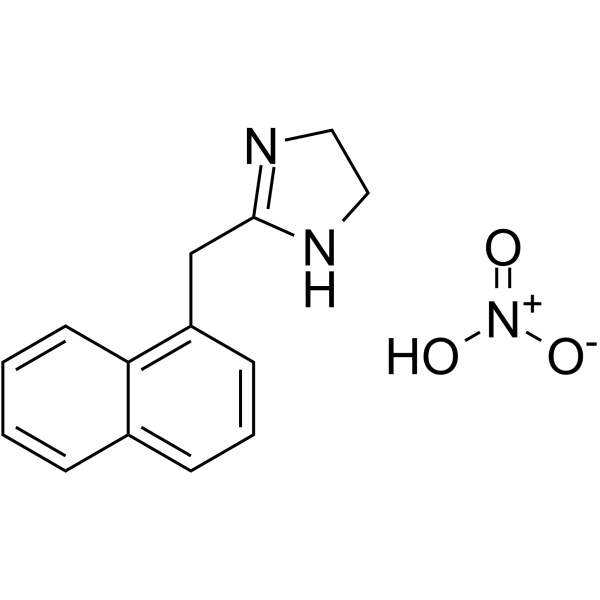
    Naphazoline (Naphthazoline) nitrate is an α-adrenergic receptor agonist. Naphazoline nitrate reduces vascular hyperpermeability and promotes vasoconstriction. Naphazoline nitrate reduces the levels of inflammatory factors (TNF-α, IL-1β and IL-6), cytokines (IFN-γ and IL-4), IgE, GMCSF, and NGF. Naphazoline nitrate can be used for non-bacterial conjunctivitis research .
    Naphazoline nitrate
  • HY-W062109

    Histamine Receptor CXCR Inflammation/Immunology
    Olopatadine (ALO4943A; KW4679) is an orally active histamine H1 receptor antagonist and mast cell stabilizer. Olopatadine exerts antiallergic effects by blocking histamine H1 receptor-mediated activities. Olopatadine inhibits exocytosis, chemokine release, F-actin polymerization, CXCL10-induced calcium influx, and T cell chemotactic activity. Olopatadine also reduces the expression levels of CXCR3 on the surface of CD4 + and CD8 + T cells. Olopatadine inhibits scratching behavior, improves dermatitis scores, and suppresses intraepidermal neurite outgrowth. Olopatadine simultaneously decreases the levels of inflammatory markers, growth factors, histamine, and specific IgE, while increasing the expression of ErbB3A/HER3A. Olopatadine can be used in research related to seasonal pollinosis, chronic rhinitis, urticaria, allergic conjunctivitis, alopecia areata, and atopic dermatitis .
    Olopatadine
  • HY-155782

    RIP kinase Inflammation/Immunology
    Zharp2-1 is an oral effective RIPK2 inhibitor, highly associated with inflammatory bowel disease (IBD). Zharp2-1 blocker muramyl dipeptide (MDP) induces growth of mononuclear cells and induces inflammatory cell factor infection. Zharp2-1 attenuates MDP-induced small inguinal peritonitis, or ameliorates by DNBS-induced large inguinal conjunctivitis .
    Zharp2-1
  • HY-B1317

    Neohetramine

    Histamine Receptor Inflammation/Immunology
    Thonzylamine is an orally active H1 histamine receptor antagonist with good antihistaminic and antianaphylactic properties. Thonzylamine can be used for the research of hypersensitivity diseases, nasal congestion, allergic conjunctivitis and other allergic diseases .
    Thonzylamine
  • HY-119995

    Apoptosis Histamine Receptor Cardiovascular Disease Cancer
    Chloropyramine is competitive reversible H1 receptor antagonist. Chloropyramine also has anti-tumour activity in breast cancer. Chloropyramine can be used for the research of allergic conditions, such as conjunctivitis and bronchial asthma .
    Chloropyramine
  • HY-B0580R

    RS37619 (Standard)

    Reference Standards COX Apoptosis Inflammation/Immunology Cancer
    Ketorolac (Standard) is the analytical standard of Ketorolac. This product is intended for research and analytical applications. Ketorolac (RS37619) is a non-steroidal anti-inflammatory drug (NSAID), acting as a nonselective COX inhibitor, with IC50s of 20 nM for COX-1 and 120 nM for COX-2. Ketorolac tromethamine is used as 0.5% ophthalmic solution for the research of allergic conjunctivitis, cystoid macular edema, intraoperative miosis, and postoperative ocular inflammation and pain. Ketorolac tromethamine is also a DDX3 inhibitor that can be used for cancer research .
    Ketorolac (Standard)
  • HY-174383

    Phosphodiesterase (PDE) Inflammation/Immunology
    PDE3/4-IN-2 is a dual PDE3A and PDE4B1 inhibitor, with an IC50 of 0.13 nM against PDE3A and 50 nM against PDE4B1. PDE3/4-IN-2 exhibits higher systemic exposure and longer retention time in lung tissues in ICR mice. PDE3/4-IN-2 can be used in research on respiratory diseases such as asthma and chronic obstructive pulmonary disease, as well as autoimmune inflammation-related studies .
    PDE3/4-IN-2
  • HY-B2178

    Histamine Receptor Inflammation/Immunology
    Emedastine difumarate is an orally active, selective and high affinity histamine H1 receptor antagonist with a Ki value of 1.3 nM. Emedastine difumarate is a benzimidazole derivative with potent antiallergic properties and used for allergic rhinitis, allergic skin diseases and allergic conjunctivitis .
    Emedastine difumarate
  • HY-14277

    R 50547

    Histamine Receptor Neurotensin Receptor Integrin Inflammation/Immunology
    Levocabastine (R 50547) is a potent and selective histamine H1-receptor antagonist. Levocabastine hydrochloride is also a selective, high affinity neurotensin receptor subtype 2 (NTR2) antagonist, with a Ki of 17 nM for mNTR2. Levocabastine can act as a VLA-4 antagonist, interferes with conjunctival eosinophil infiltration in allergic conjunctivitis (AC) .
    Levocabastine
  • HY-DNP159AF

    Biochemical Assay Reagents Others
    House dust mite extract, from D.pteronyssinus (biotinylated), the most common source of indoor allergens, induces a variety of allergic diseases, including allergic rhinitis, conjunctivitis, allergic asthma, and atopic dermatitis .
    House dust mite extract, from D.pteronyssinus (biotinylated)
  • HY-W062109S

    Isotope-Labeled Compounds Histamine Receptor CXCR Inflammation/Immunology
    Olopatadine-d6 is the deuterium labeled Olopatadine. Olopatadine hydrochloride (ALO4943A; KW4679) is an orally active histamine H1 receptor antagonist and mast cell stabilizer. Olopatadine hydrochloride exerts antiallergic effects by blocking histamine H1 receptor-mediated activities. Olopatadine hydrochloride inhibits exocytosis, chemokine release, F-actin polymerization, CXCL10-induced calcium influx, and T cell chemotactic activity. Olopatadine hydrochloride also reduces the expression levels of CXCR3 on the surface of CD4 + and CD8 + T cells. Olopatadine hydrochloride inhibits scratching behavior, improves dermatitis scores, and suppresses intraepidermal neurite outgrowth. Olopatadine hydrochloride simultaneously decreases the levels of inflammatory markers, growth factors, histamine, and specific IgE, while increasing the expression of ErbB3A/HER3A. Olopatadine hydrochloride can be used in research related to seasonal pollinosis, chronic rhinitis, urticaria, allergic conjunctivitis, alopecia areata, and atopic dermatitis .
    Olopatadine-d6
  • HY-A0015A

    Histamine Receptor Inflammation/Immunology Endocrinology
    (Rac)-Bepotastine (besilate) is the isomer of Bepotastine (besilate) (HY-A0015), and can be used as an experimental control. Bepotastine besilate is a selective and orally active second-generation histamine H1 receptor antagonist, can suppress the expression of nerve growth factor (NGF). Bepotastine besilate has the potential for allergic rhinitis, allergic conjunctivitis and urticaria/pruritus research .
    (Rac)-Bepotastine besilate
  • HY-P990170

    Transmembrane Glycoprotein Inflammation/Immunology
    Anti-Mouse PD-L2/B7-DC Antibody (TY25) is a rat-derived IgG2a κ type antibody inhibitor, targeting to mouse PD-L2/B7-DC. Anti-Mouse PD-L2/B7-DC Antibody (TY25) blocks PD-L2 binding to PD-1 and blocks PD-1 signaling. Anti-Mouse PD-L2/B7-DC Antibody (TY25) can be used for the researches of inflammation and immunology, such as conjunctivitis and transplantation .
    Anti-Mouse PD-L2/B7-DC Antibody (TY25)
  • HY-10581C

    AM-1155 sesquihydrate; BMS-206584 sesquihydrate; PD135432 sesquihydrate

    Bacterial Topoisomerase Antibiotic Infection Inflammation/Immunology
    Gatifloxacin sesquihydrate (AM-1155; BMS-206584; PD135432) is a potent fluoroquinolone antibiotic with broad-spectrum antibacterial activity. Gatifloxacin sesquihydrate inhibits bacterial type II topoisomerases (IC50=13.8 μg/ml for S. aureus topoisomerase IV) and E. coli DNA gyrase (IC50 = 0.109 μg/ml) . Gatifloxacin sesquihydrate can be used to treat bacterial conjunctivitis in vivo.
    Gatifloxacin sesquihydrate
  • HY-111311

    Bacterial Drug Derivative Infection
    NVC-422 is a N-chlorotaurine analog, virucidal agent, antibacterial agent. NVC-422 exhibits virucidal activity against Ad5 by the oxidative inactivation of key viral proteins (fiber and hexon), leading to the loss of viral integrity and infectivity. NVC-422 is shown to be highly effective in killing all microbial strains tested, including antibiotic-resistant S. aureus and E. faecium. NVC-422 can be used in the research of adenoviral conjunctivitis .
    NVC-422
  • HY-B0426AS

    Isotope-Labeled Compounds Histamine Receptor CXCR Inflammation/Immunology Endocrinology
    Olopatadine-d3 hydrochloride (ALO4943A-d3) is the deuterium labeled Olopatadine hydrochloride. Olopatadine hydrochloride (ALO4943A; KW4679) is an orally active histamine H1 receptor antagonist and mast cell stabilizer. Olopatadine hydrochloride exerts antiallergic effects by blocking histamine H1 receptor-mediated activities. Olopatadine hydrochloride inhibits exocytosis, chemokine release, F-actin polymerization, CXCL10-induced calcium influx, and T cell chemotactic activity. Olopatadine hydrochloride also reduces the expression levels of CXCR3 on the surface of CD4 + and CD8 + T cells. Olopatadine hydrochloride inhibits scratching behavior, improves dermatitis scores, and suppresses intraepidermal neurite outgrowth. Olopatadine hydrochloride simultaneously decreases the levels of inflammatory markers, growth factors, histamine, and specific IgE, while increasing the expression of ErbB3A/HER3A. Olopatadine hydrochloride can be used in research related to seasonal pollinosis, chronic rhinitis, urticaria, allergic conjunctivitis, alopecia areata, and atopic dermatitis .
    Olopatadine-d3 hydrochloride
  • HY-B0426AR

    ALO4943A (Standard); KW4679 (Standard)

    Reference Standards Histamine Receptor CXCR Inflammation/Immunology Endocrinology
    Olopatadine (hydrochloride) (Standard) is the analytical standard of Olopatadine (hydrochloride). This product is intended for research and analytical applications. Olopatadine hydrochloride (ALO4943A; KW4679) is an orally active histamine H1 receptor antagonist and mast cell stabilizer. Olopatadine hydrochloride exerts antiallergic effects by blocking histamine H1 receptor-mediated activities. Olopatadine hydrochloride inhibits exocytosis, chemokine release, F-actin polymerization, CXCL10-induced calcium influx, and T cell chemotactic activity. Olopatadine hydrochloride also reduces the expression levels of CXCR3 on the surface of CD4 + and CD8 + T cells. Olopatadine hydrochloride inhibits scratching behavior, improves dermatitis scores, and suppresses intraepidermal neurite outgrowth. Olopatadine hydrochloride simultaneously decreases the levels of inflammatory markers, growth factors, histamine, and specific IgE, while increasing the expression of ErbB3A/HER3A. Olopatadine hydrochloride can be used in research related to seasonal pollinosis, chronic rhinitis, urticaria, allergic conjunctivitis, alopecia areata, and atopic dermatitis .
    Olopatadine hydrochloride (Standard)
  • HY-I0021A

    Histamine Receptor Inflammation/Immunology Endocrinology
    Bepotastine tosylate is a selective and orally active second-generation histamine H1 receptor antagonist. Bepotastine tosylate can suppress the expression of nerve growth factor (NGF). Bepotastine tosylate can be used in studies of allergic rhinitis, allergic conjunctivitis and urticaria/pruritus .
    Bepotastine tosylate
  • HY-B1317A

    Neohetramine hydrochloride

    Histamine Receptor Inflammation/Immunology
    Thonzylamine hydrochloride is an orally active H1 histamine receptor antagonist with good antihistaminic and antianaphylactic properties. Thonzylamine hydrochloride can be used for the research of hypersensitivity diseases, nasal congestion, allergic conjunctivitis and other allergic diseases .
    Thonzylamine hydrochloride
  • HY-108411R

    Reference Standards Histamine Receptor Inflammation/Immunology
    Emedastine (Standard) is the analytical standard of Emedastine. This product is intended for research and analytical applications. Emedastine is an orally active, selective and high affinity histamine H1 receptor antagonist with a Ki value of 1.3 nM. Emedastine is a benzimidazole derivative with potent antiallergic properties and used for allergic rhinitis, allergic skin diseases and allergic conjunctivitis .
    Emedastine (Standard)
  • HY-B2178R

    Reference Standards Histamine Receptor Inflammation/Immunology
    Emedastine (difumarate) (Standard) is the analytical standard of Emedastine (difumarate). This product is intended for research and analytical applications. Emedastine difumarate is an orally active, selective and high affinity histamine H1 receptor antagonist with a Ki value of 1.3 nM. Emedastine difumarate is a benzimidazole derivative with potent antiallergic properties and used for allergic rhinitis, allergic skin diseases and allergic conjunctivitis .
    Emedastine difumarate (Standard)
  • HY-A0015R

    Reference Standards Histamine Receptor Inflammation/Immunology Endocrinology
    Bepotastine (besilate) (Standard) is the analytical standard of Bepotastine (besilate). This product is intended for research and analytical applications. Bepotastine besilate is a selective and orally active second-generation histamine H1 receptor antagonist, can suppress the expression of nerve growth factor (NGF). Bepotastine besilate has the potential for allergic rhinitis, allergic conjunctivitis and urticaria/pruritus research .
    Bepotastine besilate (Standard)
  • HY-B1317R

    Neohetramine (Standard)

    Reference Standards Histamine Receptor Inflammation/Immunology
    Thonzylamine (Standard) is the analytical standard of Thonzylamine. This product is intended for research and analytical applications. Thonzylamine is an orally active H1 histamine receptor antagonist, exhibits good antihistaminic and antianaphylactic properties. Thonzylamine can be used for the research of hypersensitivity diseases, nasal congestion, allergic conjunctivitis and other allergic diseases .
    Thonzylamine (Standard)
  • HY-111326AR

    Naphthazoline nitrate (Standard)

    Reference Standards Adrenergic Receptor TNF Receptor Interleukin Related VEGFR Cardiovascular Disease Inflammation/Immunology
    Naphazoline (nitrate) (Standard) is the analytical standard of Naphazoline (nitrate). This product is intended for research and analytical applications. Naphazoline (Naphthazoline) nitrate is an α-adrenergic receptor agonist. Naphazoline nitrate reduces vascular hyperpermeability and promotes vasoconstriction. Naphazoline nitrate reduces the levels of inflammatory factors (TNF-α, IL-1β and IL-6), cytokines (IFN-γ and IL-4), IgE, GMCSF, and NGF. Naphazoline nitrate can be used for non-bacterial conjunctivitis research .
    Naphazoline nitrate (Standard)
  • HY-14277AR

    R 50547 hydrochloride (Standard)

    Reference Standards Histamine Receptor Neurotensin Receptor Integrin Inflammation/Immunology
    Levocabastine (hydrochloride) (Standard) is the analytical standard of Levocabastine (hydrochloride). This product is intended for research and analytical applications. Levocabastine (R 50547) hydrochloride is a potent and selective histamine H1-receptor antagonist. Levocabastine hydrochloride is also a selective, high affinity neurotensin receptor subtype 2 (NTR2) antagonist, with a Ki of 17 nM for mNTR2. Levocabastine hydrochloride can act as a VLA-4 antagonist, interferes with conjunctival eosinophil infiltration in allergic conjunctivitis (AC) .
    Levocabastine hydrochloride (Standard)
  • HY-B0446R

    Naphthazoline hydrochloride (Standard)

    Reference Standards Adrenergic Receptor TNF Receptor Interleukin Related VEGFR Cardiovascular Disease Inflammation/Immunology
    Naphazoline (hydrochloride) (Standard) is the analytical standard of Naphazoline (hydrochloride). This product is intended for research and analytical applications. Naphazoline (Naphthazoline) hydrochloride is a potent α-adrenergic receptor agonist. Naphazoline hydrochloride reduces vascular hyperpermeability and promotes vasoconstriction. Naphazoline hydrochloride reduces the levels of inflammatory factors (TNF-α, IL-1β and IL-6), cytokines (IFN-γ and IL-4), IgE, GMCSF, and NGF。Naphazoline hydrochloride can be used for non-bacterial conjunctivitis research .
    Naphazoline hydrochloride (Standard)
  • HY-10581B

    AM-1155 mesylate; BMS-206584 mesylate; PD135432 mesylate

    Bacterial Topoisomerase Antibiotic Infection
    Gatifloxacin mesylate (AM-1155; BMS-206584; PD135432) is a potent fluoroquinolone antibiotic with broad-spectrum antibacterial activity. Gatifloxacin mesylate inhibits bacterial type II topoisomerases (IC50=13.8 μg/ml for S. aureus topoisomerase IV) and E. coli DNA gyrase (IC50 = 0.109 μg/ml) . Gatifloxacin mesylate can be used to treat bacterial conjunctivitis in vivo.
    Gatifloxacin mesylate
  • HY-17028A

    Bacterial Antibiotic DNA/RNA Synthesis Topoisomerase Infection Inflammation/Immunology
    (Rac)-Besifloxacin Hydrochloride is a fourth generation fluoroquinolone antibiotic. (Rac)-Besifloxacin Hydrochloride is a DNA gyrase and topoisomerase IV inhibitor. (Rac)-Besifloxacin Hydrochloride has broad-spectrum antibacterial activity, it is effective against Gram-negative and Gram-positive aerobic and anaerobic strains and reduces the incidence of drug resistance. (Rac)-Besifloxacin Hydrochloride has anti-inflammatory activity. Besifloxacin Hydrochloride can be used in bacterial conjunctivitis research .
    (Rac)-Besifloxacin hydrochloride
  • HY-10581AR

    AM-1155 hydrochloride (Standard); BMS-206584 hydrochloride (Standard); PD135432 hydrochloride (Standard)

    Reference Standards Bacterial Topoisomerase Antibiotic Infection
    Gatifloxacin (hydrochloride) (Standard) is the analytical standard of Gatifloxacin (hydrochloride). This product is intended for research and analytical applications. Gatifloxacin hydrochloride (AM-1155; BMS-206584; PD135432) is a potent fluoroquinolone antibiotic with broad-spectrum antibacterial activity. Gatifloxacin hydrochloride inhibits bacterial type II topoisomerases (IC50=13.8 μg/ml for S. aureus topoisomerase IV) and E. coli DNA gyrase (IC50 = 0.109 μg/ml)[1]. Gatifloxacin hydrochloride can be used to treat bacterial conjunctivitis in vivo.
    Gatifloxacin hydrochloride (Standard)

Inquiry Online

Your information is safe with us. * Required Fields.

Salutation


Country or Region *

Applicant Name *


Organization Name *

Department *


Email Address *


Product Name *

Cat. No.


Requested quantity *

Phone Number *


Remarks

Inquiry Online

Inquiry Information

Product Name:
Cat. No.:
Quantity:
MCE Japan Authorized Agent:

