



147084-10-4
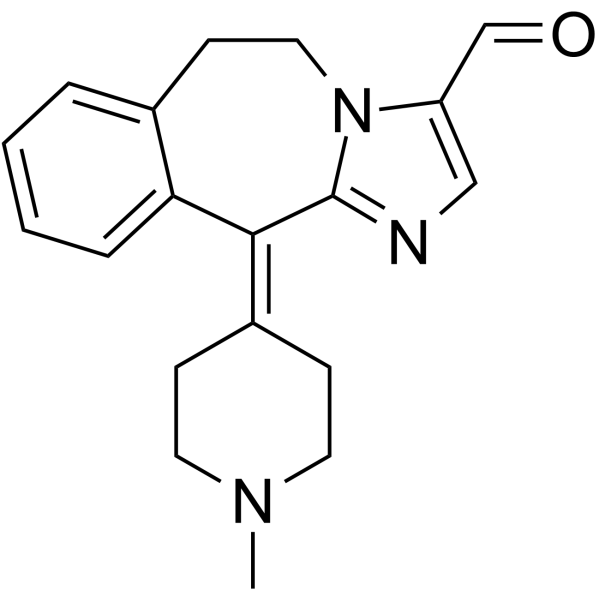
Chemical Structure
Alcaftadine
Synonym(s): R89674
- CAS No.: 147084-10-4
- Formula:C19H21N3O
- Molecular Weight:307.39
IUPAC Name: 11-(1-methylpiperidin-4-ylidene)-6,11-dihydro-5H-benzo[d]imidazo[1,2-a]azepine-3-carbaldehyde
InChIKey: MWTBKTRZPHJQLH-UHFFFAOYSA-N
SMILES: O=CC1=CN=C2N1CCC3=CC=CC=C3/C2=C4CCN(C)CC\4
Biological Activity: Alcaftadine (R89674) is an orally active, selective histamine H1/H2/H4 receptor antagonist. Alcaftadine shows extremely low affinity for muscarinic/adrenergic receptors. Alcaftadine prevents allergen-induced loss of zonula occludens and E-cadherin tight junction proteins. Alcaftadine inhibits CaMK2γ activity/phosphorylation (Kd 25.4 μM: hCaMK2γ). Alcaftadine produces sedative-hypnotic sleep-promoting effects. Alcaftadine can be used in research on allergic conjunctivitis, psoriasis, and histamine-dependent pruritus[1][2][3][4][5][6][7][8][9].
| Cat. No. | Product Name | Purity | Description | Pricing | |||||||||||||||||||
|---|---|---|---|---|---|---|---|---|---|---|---|---|---|---|---|---|---|---|---|---|---|---|---|
|
|
Alcaftadine | 98.37% | Alcaftadine (R89674) is an orally active, selective histamine H1/H2/H4 receptor antagonist. Alcaftadine shows extremely low affinity for muscarinic/adrenergic receptors. Alcaftadine prevents allergen-induced loss of zonula occludens and E-cadherin tight junction proteins. Alcaftadine inhibits CaMK2γ activity/phosphorylation (Kd 25.4 μM: hCaMK2γ). Alcaftadine produces sedative-hypnotic sleep-promoting effects. Alcaftadine can be used in research on allergic conjunctivitis, psoriasis, and histamine-dependent pruritus. | ||||||||||||||||||||
|
loading...
/
|
|||||||||||||||||||||||
|
|
Alcaftadine (Standard) | ≥98% | Alcaftadine (Standard) (R89674 (Standard)) is the analytical standard of Alcaftadine (HY-17039). This product is intended for research and analytical applications. Alcaftadine (R89674) is an orally active, selective histamine H1/H2/H4 receptor antagonist. Alcaftadine shows extremely low affinity for muscarinic/adrenergic receptors. Alcaftadine prevents allergen-induced loss of zonula occludens and E-cadherin tight junction proteins. Alcaftadine inhibits CaMK2γ activity/phosphorylation (Kd 25.4 μM: hCaMK2γ). Alcaftadine produces sedative-hypnotic sleep-promoting effects. Alcaftadine can be used in research on allergic conjunctivitis, psoriasis, and histamine-dependent pruritus. | ||||||||||||||||||||
|
loading...
/
|
|||||||||||||||||||||||
-
Similarity Score 0.82
 HY-124356Alcaftadine carboxylic acid
-
Similarity Score 0.59
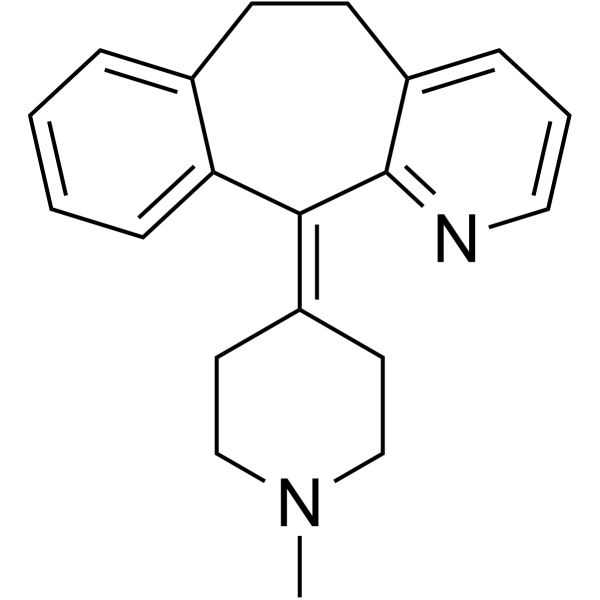 HY-B0170Azatadine
-
Similarity Score 0.57
 HY-B0115RPizotifen (Standard)
-
Similarity Score 0.55
 HY-116481Selenotifen
-
Similarity Score 0.54
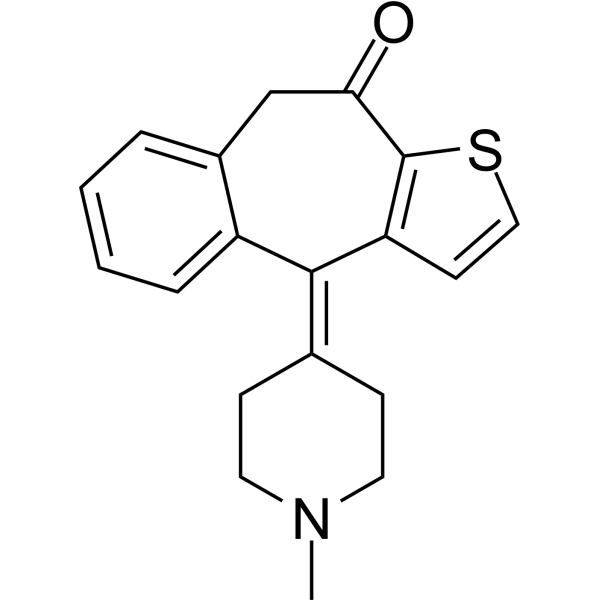 HY-B0157Ketotifen
-
Similarity Score 0.52
 HY-134149N-Formyl desloratadine
-
Similarity Score 0.52
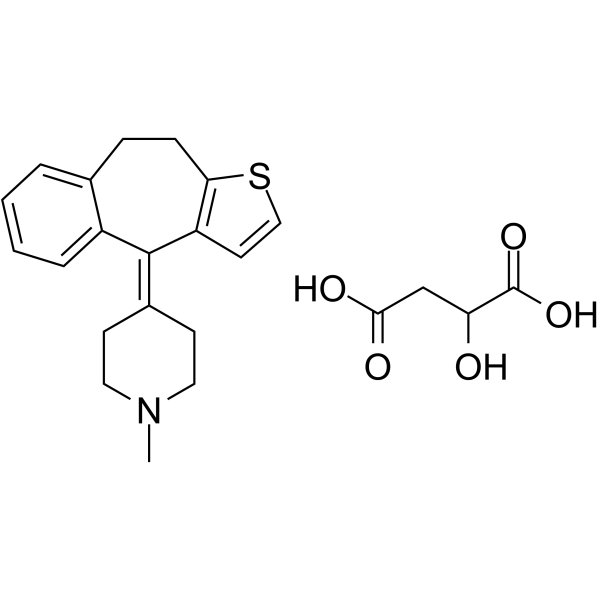 HY-B0115APizotifen malate
-
Similarity Score 0.51
 HY-W741093N-Nitroso desloratadine
-
Similarity Score 0.50
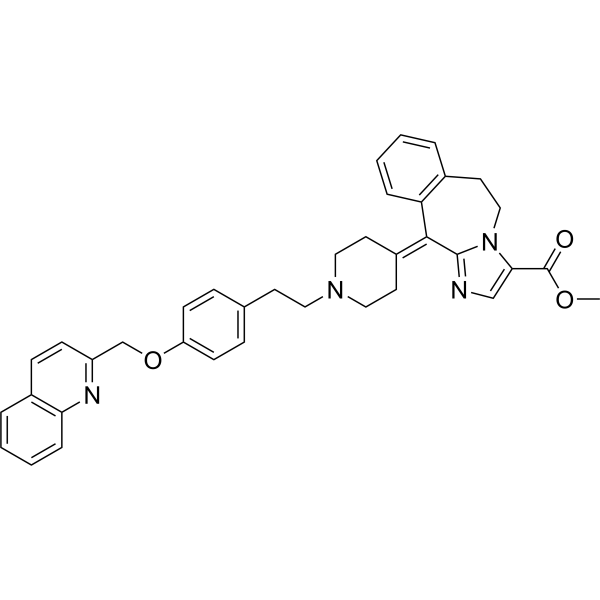 HY-132189Laniquidar
-

Explore the MedChemAI to find more analogs


References
- [1]. Torkildsen G, et al. The safety and efficacy of alcaftadine 0.25% ophthalmic solution for the prevention of itching associated with allergic conjunctivitis. Current medical research and opinion. 2011 Mar;27(3):623-31.
- [2]. Gallois-Bernos AC, et al. Alcaftadine, a new antihistamine with combined antagonist activity at histamine H1, H2, and H4 receptors. Journal of Receptor, Ligand and Channel Research. 2012 Dec 20:9-20.
- [3]. Bohets H, et al. Clinical pharmacology of alcaftadine, a novel antihistamine for the prevention of allergic conjunctivitis. Journal of ocular pharmacology and therapeutics : the official journal of the Association for Ocular Pharmacology and Therapeutics. 2011 Apr;27(2):187-95.
- [4]. Drakakis G, et al. Polypharmacological in Silico Bioactivity Profiling and Experimental Validation Uncovers Sedative-Hypnotic Effects of Approved and Experimental Drugs in Rat. ACS chemical biology. 2017 Jun 16;12(6):1593-1602.
- [5]. Ono SJ, et al. Comparison of effects of alcaftadine and olopatadine on conjunctival epithelium and eosinophil recruitment in a murine model of allergic conjunctivitis. Drug design, development and therapy. 2011 Feb 08;5:77-84.
- [6]. Kim SI, et al. Comparison of cytotoxicities and anti-allergic effects of topical ocular dual-action anti-allergic agents. BMC ophthalmology. 2019 Nov 08;19(1):217.
- [7]. Yu Y, et al. Cutaneous Calcium/Calmodulin‐Dependent Protein Kinase II‐γ–Positive Sympathetic Nerves Secreting Norepinephrine Dictate Psoriasis. Advanced Science. 2024 Jun;11(23):2306772.
- [8]. Li S, et al. Histamine sensitization of the voltage-gated sodium channel Nav1. 7 contributes to histaminergic itch in mice. ACS Chemical Neuroscience. 2022 Feb 14;13(5):700-10.
- [9]. Lane KJ, et al. Comparison of alcaftadine and olopatadine effects on ocular epithelium and eosinophil recruitment in a murine model of allergic conjunctivitis. Investigative Ophthalmology & Visual Science. 2011 Apr 22;52(14):6417-.



