11 Results for "

Cy3-NO2

" in MedChemExpress (MCE) Product Catalog:
Products (11)

11 Results for "Cy3-NO2" in MCE Product Catalog:

Cat. No.: HY-155327B
Target:  

Fluorescent Dye

Research Areas:  

Others

Cy3-PEG2-endo-BCN bromide is the bromide salt form of Cy3-PEG2-endo-BCN (HY-155327). Cy3-PEG2-endo-BCN bromide is a dye derivative of Cyanine 3 (Cy3) (HY-D0822) containing 2 PEG units. Cy3-PEG2-endo-BCN bromide contains the lyophilic bidentate macrocyclic ligand endo-BCN, which can further synthesize macrocyclic complexes. In click chemistry, endo-BCN can react with molecules containing azide groups to form stable triazoles in the absence of catalysts .
loading...
    loading...
Cat. No.: HY-D2731
Cy3-NO2 is a cyanine-based probe. Cy3-NO2 can be excited by using a 554 nm laser and filtered with a 568 nm laser .
loading...
    loading...
Cat. No.: HY-155322
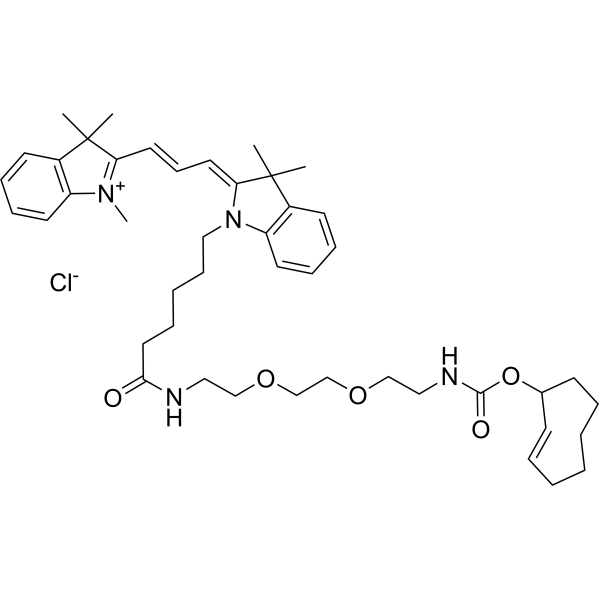
Cy3-PEG2-TCO is a dye derivative of Cyanine 3 (Cy3) (HY-D0822) containing 2 PEG units. Cy3-PEG2-TCO can use its own TCO group to perform an inverse electron demand Diels-Alder reaction (iEDDA) with molecules with Tetrazine groups.
loading...
    loading...
Cat. No.: HY-D2729
CAS No.: 3012597-48-4
Cy3-NO2-Tre is a nitroreductase-responsive cyanine-based fluorescent probe that specifically labels Mycobacterium tuberculosis (Mtb). Cy3-NO2-tre generated fluorescence after activation by a specific nitroreductase, Rv3368c, which is conserved in the Mycobacteriaceae. Cy3-NO2-tre effectively imaged mycobacteria within infected host cells, tracked the infection process, and visualized Mycobacterium smegmatis being endocytosed by macrophages (Ex/Em= 540-550/575-625 nm) .
loading...
    loading...
Cat. No.: HY-155327
CAS No.: 1663449-60-2
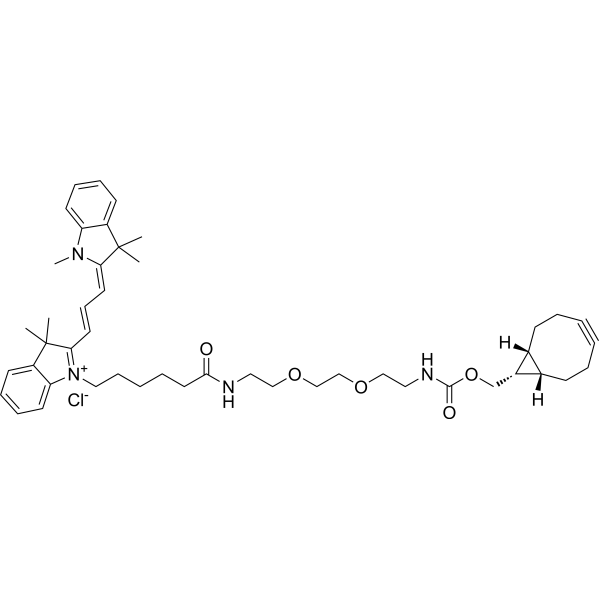
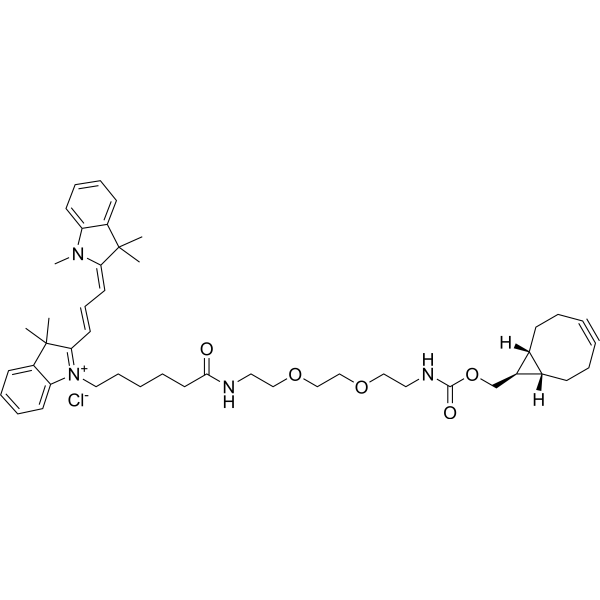
Cy3-PEG2-endo-BCN is a dye derivative of Cyanine 3 (Cy3) (HY-D0822) containing 2 PEG units. Cy3-PEG2-endo-BCN contains the lyophilic bidentate macrocyclic ligand endo-BCN, which can further synthesize macrocyclic complexes. In click chemistry, endo-BCN can react with molecules containing azide groups to form stable triazoles in the absence of catalysts.
loading...
    loading...
Cat. No.: HY-164189
Target:  

DNA/RNA Synthesis

Research Areas:  

Others

m7(3'Ma-Cy3)Gppp(2'OMe)ApG ammonium is a Cy3-labled cap analogue that can be used for mRNA synthesis. The efficiency of mRNA delivery can be determined by the detection of Cy3 by flow cytometry, which can be used to track mRNA in cells and in living animals and to screen delivery lipid ratios.
loading...
    loading...
Cat. No.: HY-D2122
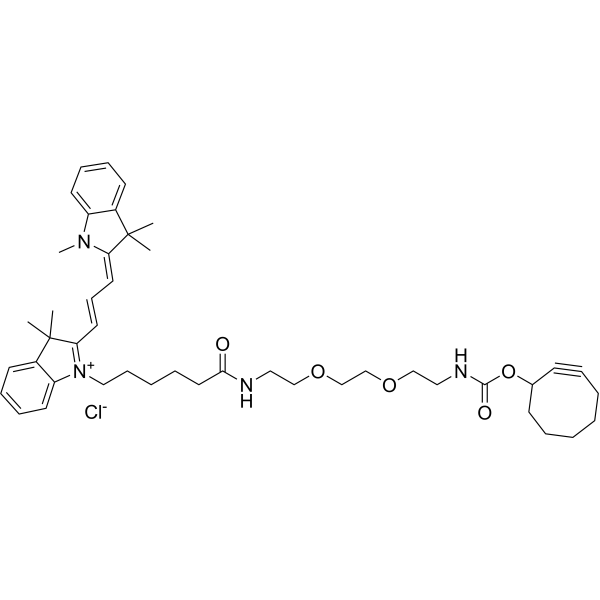
Cy3-PEG2-SCO is a dye derivative of Cyanine 3 (Cy3) (HY-D0822) containing 2 PEG units. Cy3-PEG2-SCO carries a SCO group that can be covalently bound to an amino group. SCO is often used to react with amino acid residues of proteins or peptides, particularly lysine.
loading...
    loading...
Cat. No.: HY-155325
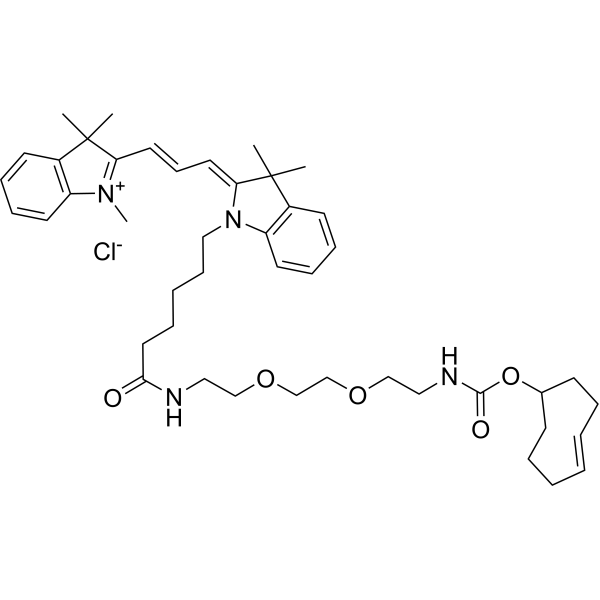
Cy3-PEG2-TCO4 is a dye derivative of Cyanine 3 (Cy3) (HY-D0822) containing 2 PEG units. Cy3-PEG2-TCO4 can use its own TCO group to perform the inverse electron demand Diels-Alder reaction (iEDDA) with molecules with Tetrazine groups.
loading...
    loading...
Cat. No.: HY-D2136
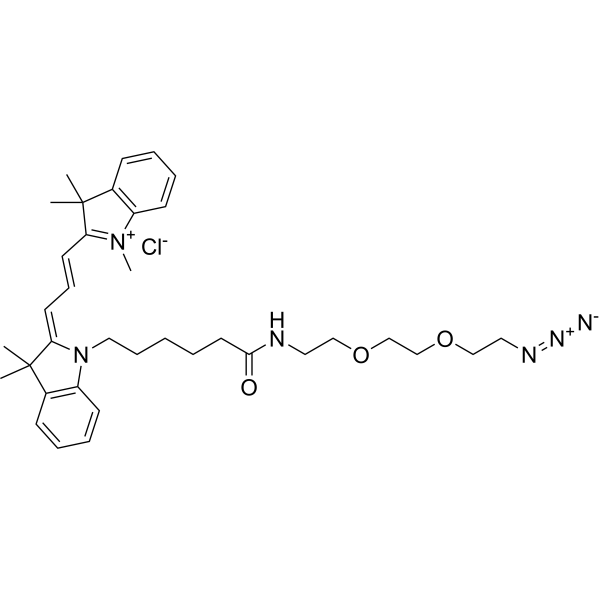
Cy3-PEG2-Azide is a Cyanine 3 (Cy3) (HY-D0822) dye derivative containing 2 PEG units. Cy3-PEG2-Azide contains an azide group and can undergo copper-catalyzed azide-alkyne cycloaddition (CuAAc) with molecules containing alkyne groups. It can also undergo ring strain-promoted alkyne-azide cycloaddition (SPAAC) with molecules containing DBCO or BCN groups.
loading...
    loading...
Cat. No.: HY-155327A
CAS No.: 1663449-60-2
Cy3-PEG2-exo-BCN is a dye derivative of Cyanine 3 (Cy3) (HY-D0822) containing 2 PEG units. Cy3-PEG2-exo-BCN contains the lyophilic bidentate macrocyclic ligand BCN, which can further synthesize macrocyclic complexes. In click chemistry, exo-BCN can react with molecules containing azide groups to form stable triazoles in the absence of catalysts.
loading...
    loading...
Cat. No.: HY-D1867
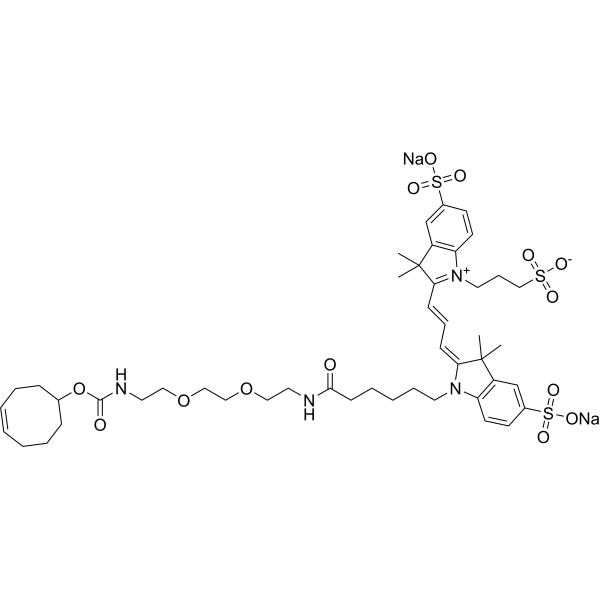
Sulfo-Cy3-PEG2-TCO disodium is a derivative of Cy3 (Cyanine3) (HY-D0822) dye containing sulfonate and TCO groups. The TCO groups of Sulfo-Cy3-PEG2-TCO disodium react with tetrazine functional groups in highly specific click chemistry to form covalent bonds. Thus, Sulfo-Cy3-PEG2-TCO disodium can be covalently bound to some biomolecules (especially antibodies, proteins, etc.) to track their location and dynamic changes in biological samples.
loading...
    loading...
  • 1

