1. Search Result
Search Result
Results for "

D-glucose 6-phosphate

" in MedChemExpress (MCE) Product Catalog:

20

Inhibitors & Agonists

4

Biochemical Assay Reagents

4

Natural
Products

3

Isotope-Labeled Compounds

Cat. No. Nombre del producto Target Áreas de investigación Chemical Structure
  • HY-112537
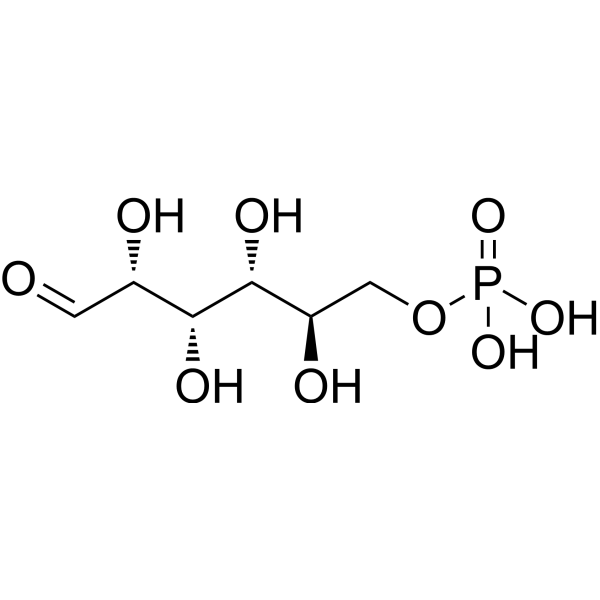
    D-Glucose 6-phosphate
    4 Publications Verification

    Endogenous Metabolite mTOR Cardiovascular Disease Metabolic Disease
    D-Glucose 6-phosphate is a key central node metabolite in glucose metabolism. It serves as the initiating metabolite for glycolysis and the pentose phosphate pathway, as well as a substrate for glycogen synthesis. D-Glucose 6-phosphate acts as a metabolic stress signal, which activates the mTOR pathway to promote protein synthesis, especially when phosphoglucose isomerase (PGI) is inhibited, thereby participating in cardiac remodeling processes. D-Glucose 6-phosphate can be used in research related to non-insulin-dependent diabetes mellitus and heart failure .
    D-Glucose 6-phosphate
  • HY-113407A

    Endogenous Metabolite FBPase Neurological Disease Metabolic Disease
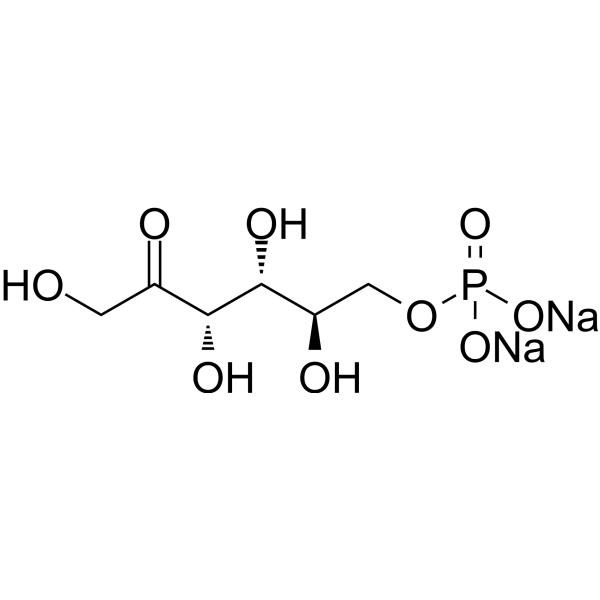
    D-Fructose 6-phosphate disodium is an endogenous metabolite. D-Fructose 6-phosphate disodium can be obtained by hydrolysis of Fructose-1,6-bisphosphatase (FBPase). D-Fructose-6-phosphate disodium is a sugar intermediate in the glycolysis pathway and the pentose phosphate pathway. D-Fructose-6-phosphate disodium can be used to detect glucosamine-6-phosphate synthase and TAL activities. D-Fructose 6-phosphate disodium can be used to study Lewy body dementia .
    D-Fructose-6-phosphate disodium
  • HY-128374
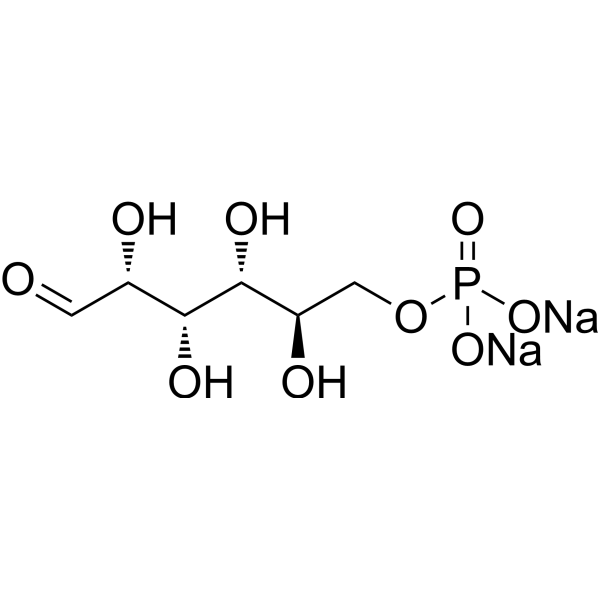
    D-Glucose 6-phosphate disodium salt
    4 Publications Verification

    Endogenous Metabolite Metabolic Disease
    D-Glucose-6-phosphate disodium salt is a glucose sugar phosphorylated at the hydroxy group on carbon 6 .
    D-Glucose 6-phosphate disodium salt
  • HY-112537B
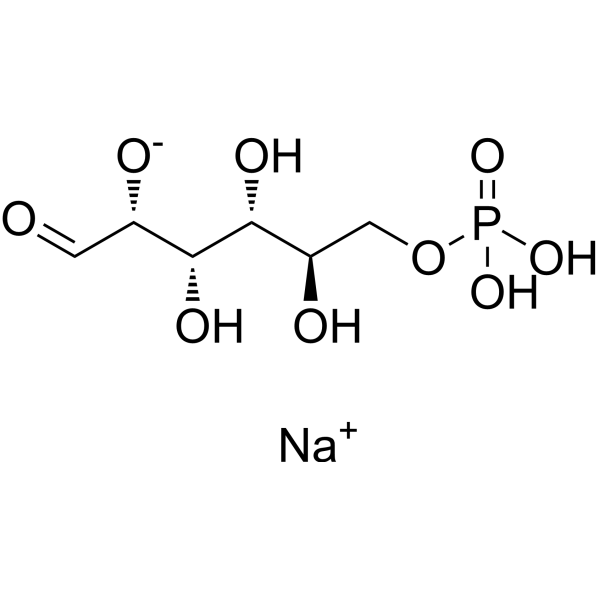
    D-Glucose 6-phosphate sodium
    3 Publications Verification

    Endogenous Metabolite Metabolic Disease
    D-Glucose 6-phosphate sodium is an endogenous metabolite.
    D-Glucose 6-phosphate sodium
  • HY-139409A
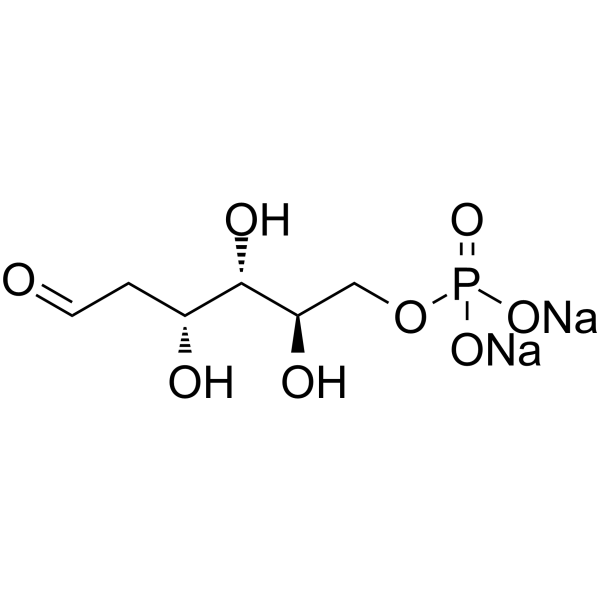
    2-Deoxy-D-glucose 6-phosphate disodium
    2 Publications Verification

    Hexokinase Glucose-6-Phosphate Isomerase (GPI) Cancer
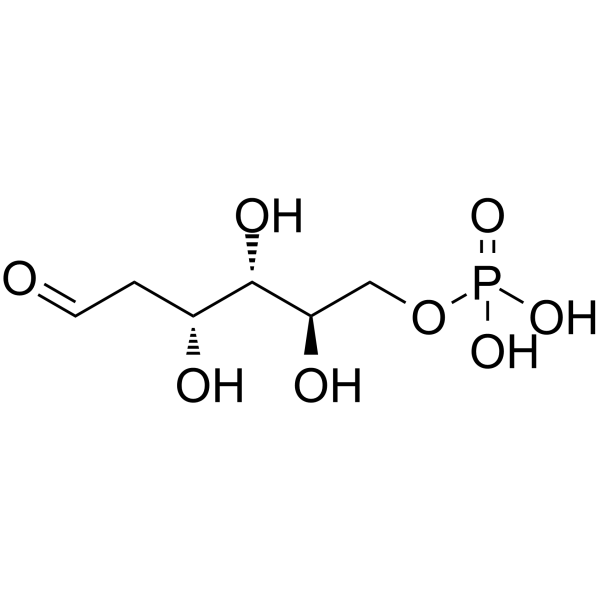
    2-Deoxy-D-glucose 6-phosphate disodium is an ATP-competitive, 2-deoxy-D-glucose non-competitive Hexokinase inhibitor, with a Ki value of 1.45 mM against bovine heart hexokinase. 2-Deoxy-D-glucose 6-phosphate disodium exerts ATP-competitive and 2-deoxy-D-glucose non-competitive inhibitory effects on bovine heart hexokinase. 2-DG inhibits glycolysis via the production and intracellular accumulation of 2-Deoxy-D-glucose 6-phosphate disodium, thereby inhibiting the functions of hexokinase and Glucose-6-phosphate isomerase, and inducing cell death. 2-Deoxy-D-glucose 6-phosphate disodium can be used in cancer-related research .
    2-Deoxy-D-glucose 6-phosphate disodium
  • HY-112537S1

    Isotope-Labeled Compounds Endogenous Metabolite mTOR Cardiovascular Disease Metabolic Disease
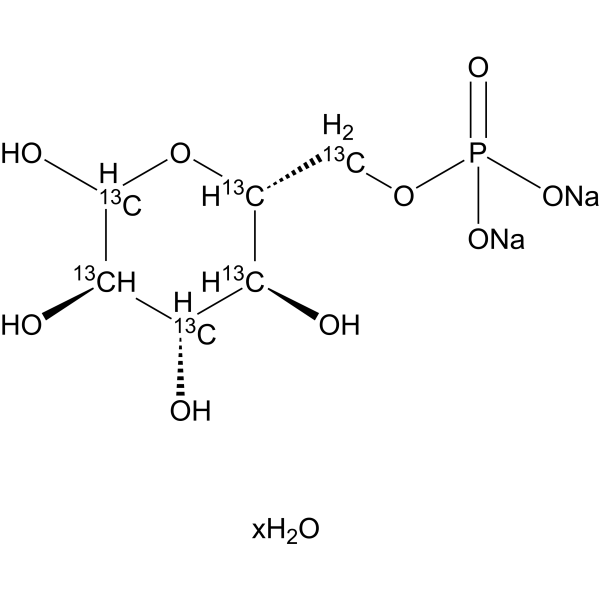
    D-Glucose 6-Phosphate- 13C6 disodium xhydrate is a 13C-labeled D-Glucose 6-phosphate disodium xhydrate. D-Glucose 6-phosphate disodium xhydrate is a key central node metabolite in sugar metabolism, serving as the initial metabolite of glycolysis and pentose phosphate pathway, and also a substrate for glycogen synthesis. D-Glucose 6-phosphate disodium xhydrate can act as a metabolic stress signal, especially when phosphoglucomutase (PGI) is inhibited, activating the mTOR pathway, promoting protein synthesis, and thereby participating in the remodeling process of the heart. D-Glucose 6-phosphate disodium xhydrate can be used in research related to non-insulin-dependent diabetes and heart failure.
    D-Glucose 6-Phosphate-13C6 (disodium xhydrate)
  • HY-167805

    Biochemical Assay Reagents
    D-Glucose 6-phosphate potassium is a biologically active compound that has the activity of being a substrate for glucose-6-phosphate isomerase. D-Glucose 6-phosphate potassium can participate in the sugar metabolism process and promote the production and utilization of energy in cells.
    D-Glucose 6-phosphate potassium
  • HY-128374R

    Reference Standards Endogenous Metabolite Metabolic Disease
    D-Glucose 6-phosphate disodium salt (Standard) is the analytical standard of D-Glucose 6-phosphate disodium salt (HY-128374). This product is intended for research and analytical applications. D-Glucose-6-phosphate disodium salt is a glucose sugar phosphorylated at the hydroxy group on carbon 6.
    D-Glucose 6-phosphate disodium salt (Standard)
  • HY-112537S2

    Isotope-Labeled Compounds Endogenous Metabolite mTOR Others
    D-Glucose 6-phosphate- 13C is 13C labeled D-Glucose 6-phosphate (HY-112537). D-Glucose 6-phosphate is a key central node metabolite in glucose metabolism. It serves as the initiating metabolite for glycolysis and the pentose phosphate pathway, as well as a substrate for glycogen synthesis. D-Glucose 6-phosphate acts as a metabolic stress signal, which activates the mTOR pathway to promote protein synthesis, especially when phosphoglucose isomerase (PGI) is inhibited, thereby participating in cardiac remodeling processes. D-Glucose 6-phosphate can be used in research related to non-insulin-dependent diabetes mellitus and heart failure.
    D-Glucose 6-phosphate-13C
  • HY-112537A

    Endogenous Metabolite mTOR Cardiovascular Disease Metabolic Disease
    D-Glucose 6-phosphate dipotassium is a key central node metabolite in glucose metabolism. It serves as the initiating metabolite for glycolysis and the pentose phosphate pathway, as well as a substrate for glycogen synthesis. D-Glucose 6-phosphate dipotassium acts as a metabolic stress signal, which activates the mTOR pathway to promote protein synthesis, especially when phosphoglucose isomerase (PGI) is inhibited, thereby participating in cardiac remodeling processes. D-Glucose 6-phosphate dipotassium can be used in research related to non-insulin-dependent diabetes mellitus and heart failure .
    D-Glucose 6-phosphate dipotassium
  • HY-139409

    Hexokinase Glucose-6-Phosphate Isomerase (GPI) Cancer
    2-Deoxy-D-glucose 6-phosphate disodium is an ATP-competitive and 2-deoxy-D-glucose non-competitive Hexokinase inhibitor, with a Ki value of 1.45 mM against bovine heart hexokinase. 2-Deoxy-D-glucose 6-phosphate disodium exerts ATP-competitive and 2-deoxy-D-glucose non-competitive inhibitory effects on bovine heart hexokinase. 2-DG inhibits glycolysis via the generation and intracellular accumulation of 2-Deoxy-D-glucose 6-phosphate disodium, thereby inhibiting the functions of hexokinase and Glucose-6-phosphate isomerase, and inducing cell death. 2-Deoxy-D-glucose 6-phosphate disodium can be used in cancer-related research .
    2-Deoxy-D-glucose 6-phosphate
  • HY-W654206

    Isotope-Labeled Compounds Others
    D-Glucose 6-Phosphate Sodium Salt Hydrate- 13C6 is the 13C-labeled D-Glucose 6-Phosphate Sodium Salt Hydrate.
    D-Glucose 6-Phosphate Sodium Salt Hydrate-13C6
  • HY-139409B

    Drug Derivative Metabolic Disease
    2-Deoxy-D-glucose 6-phosphate sodium, a derivative of 2-Deoxy-D-glucose (HY-13966), is produced in mammalian cells by the action of hexokinase on 2-DG. 2-Deoxy-D-glucose is a glucose analog that acts as a competitive inhibitor of glucose metabolism, inhibiting glycolysis via its actions on hexokinase .
    2-Deoxy-D-glucose 6-phosphate sodium
  • HY-W145606

    Biochemical Assay Reagents Others
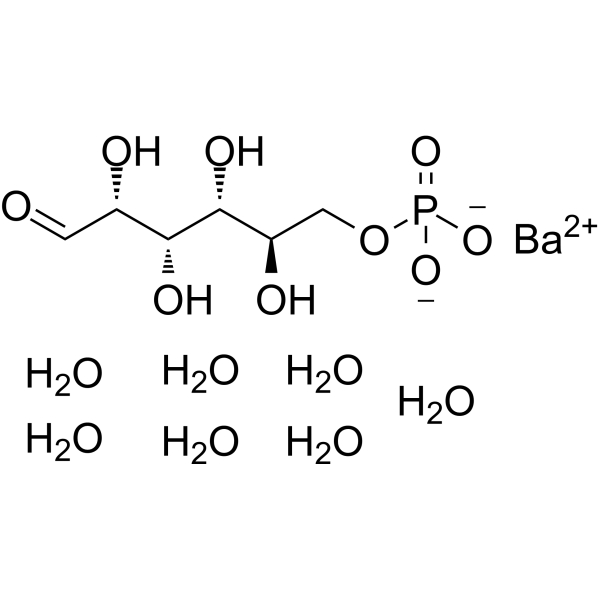
    D-Glucose 6-Phosphate Barium Salt Heptahydrate is a biochemical reagent that can be used as a biological material or organic compound for life science related research.
    D-Glucose-6-Phosphate barium salt heptahydrate
  • HY-W725496

    Endogenous Metabolite Neurological Disease Metabolic Disease
    D-Fructose 6-phosphate dipotassium is an endogenous metabolite in saliva that affects cell growth and autophagy; it can be hydrolyzed by Fructose-1,6-bisphosphatase (FBPase). D-Fructose 6-phosphate dipotassium can be converted into D-glucose 6-phosphate (HY-112537) by the action of phosphoglucose isomerase. D-Fructose 6-phosphate dipotassium is a sugar intermediate in the glycolysis pathway and the pentose phosphate pathway. D-Fructose 6-phosphate dipotassium can be used to study Lewy body dementia .
    D-Fructose 6-phosphate dipotassium
  • HY-P2918D

    Endogenous Metabolite Metabolic Disease
    Phosphoglucose isomerase, E.coli (EC 5.3.1.9) is an enzyme crucial for the interconversion of D-glucose 6-phosphate and D-fructose 6-phosphate. Phosphoglucose isomerase is responsible for the second step of glycolysis and is involved in glucogenesis.
    Phosphoglucose isomerase, E.coli
  • HY-P2918E

    Endogenous Metabolite Metabolic Disease
    Phosphoglucose isomerase, Bacillus subtilis (EC 5.3.1.9) is an enzyme crucial for the interconversion of D-glucose 6-phosphate and D-fructose 6-phosphate. Phosphoglucose isomerase is responsible for the second step of glycolysis and is involved in glucogenesis.
    Phosphoglucose isomerase, Bacillus subtilis
  • HY-P2918C

    Endogenous Metabolite Metabolic Disease
    Phosphoglucose isomerase, Saccharomyces cerevisiae (EC 5.3.1.9) is an enzyme crucial for the interconversion of D-glucose 6-phosphate and D-fructose 6-phosphate. Phosphoglucose isomerase is responsible for the second step of glycolysis and is involved in glucogenesis.
    Phosphoglucose isomerase, Saccharomyces cerevisiae
  • HY-P2820C

    Biochemical Assay Reagents Metabolic Disease
    Phosphoglucomutase, Chicken (EC 5.4.2.2) is an enzyme that transfers a phosphate group on an α-D-glucose monomer from the 1' to the 6' position in the forward direction or the 6' to the 1' position in the reverse direction. Phosphoglucomutase, Chicken (EC 5.4.2.2) facilitates the interconversion of glucose 1-phosphate and glucose 6-phosphate.
    Phosphoglucomutase, Chicken
  • HY-181430

    TGF-beta/Smad Metabolic Disease Inflammation/Immunology
    PXS 25 is a cation-independent mannose 6-phosphate receptor (CI-M6PR) inhibitor that inhibits CI-M6PR-mediated activation of latent TGF-β1. PXS 25 inhibits conversion of high glucose-induced latent TGF-β1 to active TGF-β1 in proximal tubule cells under normoxic conditions. PXS 25 suppresses high glucose-induced fibronectin, collagen IV production, and phosphorylated Smad 2 in proximal tubule cells under normoxic conditions. PXS 25 has antifibrotic properties in skin fibroblasts. PXS 25 can be used for the research of diabetic nephropathy .
    PXS 25

Consulta en línea

Your information is safe with us. * Required Fields.

Saludo


Country or Region *

Nombre del solicitante *


Nombre de la Organizaciòn *

Department *


Direcciòn del E-mail *


Nombre del producto *

Cat. No.


Requested quantity *

Número de teléfono *


Observaciones

Consulta en línea

Inquiry Information

Nombre del producto:
Cat. No.:
Cantidad:
MCE Japan Authorized Agent:

