
10 Results for "

EA.hy926 cell

" in MedChemExpress (MCE) Product Catalog:
Products (10)

10 Results for "EA.hy926 cell" in MCE Product Catalog:

5
5 Cited Publications
Cat. No.: HY-128206
CAS No.: 459420-09-8
Purity:  99.98%
Synonyms: HMPSNE
Target:  

Hippo (MST)

Research Areas:  

Metabolic Disease

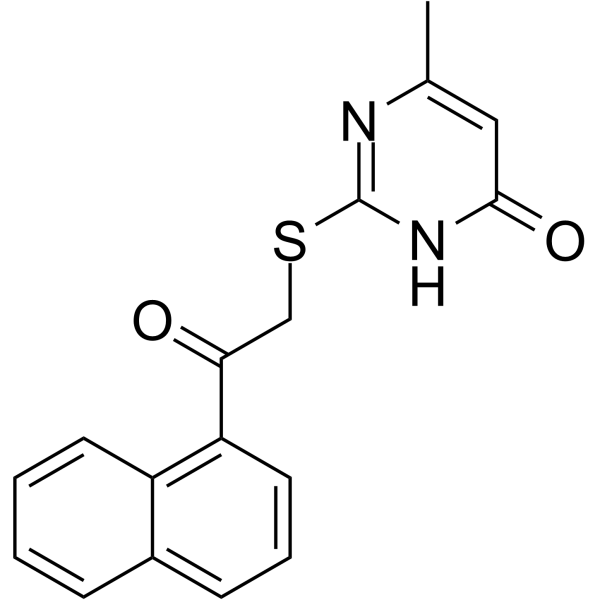
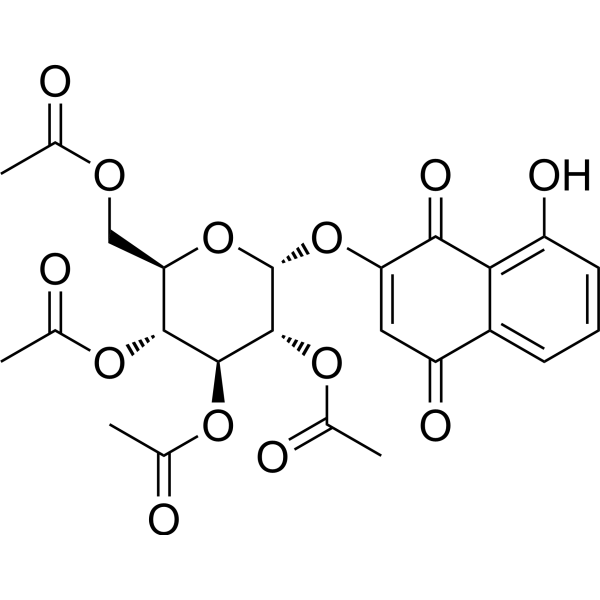
I3MT-3 (HMPSNE) is a potent, selective, and cell-membrane permeable inhibitor of 3-Mercaptopyruvate sulfurtransferase (3MST) (IC50=2.7 μM). I3MT-3 is inactive for other H2S/sulfane sulfur-producing enzymes.?I3MT-3 targets a persulfurated cysteine residue located in the active site of 3MST .
loading...
    loading...
Cat. No.: HY-W145516
CAS No.: 9000-30-0
Guar gum is an orally active nonionic galactomannan polysaccharide. It is present in the endosperm of Cyamopsis tetragonolobus seeds. Guar gum reduces cholesterol levels, regulates body weight, and acts as a thickener and viscosity modifier by forming hydrogen-bonded aqueous solutions. It serves as a rate-controlling excipient in compound delivery systems, and finds applications in the food, tissue engineering, nanosensing and industrial fields .
loading...
    loading...
Cat. No.: HY-N8210
CAS No.: 446-71-9
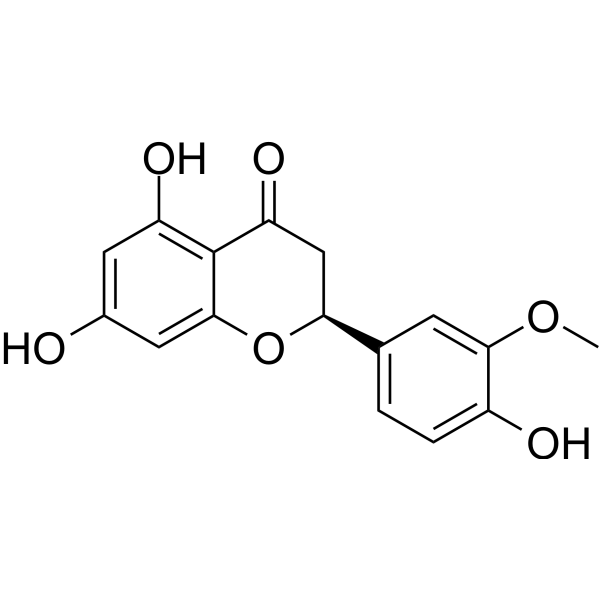
Homoeriodictyol is an orally active, bitter-tasting flavanone that can penetrate the blood-brain barrier. Homoeriodictyol enhances synaptic-related protein expression through NCOA4-mediated ferritin autophagy. Homoeriodictyol improves memory impairment in mice by inhibiting the NLRP3 inflammasome. Homoeriodictyol protects human endothelial cells from oxidative damage by activating Nrf2 and inhibiting mitochondrial dysfunction. Homoeriodictyol enhances ROS activity and induces apoptosis, exhibiting anticancer effects. Homoeriodictyol inhibits the survival and migration of androgen-resistant prostate cancer cells in vitro. Homoeriodictyol exerts antinociceptive activity in mice in vivo .
loading...
    loading...
Cat. No.: HY-122094
CAS No.: 56486-94-3
Purity:  99.49%
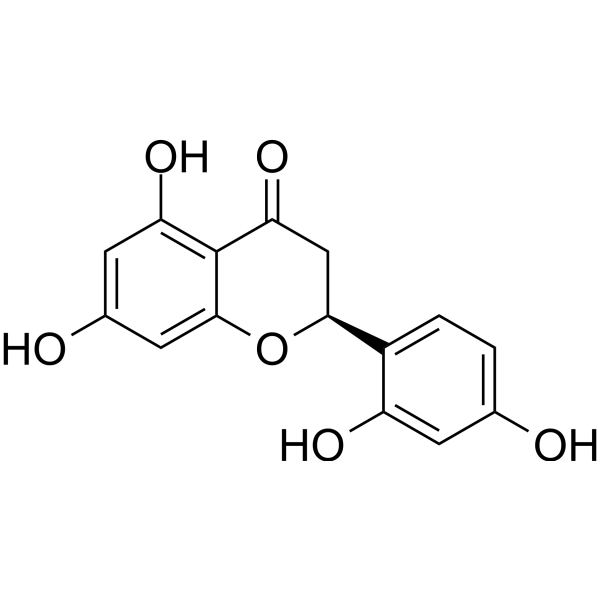
Steppogenin is a potent inhibitor of HIF-1α and DLL4, with IC50 values of 0.56 and 8.46 μM, respectively. Steppogenin can be sued for the research of angiogenic diseases, such as those involving solid tumors .
loading...
    loading...
Cat. No.: HY-146369
CAS No.: 2353417-85-1
Target:  

PROTACs VEGFR

Research Areas:  

Cancer

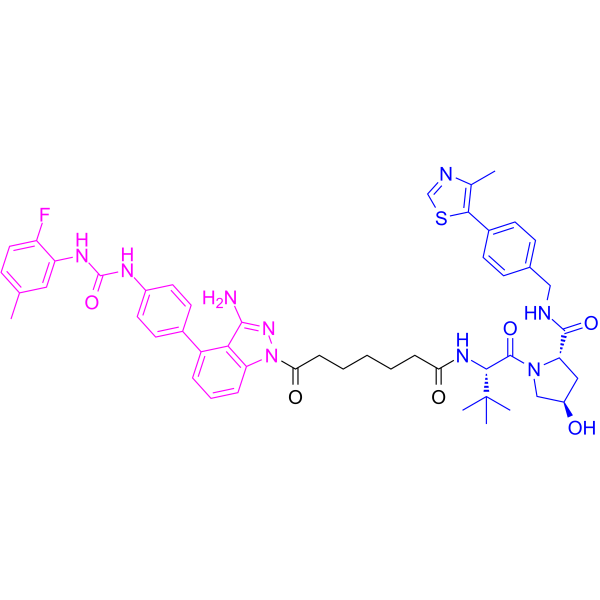
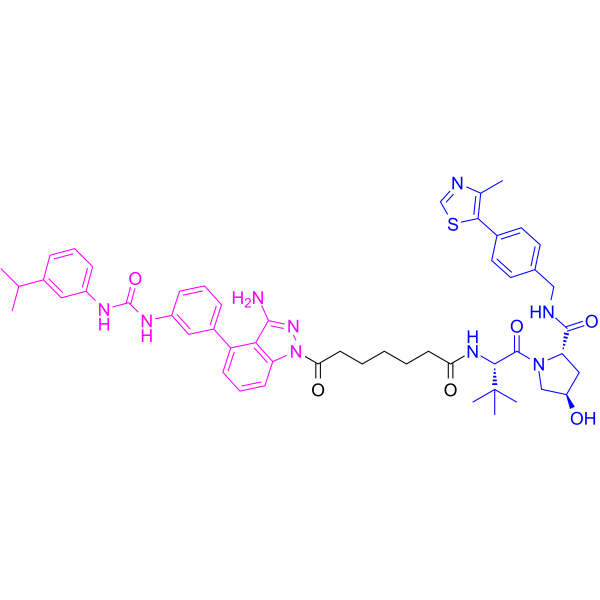
PROTAC VEGFR-2 degrader-2 is a VEGFR-2 (KDR) PROTAC degrader with weak inhibitory activity against VEGFR-2 (IC50 > 1 μM). It is applicable to the research of cancer-related pathological angiogenesis .
loading...
    loading...
Cat. No.: HY-163351
Research Areas:  

Cardiovascular Disease Cancer

PDI-IN-2 is a highly selective PDI inhibitor. PDI-IN-2 has an IC50 of 0.63-4.01 μM against human PDI, and exhibits higher targeting specificity compared with ERp57 and ERp72. PDI-IN-2 inhibits platelet aggregation induced by U46619, collagen and tumor cells, and also blocks platelet-promoted tumor cell proliferation as well as the growth of multiple myeloma cells. PDI-IN-2 serves as an important tool reagent for research on multiple myeloma and associated thrombosis .
loading...
    loading...
Cat. No.: HY-146368
CAS No.: 2601594-19-6
Target:  

PROTACs VEGFR

Research Areas:  

Cancer

PROTAC VEGFR-2 degrader-1 is a VEGFR-2-targeting PROTAC with >1 μM IC50 against VEGFR-2, >100 μM IC50 against endothelial cell proliferation, and no significant cytotoxicity against embryonic kidney cells. PROTAC VEGFR-2 degrader-1 can be used for the research of cancer .
loading...
    loading...
Cat. No.: HY-W104821
CAS No.: 603-45-2
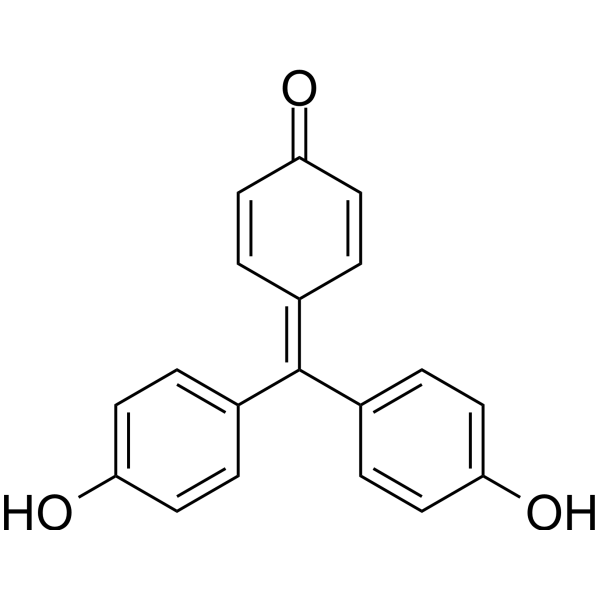
Rosolic acid is a Michael acceptor molecule isolated from the rhizomes of Plantago asiatica L. Rosolic acid inhibits Keap1, promotes Nrf2 nuclear translocation, and upregulates HO-1 and NQO-1. Rosolic acid reduces ER stress markers PERK, ATF-6, GRP78, and CHOP, as well as oxidative stress, ROS production, inflammation, and apoptosis. Rosolic acid upregulates SOD, CAT, and GPx activities, induces angiogenesis and insulin secretion, and restores endothelial function and pancreatic beta cell protection under ER stress. Rosolic acid can be used in research on diabetes and endothelial dysfunction .
loading...
    loading...
Cat. No.: HY-P11904
LADW is a tetrapeptide derived from the hydrolysate of tuna skeletal muscle myosin, with dual inhibitory activities against angiotensin-converting enzyme 1 (ACE1) and α-glucosidase. The IC50 value of LADW against ACE1 is 28.02 μM, while its IC50 value against Saccharomyces cerevisiae α-glucosidase is 4.40 mM. LADW binds competitively to the active site of ACE1, stabilizes the enzyme conformation, and blocks substrate binding. LADW binds to α-glucosidase to inhibit carbohydrate hydrolysis and can also alter starch structure. LADW can be used in studies related to hypertension and diabetes .
loading...
    loading...
Cat. No.: HY-184654
CAS No.: 2169267-60-9
MR-39 is a FPR2 agonist (EC50 = 3.9 μM). MR-39 activates FPR2 to promote neuroinflammation resolution (downregulates IL-1β and TNF-α, modulates NF-κB), upregulates synaptic proteins (synaptic proteins) and improves dendritic spine morphology. MR-39 inhibits MAPK/ERK and AKT phosphorylation in glioblastoma, induces S-phase arrest, and suppresses migration, angiogenesis, and hypoxic adaptation. MR-39 reduces Aβ plaque burden via inhibiting MyD88/NF-κB and NLRP3 inflammasome. MR-39 can be used for research on autism spectrum disorder, Alzheimer's disease, and glioblastoma .
loading...
    loading...

