17 Results for "

EPRS

" in MedChemExpress (MCE) Product Catalog:
Products (17)

17 Results for "EPRS" in MCE Product Catalog:

1
1 Cited Publications
Art. -Nr.: HY-136265
CAS. Nr.: 695207-56-8
Reinheit:  99.20%
Forschungsgebiete:  

Cancer

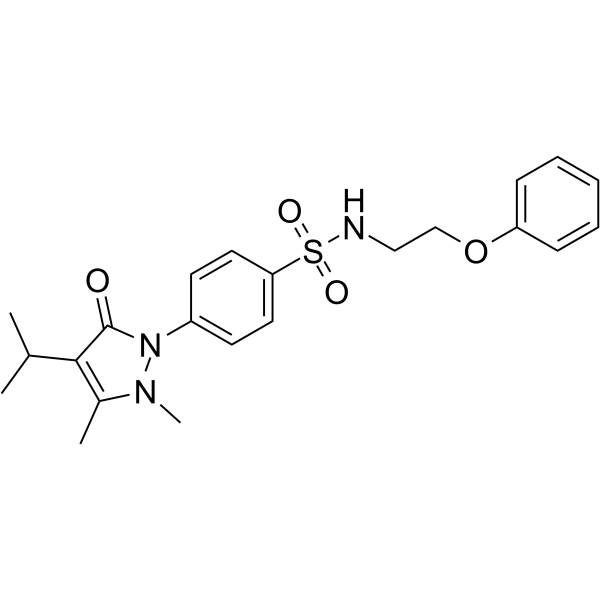
BC-LI-0186 is a potent and selective inhibitor of Leucyl-tRNA synthetase (LRS; LeuRS) and Ras-related GTP-binding protein D (RagD) interaction (IC50=46.11 nM). BC-LI-0186 competitively binds to the RagD interacting site of LRS (Kd=42.1 nM) and has on effects on LRS-Vps34, LRS-EPRS, RagB-RagD association, mTORC1 complex formation or the activities of 12 kinases. BC-LI-0186 can effectively suppress the activity of cancer-associated?MTOR?mutants and the growth of rapamycin-resistant cancer cells.?BC-LI-0186 is a promising agent for lung cancer research .
loading...
    loading...
Art. -Nr.: HY-172279A
DSPE-PEG2000-TAT is a cell-penetrating peptide-modified PEGylated phospholipid conjugate and cellular uptake enhancer. DSPE-PEG2000-TAT forms via conjugation of Cys-TAT to DSPE-PEG2000-Mal. DSPE-PEG2000-TAT enhances liposomal cellular uptake and siRNA transfection efficiency in glomerular mesangial and macrophage cells. DSPE-PEG2000-TAT can be used for drug delivery .
loading...
    loading...
Art. -Nr.: HY-168943
PLGA nanoparticles, 100nm, are biodegradable tumor-targeting nanocarriers that can serve as drug delivery enhancers and multidrug resistance inhibitors. PLGA nanoparticles, 100nm, passively enriched through the EPR effect and actively targeted via ligand-mediated endocytosis, can encapsulate various antitumor active molecules. PLGA nanoparticles, 100nm can specifically recognize multiple types of tumor cells and improve cellular uptake, cytotoxicity and antiproliferative effects after modification with ligands such as transferrin, folic acid, and RGD. PLGA nanoparticles, 100nm can encapsulate various therapeutic drugs and can be surface modified to achieve targeting, imaging, and prolonged circulation time, making them suitable for cancer-related research .
loading...
    loading...
Art. -Nr.: HY-RS04451
Forschungsgebiete:  

Others

EPRS1 Human Pre-designed siRNA Set A contains three designed siRNAs for EPRS1 gene (Human), as well as a negative control, a positive control, and a FAM-labeled negative control.

loading...
    loading...
Art. -Nr.: HY-W131302
CAS. Nr.: 5657-17-0
Synonyms: N,N-Ethylenediglycine
Target:  

Endogenous Metabolite

Forschungsgebiete:  

Cancer

Ethylenediaminediacetic acid (N,N-Ethylenediglycine) is an important ligand that enhances the antiproliferative activity of metal complexes. The complexes formed by ethylenediacetic acid and metal ions exhibited significant antiproliferative properties in MCF-7 cancer cell line. The metal complexes of ethylenediacetic acid were able to interact with DNA and were studied by CD and EPR spectroscopy techniques. Ethylenediaminediacetic acid and its metal complexes were able to induce cell cycle arrest at the G(0)/G(1) phase. The crystal structure analysis of ethylenediacetic acid provided important structural information for understanding its biological activity .
loading...
    loading...
Art. -Nr.: HY-147151
CAS. Nr.: 439858-38-5
Forschungsgebiete:  

Others

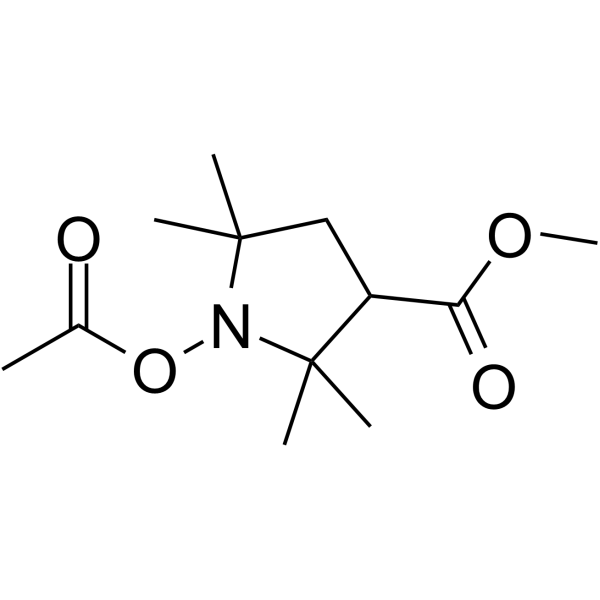
AMCPy is a potent electron paramagnetic resonance (EPR) brain imaging agent, possessing excellent lipophilicity for blood brain barrier (BBB) penetration .
loading...
    loading...
Art. -Nr.: HY-W777072
CAS. Nr.: 88418-69-3
Target:  

HIV

Forschungsgebiete:  

Others

4-isocyanato TEMPO is a spin labeling reagent used to label the 2’-position in RNA. It has been used to study HIV-1 transactivation response RNA and hammerhead ribosome dynamics by electron paramagnetic resonance (EPR) spectroscopy.
loading...
    loading...
Art. -Nr.: HY-P11145
CAS. Nr.: 216876-10-7
Target:  

Influenza Virus

Forschungsgebiete:  

Infection Inflammation/Immunology

Influenza HA (529-537) is the amino acid sequence (IYATVAGSL) at positions 529-537 of the hemagglutinin (HA) of the influenza A virus. Influenza HA (529-537) can be recognized by three different specificities (H1-specific, H2-specific, H1/H2 cross-reactive) of CD8 + cytotoxic T-lymphocyte (CTL) clones. Influenza HA (529-537) can be used to understand T-cell immune specificity and to design new vaccines .
loading...
    loading...
Art. -Nr.: HY-168943A
PLGA nanoparticles, 200nm, are biodegradable tumor-targeting nanocarriers that can serve as drug delivery enhancers and multidrug resistance inhibitors. PLGA nanoparticles, 200nm, passively enriched through the EPR effect and actively targeted via ligand-mediated endocytosis, can encapsulate various antitumor active molecules. PLGA nanoparticles, 200nm can specifically recognize multiple types of tumor cells and improve cellular uptake, cytotoxicity and antiproliferative effects after modification with ligands such as transferrin, folic acid, and RGD. PLGA nanoparticles, 200nm can encapsulate various therapeutic drugs and can be surface modified to achieve targeting, imaging, and prolonged circulation time, making them suitable for cancer-related research .
loading...
    loading...
Art. -Nr.: HY-168943B
PLGA nanoparticles, 500nm, are biodegradable tumor-targeting nanocarriers that can serve as drug delivery enhancers and multidrug resistance inhibitors. PLGA nanoparticles, 500nm, passively enriched through the EPR effect and actively targeted via ligand-mediated endocytosis, can encapsulate various antitumor active molecules. PLGA nanoparticles, 500nm can specifically recognize multiple types of tumor cells and improve cellular uptake, cytotoxicity and antiproliferative effects after modification with ligands such as transferrin, folic acid, and RGD. PLGA nanoparticles, 500nm can encapsulate various therapeutic drugs and can be surface modified to achieve targeting, imaging, and prolonged circulation time, making them suitable for cancer-related research .
loading...
    loading...
Art. -Nr.: HY-168943C
PLGA nanoparticles, 1μm, are biodegradable tumor-targeting nanocarriers that can serve as drug delivery enhancers and multidrug resistance inhibitors. PLGA nanoparticles, 1μm, passively enriched through the EPR effect and actively targeted via ligand-mediated endocytosis, can encapsulate various antitumor active molecules. PLGA nanoparticles, 1μm can specifically recognize multiple types of tumor cells and improve cellular uptake, cytotoxicity and antiproliferative effects after modification with ligands such as transferrin, folic acid, and RGD. PLGA nanoparticles, 1μm can encapsulate various therapeutic drugs and can be surface modified to achieve targeting, imaging, and prolonged circulation time, making them suitable for cancer-related research .
loading...
    loading...
Art. -Nr.: HY-117925
CAS. Nr.: 1529779-90-5
Target:  

HBV

Forschungsgebiete:  

Others

Personalised postprandial-targeting is a way to modulate water-heme interactions with activity against low-spin P450 complexes. Personalised postprandial-targeting is able to maintain the axial water ligands of CYP2C9 even in the presence of inhibitors. Personalised postprandial-targeting also allows the hydrogen atoms of the axial water ligands to be observed by EPR spectroscopy, providing insights into the enzyme active site .
loading...
    loading...
Art. -Nr.: HY-P11167
CAS. Nr.: 1346415-30-2
Target:  

Peptides

Forschungsgebiete:  

Infection

Decapeptide DP1 is an artificially designed peptide of ten amino acids (DEHGTAVMLK). Decapeptide DP1 mimics the organic ligand components found in the natural Mn²⁺ antioxidant complex and is used to construct the highly effective radiation protection agent MDP (Mn²⁺-DP1-Pi complex) .
loading...
    loading...
Art. -Nr.: HY-183004
CAS. Nr.: 2396683-89-7
Forschungsgebiete:  

Cancer

NCP26 is an ATP-competitive ProRS inhibitor (with a KD of 271 nM in the absence of proline, and a KD of 0.35 nM in the presence of 100 μM proline). NCP26 activates AAR, induces G0/G1 phase arrest, Apoptosis, Caspase cleavage, and PARP cleavage. NCP26 downregulates MYC, TCF3, and CCND1. NCP26 inhibits the growth of multiple myeloma cells. NCP26 can be used for the research of multiple myeloma .
loading...
    loading...
Art. -Nr.: HY-180557
Target:  

Folate Receptor (FR)

Forschungsgebiete:  

Cancer

4A-BFA-11 is a folate-targeted PEG-MMAE conjugate that exhibits specific binding affinity for the folate receptor α (FR-α) (KD = 106.7 nM). 4A-BFA-11 achieves tumor enrichment by combining PEG-mediated long circulation (EPR effect) and folate receptor targeting. 4A-BFA-11 undergoes enzymatic cleavage at the tumor site to release the active payload, enabling precise action. 4A-BFA-11 sefficiently carries, targets, and controls the release of MMAE in tumor tissues in a HeLa mouse model. 4A-BFA-11 can be used for cervical cancer, ovarian cancer, and lung cancer research .
loading...
    loading...
Art. -Nr.: HY-181464
CAS. Nr.: 140379-82-4
Target:  

NO Synthase

Forschungsgebiete:  

Cardiovascular Disease

CAY10565 (Compound 3d) is a nitric oxide (NO) donor. CAY10565 releases nitric acid via an acid-catalyzed ring-opening mechanism under acidic conditions. CAY10565 induces vasodilation .
loading...
    loading...
Art. -Nr.: HY-181741
Target:  

Cathepsin

Forschungsgebiete:  

Inflammation/Immunology

PI3K-001 is a cathepsin B-responsive prodrug and antifibrotic agent. PI3K-001 undergoes cathepsin B-mediated cleavage of the Val-Ala linker in fibrotic lung lesions to release an active PI3K inhibitor payload, while it remains stable in healthy tissues. PI3K-001 improves collagen deposition, tissue collapse and alveolar injury in fibrotic lung tissues. PI3K-001 is applicable for the research of pulmonary fibrosis .
loading...
    loading...
  • 1

