
4 Results for "

ESBL

" in MedChemExpress (MCE) Product Catalog:
Products (4)

4 Results for "ESBL" in MCE Product Catalog:

20
20 Cited Publications
Cat. No.: HY-W009168
CAS No.: 89785-84-2
Target:  

Bacterial Antibiotic

Research Areas:  

Infection Cancer

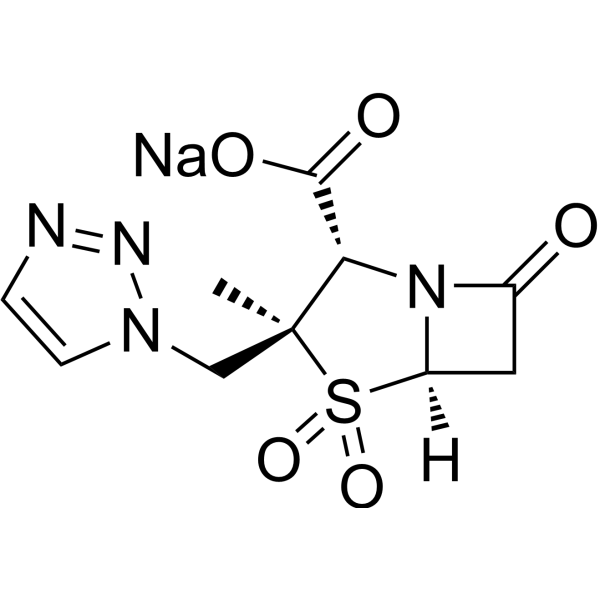
Tazobactam sodium is an antibiotic of the beta-lactamase inhibitor class. Ceftolozane combines with Tazobactam, extends the activity of ceftolozane against many ESBL-producing Enterobacteriaceae and some Bacteroides spp..
loading...
    loading...
Cat. No.: HY-N2598
CAS No.: 112-62-9
Methyl oleate is a fatty acid methyl ester (FAME) with anti-extended spectrum β-Lactamase (ESBL) potential, anticancer and antibacterial activities. Methyl oleate substantially improves the antioxidation ability but markedly impaired the antiwear capacity of zinc dialkyldithiophosphate (ZDDP). Methyl oleate is promising for research of ESBL producing multi drug resistant (MDR) pathogens .
loading...
    loading...
Cat. No.: HY-122174
CAS No.: 432038-96-5
Synonyms: CP-5609
Target:  

Antibiotic Bacterial

Research Areas:  

Infection

ME-1036 (CP-5609) is a carbapenem antibiotic. ME-1036 against resistant Gram-positive organisms, including Methicillin-resistant Staphylococcus aureus (MRSA), and vancomycin-resistant Enterococci (VRE), and ESBL-producing E. coli and K. pneumoniae but is not effective against P. aeruginosa .
loading...
    loading...
Cat. No.: HY-W923278
CAS No.: 73547-70-3
Synonyms: GR20263 dihydrochloride
Target:  

Antibiotic Bacterial

Research Areas:  

Infection

Ceftazidime (GR20263) dihydrochloride is a cephalosporin β-lactam antibiotic. Ceftazidime dihydrochloride exhibits activity against susceptible Enterobacteriaceae, multidrug-resistant Gram-negative bacteria, Pseudomonas aeruginosa, and bacteria producing Ambler class A, C, and some class D β-lactamases, but shows no activity against microorganisms producing metallo-β-lactamases. Ceftazidime dihydrochloride reduces bacterial loads in mouse models of splenic, hepatic, and thigh infections, but has low efficacy against ESBL- and KPC-producing Enterobacteriaceae. Ceftazidime dihydrochloride can be used in research related to complicated urinary tract infections, complicated intra-abdominal infections, hospital-acquired pneumonia, carbapenemase-producing Klebsiella pneumoniae infections, carbapenem-resistant Enterobacterales infections, and severe Gram-negative bacterial infections .
loading...
    loading...

