
1. Search Result
Search Result
Results for "

Estrogen Receptor α

" in MedChemExpress (MCE) Product Catalog:

208

Inhibitors & Agonists

1

Fluorescent Dyes

4

Biochemical Assay Reagents

3

Peptides

22

Natural
Products

1

Recombinant Proteins

32

Isotope-Labeled Compounds

10

Antibodies

2

Click Chemistry

2

Oligonucleotides

1

GMP Molecules

Targets Recommended:
Cat. No. Product Name Target Research Areas Chemical Structure
  • HY-14650
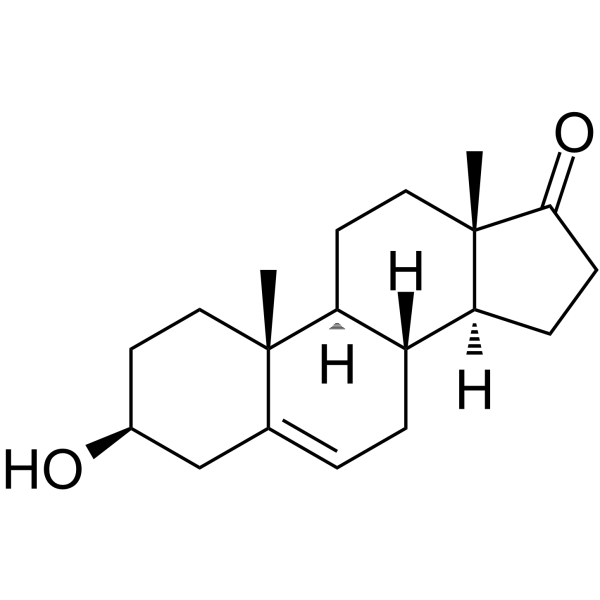
    DHEA
    45+ Cited Publications

    Prasterone; Dehydroisoandrosterone; Dehydroepiandrosterone

    Environmental Pollutants Endogenous Metabolite Androgen Receptor Cardiovascular Disease Endocrinology Cancer
    DHEA (Prasterone) is one of the most abundant steroid hormones. DHEA (Prasterone) mediates its action via multiple signaling pathways involving specific membrane receptors and via transformation into androgen and estrogen derivatives (e.g., androgens, estrogens, 7α and 7β DHEA, and 7α and 7β epiandrosterone derivatives) acting through their specific receptors.
    DHEA
  • HY-138642
    Vepdegestrant
    5+ Cited Publications

    ARV-471

    PROTACs Estrogen Receptor/ERR Cancer
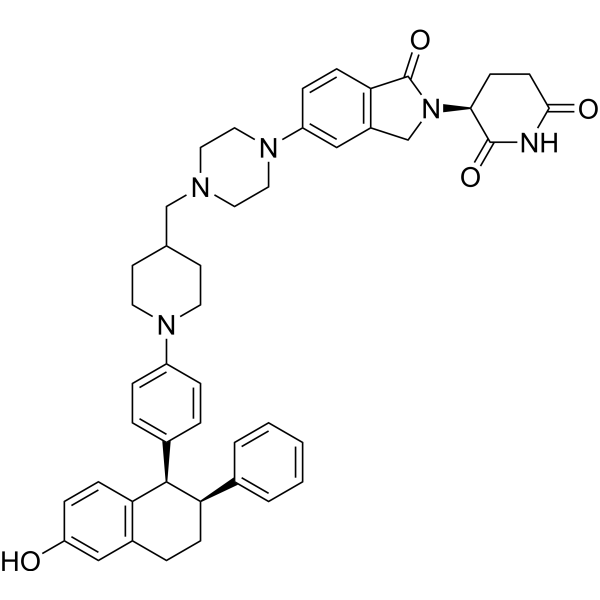
    Vepdegestrant (ARV-471) is an orally active PROTAC estrogen receptor degrader against breast cancer. Vepdegestrant is a hetero-bifunctional molecule that facilitates the interactions between estrogen receptor alpha and an intracellular E3 ligase complex. Vepdegestrant leads to the ubiquitylation and subsequent degradation of estrogen receptors via the proteasome. Vepdegestrant robustly degrades ER in ER-positive breast cancer cell lines with a half-maximal degradation concentration (DC50) of about 2 nM .
    Vepdegestrant
  • HY-103456
    PHTPP
    25+ Cited Publications

    Estrogen Receptor/ERR Cancer
    PHTPP is a selective estrogen receptor β (ERβ) antagonist with 36-fold selectivity over ERα .
    PHTPP
  • HY-100689
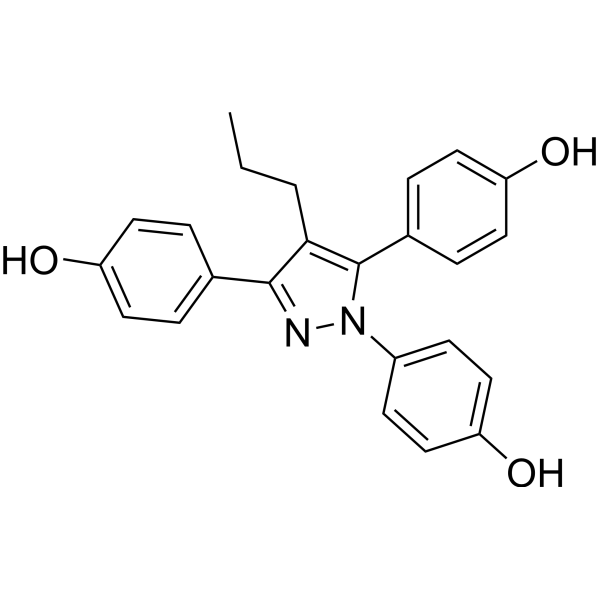
    Propyl pyrazole triol
    15+ Cited Publications

    PPT

    Estrogen Receptor/ERR Cancer
    Propyl pyrazole triol (PPT) is a selective estrogen receptor alpha (ERα) agonist. The relative binding affinity of Propyl pyrazole triol for ERα (ERα: 49%) around 410 times higher compared with estrogen receptor beta (ERβ: 0.12%) .
    Propyl pyrazole triol
  • HY-B0723
    Ospemifene
    2 Publications Verification

    FC-1271a

    Estrogen Receptor/ERR Caspase Neurological Disease Endocrinology Cancer
    Ospemifene (FC-1271a) is an orally active and non-estrogenic selective estrogen receptor modulator (SERM) with Ki values of 380 and 410 nM for estrogen receptor α (ERα) and ERβ, respectively. Ospemifene inhibits caspase-3 activity. Ospemifene inhibits neuronal degeneration, prevents bone loss, and increases vaginal weight and vaginal epithelial height. Ospemifene has anticancer activity against breast cancer .
    Ospemifene
  • HY-W142080

    α-Methyltryptophan

    mTOR Autophagy Apoptosis Amino Acid Derivatives Metabolic Disease Cancer
    α-Methyl-DL-tryptophan (α-Methyltryptophan), a tryptophan derivative, is a selective SLC6A14 blocker. In estrogen receptor (ER)-positive breast cancer cells, α-Methyl-DL-tryptophan inhibits mTOR and activates autophagy and apoptosis. α-Methyl-DL-tryptophan also has the effect of reducing weight .
    α-Methyl-DL-tryptophan
  • HY-N0835
    (20S)-Protopanaxatriol
    1 Publications Verification

    20(S)-APPT; g-PPT

    Glucocorticoid Receptor Estrogen Receptor/ERR LXR Apoptosis Cardiovascular Disease Endocrinology Cancer
    (20S)-Protopanaxatriol is a metabolite of ginsenoside. (20S)-Protopanaxatriol works through the glucocorticoid receptor (GR) and estrogen receptor (ER), and is also a LXRα inhibitor. (20S)-Protopanaxatriol shows a broad spectrum of antitumor effects .
    (20S)-Protopanaxatriol
  • HY-12870
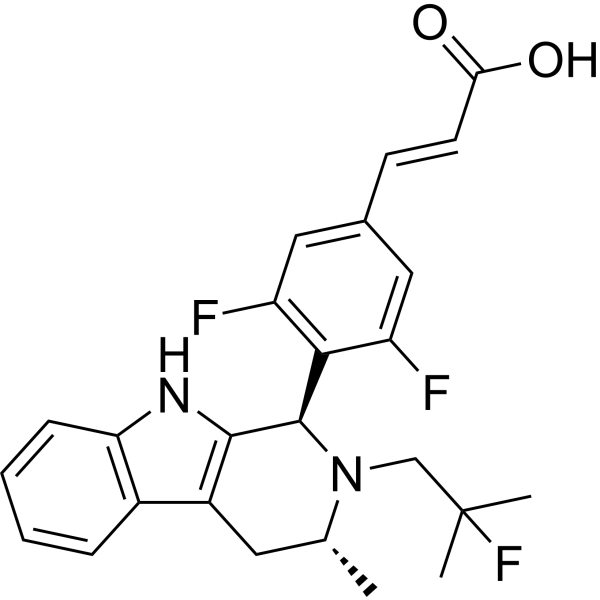
    AZD9496
    25+ Cited Publications

    Estrogen Receptor/ERR Cancer
    AZD9496 is an effective, selective estrogen receptor (ERα) antagonist with an IC50 of 0.28 nM. AZD9496 is an orally active, selective estrogen receptor degrader (SERD).
    AZD9496
  • HY-N0233
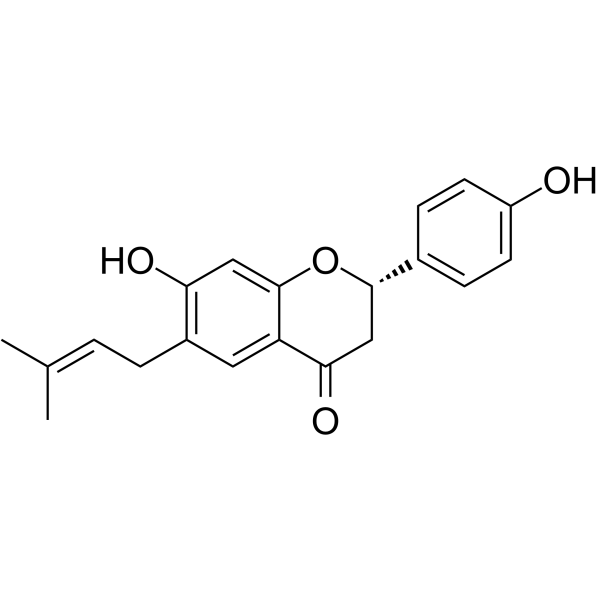
    Bavachin
    10+ Cited Publications

    Corylifolin

    Estrogen Receptor/ERR Cancer
    Bavachin, a flavonoid first isolated from seeds of P. corylifolia, acts as a phytoestrogen that activates the estrogen receptors ERα and ERβ with EC50s of 320 and 680 nM, respectively.
    Bavachin
  • HY-B0412
    Estriol
    5 Publications Verification

    Oestriol

    Estrogen Receptor/ERR Endogenous Metabolite Cancer
    Estriol (Oestriol), an orally active estrogen, is a ERα and ERβ agonist. Estriol is a potent GPR30 antagonist in estrogen receptor-negative breast cancer cells. Estriol can ameliorate disease severity through immunomodulatory mechanisms that decrease tissue inflammation. Estriol has powerful proconvulsant effects .
    Estriol
  • HY-103450

    Estrogen Receptor/ERR Endocrinology Cancer
    G-36 is a cell-permeable nonsteroidal antagonist of the G protein-coupled estrogen receptor (GPER/GPR30), which selectively inhibits estrogen-mediated PI3K activation through GPER, rather than Erα. G-36 also inhibits estrogen-mediated calcium mobilization (IC50=112 nM). G-36 is promising for research in the field of cancer .
    G36
  • HY-15731

    Estrogen Receptor/ERR Endogenous Metabolite NO Synthase Cardiovascular Disease Cancer
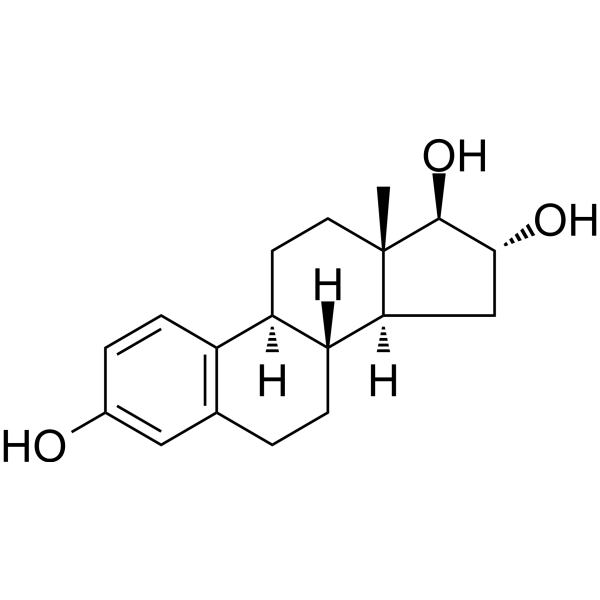
    Estetrol, an orally active estrogen synthesized exclusively during pregnancy by the human fetal liver, is a selective nuclear estrogen receptor modulator. Estetrol binds ERα as well as ERβ (with a fourfold lower affinity). Estetrol increases eNOS expression/activity and NO synthesis in endothelial cells. Estetrol exerts estrogenic actions on the endometrium or the central nervous system but presents antagonistic effects on the breast. Estetrol can be used in contraception and menopausal hormone research .
    Estetrol
  • HY-111226
    GSK5182
    4 Publications Verification

    Estrogen Receptor/ERR Reactive Oxygen Species (ROS) Cardiovascular Disease Cancer
    GSK5182 is a highly selective and orally active inverse agonist of estrogen-related receptor γ (ERRγ) with an IC50 of 79 nM. GSK5182 does not interact with other nuclear receptors, including ERRα or ERα. GSK5182 also induces reactive oxyen species (ROS) generation in hepatocellular carcinoma (HCC) .
    GSK5182
  • HY-B1662
    Hexestrol
    2 Publications Verification

    Estrogen Receptor/ERR Endocrinology
    Hexestrol is a nonsteroidal synthetic estrogen, with a Ki of 0.06 and 0.06 nM for estrogen receptor alpha (ERα) and ERβ. Hexestrol can be used for the research of the diseases caused by estrogen deficiencym, and it also can increase the weight of cattle .
    Hexestrol
  • HY-132205

    Estrogen Receptor/ERR Metabolic Disease
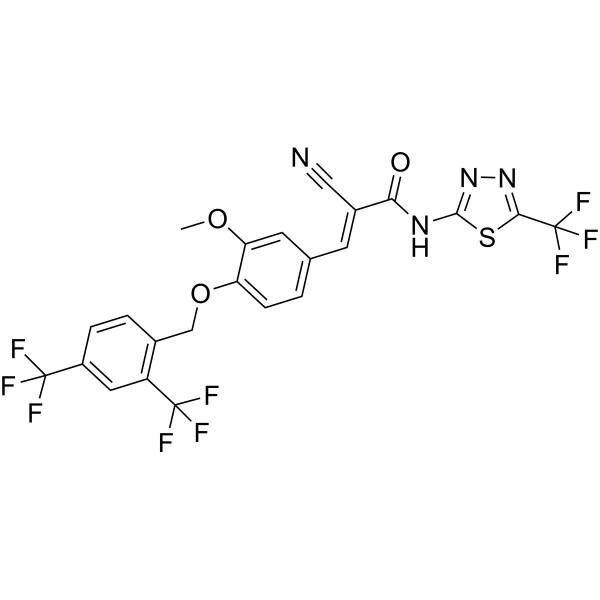
    DS45500853 is an estrogen-related receptor α (ERRα) agonist. DS45500853 inhibits the binding between receptor-interacting protein 140 (RIP140) corepressor peptide (10 nM) and GST-ERRα ligand-binding domain (LBD; 1.2 μM) with an IC50 value of 0.80 μM. DS45500853 can be used for the research of metabolic disorders, including type 2 diabetes mellitus (T2DM) .
    DS45500853
  • HY-112100

    PROTAC-Linker Conjugates for PAC Estrogen Receptor/ERR Cancer
    MC-Val-Cit-PAB-PROTAC ERα Degrader-1 (compound LP2) consists an ADC linker and a PROTAC, whcih can be conjugated to an antibody to form PACs. MC-Val-Cit-PAB-PROTAC ERα Degrader-1 conjugated to an antibody is a more marked estrogen receptor-alpha (ERα) degrader compared to PROTAC (without Ab) .
    MC-Val-Cit-PAB-PROTAC ERα Degrader-1
  • HY-N6710

    Estrogen Receptor/ERR Inflammation/Immunology
    α-Zearalenol is a Mycotoxin with high affinity for the estrogen receptors (ER), α-Zearalenol is the derivative of zearalenone (ZEN), causes reproductive disorders in animals, due to its xenoestrogenic effects .
    α-Zearalenol
  • HY-113960

    Estrogen Receptor/ERR Cancer
    ERRα antagonist-1 (Compound A) is a selective and high affinity agonist for estrogen-related receptor α (ERRα). ERRα antagonist-1 inhibits interaction of ERRα with Proliferator-activated Receptor γ Coactivator-1α (PGC-1α) and PGC-1β, the IC50 values are 170 nM and 180 nM, respectively .
    ERRα antagonist-1
  • HY-126109

    Estrogen Receptor/ERR Apoptosis Metabolic Disease Endocrinology Cancer
    (±)-8-Prenylnaringenin, a natural prenylated flavonoid, is a potent phytoestrogen. (±)-8-Prenylnaringenin is an orally active selective estrogen receptor modulator (SERM) (Estrogen Receptor/ERR) that inhibits ERα and ERβ with IC50s of 57 nM and 68 nM, respectively. (±)-8-Prenylnaringenin has anticancer effects, and can be used for osteoporosis research .
    (±)-8-Prenylnaringenin
  • HY-125703

    Estrogen Receptor/ERR Apoptosis Infection Inflammation/Immunology Endocrinology Cancer
    Ferutinin, a natural terpenoid compound, is an estrogen receptor ERα agonist and estrogen ERβ-receptor agonist/antagonist with IC50s of 33.1 nM and 180.5 nM, respectively. Ferutinin acts as an electrogenic Ca 2+-ionophore that increases calcium permeability of lipid bilayer membranes, mitochondria. Ferutinin possesses estrogenic, antitumor, antibacterial and antiinflammatory activities .
    Ferutinin
  • HY-N4121
    Isocurcumenol
    1 Publications Verification

    Estrogen Receptor/ERR Apoptosis Cancer
    Isocurcumenol, an estrogen receptor alpha (ERα) inhibitor isolated from Curcuma zedoaria Rhizomes, possesses anti-tumor acticity, with IC50 values of 99.1μg/mL and 178.2 μg/mL in DLA and KB cells, respectively .
    Isocurcumenol
  • HY-143201

    Estrogen Receptor/ERR Metabolic Disease
    DS20362725 is an estrogen-related receptor α (ERRα) agonist. DS20362725 inhibits the binding between receptor-interacting protein 140 (RIP140) corepressor peptide (10 nM) and GST-ERRα ligand-binding domain (LBD; 1.2 μM) with an IC50 value of 0.6 μM. DS20362725 can be used for the research of metabolic disorders, including type 2 diabetes mellitus (T2DM) .
    DS20362725
  • HY-W1006471

    Estrogen Receptor/ERR Endocrinology
    Estrogen receptor-agonist-1 (compound 4e) is a estrogen receptor (ER) agonist that binds to ERα with high affinity .
    Estrogen receptor-agonist-1
  • HY-143227
    DK3
    1 Publications Verification

    Estrogen Receptor/ERR Metabolic Disease
    DK3 is a potent and selective estrogen-related receptor alpha (ERRα) agonist .
    DK3
  • HY-150601
    Estrogen receptor-IN-1
    1 Publications Verification

    Estrogen Receptor/ERR Metabolic Disease
    Estrogen receptor-IN-1 (compound 16) is a potent estrogen receptor (ER) inhibitor with IC50s of 13, 5µM for ERα and Erβ, respectively .
    Estrogen receptor-IN-1
  • HY-145341

    Estrogen Receptor/ERR Cancer
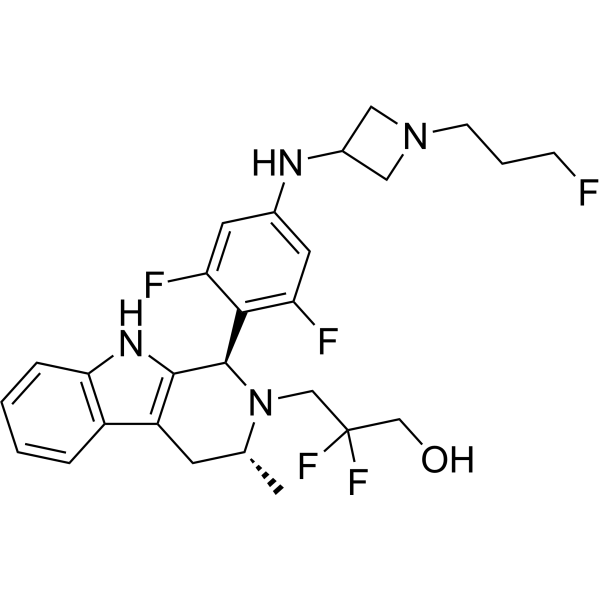
    GNE-149 is an orally bioavailable full antagonist of estrogen receptor α (ERα; IC50=0.053 nM). GNE-149 is a selective estrogen receptor degrader (SERD). GNE-149 can be used for the research of breast cancer .
    GNE-149
  • HY-150803

    Ligands for E3 Ligase Cancer
    VHL Ligand 14 (Compound 11) is a VHL ligand for design of PROTAC estrogen receptor α (ERα) degraders, with a binding affinity IC50 of 196 nM .
    VHL Ligand 14
  • HY-112098
    PROTAC ERα Degrader-1
    1 Publications Verification

    PROTACs Estrogen Receptor/ERR Cancer
    PROTAC ERα Degrader-1 comprises an ubiquitin E3 ligase binding group, a linker and a protein binding group. PROTAC ERα Degrader-1 extracts from patent WO2017201449A1, compound P1. PROTAC ERα Degrader-1 is an estrogen receptor-alpha (ERα) degrader.
    PROTAC ERα Degrader-1
  • HY-79576

    Oestrone methyl ether; 3-O-Methylestrone

    Drug Intermediate Cancer
    Estrone 3-methyl ether (Oestrone methyl ether; 3-O-Methylestrone) is a synthetic intermediate useful for synthesis of estrogen receptor modulator .
    Estrone 3-methyl ether
  • HY-150692

    Estrogen Receptor/ERR Cancer
    Estrogen receptor α antagonist 1 (compound 35) is a highly selective antagonist of estrogen receptor α, with IC50s of 0.02, 6.55 and 7.73 μM for estrogen receptor α, estrogen receptor β and MCF-7 cells, respectively. Estrogen receptor α antagonist 1 can be used for the research of cancer .
    Estrogen receptor α antagonist 1
  • HY-150693

    Estrogen Receptor/ERR Cancer
    Estrogen receptor β antagonist 2 is a potent and selective estrogen receptor β (ERβ) antagonist with IC50s of 109.10, 0.63 µM for Erα and Erβ, respectively .
    Estrogen receptor β antagonist 2
  • HY-12870A
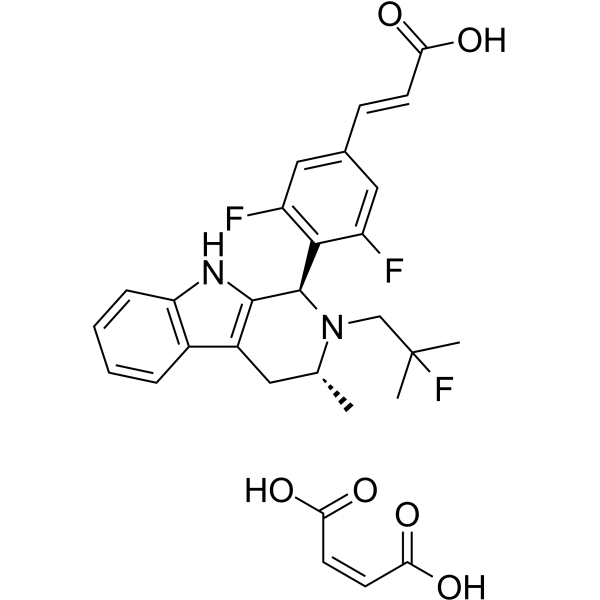
    AZD9496 maleate
    25+ Cited Publications

    Estrogen Receptor/ERR Cancer
    AZD9496 maleate is a potent and selective estrogen receptor (ERα) antagonist with IC50 of 0.28 nM. AZD9496 maleate is an orally bioavailable selective oestrogen receptor degrader (SERD).
    AZD9496 maleate
  • HY-126351

    Estrogen Receptor/ERR Ligands for Target Protein for PROTAC Cancer
    PROTAC ERRα ligand 2 is an estrogen-related receptor α (ERRα) inverse agonist with an IC50 of 5.67 nM. PROTAC ERRα ligand 2 (IC50=5.67 nM) displays a ~11-fold improved potency than XCT790 (IC50=61.3 nM) .
    PROTAC ERRα ligand 2
  • HY-141901S1

    Prasterone-d5; Dehydroisoandrosterone-d5; Dehydroepiandrosterone-d5

    Isotope-Labeled Compounds Endogenous Metabolite Androgen Receptor Cardiovascular Disease Endocrinology Cancer
    DHEA-d5 (Prasterone-d5; Dehydroisoandrosterone-d5; Dehydroepiandrosterone-d5) is the deuterium labeled DHEA (HY-14650). DHEA (Prasterone) is one of the most abundant steroid hormones. DHEA (Prasterone) mediates its action via multiple signaling pathways involving specific membrane receptors and via transformation into androgen and estrogen derivatives (e.g., androgens, estrogens, 7α and 7β DHEA, and 7α and 7β epiandrosterone derivatives) acting through their specific receptors.
    DHEA-d5
  • HY-144699

    Estrogen Receptor/ERR Cancer
    ERRα antagonist-2 (Compound 11) is a potential ERRα (estrogen related receptor α) inverse agonist with an IC50 of 0.80 μM. ERRα antagonist-2 suppresses the migration and invasion of the ER-negative MDA-MB-231 cell line. ERRα antagonist-2 inhibits breast cancer growth in vivo .
    ERRα antagonist-2
  • HY-19822D

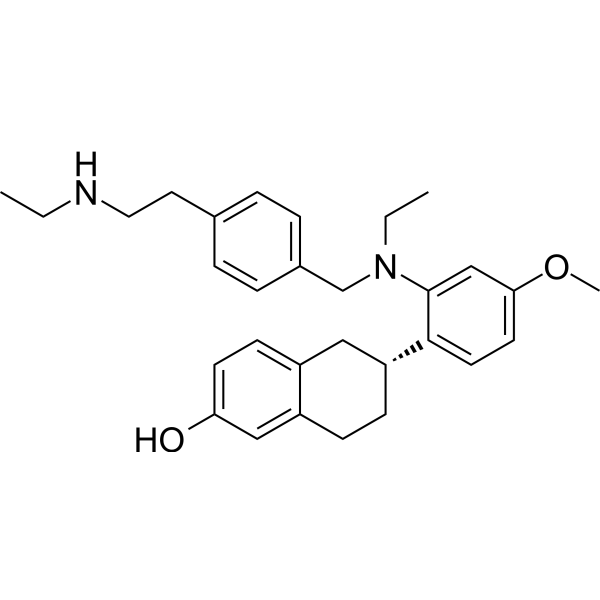
    RAD1901 S enantiomer

    Estrogen Receptor/ERR Cancer
    Elacestrant S enantiomer (RAD1901 S enantiomer) is an low activity enantiomer of elacestrant. Elacestrant (RAD1901) is a selective and orally available estrogen receptor (ERR) degrader with IC50 values of 48 and 870 nM for ERα and ERβ, respectively .
    Elacestrant (S enantiomer)
  • HY-128838

    PROTACs Estrogen Receptor/ERR Cancer
    PROTAC ERRα Degrader-1 comprises a MDM2 ligand binding group, a linker and an estrogen-related receptor alpha (ERRa) binding group. PROTAC ERRα Degrader-1 is an PROTAC estrogen-related receptor alpha (ERRa) degrader .
    PROTAC ERRα Degrader-1
  • HY-138642S

    ARV-471-d5

    Isotope-Labeled Compounds Cancer
    Vepdegestrant-d5 (ARV-471-d5) is the deuterium labeled Vepdegestrant (HY-138642). Vepdegestrant (ARV-471) is an orally active PROTAC estrogen receptor degrader against breast cancer. Vepdegestrant is a hetero-bifunctional molecule that facilitates the interactions between estrogen receptor alpha and an intracellular E3 ligase complex. Vepdegestrant leads to the ubiquitylation and subsequent degradation of estrogen receptors via the proteasome. Vepdegestrant robustly degrades ER in ER-positive breast cancer cell lines with a DC50 of about 2 nM .
    Vepdegestrant-d5
  • HY-W766497

    Isotope-Labeled Compounds Estrogen Receptor/ERR Inflammation/Immunology
    Alpha-Zearalenol-d7 is the deuterium labeled α-Zearalenol (HY-N6710). α-Zearalenol is a Mycotoxin with high affinity for the estrogen receptors (ER). α-Zearalenol is the derivative of zearalenone (ZEN), causes reproductive disorders in animals, due to its xenoestrogenic effects .
    Alpha-Zearalenol-d7
  • HY-19822B

    RAD1901 S enantiomer dihydrochloride

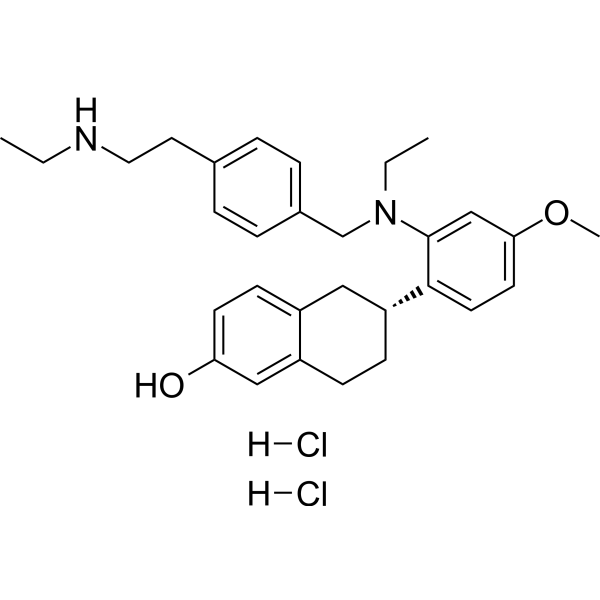
    Estrogen Receptor/ERR Cancer
    Elacestrant S enantiomer dihydrochloride (RAD1901 S enantiomer dihydrochloride) is an low activity enantiomer of elacestrant dihydrochloride. Elacestrant (RAD1901) dihydrochloride is a selective and orally available estrogen receptor (ERR) degrader with IC50 values of 48 and 870 nM for ERα and ERβ, respectively.
    Elacestrant S enantiomer dihydrochloride
  • HY-19498

    SIM-688

    NF-κB Inflammation/Immunology
    WAY-204688 is an estrogen receptor (ER-α) selective, orally active inhibitor of NF-κB transcriptional activity with an IC50 of 122 ± 30 nM for NF-κB-luciferase (NF-κB-luc) in HAECT-1 cells.
    WAY-204688
  • HY-168869

    PROTACs Estrogen Receptor/ERR Cancer
    Tamoxifen-PEG-Clozapine is an estrogen receptor α (ERα) PROTAC degrader. Tamoxifen-PEG-Clozapine degrades ERα via a ubiquitin-proteasome system that uses the ubiquitin protein ligase E3 component N-recognin 5. Tamoxifen-PEG-Clozapine can be used for the research of cancer . (Pink: ERα inhibitor (HY-W271653); Black: linker (HY-168870); Blue: CRBN Ligand (HY-G0021))
    Tamoxifen-PEG-Clozapine
  • HY-128839

    PROTACs Estrogen Receptor/ERR Cancer
    PROTAC ERRα Degrader-2 comprises a MDM2 ligand binding group, a linker and an estrogen-related receptor alpha (ERRa) binding group. PROTAC ERRα Degrader-2 is an estrogen-related receptor alpha (ERRa) degrader .
    PROTAC ERRα Degrader-2
  • HY-110392

    Estrogen Receptor/ERR Cancer
    CMP8, a selective ligand for estrogen receptor, binds to the mutant estrogen receptor ligand binding domain (ERLBD). CMP8 exhibits IC50 values of 29 nM , 41 nM, 1100 nM and 2200 nM for MGERα, MGRERα, hERα and hERβ, respectively .
    CMP8
  • HY-N2448

    Estrogen Receptor/ERR Endocrinology
    Lindleyin, isolated from Rhei rhizoma, mediates hormonal effects through estrogen receptors. Lindleyin binds to ERα with estrogenic activity .
    Lindleyin
  • HY-111484A

    SRN-927 Racemate

    Estrogen Receptor/ERR Cancer
    GDC-0927 Racemate (SRN-927 Racemate) is an estrogen receptor (ER) degrader that can effectively inhibit the activity of ER-α with an IC50 value of 0.2 nM and can be used in diseases related to estrogen receptors.
    GDC-0927 Racemate
  • HY-131404
    TPBM
    2 Publications Verification

    Estrogen Receptor/ERR Cancer
    TPBM is a potent estrogen receptor α (ERα) inhibitor with an IC50 value of 9 μM for 17β-estradiol (E2)-ERα. TPBM reduces E2·ERα recruitment to an endogenous estrogen-responsive gene. TPBM inhibits E2-dependent growth of ERα-positive cancer cells (IC50=5 μM). TPBM is not toxic to cells and does not affect estrogen-independent cell growth .
    TPBM
  • HY-138642A

    (Rac)-ARV-471

    Estrogen Receptor/ERR PROTACs Cancer
    (Rac)-Vepdegestrant is the isomer of Vepdegestrant (HY-138642). Vepdegestrant ((R)-Lavandulol) is an orally active PROTAC estrogen receptor degrader against breast cancer. Vepdegestrant is a hetero-bifunctional molecule that facilitates the interactions between estrogen receptor alpha and an intracellular E3 ligase complex. Vepdegestrant leads to the ubiquitylation and subsequent degradation of estrogen receptors via the proteasome. Vepdegestrant robustly degrades ER in ER-positive breast cancer cell lines with a half-maximal degradation concentration (DC50) of about 2 nM .
    (Rac)-Vepdegestrant
  • HY-144733

    Estrogen Receptor/ERR Apoptosis Cancer
    ERα antagonist 1 (Compound 19d) is a potent, selective, covalent estrogen receptor α (ERα) antagonist. ERα antagonist 1 induces apoptosis and cell cycle G0/G1 phase arrest in MCF-7 cells .
    ERα antagonist 1
  • HY-19822S

    RAD1901-d4

    Isotope-Labeled Compounds Estrogen Receptor/ERR Cancer
    Elacestrant-d4 (RAD1901-d4) is a deuterated labeled Elacestrant (HY-19822). Elacestrant (RAD1901) is a selective estrogen receptor (estrogen receptor, ER) degrader (SERD) with oral activity, with IC50 values of 48 and 870 nM for ERα and ERβ, respectively. Elacestrant can also effectively inhibit the growth of ER + breast cancer cell lines both in vitro and in vivo.
    Elacestrant-d4

Inquiry Online

Your information is safe with us. * Required Fields.

Salutation


Country or Region *

Applicant Name *


Organization Name *

Department *


Email Address *


Product Name *

Cat. No.


Requested quantity *

Phone Number *


Remarks

Inquiry Online

Inquiry Information

Product Name:
Cat. No.:
Quantity:
MCE Japan Authorized Agent:

