4 Results for "

G6P

" in MedChemExpress (MCE) Product Catalog:
Products (4)

4 Results for "G6P" in MCE Product Catalog:

Cat. No.: HY-15675
CAS No.: 919783-22-5
Purity:  98.09%
Target:  

Glucokinase

Research Areas:  

Metabolic Disease

AZD1656 is a potent, selective and orally active glucokinase activator with an EC50 of 60 nM. AZD1656 has the potential for type 2 diabetes research .
loading...
    loading...
Cat. No.: HY-130687A
CAS No.: 23140-52-5
Synonyms: DL-Psicose
Psicose (DL-Psicose) is an orally effective sugar substitute. Psicose activates the PI3K/Akt/mTOR pathway to promote muscle synthesis. Psicose upregulates IGF-1 and downregulates Myostatin. Psicose normalizes mitochondrial dysfunction by increasing G6P activity. Psicose enhances the activity of antioxidant enzymes and reduces oxidative stress markers. Psicose increases muscle mass, grip strength and muscle weight in aged mice and diet-induced obese mice. Psicose improves obesity and type 2 diabetes. Psicose can be used in the research of age-related sarcopenia .
loading...
    loading...
Cat. No.: HY-138877A
Target:  

Phosphatase

Research Areas:  

Cancer

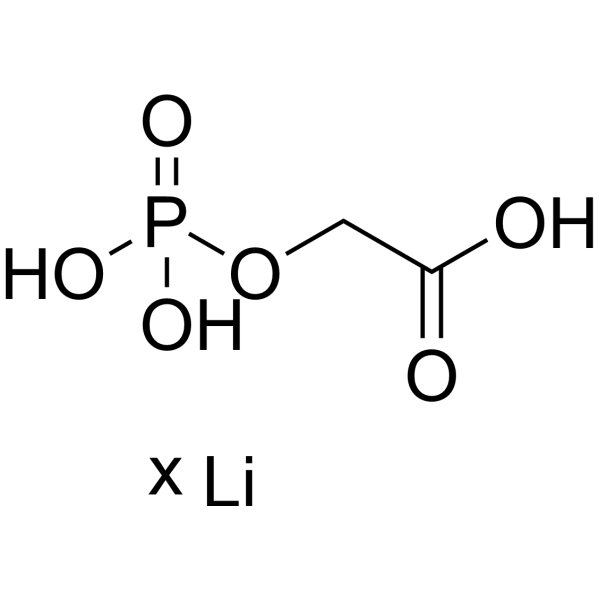
Phosphoglycolic acid (lithium) is a competitive inhibitor of phosphoglycerate mutase (PGAM)-B, an enzyme of the glycolytic pathway. Phosphoglycolic acid increases basal and fMLF-induced levels of G6P in intact neutrophils. Phosphoglycolic acid thereby increases upstream intermediates in neutrophils, thereby amplifying the respiratory oxidative burst .
loading...
    loading...
Cat. No.: HY-117746
CAS No.: 1638100-63-6
Target:  

Bacterial

Research Areas:  

Infection

KSK120 is a potent inhibitor of drug-resistant infections with specific activity against Chlamydia trachomatis (C. trachomatis). KSK120 inhibits the developmental cycle of C. trachomatis, thereby reducing the infectivity of progeny bacteria. KSK120 targets the glucose-6-phosphate (G-6P) metabolic pathway of C. trachomatis, showing its potential application in antimicrobial inhibition. The mechanism of KSK120 may involve inhibition of the transcriptional machinery, which provides new ideas for the development of specific drugs against C. trachomatis infection .
loading...
    loading...

