1. Search Result
Search Result
Results for "

GABA receptor agonist

" in MedChemExpress (MCE) Product Catalog:

64

Inhibitors & Agonists

1

Screening Libraries

3

Natural
Products

6

Isotope-Labeled Compounds

Targets Recommended:
Cat. No. Product Name Target Research Areas Chemical Structure
  • HY-B0007
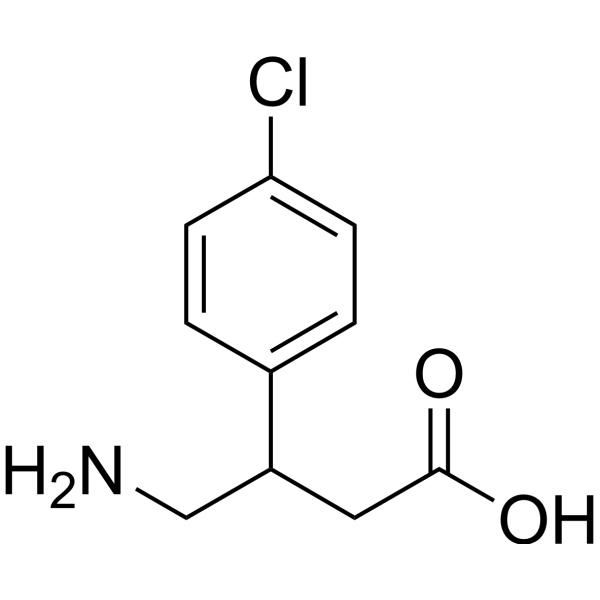
    Baclofen
    Maximum Cited Publications
    12 Publications Verification

    GABA Receptor Neurological Disease
    Baclofen, a lipophilic derivative of γ-aminobutyric acid (GABA), is an orally active, selective metabotropic GABAB receptor (GABABR) agonist with blood-brain barrier permeability. Baclofen mimics the action of GABA and produces slow presynaptic inhibition through the GABAB receptor. Baclofen has high blood brain barrier penetrance. Baclofen has the potential for muscle spasticity research .
    Baclofen
  • HY-17030

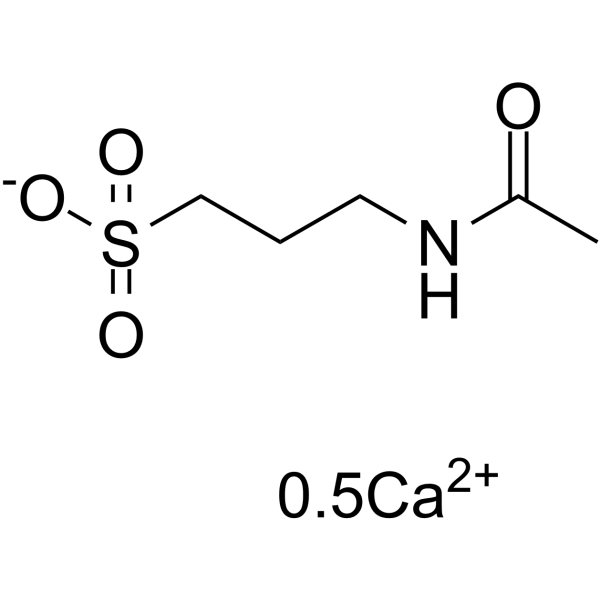
    Calcium N-acetylhomotaurinate

    GABA Receptor iGluR Neurological Disease
    Acamprosate calcium(Campral EC) is a GABA receptor agonist and modulator of glutamatergic systems; reduces alcohol consumption in animal models of alcohol addiction.
    Acamprosate calcium
  • HY-100810
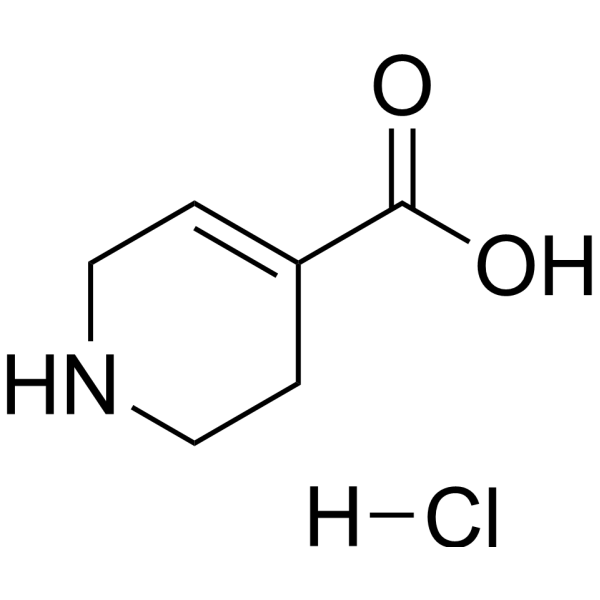
    Isoguvacine hydrochloride
    2 Publications Verification

    GABA Receptor Neurological Disease
    Isoguvacine hydrochloride is a GABA receptor agonist.
    Isoguvacine hydrochloride
  • HY-B0007C
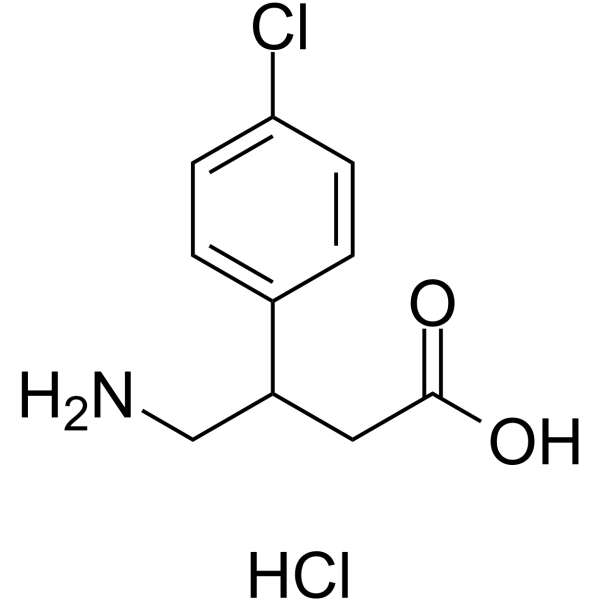
    Baclofen hydrochloride
    Maximum Cited Publications
    12 Publications Verification

    GABA Receptor Neurological Disease
    Baclofen hydrochloride, a lipophilic derivative of γ-aminobutyric acid (GABA), is an orally active, selective metabotropic GABAB receptor (GABABR) agonist. Baclofen hydrochloride mimics the action of GABA and produces slow presynaptic inhibition through the GABAB receptor. Baclofen hydrochloride has high blood brain barrier penetrance. Baclofen hydrochloride has the potential for muscle spasticity research .
    Baclofen hydrochloride
  • HY-108403

    β-Phenyl-GABA; 4-Amino-3-phenylbutanoic acid

    GABA Receptor Neurological Disease
    Phenibut (β-Phenyl-GABA) is a GABA-B agonist . Phenibut acts as a GABA-mimetic, primarily at GABAB receptors. Phenibut has anxiolytic and nootropic (cognition enhancing) effects .
    Phenibut
  • HY-W041333

    β-Phenyl-GABA hydrochloride; 4-Amino-3-phenylbutanoic acid hydrochloride; 4-Amino-3-phenylbutyric acid hydrochloride

    GABA Receptor Neurological Disease
    Phenibut (β-Phenyl-GABA) hydrochloride is an orally active GABA-B agonist . Phenibut hydrochloride acts as a GABA-mimetic, primarily at GABAB?receptors. Phenibut hydrochloride has anxiolytic and nootropic (cognition enhancing) effects .
    Phenibut hydrochloride
  • HY-U00315

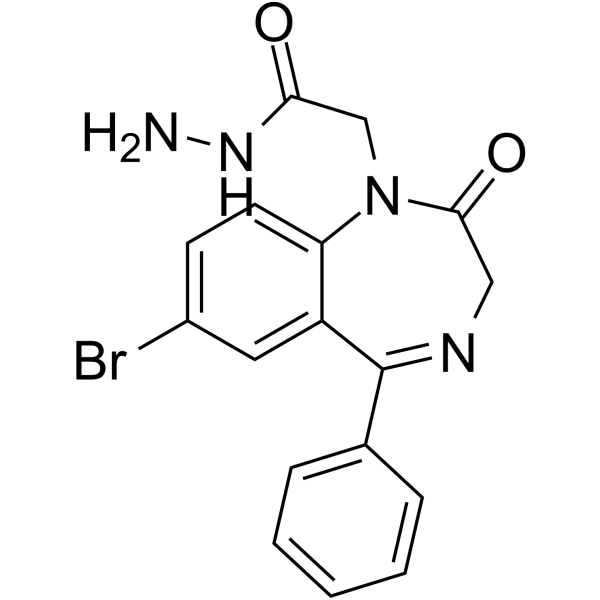
    Gidasepam; Hidazepam; Hydazepam

    GABA Receptor Neurological Disease
    Gidazepam is an agonist of GABA receptor channels (GABA RCs).
    Gidazepam
  • HY-A0173

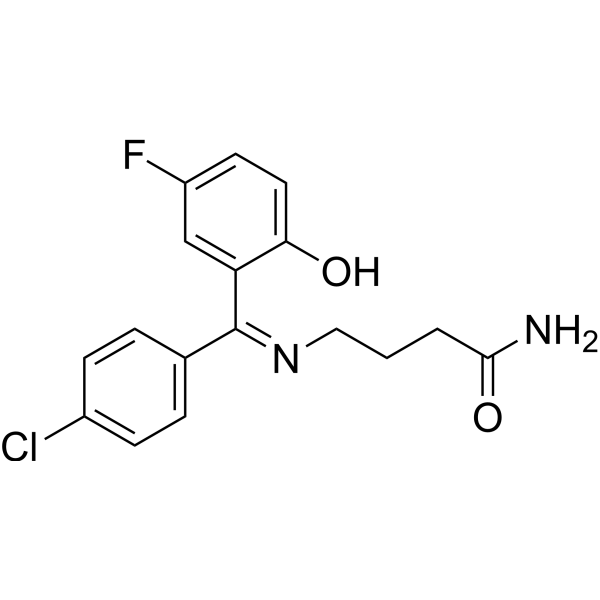
    SL 76002

    GABA Receptor Neurological Disease
    Progabide is a gamma-aminobutyric acid receptor (GABA) agonist.
    Progabide
  • HY-100800

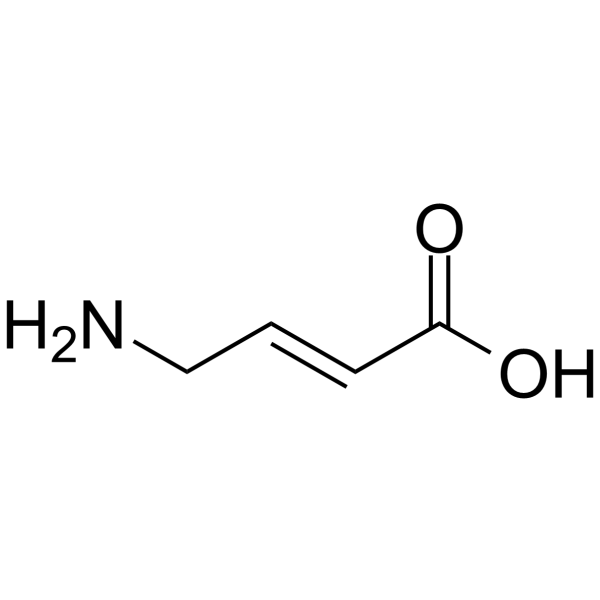
    trans-4-Aminocrotonic acid

    GABA Receptor Neurological Disease
    TACA (trans-4-Aminocrotonic acid) is a potent agonist of GABAA and GABAC receptors (KD= 0.6 μM). TACA also is GABA uptake inhibitor and substrate for GABA-T. TACA produces late biphasic responses in the MPG neurons .
    TACA
  • HY-100991

    ZK 39106; LSU-65

    GABA Receptor Neurological Disease
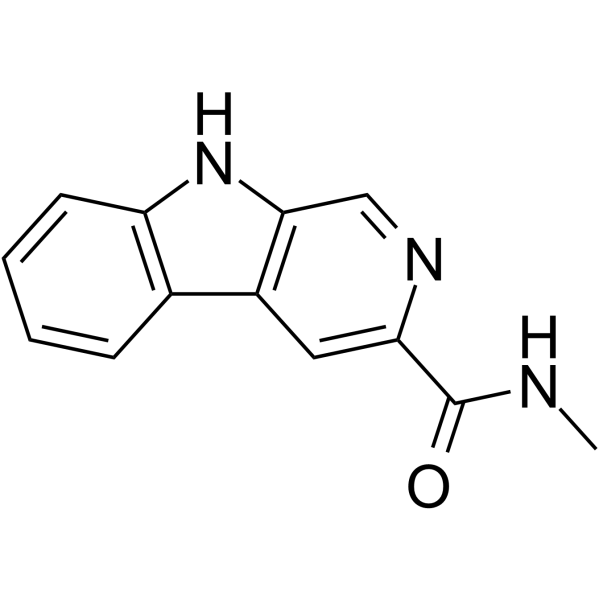
    FG 7142 (ZK 39106; LSU-65), a non-selectively benzodiazepine inverse agonist, has high affinity for the α1 subunit-containing GABAA receptor (Ki=91 nM). FG 7142 (ZK 39106; LSU-65) also modulates GABA-induced chloride flux at GABAA receptors expressing the α1 subunit (EC50= 137 nM). FG 7142 (ZK 39106; LSU-65) can increase tyrosine hydroxylation and cause upregulation of β-adrenoceptors in mouse cerebral cortex .
    FG 7142
  • HY-124030

    Drug Metabolite Neurological Disease
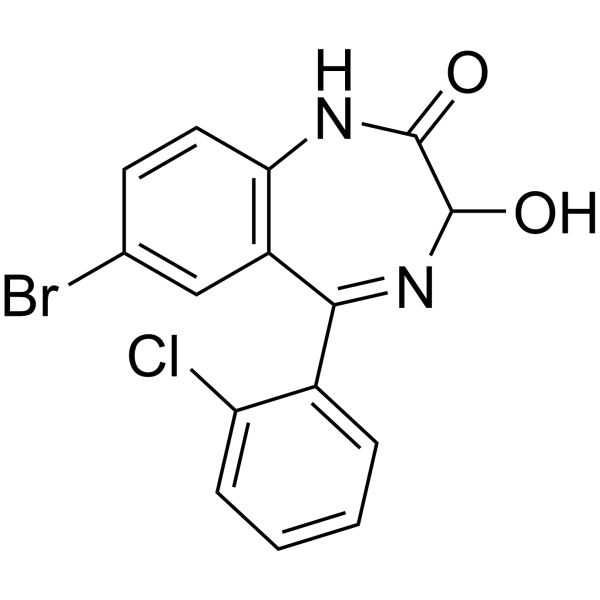
    3-Hydroxyphenazepam is an active metabolite of Cinazepam. Cinazepam is a GABAA receptor agonist. 3-Hydroxyphenazepam can inhibit synaptosomal transporter-mediated [ 3H]GABA uptake .
    3-Hydroxyphenazepam
  • HY-10061B

    AZD-3355 hydrochloride

    GABA Receptor Metabolic Disease
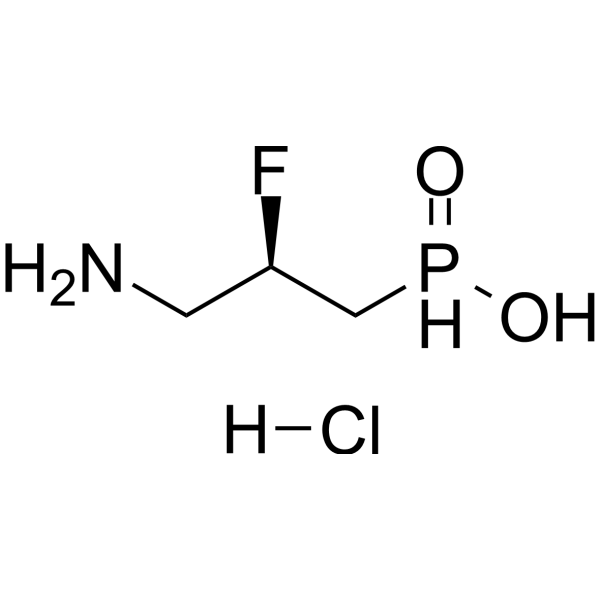
    Lesogaberan (AZD-3355) hydrochloride is a potent and selective GABAB receptor agonist with an EC50 of 8.6 nM for human recombinant GABAB receptor. The affinity (Kis) of Lesogaberan hydrochloride for rat GABAB and GABAA receptors, as measured by displacement of [ 3H]GABA binding in brain membranes: 5.1 nM and 1.4 μM, respectively. Lesogaberan hydrochloride inhibits transient lower esophageal sphincter relaxation through a peripheral mode of action .
    Lesogaberan hydrochloride
  • HY-101665

    (+)-RP-59037; IP-456; RP-62955

    GABA Receptor Neurological Disease
    Pagoclone is an active (+)-enantiomer of the racemate RP 59037. Pagoclone is a partial GABA(A) receptor agonist used for the treatment of panic and anxiety disorders.
    Pagoclone
  • HY-103133

    5-HT Receptor Neurological Disease
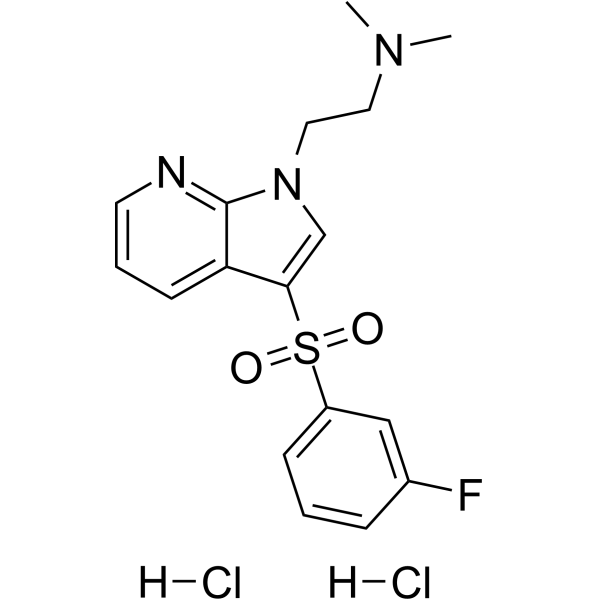
    WAY 208466 dihydrochloride is a potent and selective 5-HT6 receptor agonist (EC50=7.3 nM for the human 5-HT6 receptor). WAY-208466 dihydrochloride elevates cortical GABA levels in rat frontal cortex . WAY 208466 dihydrochloride exhibits antidepressant and anxiolytic-like effects .
    WAY208466 dihydrochloride
  • HY-W050122

    GABA Receptor Neurological Disease
    S-(+)-GABOB is an endogenous ligand with antiepileptic activity. S-(+)-GABOB is a metabolite of GABA and may function as a neurotransmitter. S-(+)-GABOB behaves as a full agonist when bound to the ρ(1) wild-type receptor. S-(+)-GABOB acts as a competitive antagonist in the ρ(1) T244S mutant receptor .
    S-(+)-GABOB
  • HY-129636

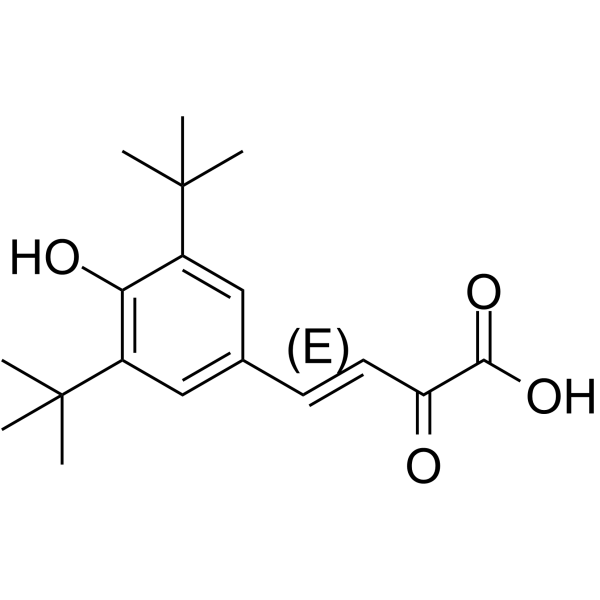
    (E)-GABAB receptor antagonist 1

    GABA Receptor ERK Neurological Disease
    CLH304a (compound 14) is a specific and noncompetitive GABAB receptor negative allosteric modulator (NAM). CLH304a decreases GABA-induced IP3 production with an IC50 of 37.9 μM. CLH304a has no effect on other GPCR Class C members such as mGluR1, mGluR2, and mGluR5. CLH304a acts on the heptahelical domain of GB2 subunits and non-competitively inhibits the effect of agonists with inverse agonist properties. CLH304a inhibits Baclofen (HY-B0007)-induced ERK1/2 phosphorylation in HEK293 cells overexpressing GABAB receptor .
    CLH304a
  • HY-W007686
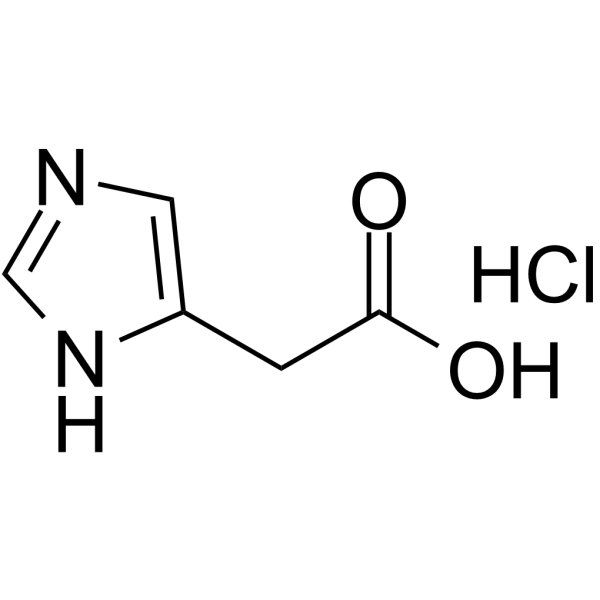
    Imidazoleacetic acid hydrochloride
    2 Publications Verification

    Imidazolyl-4-acetic acid hydrochloride

    Endogenous Metabolite GABA Receptor Neurological Disease
    Imidazoleacetic acid hydrochloride is a γ-aminobutyric acid receptor agonist. Imidazoleacetic acid hydrochloride inhibits GABA-T in a non-competitive manner, with a Ki value of 0.34 mM. Imidazoleacetic acid hydrochloride increases total free GABA in brain .
    Imidazoleacetic acid hydrochloride
  • HY-W105694

    (3-Aminopropyl)phosphonic acid

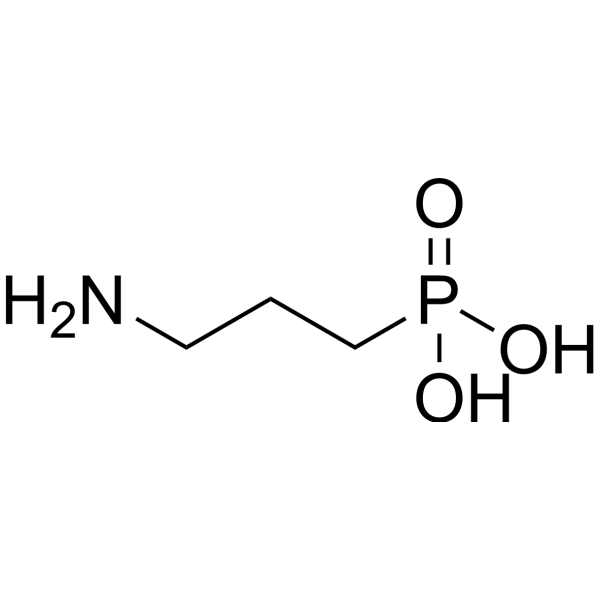
    GABA Receptor Neurological Disease
    3-Aminopropylphosphonic acid ((3-Aminopropyl)phosphonic acid) is a phosphonic acid analogue of GABA and a GABAB receptor agonist .
    3-Aminopropylphosphonic acid
  • HY-106316

    GABA Receptor Neurological Disease
    CGS 20625 is a potent, selective and orally active partial agonist for the central benzodiazepine receptor. CGS 20625 inhibits [3H]-flunitrazepam binding to central benzodiazepine receptors with an IC50 of 1.3 nM. CGS 20625 enhances GABA in Xenopus laevis oocytes . CGS 20625 can be used for the research of pentylenetetrazol-induced seizures and anxiety .
    CGS 20625
  • HY-170409

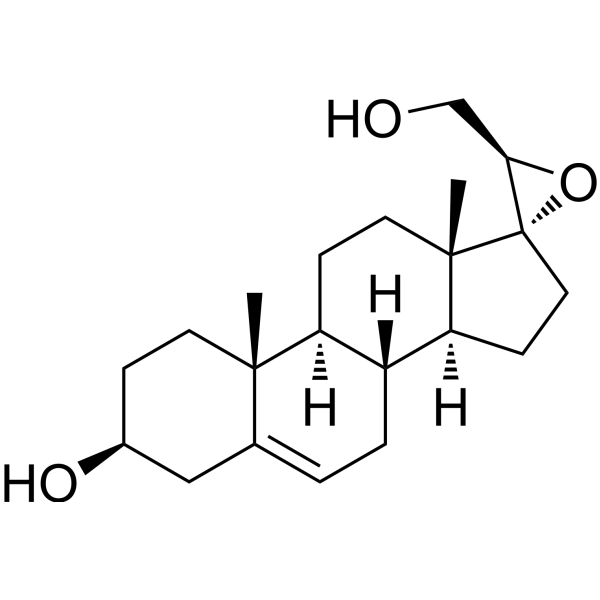
    Trk Receptor Apoptosis Neurological Disease Inflammation/Immunology
    BNN27 is the agonist for TrkA receptor and p75NTR receptor, that exhibits neurotrophic and anti-apoptotic effects. BNN27 increases the levels of glutamate, GABA, and glutamine in the rat hippocampus and prefrontal cortex, improves glutamate turnover. BNN27 exhibits neuroprotective efficacy in mouse amyotrophic lateral sclerosis (ALS) model, exhibits anti-inflammatory efficacy in experimental autoimmune encephalomyelitis (EAE) model, exhibits retinal protective efficacy in rat diabete models. BNN27 is blood-brain barrier penetrable .
    BNN27
  • HY-W794785

    5-HT Receptor Neurological Disease
    WAY 208466 is a selective 5-HT6 receptor agonist with an EC50 of 7.3 nM. WAY-208466 increases GABA levels following both acute and chronic administration in the dorsolateral frontal cortex of rat models with stereotaxic surgery. WAY 208466 can be used for anxiety-related disorders like obsessive compulsive disorder (OCD) research .
    WAY 208466
  • HY-106025

    AC-3933

    GABA Receptor Neurological Disease
    Radequinil (AC-3933) is a benzodiazepine receptor (BzR) partial inverse agonist. AC-3933 binds to GABA(-) and GABA(+) ligand with Kis of 5.15 and 6.11 nM, respectively .
    Radequinil
  • HY-115763

    3-APPA; CGP 27492; CGA 147823

    GABA Receptor Neurological Disease
    3-Aminopropylphosphinic acid (3-APPA) is a phosphonic analog of GABA. 3-Aminopropylphosphinic acid is a potent, selective GABAB receptor agonist .
    3-Aminopropylphosphinic acid
  • HY-B0007S2

    GABA Receptor Isotope-Labeled Compounds Neurological Disease
    Baclofen-d5 hydrochloride is deuterated labeled Baclofen (HY-B0007). Baclofen, a lipophilic derivative of γ-aminobutyric acid (GABA), is an orally active, selective metabotropic GABAB receptor (GABABR) agonist. Baclofen mimics the action of GABA and produces slow presynaptic inhibition through the GABAB receptor. Baclofen has high blood brain barrier penetrance. Baclofen has the potential for muscle spasticity research .
    Baclofen-d5 hydrochloride
  • HY-B0007R

    Reference Standards GABA Receptor Neurological Disease
    Baclofen (Standard) is the analytical standard of Baclofen. This product is intended for research and analytical applications. Baclofen, a lipophilic derivative of γ-aminobutyric acid (GABA), is an orally active, selective metabotropic GABAB receptor (GABABR) agonist. Baclofen mimics the action of GABA and produces slow presynaptic inhibition through the GABAB receptor. Baclofen has high blood brain barrier penetrance. Baclofen has the potential for muscle spasticity research .
    Baclofen (Standard)
  • HY-118259

    FG-8205

    GABA Receptor Neurological Disease
    L-663581 (FG-8205) is an agonist of benzodiazepine receptor, acting as a partial agonist at GABA A receptor .
    L-663581
  • HY-10061

    AZD-3355

    GABA Receptor Metabolic Disease
    Lesogaberan (AZD-3355) is a potent and selective GABAB receptor agonist with an EC50 of 8.6 nM for human recombinant GABAB receptors. The affinity (Kis) of Lesogaberan for rat GABAB and GABAA receptors, as measured by displacement of [ 3H]GABA binding in brain membranes: 5.1 nM and 1.4 μM, respectively. Lesogaberan inhibits transient lower esophageal sphincter relaxation through a peripheral mode of action .
    Lesogaberan
  • HY-W722556

    3α,5α-Androstanol

    GABA Receptor Constitutive Androstane Receptor Metabolic Disease
    5α-Androstan-3α-ol is a γ-aminobutyric acid (GABA) receptor agonist. 5α-Androstan-3α-ol can inhibit the transcriptional activity of the orphan nuclear receptor CAR (constitutive androstane receptor). 5α-Androstan-3α-ol negatively regulates the activity of CAR by binding to CAR and promoting its dissociation from coactivator proteins. 5α-Androstan-3α-ol can be used to study nuclear receptor-mediated hormone metabolism and drug detoxification mechanisms .
    5α-Androstan-3α-ol
  • HY-19308

    GABA Receptor Neurological Disease
    RWJ-51204 is a partial agonist of GABA(A) receptor, with Ki of 0.2-2 nM to the benzodiazepine site on GABA(A) receptors.
    RWJ-51204
  • HY-103225

    SB-737552 phosphate

    GABA Receptor Neurological Disease
    S-8510 (phosphate) is an inverse Benzodiazepine (BDZ) receptor agonist, with Kis of 34.6 nM, 36.2 nM for –GABA and +GABA respectively.
    S-8510 phosphate
  • HY-114685

    SB-737552 free base

    GABA Receptor Neurological Disease
    S-8510 free base is an inverse Benzodiazepine (BDZ) receptor agonist, with Kis of 34.6 nM, 36.2 nM for –GABA and +GABA respectively.
    S-8510 free base
  • HY-U00315S

    Gidasepam-d5; Hidazepam-d5; Hydazepam-d5

    GABA Receptor Neurological Disease
    Gidazepam-d5 is a deuterium labeled Gidazepam. Gidazepam is an agonist of GABA receptor channels (GABA RCs), and has anticonvulsant effect .
    Gidazepam-d5
  • HY-100124

    GABA Receptor Neurological Disease
    Bamaluzole is a GABA receptor agonist extracted from patent WO 2012064642 A1.
    Bamaluzole
  • HY-14856

    PD 0200390

    GABA Receptor Neurological Disease
    Atagabalin (PD 0200390) is a selective GABA (gamma-aminobutyric acid) receptor agonist with antianxiety and sedative effects. Atagabalin enhances the activity of the GABA receptor by binding to the α2δ subunit of the GABA receptor, thereby increasing the GABA mediated inhibition. This enhancement results in reduced excitability of neurons, helping to reduce anxiety and improve sleep. Atagabalin can be used to study neuropsychiatric disorders, anxiety or sleep disorders .
    Atagabalin
  • HY-118490

    DMMDPB

    GABA Receptor Neurological Disease
    T-2000 (DMMDPB) is an orally active GABA receptor agonist with anticonvulsant activities .
    T-2000
  • HY-114706

    MDL-26479

    GABA Receptor Neurological Disease
    Suritozole (MGL-26479) is a cognitive enhancer that acts as a partial inverse agonist of benzodiazepine receptor sites on GABAA ion channel complexes. Suritozole can be used in the study of neurodegenerative diseases .
    Suritozole
  • HY-106635

    RP31264

    GABA Receptor Neurological Disease
    Suriclone (RP31264) is a GABA receptor agonist. Suriclone is an anxiolytic agent with a high affinity for the benzodiazepine receptors. Suriclone has oral activity .
    Suriclone
  • HY-147735

    GABA Receptor Neurological Disease
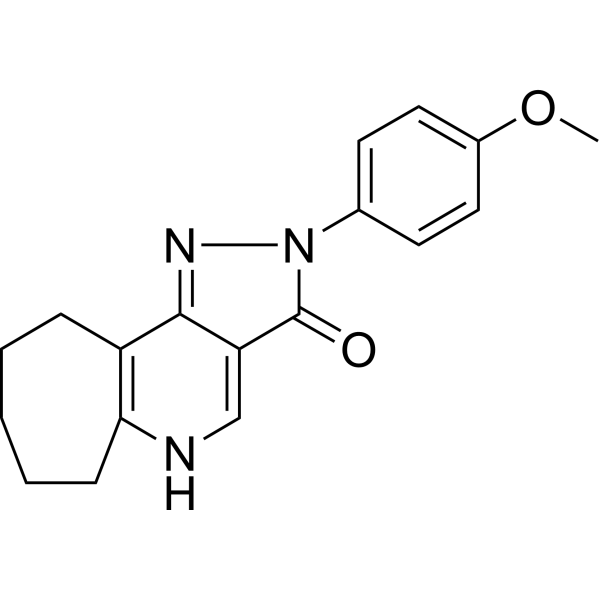
    GABAA receptor agonist 1 (compound 3e) is a potent GABAA receptor agonist. GABAA receptor agonist 1 shows anti-depression activities in classical mouse models of depression of FST and TST. GABAA receptor agonist 1 binds at the GABA binding site of GABAA receptor in order to produce GABAergic effects. GABAA receptor agonist 1 has the potential for the research of depression .
    GABAA receptor agonist 1
  • HY-147736

    GABA Receptor Neurological Disease
    GABAA receptor agonist 2 (compound 4c) is a potent GABAA receptor agonist. GABAA receptor agonist 2 shows anti-depression activities in classical mouse models of depression of FST and TST. GABAA receptor agonist 2 binds at the GABA binding site of GABAA receptor in order to produce GABAergic effects. GABAA receptor agonist 2 has the potential for the research of depression .
    GABAA receptor agonist 2
  • HY-129927

    GABA Receptor Others
    Thiomuscimol is a GABAA receptor agonist (IC50=19 nM). It has been used as a photoaffinity label for the purification and identification of GABA binding sites within the GABAA receptor complex.
    Thiomuscimol
  • HY-17030S

    Isotope-Labeled Compounds GABA Receptor iGluR Neurological Disease
    Acamprosate-d3 (calcium) is the deuterium labeled Acamprosate calcium. Acamprosate calcium is a GABA receptor agonist and modulator of glutamatergic systems .
    Acamprosate-d3 calcium
  • HY-110233S

    GABA Receptor Neurological Disease
    Acamprosate-d6 (calcium) is the deuterium labeled Acamprosate calcium. Acamprosate calcium (Campral EC) is a GABA receptor agonist and modulator of glutamatergic systems .
    Acamprosate-d6 calcium
  • HY-14856A

    iso-PD 0200390 hydrochloride

    GABA Receptor Others
    iso-Atagabalin (iso-PD 0200390) hydrochloride is a stereoisomer of Atagabalin (HY-14856). Atagabalin is a selective GABA (gamma-aminobutyric acid) receptor agonist with antianxiety effect .
    iso-Atagabalin hydrochloride
  • HY-W007686R

    Imidazolyl-4-acetic acid hydrochloride (Standard)

    Reference Standards Endogenous Metabolite GABA Receptor Metabolic Disease
    Imidazoleacetic acid (hydrochloride) (Standard) is the analytical standard of Imidazoleacetic acid (hydrochloride). This product is intended for research and analytical applications. Imidazoleacetic acid hydrochloride is a γ-aminobutyric acid receptor agonist. Imidazoleacetic acid hydrochloride inhibits GABA-T in a non-competitive manner, with a Ki value of 0.34 mM. Imidazoleacetic acid hydrochloride increases total free GABA in brain[1][2][3].
    Imidazoleacetic acid hydrochloride (Standard)
  • HY-B0007S

    Isotope-Labeled Compounds GABA Receptor Neurological Disease
    Baclofen-d4 is the deuterium labeled Baclofen. Baclofen, a lipophilic derivative of γ-aminobutyric acid (GABA), is an orally active, selective metabotropic GABAB receptor (GABABR) agonist. Baclofen mimics the action of GABA and produces slow presynaptic inhibition through the GABAB receptor. Baclofen has high blood brain barrier penetrance. Baclofen has the potential for muscle spasticity research .
    Baclofen-d4
  • HY-125508

    GABA Receptor Neurological Disease
    CCD-3693 is an orally active GABA receptor agonist. CCD-3693 has anxiolytic, anticonvulsant and sedative hypnotic activities and can be used in research related to neurological diseases .
    CCD-3693
  • HY-19006

    GABA Receptor Neurological Disease
    ZK-91296 is a GABA receptor agonist with anxiolytic activity. ZK-91296 can reduce anxiety in animals without causing sedation. ZK-91296 may have pharmacological selectivity for interaction with specific types of benzodiazepine receptors .
    ZK-91296
  • HY-105627A

    CI-572 hydrochloride

    GABA Receptor iGluR Cardiovascular Disease
    Profadol (CI-572) hydrochloride is a potent analgesic agent. Profadol is a µ-opioid receptor (MOR) agonist. Profadol hydrochloride activates the γ-aminobutyric acid (GABA) receptors and inhibits the N-methyl-D-aspartate (NMDA) receptor. Profadol increases the mRNA and protein expression of MOR .
    Profadol hydrochloride
  • HY-W707498

    Isotope-Labeled Compounds GABA Receptor Neurological Disease
    Baclofen-d4-1 is the deuterium labeled Baclofen (HY-B0007). Baclofen, a lipophilic derivative of γ-aminobutyric acid (GABA), is an orally active, selective metabotropic GABAB receptor (GABABR) agonist. Baclofen mimics the action of GABA and produces slow presynaptic inhibition through the GABAB receptor. Baclofen has high blood brain barrier penetrance. Baclofen has the potential for muscle spasticity research .
    Baclofen-d4-1
  • HY-113726

    GYKI52322; EGIS-6775

    GABA Receptor Neurological Disease
    Nerisopam is an orally active gamma-aminobutyric acid (GABA) receptor agonist. Nerisopam is an anxiolytic and antipsychotic homophthalazine. Nerisopam induces rapid, intense expression of Fos-like immunoreactivity in the rostral, dorsomedial and lateral parts of the striatum in the rat .
    Nerisopam

Inquiry Online

Your information is safe with us. * Required Fields.

Salutation


Country or Region *

Applicant Name *


Organization Name *

Department *


Email Address *


Product Name *

Cat. No.


Requested quantity *

Phone Number *


Remarks

Inquiry Online

Inquiry Information

Product Name:
Cat. No.:
Quantity:
MCE Japan Authorized Agent:

