11 Results for "

Green algae

" in MedChemExpress (MCE) Product Catalog:
Products (11)

11 Results for "Green algae" in MCE Product Catalog:

Cat. No.: HY-W011916
CAS No.: 1114-41-6
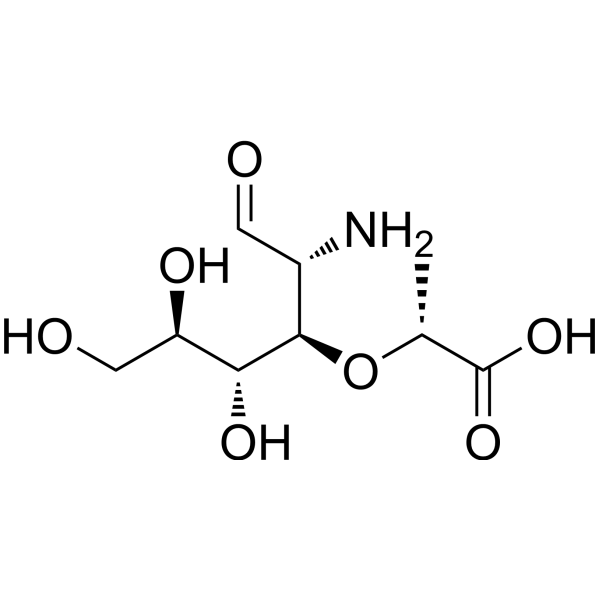
Synonyms: 3-O-Carboxyethyl-D-glucosamine
Muramic acid (3-O-Carboxyethyl-D-glucosamine) is a component found only in the cell walls of bacteria and blue-green algae. Muramic acid can be used to measure the biomass of microorganisms in environments such as estuaries, oceans, and soils .
loading...
    loading...
Cat. No.: HY-W062171
CAS No.: 19179-12-5
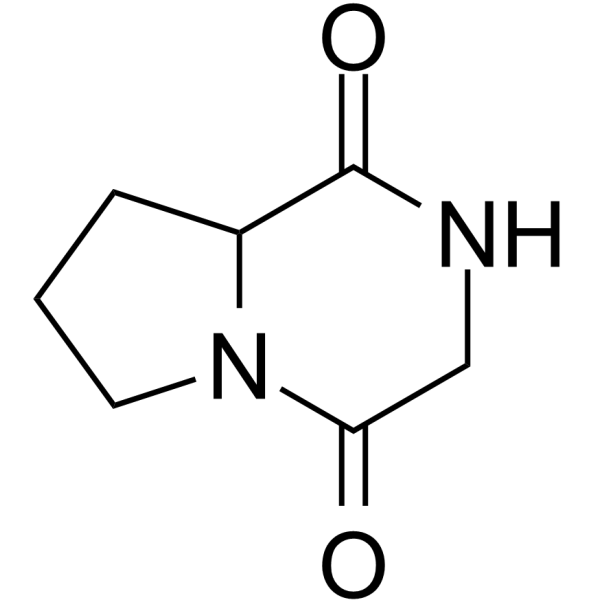
Synonyms: Pyrrolopiperazine-2,5-dione
Cyclo-(Pro-Gly) (Pyrrolopiperazine-2,5-dione), an alkaloid isolated from green algae Ulva prolifera, possesses antialgal activity against the common harmful red tide microalgae . Cyclo-(Pro-Gly) (Pyrrolopiperazine-2,5-dione) possesses antiamnesic effects and neuroprotective actions .
loading...
    loading...
Cat. No.: HY-136830
CAS No.: 102129-65-7
Purity:  ≥95.0%
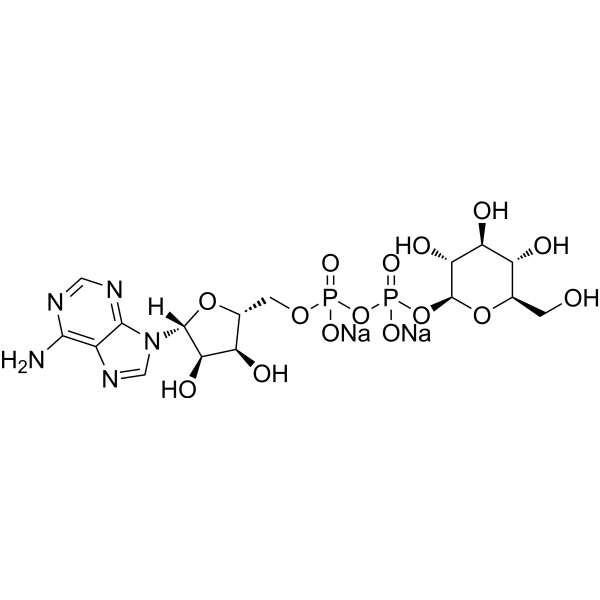
Synonyms: Adenosine-5'-diphosphoglucose disodium
ADP-Glucose disodiumIs an immediate precursor for the biosynthesis of storage polysaccharides in plants, green algae and cyanobacteria, and structural polysaccharides in some bacteria, by the addition of glucose. It is used to produce amylose, amylopectin, starch and other polysaccharides by amylose synthase or starch synthase in plastids. ADPGUsually produced in plastids, although it can be biosynthesized in the cytoplasm of some grasses and imported into plastids by membrane-bound transporters .
loading...
    loading...
Cat. No.: HY-W096997A
CAS No.: 142-31-4
Synonyms: Sodium capryl sulfate, 95%
Sodium octyl sulfate (Sodium capryl sulfate; SOS), 95% is a medium-chain anionic surfactant. Sodium octyl sulfate (SOS), 95% exhibits strong hydrophobic interactions with serum albumins (such as human serum albumin HSA and bovine serum albumin BSA), but only weak interactions with other proteins including myoglobin and hemoglobin. Sodium octyl sulfate (SOS), 95% acts as an environmental pollutant in freshwater ecosystems, mimicking the interspecific pheromones released by *Daphnia magna* to induce the formation of multicellular colonies in green algae .
loading...
    loading...
Cat. No.: HY-W062171R
CAS No.: 19179-12-5
Synonyms: Pyrrolopiperazine-2,5-dione (Standard)
Cyclo-(Pro-Gly) (Pyrrolopiperazine-2,5-dione), an alkaloid isolated from green algae Ulva prolifera, possesses antialgal activity against the common harmful red tide microalgae . Cyclo-(Pro-Gly) (Pyrrolopiperazine-2,5-dione) possesses antiamnesic effects and neuroprotective actions .
loading...
    loading...
Cat. No.: HY-W722087
CAS No.: 17301-28-9
3,6-Dimethylundecane is a type of di-methyl alkanoid compound. 3,6-Dimethylundecane is one of the various branched alkanes identified in the metabolic products of the desert blue-green algae Microcoleus vaginatus .
loading...
    loading...
Cat. No.: HY-W096997S
CAS No.: 1219802-16-0
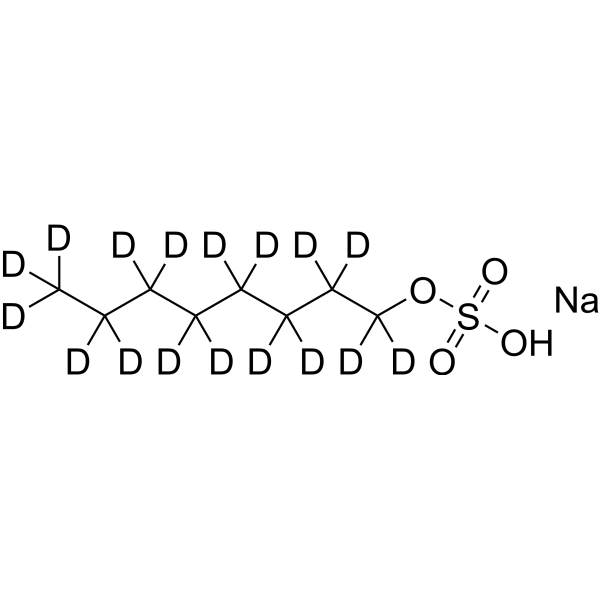
Synonyms: Sodium capryl sulfate-d17
Sodium octyl sulfate (SOS)-d17 (Sodium capryl sulfate-d17) is the deuterated analogue of Sodium octyl sulfate (SOS). Sodium octyl sulfate (Sodium capryl sulfate; SOS) is a medium‑chain anionic surfactant. Sodium octyl sulfate (SOS) can undergo strong hydrophobic interactions with serum albumins (such as human serum albumin (HSA) and bovine serum albumin (BSA)), while exhibiting weak interactions with other proteins including myoglobin and hemoglobin. As an environmental pollutant in freshwater ecosystems, Sodium octyl sulfate (SOS) can mimic interspecific pheromones released by Daphnia magna and induce the formation of multicellular colonies in green algae.
loading...
    loading...
Cat. No.: HY-N16492
CAS No.: 16421-58-2
D-Cysteinolic acid is found in starfish. D-Cysteinolic acid is also found in red alga and green algae .
loading...
    loading...
Cat. No.: HY-N14610
CAS No.: 883434-90-0
Target:  

Bacterial

Grahamimycin B has weak activity against Gram-positive bacteria, negative bacteria, cyanobacteria and green algae .
loading...
    loading...
Cat. No.: HY-E71652
Research Areas:  

Others

3,8-Divinyl protochlorophyllide a 8-vinyl-reductase (ferredoxin) (EC 1.3.7.13), found in many phototrophic bacteria, land plants, and some green and red algae, is involved in the production of monovinyl versions of (bacterio)chlorophyll pigments from their divinyl precursors.
loading...
    loading...
Cat. No.: HY-E71652A
Research Areas:  

Others

3,8-Divinyl protochlorophyllide a 8-vinyl-reductase (NADPH) (EC 1.3.1.75), found in higher plants, green algae, and some phototrophic bacteria, is involved in the production of monovinyl versions of (bacterio)chlorophyll pigments from their divinyl precursors, and can also act on 3,8-divinyl chlorophyllide a. cf.
loading...
    loading...
  • 1

