80 Results for "

H1299 cells

" in MedChemExpress (MCE) Product Catalog:
Products (80)

80 Results for "H1299 cells" in MCE Product Catalog:

19
19 Publications Verification
Cat. No.: HY-B0239
CAS No.: 56-75-7
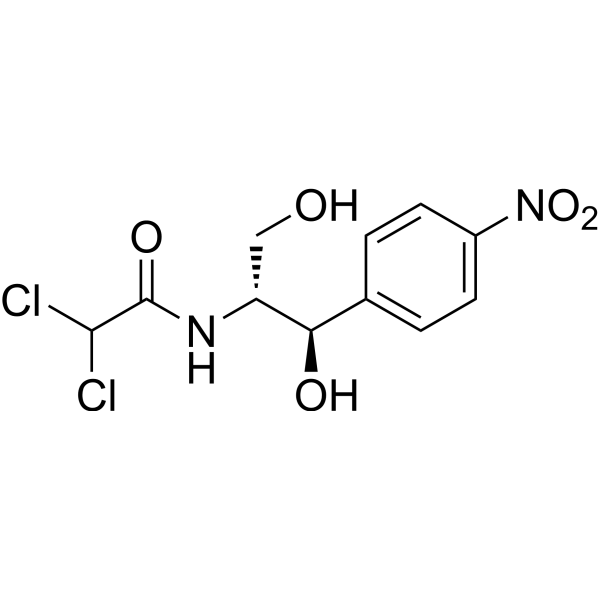
Chloramphenicol is an orally active, potent and broad-spectrum antibiotic. Chloramphenicol shows antibacterial activity. Chloramphenicol represses the oxygen-labile transcription factor and hypoxia inducible factor-1 alpha (HIF-1α) in hypoxic A549 and H1299 cells. Chloramphenicol suppresses the mRNA levels of vascular endothelial growth factor (VEGF) and glucose transporter 1, eventually decreasing VEGF release. Chloramphenicol can be used for anaerobic infections and lung cancer research .
loading...
    loading...
8
8 Cited Publications
Cat. No.: HY-122727
CAS No.: 1326852-06-5
Purity:  ≥98.0%
Target:  

DNA-PK Apoptosis

Research Areas:  

Cancer

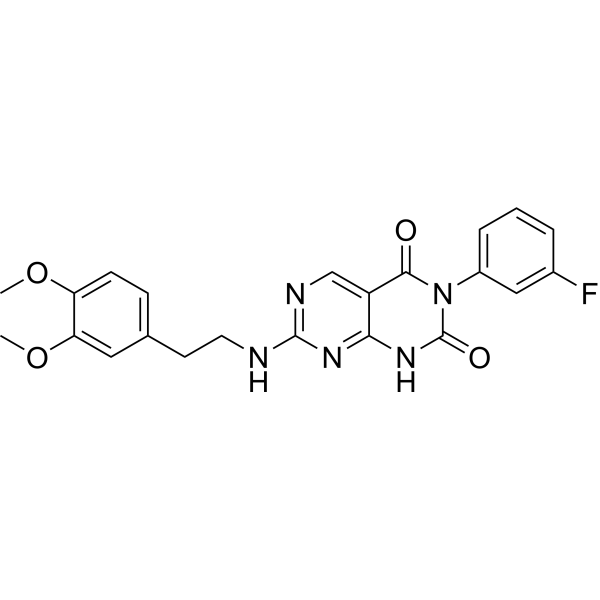
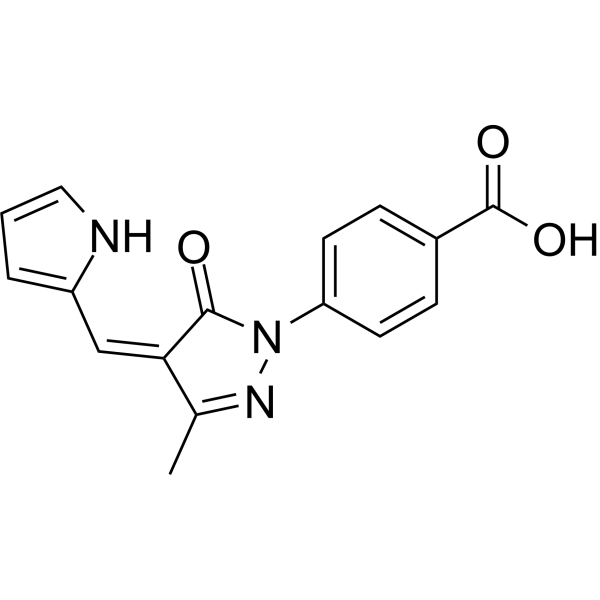
STL127705 (Compound L) is a potent Ku 70/80 heterodimer protein inhibitor with an IC50 of 3.5 μM. STL127705 interferes the binding of Ku70/80 to DNA and by inhibits the activation of the DNA-PKCS kinase. STL127705 shows antiproliferative and anticancer activity. STL127705 induces apoptosis .
loading...
    loading...
1
1 Cited Publications
Cat. No.: HY-N0060B
CAS No.: 537-98-4
Synonyms: (E)-Coniferic acid
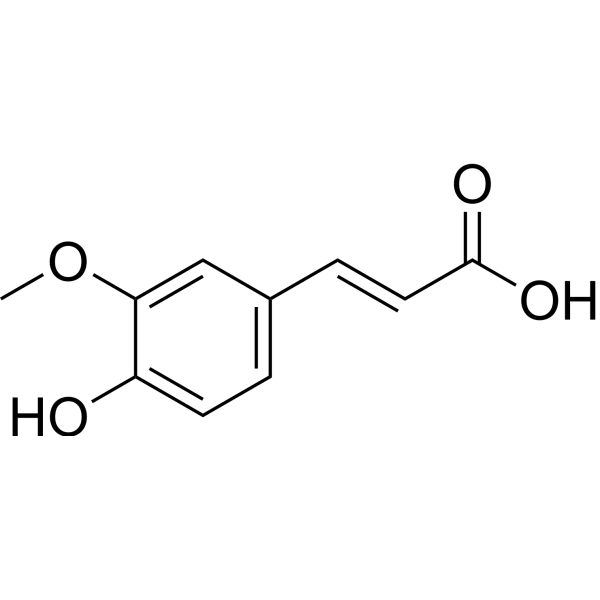
(E)-Ferulic acid is an isomer of ferulic acid, an aromatic compound abundant in plant cell walls. (E)-Ferulic acid causes phosphorylation of β-catenin (β-catenin), leading to proteasome degradation, increasing the expression of pro-apoptotic factor Bax and reducing pro-apoptotic factor Expression of the survival factor survivin. (E)-Ferulic acid can effectively remove reactive oxygen species (ROS) and inhibit lipid peroxidation. (E)-Ferulic acid exerts antiproliferative and antimigratory effects in the human lung cancer cell line H1299.
loading...
    loading...
1
1 Cited Publications
Cat. No.: HY-N3980
CAS No.: 489-86-1
Synonyms: Champacol; Guaiac alcohol
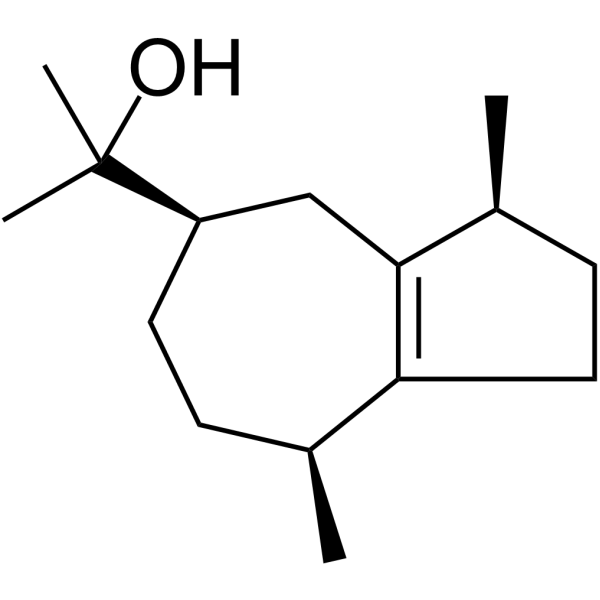
Guaiol is a sesquiterpenoid alcohol with oral activity found in various traditional Chinese medicines, exhibiting biological activities such as anti-proliferative, autophagy-promoting, insecticidal, anti-anxiety, anti-inflammatory, diuretic, and blood pressure-lowering effects. Guaiol induces apoptosis in non-small cell lung cancer cells by regulating the stability of RAD51 through autophagy modulation. Guaiol can also act directly on parasites, inhibiting their growth by affecting the kinetoplast, mitochondrial matrix and plasma membrane of the promastigotes. Guaiol kills amastigotes at an IC50 of 0.01 µg/mL. Guaiol can be used in research related to cancer, infections, cardiovascular diseases, and inflammatory conditions [4]
loading...
    loading...
1
1 Cited Publications
Cat. No.: HY-149302
CAS No.: 28532-21-0
Purity:  98.26%
Research Areas:  

Cancer

MC4033 shows IC50s of 39.4 μM, 52.1 μM, 41 μM and 30.1 μM in HCT116, H1299, A549 and U937, respectively .
MC4033 (25, 50, 100, and 200 μM, 72 h) reduces the level of H4K16Ac in HT29 cells, suggesting its ability to inhibit KAT8 in cells .
loading...
    loading...
Cat. No.: HY-P11056
CAS No.: 1198397-79-3
Target:  

MDM-2/p53

Research Areas:  

Others

REF1 peptide is a PORK1 agonist with an EC50 of 0.028 nM in tomato. REF1 peptide binds to the extracellular domain of PORK1, triggers receptor autophosphorylation, and drives downstream MPK3/MPK6 activation, thereby initiating defense and regeneration signaling cascades. REF1 peptide induces callus formation, inhibits shoot regeneration upon continuous exposure, and enhances the regeneration and transformation efficiency of recalcitrant dicotyledonous and monocotyledonous crops .
loading...
    loading...
Cat. No.: HY-162362
CAS No.: 3060730-06-2
Research Areas:  

Cancer

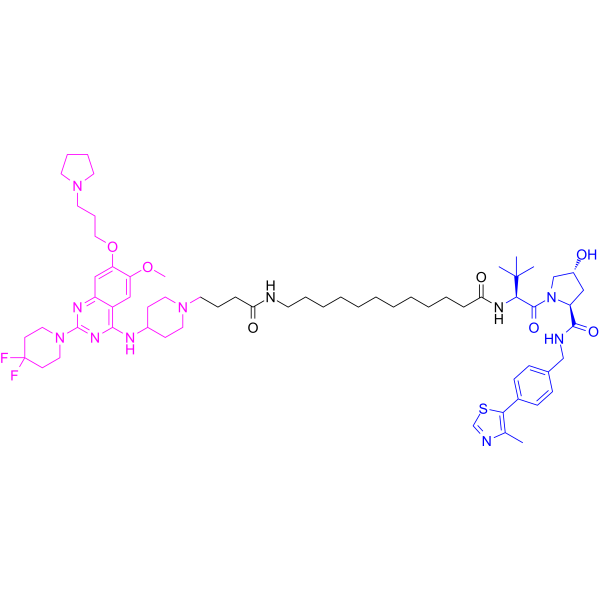
MS8709 is a PROTAC degrader that induces the degradation of G9a (EHMT2)/GLP (EHMT1) by recruiting VHL. MS8709 induces G9a/GLP protein degradation via a mechanism that simultaneously depends on G9a/GLP target protein binding, VHL recruitment, and the ubiquitin-proteasome system (UPS), while the mRNA levels of G9a and GLP do not show significant changes, indicating that the effect occurs primarily at the protein level rather than the transcriptional level. MS8709 retains the inhibitory effect on G9a/GLP methyltransferase activity and reduces H3K9me2 levels, thereby simultaneously affecting the catalytic and non-catalytic functions of G9a/GLP. MS8709 can be used for studies related to G9a/GLP biology, prostate cancer, lung cancer, and other relevant fields .
loading...
    loading...
Cat. No.: HY-174346
CAS No.: 3118494-67-7
Research Areas:  

Cancer

Skp2-IN-4 is an Skp2 inhibitor with a IC50 of 0.38  μM for Skp2-Cks1 binding. Skp2-IN-4 improves anti-tumor activity, inhibits the proliferation and induces S phase arrest by targeting Skp2. Skp2-IN-4 significantly enhances Cisplatin (HY-17394) chemosensitivity by suppressing the tumor cell stemness in NCl-H1299 xenograft mice model, promising for lung cancer and esophageal cancer research .
loading...
    loading...
Cat. No.: HY-B0239R
CAS No.: 56-75-7
Chloramphenicol (Standard) is the analytical standard of Chloramphenicol. This product is intended for research and analytical applications. Chloramphenicol is an orally active, potent and broad-spectrum antibiotic. Chloramphenicol shows antibacterial activity. Chloramphenicol represses the oxygen-labile transcription factor and hypoxia inducible factor-1 alpha (HIF-1α) in hypoxic A549 and H1299 cells. Chloramphenicol suppresses the mRNA levels of vascular endothelial growth factor (VEGF) and glucose transporter 1, eventually decreasing VEGF release. Chloramphenicol can be used for anaerobic infections and lung cancer research .
loading...
    loading...
Cat. No.: HY-16018
CAS No.: 1227939-82-3
Synonyms: ABT-348
Target:  

Aurora Kinase VEGFR PDGFR

Research Areas:  

Cancer

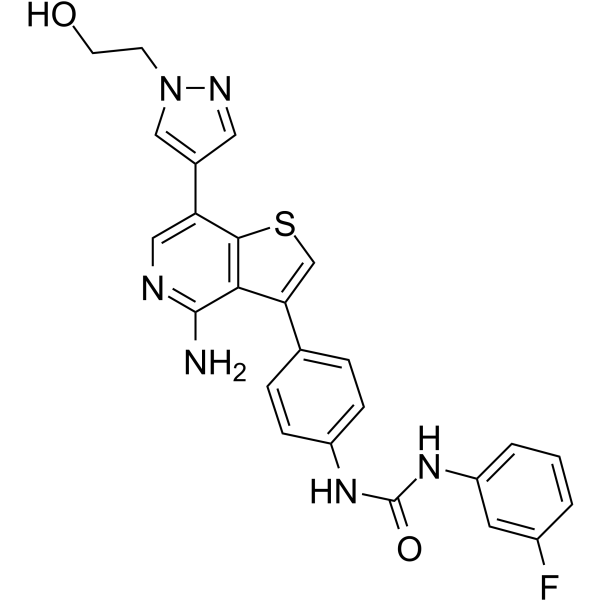
Ilorasertib (ABT-348) is a potent, orally active and ATP-competitive aurora inhibitor with IC50s of116, 5, 1 nM for aurora A, aurora B, aurora C, respectively. Ilorasertib also is a potent VEGF, PDGF inhibitor. Ilorasertib has the potential for the research of acute myeloid leukemia (AML) and myelodysplastic syndrome (MDS) .
loading...
    loading...
Cat. No.: HY-16018A
CAS No.: 1847485-91-9
Synonyms: ABT-348 hydrochloride
Target:  

Aurora Kinase PDGFR VEGFR

Research Areas:  

Cancer

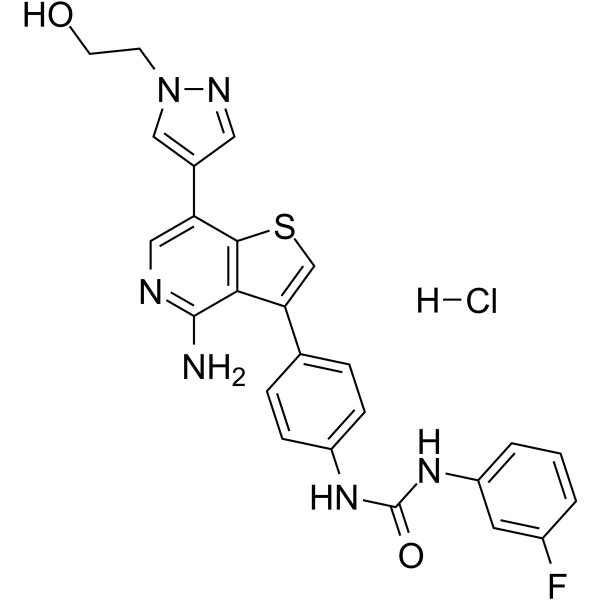
Ilorasertib (ABT-348) hydrochloride is a potent, orally active and ATP-competitive aurora inhibitor with IC50s of116, 5, 1 nM for aurora A, aurora B, aurora C, respectively. Ilorasertib hydrochloride also is a potent VEGF, PDGF inhibitor. Ilorasertib hydrochloride has the potential for the research of acute myeloid leukemia (AML) and myelodysplastic syndrome (MDS) .
loading...
    loading...
Cat. No.: HY-141482
CAS No.: 2306039-66-5
Purity:  99.81%
Target:  

E1/E2/E3 Enzyme

Research Areas:  

Cancer

WSB1 Degrader 1 is an orally active WSB1 degrader that inhibits cancer cell migration. WSB1 Degrader 1 induces time- and concentration-dependent degradation of WSB1 in a proteasome-dependent manner, increases RhoGDI2 protein levels, and reduces WSB1-driven F-actin organization and membrane ruffling. WSB1 Degrader 1 can be used in studies of cancer metastasis .
loading...
    loading...
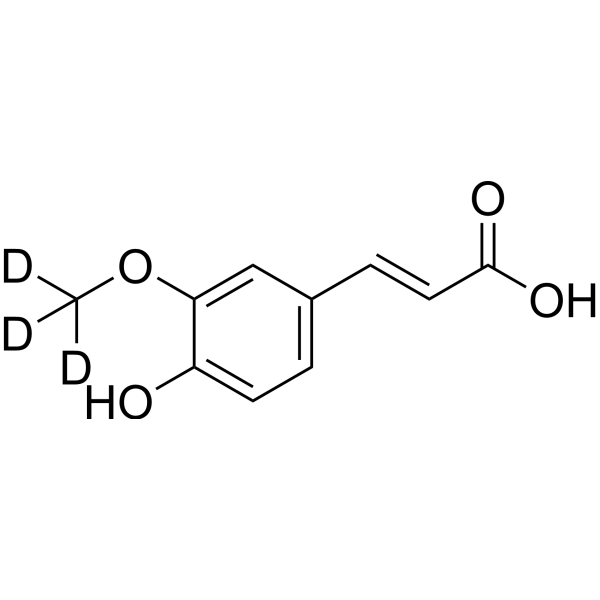
Cat. No.: HY-N0060BS
CAS No.: 860605-59-0
Synonyms: (E)-Coniferic acid-d3
(E)-Ferulic acid-d3 is the deuterium labeled (E)-Ferulic acid. (E)-Ferulic acid is a isomer of Ferulic acid which is an aromatic compound, abundant in plant cell walls. (E)-Ferulic acid causes the phosphorylation of β-catenin, resulting in proteasomal degradation of β-catenin and increases the expression of pro-apoptotic factor Bax and decreases the expression of pro-survival factor survivin. (E)-Ferulic acid shows a potent ability to remove reactive oxygen species (ROS) and inhibits lipid peroxidation. (E)-Ferulic acid exerts both anti-proliferation and anti-migration effects in the human lung cancer cell line H1299 .
loading...
    loading...
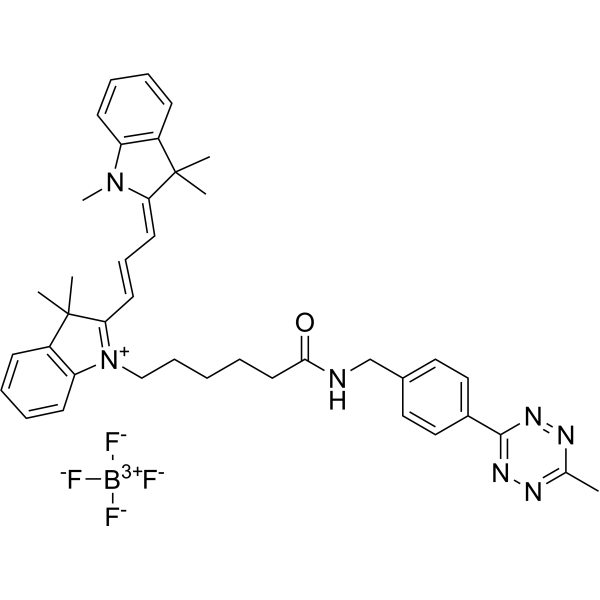
Cat. No.: HY-151776
CAS No.: 2183473-57-4
Purity:  97.36%
Synonyms: TZ-Cy3
Cy3 methyltetrazine (TZ-Cy3) is a click chemistry reagent with methyltetrazine building blocks that is highly reactive towards cyclooctene. Cy3 methyltetrazine is also a tetrazine-modified fluorescent probe that can be used to analyze protein phosphorylation in solution and living cells .
loading...
    loading...
Cat. No.: HY-163502
CAS No.: 3033746-17-4
Target:  

PROTACs STAT

Research Areas:  

Cancer

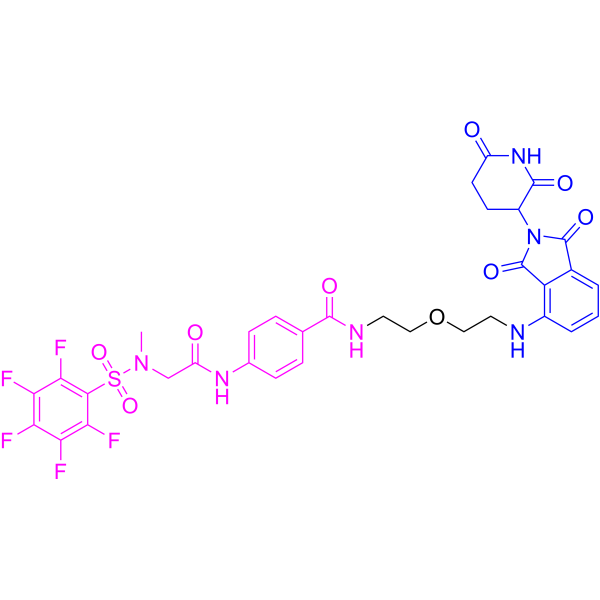
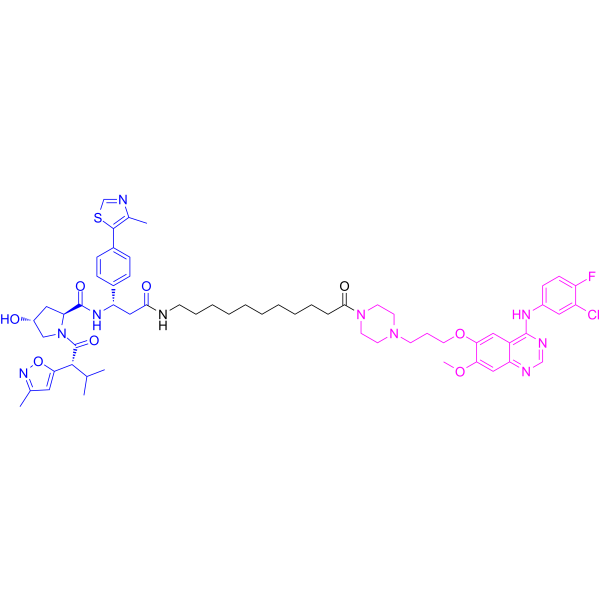
PROTAC STAT3 degrader-3 is a STAT3 PROTAC degrader. PROTAC STAT3 degrader-3 recruits the E3 ubiquitin ligase CRBN and induces the degradation of STAT3 protein. PROTAC STAT3 degrader-3 inhibits the proliferation of malignant tumor cells. PROTAC STAT3 degrader-3 can be used for the research of non-small cell lung cancer and liver cancer .
loading...
    loading...
Cat. No.: HY-168530
CAS No.: 3122200-59-0
Target:  

PD-1/PD-L1

Research Areas:  

Cancer

PDL1 degrader-1 is a palmatine-derived PD-L1 degrader. PDL1 degrader-1 interacts with and inhibits deubiquitinase CSN5, inducing PD-L1 Ub/proteasome-dependent degradation. PDL1 degrader-1 can be used for the research of non-small cell lung cancer .
loading...
    loading...
Cat. No.: HY-147942
CAS No.: 2772612-96-9
Purity:  98.95%
Target:  

PROTACs EGFR

Research Areas:  

Cancer

MS9449 is a potent PROTAC EGFR degrader, with Kd values of 17 nM and 10 nM for wild-type EGFR and mutant EGFR L858R, respectively, and a DC50 of 7.1 nM for EGFR Del19. MS9449 effectively induces the degradation of mutant EGFR through the ubiquitin-proteasome system (UPS) and the autophagy-lysosome pathway. MS9449 exhibits anticancer activity against non-small cell lung cancer. MS9449 can be applied in related research on non-small cell lung cancer .
loading...
    loading...
Cat. No.: HY-142094
CAS No.: 675190-57-5
Research Areas:  

Cancer

NSD3-IN-2 is a potent NSD3 inhibitor with an IC50 value of 17.97 μM. NSD3-IN-2 inhibits the growth and proliferation of non-small cell lung cancer cell lines H460, H1299 and H1650 with anti-cancer activity .
loading...
    loading...
Cat. No.: HY-175874
CAS No.: 353258-94-3
Research Areas:  

Cancer

Tubulin-IN-55 is a tubulin inhibitor. Tubulin-IN-55 disrupts the PI3K/Akt signaling pathway in cancer cells. Tubulin-IN-55 exerts broad-spectrum anti-proliferative activity against multiple tumor cells (HeLa, HCT116, 4T1, A549, H1299, MDA-MB231). Tubulin-IN-55 induces G2/M phase arrest and apoptosis, and inhibits tumor cell migration/invasion in cancer cells. Tubulin-IN-55 demonstrates potent antitumor efficacy in orthotopic autologous transplantation mice. Tubulin-IN-55 can be used for the study of cancer .
loading...
    loading...
Cat. No.: HY-163564
CAS No.: 3117543-71-9
Target:  

PROTACs PINK1/Parkin

Research Areas:  

Neurological Disease Cancer

JYQ-194 is a PROTAC degrader that selectively induces PARK7 degradation by recruiting cereblon. JYQ-194 induces proteasome-dependent degradation of PARK7 in human tumor cells. JYQ-194 is applicable to research related to Parkinson's disease and cancer .
loading...
    loading...

