4 Results for "

Indochlorophenol

" in MedChemExpress (MCE) Product Catalog:
Products (4)

4 Results for "Indochlorophenol" in MCE Product Catalog:

1
1 Cited Publications
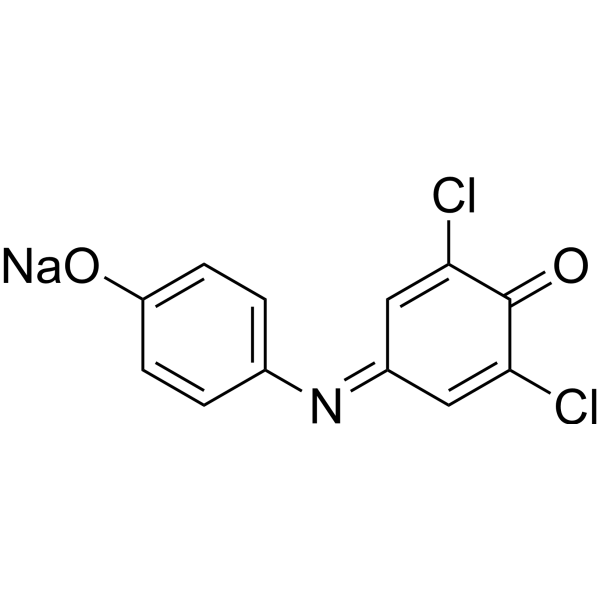
Cat. No.: HY-D0018
CAS No.: 620-45-1
Synonyms: Dichlorophenylindophenol sodium; DCPIP sodium; Indochlorophenol sodium
DCIP sodium is a blue dye commonly used in various biochemical and biotechnological applications as an indicator of redox reactions. DCIP sodium has unique chemical properties that change color according to the oxidation state of the substance being tested. It is commonly used in enzyme assays, such as measuring the activity of succinate dehydrogenase, or in protein quantification methods, such as the Lowry assay.
loading...
    loading...
1
1 Cited Publications
Cat. No.: HY-P10579
CAS No.: 2225868-19-7
Target:  

Ephrin Receptor

Research Areas:  

Cancer

123B9, a tumor-homing agent, is a potent and selective EphA2 agonist with a Kd value of 4.0 μM. 123B9 selectively targets the EphA2 tyrosine kinase receptor ligand-binding domain. 123B9 does not appreciably inhibit the ligand binding domains of the most closely related EphA3 and EphA4 receptors .
loading...
    loading...
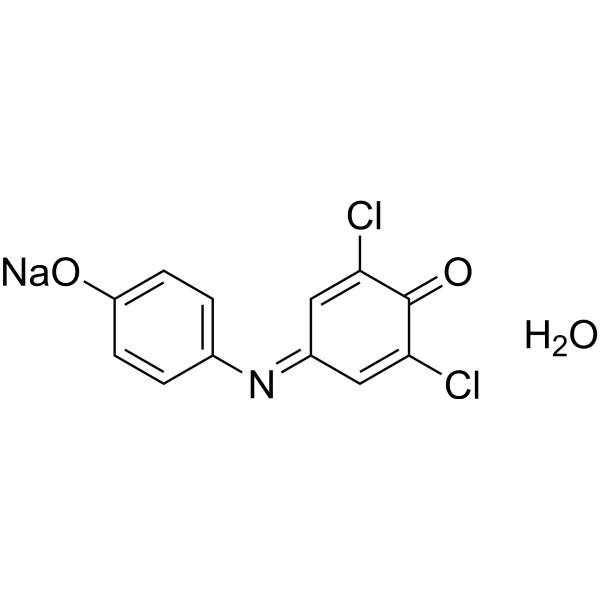
Cat. No.: HY-D0018A
CAS No.: 283164-79-4
Synonyms: Dichlorophenylindophenol hydrate sodium; DCPIP hydrate sodium; Indochlorophenol hydrate sodium
Research Areas:  

Others

DCIP hydrate sodium is a biochemical reagent that can be used as a biological material or organic compound for life science related research.
loading...
    loading...
Cat. No.: HY-D0018R
CAS No.: 620-45-1
Synonyms: Dichlorophenylindophenol sodium (Standard); DCPIP sodium (Standard); Indochlorophenol sodium (Standard)
DCIP (sodium) (Standard) is the analytical standard of DCIP (sodium). This product is intended for research and analytical applications. DCIP sodium is a blue dye commonly used in various biochemical and biotechnological applications as an indicator of redox reactions. DCIP sodium has unique chemical properties that change color according to the oxidation state of the substance being tested. It is commonly used in enzyme assays, such as measuring the activity of succinate dehydrogenase, or in protein quantification methods, such as the Lowry assay.
loading...
    loading...

