Search Result
Results for "
KV channels
" in MedChemExpress (MCE) Product Catalog:
1
Biochemical Assay Reagents
4
Isotope-Labeled Compounds
| Cat. No. |
Product Name |
Target |
Research Areas |
Chemical Structure |
-
- HY-139791
-
|
XEN1101
|
Potassium Channel
|
Neurological Disease
|
|
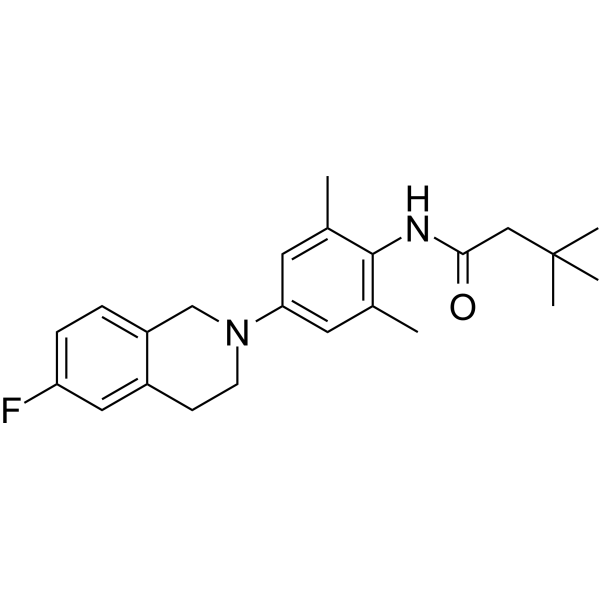
Azetukalner (XEN1101) is a selective and orally active Kv7.2/Kv7.3 potassium channel opener with an EC50 of 27 nM. Azetukalner is approximately 4-fold more selective for Kv7.2/7.3 over Kv7.3/7.5 (EC50 of 94 nM) and Kv7.4 (EC50 of 113 nM) channels. Azetukalner exhibits a selectivity >100-fold for Kv7 channels over other ion channels and receptors. Azetukalner can be used for the study of focal epilepsy .
|
-
-
- HY-B0267
-
|
|
mAChR
Potassium Channel
|
Neurological Disease
Cancer
|
|
Oxybutynin is an anticholinergic agent, which inhibits vascular Kv channels in a concentration-dependent manner, with an IC50 of 11.51 μM . Oxybutynin is a click chemistry reagent, it contains an Alkyne group and can undergo copper-catalyzed azide-alkyne cycloaddition (CuAAc) with molecules containing Azide groups.
|
-
-
- HY-50722
-
|
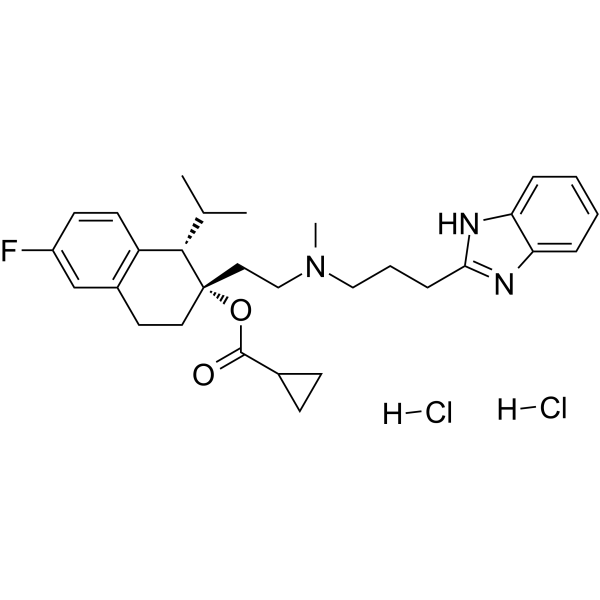
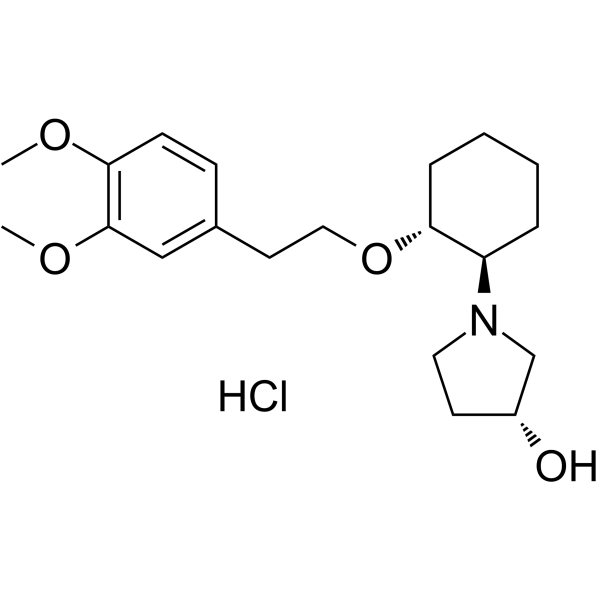
NNC 55-0396 dihydrochloride
|
Calcium Channel
Cytochrome P450
|
Cardiovascular Disease
Neurological Disease
Cancer
|
|
NNC 55-0396 (NNC 55-0396 dihydrochloride) is a blood-brain-barrier-permeable T-type Ca 2+ channel inhibitor and pan-P450 inhibitor. NNC 55-0396 selectively inhibits T-type Ca 2+ channels, suppresses HIF-1α expression and stability and inhibits Kv currents. NNC 55-0396 reduces brain infarct and attenuates neurological dysfunction. NNC 55-0396 inhibits the activity of multiple P450 enzymes. NNC 55-0396 (free base) can be used for the research of brain injury, hypertension, and glioblastoma .
|
-
-
- HY-117639
-
|
|
Potassium Channel
|
Neurological Disease
|
|
AUT1 is a recombinant human Kv3 channel modulator. AUT1 modulates Kv3.1b and Kv3.2a channels in human recombinant with pEC50 values of 5.33 and 5.31 μM, respectively. AUT1 can be used for the research of disorders associated with dysfunction of inhibitory feedback in corticolimbic circuits, such as schizophrenia .
|
-
-
- HY-10015
-
|
5-(4-Phenoxybutoxy)psoralen
|
Potassium Channel
|
Inflammation/Immunology
|
|
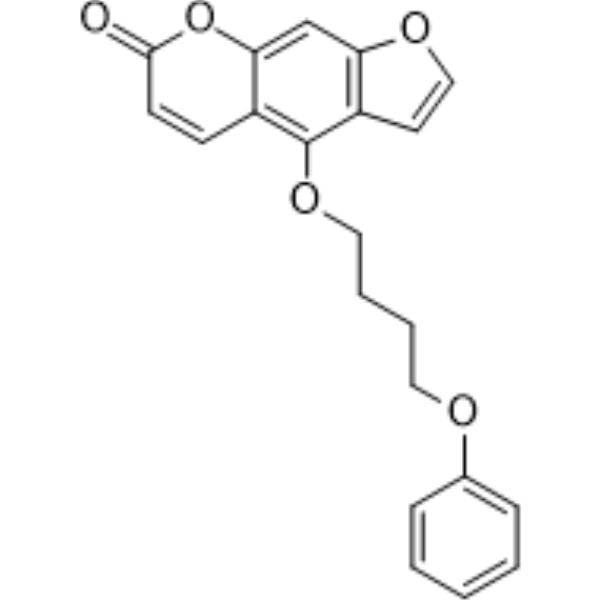
PAP-1 (5-(4-Phenoxybutoxy)psoralen) is a potent, selective, and orally active Kv1.3 blocker (EC50=2 nM). PAP-1 blocks Kv1.3 in a use-dependent manner and acts by preferentially binding to the C-type inactivated state of the channel. PAP-1 exhibits 23-fold selectivity over Kv1.5 (EC50=45 nM), and further displays 33- to 125-fold selectivity over all other Kv1-family channels. PAP-1 does not exhibit cytotoxic or phototoxic effects .
|
-
-
- HY-B0267A
-
|
|
mAChR
Potassium Channel
|
Neurological Disease
Cancer
|
|
Oxybutynin chloride is an oral active and competitive mAChR antagonist with Kis of 14.3 and 5.55 nM for specific [ 3H]NMS binding in the mouse bladder and cerebral cortex, respectively. Oxybutynin chloride inhibits vascular Kv channels in a manner independent of anticholinergic effect, with an IC50 value of 11.51 μM. Oxybutynin chloride reduces muscle spasm in the bladder and urinary tract, can be used in study of overactive bladder syndrome (OAB) . Oxybutynin (chloride) is a click chemistry reagent, it contains an Alkyne group and can undergo copper-catalyzed azide-alkyne cycloaddition (CuAAc) with molecules containing Azide groups.
|
-
-
- HY-101843
-
-
-
- HY-108577
-
|
|
Potassium Channel
|
Neurological Disease
|
|
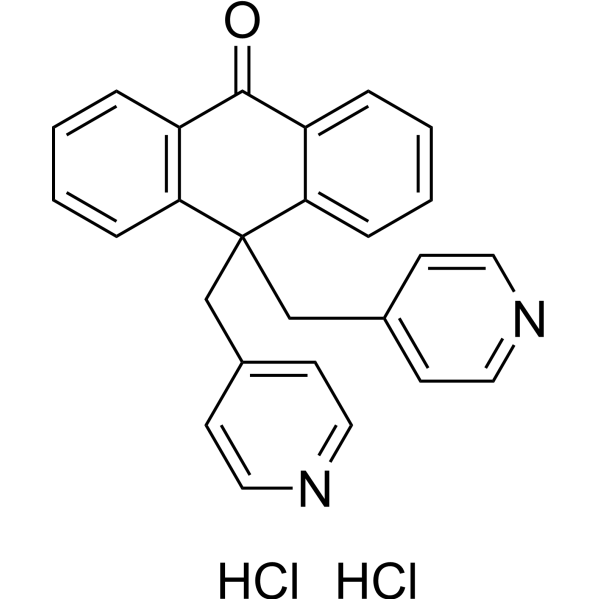
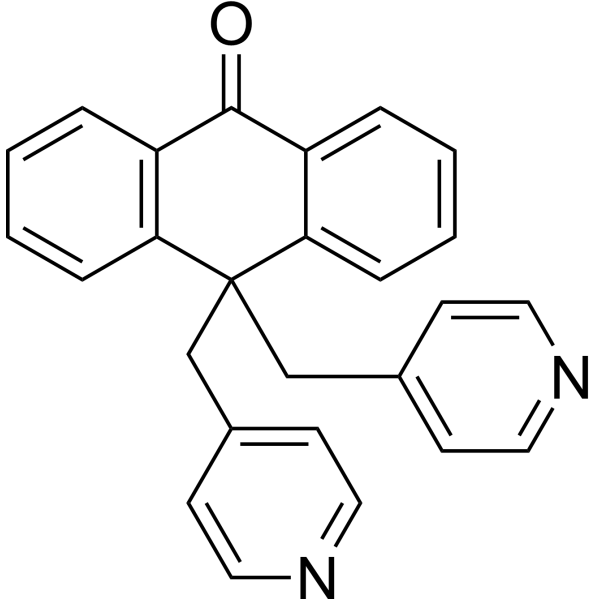
XE991 dihydrochloride, a Kv7 (KCNQ) channels blocker, potently inhibits Kv7.1 (KCNQ1), Kv7.2 (KCNQ2), Kv7.2 + Kv7.3 (KCNQ3) channel, and M-current with IC50s of 0.75 μM, 0.71 μM, 0.6 μM, and 0.98 μM, respectively .
|
-
-
- HY-108577A
-
XE991
3 Publications Verification
|
Potassium Channel
|
Neurological Disease
|
|
XE 991 dihydrochloride, a Kv7 (KCNQ) channels blocker, potently inhibits Kv7.1 (KCNQ1), Kv7.2 (KCNQ2), Kv7.2 + Kv7.3 (KCNQ3) channel, and M-current with IC50s of 0.75 μM, 0.71 μM, 0.6 μM, and 0.98 μM, respectively .
|
-
-
- HY-108584
-
|
BMS-204352
|
Potassium Channel
|
Neurological Disease
|
|
Flindokalner (BMS-204352) is a potassium channel modulator. Flindokalner is a positive modulator of all neuronal Kv7 channel subtypes expressed in HEK293 cells. Flindokalner is also a large conductance calcium-activated K channel (BKca) positive modulator. Flindokalner shows a negative modulatory activity at Kv7.1 channels (Ki=3.7 μM), and acts as a negative modulator of GABAA receptors. Flindokalner shows anxiolytic efficacy in vivo .
|
-
-
- HY-14183
-
|
RSD1235 hydrochloride
|
Potassium Channel
|
Cardiovascular Disease
|
|
Vernakalant hydrochloride is a mixed voltage- and frequency-dependent Na + and atria-preferred K + channel blocker. IC50 for block by Vernakalant of wild-type and mutant Kv1.5 channels Fractional block is 13.35±0.93 μM, 0.61±0.03 μM, and 1.63±0.09 μM for Kv1.5 channel wt, Kv1.5 channel I508F, Kv1.5 channel T479A, respectively.
|
-
-
- HY-108586
-
|
|
Potassium Channel
|
Neurological Disease
|
|
NS3623 is an activator of human ether-a-go-go-related gene (hERG1/KV11.1) potassium channels. NS3623 activates the IKr and Ito currents and has antiarrhythmic effect. NS3623 has a dual mode of action, being an inhibitor of hERG1 channels .
|
-
-
- HY-125469
-
|
PF-04895162
|
Potassium Channel
|
Neurological Disease
|
|
ICA-105665 (PF-04895162) is a potent and orally active neuronal Kv7.2/7.3 and Kv7.3/7.5 potassium channels opener. ICA-105665 inhibits liver mitochondrial function and bile salt export protein (BSEP) transport (IC50 of 311 μM). ICA-105665 can penetrate the blood-brain barrier and has antiseizure effects .
|
-
-
- HY-114608
-
|
|
Sodium Channel
|
Neurological Disease
|
|
RY785 is a potent and selective voltage-gated potassium (KV2) channel inhibitor with an IC50 of 0.05 μM for KV2.2. RY785 has analgesic activity .
|
-
-
- HY-108588
-
NS5806
1 Publications Verification
|
Potassium Channel
|
Cardiovascular Disease
|
|
NS5806, a potent potassium current activator, increases KV4.3/KChIP2 peak current amplitudes with an EC50 of 5.3 μM. NS5806 slows KV4.3 and KV4.2 current dacay in channel complexes containing KChIP2 .
|
-
-
- HY-108587
-
|
|
Potassium Channel
|
Neurological Disease
|
|
ICA 110381 is an orally active Kv7.2/Kv7.3 (KCNQ2/3) potassium channel activator with anticonvulsive properties. ICA 110381 is a KCNQ2/Q3 activator (EC50=0.38 μM) as well as KCNQ1 antagonist (IC50=15 μM) .
|
-
-
- HY-122015
-
|
|
Potassium Channel
|
Neurological Disease
|
|
ASP2905 is an orally active potassium channel Kv12.2 inhibitor encoded by the Kcnh3/BEC1 gene. ASP2905 can cross the blood-brain barrier and has antipsychotic activities .
|
-
-
- HY-108574
-
|
|
Potassium Channel
HCN Channel
|
Neurological Disease
|
|
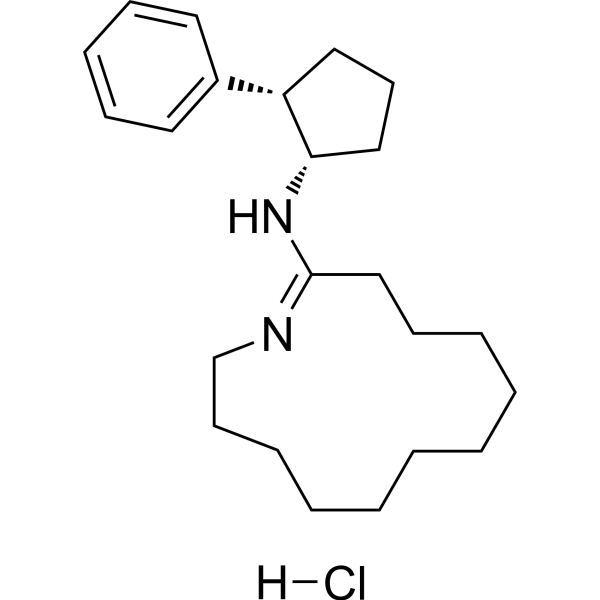
CP 339818 hydrochloride is a non-peptide Kv1.3 channel (IC50 = 200 nM) and Kv1.4 channel blocker. CP 339818 hydrochloride inhibits HCN channel with IC50s of 18.9 μM and 43.4 μM against HCN1 and HCN4 (high Cl -). CP 339818 hydrochloride has significantly weaker blocking effects on Kv1.1, Kv1.2, Kv1.5, Kv1.6, Kv3.1-4, and Kv4.2 channels. CP 339818 hydrochloride selectively blocked Kv1.3, thereby inhibiting the activation process of human T cells. CP 339818 hydrochloride can be used to study the physiological functions of HCN and Kv channels .
|
-
-
- HY-178281
-
|
|
Potassium Channel
Sodium Channel
|
Neurological Disease
|
|
E0199 is a novel potent dual-target KV7/NaV modulator that activates the KV7 channel (KV7.2/7.3 (EC50 = 12.78 nM), KV7.2 (EC50 = 0.50 μM), and KV7.5 (EC50 = 27.14 nM) channels) while simultaneously blocks the NaV1.7 (IC50 = 0.52 μM), NaV1.8 (IC50 = 0.24 μM), and NaV1.9 (IC50 = 0.16 μM) channels. E0199 shows a potent analgesic effect without affecting heart and skeletal muscle ion channels critically in a chronic constriction injury (CCI) mouse model. E0199 can be used for Neuropathic pain (NP) research .
|
-
-
- HY-P1280
-
|
|
Potassium Channel
|
Neurological Disease
|
|
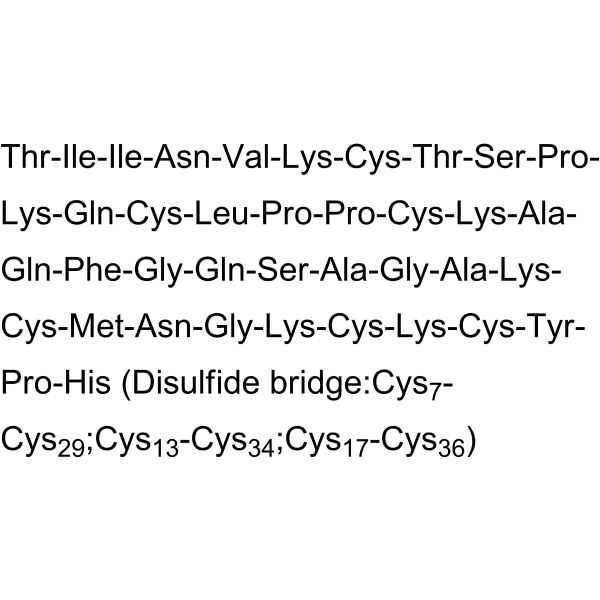
Margatoxin, an alpha-KTx scorpion toxin, is a high affinity inhibitor of Kv1.3 (Kd=11.7 pM). Margatoxin inhibits the Kv1.2 (Kd=6.4 pM) and Kv1.1 (Kd=4.2 nM). Margatoxin, a 39 amino-acid-long peptide, is isolated from the venom of the scorpion Centruroides margaritatus and widely used in ion channel research .
|
-
-
- HY-120033
-
RY796
2 Publications Verification
|
Sodium Channel
|
Neurological Disease
|
|
RY796 is a potent and selective voltage-gated potassium (KV2) channel inhibitor with IC50s of 0.25 μM and 0.09 μM for KV2.1 and KV2.2. RY796 has analgesic activity .
|
-
-
- HY-161104
-
|
|
Potassium Channel
Apoptosis
|
Cardiovascular Disease
Neurological Disease
|
|
Kv2.1-IN-1 is an orally active and blood-brain barrier penetrant Kv2.1 inhibitor with an IC50 of 0.07 μM. Kv2.1-IN-1 exhibits a selectivity >130 fold over other K +, Na +, and Ca 2+ ion channels. Kv2.1-IN-1 decreases the apoptosis of HEK293 cells induced by H2O2. Kv2.1-IN-1 produces significant neuroprotection efficacy in middle cerebral artery occlusion (MCAO) rat. Kv2.1-IN-1 can be used for the study of ischemic stroke .
|
-
-
- HY-111996
-
|
|
Potassium Channel
|
Neurological Disease
Inflammation/Immunology
|
|
Kv3 activator-1 is a Kv3 family voltage-gated potassium channel activator. Kv3 activator-1 reverses mechanical hyperalgesia in rat models of neuropathic and inflammatory pain, with rapid onset and long-lasting, dose-related effects. Kv3 activator-1 can be used for the research of pain .
|
-
-
- HY-110358
-
|
|
Sodium Channel
|
Inflammation/Immunology
|
|
QAQ dichloride, a photoswitchable voltage-gated Nav and Kv channels blocker, blocks channels in its trans form (of the azobenzene photoswitch), but not in its cis form. QAQ dichloride is membrane-impermeant and only infiltrates pain-sensing neurons that express endogenous import channels. QAQ dichloride acts as a light-sensitive analgesic and can be used for studying of signaling mechanisms in acute and chronic pain .
|
-
-
- HY-172374A
-
|
|
Potassium Channel
|
Inflammation/Immunology
|
|
KV1.3-IN-2 hydrochloride is a kv1.3 potassium channel inhibitor without affecting hERG channel activity. KV1.3-IN-2 hydrochloride can be used in research of immune-related diseases such as psoriasis, rheumatoid arthritis, and systemic lupus erythematosus .
|
-
-
- HY-172374
-
|
|
Potassium Channel
|
Inflammation/Immunology
|
|
KV1.3-IN-2 is a kv1.3 potassium channel inhibitor without affecting hERG channel activity. KV1.3-IN-2 can be used in research of immune-related diseases such as psoriasis, rheumatoid arthritis, and systemic lupus erythematosus .
|
-
-
- HY-P3055A
-
|
DTX-I TFA
|
Potassium Channel
|
Cancer
|
|
Dendrotoxin-I (DTX-I) TFA is a potent K + channel blocker with IC50s of 0.13-50 nM for voltage-gated potassium channel subunits KV1.1, KV1.2 and KV1.6. Dendrotoxin-I TFA, a neurotoxin, has the potential for cancer research .
|
-
-
- HY-P2707
-
|
α-DTX
|
Sodium Channel
Potassium Channel
|
Neurological Disease
|
|
α-Dendrotoxin (α-DTX) is a voltage-gated K + channel blocker and an acid-sensing ion channel (ASIC) inhibitor. α-Dendrotoxin blocks Kv1.1, Kv1.2, Kv1.6 and D-type (ID) voltage-gated K + channels, and reversibly inhibits slowly inactivating potassium currents. α-Dendrotoxin induces epilepsy-related behaviors in mice. α-Dendrotoxin can be used in studies related to tonic-clonic seizures .
|
-
-
- HY-P3089A
-
|
|
Potassium Channel
|
Others
|
|
Dendrotoxin K TFA is a Kv1.1 channel blocker. Dendrotoxin K TFA determines glutamate release in CA3 neurons in a time-dependent manner through the control of the presynaptic spike waveform .
|
-
-
- HY-P1427A
-
|
|
Potassium Channel
|
Neurological Disease
|
|
Guangxitoxin 1E TFA is the TFA salt form of Guangxitoxin 1E (HY-P1427). Guangxitoxin 1E TFA is a peptide toxin and a selective inhibitor for voltage-gated potassium channel KV2.1 and KV2.2 with IC50 of 1-3 nM. Guangxitoxin 1E TFA enhances glucose-stimulated intracellular calcium ion oscillations and increases insulin secretion in a glucose-dependent manner .
|
-
-
- HY-44153
-
|
|
Potassium Channel
|
Neurological Disease
|
|
KV2 channel inhibitor-1 is a selective KV2 channel inhibitor with IC50s of 0.2 μM and 0.41 μM for KV2.1 and KV2.2, respectively. KV2 channel inhibitor-1 possesses good selectivity over KV1.2 (IC50>10 μM). KV2 channel inhibitor-1 is >10-fold selective over NaV channels and other KV channels and displays weak activity on CaV channels .
|
-
-
- HY-P2786A
-
-
-
- HY-163018
-
-
-
- HY-P5925A
-
|
SsTx Toxin TFA
|
Potassium Channel
|
Neurological Disease
Inflammation/Immunology
|
|
Ssm Spooky Toxin TFA is found in Scolopendra mutilans that potently inhibits KCNQ (voltage-gated potassium channel family 7) channels, with IC50s of 2.8 μM, 5.26 μM and 0.1-0.3 M for Kv7.4, Kv1.3, and Shal channel, respectivily. Ssm Spooky Toxin TFA inhibits cytokine generation by specifically acting on the KV1.3 channel in T cells. Ssm Spooky Toxin TFA plays an essential role in the centipede’s circulatory system .
|
-
-
- HY-120375
-
-
-
- HY-P5818
-
-
-
- HY-137986
-
|
|
Potassium Channel
|
Inflammation/Immunology
|
|
LUF7244 is a selective allosteric modulator of Kv11.1 channels. LUF7244 inhibits early afterdepolarizations. LUF7244 can be used for anti-arrhythmia research .
|
-
-
- HY-10015R
-
|
5-(4-Phenoxybutoxy)psoralen (Standard)
|
Reference Standards
Potassium Channel
|
Inflammation/Immunology
|
|
PAP-1 (Standard) is the analytical standard of PAP-1. This product is intended for research and analytical applications. PAP-1 (5-(4-Phenoxybutoxy)psoralen) is a potent, selective, and orally active Kv1.3 blocker (EC50=2 nM). PAP-1 blocks Kv1.3 in a use-dependent manner and acts by preferentially binding to the C-type inactivated state of the channel. PAP-1 exhibits 23-fold selectivity over Kv1.5 (EC50=45 nM), and further displays 33- to 125-fold selectivity over all other Kv1-family channels. PAP-1 does not exhibit cytotoxic or phototoxic effects .
|
-
-
- HY-118387
-
|
|
Potassium Channel
|
Cardiovascular Disease
|
|
AVE-0118 is a Kv1.5 potassium channel blocker and antiarrhythmic agent. AVE-0118 blocks neuronal Kv1.5 potassium channels, thereby enhancing the release of norepinephrine. AVE-0118 enhances field stimulation-induced neurogenic contraction, an effect sensitive to α1-adrenergic receptor blockade. AVE-0118 terminates persistent atrial fibrillation in some dogs. AVE-0118 is applicable to research related to atrial fibrillation and persistent atrial fibrillation .
|
-
-
- HY-P1427
-
|
|
Potassium Channel
|
Neurological Disease
|
|
Guangxitoxin 1E is a potent and selective blocker of KV2.1 and KV2.2 channels. Guangxitoxin 1E inhibits KV2 with an IC50 of 1-3 nM. KV2 channels underlie delayed-rectifier potassium currents in various neurons .
|
-
-
- HY-P3055
-
|
DTX-I
|
Potassium Channel
|
Neurological Disease
Cancer
|
|
Dendrotoxin-I (DTX-I) is a potent K + channels blocker with IC50s of 0.13-50 nM for voltage-gated potassium channel subunits KV1.1, KV1.2 and KV1.6, respectively. Dendrotoxin-I, a neurotoxin, has the potential for cancer research .
|
-
-
- HY-P5925
-
|
SsTx Toxin
|
Potassium Channel
|
Neurological Disease
Inflammation/Immunology
|
|
Ssm Spooky Toxin is found in Scolopendra mutilans that potently inhibits KCNQ (voltage-gated potassium channel family 7) channels, with IC50s of 2.8 μM, 5.26 μM and 0.1-0.3 M for Kv7.4, Kv1.3, and Shal channel, respectivily. Ssm Spooky Toxin inhibits cytokine generation by specifically acting on the KV1.3 channel in T cells. Ssm Spooky Toxin plays an essential role in the centipede’s circulatory system .
|
-
-
- HY-P5155
-
|
|
Potassium Channel
|
Neurological Disease
|
|
Stromatoxin 1 is an inhibitor of Potassium Channel, a peptide which can be isolated from tarantulas. Stromatoxin 1 selectively inhibits K(V)2.1, K(V)2.2, K(V)4.2, and K(V)2.1/9.3 channels. K(V)2.1 and K(V)2.2, but not K(V)4.2, channel subunits play a key role in opposing both myogenic and neurogenic urinary bladder smooth muscle (UBSM) contractions in rats .
|
-
-
- HY-159506
-
-
-
- HY-180468
-
|
|
Potassium Channel
|
Neurological Disease
|
|
Kv7 activator-2 (A14a) is a Kv7 potassium channel activator. Kv7 activator-2 can be used for the research of neurological disease, such as epilepsy .
|
-
-
- HY-155516
-
|
|
Potassium Channel
|
Inflammation/Immunology
|
|
KV1.3-IN-1 (Compound trans-18) is a KV1.3 channel inhibitor (IC50: 230 nM and 26.12 nM in Ltk cells and PHA-activated T-lymphocytes respectively). KV1.3-IN-1 impairs intracellular Ca 2+ signaling. KV1.3-IN-1 inhibits T-cell activation, proliferation, and colony formation .
|
-
-
- HY-P1281
-
|
|
Potassium Channel
|
Neurological Disease
|
|
Kaliotoxin is a peptidyl inhibitor of neuronal BK-Type. Kaliotoxin can specific inhibit Kv channels and calcium-activated potassium channels. Kaliotoxin can be used for the research of the regulation of membrane potential and neuron excitability .
|
-
-
- HY-B0267R
-
|
|
Reference Standards
mAChR
Potassium Channel
|
Neurological Disease
|
|
Oxybutynin (Standard) is the analytical standard of Oxybutynin. This product is intended for research and analytical applications. Oxybutynin is an anticholinergic agent, which inhibits vascular Kv channels in a concentration-dependent manner, with an IC50 of 11.51 μM . Oxybutynin is a click chemistry reagent, it contains an Alkyne group and can undergo copper-catalyzed azide-alkyne cycloaddition (CuAAc) with molecules containing Azide groups.
|
-
-
- HY-110358A
-
|
|
Sodium Channel
|
Inflammation/Immunology
|
|
QAQ dichloride dichloride, a photoswitchable voltage-gated Nav and Kv channels blocker, blocks channels in its trans form (of the azobenzene photoswitch), but not in its cis form. QAQ dichloride dichloride is membrane-impermeant and only infiltrates pain-sensing neurons that express endogenous import channels. QAQ dichloride dichloride acts as a light-sensitive analgesic and can be used for studying of signaling mechanisms in acute and chronic pain .
|
-
-
- HY-114540
-
|
|
Potassium Channel
HCN Channel
|
Neurological Disease
|
|
CP-339818 is a non-peptide Kv1.3 channel (IC50 = 200 nM) and Kv1.4 channel blocker. CP 339818 inhibits HCN channel with IC50s of 18.9 μM and 43.4 μM against HCN1 and HCN4 (high Cl -). CP-339818 has significantly weaker blocking effects on Kv1.1, Kv1.2, Kv1.5, Kv1.6, Kv3.1-4, and Kv4.2 channels. CP-339818 selectively blocked Kv1.3, thereby inhibiting the activation process of human T cells. CP-339818 can be used to study the physiological functions of HCN and Kv channels .
|
-
- HY-P5788
-
|
|
Potassium Channel
|
Neurological Disease
|
|
Hemitoxin, a scorpion-venom peptide, is a K + channel blocker. Hemitoxin blocks rat Kv1.1, Kv1.2 and Kv1.3 channels expressed in Xenopus oocytes with IC50 values of 13 nM, 16 nM and 2 nM, respectively .
|
-
- HY-P1886
-
|
|
Potassium Channel
|
Neurological Disease
|
|
Kv3, Channel Containing Protein (567-585) corresponds to amino acids 567 to 585 fragment of the Kv3.1b channel containing protein. Kv3 channel protein is expressed by parvalbumin (PV)-containing pallidal neurons .
|
-
- HY-161625
-
-
- HY-161624
-
-
- HY-113964
-
|
|
Potassium Channel
|
Inflammation/Immunology
|
|
UK-78282 is a selective Kv1.3 voltage-gated potassium channel inhibitor with an IC50 of 200 nM. UK-78282 also inhibit Kv1.4 potassium channel. UK-78282 can inhibit human T cell activation .
|
-
- HY-P5771
-
|
|
Sodium Channel
|
Neurological Disease
|
|
Jingzhaotoxin-IX, a C-terminally amidated peptide composed of 35 amino acid residues, is a neurotoxin. Jingzhaotoxin-IX inhibits voltage-gated sodium channels (both tetrodotoxin-resistant and tetrodotoxin-sensitive isoforms) and Kv2.1 channel. Jingzhaotoxin-IX has no effect on delayed rectifier potassium channel Kv1.1, 1.2 and 1.3 .
|
-
- HY-108577R
-
|
|
Potassium Channel
|
Neurological Disease
|
|
XE991 dihydrochloride (Standard) is the analytical standard of XE991 dihydrochloride. This product is intended for research and analytical applications. XE991 dihydrochloride, a Kv7 (KCNQ) channels blocker, potently inhibits Kv7.1 (KCNQ1), Kv7.2 (KCNQ2), Kv7.2 + Kv7.3 (KCNQ3) channel, and M-current with IC50s of 0.75 μM, 0.71 μM, 0.6 μM, and 0.98 μM, respectively .
|
-
- HY-153746
-
|
|
Potassium Channel
|
Neurological Disease
|
|
Kv3 modulator 5 (Example 5) is a Kv3 channel modulator. Kv3 modulator 5 increases the Kv3.2 current. Kv3 modulator 5 can be used for research of hearing disorders .
|
-
- HY-P5870
-
|
|
Potassium Channel
|
Inflammation/Immunology
|
|
KTX-Sp2 is a potassium channel toxin. KTX-Sp2 effectively blocks three types of exogenous voltage-gated potassium channels: Kv1.1, Kv1.2 and Kv1.3. Ktx-Sp2 inhibits endogenous Kv1.3 and suppresses Ca 2+ signaling in Jurkat T cells. Ktx-Sp2 inhibits IL-2 secretion from activated Jurkat T cells .
|
-
- HY-P5873
-
|
JZTX-X
|
Potassium Channel
|
Neurological Disease
|
|
Jingzhaotoxin-X (JZTX-X) is a selective Kv4.2 and Kv4.3 potassium channels inhibitor. Jingzhaotoxin-X causes long-lasting mechanical hyperalgesia .
|
-
- HY-P3316
-
|
|
Potassium Channel
|
Neurological Disease
Inflammation/Immunology
|
|
OSK-1 is a potent Kv channel blocker with IC50s of of 0.6 nM, 5.4 nM, 0.014 nM for Kv1.1, Kv1.2 and Kv1.3, respectively. OSK1 is a moderate blocker of Ca 2+-activated KCa3.1 channel with an IC50 of 225 nM. OSK-1 belongs to α-KTx3 toxins and is used as a immunosuppressive agent .
|
-
- HY-P1440A
-
|
|
Potassium Channel
|
Neurological Disease
|
|
BeKm-1 TFA is a potent and selective KV11.1 (hERG) channel blocker. BeKm-1 TFA is selective for KV11.1 over a panel of 14 other potassium channels. BeKm-1 TFA dose-dependently prolongs QTc interval in isolated rabbit heart.
|
-
- HY-P3014
-
|
|
Potassium Channel
|
Others
|
|
Hongotoxin-1, isolated from venom of Centruroides limbatus, is the inhibitor of potassium channel, with IC50 for? Kv1.1, Kv1.2, Kv1.3, and Kv1.6 of 31 pM, 170 pM, 86 pM,and 6000 pM, respectively .
|
-
- HY-164417
-
|
|
Potassium Channel
|
Neurological Disease
|
|
Kv7.2/Kv7.3 activator-1 (compound 517) is a potent Kv7.2/Kv7.3 channel activator with an EC50 value of <1 µM. Kv7.2/Kv7.3 activator-1 has the potential for the research of neurological diseases .
|
-
- HY-P5871
-
|
JzTx-XII
|
Potassium Channel
|
Others
|
|
Jingzhaotoxin-XII (JzTx-XII) is a specific Kv4.1 channel inhibitor with an IC50 of 0.363 μM. Jingzhaotoxin-XII interacts with the channels by modifying the gating behavior .
|
-
- HY-128830
-
|
|
Potassium Channel
|
Inflammation/Immunology
|
|
Kv3 modulator 3 (Compound 4) is a selective modulator of Kv3.1 and/or Kv3.2 and/or Kv3.3 channels extracted from patent WO2017098254A1, compound 4, has analgesic activity for use in the prophylaxis o or treatment of pain .
|
-
- HY-P5871A
-
|
JzTx-XII TFA
|
Potassium Channel
|
Others
|
|
Jingzhaotoxin-XII (JzTx-XII) TFA is a specific Kv4.1 channel inhibitor with an IC50 of 0.363 μM. Jingzhaotoxin-XII TFA interacts with the channels by modifying the gating behavior .
|
-
- HY-178928
-
|
|
Potassium Channel
|
Inflammation/Immunology
|
|
KV1.3-IN-3 (Compound 13a) is a KV1.3 channel inhibitor. KV1.3-IN-3 decreases the Kv1.3 peak current amplitude by more than 80%. KV1.3-IN-3 exhibits excellent pharmacological properties and safety. KV1.3-IN-3 can be used for the study of autoimmunity disease .
|
-
- HY-134953
-
|
|
Potassium Channel
|
Cancer
|
|
Mephetyl tetrazole is a potassium channel Kv1.5 blocker, with an IC50 of 330 nM. Mephetyl tetrazole can be used for the research of cancer .
|
-
- HY-P5853
-
|
|
Potassium Channel
|
Inflammation/Immunology
|
|
Aam-KTX is a Kv channel inhibitor with IC50 values of 1.1 nM and >750 nM for Kv1.3 and Kv1.1, respectively. Aam-KTX is a toxic peptide obtained from the venom of the scorpion Mesobuthus eupeus. Aam-KTX has potential in autoimmune diseases research .
|
-
- HY-126106
-
|
|
Potassium Channel
|
Others
|
|
(BrMT)2 (compound 2) is a non-peptide snail toxin that slows down the activation of Kv1.1 channels .
|
-
- HY-178300
-
|
|
Potassium Channel
|
Neurological Disease
|
|
Kv7 activator-1 (Page 66) is a Kv7 channel activator. Kv7 activator-1 can be used for the studies of depression disorders, neurodegenerative diseases or pain disorders .
|
-
- HY-P2710
-
|
|
Potassium Channel
|
Neurological Disease
Inflammation/Immunology
|
|
Noxiustoxin is a toxin from the venom of the Mexican scorpion Centruroides noxius which block voltage-dependent potassium channel (Kv1.3, IC50 = 360 nM), and calcium-activated potassium channel. Noxiustoxin plays an important role in neuroinflammatory disease .
|
-
- HY-P2785A
-
-
- HY-129699
-
-
- HY-155516A
-
|
|
Potassium Channel
|
Inflammation/Immunology
|
|
cis-KV1.3-IN-1 (Compound cis-18) is a cis-isomer of KV1.3-IN-1 (HY-155516). cis-KV1.3-IN-1 is an inhibitor of the KV1.3 channel. cis-KV1.3-IN-1 (10 μM) inhibits KV1.3 by 25.53% in Xenopus oocytes expressing human hKV1.3 .
|
-
- HY-P1274
-
|
|
Potassium Channel
|
Inflammation/Immunology
|
|
ShK-Dap22 is a potent Kv1.3-specific immunosuppressive Polypeptide. ShK-Dap22 is a selective Kv1.3 channel blocker with IC50s of 23 pM, 1.8 nM, 10.5 nM, 37 nM, and 39 nM for mKv1.3, mKv1.1, hKv1.6, mKv1.4, and rKv1.2 channels, respectively .
|
-
- HY-108584R
-
|
BMS-204352 (Standard)
|
Potassium Channel
Reference Standards
|
Neurological Disease
|
|
Flindokalner (Standard) is the analytical standard of Flindokalner. This product is intended for research and analytical applications. Flindokalner (BMS-204352) is a potassium channel modulator. Flindokalner is a positive modulator of all neuronal Kv7 channel subtypes expressed in HEK293 cells. Flindokalner is also a large conductance calcium-activated K channel (BKca) positive modulator. Flindokalner shows a negative modulatory activity at Kv7.1 channels (Ki=3.7 μM), and acts as a negative modulator of GABAA receptors. Flindokalner shows anxiolytic efficacy in vivo .
|
-
- HY-168214
-
|
|
Potassium Channel
|
Neurological Disease
|
|
Kv7.2/Kv7.3 agonist 1 (Compound 16) is an orally active agonist for KV7.2/7.3 channel (KCNQ2/3) with an EC50 of 1.03 μM. Kv7.2/Kv7.3 agonist 1 exhibits analgesic efficacy in mice chronic constriction injury (CCI) model and mice Streptozotocin (HY-13753)-induced diabetic peripheral neuropathic pain (DPNP) model, with ED50 of 12.02 and 9.63 mg/kg .
|
-
- HY-108327
-
|
|
Potassium Channel
|
Neurological Disease
|
|
PF-05020182 is an orally active opener for Kv7 channel, that activates human Kv7.2/7.3, Kv7.4 and Kv7.3/7.5 with EC50 of 334, 625 and 588 nM, respectively. PF-05020182 exhibits anticonvulsant activity in rats corneal electric shock-induced tonic seizure (MES) models. PF-05020182 is blood-brain barrier (BBB) penetrable .
|
-
- HY-P1280A
-
|
|
Potassium Channel
|
Neurological Disease
|
|
Margatoxin TFA, an alpha-KTx scorpion toxin, is a high affinity inhibitor of Kv1.3 (Kd=11.7 pM). Margatoxin TFA inhibits the Kv1.2 (Kd=6.4 pM) and Kv1.1 (Kd=4.2 nM). Margatoxin TFA, a 39 amino-acid-long peptide, is isolated from the venom of the scorpion Centruroides margaritatus and widely used in ion channel research .
|
-
- HY-P3089
-
|
|
Potassium Channel
|
Others
|
|
Dendrotoxin K is a Kv1.1 channel blocker. Dendrotoxin K determines glutamate release in CA3 neurons in a time-dependent manner through the control of the presynaptic spike waveform .
|
-
- HY-144802
-
-
- HY-116759
-
-
- HY-126936
-
|
|
Potassium Channel
|
Cardiovascular Disease
|
|
MSD-D is a potent and frequency-dependent Kv1.5 channel inhibitor with an IC50 value of 0.5 μM. MSD-D is promising for research of atrial-selective class III antiarrhythmics .
|
-
- HY-N8372
-
|
|
Potassium Channel
|
Inflammation/Immunology
|
|
Nalanthalide is a voltage-gated potassium channel Kv1.3 blocker (IC50=3.9 µM) and a potential immunosuppressant. Nalanthalide can be used for research on inflammatory immune diseases, such as neuroinflammation .
|
-
- HY-128829
-
|
|
Potassium Channel
|
Inflammation/Immunology
|
|
Kv3 modulator 2 (formula (I)) is a potent Kv3 channels modulator extracted from patent WO2018109484A1, compound formula (I) , has analgesic activity and is used in the prophylaxis or treatment of related disorders .
|
-
- HY-P2785
-
-
- HY-181755
-
|
|
NO Synthase
|
Inflammation/Immunology
|
|
Phenylaminojuglone AJ-2 is a nitric oxide synthase inhibitor that interacts with soluble guanylate cyclase, β-adrenergic receptor, CaV1.2 calcium channel, KV channel and KCa channel. Phenylaminojuglone AJ-2 blocks extracellular Ca 2+ influx, regulates the activity of the NO?sGC?cGMP signaling pathway, and inhibits pharmacologic and electromechanical contractions of smooth muscle. Phenylaminojuglone AJ-2 is applicable to studies related to intestinal spasm .
|
-
- HY-181874
-
|
|
Potassium Channel
|
Neurological Disease
|
|
E0714 is a blood-brain barrier-permeable, selective Kv7.2 potassium channel activator, with EC50 values of 1.90 μM and 0.021 μM for homotetrameric Kv7.2 channels and heterotetrameric Kv7.2/7.3 channels, respectively. E0714 exhibits anticonvulsant activity. E0714 can be used in research related to epilepsy .
|
-
- HY-101843R
-
|
|
Reference Standards
Potassium Channel
|
Neurological Disease
|
|
ML213 (Standard) is the analytical standard of ML213 (HY-101843). This product is intended for research and analytical applications. ML213 is a selective activator of Kv7.2 and Kv7.4 channels, enhances Kv7.2 and Kv7.4 channels with EC50s of 230 and 510 nM, respectively.
|
-
- HY-171116
-
|
|
Potassium Channel
|
Neurological Disease
|
|
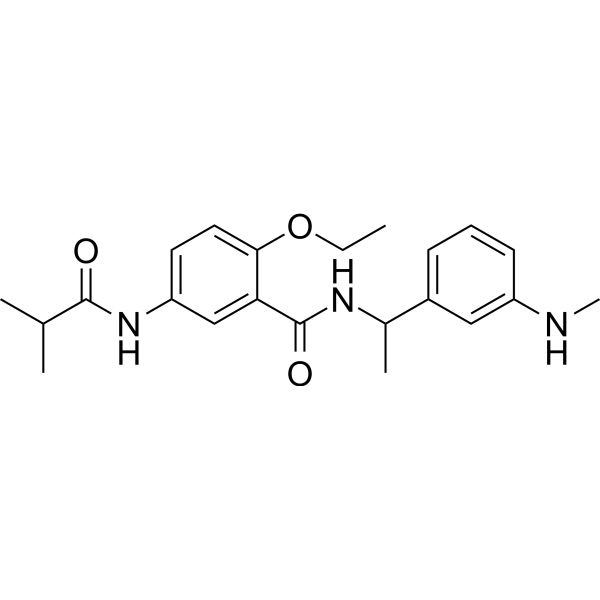
Kv7.2/Kv7.3 activator-4 (example 53) is a Kv7.2/Kv7.3 potassium channel activator that can be used in the research of epilepsy, neuropathic pain and other related diseases .
|
-
- HY-108577AR
-
|
|
Potassium Channel
Reference Standards
|
Neurological Disease
|
|
XE991 (Standard) is the analytical standard of XE991 (HY-108577A). This product is intended for research and analytical applications. XE 991, a Kv7 (KCNQ) channels blocker, potently inhibits Kv7.1 (KCNQ1), Kv7.2 (KCNQ2), Kv7.2 + Kv7.3 (KCNQ3) channel, and M-current with IC50s of 0.75 μM, 0.71 μM, 0.6 μM, and 0.98 μM, respectively .
|
-
- HY-136805
-
|
|
Potassium Channel
|
Neurological Disease
|
|
Kv1.5-IN-1 is a Kv1.5 channel inhibitor. Its target selectivity and pharmacodynamic effects were evaluated in an in vitro rat model. After the introduction of a methoxy group at the R5 position, Kv1.5-IN-1 showed inhibitory potency similar to that of the unsubstituted compound. Its IC50 value for hKv1.5 channels was 0.51 μM. Kv1.5-IN-1 exhibited a high degree of selectivity, nearly 2,600 times higher than compound Ik and 300 times higher than compound IId, indicating that it may be a safe inhibitor. Due to its good pharmacological behavior, Kv1.5-IN-1 deserves further pharmacodynamic and pharmacokinetic evaluation. These properties make Kv1.5-IN-1 a potential Kv1.5 channel inhibitor that may have application prospects in the treatment of related diseases.
|
-
- HY-50722B
-
|
|
Calcium Channel
Cytochrome P450
|
Cardiovascular Disease
Neurological Disease
Cancer
|
|
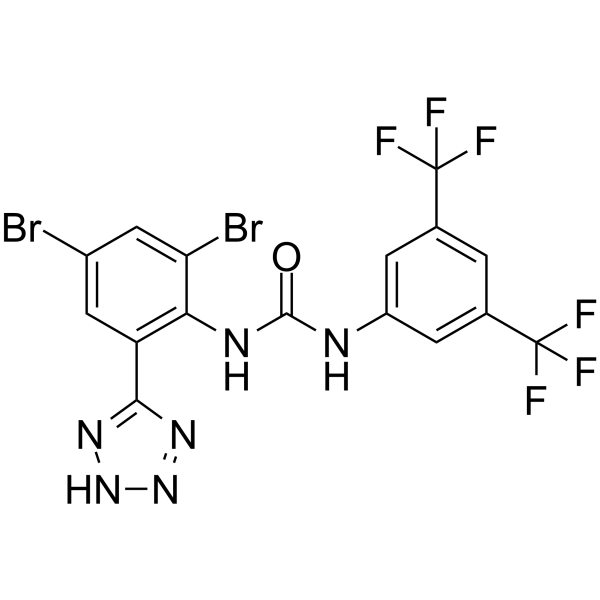
NNC 55-0396 free base is a blood-brain-barrier-permeable T-type Ca 2+ channel inhibitor and pan-P450 inhibitor. NNC 55-0396 free base selectively inhibits T-type Ca2+ channels, suppresses HIF-1α expression and stability and inhibits Kv currents. NNC 55-0396 free base reduces brain infarct and attenuates neurological dysfunction. NNC 55-0396 free base inhibits the activity of multiple P450 enzymes. NNC 55-0396 (free base) can be used for the research of brain injury, hypertension, and glioblastoma .
|
-
- HY-172584
-
|
|
Potassium Channel
|
Neurological Disease
|
|
Kv7.2/Kv7.3 modulator-1 (compound 6a) is a Kv7.2/Kv7.3 modulator with the pEC50 of 7.96 (KV7.2/3 channel opening activity). Kv7.2/Kv7.3 modulator-1 can be used for study of epilepsy, depression,brain injury and pain .
|
-
- HY-172585
-
|
|
Potassium Channel
|
Neurological Disease
|
|
Kv7.2/Kv7.3 modulator-2 (compound 7d) is a Kv7.2/Kv7.3 modulator with the pEC50 of 7.42 (KV7.2/3 channel opening activity). Kv7.2/Kv7.3 modulator-2 can be used for study of epilepsy, depression,brain injury and pain .
|
-
- HY-P5157
-
|
|
Potassium Channel
|
Neurological Disease
|
|
BmP02 is a selective Kv1.3 channel blocker and a highly-selective Kv4.2 modulator, which can be isolated from Chinese scorpion (Buthus martensi Karsch) venom. BmP02 also delays the inactivation of Kv4.2 in HEK293T cells, with an EC50 value of ~850 nM. BmP02 inhibits the transient outward potassium currents (Ito) in ventricular muscle cells .
|
-
- HY-108588R
-
|
|
Reference Standards
Potassium Channel
|
Cardiovascular Disease
|
|
NS5806 (Standard) is the analytical standard of NS5806 (HY-108588). This product is intended for research and analytical applications. NS5806, a potent potassium current activator, increases KV4.3/KChIP2 peak current amplitudes with an EC50 of 5.3 μM. NS5806 slows KV4.3 and KV4.2 current dacay in channel complexes containing KChIP2 .
|
-
- HY-181128
-
|
|
Potassium Channel
|
Neurological Disease
|
|
QO-83, Retigabine analogue, is a voltage-gated potassium channel KCNQ2 (Kv7.2) activator with an EC50 of 0.56 μM. QO-83 binds to a single hydrophobic pocket of KCNQ2-CaM complex in closed conformation. QO-83 induces a negative shift in the voltage-dependent activation curve of KCNQ2 channels, increasing the channel's voltage sensitivity. QO-83 can be used for the research of epilepsies .
|
-
- HY-101396
-
|
|
Potassium Channel
|
Neurological Disease
|
|
ICA-069673 is a KCNQ2/Q3 potassium channel activator. ICA-069673 demonstrates greater selectivity for KV7.2/7.3 over KV7.3/KV7.5, with EC50s of 0.69 μM and 14.3 μM, respectively. ICA-069673 inhibits spontaneous phasic and nerve-evoked contractions in guinea pig detrusor smooth muscle (DSM). ICA-069673 also decreases the global intracellular Ca(2+) concentration in DSM cells .
|
-
- HY-100712
-
DPO-1
1 Publications Verification
|
Potassium Channel
Calcium Channel
NOD-like Receptor (NLR)
Interleukin Related
|
Cardiovascular Disease
Inflammation/Immunology
|
|
DPO-1 is a potent Kv1.5 and Kv1.3 (EC50 = 3.1 μM) channels inhibitor with potential immunomodulatory and anti-inflammatory effects. DPO-1 reduces Kv1.3 current density, blunts Ca 2+ influx in Ca 2+-depleted Jurkat cells, and inhibits IL-2 secretion in activated Jurkat cells. DPO-1 inhibits Uric acid sodium (HY-B2130A) (MSU)-induced NLRP3 inflammasome activation by blocking Kv1.5-mediated K + efflux. DPO-1 can be used for the study of immunologic disorders and atrial fibrillation .
|
-
- HY-106017
-
|
|
Potassium Channel
Sodium Channel
|
Neurological Disease
|
|
Nerispirdine is an ion channel inhibitor with IC50s of 3.6, 3.7 and 11.9 μM against K(v)1.1, K(v)1.2 and voltage-dependent Na(+) channel, respectively. Nerispirdine is a 4-aminopyridine (4-AP, HY-B0604) derivative and can be utilized in research on neurological disorders .
|
-
- HY-P1409
-
|
|
Potassium Channel
|
Inflammation/Immunology
|
|
ADWX 1 is a new peptide inhibitor that is potent and selective for Kv1.3 with an IC50 value of 1.89 pM. ADWX 1 inhibits Kv1.3 channel activity specifically to inhibit both the initial calcium signaling and NF-κB activation. ADWX 1 ameliorates the disease in rats of experimental autoimmune encephalomyelitis (EAE) models. ADWX 1 can be used to study T cell-mediated autoimmune diseases .
|
-
- HY-P1409A
-
|
|
Potassium Channel
|
Inflammation/Immunology
|
|
ADWX 1 TFA is a new peptide inhibitor that is potent and selective for Kv1.3 with an IC50 value of 1.89 pM. ADWX 1 inhibits Kv1.3 channel activity specifically to inhibit both the initial calcium signaling and NF-κB activation. ADWX 1 TFA ameliorates the disease in rats of experimental autoimmune encephalomyelitis (EAE) models. ADWX 1 TFA can be used to study T cell-mediated autoimmune diseases .
|
-
- HY-108583
-
|
5-(4-Phenylbutoxy)psoralen
|
Potassium Channel
|
Inflammation/Immunology
|
|
Psora-4 is a potent and selective inhibitor of Kv1.3 (voltage-gated potassium channels) with an EC50 of 3 nM . Psora-4 has immunosuppressive activity and inhibits proliferation of human and rat myelin-specific effector memory T cells in vitro .
|
-
- HY-108590
-
-
- HY-110162
-
|
|
Potassium Channel
|
Neurological Disease
|
|
QO 58 is a potent modulator of K(v)7 channels. QO-58 increases the current amplitudes, shifts the voltage-dependent activation curve in a more negative direction and slows the deactivation of K(v)7.2/K(v)7.3 currents. QO-58 has the potential for the research of diseases associated with neuronal hyperexcitability .
|
-
- HY-P3507
-
|
ShK-186
|
Potassium Channel
|
Metabolic Disease
Inflammation/Immunology
|
|
Dalazatide (ShK-186) is a specific Kv1.3 potassium channel peptide inhibitor. Dalazatide can be used in the study of autoimmune diseases such as multiple sclerosis (MS), lupus erythematosus, psoriasis, rheumatoid arthritis, type 1 diabetes and inflammatory bowel disease .
|
-
- HY-P10572
-
-
- HY-P5156
-
|
|
Potassium Channel
|
Neurological Disease
|
|
BDS-I known as blood depressing substance, is a marine toxin which can be extracted from Anemonia sulcata. BDS-I is a specific inhibitor of Potassium Channel, targeting to Kv3.4. BDS-I inhibits Aβ1-42-induced enhancement of KV3.4 activity, caspase-3 activation, and abnormal nuclear morphology of NGF-differentiated PC-12 cells. BDS-I reverts the Aβ peptide-induced cell death .
|
-
- HY-14186
-
|
WYE-160020
|
Potassium Channel
|
Cardiovascular Disease
|
|
KVI-020 is an orally active, potent and selective blocker of the atrial potassium channel Kv1.5, with an IC50 of 480 nM. KVI-020 can inhibits hERG, with an IC50 of 15100 nM. KVI-020 is a potent antiarrhythmic agent, and can be used for atrial fibrillation (AF) research .
|
-
- HY-P3507A
-
|
ShK-186 TFA
|
Potassium Channel
|
Metabolic Disease
Inflammation/Immunology
|
|
Dalazatide (ShK-186) TFA is a specific Kv1.3 potassium channel peptide inhibitor. Dalazatide TFA can be used in the study of autoimmune diseases such as multiple sclerosis (MS), lupus erythematosus, psoriasis, rheumatoid arthritis, type 1 diabetes and inflammatory bowel disease .
|
-
- HY-P4742A
-
|
6-FAM-AEEAC-SHK TFA
|
Biochemical Assay Reagents
Potassium Channel
|
Neurological Disease
|
|
6-FAM-AEEAc-Stichodactyla helianthus Neurotoxin (ShK) TFA (6-FAM-AEEAC-SHK TFA) is a peptide neurotoxin conjugated with a fluorescent marker. 6-FAM-AEEAc-Stichodactyla helianthus Neurotoxin (ShK) TFA can block voltage-gated potassium channels (kv1.1 and kv1.2) to prolong the duration of action potentials, thereby affecting the conduction of neural signals. 6-FAM-AEEAc-Stichodactyla helianthus Neurotoxin (ShK) TFA can be used in neuroscience research .
|
-
- HY-W001992
-
|
3-Nitro-2,6-dichloropyridine
|
Biochemical Assay Reagents
|
Neurological Disease
|
|
2,6-Dichloro-3-nitropyridine is a starting compound for the synthesis of a sulfide analog of Flupirtine (HY-17001A) with KV7.2/3 channel opening activity. 2,6-Dichloro-3-nitropyridine can be used in pain research .
|
-
- HY-P5931
-
|
Potassium channel toxin alpha-KTx 6.13; SPX; α-KTx6.13
|
Potassium Channel
|
Inflammation/Immunology
Cancer
|
|
Spinoxin isolated from the venom of scorpion Heterometrus spinifer, is a 34-residue peptide neurotoxin cross-linked by four disulfide bridges. Spinoxin is a potent inhibitor of Kv1.3 potassium channel (IC50 = 63 nM), considering to be valid molecular targets in the diagnostics and therapy of various autoimmune disorders and cancers .
|
-
- HY-B1239
-
|
Hexahydroadiphenine hydrochloride
|
Cholinesterase (ChE)
Potassium Channel
Amyloid-β
TRP Channel
Tau Protein
NOD-like Receptor (NLR)
JNK
NF-κB
IKK
|
Neurological Disease
Metabolic Disease
Inflammation/Immunology
|
|
Drofenine (Cycloadiphene; Hexahydroadiphenine) hydrochloride is an brain-penetrant antispasmodic agent. Drofenine hydrochloride is a Kv2.1 channel inhibitor with human IC50 of 9.53 μM. Drofenine hydrochloride is a butyrylcholinesterase (BChE) inhibitor with Ki of 0.003 mM, and is a TRPV3 activator. Drofenine hydrochloride blocks Kv2.1-dependent potassium efflux, inhibits Kv2.1/JNK/NF-κB and IkBa/NF-kB signaling, suppresses Kv2.1 mRNA/protein expression. Drofenine suppresses oligomeric Aβ-induced microglial NLRP3 inflammasome activation and neuronal Tau hyperphosphorylation, improves cognitive impairment, promotes neurite outgrowth. Drofenine hydrochloride induces calcium influx in keratinocytes and exert cytotoxicity against keratinocytes. Drofenine hydrochloride ameliorates diabetic peripheral neuropathy -like pathology. Drofenine hydrochloride can be used for the researches of Alzheimer's disease, diabetic peripheral neuropathy and smooth muscle spasm .
|
-
- HY-B1239A
-
|
Cycloadiphene; Hexahydroadiphenine
|
Potassium Channel
Cholinesterase (ChE)
TRP Channel
NOD-like Receptor (NLR)
Amyloid-β
Tau Protein
JNK
NF-κB
IKK
|
Neurological Disease
Metabolic Disease
Inflammation/Immunology
|
|
Drofenine (Cycloadiphene; Hexahydroadiphenine) is an brain-penetrant antispasmodic agent. Drofenine is a Kv2.1 channel inhibitor with human IC50 of 9.53 μM. Drofenine is a butyrylcholinesterase (BChE) inhibitor with Ki of 0.003 mM, and is a TRPV3 activator. Drofenine blocks Kv2.1-dependent potassium efflux, inhibits Kv2.1/JNK/NF-κB and IkBa/NF-kB signaling, suppresses Kv2.1 mRNA/protein expression. Drofenine suppresses oligomeric Aβ-induced microglial NLRP3 inflammasome activation and neuronal Tau hyperphosphorylation, improves cognitive impairment, promotes neurite outgrowth. Drofenine induces calcium influx in keratinocytes and exert cytotoxicity against keratinocytes. Drofenine ameliorates diabetic peripheral neuropathy -like pathology. Drofenine can be used for the researches of Alzheimer's disease, diabetic peripheral neuropathy and smooth muscle spasm .
|
-
- HY-100712R
-
|
|
Potassium Channel
Reference Standards
Calcium Channel
NOD-like Receptor (NLR)
Interleukin Related
|
Cardiovascular Disease
Inflammation/Immunology
|
|
DPO-1 (Standard) is the analytical standard of DPO-1 (HY-100712). This product is intended for research and analytical applications. DPO-1 is a potent Kv1.5 and Kv1.3 (EC50 = 3.1 μM) channels inhibitor with potential immunomodulatory and anti-inflammatory effects. DPO-1 reduces Kv1.3 current density, blunts Ca2+ influx in Ca2+-depleted Jurkat cells, and inhibits IL-2 secretion in activated Jurkat cells. DPO-1 inhibits Uric acid sodium (HY-B2130A) (MSU)-induced NLRP3 inflammasome activation by blocking Kv1.5-mediated K+ efflux. DPO-1 can be used for the study of immunologic disorders and atrial fibrillation .
|
-
- HY-181103
-
|
|
Opioid Receptor
Potassium Channel
|
Neurological Disease
|
|
ERG-IN-6 (compound (+)-(S)-5a) is a μ-opioid receptor activator with an EC50 of 0.12 nM. ERG-IN-6 also is a hERG (Kv11.1) potassium channel inhibitor with an IC50 of 0.681 μM. ERG-IN-6 can be used for the research of pain .
|
-
- HY-P5182
-
|
|
Potassium Channel
|
Inflammation/Immunology
|
|
HsTX1, from the scorpion Heterometrus spinnifer, is a 34-residue, C-terminally amidated peptide cross-linked by four disulfide bridges. HsTX1, an the inhibitor of potassium channel, with IC50 for Kv1.3 of 12 pM inhibits TEM cell activation and attenuates inflammation in autoimmunity .
|
-
- HY-W013727
-
|
|
Potassium Channel
|
Inflammation/Immunology
|
|
UK-78282, a novel piperidine, potent and selective Kv1.3 blocker with an IC50 of 200 nM. UK-78,282 effectively suppresses human T-lymphocyte activation in vitro. UK-78,282 binds to residues at the inner surface of the channel overlapping the site of action of verapamil .
|
-
- HY-108586R
-
|
|
Reference Standards
Potassium Channel
|
Neurological Disease
|
|
NS3623 (Standard) is the analytical standard of NS3623 (HY-108586). This product is intended for research and analytical applications. NS3623 is an activator of human ether-a-go-go-related gene (hERG1/KV11.1) potassium channels. NS3623 activates the IKr and Ito currents and has antiarrhythmic effect. NS3623 has a dual mode of action, being an inhibitor of hERG1 channels .
|
-
- HY-117825
-
|
|
Potassium Channel
|
Neurological Disease
|
|
RU-TRAAK-2 is a completely reversible TRAAK (TWIK-related arachidonic acid-stimulated K + channel) inhibitor. RU-TRAAK-2 exerts no activity for non-K2P channels (Kv1.2, Slo1 and GIRK2) . RU-TRAAK-2 is a click chemistry reagent, it contains an Alkyne group and can undergo copper-catalyzed azide-alkyne cycloaddition (CuAAc) with molecules containing Azide groups.
|
-
- HY-101396R
-
|
|
Potassium Channel
Reference Standards
|
Neurological Disease
|
|
ICA-069673 (Standard) is the analytical standard of ICA-069673 (HY-101396). This product is intended for research and analytical applications. ICA-069673 is a KCNQ2/Q3 potassium channel activator. ICA-069673 demonstrates greater selectivity for KV7.2/7.3 over KV7.3/KV7.5, with EC50s of 0.69 μM and 14.3 μM, respectively. ICA-069673 inhibits spontaneous phasic and nerve-evoked contractions in guinea pig detrusor smooth muscle (DSM). ICA-069673 also decreases the global intracellular Ca(2+) concentration in DSM cells .
|
-
- HY-144801A
-
|
|
Potassium Channel
|
Cardiovascular Disease
|
|
DDO-02005 is a potent Kv1.5 potassium channel inhibitor with an IC50 value of 0.72 μM. DDO-02005 has good anti-atrial fibrillation (AF) effect in CaCl2-ACh AF rats model and effective anti-arrhythmic activity caused by aconitine .
|
-
- HY-172431
-
|
BHV-7000
|
Potassium Channel
|
Neurological Disease
|
|
Opakalim (BHV-7000) is a selective Kv7.2/7.3 potassium channels activator with an EC50 of 0.6 μM. Opakalim shows minimal GABAA receptor activation and exhibits potent anti-seizure efficacy in the maximal electroshock seizure (MES) model. Opakalim can be used for the study of seizures .
|
-
- HY-P5916
-
|
κ-Theraphotoxin-Gr4a; Kappa-TRTX-Gr4a; Voltage sensor toxin 3; Peptide F
|
Others
Potassium Channel
|
Neurological Disease
|
|
VSTx-3 is a KV channel blocker. VSTx-3 is demonstrated to be a potent, TTX-sensitive sodium channel blocker and especially, a potent blocker of NaV1.8 channels (IC50 0.19 μM for hNaV1.3, 0.43 μM for hNaV1.7 and 0.77 μM for hNaV1.8 channels).
|
-
- HY-P5182A
-
|
|
Potassium Channel
|
Inflammation/Immunology
|
|
HsTX1 (TFA) toxin, from the scorpion Heterometrus spinnifer, is a 34-residue, C-terminally amidated peptide cross-linked by four disulfide bridges. HsTX1 (TFA) is an the inhibitor of potassium channel, with IC50 for Kv1.3 of 12 pM and inhibits TEM cell activation and attenuates inflammation in autoimmunity .
|
-
- HY-P3071
-
|
Stichodactyla helianthus neurotoxin
|
Potassium Channel
|
Neurological Disease
Inflammation/Immunology
|
|
ShK toxin blocks voltage-dependent potassium channel (Kv1.3 channel). ShK toxin can be isolated from the whole body extract of the Caribbean sea anemone (Stichodactylu helianthus). ShK toxin competes with dendrotoxin I and α-dendrotoxin for binding to synaptosomal membranes of rat brain, facilitates acetylcholine release. ShK toxin suppresses K+ currents in cultured rat dorsal root ganglion neurons. ShK toxin also inhibits T lymphocyte proliferation .
|
-
- HY-B0267AS
-
-
- HY-P1424
-
|
|
Potassium Channel
|
Neurological Disease
|
|
Lei-Dab7 is a potent and selective SK2 (KCa2.2) channels blocker with a Kd of 3.8 nM. Lei-Dab7 shows low or no activity on KCa1, KCa3, Kv and Kir2.1 channels .
|
-
- HY-144801
-
|
|
Potassium Channel
|
Cardiovascular Disease
|
|
DDO-02005 (free base) is a potent Kv1.5 potassium channel inhibitor with an IC50 value of 0.72 μM. DDO-02005 (free base) has good anti-atrial fibrillation (AF) effect in CaCl2-ACh AF rats model and effective anti-arrhythmic activity caused by aconitine .
|
-
- HY-12343
-
ML277
1 Publications Verification
CID-53347902
|
Potassium Channel
|
Cardiovascular Disease
|
|
ML277 (CID-53347902) is a potent and selective activator of K(v)7.1 (KCNQ1) potassium channel activator (EC50=270 nM), rescues function of pathophysiologically important mutant channel complexes in human induced pluripotent stem cell-derived cardiomyocytes .
|
-
- HY-108591
-
|
R-L3
|
Potassium Channel
|
Cardiovascular Disease
|
|
L-364,373 (R-L3) is a voltage-gated Kv7.1 (KCNQ1)/mink channels activator. L-364,373 activates Iks (slow delayed rectifier potassium current) and shortens action potential duration in guinea pig cardiac myocytes, and suppresses early afterdepolarizations in rabbit ventricular myocytes .
|
-
- HY-18063
-
|
|
Potassium Channel
Cytochrome P450
|
Neurological Disease
|
|
ML252 is a selective inhibitor of KCNQ2 (Kv7.2) channel with an IC50s of 69 nM, 2.92 μM, 0.12 μM and 0.20 μM for KCNQ2, KCNQ1 (Kv7.1), KCNQ2/Q3 and KCNQ4, respectively. ML252 also inhibits Cytochrome P450 with IC50s of 6.1 nM (CYP1A2), 18.9 nM (CYP2C9), 3.9 nM (CYP3A4), 19.9 nM (CYP2D6), respectively. ML252 shows highly brain penetrant .
|
-
- HY-18063A
-
|
|
Potassium Channel
Cytochrome P450
|
Neurological Disease
|
|
ML252 hydrochloride is a selective inhibitor of KCNQ2 (Kv7.2) channel with IC50s of 69 nM, 2.92 μM, 0.12 μM and 0.20 μM for KCNQ2, KCNQ1 (Kv7.1), KCNQ2/Q3 and KCNQ4, respectively. ML252 hydrochloride also inhibits Cytochrome P450 with IC50s of 6.1 nM (CYP1A2), 18.9 nM (CYP2C9), 3.9 nM (CYP3A4), 19.9 nM (CYP2D6), respectively. ML252 hydrochloride shows highly brain penetrant .
|
-
- HY-P3071A
-
|
Stichodactyla helianthus neurotoxin TFA
|
Potassium Channel
|
Neurological Disease
Inflammation/Immunology
|
|
ShK toxin TFA (Stichodactyla helianthus neurotoxin TFA) is a neurotoxin. ShK toxin TFA blocks voltage-dependent potassium channel (Kv1.3 channel). ShK toxin TFA can be isolated from the whole body extract of the Caribbean sea anemone (Stichodactylu helianthus). ShK toxin TFA competes with dendrotoxin I and α-dendrotoxin for binding to synaptosomal membranes of rat brain, facilitates acetylcholine release. ShK toxin TFA suppresses K + currents in cultured rat dorsal root ganglion neurons. ShK toxin TFA also inhibits T lymphocyte proliferation .
|
-
- HY-P5917
-
|
Vaejovis mexicanus peptide 24
|
Potassium Channel
|
Inflammation/Immunology
Cancer
|
|
Vm24-toxin (Vaejovis mexicanus peptide 24), a 36-residue peptide, is a potent and selective Kv1.3 blocker with a Kd of ~3 pM in lymphocytes. Vm24-toxin shows >1500-fold affinity for Kv1.3 over other assayed potassium channels. Vm24-toxin folds into a distorted cystine-stabilized α/β motif consisting of a single-turn α-helix and a three-stranded antiparallel β-sheet, stabilized by four disulfide bridges. Vm24-toxin attenuates the CD4 + effector memory T cell response to T cell receptor (TCR) stimulation .
|
-
- HY-P5917A
-
|
Vaejovis mexicanus peptide 24 TFA
|
Potassium Channel
|
Inflammation/Immunology
Cancer
|
|
Vm24-toxin (Vaejovis mexicanus peptide 24) TFA, a 36-residue peptide, is a potent and selective Kv1.3 blocker with a Kd of ~3 pM in lymphocytes. Vm24-toxin TFA shows >1500-fold affinity for Kv1.3 over other assayed potassium channels. Vm24-toxin TFA folds into a distorted cystine-stabilized α/β motif consisting of a single-turn α-helix and a three-stranded antiparallel β-sheet, stabilized by four disulfide bridges. Vm24-toxin TFA attenuates the CD4 + effector memory T cell response to T cell receptor (TCR) stimulation .
|
-
- HY-P1441A
-
|
|
Sodium Channel
|
Neurological Disease
|
|
Mambalgin 1 TFA is a selective ASIC1a inhibitor (IC50 values are 192 and 72 nM for human ASIC1a and ASIC1a/1b dimer, respectively). Mambalgin 1 TFA binds to closed/inactive channel. Mambalgin 1 TFA is selective for ASIC1a over ASIC2a, ASIC3, TRPV1, P2X2, 5-HT3, Nav1.8, Cav3.2 and Kv1.2 channels. Mambalgin 1 TFA increases latency of withdrawal response in mouse tail-flick and paw-flick tests.
|
-
- HY-172521
-
|
|
Potassium Channel
|
Others
|
|
(S)-(+)-Docosahexaenyl-2'-hydroxy-1'-propylamide (N-Docosahexacnoylethanolamide(22:6)) is a DHEA homolog. (S)-(+)-Docosahexaenyl-2'-hydroxy-1'-propylamide blocks the Shaker-related voltage-gated potassium channels. (S)-(+)-Docosahexaenyl-2'-hydroxy-1'-propylamide can inhibit the Kv1.2 K+ currents with an IC50 of 1.5 μM .
|
-
- HY-113673
-
|
|
Potassium Channel
|
Cardiovascular Disease
|
|
A-935142 is a human ether-a-go-go-related gene (hERG, Kv 11.1) channel activator. A-935142 enhances hERG current in a complex manner by facilitation of activation, reduction of inactivation, and slowing of deactivation, and abbreviates atrial and ventricular repolarization .
|
-
- HY-108590R
-
|
XR-543 (Standard)
|
Reference Standards
Potassium Channel
|
Neurological Disease
|
|
DMP-543 (Standard) is the analytical standard of DMP-543 (HY-108590). This product is intended for research and analytical applications. DMP-543 (XR-543) is a KV7 channel blocker, also acts as a potent neurotransmitter release enhancer .
|
-
- HY-115823
-
|
|
Potassium Channel
|
Neurological Disease
|
|
ztz240 is a chemical modulator of voltage-gated potassium channel Kv7 (KCNQ) (KCNQ2 and 3: EC50=6.1 μM; KCNQ4: EC50=12.2 μM). ztz240 can be used in analgesia and anti-epileptic research .
|
-
- HY-175668
-
|
|
Potassium Channel
|
Neurological Disease
|
|
IDOR-1104-0086 is an orally active Kv7 potassium channel opener with an EC50 of 210 nM that can cross blood-brain barrier. IDOR-1104-0086 displays strong selectivity against the hERG channel with an IC20 of 25 μM. IDOR-1104-0086 exhibits efficacy in two rodent models of epilepsy and a favorable tolerability profile. IDOR-1104-0086 can used for the study of epilepsy .
|
-
- HY-108591R
-
|
R-L3 (Standard)
|
Reference Standards
Potassium Channel
|
Cardiovascular Disease
|
|
L-364,373 (Standard) is the analytical standard of L-364,373 (HY-108591). This product is intended for research and analytical applications. L-364,373 (R-L3) is a voltage-gated Kv7.1 (KCNQ1)/mink channels activator. L-364,373 activates Iks (slow delayed rectifier potassium current) and shortens action potential duration in guinea pig cardiac myocytes, and suppresses early afterdepolarizations in rabbit ventricular myocytes .
|
-
- HY-W020468
-
|
DuP 996
|
Potassium Channel
TRP Channel
|
Neurological Disease
|
|
Linopirdine (DuP 996) is an orally active, selective M-type K + current (IM; Kv7; KCNQ Channels) inhibitor with an IC50 of 2.4 μM. Linopirdine is a TRPV1 agonist. Linopirdine, a putative cognition enhancing agent, increases acetylcholine release in rat brain tissue .
|
-
- HY-W020468R
-
|
DuP 996 (Standard)
|
Reference Standards
Potassium Channel
TRP Channel
|
Neurological Disease
|
|
Linopirdine (DuP 996) is an orally active, selective M-type K+ current (IM; Kv7; KCNQ Channels) inhibitor with an IC50 of 2.4 μM. Linopirdine is a TRPV1 agonist. Linopirdine, a putative cognition enhancing agent, increases acetylcholine release in rat brain tissue .
|
-
- HY-103192
-
|
RMI12330A
|
Adenylate Cyclase
Potassium Channel
|
Neurological Disease
Cancer
|
|
MDL12330A (RMI12330A) is an adenylyl cyclases inhibitor. MDL12330A can inhibit KV channels, increases insulin secretion and Ca 2+ levels. MDL12330A accentuates contractions in uterine rings and inhibits cardiac functions. MDL12330A can be used for the research of endocrinology, metabolic and cardiovascular disease .
|
-
- HY-120960
-
|
ARA-S
|
Akt
p38 MAPK
Apoptosis
Potassium Channel
|
Cardiovascular Disease
Neurological Disease
|
|
N-Arachidonoyl-L-serine (ARA-S) is an endocannabinoid. N-Arachidonoyl-L-serine induces phosphorylation of Akt and MAPK in endothelial cells. N-Arachidonoyl-L-serine also induces endothelium-dependent vasodilation in isolated rat mesenteric and abdominal aortas. N-Arachidonoyl-L-serine exhibits neuroprotective effects after traumatic brain injury by reducing apoptosis. N-Arachidonoyl-L-serine promotes the opening of KV7.1/KCNE1 channels in mammalian cells and shortens the action potential duration in cardiomyocytes. N-Arachidonoyl-L-serine may be used in research on cardiovascular and cerebrovascular diseases and neurological disorders .
|
-
- HY-N1584
-
Halofuginone
Maximum Cited Publications
20 Publications Verification
RU-19110
|
DNA/RNA Synthesis
TGF-beta/Smad
Parasite
Sodium Channel
Calcium Channel
|
Infection
Cardiovascular Disease
Inflammation/Immunology
Cancer
|
|
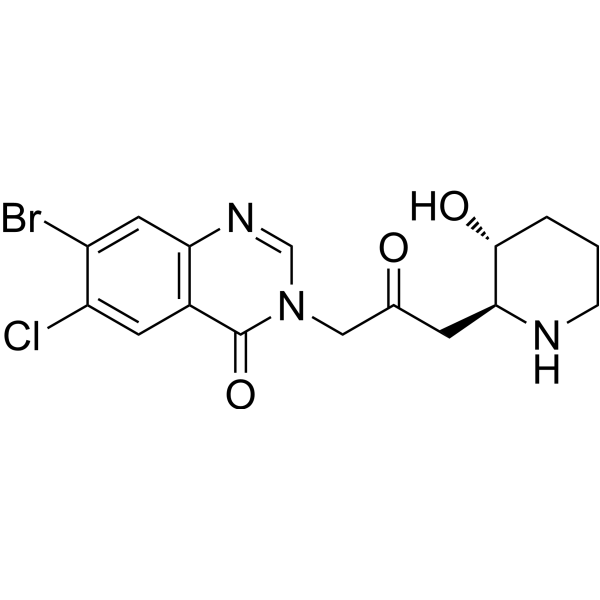
Halofuginone (RU-19110), a Febrifugine derivative, is a competitive prolyl-tRNA synthetase inhibitor with a Ki of 18.3 nM . Halofuginone is a specific inhibitor of type-I collagen synthesis and attenuates osteoarthritis (OA) by inhibition of TGF-β activity . Halofuginone is also a potent pulmonary vasodilator by activating Kv channels and blocking voltage-gated, receptor-operated and store-operated Ca 2+ channels. Halofuginone has anti-malaria, anti-inflammatory, anti-cancer, anti-fibrosis effects .
|
-
- HY-N1584C
-
|
RU-19110 lactate
|
DNA/RNA Synthesis
TGF-beta/Smad
Parasite
Sodium Channel
Calcium Channel
|
Infection
Cardiovascular Disease
Inflammation/Immunology
Cancer
|
|
Halofuginone lactate, a Febrifugine derivative, is a competitive prolyl-tRNA synthetase inhibitor with a Ki of 18.3 nM . Halofuginone lactate is a specific inhibitor of type-I collagen synthesis and attenuates osteoarthritis (OA) by inhibition of TGF-β activity . Halofuginone lactate is also a potent pulmonary vasodilator by activating Kv channels and blocking voltage-gated, receptor-operated and store-operated Ca 2+ channels. Halofuginone lactate has anti-malaria, anti-inflammatory, anti-cancer, anti-fibrosis effects .
|
-
- HY-14946
-
|
3,4-Diaminopyridine
|
Potassium Channel
|
Neurological Disease
|
|
Amifampridine (3,4-Diaminopyridine) is an orally active, potent and cell permeable voltage-gated potassium (Kv) channel blocker (PCB). Amifampridine is efficacy in the reversal of BoNT/A (HY-P79153) intoxication. Amifampridine increases transmitter release from neuromuscular junctions (NMJs). Amifampridine can be used for Lambert-Eaton myasthenic syndrome (LEMS) research .
|
-
- HY-14946A
-
|
3,4-Diaminopyridine phosphate
|
Potassium Channel
|
Neurological Disease
|
|
Amifampridine (3,4-Diaminopyridine) phosphate is an orally active, potent and cell permeable voltage-gated potassium (Kv) channel blocker (PCB). Amifampridine phosphate is efficacy in the reversal of BoNT/A (HY-P79153) intoxication. Amifampridine phosphate increases transmitter release from neuromuscular junctions (NMJs). Amifampridine phosphate can be used for Lambert-Eaton myasthenic syndrome (LEMS) research .
|
-
- HY-N1584B
-
|
RU-19110 hydrochloride
|
Calcium Channel
DNA/RNA Synthesis
Parasite
Sodium Channel
TGF-beta/Smad
|
Infection
Cardiovascular Disease
Inflammation/Immunology
Cancer
|
|
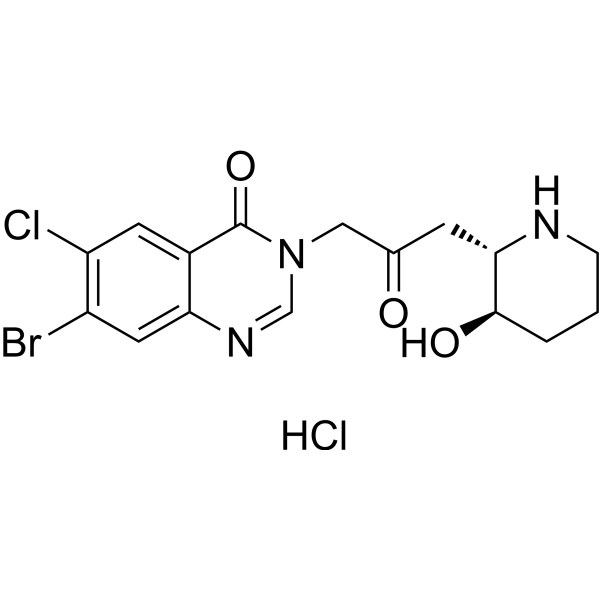
Halofuginone (RU-19110) hydrobromid, a Febrifugine derivative, is a competitive prolyl-tRNA synthetase inhibitor with a Ki of 18.3 nM. Halofuginone hydrobromid is a specific inhibitor of type-I collagen synthesis and attenuates osteoarthritis (OA) by inhibition of TGF-β activity. Halofuginone hydrobromid is also a potent pulmonary vasodilator by activating Kv channels and blocking voltage-gated, receptor-operated and store-operated Ca 2+ channels. Halofuginone hydrobromid has anti-malaria, anti-inflammatory, anti-cancer, anti-fibrosis effects .
|
-
- HY-N1584A
-
|
RU-19110 hydrobromide
|
DNA/RNA Synthesis
TGF-beta/Smad
Parasite
Sodium Channel
Calcium Channel
|
Infection
Cardiovascular Disease
Inflammation/Immunology
Cancer
|
|
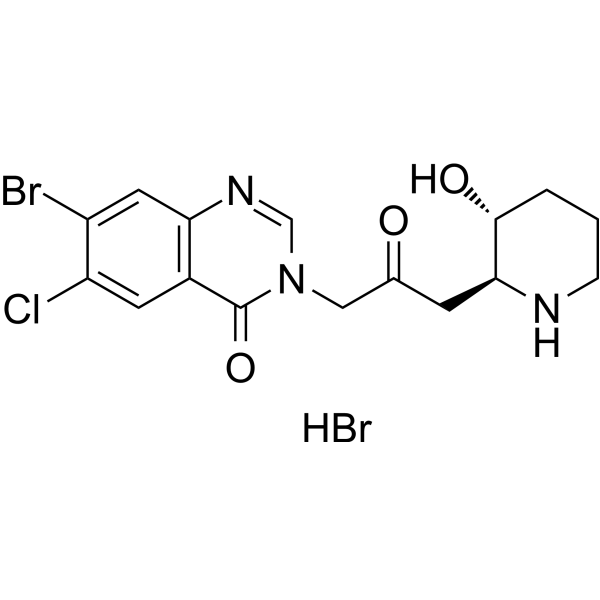
Halofuginone (RU-19110) hydrobromid, a Febrifugine derivative, is a competitive prolyl-tRNA synthetase inhibitor with a Ki of 18.3 nM . Halofuginone hydrobromid is a specific inhibitor of type-I collagen synthesis and attenuates osteoarthritis (OA) by inhibition of TGF-β activity . Halofuginone hydrobromid is also a potent pulmonary vasodilator by activating Kv channels and blocking voltage-gated, receptor-operated and store-operated Ca 2+ channels. Halofuginone hydrobromid has anti-malaria, anti-inflammatory, anti-cancer, anti-fibrosis effects .
|
-
- HY-143690S
-
|
|
Isotope-Labeled Compounds
|
Others
|
|
Oxybutynin-d10 hydrochloride is the deuterium labeled Oxybutynin (HY-B0267). Oxybutynin is an anticholinergic agent, which inhibits vascular Kv channels in a concentration-dependent manner, with an IC50 of 11.51 μM . Oxybutynin is a click chemistry reagent, it contains an Alkyne group and can undergo copper-catalyzed azide-alkyne cycloaddition (CuAAc) with molecules containing Azide groups.
|
-
- HY-W105272R
-
|
|
Reference Standards
Endogenous Metabolite
|
Metabolic Disease
|
|
Halofuginone (Standard) is the analytical standard of Halofuginone. This product is intended for research and analytical applications. Halofuginone (RU-19110), a Febrifugine derivative, is a competitive prolyl-tRNA synthetase inhibitor with a Ki of 18.3 nM . Halofuginone is a specific inhibitor of type-I collagen synthesis and attenuates osteoarthritis (OA) by inhibition of TGF-β activity . Halofuginone is also a potent pulmonary vasodilator by activating Kv channels and blocking voltage-gated, receptor-operated and store-operated Ca2+ channels. Halofuginone has anti-malaria, anti-inflammatory, anti-cancer, anti-fibrosis effects .
|
-
- HY-N1584R
-
|
RU-19110 (Standard)
|
Reference Standards
DNA/RNA Synthesis
TGF-beta/Smad
Parasite
Sodium Channel
Calcium Channel
|
Infection
Cardiovascular Disease
Inflammation/Immunology
Cancer
|
|
Halofuginone (Standard) is the analytical standard of Halofuginone. This product is intended for research and analytical applications. Halofuginone (RU-19110), a Febrifugine derivative, is a competitive prolyl-tRNA synthetase inhibitor with a Ki of 18.3 nM . Halofuginone is a specific inhibitor of type-I collagen synthesis and attenuates osteoarthritis (OA) by inhibition of TGF-β activity . Halofuginone is also a potent pulmonary vasodilator by activating Kv channels and blocking voltage-gated, receptor-operated and store-operated Ca2+ channels. Halofuginone has anti-malaria, anti-inflammatory, anti-cancer, anti-fibrosis effects .
|
-
- HY-103192R
-
|
RMI12330A (Standard)
|
Adenylate Cyclase
Reference Standards
Potassium Channel
|
Neurological Disease
Cancer
|
|
MDL12330A (Standard) is the analytical standard of MDL12330A (HY-103192). MDL12330A (RMI12330A) is an adenylyl cyclases inhibitor. MDL12330A can inhibit KV channels, increases insulin secretion and Ca 2+ levels. MDL12330A accentuates contractions in uterine rings and inhibits cardiac functions. MDL12330A can be used for the research of endocrinology, metabolic and cardiovascular disease .
|
-
- HY-N1584BR
-
|
RU-19110 hydrochloride (Standard)
|
Reference Standards
Calcium Channel
DNA/RNA Synthesis
Parasite
Sodium Channel
TGF-beta/Smad
|
Infection
Cardiovascular Disease
Inflammation/Immunology
Cancer
|
|
Halofuginone (hydrochloride) (Standard) is the analytical standard of Halofuginone (hydrochloride). This product is intended for research and analytical applications. Halofuginone (RU-19110) hydrobromid, a Febrifugine derivative, is a competitive prolyl-tRNA synthetase inhibitor with a Ki of 18.3 nM. Halofuginone hydrobromid is a specific inhibitor of type-I collagen synthesis and attenuates osteoarthritis (OA) by inhibition of TGF-β activity. Halofuginone hydrobromid is also a potent pulmonary vasodilator by activating Kv channels and blocking voltage-gated, receptor-operated and store-operated Ca2+ channels. Halofuginone hydrobromid has anti-malaria, anti-inflammatory, anti-cancer, anti-fibrosis effects [4] .
|
-
- HY-108578
-
|
|
Potassium Channel
|
Neurological Disease
|
|
RuBi-4AP, a derivative of 4-aminopyridine (4AP; HY-B0604), is a caged Kv channel blocker. RuBi-4AP contains a photolabile protecting group, allowing its effect to be controlled precisely in both space and time with light. RuBi-4AP can be used for the research of neuronal excitability, synaptic transmission, and signal propagation .
|
-
- HY-W002097R
-
|
2-Acetyl-5-methylthiophene (Standard)
|
Reference Standards
Others
|
Others
|
|
Amifampridine (Standard) is the analytical standard of Amifampridine. This product is intended for research and analytical applications. Amifampridine (3,4-Diaminopyridine) is an orally active, potent and cell permeable voltage-gated potassium (Kv) channel blocker (PCB). Amifampridine is efficacy in the reversal of BoNT/A (HY-P79153) intoxication. Amifampridine increases transmitter release from neuromuscular junctions (NMJs). Amifampridine can be used for Lambert-Eaton myasthenic syndrome (LEMS) research .
|
-
- HY-14946R
-
|
3,4-Diaminopyridine (Standard)
|
Reference Standards
Potassium Channel
|
Neurological Disease
|
|
Amifampridine (Standard) is the analytical standard of Amifampridine. This product is intended for research and analytical applications. Amifampridine (3,4-Diaminopyridine) is an orally active, potent and cell permeable voltage-gated potassium (Kv) channel blocker (PCB). Amifampridine is efficacy in the reversal of BoNT/A (HY-P79153) intoxication. Amifampridine increases transmitter release from neuromuscular junctions (NMJs). Amifampridine can be used for Lambert-Eaton myasthenic syndrome (LEMS) research .
|
-
- HY-N1584AR
-
|
RU-19110 hydrobromide (Standard)
|
Reference Standards
DNA/RNA Synthesis
TGF-beta/Smad
Parasite
Sodium Channel
Calcium Channel
|
Infection
Cardiovascular Disease
Inflammation/Immunology
Cancer
|
|
Halofuginone (hydrobromide) (Standard) is the analytical standard of Halofuginone (hydrobromide). This product is intended for research and analytical applications. Halofuginone (RU-19110) hydrobromid, a Febrifugine derivative, is a competitive prolyl-tRNA synthetase inhibitor with a Ki of 18.3 nM . Halofuginone hydrobromid is a specific inhibitor of type-I collagen synthesis and attenuates osteoarthritis (OA) by inhibition of TGF-β activity . Halofuginone hydrobromid is also a potent pulmonary vasodilator by activating Kv channels and blocking voltage-gated, receptor-operated and store-operated Ca 2+ channels. Halofuginone hydrobromid has anti-malaria, anti-inflammatory, anti-cancer, anti-fibrosis effects .
|
-
- HY-14946S
-
|
3,4-Diaminopyridine-d3
|
Isotope-Labeled Compounds
Potassium Channel
|
Neurological Disease
|
|
Amifampridine-d3 (3,4-Diaminopyridine-d3) is deuterium labeled Amifampridine. Amifampridine (3,4-Diaminopyridine) is an orally active, potent and cell permeable voltage-gated potassium (Kv) channel blocker (PCB). Amifampridine is efficacy in the reversal of BoNT/A (HY-P79153) intoxication. Amifampridine increases transmitter release from neuromuscular junctions (NMJs). Amifampridine can be used for Lambert-Eaton myasthenic syndrome (LEMS) research .
|
-
- HY-P1424A
-
|
|
Potassium Channel
|
Neurological Disease
|
|
Lei-Dab7 TFA is a high affinity, selective KCa2.2 (SK2) channel blocker (Kd=3.8 nM). Lei-Dab7 TFA exhibits >200-fold selectivity for KCa2.2 over KCa2.1, KCa2.3, KCa3.1, Kv and Kir2.1. Lei-Dab7 TFA increases theta-burst responses and increases LTP in rat hippocampal slices in vitro.
|
-
- HY-P1426
-
|
|
Potassium Channel
|
Neurological Disease
|
|
AmmTX3 is a peptide toxin identified from the venom of the scorpion Androctonus mauretanicus. AmmTX3 is a highly specific blocker of Kv4 channels, which selectively and almost completely blocks transient A-type K + currents with a Ki of 131 nM. AmmTX3 induces epileptiform behaviors and causes death in mice receiving intracerebroventricular injection. AmmTX3 increases the excitability of dentate gyrus granule cells, reduces GABAergic inhibition, enhances and stabilizes the EPSP-spike component of long-term potentiation, and impairs reference memory. AmmTX3 can be used in research related to pain, epilepsy, and autism spectrum disorder .
|
-
- HY-B0267AR
-
|
|
Reference Standards
mAChR
Potassium Channel
|
Neurological Disease
|
|
Oxybutynin (chloride) (Standard) is the analytical standard of Oxybutynin (chloride). This product is intended for research and analytical applications. Oxybutynin chloride is an oral active and competitive mAChR antagonist with Kis of 14.3 and 5.55 nM for specific [ 3H]NMS binding in the mouse bladder and cerebral cortex, respectively. Oxybutynin chloride inhibits vascular Kv channels in a manner independent of anticholinergic effect, with an IC50 value of 11.51 μM. Oxybutynin chloride reduces muscle spasm in the bladder and urinary tract, can be used in study of overactive bladder syndrome (OAB) . Oxybutynin (chloride) is a click chemistry reagent, it contains an Alkyne group and can undergo copper-catalyzed azide-alkyne cycloaddition (CuAAc) with molecules containing Azide groups.
|
-
- HY-P1426A
-
|
|
Potassium Channel
|
Neurological Disease
|
|
AmmTX3 TFA is a peptide toxin identified from the venom of the scorpion Androctonus mauretanicus. AmmTX3 TFA is a highly specific blocker of Kv4 channels, which selectively and almost completely blocks transient A-type K + currents with a Ki of 131 nM. AmmTX3 TFA induces epileptiform behaviors and causes death in mice receiving intracerebroventricular injection. AmmTX3 TFA increases the excitability of dentate gyrus granule cells, reduces GABAergic inhibition, enhances and stabilizes the EPSP-spike component of long-term potentiation, and impairs reference memory. AmmTX3 TFA can be used in research related to pain, epilepsy, and autism spectrum disorder .
|
-
- HY-17001
-
|
D 9998 Maleate
|
Potassium Channel
iGluR
GABA Receptor
|
Neurological Disease
Inflammation/Immunology
|
|
Flupirtine (D 9998) Maleate is an orally active, blood-brain barrier-crossing non-opioid analgesic and neuroprotective agent. Flupirtine Maleate is a neuronal potassium channel opener (Kv7 activator), a NMDA receptor antagonist and a GABA receptor activator. Flupirtine Maleate stabilizes blood-brain-barrier integrity, reduces oxidative stress and brain leukocyte infiltration, enhances angioneurogenesis, suppresses calcium influx, stabilizes neuronal resting membrane potential, and counteracts focal cerebral ischemia. Flupirtine Maleate exhibits analgesic, muscle relaxant properties, protects neurons from excitotoxic, ischemic, or cytokine-mediated death. Flupirtine Maleate functions as a non-opioid analgesic without antipyretic or antiphlogistic properties, shows no relevant affinity to opiate receptor. Flupirtine Maleate can be used for the research of focal cerebral ischemia, pain, Alzheimer’s disease, or multiple sclerosis .
|
-
- HY-W709349
-
|
D 9998 hydrochloride
|
Potassium Channel
iGluR
GABA Receptor
|
Neurological Disease
Inflammation/Immunology
|
|
Flupirtine (D 9998) hydrochloride is an orally active, blood-brain barrier-crossing non-opioid analgesic and neuroprotective agent. Flupirtine hydrochloride is a neuronal potassium channel opener (Kv7 activator), a NMDA receptor antagonist and a GABA receptor activator. Flupirtine hydrochloride stabilizes blood-brain-barrier integrity, reduces oxidative stress and brain leukocyte infiltration, enhances angioneurogenesis, suppresses calcium influx, stabilizes neuronal resting membrane potential, and counteracts focal cerebral ischemia. Flupirtine hydrochloride exhibits analgesic, muscle relaxant properties, protects neurons from excitotoxic, ischemic, or cytokine-mediated death. Flupirtine hydrochloride functions as a non-opioid analgesic without antipyretic or antiphlogistic properties, shows no relevant affinity to opiate receptor. Flupirtine hydrochloride can be used for the research of focal cerebral ischemia, pain, Alzheimer’s disease, or multiple sclerosis .
|
-
- HY-17001A
-
|
D 9998
|
Potassium Channel
iGluR
GABA Receptor
|
Neurological Disease
Inflammation/Immunology
|
|
Flupirtine (D 9998) is an orally active, blood-brain barrier-crossing non-opioid analgesic and neuroprotective agent. Flupirtine is a neuronal potassium channel opener (Kv7 activator), a NMDA receptor antagonist and a GABA receptor activator. Flupirtine stabilizes blood-brain-barrier integrity, reduces oxidative stress and brain leukocyte infiltration, enhances angioneurogenesis, suppresses calcium influx, stabilizes neuronal resting membrane potential, and counteracts focal cerebral ischemia. Flupirtine exhibits analgesic, muscle relaxant properties, protects neurons from excitotoxic, ischemic, or cytokine-mediated death. Flupirtine functions as a non-opioid analgesic without antipyretic or antiphlogistic properties, shows no relevant affinity to opiate receptor. Flupirtine can be used for the research of focal cerebral ischemia, pain, Alzheimer’s disease, or multiple sclerosis .
|
-
- HY-17001R
-
|
D 9998 Maleate (Standard)
|
Reference Standards
Potassium Channel
iGluR
GABA Receptor
|
Neurological Disease
Inflammation/Immunology
|
|
Flupirtine Maleate (Standard) is the analytical standard of Flupirtine Maleate (HY-17001). This product is intended for research and analytical applications. Flupirtine Maleate is an orally active, blood-brain barrier-crossing non-opioid analgesic and neuroprotective agent. Flupirtine Maleate is a neuronal potassium channel opener (Kv7 activator), a NMDA receptor antagonist and a GABA receptor activator. Flupirtine Maleate stabilizes blood-brain-barrier integrity, reduces oxidative stress and brain leukocyte infiltration, enhances angioneurogenesis, suppresses calcium influx, stabilizes neuronal resting membrane potential, and counteracts focal cerebral ischemia. Flupirtine Maleate exhibits analgesic, muscle relaxant properties, protects neurons from excitotoxic, ischemic, or cytokine-mediated death. Flupirtine Maleate functions as a non-opioid analgesic without antipyretic or antiphlogistic properties, shows no relevant affinity to opiate receptor. Flupirtine Maleate can be used for the research of focal cerebral ischemia, pain, Alzheimer’s disease, or multiple sclerosis .
|
-
- HY-W709349S
-
|
D 9998-d6 hydrochloride
|
Isotope-Labeled Compounds
Potassium Channel
iGluR
GABA Receptor
|
Neurological Disease
|
|
Flupirtine-d6 (D 9998-d6) hydrochloride is the deuterium labeled Flupirtine hydrochloride (HY-W709349). Flupirtine hydrochloride is an orally active, blood-brain barrier-crossing non-opioid analgesic and neuroprotective agent. Flupirtine hydrochloride is a neuronal potassium channel opener (Kv7 activator), a NMDA receptor antagonist and a GABA receptor activator. Flupirtine hydrochloride stabilizes blood-brain-barrier integrity, reduces oxidative stress and brain leukocyte infiltration, enhances angioneurogenesis, suppresses calcium influx, stabilizes neuronal resting membrane potential, and counteracts focal cerebral ischemia. Flupirtine hydrochloride exhibits analgesic, muscle relaxant properties, protects neurons from excitotoxic, ischemic, or cytokine-mediated death. Flupirtine hydrochloride functions as a non-opioid analgesic without antipyretic or antiphlogistic properties, shows no relevant affinity to opiate receptor. Flupirtine hydrochloride can be used for the research of focal cerebral ischemia, pain, Alzheimer’s disease, or multiple sclerosis .
|
-
- HY-110230
-
|
D 9998-d4 hydrochloride
|
Isotope-Labeled Compounds
Potassium Channel
iGluR
GABA Receptor
|
Neurological Disease
Inflammation/Immunology
|
|
Flupirtine-d4 (D 9998-d4) hydrochloride is the deuterium labeled Flupirtine hydrochloride (HY-W709349). Flupirtine hydrochloride is an orally active, blood-brain barrier-crossing non-opioid analgesic and neuroprotective agent. Flupirtine hydrochloride is a neuronal potassium channel opener (Kv7 activator), a NMDA receptor antagonist and a GABA receptor activator. Flupirtine hydrochloride stabilizes blood-brain-barrier integrity, reduces oxidative stress and brain leukocyte infiltration, enhances angioneurogenesis, suppresses calcium influx, stabilizes neuronal resting membrane potential, and counteracts focal cerebral ischemia. Flupirtine hydrochloride exhibits analgesic, muscle relaxant properties, protects neurons from excitotoxic, ischemic, or cytokine-mediated death. Flupirtine hydrochloride functions as a non-opioid analgesic without antipyretic or antiphlogistic properties, shows no relevant affinity to opiate receptor. Flupirtine hydrochloride can be used for the research of focal cerebral ischemia, pain, Alzheimer’s disease, or multiple sclerosis .
|
-
- HY-N15339A
-
|
|
Sigma Receptor
|
Neurological Disease
|
|
Convolamine hydrochloride is a tropane alkaloid and a potent Sigma-1 receptor positive allosteric modulator with an IC50 value of 289 nM. Convolamine hydrochloride can be extracted from Convolvulus plauricalis. Convolamine hydrochloride exhibits cognitive-improving and neuroprotective properties. Convolamine hydrochloride can be used in research related to Wolfram syndrome and Alzheimer's disease .
|
-
- HY-17001AR
-
|
D 9998 (Standard)
|
Reference Standards
Potassium Channel
iGluR
GABA Receptor
|
Neurological Disease
Inflammation/Immunology
|
|
Flupirtine (Standard) (D 9998 (Standard)) is the analytical standard of Flupirtine (HY-17001A). This product is intended for research and analytical applications. Flupirtine is an orally active, blood-brain barrier-crossing non-opioid analgesic and neuroprotective agent. Flupirtine is a neuronal potassium channel opener (Kv7 activator), a NMDA receptor antagonist and a GABA receptor activator. Flupirtine stabilizes blood-brain-barrier integrity, reduces oxidative stress and brain leukocyte infiltration, enhances angioneurogenesis, suppresses calcium influx, stabilizes neuronal resting membrane potential, and counteracts focal cerebral ischemia. Flupirtine exhibits analgesic, muscle relaxant properties, protects neurons from excitotoxic, ischemic, or cytokine-mediated death. Flupirtine functions as a non-opioid analgesic without antipyretic or antiphlogistic properties, shows no relevant affinity to opiate receptor. Flupirtine can be used for the research of focal cerebral ischemia, pain, Alzheimer’s disease, or multiple sclerosis .
|
-
| Cat. No. |
Product Name |
Type |
-
- HY-W001992
-
|
3-Nitro-2,6-dichloropyridine
|
Biochemical Assay Reagents
|
|
2,6-Dichloro-3-nitropyridine is a starting compound for the synthesis of a sulfide analog of Flupirtine (HY-17001A) with KV7.2/3 channel opening activity. 2,6-Dichloro-3-nitropyridine can be used in pain research .
|
| Cat. No. |
Product Name |
Target |
Research Area |
-
- HY-P3507
-
|
ShK-186
|
Potassium Channel
|
Metabolic Disease
Inflammation/Immunology
|
|
Dalazatide (ShK-186) is a specific Kv1.3 potassium channel peptide inhibitor. Dalazatide can be used in the study of autoimmune diseases such as multiple sclerosis (MS), lupus erythematosus, psoriasis, rheumatoid arthritis, type 1 diabetes and inflammatory bowel disease .
|
-
- HY-P3507A
-
|
ShK-186 TFA
|
Potassium Channel
|
Metabolic Disease
Inflammation/Immunology
|
|
Dalazatide (ShK-186) TFA is a specific Kv1.3 potassium channel peptide inhibitor. Dalazatide TFA can be used in the study of autoimmune diseases such as multiple sclerosis (MS), lupus erythematosus, psoriasis, rheumatoid arthritis, type 1 diabetes and inflammatory bowel disease .
|
-
- HY-P1280
-
|
|
Potassium Channel
|
Neurological Disease
|
|
Margatoxin, an alpha-KTx scorpion toxin, is a high affinity inhibitor of Kv1.3 (Kd=11.7 pM). Margatoxin inhibits the Kv1.2 (Kd=6.4 pM) and Kv1.1 (Kd=4.2 nM). Margatoxin, a 39 amino-acid-long peptide, is isolated from the venom of the scorpion Centruroides margaritatus and widely used in ion channel research .
|
-
- HY-P3055A
-
|
DTX-I TFA
|
Potassium Channel
|
Cancer
|
|
Dendrotoxin-I (DTX-I) TFA is a potent K + channel blocker with IC50s of 0.13-50 nM for voltage-gated potassium channel subunits KV1.1, KV1.2 and KV1.6. Dendrotoxin-I TFA, a neurotoxin, has the potential for cancer research .
|
-
- HY-P2707
-
|
α-DTX
|
Sodium Channel
Potassium Channel
|
Neurological Disease
|
|
α-Dendrotoxin (α-DTX) is a voltage-gated K + channel blocker and an acid-sensing ion channel (ASIC) inhibitor. α-Dendrotoxin blocks Kv1.1, Kv1.2, Kv1.6 and D-type (ID) voltage-gated K + channels, and reversibly inhibits slowly inactivating potassium currents. α-Dendrotoxin induces epilepsy-related behaviors in mice. α-Dendrotoxin can be used in studies related to tonic-clonic seizures .
|
-
- HY-P3089A
-
|
|
Potassium Channel
|
Others
|
|
Dendrotoxin K TFA is a Kv1.1 channel blocker. Dendrotoxin K TFA determines glutamate release in CA3 neurons in a time-dependent manner through the control of the presynaptic spike waveform .
|
-
- HY-P1427A
-
|
|
Potassium Channel
|
Neurological Disease
|
|
Guangxitoxin 1E TFA is the TFA salt form of Guangxitoxin 1E (HY-P1427). Guangxitoxin 1E TFA is a peptide toxin and a selective inhibitor for voltage-gated potassium channel KV2.1 and KV2.2 with IC50 of 1-3 nM. Guangxitoxin 1E TFA enhances glucose-stimulated intracellular calcium ion oscillations and increases insulin secretion in a glucose-dependent manner .
|
-
- HY-P5156
-
|
|
Potassium Channel
|
Neurological Disease
|
|
BDS-I known as blood depressing substance, is a marine toxin which can be extracted from Anemonia sulcata. BDS-I is a specific inhibitor of Potassium Channel, targeting to Kv3.4. BDS-I inhibits Aβ1-42-induced enhancement of KV3.4 activity, caspase-3 activation, and abnormal nuclear morphology of NGF-differentiated PC-12 cells. BDS-I reverts the Aβ peptide-induced cell death .
|
-
- HY-P3071
-
|
Stichodactyla helianthus neurotoxin
|
Potassium Channel
|
Neurological Disease
Inflammation/Immunology
|
|
ShK toxin blocks voltage-dependent potassium channel (Kv1.3 channel). ShK toxin can be isolated from the whole body extract of the Caribbean sea anemone (Stichodactylu helianthus). ShK toxin competes with dendrotoxin I and α-dendrotoxin for binding to synaptosomal membranes of rat brain, facilitates acetylcholine release. ShK toxin suppresses K+ currents in cultured rat dorsal root ganglion neurons. ShK toxin also inhibits T lymphocyte proliferation .
|
-
- HY-P2786A
-
-
- HY-P5925A
-
|
SsTx Toxin TFA
|
Potassium Channel
|
Neurological Disease
Inflammation/Immunology
|
|
Ssm Spooky Toxin TFA is found in Scolopendra mutilans that potently inhibits KCNQ (voltage-gated potassium channel family 7) channels, with IC50s of 2.8 μM, 5.26 μM and 0.1-0.3 M for Kv7.4, Kv1.3, and Shal channel, respectivily. Ssm Spooky Toxin TFA inhibits cytokine generation by specifically acting on the KV1.3 channel in T cells. Ssm Spooky Toxin TFA plays an essential role in the centipede’s circulatory system .
|
-
- HY-P5818
-
-
- HY-P1409A
-
|
|
Potassium Channel
|
Inflammation/Immunology
|
|
ADWX 1 TFA is a new peptide inhibitor that is potent and selective for Kv1.3 with an IC50 value of 1.89 pM. ADWX 1 inhibits Kv1.3 channel activity specifically to inhibit both the initial calcium signaling and NF-κB activation. ADWX 1 TFA ameliorates the disease in rats of experimental autoimmune encephalomyelitis (EAE) models. ADWX 1 TFA can be used to study T cell-mediated autoimmune diseases .
|
-
- HY-P5182A
-
|
|
Potassium Channel
|
Inflammation/Immunology
|
|
HsTX1 (TFA) toxin, from the scorpion Heterometrus spinnifer, is a 34-residue, C-terminally amidated peptide cross-linked by four disulfide bridges. HsTX1 (TFA) is an the inhibitor of potassium channel, with IC50 for Kv1.3 of 12 pM and inhibits TEM cell activation and attenuates inflammation in autoimmunity .
|
-
- HY-P5917A
-
|
Vaejovis mexicanus peptide 24 TFA
|
Potassium Channel
|
Inflammation/Immunology
Cancer
|
|
Vm24-toxin (Vaejovis mexicanus peptide 24) TFA, a 36-residue peptide, is a potent and selective Kv1.3 blocker with a Kd of ~3 pM in lymphocytes. Vm24-toxin TFA shows >1500-fold affinity for Kv1.3 over other assayed potassium channels. Vm24-toxin TFA folds into a distorted cystine-stabilized α/β motif consisting of a single-turn α-helix and a three-stranded antiparallel β-sheet, stabilized by four disulfide bridges. Vm24-toxin TFA attenuates the CD4 + effector memory T cell response to T cell receptor (TCR) stimulation .
|
-
- HY-P1427
-
|
|
Potassium Channel
|
Neurological Disease
|
|
Guangxitoxin 1E is a potent and selective blocker of KV2.1 and KV2.2 channels. Guangxitoxin 1E inhibits KV2 with an IC50 of 1-3 nM. KV2 channels underlie delayed-rectifier potassium currents in various neurons .
|
-
- HY-P3055
-
|
DTX-I
|
Potassium Channel
|
Neurological Disease
Cancer
|
|
Dendrotoxin-I (DTX-I) is a potent K + channels blocker with IC50s of 0.13-50 nM for voltage-gated potassium channel subunits KV1.1, KV1.2 and KV1.6, respectively. Dendrotoxin-I, a neurotoxin, has the potential for cancer research .
|
-
- HY-P5925
-
|
SsTx Toxin
|
Potassium Channel
|
Neurological Disease
Inflammation/Immunology
|
|
Ssm Spooky Toxin is found in Scolopendra mutilans that potently inhibits KCNQ (voltage-gated potassium channel family 7) channels, with IC50s of 2.8 μM, 5.26 μM and 0.1-0.3 M for Kv7.4, Kv1.3, and Shal channel, respectivily. Ssm Spooky Toxin inhibits cytokine generation by specifically acting on the KV1.3 channel in T cells. Ssm Spooky Toxin plays an essential role in the centipede’s circulatory system .
|
-
- HY-P5155
-
|
|
Potassium Channel
|
Neurological Disease
|
|
Stromatoxin 1 is an inhibitor of Potassium Channel, a peptide which can be isolated from tarantulas. Stromatoxin 1 selectively inhibits K(V)2.1, K(V)2.2, K(V)4.2, and K(V)2.1/9.3 channels. K(V)2.1 and K(V)2.2, but not K(V)4.2, channel subunits play a key role in opposing both myogenic and neurogenic urinary bladder smooth muscle (UBSM) contractions in rats .
|
-
- HY-P5916
-
|
κ-Theraphotoxin-Gr4a; Kappa-TRTX-Gr4a; Voltage sensor toxin 3; Peptide F
|
Peptides
Potassium Channel
|
Neurological Disease
|
|
VSTx-3 is a KV channel blocker. VSTx-3 is demonstrated to be a potent, TTX-sensitive sodium channel blocker and especially, a potent blocker of NaV1.8 channels (IC50 0.19 μM for hNaV1.3, 0.43 μM for hNaV1.7 and 0.77 μM for hNaV1.8 channels).
|
-
- HY-P3071A
-
|
Stichodactyla helianthus neurotoxin TFA
|
Potassium Channel
|
Neurological Disease
Inflammation/Immunology
|
|
ShK toxin TFA (Stichodactyla helianthus neurotoxin TFA) is a neurotoxin. ShK toxin TFA blocks voltage-dependent potassium channel (Kv1.3 channel). ShK toxin TFA can be isolated from the whole body extract of the Caribbean sea anemone (Stichodactylu helianthus). ShK toxin TFA competes with dendrotoxin I and α-dendrotoxin for binding to synaptosomal membranes of rat brain, facilitates acetylcholine release. ShK toxin TFA suppresses K + currents in cultured rat dorsal root ganglion neurons. ShK toxin TFA also inhibits T lymphocyte proliferation .
|
-
- HY-P1441A
-
|
|
Sodium Channel
|
Neurological Disease
|
|
Mambalgin 1 TFA is a selective ASIC1a inhibitor (IC50 values are 192 and 72 nM for human ASIC1a and ASIC1a/1b dimer, respectively). Mambalgin 1 TFA binds to closed/inactive channel. Mambalgin 1 TFA is selective for ASIC1a over ASIC2a, ASIC3, TRPV1, P2X2, 5-HT3, Nav1.8, Cav3.2 and Kv1.2 channels. Mambalgin 1 TFA increases latency of withdrawal response in mouse tail-flick and paw-flick tests.
|
-
- HY-P1426
-
|
|
Potassium Channel
|
Neurological Disease
|
|
AmmTX3 is a peptide toxin identified from the venom of the scorpion Androctonus mauretanicus. AmmTX3 is a highly specific blocker of Kv4 channels, which selectively and almost completely blocks transient A-type K + currents with a Ki of 131 nM. AmmTX3 induces epileptiform behaviors and causes death in mice receiving intracerebroventricular injection. AmmTX3 increases the excitability of dentate gyrus granule cells, reduces GABAergic inhibition, enhances and stabilizes the EPSP-spike component of long-term potentiation, and impairs reference memory. AmmTX3 can be used in research related to pain, epilepsy, and autism spectrum disorder .
|
-
- HY-P1281
-
|
|
Potassium Channel
|
Neurological Disease
|
|
Kaliotoxin is a peptidyl inhibitor of neuronal BK-Type. Kaliotoxin can specific inhibit Kv channels and calcium-activated potassium channels. Kaliotoxin can be used for the research of the regulation of membrane potential and neuron excitability .
|
-
- HY-P5788
-
|
|
Potassium Channel
|
Neurological Disease
|
|
Hemitoxin, a scorpion-venom peptide, is a K + channel blocker. Hemitoxin blocks rat Kv1.1, Kv1.2 and Kv1.3 channels expressed in Xenopus oocytes with IC50 values of 13 nM, 16 nM and 2 nM, respectively .
|
-
- HY-P1886
-
|
|
Potassium Channel
|
Neurological Disease
|
|
Kv3, Channel Containing Protein (567-585) corresponds to amino acids 567 to 585 fragment of the Kv3.1b channel containing protein. Kv3 channel protein is expressed by parvalbumin (PV)-containing pallidal neurons .
|
-
- HY-P5771
-
|
|
Sodium Channel
|
Neurological Disease
|
|
Jingzhaotoxin-IX, a C-terminally amidated peptide composed of 35 amino acid residues, is a neurotoxin. Jingzhaotoxin-IX inhibits voltage-gated sodium channels (both tetrodotoxin-resistant and tetrodotoxin-sensitive isoforms) and Kv2.1 channel. Jingzhaotoxin-IX has no effect on delayed rectifier potassium channel Kv1.1, 1.2 and 1.3 .
|
-
- HY-P5870
-
|
|
Potassium Channel
|
Inflammation/Immunology
|
|
KTX-Sp2 is a potassium channel toxin. KTX-Sp2 effectively blocks three types of exogenous voltage-gated potassium channels: Kv1.1, Kv1.2 and Kv1.3. Ktx-Sp2 inhibits endogenous Kv1.3 and suppresses Ca 2+ signaling in Jurkat T cells. Ktx-Sp2 inhibits IL-2 secretion from activated Jurkat T cells .
|
-
- HY-P5873
-
|
JZTX-X
|
Potassium Channel
|
Neurological Disease
|
|
Jingzhaotoxin-X (JZTX-X) is a selective Kv4.2 and Kv4.3 potassium channels inhibitor. Jingzhaotoxin-X causes long-lasting mechanical hyperalgesia .
|
-
- HY-P3316
-
|
|
Potassium Channel
|
Neurological Disease
Inflammation/Immunology
|
|
OSK-1 is a potent Kv channel blocker with IC50s of of 0.6 nM, 5.4 nM, 0.014 nM for Kv1.1, Kv1.2 and Kv1.3, respectively. OSK1 is a moderate blocker of Ca 2+-activated KCa3.1 channel with an IC50 of 225 nM. OSK-1 belongs to α-KTx3 toxins and is used as a immunosuppressive agent .
|
-
- HY-P1440A
-
|
|
Potassium Channel
|
Neurological Disease
|
|
BeKm-1 TFA is a potent and selective KV11.1 (hERG) channel blocker. BeKm-1 TFA is selective for KV11.1 over a panel of 14 other potassium channels. BeKm-1 TFA dose-dependently prolongs QTc interval in isolated rabbit heart.
|
-
- HY-P3014
-
|
|
Potassium Channel
|
Others
|
|
Hongotoxin-1, isolated from venom of Centruroides limbatus, is the inhibitor of potassium channel, with IC50 for? Kv1.1, Kv1.2, Kv1.3, and Kv1.6 of 31 pM, 170 pM, 86 pM,and 6000 pM, respectively .
|
-
- HY-P5871
-
|
JzTx-XII
|
Potassium Channel
|
Others
|
|
Jingzhaotoxin-XII (JzTx-XII) is a specific Kv4.1 channel inhibitor with an IC50 of 0.363 μM. Jingzhaotoxin-XII interacts with the channels by modifying the gating behavior .
|
-
- HY-P5871A
-
|
JzTx-XII TFA
|
Potassium Channel
|
Others
|
|
Jingzhaotoxin-XII (JzTx-XII) TFA is a specific Kv4.1 channel inhibitor with an IC50 of 0.363 μM. Jingzhaotoxin-XII TFA interacts with the channels by modifying the gating behavior .
|
-
- HY-P5853
-
|
|
Potassium Channel
|
Inflammation/Immunology
|
|
Aam-KTX is a Kv channel inhibitor with IC50 values of 1.1 nM and >750 nM for Kv1.3 and Kv1.1, respectively. Aam-KTX is a toxic peptide obtained from the venom of the scorpion Mesobuthus eupeus. Aam-KTX has potential in autoimmune diseases research .
|
-
- HY-P2710
-
|
|
Potassium Channel
|
Neurological Disease
Inflammation/Immunology
|
|
Noxiustoxin is a toxin from the venom of the Mexican scorpion Centruroides noxius which block voltage-dependent potassium channel (Kv1.3, IC50 = 360 nM), and calcium-activated potassium channel. Noxiustoxin plays an important role in neuroinflammatory disease .
|
-
- HY-P2785A
-
-
- HY-P1274
-
|
|
Potassium Channel
|
Inflammation/Immunology
|
|
ShK-Dap22 is a potent Kv1.3-specific immunosuppressive Polypeptide. ShK-Dap22 is a selective Kv1.3 channel blocker with IC50s of 23 pM, 1.8 nM, 10.5 nM, 37 nM, and 39 nM for mKv1.3, mKv1.1, hKv1.6, mKv1.4, and rKv1.2 channels, respectively .
|
-
- HY-P1280A
-
|
|
Potassium Channel
|
Neurological Disease
|
|
Margatoxin TFA, an alpha-KTx scorpion toxin, is a high affinity inhibitor of Kv1.3 (Kd=11.7 pM). Margatoxin TFA inhibits the Kv1.2 (Kd=6.4 pM) and Kv1.1 (Kd=4.2 nM). Margatoxin TFA, a 39 amino-acid-long peptide, is isolated from the venom of the scorpion Centruroides margaritatus and widely used in ion channel research .
|
-
- HY-P3089
-
|
|
Potassium Channel
|
Others
|
|
Dendrotoxin K is a Kv1.1 channel blocker. Dendrotoxin K determines glutamate release in CA3 neurons in a time-dependent manner through the control of the presynaptic spike waveform .
|
-
- HY-P2785
-
-
- HY-P1409
-
|
|
Potassium Channel
|
Inflammation/Immunology
|
|
ADWX 1 is a new peptide inhibitor that is potent and selective for Kv1.3 with an IC50 value of 1.89 pM. ADWX 1 inhibits Kv1.3 channel activity specifically to inhibit both the initial calcium signaling and NF-κB activation. ADWX 1 ameliorates the disease in rats of experimental autoimmune encephalomyelitis (EAE) models. ADWX 1 can be used to study T cell-mediated autoimmune diseases .
|
-
- HY-P10572
-
-
- HY-P4742A
-
|
6-FAM-AEEAC-SHK TFA
|
Biochemical Assay Reagents
Potassium Channel
|
Neurological Disease
|
|
6-FAM-AEEAc-Stichodactyla helianthus Neurotoxin (ShK) TFA (6-FAM-AEEAC-SHK TFA) is a peptide neurotoxin conjugated with a fluorescent marker. 6-FAM-AEEAc-Stichodactyla helianthus Neurotoxin (ShK) TFA can block voltage-gated potassium channels (kv1.1 and kv1.2) to prolong the duration of action potentials, thereby affecting the conduction of neural signals. 6-FAM-AEEAc-Stichodactyla helianthus Neurotoxin (ShK) TFA can be used in neuroscience research .
|
-
- HY-P5931
-
|
Potassium channel toxin alpha-KTx 6.13; SPX; α-KTx6.13
|
Potassium Channel
|
Inflammation/Immunology
Cancer
|
|
Spinoxin isolated from the venom of scorpion Heterometrus spinifer, is a 34-residue peptide neurotoxin cross-linked by four disulfide bridges. Spinoxin is a potent inhibitor of Kv1.3 potassium channel (IC50 = 63 nM), considering to be valid molecular targets in the diagnostics and therapy of various autoimmune disorders and cancers .
|
-
- HY-P5182
-
|
|
Potassium Channel
|
Inflammation/Immunology
|
|
HsTX1, from the scorpion Heterometrus spinnifer, is a 34-residue, C-terminally amidated peptide cross-linked by four disulfide bridges. HsTX1, an the inhibitor of potassium channel, with IC50 for Kv1.3 of 12 pM inhibits TEM cell activation and attenuates inflammation in autoimmunity .
|
-
- HY-P1424
-
|
|
Potassium Channel
|
Neurological Disease
|
|
Lei-Dab7 is a potent and selective SK2 (KCa2.2) channels blocker with a Kd of 3.8 nM. Lei-Dab7 shows low or no activity on KCa1, KCa3, Kv and Kir2.1 channels .
|
-
- HY-P5917
-
|
Vaejovis mexicanus peptide 24
|
Potassium Channel
|
Inflammation/Immunology
Cancer
|
|
Vm24-toxin (Vaejovis mexicanus peptide 24), a 36-residue peptide, is a potent and selective Kv1.3 blocker with a Kd of ~3 pM in lymphocytes. Vm24-toxin shows >1500-fold affinity for Kv1.3 over other assayed potassium channels. Vm24-toxin folds into a distorted cystine-stabilized α/β motif consisting of a single-turn α-helix and a three-stranded antiparallel β-sheet, stabilized by four disulfide bridges. Vm24-toxin attenuates the CD4 + effector memory T cell response to T cell receptor (TCR) stimulation .
|
-
- HY-P1424A
-
|
|
Potassium Channel
|
Neurological Disease
|
|
Lei-Dab7 TFA is a high affinity, selective KCa2.2 (SK2) channel blocker (Kd=3.8 nM). Lei-Dab7 TFA exhibits >200-fold selectivity for KCa2.2 over KCa2.1, KCa2.3, KCa3.1, Kv and Kir2.1. Lei-Dab7 TFA increases theta-burst responses and increases LTP in rat hippocampal slices in vitro.
|
-
- HY-P1426A
-
|
|
Potassium Channel
|
Neurological Disease
|
|
AmmTX3 TFA is a peptide toxin identified from the venom of the scorpion Androctonus mauretanicus. AmmTX3 TFA is a highly specific blocker of Kv4 channels, which selectively and almost completely blocks transient A-type K + currents with a Ki of 131 nM. AmmTX3 TFA induces epileptiform behaviors and causes death in mice receiving intracerebroventricular injection. AmmTX3 TFA increases the excitability of dentate gyrus granule cells, reduces GABAergic inhibition, enhances and stabilizes the EPSP-spike component of long-term potentiation, and impairs reference memory. AmmTX3 TFA can be used in research related to pain, epilepsy, and autism spectrum disorder .
|
- HY-P5157
-
|
|
Potassium Channel
|
Neurological Disease
|
|
BmP02 is a selective Kv1.3 channel blocker and a highly-selective Kv4.2 modulator, which can be isolated from Chinese scorpion (Buthus martensi Karsch) venom. BmP02 also delays the inactivation of Kv4.2 in HEK293T cells, with an EC50 value of ~850 nM. BmP02 inhibits the transient outward potassium currents (Ito) in ventricular muscle cells .
|
| Cat. No. |
Product Name |
Category |
Target |
Chemical Structure |
| Cat. No. |
Product Name |
Chemical Structure |
-
- HY-B0267AS
-
|
|
|
Oxybutynin-d11 (chloride) is the deuterium labeled Oxybutynin chloride. Oxybutynin chloride is an anticholinergic agent, which inhibits vascular Kv channels in a concentration-dependent manner, with an IC50 of 11.51 μM .
|
-
-
- HY-14946S
-
|
|
|
Amifampridine-d3 (3,4-Diaminopyridine-d3) is deuterium labeled Amifampridine. Amifampridine (3,4-Diaminopyridine) is an orally active, potent and cell permeable voltage-gated potassium (Kv) channel blocker (PCB). Amifampridine is efficacy in the reversal of BoNT/A (HY-P79153) intoxication. Amifampridine increases transmitter release from neuromuscular junctions (NMJs). Amifampridine can be used for Lambert-Eaton myasthenic syndrome (LEMS) research .
|
-
-
- HY-143690S
-
|
|
|
Oxybutynin-d10 hydrochloride is the deuterium labeled Oxybutynin (HY-B0267). Oxybutynin is an anticholinergic agent, which inhibits vascular Kv channels in a concentration-dependent manner, with an IC50 of 11.51 μM . Oxybutynin is a click chemistry reagent, it contains an Alkyne group and can undergo copper-catalyzed azide-alkyne cycloaddition (CuAAc) with molecules containing Azide groups.
|
-
-
- HY-W709349S
-
|
|
|
Flupirtine-d6 (D 9998-d6) hydrochloride is the deuterium labeled Flupirtine hydrochloride (HY-W709349). Flupirtine hydrochloride is an orally active, blood-brain barrier-crossing non-opioid analgesic and neuroprotective agent. Flupirtine hydrochloride is a neuronal potassium channel opener (Kv7 activator), a NMDA receptor antagonist and a GABA receptor activator. Flupirtine hydrochloride stabilizes blood-brain-barrier integrity, reduces oxidative stress and brain leukocyte infiltration, enhances angioneurogenesis, suppresses calcium influx, stabilizes neuronal resting membrane potential, and counteracts focal cerebral ischemia. Flupirtine hydrochloride exhibits analgesic, muscle relaxant properties, protects neurons from excitotoxic, ischemic, or cytokine-mediated death. Flupirtine hydrochloride functions as a non-opioid analgesic without antipyretic or antiphlogistic properties, shows no relevant affinity to opiate receptor. Flupirtine hydrochloride can be used for the research of focal cerebral ischemia, pain, Alzheimer’s disease, or multiple sclerosis .
|
-
Your information is safe with us. * Required Fields.
Inquiry Information
- Product Name:
- Cat. No.:
- Quantity:
- MCE Japan Authorized Agent:

