


17 Results for "

M2-like macrophages

" in MedChemExpress (MCE) Product Catalog:
Products (17)

17 Results for "M2-like macrophages" in MCE Product Catalog:

1
1 Cited Publications
Cat. No.: HY-P99364
CAS No.: 1024603-92-6
Synonyms: Anti-VEGFR1/FLT1 Reference Antibody; IMC-18F1

Target:  

VEGFR Apoptosis p38 MAPK Akt

Research Areas:  

Endocrinology Cancer

Icrucumab (Anti-VEGFR1/FLT1 Reference Antibody; IMC-18F1) is an IgG1 antibody inhibitor targeting VEGFR-1/FLT1 with anti-tumor activity. By blocking ligand-dependent phosphorylation and downstream signal transduction, Icrucumab reduces the activities of MAPK and Akt in breast cancer xenograft models, inhibits the proliferation and invasion of VEGFR-1-positive tumor cells, and reverses the conversion of M1 macrophages to the pro-tumor M2-like phenotype. Icrucumab also inhibits tumor cell proliferation, promotes apoptosis, and effectively suppresses tumor growth through direct targeting of tumors and host support mechanisms. In addition, Icrucumab exhibits a synergistic effect when combined with chemotherapeutic agents, and it is used in research related to various cancers including advanced solid malignancies, thyroid cancer, melanoma, and lung cancer .
loading...
    loading...
1
1 Cited Publications
Cat. No.: HY-B1076
CAS No.: 2668-66-8
Synonyms: HMS; 6α-Methyl-11β-hydroxyprogesterone
Target:  

VEGFR CCR STAT

Research Areas:  

Neurological Disease

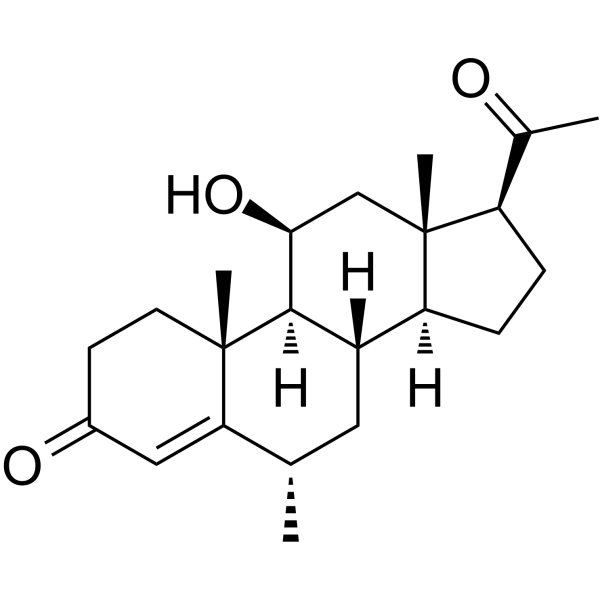
Medrysone (HMS; 6α-Methyl-11β-hydroxyprogesterone) is a STAT6 modulator and M2 macrophage polarization inducer. Medrysone enhances IL-4-triggered STAT6 activation, upregulates the expression of M2 markers, and promotes the secretion of VEGF and CCL2. Medrysone also enhances the pro-migratory activity of M2-like macrophages toward endothelial cells. By regulating macrophage polarization and related repair pathways, Medrysone significantly promotes corneal wound repair in a rat mechanical injury model. Medrysone can be used for research related to corneal injury .
loading...
    loading...
1
1 Cited Publications
Cat. No.: HY-139990
CAS No.: 2760584-90-3
Purity:  98.26%
Target:  

c-Fms

Research Areas:  

Cancer

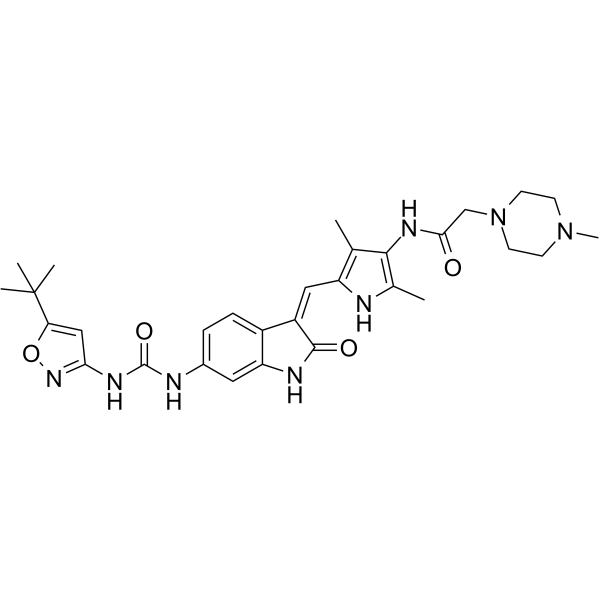
CSF1R-IN-3 (compound 21) is a potent and orally active CSF-1R inhibitor (IC50=2.1 nM). CSF1R-IN-3 is a potent antiproliferative activity against colorectal cancer cells. CSF1R-IN-3 inhibits the progression of colorectal cancer by suppressing the migration of macrophages, reprograming M2-like macrophages to the M1 phenotype, and enhancing the antitumor immunity .
loading...
    loading...
Cat. No.: HY-P10449
CAS No.: 3098205-40-1
Target:  

Inhibitory Antibodies

Research Areas:  

Inflammation/Immunology Cancer

M2 Peptide is a peptide targeting M2-like tumor-associated macrophages (TAMs). M2 Peptide is used to carry drugs or small interfering RNA (siRNA) to promote the repolarization of M2-like macrophages to M1-like macrophages, thereby altering the immunosuppressive state in the tumor microenvironment and enhancing the anti-tumor immune response. M2 Peptide can be used to study the effect of macrophage polarization and how this polarization change affects tumor growth and metastasis .
loading...
    loading...
Cat. No.: HY-P990087
CAS No.: 2756228-84-7
Synonyms: OR-2805
Zovostotug (OR-2805) is a fully human IgG1 antibody that binds to CD163. Zovostotug binds to CD163 expressed on TAMs and M2-like macrophages. Zovostotug does not bind to other hematopoietic cells nor to a panel of human primary non-immune cells. Zovostotug canbe used for the study of lung cancer .
loading...
    loading...
Cat. No.: HY-123901
CAS No.: 112649-21-5
Purity:  98.19%
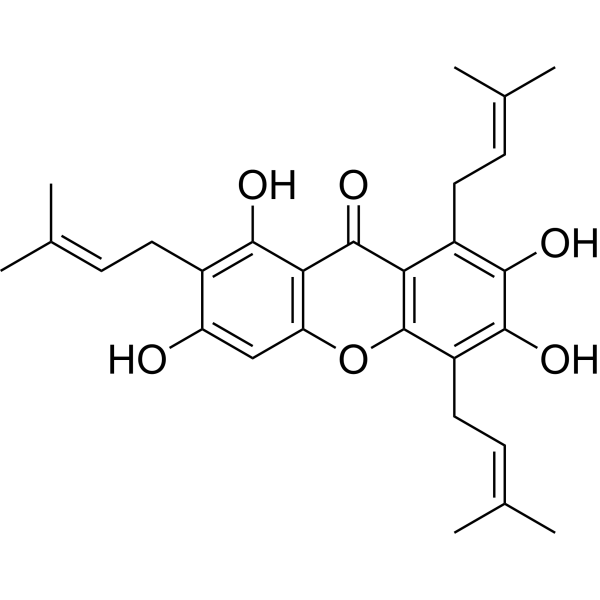
Garcinone E is a xanthone natural product that exerts antioxidant, anti-inflammatory, antitumor, and immunomodulatory activities by inhibiting JNK, TNF-α, NF-κB, and FAS, and enhancing Nrf2 signaling pathways. Garcinone E can be used in research on autoimmune hepatitis, obesity, and various cancers (including breast cancer, colorectal cancer, cervical cancer, liver cancer, lung cancer, and gastric cancer) .
loading...
    loading...
Cat. No.: HY-156850
CAS No.: 2247608-27-9
Purity:  98.55%
Target:  

HDAC NF-κB

Research Areas:  

Cancer

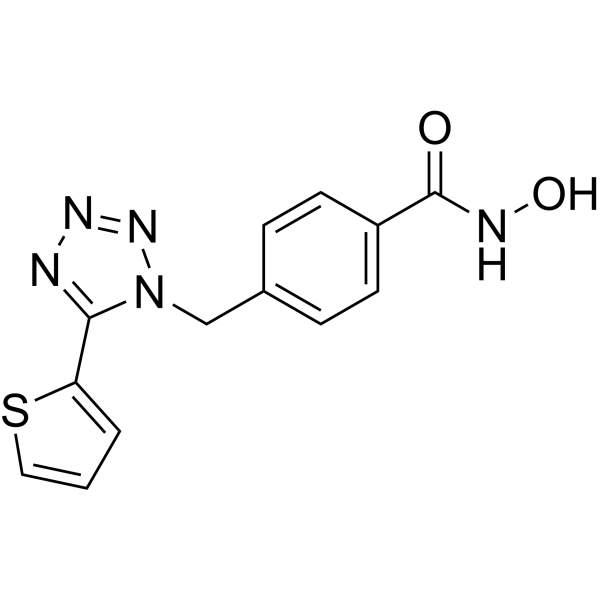
ITF 3756 is a selective, orally active HDAC6 inhibitor. ITF 3756 antagonizes TNF-α-induced activation of the NF-κB pathway. ITF 3756 reduces PD-L1 expression on human monocytes and CD8 + T cells, and exhibits antitumor activity. ITF 3756 can be used in colon cancer-related research .
loading...
    loading...
Cat. No.: HY-169089
Target:  

Drug Derivative

Research Areas:  

Cancer

RP-182-PEG3-K palmitic acid-NH2 (Compound 1a) is a fatty acid derivative of the immunomodulatory peptide RP-182. RP-182-PEG3-K palmitic acid-NH2 inhibits CD206 high M2-like macrophage (IC50 of 3.2 μM) and induces phagocytosis. RP-182-PEG3-K palmitic acid-NH2 exhibits antitumor efficacy in mouse B16 melanoma allografts .
loading...
    loading...
Cat. No.: HY-N3248
CAS No.: 81371-54-2
Synonyms: Momordicacoside G
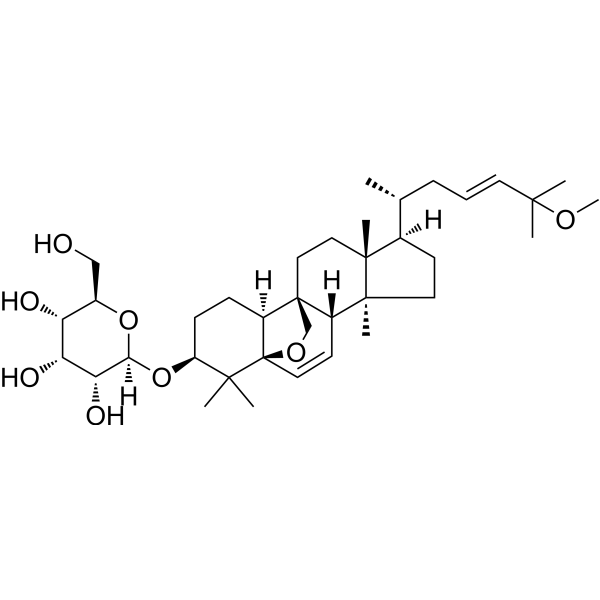
Momordicoside G (Momordicacoside G) is an orally active cucurbitane-type triterpene glycoside. Momordicoside G selectively induces apoptosis of M1-like macrophages, without affecting M2-like macrophages. Momordicoside G reduces intracellular ROS levels and promotes autophagy. Momordicoside G also has anticancer activity, inhibiting the growth of cancer cell lines. Momordicoside G stimulates M2-associated lung injury repair and prevents inflammatory lung cancer injury .
loading...
    loading...
Cat. No.: HY-P990061
CAS No.: 2640981-19-5
Synonyms: JTX 8064
Polzastobart (JTX-8064) is a humanized IgG4 monoclonal antibody and LILRB2 (ILT4) antagonist. Polzastobart specifically binds to and antagonizes LILRB2, relieves ILT4-mediated myeloid immunosuppression, and promotes the polarization of macrophages from an M2-like phenotype to an M1-like phenotype. Polzastobart induces macrophage polarization, IFNγ signaling, and T cell inflammation-related pharmacodynamic responses in ex vivo human renal cancer, lung cancer, and head and neck cancer tissues. Polzastobart can be used in studies related to tumor-associated macrophages and tumor immunity. For the isotype control of Polzastobart, refer to: Human IgG4 (S228P) kappa, Isotype Control (HY-P99003) .
loading...
    loading...
Cat. No.: HY-169089A
Target:  

Drug Derivative

Research Areas:  

Cancer

RP-182-PEG3-K(palmitic acid)-NH2 (Compound 1a) TFA is a fatty acid derivative of the immunomodulatory peptide RP-182. RP-182-PEG3-K(palmitic acid)-NH2 TFA inhibits CD206 high M2-like macrophage (IC50 of 3.2 μM) and induces phagocytosis. RP-182-PEG3-K(palmitic acid)-NH2 TFA exhibits antitumor efficacy in mouse B16 melanoma allografts .
loading...
    loading...
Cat. No.: HY-162700
Target:  

MAPKAPK2 (MK2)

Research Areas:  

Inflammation/Immunology Cancer

MK2-IN-6 (Compound 11) is a potent and selective irreversible MK2 inhibitor with an IC50 value of 2.3 nM. MK2-IN-6 inhibits MK2 kinase activity, achieving prolonged MK2 signaling suppression and reducing pathological inflammatory cytokines in macrophages. MK2-IN-6 inhibits the M2-like protumor phenotype of macrophages both in vitro and in vivo, which is proming for research of colorectal cancer .
loading...
    loading...
Cat. No.: HY-B1076R
CAS No.: 2668-66-8
Synonyms: HMS (Standard); 6α-Methyl-11β-hydroxyprogesterone (Standard)
Research Areas:  

Inflammation/Immunology

Medrysone (Standard) is the analytical standard of Medrysone. This product is intended for research and analytical applications. Medrysone (HMS; 6α-Methyl-11β-hydroxyprogesterone) is a STAT6 modulator and M2 macrophage polarization inducer. Medrysone enhances IL-4-triggered STAT6 activation, upregulates the expression of M2 markers, and promotes the secretion of VEGF and CCL2. Medrysone also enhances the pro-migratory activity of M2-like macrophages toward endothelial cells. By regulating macrophage polarization and related repair pathways, Medrysone significantly promotes corneal wound repair in a rat mechanical injury model. Medrysone can be used for research related to corneal injury .
loading...
    loading...
Cat. No.: HY-162415
CAS No.: 2760585-35-9
Target:  

c-Fms Apoptosis

Research Areas:  

Cancer

CSF1R-IN-22 (Compound C19) is an orally effective CSF-1R selective inhibitor (IC50<6 nM). CSF1R-IN-22 enhances the secretion of CXCL9 from M2 macrophages, increases CD8 + T cell infiltration. CSF1R-IN-22 boosts anti-tumor immune responses of anti-PD-1, and induces apoptosis in tumor cells. CSF1R-IN-22 can effectively reprogram M2-like TAMs (tumor-associated macrophages) to the M1 phenotype and reshape the TME by inducing the recruitment of CD8 + T cells into tumors and reducing the infiltration of immunosuppressive Tregs and MDSCs .
loading...
    loading...
Cat. No.: HY-183845
CAS No.: 2639366-75-7
Research Areas:  

Cancer

HTL0039732 is an orally active antagonist of the prostaglandin EP4 receptor (Prostaglandin E2 Receptor EP4). HTL0039732 reverses PGE2-induced differentiation toward M2-like macrophages. HTL0039732 exhibits efficacy in syngeneic tumor models and acts synergistically with PD-1/PD-L1 pathway blockers. HTL0039732 can be used for the research of advanced solid tumors .
loading...
    loading...
Cat. No.: HY-181059
CAS No.: 1190602-80-2
AMPK/mTOR modulator-1, Ginsenoside derivative, is an orally active mTOR inhibitor and AMPK activator. AMPK/mTOR modulator-1 activates AMPK signaling with a Kd of 4.759 μM. AMPK/mTOR modulator-1 promotes M1-like tumor-associated macrophage polarization while suppressing M2-like polarization. AMPK/mTOR modulator-1 can enhance glycolysis. AMPK/mTOR modulator-1 significantly inhibits tumor progression and shows anti-inflammation activity. AMPK/mTOR modulator-1 can be used for the research of colorectal cancer .
loading...
    loading...
Cat. No.: HY-P992520
Target:  

Folate Receptor (FR)

Research Areas:  

Cancer

Anti-FOLR2 Antibody is a specific antibody targeting folate receptor β (FOLR2). Anti-FOLR2 Antibody effectively detects intracellular and extracellular FOLR2 expression in flow cytometry and confocal microscopy experiments, facilitating the precise detection and isolation of FOLR2+ macrophages in breast cancer. Anti-FOLR2 Antibody is also widely used in studies on the mechanisms, diagnosis and treatment of chronic lymphocytic leukemia (CLL) .
loading...
    loading...
  • 1

