
1. Search Result
Search Result
Results for "

PARP inhibitors

" in MedChemExpress (MCE) Product Catalog:

442

Inhibitors & Agonists

1

Fluorescent Dyes

1

Biochemical Assay Reagents

1

Inhibitory Antibodies

44

Natural
Products

13

Isotope-Labeled Compounds

2

Click Chemistry

8

Oligonucleotides

1

GMP Molecules

Targets Recommended:
Cat. No. Product Name Target Research Areas Chemical Structure
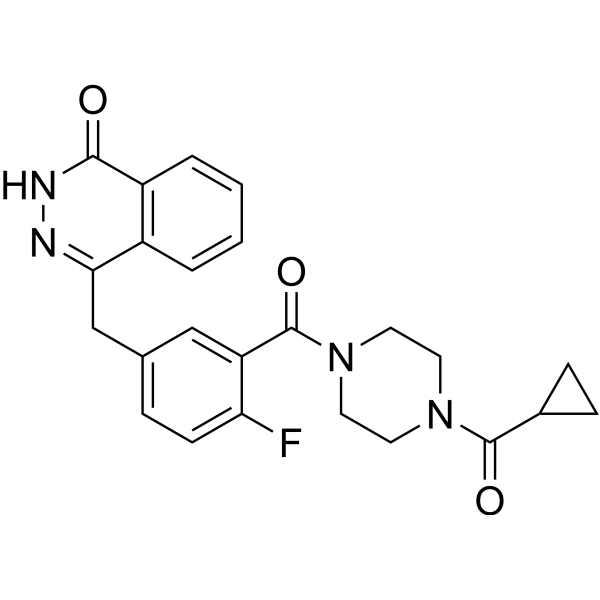
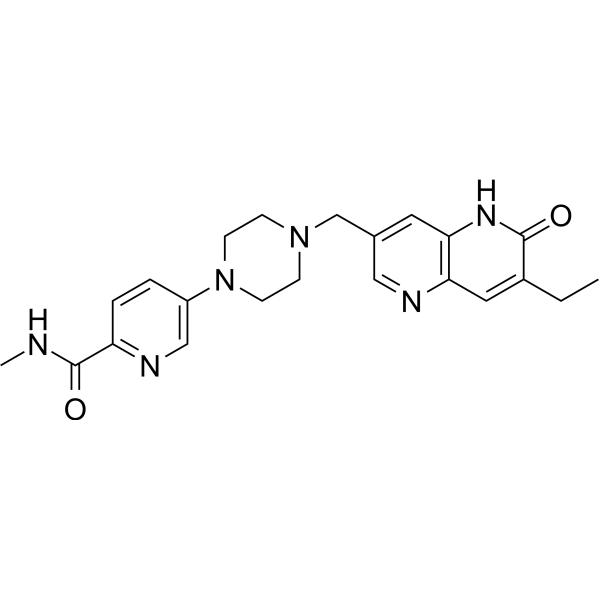
  • HY-10617A
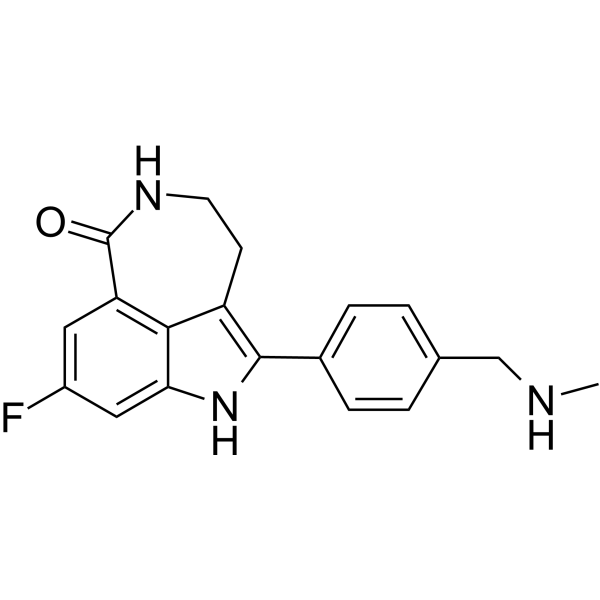
    Rucaparib
    45+ Cited Publications

    AG014699; PF-01367338

    PARP Cancer
    Rucaparib (AG014699) is an orally active, potent inhibitor of PARP proteins (PARP-1, PARP-2 and PARP-3) with a Ki of 1.4 nM for PARP1. Rucaparib is a modest hexose-6-phosphate dehydrogenase (H6PD) inhibitor. Rucaparib has the potential for castration-resistant prostate cancer (CRPC) research .
    Rucaparib
  • HY-10129
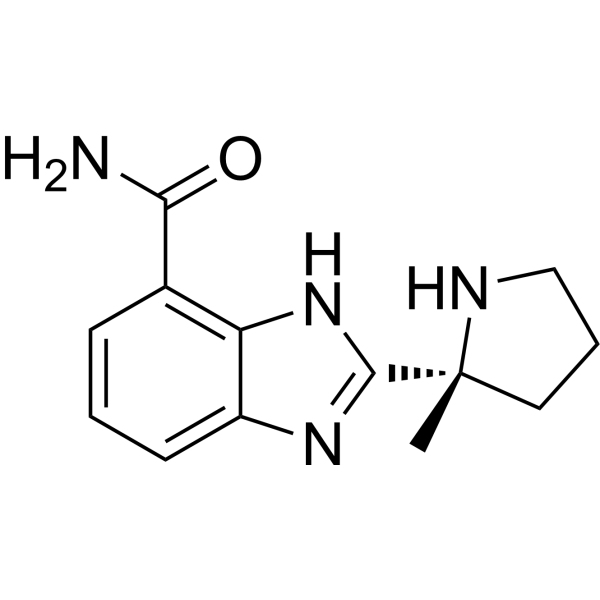
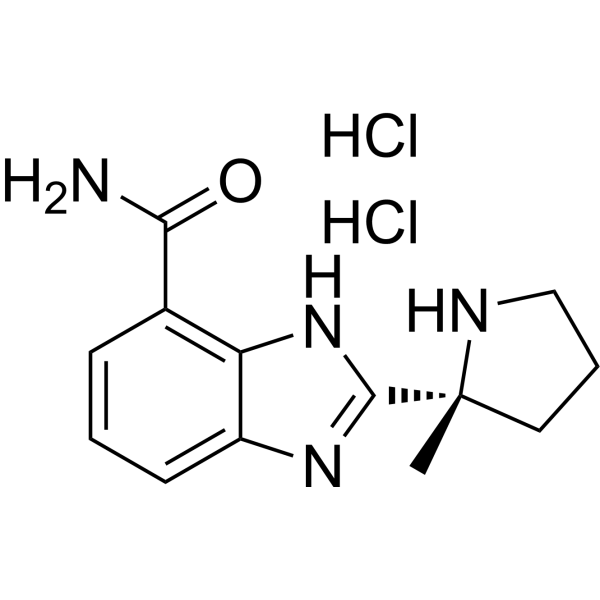
    Veliparib
    45+ Cited Publications

    ABT-888

    PARP Autophagy Cancer
    Veliparib (ABT-888) is a potent PARP inhibitor, inhibiting PARP1 and PARP2 with Kis of 5.2 and 2.9 nM, respectively .
    Veliparib
  • HY-10617
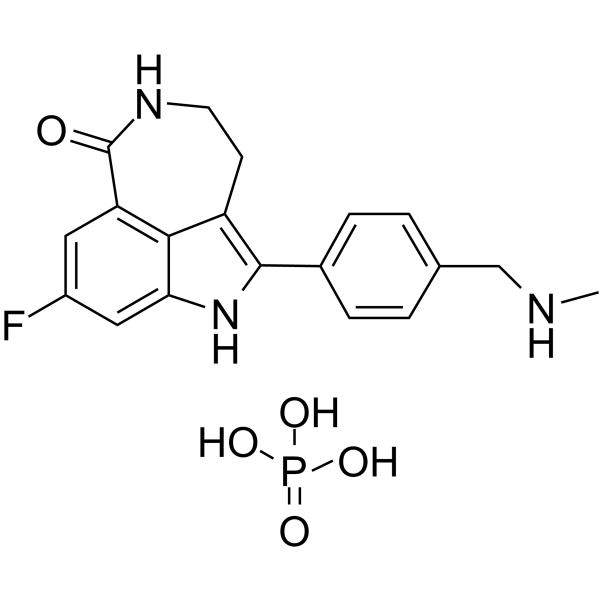
    Rucaparib phosphate
    45+ Cited Publications

    AG-014699 phosphate; PF-01367338 phosphate

    PARP Cancer
    Rucaparib (AG014699) phosphate is an orally active, potent inhibitor of PARP proteins (PARP-1, PARP-2 and PARP-3) with a Ki of 1.4 nM for PARP1. Rucaparib phosphate is a modest hexose-6-phosphate dehydrogenase (H6PD) inhibitor. Rucaparib phosphate has the potential for castration-resistant prostate cancer (CRPC) research .
    Rucaparib phosphate
  • HY-148566
    OUL232
    2 Publications Verification

    PARP Cancer
    OUL232 is a potent inhibitor of mono-ARTs PARP7, PARP10, PARP11, PARP12, PARP14, and PARP15. OUL232 is the most potent PARP10 inhibitor described to date (IC50=7.8 nM), as well as the first PARP12 inhibitor ever reported .
    OUL232
  • HY-102003
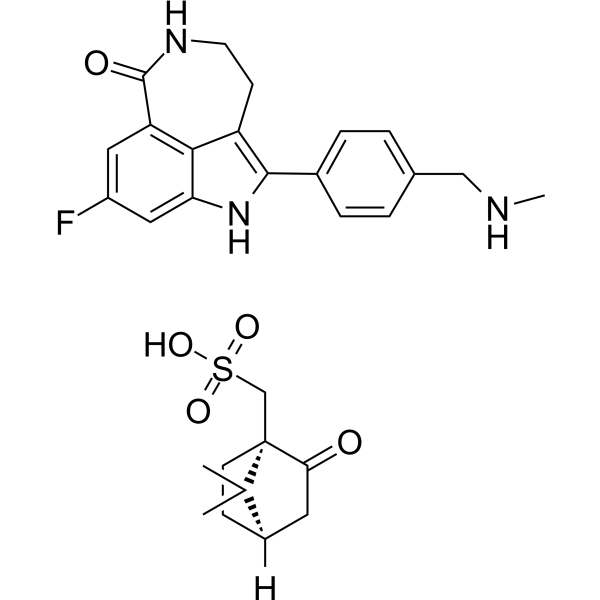
    Rucaparib monocamsylate
    35+ Cited Publications

    AG014699 monocamsylate; PF-01367338 monocamsylate

    PARP Cancer
    Rucaparib (AG014699) monocamsylate is an orally active, potent inhibitor of PARP proteins (PARP-1, PARP-2 and PARP-3) with a Ki of 1.4 nM for PARP1. Rucaparib monocamsylate is a modest hexose-6-phosphate dehydrogenase (H6PD) inhibitor. Rucaparib monocamsylate has the potential for castration-resistant prostate cancer (CRPC) research .
    Rucaparib monocamsylate
  • HY-14478
    UPF 1069
    1 Publications Verification

    PARP Cancer
    UPF 1069 is a PARP inhibitor, with IC50s of 8 and 0.3 μM for PARP-1 and PARP-2, respectively.
    UPF 1069
  • HY-13536
    AZD-2461
    5+ Cited Publications

    PARP Cancer
    AZD-2461 is a potent PARP inhibitor, with IC50s of 5 nM, 2 nM and 200 nM for PARP1, PARP2 and PARP3, respectively.
    AZD-2461
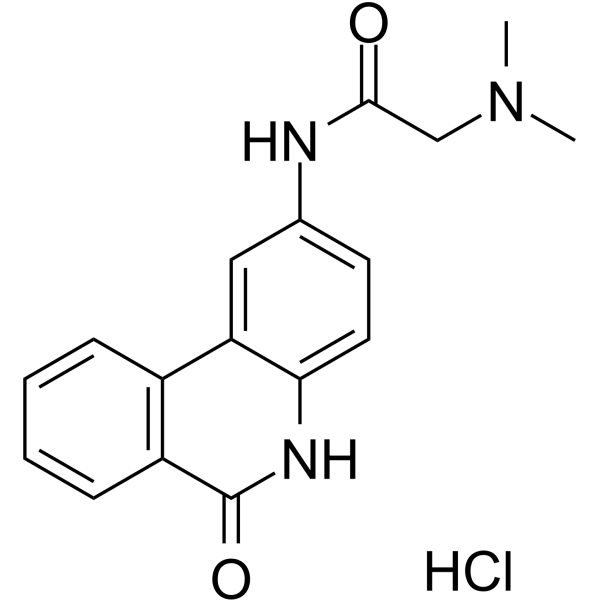
  • HY-155351

    PARP Cytochrome P450 Cancer
    PARP7-IN-15 is an orally active and selective PARP7 inhibitor with an IC50 of 0.56 nM. PARP7-IN-15 inhibits the enzymatic activity of PARP7 and induces anti-tumor activity against lung cancer in vivo. PARP7-IN-15 can be used for the research of lung cancer .
    PARP7-IN-15
  • HY-125218

    ITK7

    PARP Cancer
    PARP11 inhibitor ITK7 (ITK7) is a potent and selective PARP11 inhibitor. PARP11 inhibitor ITK7 can potently inhibit PARP11 with an IC50 value of 14 nM. PARP11 inhibitor ITK7 can be used for the research of cellular localization .
    PARP11 inhibitor ITK7
  • HY-148753

    PARP Cancer
    PARP10-IN-2 is a potent mono‐ADP‐ribosyltransferase PARP10 inhibitor with an IC50 of 3.64 μM for human PARP10. PARP10-IN-2 reveals potent inhibition on PARP2 and PARP15 with IC50s of 27 μM and 11 μM for human PARP2 and human PARP15, respectively .
    PARP10-IN-2
  • HY-108632
    BYK204165
    1 Publications Verification

    PARP Cancer
    BYK204165 is a potent and selective PARP1 inhibitor. BYK204165 inhibits cell-free recombinant human PARP-1 (hPARP-1) with a pIC50 of 7.35 (pKi=7.05), and murine PARP-2 (mPARP-2) with a pIC50 of 5.38, respectively. BYK204165 displays 100-fold selectivity for PARP-1 .
    BYK204165
  • HY-160409

    Topoisomerase Apoptosis Cancer
    TopBP1-IN-1 is a TopBP1 inhibitor. TopBP1-IN-1 has a synergistic effect with PARP inhibitors. TopBP1-IN-1 has antitumor activity .
    TopBP1-IN-1
  • HY-13540

    GPI 21016

    PARP Cancer
    E7016 (GPI 21016) is an orally available PARP inhibitor. E7016 can enhance tumor cell radiosensitivity in vitro and in vivo through the inhibition of DNA repair. E7016 acts as a potential anticancer agent .
    E7016
  • HY-148754

    PARP Cancer
    PARP10-IN-3 is a selective mono‐ADP‐ribosyltransferase PARP10 inhibitor with an IC50 of 480 nM for human PARP10. PARP10-IN-3 reveals potent inhibition on PARP2 and PARP15 with IC50s of 1.7 μM for human PARP2 and human PARP15, respectively .
    PARP10-IN-3
  • HY-119653

    PARP Cancer
    AZ9482 is a triple PARP1/2/6 inhibitor, with IC50 values of 1 nM, 1 nM and 640 nM for PARP1, PARP2 and PARP6, respectively .
    AZ9482
  • HY-145749

    PARP Cancer
    PARPYnD is a PARP enzyme photoaffinity probe (AfBP) based on the triple PARP1/2/6 inhibitor AZ9482 (HY-119653), which induces breast cancer Formation of multipolar spindles (MPS) in cells. PARPYnD inhibits PAPR wih IC50 of 38 nM (PARP1), 6 nM (PARP2), 230 nM (PARP6), respectively. PARPYnD enriches recombinant PARP6 incorporated into cell lysates and inhibits PARP6 in cell-free assays, but it does not label PARP6 in intact cells .
    PARPYnD
  • HY-117889

    PARP Apoptosis Cancer
    PARP14 inhibitor H10, compound H 10, is a selective inhibitor against PARP14 (IC50=490 nM), over other PARPs (≈24 fold over PARP1). PARP14 inhibitor H10 induces caspase-3/7-mediated cell apoptosis .
    PARP14 inhibitor H10
  • HY-161431

    DNA/RNA Synthesis Cancer
    RTx-152 traps Polθ on DNA and is an allosteric Polθ-pol inhibitor (IC50: 6.2 nM). RTx-152 selectively kills HR-deficient cancer cells, and suppresses PARP inhibitor resistance in multiple genetic backgrounds, including homologous recombination (HR)-proficient cells. RTx-152 selectively kills BRCA2-null cells .
    RTx-152
  • HY-102035

    PARP Cancer
    PARP-2-IN-1 is a potent and selective PARP-2 inhibitor with an IC50 of 11.5 nM.
    PARP-2-IN-1
  • HY-143398

    PARP Cancer
    PARP10/15-IN-1 (compound 8l) is a potent inhibitor of dual inhibitor of PARP10 and PARP15, with IC50s of 160 nM and 370 nM, respectively. PARP10/15-IN-1 can be used for cancer .
    PARP10/15-IN-1
  • HY-163081

    PARP Cancer
    PARP7-IN-17 is a potent inhibitor of PARP7 with IC50 of 4.5 nM that has oral bioavailability. PARP7-IN-17 displays antitumor effect .
    PARP7-IN-17
  • HY-146502

    PARP Apoptosis Cancer
    PARP10/15-IN-3 (Compound 8a) is a potent PARP10 and PARP15 dual inhibitor with IC50 values of 0.14 µM and 0.40 µM against PARP10 and PARP15, respectively. PARP10/15-IN-3 is able to enter cells and rescue cells from apoptosis .
    PARP10/15-IN-3
  • HY-146501

    PARP Apoptosis Cancer
    PARP10/15-IN-2 (Compound 8h) is a potent PARP10 and PARP15 dual inhibitor with IC50 values of 0.15 µM and 0.37 µM against PARP10 and PARP15, respectively. PARP10/15-IN-2 is able to enter cells and rescue cells from apoptosis .
    PARP10/15-IN-2
  • HY-147886
    PARP1-IN-11
    1 Publications Verification

    PARP Cancer
    PARP1-IN-11 (compound 49) is a potent PARP1 inhibitor with IC50 value of 0.082 µM. PARP1-IN-11 shows complete inhibition of PARP2 and substantially inhibits PARP3, TNKS1 and TNKS2 .
    PARP1-IN-11
  • HY-132297A
    PARP1-IN-5 dihydrochloride
    1 Publications Verification

    PARP Cancer
    PARP1-IN-5 dihydrochloride is a low toxicity, orally active, potent and selective PARP-1 inhibitor (IC50 =14.7 nM). PARP1-IN-5 dihydrochloride can be used for the research of cancer .
    PARP1-IN-5 dihydrochloride
  • HY-156419A

    PARP Cancer
    PARP7-IN-16 free base is the free base form of PARP7-IN-16 (HY-156419). PARP7-IN-16 free base is a selective and orally active inhibitor of PARP-1/2/7, with IC50s of 0.94, 0.87 and 0.21 nM, respectively. PARP7-IN-16 can be used for the research of breast cancer and prostate cancer .
    PARP7-IN-16 free base
  • HY-W156961

    PARP Neurological Disease
    LS-75 is a PARP-1 inhibitor with blood-brain permeability and IC50 value of 18 μM. LS-75 has neuroprotective activity .
    LS-75
  • HY-179406

    PARP DNA/RNA Synthesis Reactive Oxygen Species (ROS) Apoptosis Cancer
    PARP1-IN-49 is a selective PARP1 inhibitor with an IC50 of 23.56 nM and a Kd of 17.78 nM. PARP1-IN-49 shows a selectivity for PARP1 over PARP2. PARP1-IN-49 leads to the induction of DNA damage, cell cycle arrest, and apoptosis. PARP1-IN-49 also increases intracellular ROS levels and inhibits cell migration. PARP1-IN-49 can be used for the research of breast cancer and ovarian cancer .
    PARP1-IN-49
  • HY-105253

    PARP Neurological Disease
    PARP-2/1-IN-2 (Compound 4a), the enantiomer of Veliparib (HY-10129), is a potent PARP inhibitor with Kis of 2 and 5 nM against PARP-2 and PARP-1, respectively. PARP-2/1-IN-2 has an EC50 of 3 nM in a cell based assay of PARP activity .
    PARP-2/1-IN-2
  • HY-102003A

    AG014699 camsylate; PF-01367338 camsylate

    PARP Cancer
    Rucaparib (AG014699) camsylate is an orally active, potent inhibitor of PARP proteins (PARP-1, PARP-2 and PARP-3) with a Ki of 1.4 nM for PARP1. Rucaparib camsylate is a modest hexose-6-phosphate dehydrogenase (H6PD) inhibitor. Rucaparib camsylate has the potential for castration-resistant prostate cancer (CRPC) research .
    Rucaparib camsylate
  • HY-146336

    PARP Apoptosis Cancer
    PARP1/2/TNKS1/2-IN-1 (Compound I-9) is a dual PARP-1, PARP-2, TNKS1 and TNKS2 inhibitor with IC50 values of 0.25 nM, 1.2 nM, 13.5 nM and 4.15 nM against PARP-1, PARP-2, TNKS1 and TNKS2, respectively. PARP1/2/TNKS1/2-IN-1 exhibits favorable synergistic antitumor efficacy and induces apoptosis .
    PARP1/2/TNKS1/2-IN-1
  • HY-10885

    ABT-472

    PARP Cancer
    A-620223 succinate (ABT-472) is an orally available poly(ADP-ribose) polymerase (PARP) inhibitor. A-620223 succinate (ABT-472) exhibits very good potency against the PARP-1 enzyme with a Ki value of 8 nM and an EC50 value of 3 nM in whole cell assay, making it useful in cancer research .
    A-620223 succinate
  • HY-157165

    Microtubule/Tubulin PARP Cancer
    Tubulin/PARP-IN-1 (compound 14) is a dual PARP-tubulin inhibitor with activity against endometrial cancer. Tubulin/PARP-IN-1 inhibits PARP and tubulin with IC50s of 74 nM (PARP1), 109 nM (PARP2), and 1.4 μM (Microtubule/Tubulin), respectively. Tubulin/PARP-IN-1 can induce apoptosis and autophagy and cause cell cycle arrest in the G2/M phase .
    Tubulin/PARP-IN-1
  • HY-10615
    A-620223
    1 Publications Verification

    PARP Cancer
    A-620223 is a PARP-1 inhibitor with a Ki of 8 nM against PARP-1 and EC50 of 3 nM in a whole cell assay. A-620223 demonstrates good in vivo efficacy in a B16F10 subcutaneous murine melanoma model in combination with Temozolomide (TMZ) (HY-17364) and in an MX-1 breast xenograph model in combination with Cisplatin (HY-17394). A-620223 can be used for the studies of melanoma and breast cancer .
    A-620223
  • HY-10617B

    AG014699 hydrochloride; PF-01367338 hydrochloride

    PARP Cancer
    Rucaparib (AG014699) hydrochloride is an orally active, potent inhibitor of PARP proteins (PARP-1, PARP-2 and PARP-3) with a Ki of 1.4 nM for PARP1. Rucaparib hydrochloride is a modest hexose-6-phosphate dehydrogenase (H6PD) inhibitor. Rucaparib hydrochloride has the potential for castration-resistant prostate cancer (CRPC) research .
    Rucaparib hydrochloride
  • HY-149398

    Apoptosis PARP CDK Cancer
    PARP-1/2-IN-2-IN-1 (Compound 12e) is a PARP1/2/CDK12 inhibitor (IC50: 34, 30 and 285 nM respectively). PARP-1/2-IN-2 inhibits DNA damage repair, promotes cell cycle arrest and apoptosis. PARP-1/2-IN-2 inhibits the growth of TNBC cells and TNBC xenograft tumor .
    PARP-1/2-IN-2
  • HY-178178

    PARP Reactive Oxygen Species (ROS) DNA/RNA Synthesis Apoptosis Cancer
    PARP1-IN-46 is a potent PARP-1 inhibitor with an IC50 of 2.4 nM. PARP1-IN-46 demonstrates remarkable anti-proliferative activity in both rat (C6) and human (U87MG) glioma cells. PARP1-IN-46 promotes PARP cleavage, triggers DNA damage, and increases ROS. PARP1-IN-46 effectively inhibits the migration, invasion and colony formation of glioma cells, and ultimately induces cell apoptosis. PARP1-IN-46 can be used to the study of glioma .
    PARP1-IN-46
  • HY-10617C

    AG-014699 tartrate; PF-01367338 tartrate

    PARP Cancer
    Rucaparib (AG014699) tartrate is an orally active, potent inhibitor of PARP proteins (PARP-1, PARP-2 and PARP-3) with a Ki of 1.4 nM for PARP1. Rucaparib tartrate is a modest hexose-6-phosphate dehydrogenase (H6PD) inhibitor. Rucaparib tartrate has the potential for castration-resistant prostate cancer (CRPC) research .
    Rucaparib tartrate
  • HY-176456

    PARP Inflammation/Immunology Cancer
    PARP14 inhibitor 2 (Compound 3) is an orally active and highly selective PARP14 inhibitor with an IC50 value of <30 nM. PARP14 inhibitor 2 inhibits the mono-ADP-ribosyltransferase activity of PARP14 and regulates IFN-γ and IL-4 signaling, reversing protumor macrophage polarization and inhibiting anti-tumor inflammatory responses. PARP14 inhibitor 2 is promising for research of PARP14-related diseases such as tumors, atopic dermatitis and autoimmune diseases .
    PARP14 inhibitor 2
  • HY-163492

    PARP Cancer
    PARP7-IN-19 (compound 5a) is an inhibitor of PARP7 ( IC50 ≤10nM). PARP7-IN-19 can be used in the research area of tumors .
    PARP7-IN-19
  • HY-175471

    PARP Cancer
    PARP1-IN-42 (Example 43 cis-a) is a PARP1 inhibitor with IC50 <10 nM. PARP1-IN-42 can be used in cancer research .
    PARP1-IN-42
  • HY-151609

    PARP Cancer
    PARP7-IN-12 is a potent PARP7 Inhibitor with an IC50 value of 7.836 nM. PARP7-IN-12 can be used in research of cancer .
    PARP7-IN-12
  • HY-132297

    PARP Cancer
    PARP1-IN-5 is a low toxicity, orally active, potent and selective PARP-1 inhibitor (IC50 =14.7 nM). PARP1-IN-5 can be used for the research of cancer .
    PARP1-IN-5
  • HY-178972

    PARP Infection Metabolic Disease Cancer
    PARP1-IN-48 (Compound 61) is a highly selective PARP1 (PARP1 IC50 = 3 nM, PARP2 IC50 = 170 nM) inhibitor. PARP1-IN-48 can be used for research on cancer, viral infections, and metabolic conditions .
    PARP1-IN-48
  • HY-151625

    PARP Apoptosis Cancer
    PARP-2-IN-3 (Compound 12) is a potent PARP-2 inhibitor with an IC50 of 0.07 μM. PARP-2-IN-3 induces apoptosis and necrosis in cancer cells. PARP-2-IN-3 shows appropriate predicted pharmacokinetic parameters and oral bioavailability .
    PARP-2-IN-3
  • HY-164475

    PARP Cancer
    PARP1-IN-29 is an orally active PARP-1 inhibitor with an IC50 value of 6.3 nM. PARP1-IN-29, after being labeled with [18F], can be used for positron emission tomography (PET) imaging, specifically targeting PARP-1 in tumors. PARP1-IN-29 is applicable in the fields of oncology and imaging research, particularly for detecting PARP-1 activity in cancer .
    PARP1-IN-29
  • HY-161606

    PARP Cancer
    PARP-1/2/7-IN-1 (compound 86) is a potent inhibitor of PARP-1/2/7, with the IC50 of < 10 nM .
    PARP-1/2/7-IN-1
  • HY-157490

    PARP HDAC Cancer
    PARP/HDAC-IN-1 (compound B102) is a potent dual inhibitor of PARP and HDAC. PARP/HDAC-IN-1 inhibits PARP1, PARP2 and HDAC1 with IC50s of 19.01, 2.13, 1690 nM, respectively .
    PARP/HDAC-IN-1
  • HY-178100

    PARP BCRP Cancer
    PARP1-IN-45 (Compound 15) is a PARP1 inhibitor with an IC50 of 17  nM. PARP1-IN-45 effectively stimulates ATPase activity of ABCG2. PARP1-IN-45 can be used for cancers like ovarian cancer research .
    PARP1-IN-45
  • HY-144338

    Epigenetic Reader Domain PARP Apoptosis DNA/RNA Synthesis Cancer
    PARP1/BRD4-IN-1 is a potent and high selective PARP1/BRD4 inhibitor (IC50s of 49 and 202 nM in PARP1 and BRD4, respectively). PARP1/BRD4-IN-1 represses the expression and activity of PARP1 and BRD4 to synergistically inhibit the malignant growth of pancreatic cancer cells .
    PARP1/BRD4-IN-1

Inquiry Online

Your information is safe with us. * Required Fields.

Salutation


Country or Region *

Applicant Name *


Organization Name *

Department *


Email Address *


Product Name *

Cat. No.


Requested quantity *

Phone Number *


Remarks

Inquiry Online

Inquiry Information

Product Name:
Cat. No.:
Quantity:
MCE Japan Authorized Agent:

