1. Search Result
Search Result
Results for "

Polyvinyl alcohol

" in MedChemExpress (MCE) Product Catalog:

30

Inhibitors & Agonists

3

Fluorescent Dyes

23

Biochemical Assay Reagents

8

Oligonucleotides

1

GMP Molecules

Cat. No. Product Name Target Research Areas Chemical Structure
  • HY-Y0850E

    PVA (Mw 30000-70000, 87-90% hydrolyzed); Poly(Ethenol) (Mw 30000-70000, 87-90% hydrolyzed)

    Environmental Pollutants Biochemical Assay Reagents Cardiovascular Disease Cancer
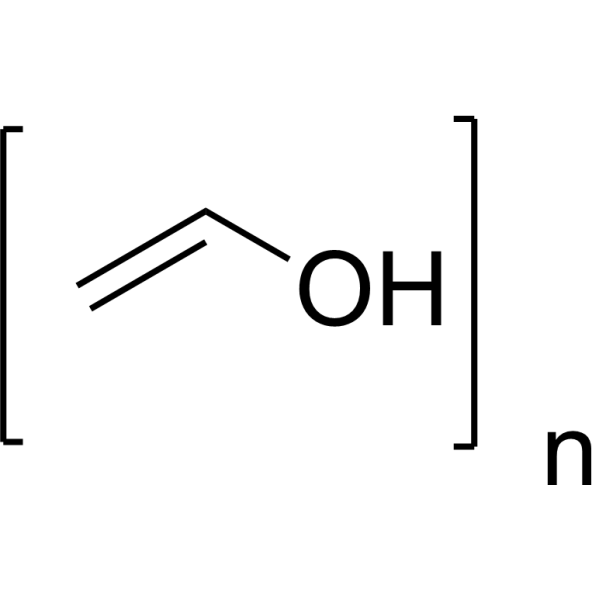
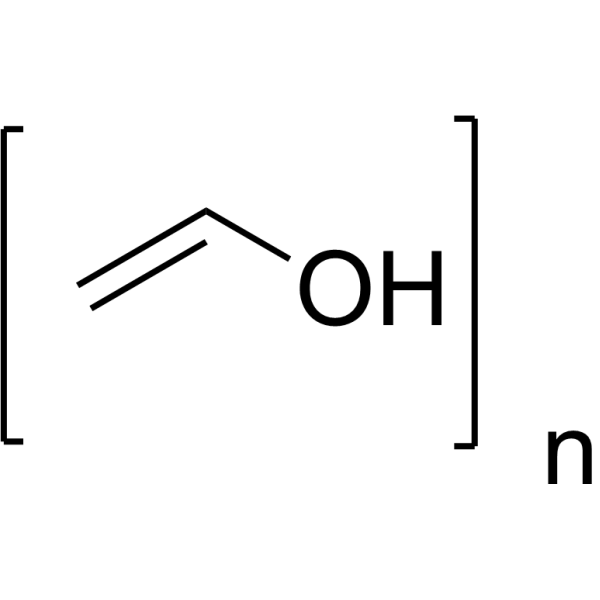
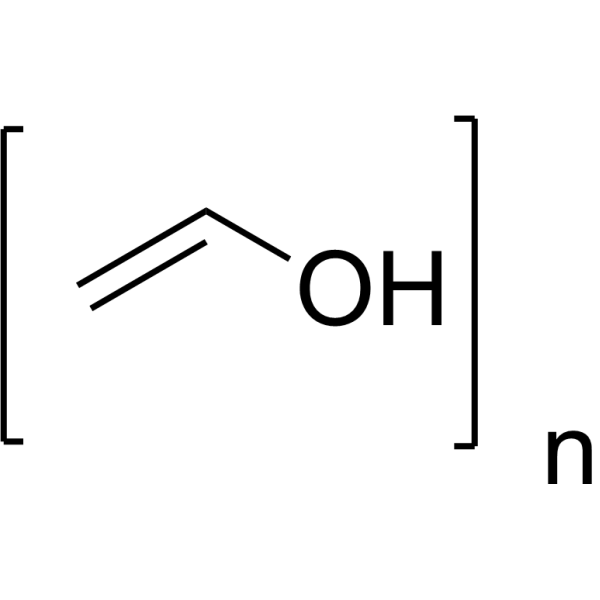
    Polyvinyl alcohol (Mw 30000-70000, 87-90% hydrolyzed) is a polyvinyl alcohol with a molecular weight of 30000-70000 and hydrolytic properties. The degree of hydrolysis refers to the degree to which the acetate groups in the original polyvinyl acetate are converted into hydroxyl groups during the hydrolysis process. Polyvinyl alcohol (Mw 30000-70000, 87-90% hydrolyzed) is the hydrolysis and removal of acetate groups after the polymerization of ethylene acetate. And polyvinyl alcohol is obtained. A degree of hydrolysis of 87-90% indicates that a large part of the acetate groups have been removed, resulting in a large number of hydroxyl groups in the PVA structure. Polyvinyl alcohol with different degrees of hydrolysis can be used to self-crosslink to form cryogel, which can be used as biological excipients .
    Polyvinyl alcohol (Mw 30000-70000, 87-90% hydrolyzed)
  • HY-Y0850

    Environmental Pollutants Biochemical Assay Reagents Neurological Disease
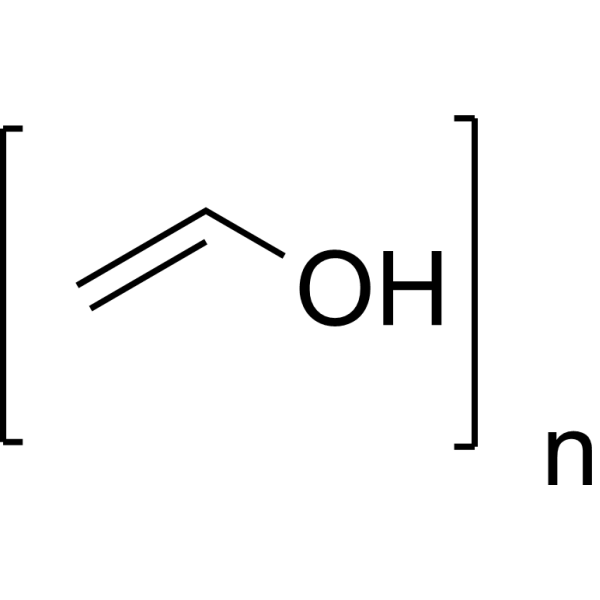
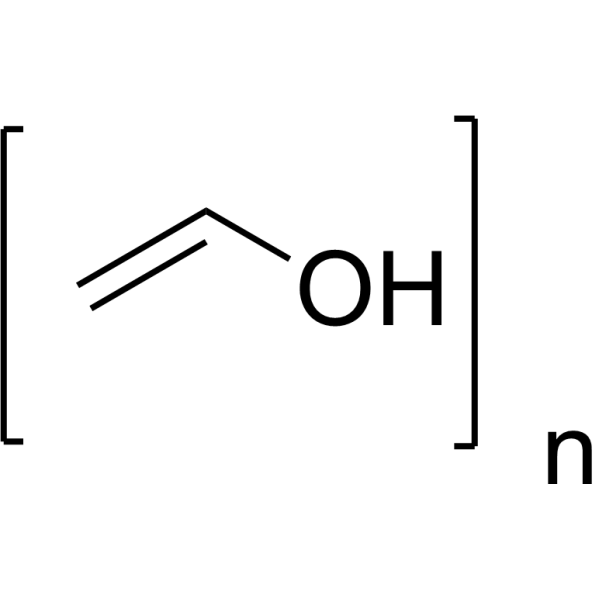
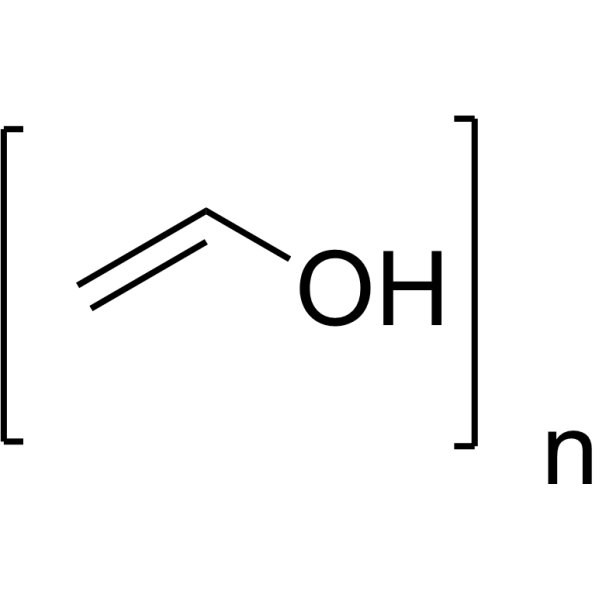
    Polyvinyl alcohol (Mw 146000-186000, 99+% hydrolyzed) is a non-biodegradable, hydrophilic, odorless biomedical polymer with cell adhesion/proliferation inhibition, peripheral nerve regeneration induction, dissolution enhancement, and non-toxic, biocompatible properties .
    Polyvinyl alcohol (Mw 146000-186000, 99+% hydrolyzed)
  • HY-Y0850J

    PVA (Mw 13000-23000, 87-89% hydrolyzed); Poly(Ethenol) (Mw 13000-23000, 87-89% hydrolyzed)

    Environmental Pollutants Biochemical Assay Reagents Cancer
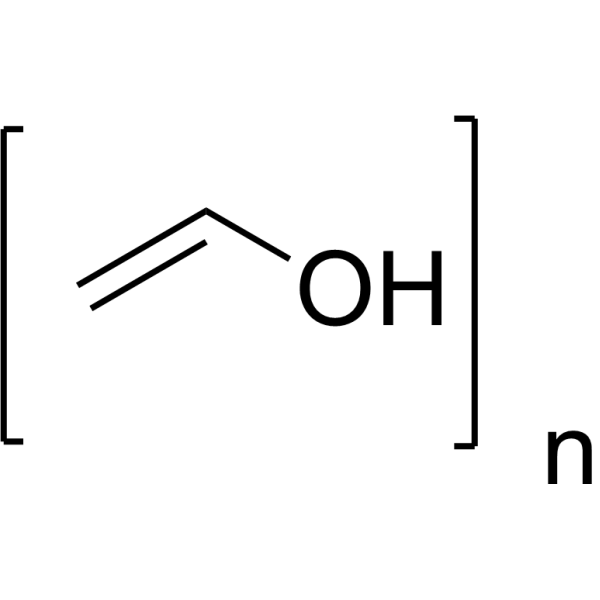
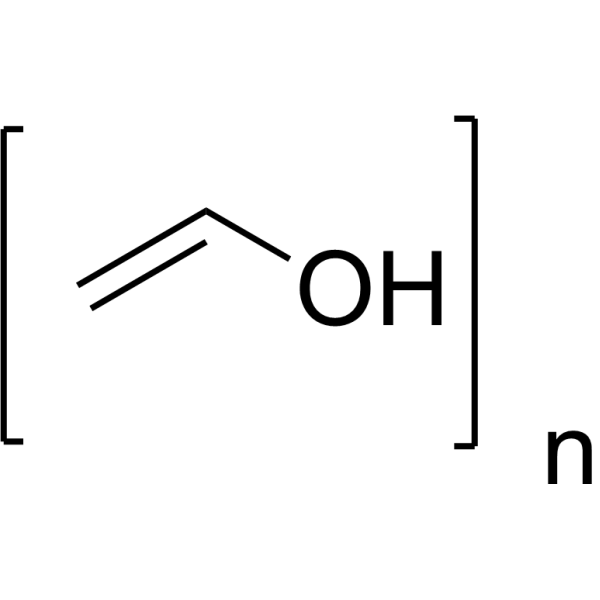
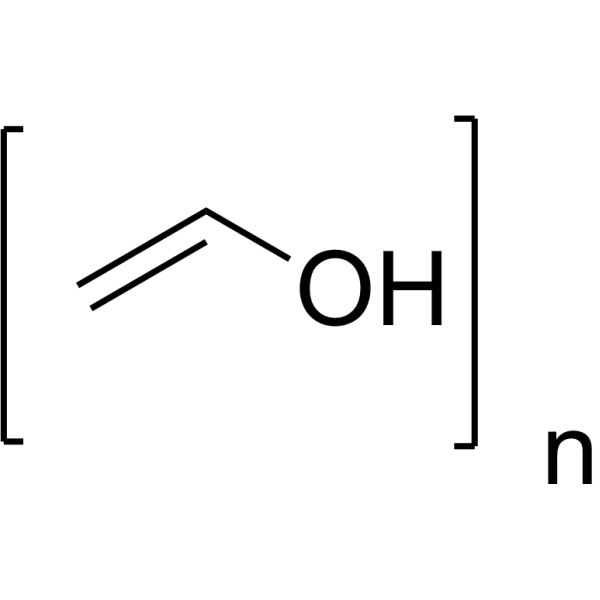
    Polyvinyl alcohol (Mw 13000-23000, 87-89% hydrolyzed) is a polyvinyl alcohol with a molecular weight of 130000-23000 and hydrolytic properties. Polyvinyl alcohol (Mw 13000-23000, 87-89% hydrolyzed) is the hydrolysis and removal of acetate groups after the polymerization of ethylene acetate and polyvinyl alcohol is obtained. A degree of hydrolysis of 87-89% indicates that a large part of the acetate groups have been removed, resulting in a large number of hydroxyl groups in the PVA structure. Polyvinyl alcohol with different degrees of hydrolysis can be used to self-crosslink to form cryogel, which can be used as biological excipient. Polyvinyl alcohol can be used in tissue engineering by electrospinning. Polyvinyl alcohol can achieve high cellular density, infiltration, and uniform distribution, facilitating functional connections between cells. Polyvinyl alcohol can improve cell vitality through in vitro cultivation. Polyvinyl alcohol demonstrates promising inhibition of ostersarcoma cancer cells with Doxorubicin (HY-15142A) .
    Polyvinyl alcohol (Mw 13000-23000, 87-89% hydrolyzed)
  • HY-Y0850P

    PVA (Mw 146000-186000, 87-89% hydrolyzed); Poly(Ethenol) (Mw 146000-186000, 87-89% hydrolyzed)

    Environmental Pollutants Biochemical Assay Reagents Cancer
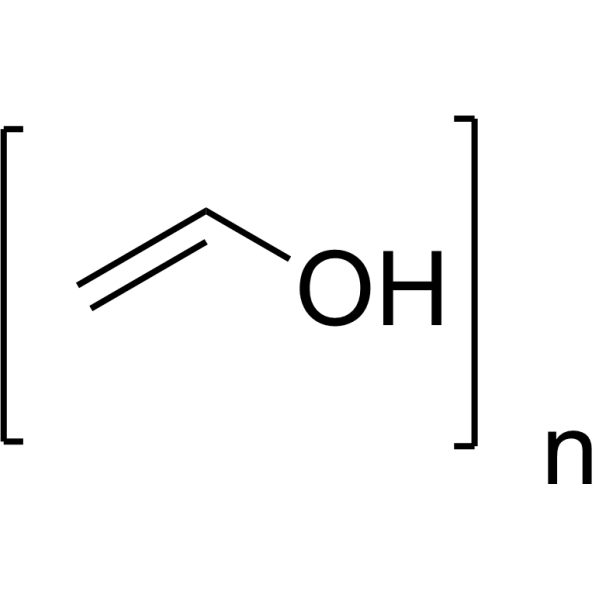
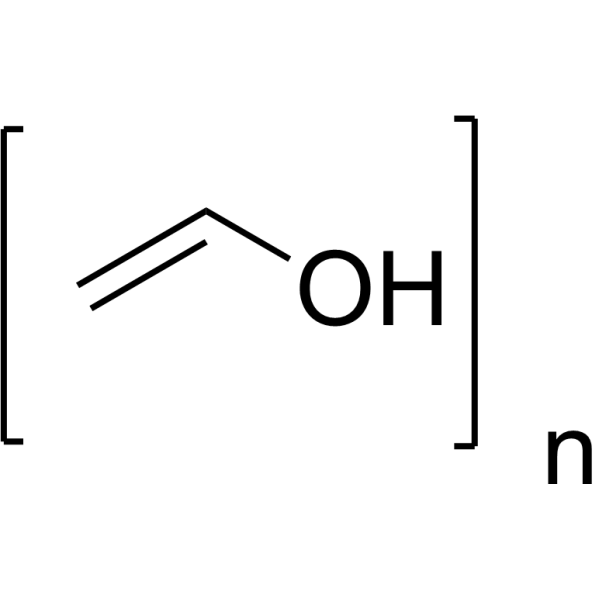
    Polyvinyl alcohol (Mw 146000-186000, 87-89% hydrolyzed) is a polyvinyl alcohol with a molecular weight of 146000-186000 and hydrolytic properties. Polyvinyl alcohol (Mw 146000-186000, 87-89% hydrolyzed) is the hydrolysis and removal of acetate groups after the polymerization of ethylene acetate. And polyvinyl alcohol is obtained. Polyvinyl alcohol with different degrees of hydrolysis can be used to self-crosslink to form cryogel, which can be used as biological excipient. Polyvinyl alcohol can be used in tissue engineering by electrospinning. Polyvinyl alcohol can achieve high cellular density, infiltration, and uniform distribution, facilitating functional connections between cells. Polyvinyl alcohol can improve cell vitality through in vitro cultivation. Polyvinyl alcohol demonstrates promising inhibition of ostersarcoma cancer cells with Doxorubicin (HY-15142A) .
    Polyvinyl alcohol (Mw 146000-186000, 87-89% hydrolyzed)
  • HY-Y0850L

    PVA (Mw 85000-124000, 99+% hydrolyzed); Poly(Ethenol) (Mw 85000-124000, 99+% hydrolyzed)

    Environmental Pollutants Biochemical Assay Reagents Cancer
    Polyvinyl alcohol (Mw 85000-124000, 99+% hydrolyzed) is a polyvinyl alcohol with a molecular weight of 85000-124000 and hydrolytic properties. Polyvinyl alcohol (Mw 85000-124000, 99+% hydrolyzed) forms hydrogels that can be used to simulate digestive organs and lesion models for the training of endoscopic ultrasound (EUS) and endoscopic ultrasound elastography (EUS-E). Polyvinyl alcohol with different degrees of hydrolysis can be used to self-crosslink to form cryogel, which can be used as biological excipients .
    Polyvinyl alcohol (Mw 85000-124000, 99+% hydrolyzed)
  • HY-Y0850H

    PVA (Mw 89000-98000, 99+% hydrolyzed); Poly(Ethenol) (Mw 89000-98000, 99+% hydrolyzed)

    Environmental Pollutants Biochemical Assay Reagents Others
    Polyvinyl alcohol (Mw 89000-98000, 99+% hydrolyzed) also known as PVA, is a vinyl water-soluble polymer that can be used as a non-ionic surfactant. It can also be used as a biodegradable polymer and can be used in adhesives, coatings, textiles, ceramics and cosmetics .
    Polyvinyl alcohol (Mw 89000-98000, 99+% hydrolyzed)
  • HY-Y0850I

    PVA (Mw 9000-10000, 80% hydrolyzed); Poly(Ethenol) (Mw 9000-10000, 80% hydrolyzed)

    Environmental Pollutants Biochemical Assay Reagents Cancer
    Polyvinyl alcohol (Mw 9000-10000, 80% hydrolyzed) also known as PVA, is a vinyl water-soluble polymer that can be used as a non-ionic surfactant. Polyvinyl alcohol (Mw 9000-10000, 80% hydrolyzed) can be used as a biodegradable polymer and can be used in adhesives, coatings, textiles, ceramics, and cosmetics. Polyvinyl alcohol can be used in tissue engineering by electrospinning. Polyvinyl alcohol can achieve high cellular density, infiltration, and uniform distribution, facilitating functional connections between cells. Polyvinyl alcohol can improve cell vitality through in vitro cultivation. Polyvinyl alcohol demonstrates promising inhibition of ostersarcoma cancer cells with Doxorubicin (HY-15142A) .
    Polyvinyl alcohol (Mw 9000-10000, 80% hydrolyzed)
  • HY-Y0850M

    PVA (Mw 85000-124000, 87-89% hydrolyzed); Poly(Ethenol) (Mw 85000-124000, 87-89% hydrolyzed)

    Environmental Pollutants Biochemical Assay Reagents Others
    Polyvinyl alcohol (Mw 85000-124000, 87-89% hydrolyzed) is a polyvinyl alcohol with a molecular weight of 85000-124000 and hydrolytic properties. The degree of hydrolysis refers to the degree to which the acetate groups in the original polyvinyl acetate are converted into hydroxyl groups during the hydrolysis process. Polyvinyl alcohol (Mw 85000-124000, 87-89% hydrolyzed) is the hydrolysis and removal of acetate groups after the polymerization of ethylene acetate. And polyvinyl alcohol is obtained. A degree of hydrolysis of 87-89% indicates that a large part of the acetate groups have been removed, resulting in a large number of hydroxyl groups in the PVA structure. Polyvinyl alcohol with different degrees of hydrolysis can be used to self-crosslink to form cryogel, which can be used as biological excipient .
    Polyvinyl alcohol (Mw 85000-124000, 87-89% hydrolyzed)
  • HY-Y0850U6

    Polyvinyl alcohol (Mw 205000); Poly(Ethenol) (Mw 205000)

    Biochemical Assay Reagents Infection Inflammation/Immunology
    PVA (Polyvinyl alcohol) (Mw 205000) is a polyvinyl alcohol with a molecular weight of 205000, which is used as a biological additive. PVA (Mw 205000) can be cross-linked through physical or chemical methods to form hydrogels, and is widely applied in fields such as biomedicine, food packaging, textiles, papermaking, sensing, and electronic devices. After PVA enema, it has an improving effect on acute colitis induced by DSS (HY-116282C) in mice .
    PVA (Mw 205000)
  • HY-Y0850K

    PVA (Mw 31000-50000, 98-99% hydrolyzed); Poly(Ethenol) (Mw 31000-50000, 98-99% hydrolyzed)

    Environmental Pollutants Biochemical Assay Reagents Cancer
    Polyvinyl alcohol (Mw 31000-50000, 98-99% hydrolyzed), also known as PVA, is a vinyl water-soluble polymer that can be used as a non-ionic surfactant. It can also be used as a biodegradable polymer and can be used in adhesives, coatings, textiles, ceramics and cosmetics. Polyvinyl alcohol can be used in tissue engineering by electrospinning. Polyvinyl alcohol can achieve high cellular density, infiltration, and uniform distribution, facilitating functional connections between cells. Polyvinyl alcohol can improve cell vitality through in vitro cultivation. Polyvinyl alcohol demonstrates promising inhibition of ostersarcoma cancer cells with Doxorubicin (HY-15142A) .
    Polyvinyl alcohol (Mw 31000-50000, 98-99% hydrolyzed)
  • HY-Y0850U9

    Polyvinyl alcohol (Mw 67000, 87-89% hydrolyzed, ~1400 polymerization); Poly(Ethenol) (Mw 67000, 87-89% hydrolyzed, ~1400 polymerization)

    Biochemical Assay Reagents Others
    PVA (Mw 67000, 87-89% hydrolyzed, ~1400 polymerization) is a polyvinyl alcohol with a molecular weight of 67000 and hydrolytic properties. Degree of hydrolysis refers to the conversion rate of acetate groups in the original polyvinyl acetate to hydroxyl groups; PVA (Mw 67000, 87-89% hydrolyzed, ~1400 polymerization) is obtained by hydrolyzing and removing acetate groups after the polymerization of vinyl acetate. Polyvinyl alcohol with different degrees of hydrolysis can be used to form self-crosslinked cryogels and is applied as a biological adjuvant .
    PVA (Mw 67000, 87-89% hydrolyzed, ~1400 polymerization)
  • HY-Y0850U4

    Polyvinyl alcohol (Mw 145000, 99+% hydrolyzed, ~3300 polymerization); Poly(Ethenol) (Mw 145000, 99+% hydrolyzed, ~3300 polymerization)

    Biochemical Assay Reagents Others
    PVA (Mw 145000, 99+% hydrolyzed, ~3300 polymerization) is a polyvinyl alcohol with molecular weight of 145000 with hydrolysis properties. PVA (Mw 145000, 99+% hydrolyzed, ~3300 polymerization) is obtained by polymerizing vinyl acetate followed by hydrolysis to remove acetate groups, yielding polyvinyl alcohol .
    PVA (Mw 145000, 99+% hydrolyzed, ~3300 polymerization)
  • HY-Y0850N

    PVA (Mw 13000-23000, 98% hydrolyzed); Poly(Ethenol) (Mw 13000-23000, 98% hydrolyzed)

    Environmental Pollutants Biochemical Assay Reagents Cancer
    Polyvinyl alcohol (PVA; Poly(Ethenol)) (Mw 13000-23000, 98% hydrolyzed) , also known as PVA, is a vinyl water-soluble polymer that can be used as a non-ionic surfactant. Polyvinyl alcohol (Mw 13000-23000, 98% hydrolyzed) can also be used as a biodegradable polymer and can be used in adhesives, coatings, textiles, ceramics and cosmetics. Polyvinyl alcohol (Mw 13,000–23,000, 98% hydrolyzed) can be used in studies involving breast cancer as well as cisplatin (HY-17394)-induced sensorineural hearing loss .
    Polyvinyl alcohol (Mw 13000-23000, 98% hydrolyzed)
  • HY-Y0850O

    PVA (Mw 31000-50000, 87-89% hydrolyzed); Poly(Ethenol) (Mw 31000-50000, 87-89% hydrolyzed)

    Environmental Pollutants Biochemical Assay Reagents Cancer
    Polyvinyl alcohol (PVA; Poly (Ethenol)) (Mw 31000-50000, 87-89% hydrolyzed) is a polymer with emulsifying and stabilizing properties, with a degree of hydrolysis of 87-89%. Polyvinyl alcohol (Mw 31000-50000, 87-89% hydrolyzed) mainly acts as a stabilizer in the preparation of nanomedicines; it not only maintains the structural integrity of PEGylated PLGA nanoparticles during double emulsion synthesis, but also facilitates the preparation of chitosan/matrine-PLGA nanoparticle aqueous solutions and lipid-polymer nanoparticles. Polyvinyl alcohol (Mw 31000-50000, 87-89% hydrolyzed) can be widely used in research related to fields such as breast cancer .
    Polyvinyl alcohol (Mw 31000-50000, 87-89% hydrolyzed)
  • HY-Y0850U3

    Polyvinyl alcohol (Mw 125000, 98-99% hydrolyzed, ~2800 polymerization); Poly(Ethenol) (Mw 125000, 98-99% hydrolyzed, ~2800 polymerization)

    Biochemical Assay Reagents Others
    PVA (Polyvinyl alcohol) (Mw 125000, 98-99% hydrolyzed, ~2800 polymerization) is a water-soluble, biodegradable, biocompatible and non-immunogenic polymer. PVA (Mw 125000, 98-99% hydrolyzed, ~2800 polymerization) causes no irritation to rabbit eyes, no skin sensitization in guinea pigs, promotes the proliferation of human skin keratinocytes, and reduces the loss of corneal endothelial cells. The LD50 of PVA (Mw 125000, 98-99% hydrolyzed, ~2800 polymerization) in rats and dogs is greater than 10 g/kg. PVA (Mw 125000, 98-99% hydrolyzed, ~2800 polymerization) is hardly absorbed by the digestive system, causes no adverse effects upon long-term oral administration, and shows no mutagenicity or carcinogenicity. However, repeated intravenous or portal vein injection of PVA (Mw 125000, 98-99% hydrolyzed, ~2800 polymerization) may induce pathological changes such as glomerular lesions, anemia, hypertension or liver fibrosis in rats or dogs. Crosslinked nanofibers prepared by modifying PVA (Mw 125000, 98-99% hydrolyzed, ~2800 polymerization) can be used in studies related to wound dressings and other applications .
    PVA (Mw 125000, 98-99% hydrolyzed, ~2800 polymerization)
  • HY-DY3004

    Biochemical Assay Reagents Others
    Frozen Section Embedding Medium is a water-soluble mixture of polyethylene glycol and polyvinyl alcohol, widely used in immunohistochemistry experiments. Frozen Section Embedding Medium supports tissue during frozen sectioning, increasing tissue continuity and reducing wrinkling and fragmentation.
    Frozen Section Embedding Medium
  • HY-Y0850U5

    Polyvinyl alcohol (Mw 27000, 98-99% hydrolyzed, ~600 polymerization); Poly(Ethenol) (Mw 27000, 98-99% hydrolyzed, ~600 polymerization)

    Biochemical Assay Reagents Fungal Infection
    PVA (Polyvinyl alcohol) (Mw 27000, 98-99% hydrolyzed, ~600 polymerization) is a nonionic ethanol homopolymer with hydrophilicity, water solubility and biodegradability. PVA (Mw 27000, 98-99% hydrolyzed, ~600 polymerization) exhibits biocompatibility, non-toxicity and non-carcinogenicity, as well as antibacterial activity against Gram-positive bacteria, Gram-negative bacteria and fungal strains. PVA (Mw 27000, 98-99% hydrolyzed, ~600 polymerization) can serve as a solubilizer, stabilizer, mucoadhesive agent and sustained-release agent, and has a synergistic solubilizing effect on voriconazole/sulfobutyl ether β-cyclodextrin complexes. By stabilizing such complexes, PVA (Mw 27000, 98-99% hydrolyzed, ~600 polymerization) forms freeze-thaw hydrogels with high mucoadhesion, sustained drug release and ex vivo corneal permeability. When compounded with hyaluronic acid hydrogels, PVA (Mw 27000, 98-99% hydrolyzed, ~600 polymerization) supports chondrocyte growth in vitro, and also forms complexes with Cu 2+, Co 2+, Ni 2+ and Zn 2+ ions. PVA (Mw 27000, 98-99% hydrolyzed, ~600 polymerization) can be used in studies related to fungal keratitis, bacterial infections and fungal infections .
    PVA (Mw 27000, 98-99% hydrolyzed, ~600 polymerization)
  • HY-Y0850U8

    Polyvinyl alcohol (Mw 47000, 98-99% hydrolyzed, ~1000 polymerization); Poly(Ethenol) (Mw 47000, 98-99% hydrolyzed, ~1000 polymerization)

    Biochemical Assay Reagents Others
    PVA (Mw 47000, 98-99% hydrolyzed, ~1000 polymerization) is a polyvinyl alcohol with molecular weight of 47000 with hydrolysis properties. Hydrolysis degree refers to the conversion rate of acetic acid group hydrolysis to hydroxyl group in the original polyvinyl acetate, PVA (Mw 47000, 98-99% hydrolyzed, ~1000 polymerization). In addition, polyvinyl alcohol is obtained from polymerization of vinyl acetate to remove acetic acid group by hydrolysis. Polyvinyl alcohol with different degrees of hydrolysis can be self-crosslinked to form frozen gels and used as biological excipients .
    PVA (Mw 47000, 98-99% hydrolyzed, ~1000 polymerization)
  • HY-Y0850U7

    Polyvinyl alcohol (Mw 195000, 98-99% hydrolyzed, ~4300 polymerization); Poly(Ethenol) (Mw 195000, 98-99% hydrolyzed, ~4300 polymerization)

    Biochemical Assay Reagents Others
    PVA (Mw 195000, 98-99% hydrolyzed, ~4300 polymerization) is polyvinyl alcohol with a molecular weight of 195,000 and hydrolytic properties. PVA (Mw 195000, 98-99% hydrolyzed, ~4300 polymerization) is obtained by polymerizing vinyl acetate followed by hydrolysis to remove acetate groups, yielding polyvinyl alcohol .
    PVA (Mw 195000, 98-99% hydrolyzed, ~4300 polymerization)
  • HY-Y0850U1

    Polyvinyl alcohol (Mw 61000, 98-99% hydrolyzed, ~1400 polymerization); Poly(Ethenol) (Mw 61000, 98-99% hydrolyzed, ~1400 polymerization)

    Biochemical Assay Reagents Others
    PVA (Mw 61000, 98-99% hydrolyzed, ~1400 polymerization) (Polyvinyl alcohol (Mw 61000, 98-99% hydrolyzed, ~1400 polymerization); Poly(Ethenol) (Mw 61000, 98-99% hydrolyzed, ~1400 polymerization)) is a biodegradable of polymer. PVA (Mw 61000, 98-99% hydrolyzed, ~1400 polymerization) can be used to produce bio-composite films .
    PVA (Mw 61000, 98-99% hydrolyzed, ~1400 polymerization)
  • HY-Y0850U2

    Polyvinyl alcohol (Mw 130000, 87-89% hydrolyzed, ~2700 polymerization); Poly(Ethenol) (Mw 130000, 87-89% hydrolyzed, ~2700 polymerization)

    Biochemical Assay Reagents Others
    PVA (Mw 130000, 87-89% hydrolyzed, ~2700 polymerization) (Polyvinyl alcohol (Mw 130000, 87-89% hydrolyzed, ~2700 polymerization); Poly(Ethenol) (Mw 130000, 87-89% hydrolyzed, ~2700 polymerization)) is a biodegradable of polymer. PVA (Mw 130000, 87-89% hydrolyzed, ~2700 polymerization) can be used to blend with various biopolymers and hydrophilic synthetic polymers to improve mechanical properties of films .
    PVA (Mw 130000, 87-89% hydrolyzed, ~2700 polymerization)
  • HY-Y0850U

    Polyvinyl alcohol (Mw 31000, 87-89% hydrolyzed, ~630 polymerization); Poly(Ethenol) (Mw 31000, 87-89% hydrolyzed, ~630 polymerization)

    Biochemical Assay Reagents Others
    PVA (Mw 31000, 87-89% hydrolyzed, ~630 polymerization) (Polyvinyl alcohol (Mw 31000, 87-89% hydrolyzed, ~630 polymerization); Poly(Ethenol) (Mw 31000, 87-89% hydrolyzed, ~630 polymerization)) is a biocompatible, biodegradable, nontoxic and hydrophilic synthetic polymer. PVA (Mw 31000, 87-89% hydrolyzed, ~630 polymerization) can be used to produce bone tissue engineering scaffold [1]
    PVA (Mw 31000, 87-89% hydrolyzed, ~630 polymerization)
  • HY-D1545

    Acid Violet 9

    Fluorescent Dye Others
    Violamine R (Acid Violet 9) is a potent fluorophore. Violamine R shows environment and temperature-dependent photoluminescence (PL) intermittency in poly(vinyl alcohol) (PVOH) and potassium acid phthalate (KAP). Violamine R can be used to measure the temperatures spanning the glass-transition temperature (Tg) of the polymer host by the fluorescence intermittency or blinking in poly(vinyl alcohol) (PVA) .
    Violamine R
  • HY-Y0850AGL2

    PVA, MW 64000 (GMP Like)

    Biochemical Assay Reagents Others
    Polyvinyl alcohol, MW 64000 (GMP Like) (PVA, MW 64000 (GMP Like)) is the GMP Like class Polyvinyl alcohol, MW 64000 that can be used as pharmaceutical excipients.
    Polyvinyl alcohol, MW 64000 (GMP Like)
  • HY-185567

    Biochemical Assay Reagents Others
    Poly(vinyl alcohol-co-ethylene) ethylene 32 mol % is a non-toxic polymer with good hydrophilicity and biocompatibility. Poly(vinyl alcohol-co-ethylene) ethylene 32 mol % has high tensile strength and excellent film-forming property. Poly(vinyl alcohol-co-ethylene) ethylene 32 mol % can be used in research related to packaging materials .
    Poly(vinyl alcohol-co-ethylene) ethylene 32 mol %
  • HY-B0746

    dl-Flurbiprofen sodium

    Endogenous Metabolite Inflammation/Immunology
    Flurbiprofen sodium (dl-Flurbiprofen sodium) is a nonsteroidal anti-inflammatory agent (NSAID) with anti-inflammatory and analgesic activities. Flurbiprofen sodium is used to reduce bone resorption in periodontal disease, and it works by inhibiting carbonic anhydrase. Flurbiprofen sodium is formulated as biodegradable microspheres for use as a compound delivery system, particularly within the periodontal pocket. The release rate of flurbiprofen sodium is related to the concentration of polymer and polyvinyl alcohol used in its preparation .
    Flurbiprofen sodium
  • HY-164036R

    Reference Standards Antibiotic Bacterial Infection
    Flurbiprofen (sodium) (Standard) is the analytical standard of Flurbiprofen (sodium). This product is intended for research and analytical applications. Flurbiprofen sodium (dl-Flurbiprofen sodium) is a nonsteroidal anti-inflammatory agent (NSAID) with anti-inflammatory and analgesic activities. Flurbiprofen sodium is used to reduce bone resorption in periodontal disease, and it works by inhibiting carbonic anhydrase. Flurbiprofen sodium is formulated as biodegradable microspheres for use as a compound delivery system, particularly within the periodontal pocket. The release rate of flurbiprofen sodium is related to the concentration of polymer and polyvinyl alcohol used in its preparation .
    Lolamicin (Standard)
  • HY-E71290

    Biochemical Assay Reagents Others
    β-Diketone hydrolase (EC 3.7.1.7) acts on the product of the action of EC 1.1.3.18 secondary-alcohol oxidase, on polyvinyl alcohols; involved in the bacterial degradation of polyvinyl alcohol.
    β-Diketone hydrolase
  • HY-B0746R

    dl-Flurbiprofen sodium (Standard)

    Endogenous Metabolite Reference Standards Inflammation/Immunology
    Flurbiprofen (sodium) (Standard) is the analytical standard of Flurbiprofen (sodium). This product is intended for research and analytical applications. Flurbiprofen sodium (dl-Flurbiprofen sodium) is a nonsteroidal anti-inflammatory agent (NSAID) with anti-inflammatory and analgesic activities. Flurbiprofen sodium is used to reduce bone resorption in periodontal disease, and it works by inhibiting carbonic anhydrase. Flurbiprofen sodium is formulated as biodegradable microspheres for use as a compound delivery system, particularly within the periodontal pocket. The release rate of flurbiprofen sodium is related to the concentration of polymer and polyvinyl alcohol used in its preparation .
    Flurbiprofen sodium (Standard)
  • HY-183137

    Fluorescent Dye Others
    Neotetrazolium chloride is a photoreducible tetrazolium dye. Neotetrazolium chloride undergoes photoreduction to form a stable red monoformazan via a transient tetrazolinyl radical-tetrazolium intermediate upon UV exposure. Neotetrazolium chloride can be as a UV dosimeter .
    Neotetrazolium chloride

Inquiry Online

Your information is safe with us. * Required Fields.

Salutation


Country or Region *

Applicant Name *


Organization Name *

Department *


Email Address *


Product Name *

Cat. No.


Requested quantity *

Phone Number *


Remarks

Inquiry Online

Inquiry Information

Product Name:
Cat. No.:
Quantity:
MCE Japan Authorized Agent:

