
1. Search Result
Search Result
Results for "

Pseudomonas species

" in MedChemExpress (MCE) Product Catalog:

29

Inhibitors & Agonists

2

Biochemical Assay Reagents

3

Peptides

8

Natural
Products

3

Isotope-Labeled Compounds

Targets Recommended:
Cat. No. Product Name Target Research Areas Chemical Structure
  • HY-111278
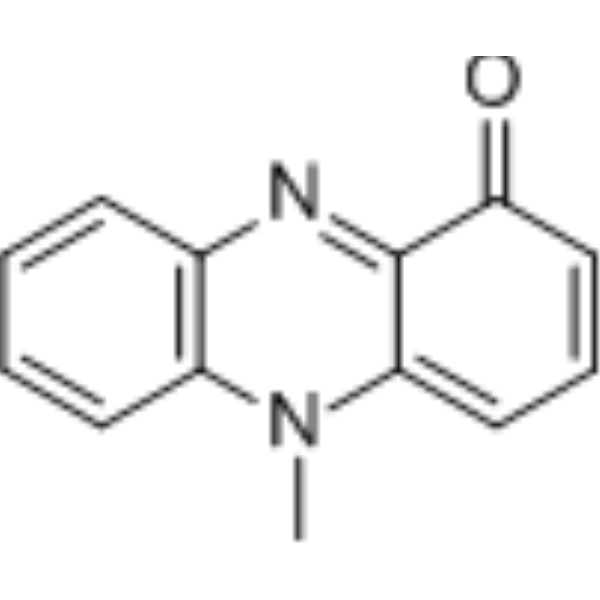
    Pyocyanin
    2 Publications Verification

    Pyocyanine; Sanazin; Sanasin

    Reactive Oxygen Species (ROS) Bacterial Drug Metabolite Endogenous Metabolite Infection Inflammation/Immunology
    Pyocyanin (Pyocyanine) is a toxic, quorum sensing (QS) controlled metabolite produced by Pseudomonas aeruginosa. Pyocyanin is a REDOX active compound that promotes the production of reactive oxygen species (ROS). Pyocyanin has antibacterial and anti-inflammatory activity .
    Pyocyanin
  • HY-B1118
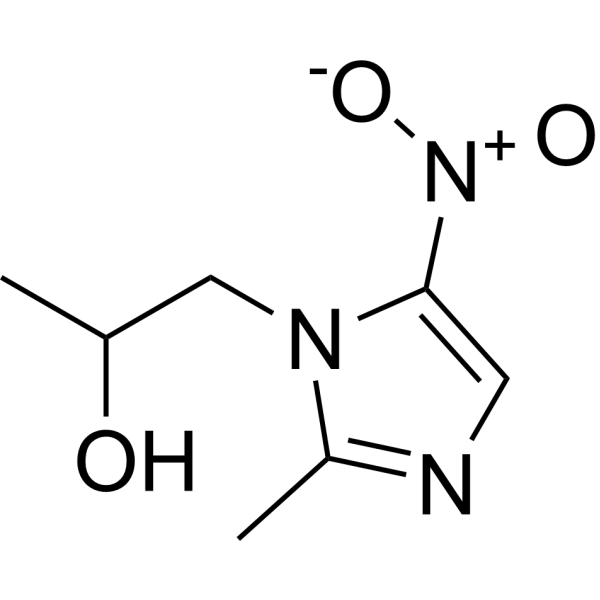
    Secnidazole
    1 Publications Verification

    RP-14539; PM-185184

    Bacterial Parasite Infection
    Secnidazole (RP-14539) is an orally active azole antibiotic and a imidazole mitigator of Serratia marcescens virulence. Secnidazole, as an analog of acylhomoserine lactones, effectively inhibits QS resulting in the attenuation of Pseudomonas aeruginosa pathogenesis. Secnidazole has antimicrobial activity against many anaerobic Gram-negative and Gram-positive bacterial species in vitro. Secnidazole can be used for the research of various diseases, such as amoebiasis and giardiasis, and bacterial vaginitis .
    Secnidazole
  • HY-W015969

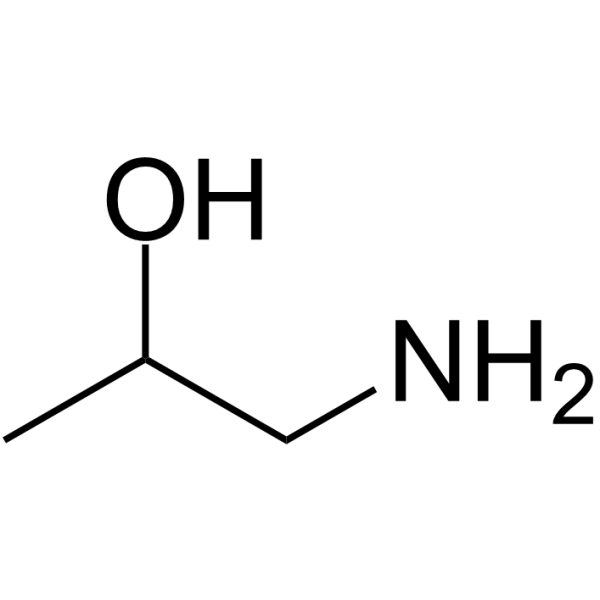
    Monoisopropanolamine

    Environmental Pollutants Endogenous Metabolite Metabolic Disease
    1-Aminopropan-2-ol is a microbial metabolism of amino alcohol metabolism via propionaldehyde and acetaldehyde in a species of Pseudomonas .
    1-Aminopropan-2-ol
  • HY-119171

    KMO Neurological Disease Inflammation/Immunology
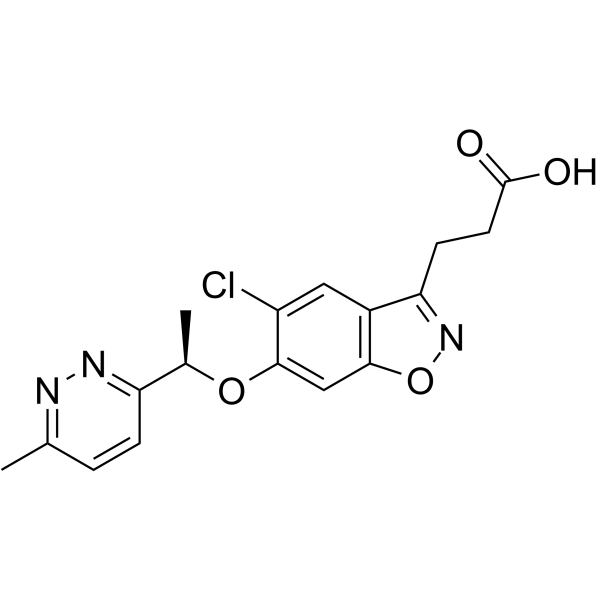
    GSK 366 is a type II kynurenine-3-monooxygenase (KMO) inhibitor with IC50 values of 2.3 nM and 0.7 nM for human KMO and P. fluorescens-KMO (Pf-KMO). GSK 366 binds to KMO’s substrate site, prevents productive NADPH association, substrate binding, and FAD hydroperoxy species formation. GSK 366 does not stimulate hydrogen peroxide (H2O2) production and reduces H2O2 levels. GSK 366 can be used for the researches of inflammation and neurological disease, such as acute pancreatitis multiple organ dysfunction syndrome and Alzheimer’s disease .
    GSK 366
  • HY-B1128A

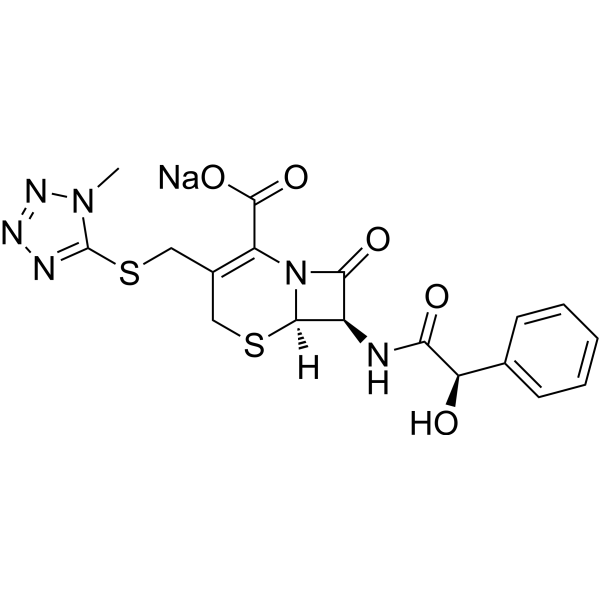
    Cephamandole sodium

    Antibiotic Bacterial Infection
    Cefamandole (Cephamandole) sodium is a semi-synthetic second-generation cephalosporin antibiotic with broad-spectrum antimicrobial activity. Cefamandole sodium is resistant to hydrolysis by β-lactamases produced by some Gram-negative bacteria. Cefamandole sodium kills Gram-positive cocci and various Gram-negative bacilli mainly by inhibiting cell wall synthesis, but it is inactive against Pseudomonas, Proteus vulgaris and Providencia stuartii, and its efficacy is affected by inoculum size. The plasma elimination half-life of Cefamandole sodium in rats is only 0.4 h, it is mainly excreted in urine in biologically active form, and it hardly penetrates the non-inflamed blood-brain barrier. Cefamandole sodium is widely used in studies related to bacterial infections .
    Cefamandole sodium
  • HY-B1118R

    RP-14539 (Standard); PM-185184 (Standard)

    Reference Standards Bacterial Parasite Infection
    Secnidazole (Standard) is the analytical standard of Secnidazole. This product is intended for research and analytical applications. Secnidazole (RP-14539) is an orally active azole antibiotic and a imidazole mitigator of Serratia marcescens virulence. Secnidazole, as an analog of acylhomoserine lactones, effectively inhibits QS resulting in the attenuation of Pseudomonas aeruginosa pathogenesis. Secnidazole has antimicrobial activity against many anaerobic Gram-negative and Gram-positive bacterial species in vitro. Secnidazole can be used for the research of various diseases, such as amoebiasis and giardiasis, and bacterial vaginitis .
    Secnidazole (Standard)
  • HY-P11165

    Bacterial Infection
    DRGN-1 is an antimicrobial peptide. DRGN-1 exhibits potent antimicrobial and anti-biofilm activities, inhibiting both Gram-negative and Gram-positive bacteria, with an EC50 range of 0.50-4.62 μM. DRGN-1 exerts its antimicrobial effect by disrupting bacterial membrane permeability and slightly depolarizing the membrane potential. DRGN-1 inhibits the formation of biofilms of single bacterial species and mixed species of Pseudomonas aeruginosa and Staphylococcus aureus. DRGN-1 can significantly promote the healing of uninfected and mixed biofilm-infected mouse wounds. DRGN-1 can be used for the study of infections .
    DRGN-1
  • HY-B1128

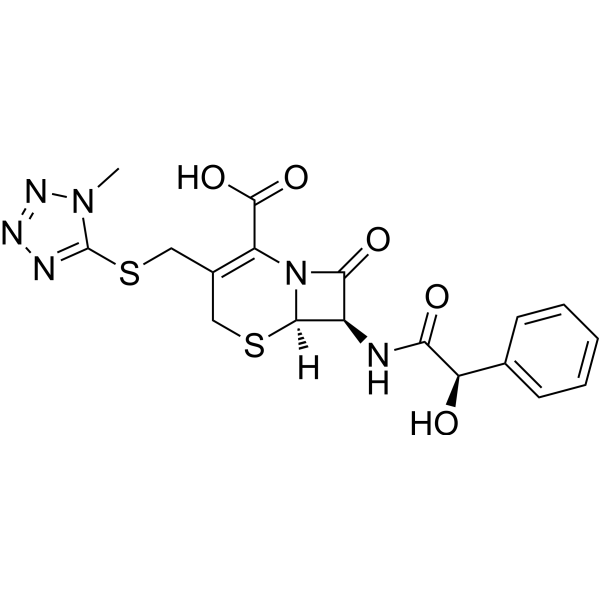
    Cephamandole

    Antibiotic Bacterial Infection
    Cefamandole (Cephamandole) is a semi-synthetic second-generation cephalosporin antibiotic with broad-spectrum antimicrobial activity. Cefamandole is resistant to hydrolysis by β-lactamases produced by some Gram-negative bacteria. Cefamandole kills Gram-positive cocci and various Gram-negative bacilli mainly by inhibiting cell wall synthesis, but it is inactive against Pseudomonas, Proteus vulgaris and Providencia stuartii, and its efficacy is affected by inoculum size. The plasma elimination half-life of Cefamandole in rats is only 0.4 h, it is mainly excreted in urine in biologically active form, and it hardly penetrates the non-inflamed blood-brain barrier. Cefamandole is widely used in studies related to bacterial infections .
    Cefamandole
  • HY-P11547

    Bacterial Infection
    Plantaricin F is an antibacterial peptide. Plantaricin F strongly inhibits several gram-negative bacteria including the foodbome pathogens Salmonella enteritidis and Pseudomonas aeruginosa. Plantaricin F inhibits several Lactobacillus, Pediococcus and Leuconostoc species .
    Plantaricin F
  • HY-111278R

    Pyocyanine (Standard); Sanazin (Standard); Sanasin (Standard)

    Reference Standards Reactive Oxygen Species (ROS) Bacterial Drug Metabolite Endogenous Metabolite Infection Inflammation/Immunology
    Pyocyanin (Standard) is the analytical standard of Pyocyanin. This product is intended for research and analytical applications. Pyocyanin (Pyocyanine) is a toxic, quorum sensing (QS) controlled metabolite produced by Pseudomonas aeruginosa. Pyocyanin is a REDOX active compound that promotes the production of reactive oxygen species (ROS). Pyocyanin has antibacterial and anti-inflammatory activity[1][2][3][4].
    Pyocyanin (Standard)
  • HY-121195

    PC-904

    Bacterial Infection
    Apalcillin (PC-904) in combination with Ro 48-1220, a penam sulfone β-lactamase inhibitor, demonstrated broad-spectrum activity against gram-negative aerobic and anaerobic bacteria, excluding Klebsiella oxytoca. It exhibited potent activity against β-lactamase-producing Moraxella catarrhalis, Haemophilus influenzae, and Neisseria gonorrhoeae, with effective MICs (11 μg/mL). The combination also inhibited Pseudomonas aeruginosa, Stenotrophomonas maltophilia, and Acinetobacter species at low MICs (0.25 to 4 μg/mL). However, its efficacy against oxacillin-resistant staphylococci and certain gram-positive organisms was limited. Apalcillin/Ro 48-1220 showed comparable efficacy to piperacillin/tazobactam against some extended-spectrum β-lactamase-producing Escherichia coli but was less effective against SHV-type β-lactamases .
    Apalcillin
  • HY-P2879E

    Lactate Dehydrogenase Others
    Chemically modified Pseudomonas species Cholesterol Esterase splits fatty acids from sterols.
    Chemically modified Pseudomonas species Cholesterol Esterase
  • HY-P2752C

    Biochemical Assay Reagents Others
    Chemically modified Pseudomonas species Lipoprotein Lipase hydrolyzes triglycerides into three free fatty acids and glycerol.
    Chemically modified Pseudomonas species Lipoprotein Lipase
  • HY-157360

    Biochemical Assay Reagents Others
    Acetamide Agar is a solid culture media for non-fermenting bacteria. Acetamide Agar helps differentiate P. acidovorans from other non-sugar-soluble or weakly sugar-soluble Pseudomonas species. Acetamide Agar can be used to test the ability of microorganisms such as Pseudomonas aeruginosa to utilize acetamide through deamination .
    Acetamide Agar
  • HY-W015969R

    Monoisopropanolamine (Standard)

    Reference Standards Endogenous Metabolite Metabolic Disease
    1-Aminopropan-2-ol (Standard) is the analytical standard of 1-Aminopropan-2-ol. This product is intended for research and analytical applications. 1-Aminopropan-2-ol is a microbial metabolism of amino alcohol metabolism via propionaldehyde and acetaldehyde in a species of Pseudomonas .
    1-Aminopropan-2-ol (Standard)
  • HY-W752616

    Monoisopropanolamine-d6

    Isotope-Labeled Compounds Endogenous Metabolite Metabolic Disease
    1-Aminopropan-2-ol-d6 (Monoisopropanolamine-d6) is the deuterium labeled 1-Aminopropan-2-ol (HY-W015969). 1-Aminopropan-2-ol is a microbial metabolism of amino alcohol metabolism via propionaldehyde and acetaldehyde in a species of Pseudomonas .
    1-Aminopropan-2-ol-d6
  • HY-B1118A

    RP-14539 hemihydrate; PM-185184 hemihydrate

    Bacterial Parasite Infection
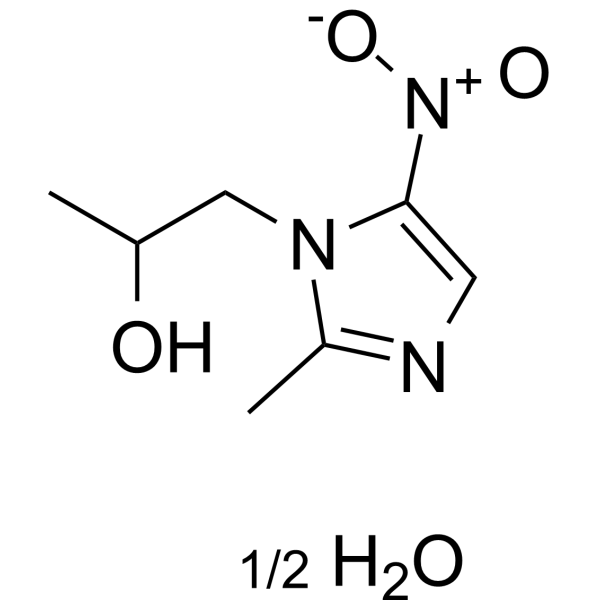
    Secnidazole (RP-14539) hemihydrate is an orally active azole antibiotic and a imidazole mitigator of Serratia marcescens virulence. Secnidazole hemihydrate, as an analog of acylhomoserine lactones, effectively inhibits QS resulting in the attenuation of Pseudomonas aeruginosa pathogenesis. Secnidazole hemihydrate has antimicrobial activity against many anaerobic Gram-negative and Gram-positive bacterial species in vitro. Secnidazole hemihydrate can be used for the research of various diseases, such as amoebiasis and giardiasis, and bacterial vaginitis .
    Secnidazole hemihydrate
  • HY-172109

    DNA/RNA Synthesis Infection
    DNA Gyrase-IN-15 (Compound 11) is an antimicrobial agent and inhibitor of DHPS and DNA gyrase, with IC50s of 1.73 and 0.07 µM, respectively. DNA Gyrase-IN-15 shows antimicrobial activity against Enterococcus faecalis (MIC of 15.62 µg/mL), Acinetobacter baumannii, Enterobacter species (MIC of 7.81 µg/mL), Pseudomonas aeruginosa, Klebsiella pneumoniae and Staphylococcus aureus. DNA Gyrase-IN-15 also shows antibiofilm activity against Enterococcus faecalis .
    DNA Gyrase-IN-15
  • HY-B1118S2

    RP-14539-d4; PM-185184-d4

    Bacterial Parasite Antibiotic Infection
    Secnidazole-d4 is the deuterium labeled Secnidazole . Secnidazole (RP-14539) is an orally active azole antibiotic and a imidazole mitigator of Serratia marcescens virulence. Secnidazole, as an analog of acylhomoserine lactones, effectively inhibits QS resulting in the attenuation of Pseudomonas aeruginosa pathogenesis. Secnidazole has antimicrobial activity against many anaerobic Gram-negative and Gram-positive bacterial species in vitro. Secnidazole can be used for the research of various diseases, such as amoebiasis and giardiasis, and bacterial vaginitis .
    Secnidazole-d4
  • HY-155662

    Reactive Oxygen Species (ROS) Infection
    ROS inducer 3 (Compound I6) is a ROS inducer. ROS inducer 3 has excellent in vitro bioactivity with an EC50 of 2.86 μg/mL. ROS inducer 3 has significant protective activity for preventing Pseudomonas syringae pv. actinidiae. ROS inducer 2, as a bactericidal agent, can be used for the research of intractable plant bacterial diseases .
    ROS inducer 3
  • HY-B1118S3

    RP-14539-d3; PM-185184-d3

    Isotope-Labeled Compounds Antibiotic Bacterial Parasite Infection
    Secnidazole-d3 (RP-14539-d3; PM-185184-d3) is the deuterium labeled Secnidazole (HY-B1118). Secnidazole (RP-14539) is an orally active azole antibiotic and a imidazole mitigator of Serratia marcescens virulence. Secnidazole, as an analog of acylhomoserine lactones, effectively inhibits QS resulting in the attenuation of Pseudomonas aeruginosa pathogenesis. Secnidazole has antimicrobial activity against many anaerobic Gram-negative and Gram-positive bacterial species in vitro. Secnidazole can be used for the research of various diseases, such as amoebiasis and giardiasis, and bacterial vaginitis .
    Secnidazole-d3
  • HY-W127461

    Gangliotriosylceramide

    Biochemical Assay Reagents Others
    Ganglioside GM2 asialo (asialo-GM2) is a glycosphingolipid containing three monosaccharide residues and one fatty acid of variable chain length, but lacks the sialic acid residue present on ganglioside M2. Asialo-GM2 is found at low or undetectable levels in normal human brains, but it accumulates in the brains of patients with Tay-Sachs disease and Sandhoff disease, which are expressed as lysosomal β- A neurodegenerative disorder characterized by hexosaminidase A and B deficiency. It also binds to various bacteria, including Pseudomonas isolated from cystic fibrosis patients. The Asialo-GM2 mixture contains ganglioside GM2 asialo molecular species with fatty acyl chains of variable length.
    Ganglioside GM2, Asialo
  • HY-N19937

    Others Others
    Rhamnolipid 4 is a rhamnolipid that can be found in Pseudomonas species .
    Rhamnolipid 4
  • HY-N18435

    Bacterial Reactive Oxygen Species (ROS) Infection
    Komaroidine is a bactericidal agent. Komaroidine induces reactive oxygen species (ROS) bursts in bacterial cells, disrupts antioxidant enzyme function and redox homeostasis, increases membrane permeability, and triggers bacterial apoptosis. Komaroidine suppresses bacterial burden within infected plant tissues.Komaroidine exhibits broad-spectrum antibacterial activity against phytopathogenic bacteria including Xanthomonas oryzae pv. oryzae, Xanthomonas axonopodis pv. citri, and Pseudomonas syringae pv. actinidiae. Komaroidine can be used for the research of rice bacterial leaf blight .
    Komaroidine
  • HY-P11121

    Bacterial Infection
    Myxinidin is an antimicrobial peptide. Myxinidin exhibits the ability to inhibit and eradicate biofilms formed by Pseudomonas aeruginosa and various Candida species. Myxinidin can be used for the study of infection .
    Myxinidin
  • HY-N15263

    Antibiotic Fungal Infection Cancer
    Cepafungin III is an acylpeptide antibiotic that can be isolated from the culture broth of Pseudomonas species. Cepafungin III exhibits inhibitory activity against yeast and fungi, and antitumor activity against P388 leukemia in mice, when mixed with Cepafungin I and II .
    Cepafungin III
  • HY-W093378

    Biochemical Assay Reagents Bacterial Infection
    Silver (I) sulfide is a biochemical reagent. Silver (I) sulfide nanoparticles exert Antibacterial effects against a variety of resistant bacteria, including Gram-positive and Gram-negative bacteria. Silver (I) sulfide can be used in the research of bacterial infections, such as infections caused by Staphylococcus aureus, Streptococcus agalactiae, Escherichia coli and Pseudomonas species .
    Silver(I) sulfide
  • HY-W714201

    Herbicide Parasite Infection
    Nitralin is a dinitroaniline herbicide. Nitralin exhibits inhibitory activity against Cryptosporidium parvum, with a IC50 of 4.5 µM .
    Nitralin
  • HY-N13274

    Lacceroic acid

    Bacterial Infection
    Dotriacontanoic acid (Lacceroic acid) is a fatty acid found in Limnophila polystachya Benth. Dotriacontanoic acid exhibits anti-bacterial activity against multiple gram-negative bacteria .
    Dotriacontanoic acid

Inquiry Online

Your information is safe with us. * Required Fields.

Salutation


Country or Region *

Applicant Name *


Organization Name *

Department *


Email Address *


Product Name *

Cat. No.


Requested quantity *

Phone Number *


Remarks

Inquiry Online

Inquiry Information

Product Name:
Cat. No.:
Quantity:
MCE Japan Authorized Agent:

