1. Search Result
Search Result
Results for "

acute hepatotoxicity

" in MedChemExpress (MCE) Product Catalog:

10

Inhibitors & Agonists

6

Natural
Products

1

Isotope-Labeled Compounds

Cat. No. Product Name Target Research Areas Chemical Structure
  • HY-108292

    NF-κB Neurological Disease Cancer
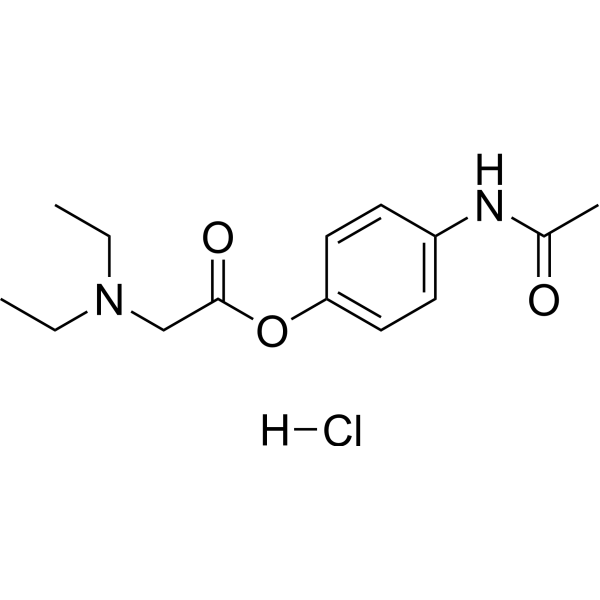
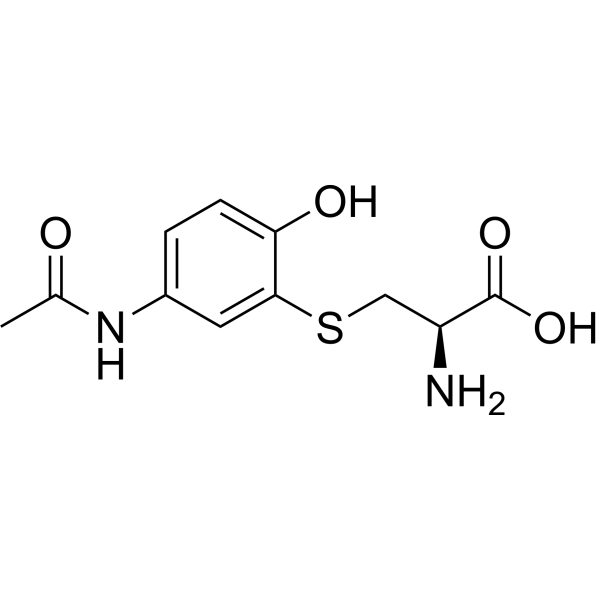
    Propacetamol hydrochloride is an orally active prodrug of paracetamol and an inducer of acute liver injury models, with multiple properties including antinociception, antioxidation and gastroprotection. Propacetamol hydrochloride potentiates Tramadol and attenuates Aspirin (HY-14654)-induced gastric mucosal damage and lipid peroxidation. Under specific conditions, Propacetamol hydrochloride also acts as a hepatotoxic inducer, triggering acute liver injury, oxidative stress and apoptosis, with strain differences in toxicity sensitivity. Propacetamol hydrochloride can be used in the research of acute liver injury, drug-induced hepatotoxicity and gastric mucosal damage .
    Propacetamol hydrochloride
  • HY-N0660

    Apoptosis PARP Caspase AMPK Autophagy VEGFR Keap1-Nrf2 STING 11β-HSD Ferroptosis PI3K Akt p38 MAPK ERK Neurological Disease Metabolic Disease Inflammation/Immunology Cancer
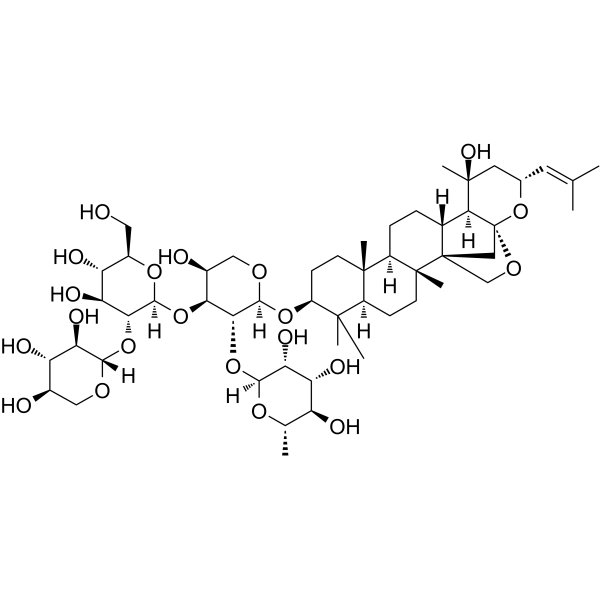
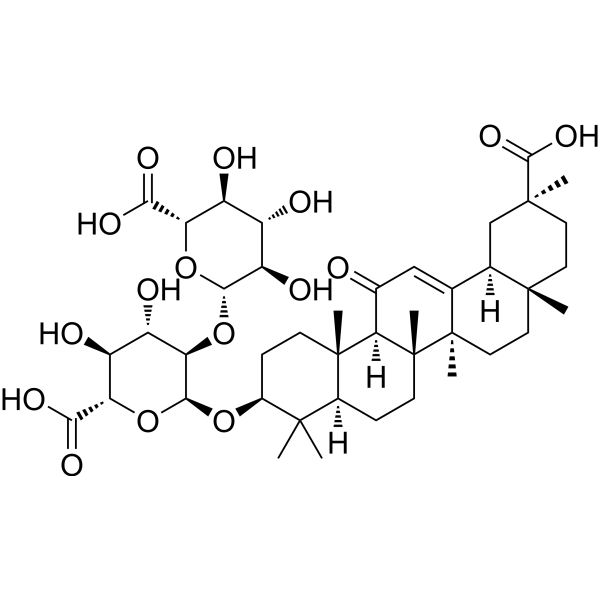
    Jujuboside B is a bioactive saponin component isolated from Ziziphi Spinosae Semen (sour jujube seed), with oral efficacy and blood-brain barrier permeability. Jujuboside B induces acute leukemia cell death and drives necroptosis apoptosis by activating the RIPK1/RIPK3/MLKL pathway. Jujuboside B upregulates the expression of NOXA, PARP and caspase-3, activates AMPK, inhibits the proliferation of breast cancer cells, and induces cell apoptosis and autophagy. Jujuboside B inhibits angiogenesis and tumor growth by blocking the VEGFR-2 signaling pathway. Jujuboside B alleviates liver injury in mice by regulating the Nrf2-STING signaling pathway . Jujuboside B alleviates liver injury by regulating anti-inflammatory responses and downregulating the expression of 11β-HSD2. Jujuboside B induces ferroptosis and overcomes radioresistance in non-small cell lung cancer via the PPARγ-ATF3-Gpx4 signaling pathway. Jujuboside B exerts inhibitory effects on platelet aggregation. Jujuboside B inhibits febrile seizures by suppressing the activity of AMPA receptors. Jujuboside B reverses chronic unpredictable mild stress-promoted tumor progression by blocking the PI3K/Akt and MAPK/ERK pathways and dephosphorylating CREB signaling. Jujuboside B is applicable to related studies on acute leukemia, breast cancer, PM2.5-induced lung injury, hepatotoxicity, liver injury, colorectal cancer, non-small cell lung cancer, thromboembolic diseases, cardiovascular diseases associated with high platelet aggregation, febrile seizures, and depressive-like phenotypes .
    Jujuboside B
  • HY-N7697B

    Others Others
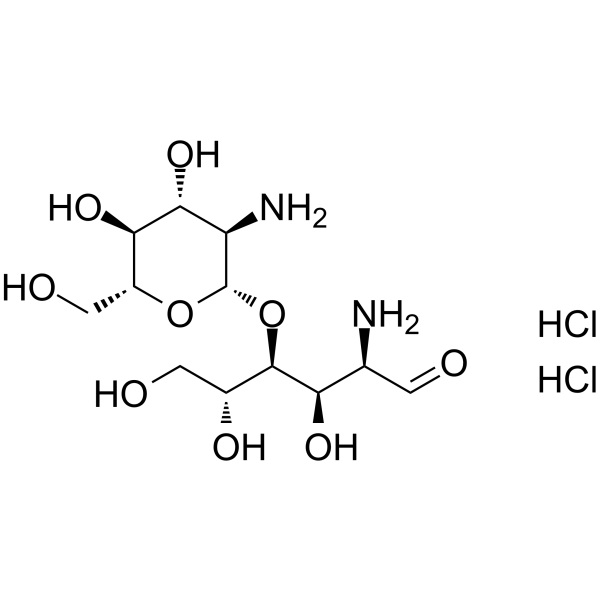
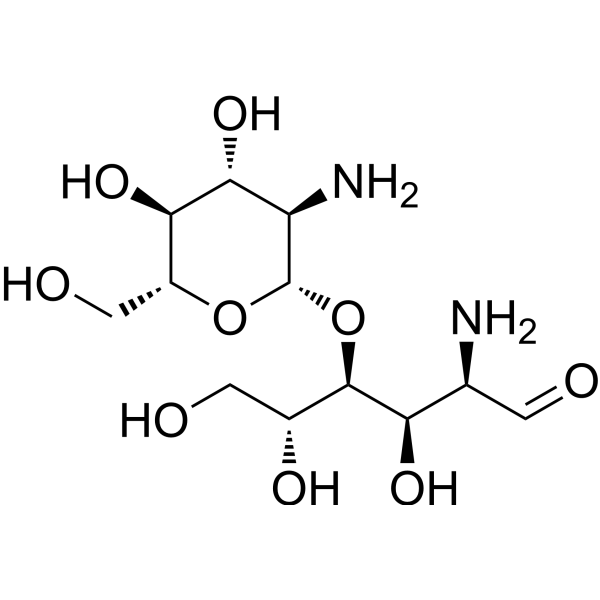
    Chitobiose dihydrochloride is an orally active chitosan oligosaccharide (degree of polymerization 2). Chitobiose dihydrochloride shows hepatoprotective activity and counteracts CCl4-induced elevation of plasma aspartate transaminase and alanine transaminase activities in rats. Chitobiose dihydrochloride can be used for the research of carbon tetrachloride-induced acute hepatotoxicity .
    Chitobiose dihydrochloride
  • HY-N7697F

    Others Metabolic Disease
    Chitobiose is an orally active chitosan oligosaccharide (degree of polymerization 2). Chitobiose shows hepatoprotective activity and counteracts CCl4-induced elevation of plasma aspartate transaminase and alanine transaminase activities in rats. Chitobiose can be used for the research of carbon tetrachloride-induced acute hepatotoxicity .
    Chitobiose
  • HY-125539

    Antibiotic Phosphatase Fungal Infection
    Roridin E is a glucose-6-phosphatase (G6Pase) inhibitor and antibiotic, and is a metabolic byproduct of Roridin A (HY-N9599). Roridin E induces significant oxidative stress, characterized by depletion of glutathione in vivo, induction of hepatic lipid peroxidation, and inhibition of renal superoxide dismutase activity. Roridin E reduces blood glucose levels in rats, but exhibits acute toxicity (which is enhanced when co-administered with linoleic acid (HY-N0729)) and causes hepatotoxicity in male albino mice. Roridin E induces a decrease in total blood protein and increases in the levels of total lipids, γ-glutamyltransferase, alkaline phosphatase, and 5'-nucleotidase. Roridin E can be isolated from molds, and possesses cytostatic and antifungal activities similar to those of Verrucarin A (HY-107426) and Roridin A. Roridin E exhibits in vivo activity in rodents and is commonly used in hepatotoxicity-related studies .
    Roridin E
  • HY-117082

    GBL-5g

    TNF Receptor Inflammation/Immunology
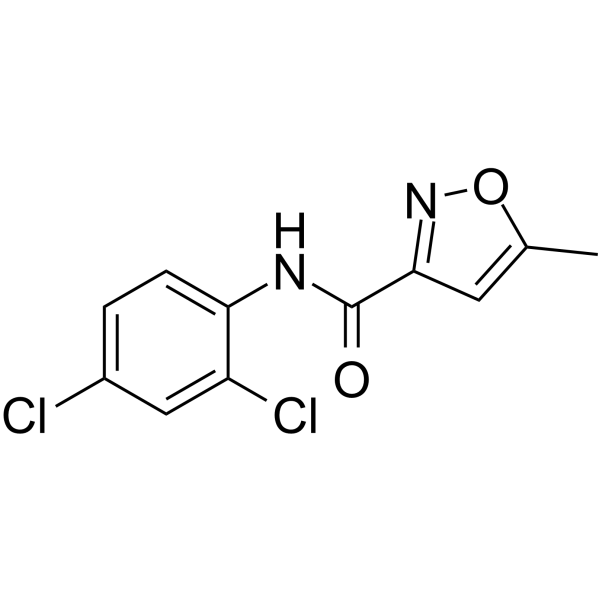
    UTL-5g (GBL-5g), an anti-inflammatory TNF-α inhibitor, has chemoprotective and liver radioprotective effects. UTL-5g lowers hepatotoxicity, nephrotoxicity, and myelotoxicity induced by Cisplatin through TNF-α inhibition among other factors .
    UTL-5g
  • HY-N1283

    Others Metabolic Disease
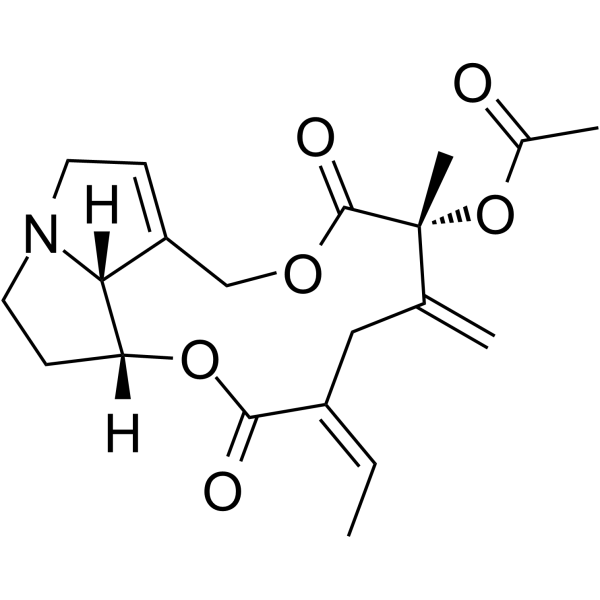
    Seneciphyllinine, a pyrrolizidine alkaloid, is isolated from the roots of Gynura japonica. Pyrrolizidine alkaloids are highly hepatotoxic natural chemicals that produce irreversible chronic and acute hepatotoxic effects on human beings .
    Seneciphyllinine
  • HY-182780

    Drug Derivative Cancer
    LSPN925 is an anticancer agent. LSPN925 exhibits cytotoxic and antiproliferative activities against tumor cells. LSPN925 has predicted oral bioavailability, low risks of hepatotoxicity and acute toxicity, and no risk of cardiotoxicity. LSPN925 can be used for the research of ovarian cancer, melanoma and breast cancer .
    LSPN925
  • HY-W722107

    1,3-Thiazolidine-4-carboxylic acid-d4

    Isotope-Labeled Compounds Amino Acid Derivatives Cardiovascular Disease Cancer
    Timonacic-d4 (1,3-Thiazolidine-4-carboxylic acid-d4) is deuterium labeled Timonacic. Timonacic (1,3-Thiazolidine-4-carboxylic acid) is a thiol antioxidant. Timonacic has anti-aging and anti-hepatotoxic effects, and it can be used to study acute illnesses and liver diseases, by inducing reversal, it is also used in research on certain cancer cases .
    Timonacic-d4
  • HY-N0660R

    Reference Standards ERK p38 MAPK Akt PI3K 11β-HSD STING VEGFR Ferroptosis Autophagy Apoptosis Keap1-Nrf2 Caspase PARP AMPK Neurological Disease Metabolic Disease Inflammation/Immunology Cancer
    Jujuboside B (Standard) is the analytical standard of Jujuboside B. This product is intended for research and analytical applications. Jujuboside B is a bioactive saponin component isolated from Ziziphi Spinosae Semen (sour jujube seed), with oral efficacy and blood-brain barrier permeability. Jujuboside B induces acute leukemia cell death and drives necroptosis apoptosis by activating the RIPK1/RIPK3/MLKL pathway. Jujuboside B upregulates the expression of NOXA, PARP and caspase-3, activates AMPK, inhibits the proliferation of breast cancer cells, and induces cell apoptosis and autophagy. Jujuboside B inhibits angiogenesis and tumor growth by blocking the VEGFR-2 signaling pathway. Jujuboside B alleviates liver injury in mice by regulating the Nrf2-STING signaling pathway . Jujuboside B alleviates liver injury by regulating anti-inflammatory responses and downregulating the expression of 11β-HSD2. Jujuboside B induces ferroptosis and overcomes radioresistance in non-small cell lung cancer via the PPARγ-ATF3-Gpx4 signaling pathway. Jujuboside B exerts inhibitory effects on platelet aggregation. Jujuboside B inhibits febrile seizures by suppressing the activity of AMPA receptors. Jujuboside B reverses chronic unpredictable mild stress-promoted tumor progression by blocking the PI3K/Akt and MAPK/ERK pathways and dephosphorylating CREB signaling. Jujuboside B is applicable to related studies on acute leukemia, breast cancer, PM2.5-induced lung injury, hepatotoxicity, liver injury, colorectal cancer, non-small cell lung cancer, thromboembolic diseases, cardiovascular diseases associated with high platelet aggregation, febrile seizures, and depressive-like phenotypes.
    Jujuboside B (Standard)

Inquiry Online

Your information is safe with us. * Required Fields.

Salutation


Country or Region *

Applicant Name *


Organization Name *

Department *


Email Address *


Product Name *

Cat. No.


Requested quantity *

Phone Number *


Remarks

Inquiry Online

Inquiry Information

Product Name:
Cat. No.:
Quantity:
MCE Japan Authorized Agent:

